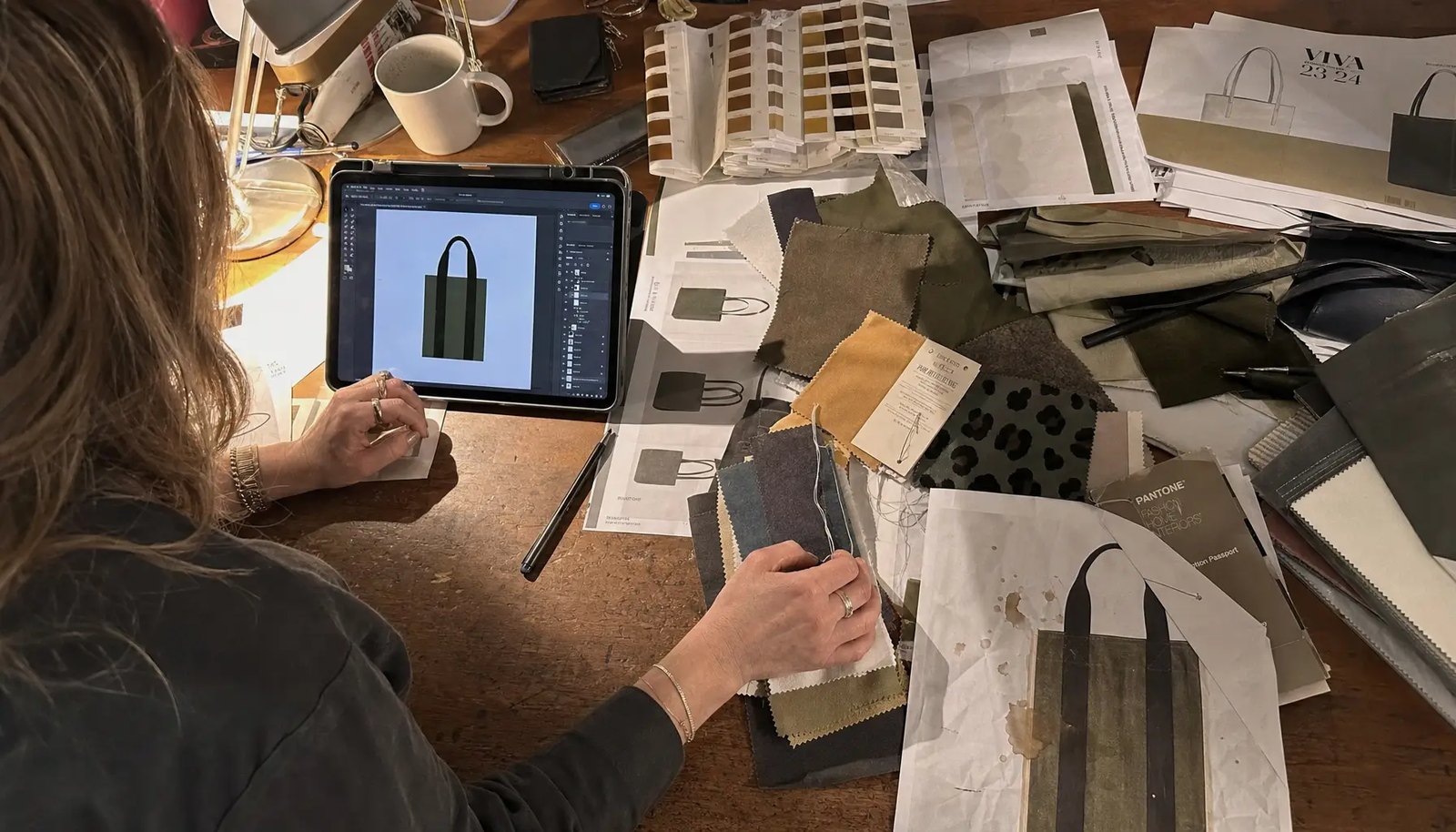
1. Start with the tote's commercial job
Wholesale organic cotton totes for skincare brands should be sourced around the bag's job, not the first artwork mockup. A tote used as a spa giveaway can be lighter and simpler than a tote sold as merchandise or used to carry a boxed skincare set with glass jars. The product role drives GSM, handle strength, print expectations, packing method, and the level of organic documentation required.
Write a short use case before asking for price. A useful version might say: natural organic cotton tote for a skincare gift-with-purchase, one-color logo, designed to carry up to 2 kg of boxed product, bulk packed for store distribution, with organic cotton documentation reviewed before claim approval. That sentence gives the supplier a clearer target than a mood board and a quantity.
Separate functional requirements from brand requirements. Functional requirements include finished size, fabric weight, handle drop, seam reinforcement, load expectation, and carton packing. Brand requirements include fabric shade, logo placement, print softness, label style, and whether an organic claim appears on the tote, hangtag, website, or retailer listing.
- Define whether the tote is promotional packaging, retail merchandise, store carryout, kit packaging, or event giveaway.
- Estimate the heaviest likely packed load and include it in the RFQ.
- Decide whether the tote must photograph well, stand neatly in a kit, or simply function as a reusable carrier.
- List must-have construction requirements separately from nice-to-have branding details.
2. Choose GSM, fabric finish, and construction together
Finished GSM is one of the clearest cost drivers. For buyer planning, 140-160 GSM is usually enough for light gifting and sample programs, 160-180 GSM is a practical middle range for skincare promotions, and 180-220 GSM is better for premium kits or heavier product sets. These are planning bands, not universal rules. The right choice depends on load, presentation, budget, and how long the tote is expected to be reused.
Fabric finish changes both cost and quality risk. Natural unbleached cotton can show flecks, seed marks, slub, and shade variation. Many skincare brands like that natural look, but it should be approved intentionally. Bleached white fabric gives a cleaner canvas for minimalist branding, yet it makes stains, lint, shade variation, and print defects more visible. Dyed organic cotton supports a stronger brand color system, but it usually adds lab dips, approval time, MOQ pressure, and colorfastness checks.
Construction should be quoted with the fabric. Handle width, handle drop, seam allowance, stitch density, bottom seam, side seam, and reinforcement method affect how the tote performs with jars and bottles. A lower GSM tote with good reinforcement may outperform a heavier bag with weak handle stitching. Ask for finished GSM, not just fabric description, and set a tolerance that can be measured during inspection.
- Specify finished GSM and ask how it will be measured.
- Use fabric swatches to approve natural, bleached, dyed, or custom-color fabric.
- Quote handle drop, handle width, seam construction, and reinforcement method with the tote body.
- Ask whether the fabric is stock, reserved, or custom-prepared for the order.
3. Build the bulk pricing plan around real tiers
A bulk pricing plan should show where cost actually changes. Ask suppliers to quote the same specification at 500, 1,000, 2,500, 5,000, and 10,000 pieces. If the specification changes between tiers, the comparison becomes less useful. The goal is to see the effect of volume on the same tote, not to compare a stock giveaway bag against a custom retail bag.
Small orders are usually dominated by fixed charges. A 500-piece run can carry the same screen setup, sample development, artwork handling, and document review effort as a larger order. At 2,500 or 5,000 pieces, setup becomes less important per unit, while fabric, sewing, packing, and freight cube become the main cost drivers. At higher quantities, savings often slow because material and labor do not disappear.
Keep first-order and reorder economics separate. First orders may include sample making, courier freight, screen charges, lab dips, barcode setup, and extra approval time. Reorders should be priced against the approved specification, with screens, artwork, labels, carton pack, and documentation route already known. If the supplier cannot show both, procurement cannot judge the true cost of a repeat program.
- Request tiered pricing at 500, 1,000, 2,500, 5,000, and 10,000 pieces for the same spec.
- Separate sample fees, screen charges, strike-offs, lab dips, artwork cleanup, and document charges from unit price.
- Ask for reorder pricing after sample, screen, label, and packing approvals are complete.
- Use small pilot pricing for validation, not as proof of full-scale unit economics.
4. Compare landed cost, not only factory unit price
The lowest ex-factory unit price is not always the lowest usable cost. Totes are bulky relative to value, and carton cube can affect freight more than expected. Landed cost should include product cost, setup charges, sample and courier cost, packing upgrades, inspection, freight, duty if applicable, taxes if applicable, destination handling, and any compliance or document fees.
Use a simple calculation for every tier: total landed cost equals unit price multiplied by order quantity, plus fixed project charges, plus logistics and destination charges. Then divide by quantity. For example, if a 2,500-piece quote has a USD 1.20 unit price, USD 90 screen charge, USD 75 sample courier, USD 650 freight and destination estimate, and USD 120 inspection allocation, the estimated landed total is USD 3,935, or USD 1.57 per tote. If a higher-quality option is USD 1.34 per unit with the same setup charges but USD 560 freight because cartonization is tighter, the landed cost is USD 1.68. The real gap is USD 0.11, not just the factory price difference.
Replace this worked calculation with supplier quotes, freight forwarder estimates, duty assumptions, and destination charges for your market. The important point is consistency. A procurement team should not compare one quote on FOB terms with another on delivered terms, or one quote with carton data against another that omits carton dimensions.
- Ask for Incoterm, handoff point, carton dimensions, gross weight, net weight, and units per carton.
- Run landed-cost math at each quantity tier before choosing the MOQ.
- Include inspection, packing upgrades, duty, taxes, and destination charges when relevant.
- Flag quotes that omit carton data, setup charges, or shipping assumptions.
5. Handle organic claims with document control
Organic cotton sourcing requires careful claim control. A tote made with organic cotton, a tote certified under a standard, and a tote allowed to carry a consumer-facing certified organic claim are not automatically the same thing. Procurement should define where the claim will appear: internal purchase file, invoice, tote print, hangtag, website, retailer listing, or product bundle copy.
GOTS and OCS should not be treated as interchangeable labels. GOTS is a broader textile processing standard with organic fiber and processing requirements. OCS focuses on chain of custody for organically grown material content. A supplier scope certificate shows what the supplier is certified to do, but it does not by itself prove that a specific shipment is certified. Depending on the claim and sales channel, an order-level transaction certificate or equivalent system documentation may be required.
Scope matters. A fabric mill may be certified while the cut-and-sew factory, printer, labeler, packer, or trader may not be covered for the activity in your order. If the tote, hangtag, or sales page will make a certified claim, involve your compliance team, certifier, or legal reviewer before approving language. Avoid broad language such as eco-friendly, chemical-free, or fully sustainable unless it is separately supportable.
- Ask what can be provided for the exact order: scope certificate, transaction certificate where required, fabric record, supplier declaration, invoice reference, or packing-list reference.
- Confirm whether certification scope covers fabric supply, cutting, sewing, printing, labeling, packing, exporting, and trading as needed.
- Do not print organic claim language until documentation route and market-specific labeling rules are reviewed.
- Keep certificates, order records, approved claim text, invoices, and packing lists in the purchase file.
6. Control artwork before it becomes a production problem
Skincare branding often uses fine type, soft neutrals, delicate marks, and minimal layouts. Those choices can work on cotton, but cotton is not paper. Fabric shade, weave texture, ink absorption, and surface unevenness all affect print appearance. A digital mockup is useful for placement, but it cannot approve ink behavior on actual fabric.
One-color screen print is usually the most economical route for bulk organic cotton totes. It works well for simple logos, line art, and clear typography. Two or three colors add screen cost, registration control, and inspection time. Gradients, halftones, very thin strokes, and tiny type are higher risk on textured cotton. Large solid print areas can feel stiff or show pinholes, especially on open weaves.
Approve a strike-off on the actual bulk fabric color and GSM whenever possible. If exact brand color matters, give a color reference but allow a textile tolerance. Pantone matching on cotton is a target, not the same as coated paper packaging. The RFQ should also state what happens if artwork changes after screens are made, whether screens are stored for reorders, and whether repeat setup charges apply.
- Send vector artwork with print size, placement, color count, side count, and ink reference.
- Set minimum line weight, small-text limits, and registration tolerance before final approval.
- Review opacity, hand feel, edge sharpness, cracking, pinholes, bleed-through, and reverse-side show-through.
- Ask how long screens are stored and what charges apply for reorders or artwork changes.
7. Plan MOQ and lead time by supplier route
MOQ reflects the production route. A low MOQ often means stock fabric, standard dimensions, existing handle construction, one-color print, and simple packing. That can be ideal for a launch test or event program. A higher MOQ may be tied to custom fabric, dyeing, woven labels, insert cards, barcode labels, retail folding, or stricter document requirements.
Compare three routes separately. A stock route is fastest: standard size, natural or white organic cotton, one-color print, and bulk cartons. A semi-custom route adjusts size, print, labels, carton count, or packing while staying close to existing materials. A full custom route may include custom dyeing, custom dimensions, labels, inserts, individual packing, and controlled claim documentation. Each route has different MOQ, lead time, and approval risk.
Break lead time into gates instead of accepting one broad number. Sampling begins after artwork and spec are clear. Bulk production begins after sample approval, purchase order, deposit if required, material confirmation, and document route confirmation. Shipment begins after inspection, packing list, export paperwork, and cargo handoff. Fixed launch dates need approval deadlines for artwork, samples, claims, labels, and carton marks.
- Ask MOQ by fabric, tote body, print, label, insert, barcode label, individual packing, and carton marks.
- Compare stock, semi-custom, and full custom quotes as different sourcing routes.
- Request a timeline for sampling, material preparation, printing, sewing, packing, inspection, and shipping handoff.
- Discuss split shipment only after checking the landed-cost impact of air freight or expedited service.
8. Use sample approval to lock the buying spec
Sample approval should protect bulk production, not just confirm that the tote looks acceptable. A sample made from substitute fabric or a different GSM can only approve shape and artwork position. If the production fabric will be prepared later, the approval record should state what is final and what remains pending.
Measure the sample the same way an inspector will measure bulk goods. Record width, height, gusset, handle drop, handle width, seam allowance, print size, print placement, label position, and folded size. Load the tote with the real skincare assortment or an equivalent weight. A tote that looks fine empty may twist, stretch, or stress at the handle attachment when packed with bottles and jars.
Use measurable comments. Instead of saying the logo should be higher, state the distance from the top edge or seam. Instead of saying handles should be stronger, state the reinforcement method or load test expectation. Keep dated photos, written approvals, and any rejected sample notes. For premium programs, request a top-of-production photo set or sample before the full line continues.
- Approve samples that identify fabric GSM, fabric finish, print method, handle construction, label, and packing route.
- Measure and photograph the sample before approval.
- Test with realistic product weight and hold time.
- Keep approved sample records for reorders and supplier accountability.
9. Specify packing, cartonization, and warehouse rules
Packing affects cost, freight, presentation, and warehouse receiving. Bulk-packed totes are usually lowest cost, but they still need a defined fold, inner count, master carton count, carton marks, and maximum carton weight. Without this, totes may arrive creased, dusty, miscounted, or difficult for a fulfillment center to process.
Individual polybags can protect against dust and handling marks, but they add material, labor, and sustainability review. Paper bands, belly bands, hangtags, or no individual packaging may be better depending on the brand and channel. If barcodes are required, define barcode type, label position, and whether the barcode sits on the bag, polybag, hangtag, insert, or carton.
Carton data should be available before the final supplier comparison. Ask for units per carton, carton dimensions, gross weight, net weight, and outer marks. These details support freight estimates and warehouse planning. Cotton can also absorb odor and moisture, so finished goods should be stored clean, dry, and away from strong smells before shipment.
- Define fold method, inner count, master carton count, carton marks, and maximum carton weight.
- Decide on individual polybags, paper bands, inserts, hangtags, or barcode labels before final pricing.
- Collect carton dimensions and gross weight for freight and receiving planning.
- Inspect odor, moisture risk, carton labeling, and packing-list accuracy before shipment release.
10. Compare suppliers with a focused RFQ and QC plan
A strong RFQ is specific but not bloated. Start with use case, target quantities, delivery window, destination, Incoterm preference, and organic claim requirement. Then provide the technical spec: finished size, GSM, fabric finish, handle construction, print method, artwork, label, packing, carton requirements, and inspection expectations. Ask suppliers to confirm exceptions instead of quietly changing the spec to hit a lower price.
Supplier comparison should include landed cost, specification match, document support, setup charges, lead-time credibility, sample route, packing detail, carton data, and communication clarity. A supplier who asks precise questions may be more useful than one who quickly returns a low quote with missing GSM, missing carton dimensions, vague organic documents, or unclear setup charges.
Agree the QC plan before bulk production. Define who inspects, when inspection happens, what sampling plan or AQL is used, and how defects are classified. The main defect groups for organic cotton totes are fabric defects, measurement issues, sewing defects, print defects, label or claim errors, packing errors, and carton documentation errors. Treat organic documentation as a shipment release item, not a file to chase after goods have shipped.
After the first order, preserve the approved reorder file: sample photos, GSM, fabric shade, artwork, screen details, label files, packing spec, carton data, inspection notes, document set, and final quote. Reorders become cleaner when procurement prevents small specification drift.
- Send one RFQ package with spec sheet, artwork, claim requirement, packing spec, tier quantities, destination, and delivery target.
- Compare suppliers by landed cost, documentation, sample accuracy, QC process, carton data, and lead-time credibility.
- Set inspection points for incoming fabric, print strike-off, in-line sewing, packing, and pre-shipment review.
- Keep an approved reorder file so future pricing uses the same specification.
Specification comparison for buyers
| Quote scenario | 500 pcs estimated landed/unit | 2,500 pcs estimated landed/unit | 5,000 pcs estimated landed/unit | What changes the price |
|---|---|---|---|---|
| Stock natural organic cotton tote, 150 GSM, 1-color one-side print, bulk packed | USD 2.55-3.10 | USD 1.45-1.85 | USD 1.25-1.60 | Fixed screen, sample, and freight charges spread across volume; stock fabric keeps lead time and fabric risk lower |
| Semi-custom organic cotton tote, 170 GSM, adjusted size, 1-color print, defined carton pack | USD 3.05-3.80 | USD 1.75-2.25 | USD 1.50-1.95 | Pattern adjustment, sample round, fabric confirmation, and tighter packing spec add cost but improve consistency |
| Premium skincare kit tote, 200 GSM, reinforced handles, 2-side print, insert card | USD 4.10-5.20 | USD 2.35-3.10 | USD 2.05-2.70 | Heavier fabric, extra print setup, handle reinforcement, inspection time, and insert handling raise both unit and labor cost |
| Custom dyed organic cotton tote, 180 GSM, label, barcode, individual pack | Usually inefficient unless used as paid sample or approval run | USD 2.80-3.80 | USD 2.35-3.25 | Lab dips, dyeing MOQ, label MOQ, packaging materials, and claim review create meaningful upfront cost |
| Example fixed charges to include in every comparison | Screen USD 60-120; sample and courier USD 50-150; inspection allocation USD 100-250 | Same charge types, lower per-unit impact | Same charge types, lowest per-unit impact | These are illustrative planning ranges only; replace with supplier quote, freight quote, duty, taxes, and destination charges |
| Freight and carton effect | Often USD 0.35-0.80/unit depending on carton cube and service | Often USD 0.15-0.40/unit | Often USD 0.10-0.30/unit | Units per carton, gross weight, carton dimensions, destination, Incoterm, and shipment mode |
| Organic document support | Can feel expensive if order-level documentation is required on a small run | More practical when document review cost is spread across volume | Best suited to repeat programs with stable claim language | Supplier scope, transaction certificate availability, certifier process, and market-specific labeling rules |
| Reorder after approved sample and screen | May improve modestly if setup is not repeated | Usually clearer savings if spec is unchanged | Best pricing stability when annual forecast is shared | Screen storage, artwork stability, fabric availability, packing repeatability, and forecast confidence |
Buyer checklist before sampling
- Define the tote role: gift-with-purchase, retail merchandise, spa giveaway, influencer kit, e-commerce insert, or store carryout bag.
- Set finished dimensions in centimeters or millimeters, including width, height, gusset, handle drop, handle width, and measurement tolerance.
- Specify finished GSM: 140-160 GSM for light gifting, 160-180 GSM for general skincare promotions, or 180-220 GSM for premium kits and heavier products.
- State fabric finish: natural unbleached, bleached white, dyed shade, or custom color, and ask whether the quote uses stock fabric or custom-prepared fabric.
- Confirm organic claim needs before quoting: GOTS certified product, OCS content claim, order-level transaction certificate support, supplier scope certificate, material declaration, or no consumer-facing claim.
- Send vector artwork with print size, print position, number of colors, print sides, ink references, and registration tolerance.
- Separate recurring unit price from sample fee, screen charge, film charge, lab dip, strike-off, barcode setup, and certification document charges if any.
- Request tiered pricing for the same specification at 500, 1,000, 2,500, 5,000, and 10,000 pieces.
- Define packing before final quote: bulk fold, inner count, individual polybag or paper band, insert card, barcode label, carton count, carton marks, and maximum carton weight.
- Ask for carton dimensions, gross weight, net weight, units per carton, Incoterm, and shipping handoff point so landed-cost math is not based on product price alone.
Factory quote questions to send
- What finished dimensions, handle drop, handle width, seam allowance, fabric construction, and finished GSM are included in this quote?
- What GSM tolerance will you hold in bulk, and will GSM be checked before cutting or only after sewing?
- Is the organic cotton fabric in stock, or does this order require weaving, bleaching, dyeing, finishing, or special reservation?
- Which documents can be provided for this exact order: GOTS scope certificate, OCS scope certificate, transaction certificate where applicable, fabric purchase record, supplier declaration, invoice references, or packing-list references?
- Does your certification scope cover the activity being quoted, such as fabric supply, cutting, sewing, printing, labeling, packing, exporting, or trading?
- What organic claim language can you support, and which claim language should not be used until our certifier, compliance team, or market-specific rules confirm it?
- What is the MOQ for the tote body, print, woven label, hangtag, insert card, individual packing, barcode label, and carton marks?
- Please quote 500, 1,000, 2,500, 5,000, and 10,000 pieces with unit price, setup charges, sample charges, estimated lead time, Incoterm, carton data, and payment terms.
- What print method is priced, how many colors and sides are included, and what are the separate screen, film, strike-off, color matching, or artwork charges?
- What artwork limits apply for minimum line weight, small type, gradients, halftones, registration tolerance, and print placement tolerance on cotton fabric?
Quality-control points to confirm
- Verify finished fabric GSM against the approved specification and tolerance before cutting; do not rely only on fabric description or hand feel.
- Check fabric shade, whiteness or natural color consistency, slub level, oil marks, weaving defects, lint, odor, and visible contamination before print approval.
- Measure finished tote width, height, gusset, handle drop, and handle width after sewing, pressing, and folding because finished size can shift during production.
- Inspect stitch density, seam allowance, thread trimming, bottom seam strength, side seam straightness, and handle attachment reinforcement on both sides of the tote.
- Load-test handles with a realistic skincare kit weight and hold time, including jars, bottles, cartons, samples, and insert materials the tote will actually carry.
- Review print strike-off on actual bulk fabric color and GSM, checking ink shade, hand feel, edge sharpness, opacity, pinholes, cracking, bleed-through, and reverse-side show-through.
- Check print placement with a ruler or template and record tolerance for center alignment, distance from seams, and distance from top edge.
- Inspect labels, hangtags, barcode stickers, insert cards, and organic claim text against approved artwork and document rules before packing starts.
- Confirm folding method, inner count, master carton count, carton marks, carton dimensions, gross weight, and packing list against the approved shipping spec.
- Use an agreed AQL or internal sampling plan at pre-shipment, with defects classified for fabric, sewing, print, measurement, label, packing, carton, and document errors.