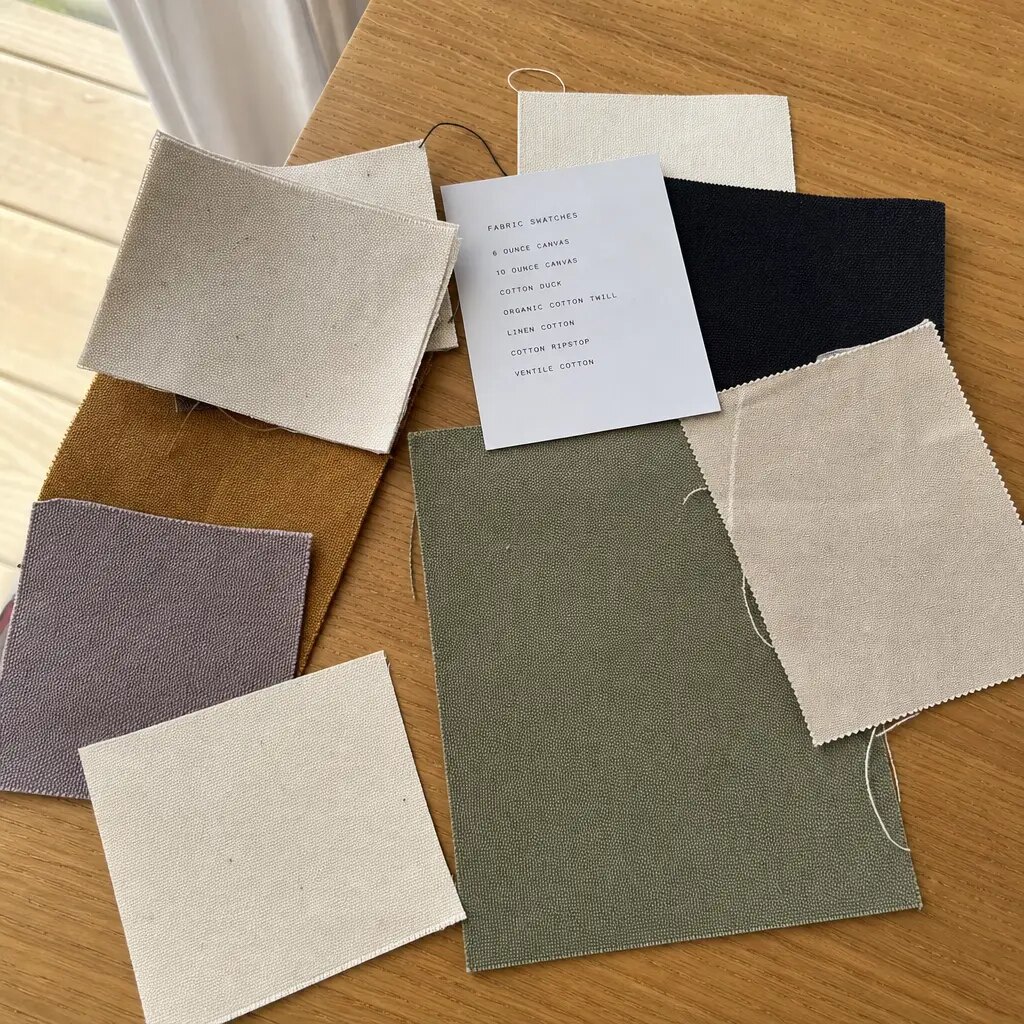
Start With the In-Hand Date, Not the PO
For wholesale organic cotton totes for farmers market vendors, the only date that really matters is the date the bags are actually in hand and ready for use. A supplier can talk about ship dates all day, but farmers market launches, retail resets, and seasonal promotions run on receiving dates, not production promises. Start with the first weekend the bags need to be on the table, then count backward for receiving, transit, customs clearance if needed, and the time it takes your team to inspect and distribute the cartons. That backward count is the schedule that matters.
The common failure mode is treating the purchase order as the beginning of the timeline. In practice, the PO comes after the buying team has already made a lot of decisions that affect lead time: artwork version, pack format, decoration method, carton marking, and whether the tote has to be certified or simply sourced from an organic fiber lot. When those decisions move late, the schedule slips in small pieces that are easy to ignore until the launch is at risk.
The clean way to manage the order is to define three dates before you ask for pricing: the latest acceptable sample approval date, the latest production start date, and the in-hand date. Those three checkpoints force everyone to see the same schedule. They also make it easier to compare suppliers, because a factory that promises a lower unit price but cannot meet the sample gate is not actually a better option for a seasonal market program.
- Work backward from the in-hand date, not the ship date.
- Set the latest sample approval date before you ask for quotes.
- Separate production time from transit time in every schedule.
- Use the market opening date as the real commercial deadline.
Choose a Tote Spec That Fits Market Use
A tote for farmers market vendors has to do more than carry a logo. It needs to hold produce, jars, baked goods, or bundled merchandise without feeling flimsy, and it often needs to look credible enough to resell. That means the spec should be built around use, not around a generic cotton bag template. Lightweight promotional totes are often fine for giveaways, but resale and heavier market carry usually need more fabric and better reinforcement.
Fabric weight is the first lever buyers usually adjust. As a practical planning range, lighter promotional programs often sit around 140 to 160 GSM, while a tote that must feel retail-ready or carry heavier contents usually performs better around 180 to 220 GSM. That is not a rule from a lab sheet. It is a procurement starting point. The final call should reflect what the customer will actually carry and how the bag will be sold. A heavier bag may cost more, but it can also reduce complaints about stretch, thinness, and poor shape retention.
Construction matters just as much as cloth weight. A flat tote is simpler and usually faster to sew. A gusseted tote gives more usable volume and presents better on a rack or booth table. Handle drop matters because market buyers may carry the bag by hand one day and over the shoulder the next. If the handle length is wrong, the tote can be technically correct and still feel wrong in use. This is why the spec should describe finished size, handle drop, gusset depth, and base style together instead of as separate afterthoughts.
- Use fabric weight as a starting point, not as the whole spec.
- Match flat versus gusseted construction to the actual carry use.
- Set handle drop based on how the tote will be carried in the market.
- Write finished size, seam allowance, and base style into one spec sheet.
- Use one measurement system across quote, sample, and PO to avoid drift.
Pick the Sourcing Route That Matches the Order
The right sourcing route depends on control needs, volume, and how fast the bags must move. A direct factory is usually the cleanest path when the spec is stable and the buyer wants one source to own cutting, printing, sewing, and packing. A trading company can be useful when the program needs coordination across multiple processes or when the buyer does not want to manage every factory detail directly. A local decorator can be the fastest option for a small run if the blank tote is already approved and in stock. A stock program is the fastest route of all, but only if the inventory is actually there in the right color, size, and pack format.
The important point is that sourcing routes are not interchangeable. A direct factory with stocked fabric and one-color print can usually turn faster than a mill-ordered program, but only if the buyer does not keep changing the artwork or pack format. A trading company can smooth communication, but it can also add a layer of delay if approvals bounce back and forth. A local decorator can rescue a short timeline, but the blank tote has to match the organic claim and the quality standard. Buyers should choose the route that best fits the order, not the route that sounds easiest in an email.
When comparing suppliers, ask who owns the weakest link. If the factory sources fabric from a mill, who confirms the booking? If the order uses a trading company, who is accountable for the QC failure if a seam issue appears? If a local decorator is using imported blanks, who verifies the blank tote spec and claim support? Those questions expose the real operating model quickly. The cheapest quote is not the best quote if nobody clearly owns the risky part of the process.
- Direct factory is best when the spec is stable and the buyer wants tighter control.
- Trading company helps when coordination is complex, but it adds an extra handoff.
- Local decorator is useful for small urgent runs if the blank tote is already proven.
- Stock programs are fastest, but only if inventory by size and color is confirmed.
- Ask who owns the fabric booking, the decoration approval, and the QC failure if something goes wrong.
Build a Quote You Can Actually Compare
A quote for wholesale organic cotton totes should read like a production brief with prices attached. If it only shows a unit price and a tote size, it is not enough to evaluate. The comparison has to include the fabric GSM, weave, finished dimensions, handle length, print method, number of colors, label requirements, pack format, and any setup or sample charges. Without that structure, one supplier can look cheaper simply because they left out screen charges, carton work, packing labor, or freight assumptions.
Lead time needs the same level of detail. A useful quote should split the schedule into fabric booking, sample approval, cutting, printing, sewing, finishing, packing, and transit. That breakdown makes it possible to see where time is actually spent and where the order can be simplified. If the supplier cannot describe the schedule in pieces, the promise is too vague for procurement use. A fast quote is not useful if it hides work that will surface later as delay or extra cost.
The quote should also tell you what changes trigger a re-quote. A different print color, a changed handle length, a switch from bulk cartons to retail polybags, or a new carton mark can all affect both price and lead time. It is better to ask those questions before the order is awarded than to discover them after artwork has already been approved. The goal is not only to get a lower number. It is to get a number that refers to the same work across every supplier.
- Ask for fabric, sewing, print, packing, and freight assumptions separately.
- Require a broken-out lead time instead of a single promised date.
- Check whether sample charges and screen charges are separate line items.
- Compare suppliers only after the spec is identical across quotes.
- Ask what changes would trigger a re-quote before you award the order.
Use Lead-Time Gates, Not a Single Promise
The schedule for a tote order usually moves through five gates: sample approval, raw material booking, cutting and sewing, print and finishing, and packing and dispatch. If the fabric is stocked and the art is final, the order can move quickly. If the fabric must be booked from a mill, the print uses more than one color, or the pack format is retail-ready, the timeline expands. Buyers often lose time not because the factory is slow, but because the order kept changing after the timeline was already set.
As a planning band, a direct factory with stocked fabric and one-color screen print may move in roughly 3 to 5 weeks before transit once the sample is approved. A custom size, second print color, or retail pack format can push that into the 5 to 8 week range. If the fabric has to be booked from the mill, add the fabric lead time first and plan more conservatively, often into the 6 to 10 week range before transit depending on mill capacity and how quickly approvals turn. These are planning bands, not guarantees. The useful move is to ask the supplier to map their own schedule against your required date in writing.
When timing gets tight, simplify the product before buying speed. Dropping a second print color, switching to stocked fabric, or using a simpler pack format usually buys more time than paying for expedited freight after the order is already late. Air freight can solve a launch problem, but it is expensive and it does nothing to fix a bad spec. The best schedule risk reduction happens before production starts, not at the shipping stage.
- Treat sample approval, material booking, production, packing, and transit as separate gates.
- Use supplier-confirmed schedule bands instead of generic promises.
- If timing is tight, reduce complexity before you pay for speed.
- Build a buffer for holidays, port delays, and one revision cycle.
- Count backwards from the launch date, not from production start.
Verify the Organic Claim and the Paper Trail
Organic cotton is not just a style description. If the bag is being sold as organic, the buyer needs a clean chain from material to finished goods to shipment paperwork. That means separating three things that are often confused in sales talk. First is the fiber claim itself: what percentage of the bag is organic cotton, and how is that stated in the spec? Second is the documentation that supports the claim for the actual lot being purchased. Third is the shipment record: invoice, packing list, carton marks, and any required certification references tied to the finished goods lot. Those are related, but they are not interchangeable.
A factory certificate alone is not enough if the shipment lot is different from the certified material lot. Buyers should ask the supplier to explain exactly which lot or booking the finished goods come from and how that maps to the documents they will receive. If the supplier cannot walk through that chain clearly, the claim is too loose for a procurement program that has to stand up to internal review or retail compliance checks. The question is not whether the factory has a certificate. The question is whether the specific order can be documented cleanly.
Fabric finish affects both the claim and the customer experience. Natural, undyed fabric is often the simplest and fastest route because it avoids shade management. Pre-shrunk or washed fabric adds process time, but it can reduce later complaints about size changes or a rough hand feel. Buyers should decide that early. Changing the finish after sampling is a common way to lose time and create inconsistency between the approved sample and the bulk run.
- Separate fiber claim, supporting documents, and shipment paperwork.
- Confirm whether the organic claim applies to the exact lot being shipped.
- Do not assume a factory-wide certificate covers every material lot automatically.
- Decide early whether the fabric must be natural, pre-shrunk, or washed.
- Ask for the document path before bulk production starts.
Approve the Sample for Manufacturing, Not Just Appearance
A sales sample is not enough for a tote program that has to perform under real use. The buyer should request a pre-production sample made from the same fabric lot and the same print method intended for bulk. That sample is the best check on how the cotton behaves after printing, whether the handles sit correctly, and whether the finished size stays where it should after sewing and finishing. If the supplier cannot produce a true pre-production sample, the schedule is not fully proven yet.
Approval should be written in measurable terms. Finished size, handle length, print placement, stitch quality, and seam strength should all have tolerances before the bulk run starts. For many tote programs, dimensional tolerances in the range of plus or minus 0.5 cm to 1 cm are practical, but the final range should be tied to the channel and the retail expectation. A giveaway bag can tolerate more variation than a resale tote that has to look consistent across a shelf display. Define what counts as a major defect before the run starts, not after problems are already on the floor.
The best sample review is physical and specific. Measure the bag. Pull the handles. Check the print under light. Fold it, refold it, and look at the seams after handling. A sample that only looks good in a photo has not been approved for procurement; it has only been approved for a photo. If the order is time-sensitive, first-piece photos and first-carton photos are worth asking for because they catch errors while there is still time to fix them.
- Request a true pre-production sample from the production fabric.
- Set critical dimensions and defect thresholds before bulk starts.
- Check handle reinforcement, seam strength, and print durability by hand.
- Use first-piece and first-carton photos when the launch date matters.
- Write the approval standard into the PO so the factory is not guessing.
Make Packing and Labeling Part of the Buy, Not an Afterthought
Packing changes the real cost of the order more than many buyers expect. A tote packed in bulk is easier and cheaper to handle than a tote that needs retail polybags, hangtags, insert cards, bundle counts, or shelf-ready presentation. Each additional pack step adds labor and creates another point where the commercial spec can drift away from the quote. Before the order is awarded, the buyer should decide whether the destination is a warehouse, a retail shelf, or a market vendor receiving stock directly. The best pack format is the one that matches the receiving flow.
Carton planning matters too. The cartons need to protect the bags from moisture, compression, and excessive creasing, especially if the bag is being resold. Ask for carton dimensions, gross weight, units per carton, and carton mark format before freight is booked. If the program requires fiber-content, country-of-origin, or SKU labeling, define where that information will appear: sewn-in label, printed label, or attached tag. Waiting until after production starts usually leads to repacking or receiving delays.
Packing is also where hidden margin can hide. A quote that looks competitive on the tote itself can become expensive once polybags, barcode labels, bundle tying, carton marks, and repacking are added. The safest approach is to ask the factory to separate pack labor from base manufacturing labor so the comparison is visible. That makes landed cost more honest and reduces the chance of post-award surprises.
- Choose bulk pack or retail pack before the PO is issued.
- Match carton count and carton size to the receiving warehouse requirements.
- Confirm any required country-of-origin or fiber-content labeling early.
- Ask for carton dimensions, gross weight, and units per carton before booking freight.
- Separate pack labor from manufacturing labor in the quote.
Plan Reorders and Buffer Stock Before the First Shipment Lands
The first shipment is usually not the last one. If the tote works at market, demand can rise after a good launch, a seasonal event, or a wholesale re-order from a vendor who sees it sell through. That is why a procurement plan should include reorder logic before the first carton arrives. Ask whether the factory can repeat the exact spec, whether the fabric is likely to be available again, whether the print screen or artwork file can be reused, and whether the packing format is documented well enough to avoid re-approval. Those details determine whether the second order moves in days or drifts for weeks.
A small safety quantity can prevent an expensive emergency purchase. That matters for market programs because the cost of missing the season is often higher than the cost of holding a limited buffer. If the tote is tied to a spring market launch, a holiday event, or a recurring retail reset, a modest overbuy can be the cheaper option. The point is not to overstock blindly. The point is to make the first order sized with the second order in mind.
Good reorder planning depends on documentation quality. Keep the approved spec, artwork files, sample approval, carton marks, and lot references in one place so the next RFQ does not start from scratch. A tote program becomes cheaper to manage when the second order is a repeat, not a new project. That is usually where strong procurement work shows up most clearly.
- Store the approved spec, artwork, and packing format with the production record.
- Ask whether the print screen or decoration file can be reused on the next run.
- Hold a small buffer if the tote supports a seasonal launch or public event.
- Check whether the fabric can be repeated before you promise a reorder date.
- Keep carton and label requirements with the reorder file.
Send a Procurement-Ready RFQ Packet
The fastest useful quote starts with the right input. For a tote program, the RFQ packet should include finished size, handle drop, gusset depth, target GSM, fabric finish, decoration method, number of colors, pack format, label requirements, and the required in-hand date. If any of those are missing, the quote may still be quick, but it will not be comparable. Buyers often lose time by asking suppliers to interpret a vague brief and then correcting the result after the first sample comes back wrong.
A good RFQ packet also tells suppliers what not to change. If the bag must stay natural-colored, say so. If the tote is meant for a farmers market vendor and needs to stand upright on a booth table, say that too. If the logo placement cannot move, define the allowed print window. These guardrails reduce back-and-forth and make the supplier quote the right work the first time. That is especially important when buying wholesale organic cotton totes for farmers market vendors, because the product often has to balance utility, presentation, and claim support at once.
The award decision should be based on fit, schedule, and document quality, not unit price alone. A slightly higher quote is often the better commercial answer if it includes clear QC terms, clean claim support, and a schedule that survives the launch date. Procurement credibility improves when the buy is reproducible. The right supplier is the one who can repeat the spec, document the lot, and land the order on time without improvising.
- Include size, GSM, decoration method, pack format, and in-hand date in the RFQ.
- Tell suppliers what must not change, not only what should change.
- Require a quote that can be compared line by line.
- Award on fit, schedule, and document quality, not unit price alone.
- Keep the approved packet as the source of truth for reorders.
Specification comparison for buyers
| Source route | Best fit | Typical MOQ / lead time | Coordination burden | Main risk to verify |
|---|---|---|---|---|
| Direct factory with stocked organic fabric | Repeat orders with a stable tote spec and simple print | Often 500 to 5,000 units; production can move in about 3 to 5 weeks before transit once art is approved | Lower, because one factory owns cutting, sewing, and packing | Confirm the fabric is actually reserved, not only available in theory |
| Direct factory with mill-ordered fabric | Custom sizes, custom handfeel, or higher-volume retail programs | Often 1,000 to 10,000 units; add the mill booking window before sewing starts, which can push the working schedule to about 6 to 10 weeks before transit | Medium, because fabric booking must be managed before production can start | Verify mill lead time, shade consistency, and who owns the booking |
| Trading company coordinating factory production | Programs that need one coordinator for labels, packing, print, and shipment paperwork | Usually 1,000 to 20,000 units; timing is similar to the factory route, but response time depends on how quickly the coordinator relays approvals | Higher, because the buyer is managing one extra layer | Check whether QC ownership is clear or whether issues get pushed between parties |
| Local decorator using imported blanks | Small replenishments or urgent runs when the blank tote is already proven | Commonly 100 to 1,500 units; fastest when blanks are in stock and decoration is simple | Lower on the decoration side, but limited by blank availability | Confirm the blank bag still supports the organic claim and the required quality |
| Stock program with light customization | Events, seasonal promos, or fast-turn purchases | Usually 50 to 2,000 units; can ship in days if inventory exists | Lowest, because the bag is already manufactured | Check stock by size, color, and pack format before promising dates |
| Material | organic cotton canvas, batch documentation where available, undyed or low-impact dyed fabric, and shrinkage control | Before price comparison | Different cloth weights, backing, or certification claims make quotes hard to compare | |
| Construction | seam allowance, handle reinforcement, label attachment, fabric pre-shrink note, and batch shade control | Before sampling | Weak stress points create returns and failed inspections | |
| Decoration | water-based print, embroidery, woven organic label, or low-impact transfer checked against certification claims | Before artwork approval | The wrong method can crack, bleed, pucker, or fail on the chosen fabric |
Buyer checklist before sampling
- Work backward from the in-hand date, not the ship date, and hold a realistic buffer for receiving.
- Freeze finished size, handle drop, gusset depth, and base construction before asking for final pricing.
- Choose the fabric weight for the actual use case: giveaway, resale, produce carry, or retail shelf display.
- Confirm whether the tote will be natural, pre-shrunk, washed, or left raw so the spec does not change later.
- Decide the decoration method up front: one-color screen print, two-color screen print, woven label only, transfer, or no print.
- Set the pack format early: bulk carton, retail polybag, bundle pack, or shelf-ready unit.
- Ask for a quote that separates fabric, sewing, print, packing, and freight assumptions.
- Request a pre-production sample made from the same fabric and the same print method planned for bulk.
- Define dimensional tolerances and defect limits in the PO, not just in email.
- Confirm the document set needed for fiber claims, certification claims, carton marks, and shipment paperwork before production starts.
Factory quote questions to send
- Is the fabric already stocked, or does it need to be booked from the mill first?
- Can you name the fabric GSM, weave, width, and expected shrinkage after finishing?
- What exact organic claim can you support for this shipment lot, and which documents will you provide?
- Which factory or subcontractor will cut, print, sew, and pack the bags?
- What is the MOQ per size, color, artwork version, and pack format?
- What sample charges, screen charges, plate charges, or setup charges are separate from the unit price?
- Can you break the schedule into fabric booking, sample approval, cutting, printing, sewing, packing, and transit?
- What are the finished size tolerance, handle length tolerance, and acceptable seam and print defect limits?
- What is the carton spec, units per carton, gross weight, and carton mark format?
- Which incoterms are available, and from which warehouse or port will the shipment move?
Quality-control points to confirm
- The production fabric should match the approved GSM, weave, width, and shrinkage range on the actual lot being used.
- The fabric should be inspected for thin spots, holes, broken yarns, slubs, oil stains, and other defects that would weaken the tote or distort print.
- Finished body size, handle length, gusset depth, and base dimensions should stay within the agreed tolerance written into the PO.
- Handle attachment, bar tacks, seam allowance, and bottom reinforcement should be even and secure, with no open seams or skipped stitches.
- Print placement, registration, opacity, and cure should match the approved sample, with no obvious bleed, cracking, or rubbed-off ink after handling.
- If the bag is pre-shrunk or washed, the shrinkage result should be checked on the actual production fabric, not on a sample swatch from a different lot.
- Packing count, carton marks, barcode labels, and the packing list should match exactly, with one SKU per carton unless mixed packing was approved in writing.
- If the bag carries an organic claim, the fiber claim, lot references, certification or transaction paperwork, and shipping documents should all match the same shipment.
- If AQL inspection is used, the major and minor defect thresholds should be set before inspection so the factory knows what will fail bulk acceptance.