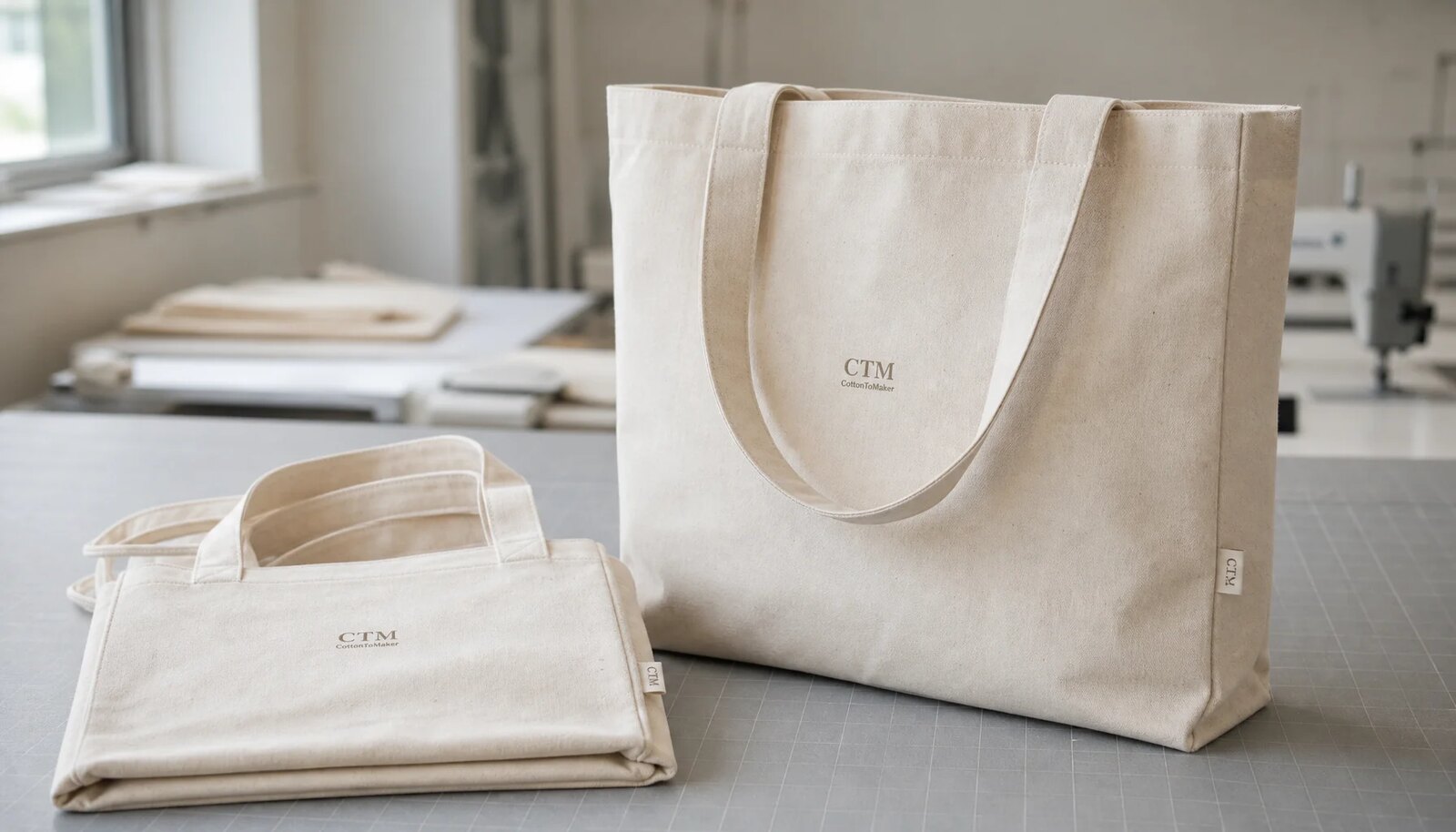
Start With The Deadline That Actually Matters
For event planners, the deadline is rarely the day the factory finishes sewing. The useful date is when the totes must be received, counted, and ready for the next operational step. That may be warehouse receiving, attendee kit assembly, sponsor insert packing, registration setup, venue move-in, or regional distribution. A shipment that lands one day before the conference can still be late if the warehouse needs three business days to reconcile cartons, build kits, and release outbound freight.
Work backward from the first date your team loses flexibility. If kitting starts on Monday, the cartons need to arrive before Monday. If the venue requires delivery appointments, the goods need to be staged before the appointment window. Then subtract domestic transit, customs clearance if imported, international freight, export packing, final inspection, print curing, sewing, cutting, fabric booking, sample approval, artwork proofing, and RFQ alignment. This backward view quickly shows where the order can slip.
For many custom import orders, 10 to 14 weeks from final approval to warehouse receipt is a realistic planning range. It is not a universal promise. It is a procurement-friendly window for orders involving custom size, organic fabric documentation, print approval, export packing, shipping, and receiving. Stock-and-print orders can move faster when inventory is physically available and decoration is simple. Dyed fabric, multiple destinations, premium packing, late sponsor logos, document review, or freight congestion can stretch the plan.
- Set the official date as warehouse receipt, kitting start, or venue move-in, not event opening day.
- Ask the supplier to write down the lead time trigger: deposit, final artwork, fabric approval, or pre-production sample approval.
- Track art lock, sample signoff, bulk start, print start, inspection, shipment handoff, and receipt as separate milestones.
- Add buyer-side time for brand, sponsor, legal, sustainability, finance, and warehouse approvals.
- Treat any quote without milestone dates as a price estimate, not a usable production schedule.
Break Lead Time Into Decision Gates
A lead time plan gets sharper when each stage has its own owner and deadline. RFQ alignment may take one day when procurement sends a complete spec. It can take two weeks when suppliers must chase fabric weight, print size, carton rules, Incoterms, delivery address, organic documentation requirements, and artwork files. The calendar often starts slipping before the purchase order is even issued.
Separate buyer-controlled time from supplier-controlled time. Supplier time includes fabric sourcing, cutting, sewing, printing, curing, packing, inspection, and freight handoff. Buyer time includes artwork cleanup, logo approval, PO creation, deposit release, sample review, legal review, sustainability review, and warehouse instruction. A factory may quote 25 to 35 production days, but a slow sample approval or delayed deposit still burns event calendar days.
Use gates instead of vague updates. If the print strike-off is not approved by a fixed date, procurement may need to simplify the artwork, move to stock totes, approve a photo sample for low-risk details, or split freight. Those fallback rules are easiest to agree while the order is still calm. Once the date is tight, every decision costs more and carries more risk.
- RFQ gate: normalize size, GSM, handle spec, artwork, packing, documents, Incoterms, and destination before comparing prices.
- Artwork gate: confirm vector files, Pantone targets, print size, sponsor approval, and logo freeze date.
- Sample gate: define blank sample, strike-off, pre-production sample, courier time, approval owner, and revision limit.
- Production gate: track fabric arrival, cutting, sewing, printing, curing, packing, and inspection separately.
- Logistics gate: confirm freight mode, customs responsibility, delivery appointments, and final-mile receiving rules.
Pick The Supplier Route By Calendar Risk
The best supplier route depends on how much control the event needs and how much time is left. A direct cut-and-sew factory is often the strongest fit for custom wholesale organic cotton totes with defined fabric weight, handle length, gusset depth, print placement, label details, and carton rules. The advantage is visibility. One production chain can explain fabric booking, sewing capacity, decoration timing, inspection, and export packing. The buyer's job is to provide a complete spec and approve quickly.
A domestic or regional stock-and-print wholesaler may be safer when the event date is close. This route works best for a standard natural tote, a basic size, and a simple one-color or two-color logo. The risk is assuming a catalog item equals usable stock. Ask for live inventory by SKU, warehouse, color, lot if available, and available quantity after internal quality checks. If the program needs 4,000 matching bags, 4,000 theoretical catalog units are not enough.
A trading company or sourcing agent can be useful when the event kit includes several items or when one coordinator must manage multiple factories. The weak point is hidden handoffs. Procurement should know where the bags are made, where they are printed, who owns QC, who approves rework, and who can escalate schedule problems. For fixed event dates, the lowest unit price is less valuable than clear production control.
- Use a direct factory for repeat custom specs, larger quantities, and controlled construction requirements.
- Use stock-and-print for urgent programs where a standard tote still supports the event experience.
- Use a trading company when production-site visibility, QC responsibility, and escalation ownership are clear.
- Ask who owns fabric booking, artwork proofing, sample approval, inspection, carton labeling, and shipment release.
- Compare routes by landed cost, approval speed, document readiness, quality accountability, and calendar risk.
Specify Fabric So Quotes Are Comparable
Fabric affects cost, feel, print behavior, packing volume, and lead time. For many event programs, 180 to 220 GSM organic cotton plain weave or canvas is a practical range. It feels more substantial than a very light giveaway bag while staying manageable for folding, carton packing, and screen printing. A 140 to 160 GSM tote may work for brochures or light inserts, but it can feel underpowered when attendees carry books, bottles, packaged samples, or retail merchandise.
Heavier fabric can raise perceived value, but it is not automatically the smartest buy. At 240 GSM and above, the tote may require different sewing settings, take more space in cartons, increase freight cube, and create more folded bulk at registration tables. For premium gifting or heavier product loads, the extra cost may make sense. For a conference carrier, balanced fabric, clean seams, strong handles, and a crisp print may do more for the attendee experience than simply choosing the highest GSM.
Organic cotton documentation should be treated as part of the spec, not as a marketing phrase. If your buyer file requires certificate copies, transaction or traceability documents, supplier scope documents, test reports, or ESG review, include that in the RFQ. Documentation can delay approval just like fabric shortages can. The supplier needs to know which files must match the order lot, the production site, and the claim used on the bag or event materials.
- State target finished GSM with an acceptable tolerance, not only a catalog weight.
- Define construction and finish: plain weave, canvas, natural unbleached, bleached, dyed, washed, or preshrunk if relevant.
- Confirm whether the fabric is in stock, reserved for the PO, or sourced only after deposit.
- Request a swatch or blank sample when shade, opacity, hand feel, or print surface matters.
- Separate organic marketing language from the documents your compliance team actually needs.
- Tell the supplier the intended load: paper inserts, books, bottles, apparel, sponsor samples, or retail-style merchandise.
Lock Construction Before Price Comparison
Two tote quotes can look nearly identical and still buy very different bags. Body width, height, gusset depth, handle length, handle width, seam allowance, top hem, thread color, label position, and reinforcement method should be settled before procurement compares pricing. A lower quote may reflect a shallow gusset, shorter handles, narrow webbing, fewer reinforcement stitches, or lighter finishing. Those savings become visible when attendees carry the bag for a full event day.
Handle length deserves special attention. A hand-carry tote may use shorter handles, while many conference attendees expect shoulder carry. Longer handles use more material, change the bag's proportions, and add folded bulk. Handle reinforcement also matters. Box stitching, cross-stitching, or bartacks can reduce failure risk when bags carry heavier kits, but they may add cost and sewing time. Put that choice in the spec instead of leaving it to factory habit.
Tolerances keep inspection fair. Cotton totes are cut and sewn products, so small measurement variation is normal. The buyer should define acceptable finished tolerances for body size, gusset depth, handle length, handle width, handle placement, and logo position. Without written tolerances, the final inspection can become a debate about expectations instead of an objective quality check.
- Provide finished measurements for body width, height, gusset, handle length, handle width, and logo placement.
- Define flat, bottom-gusseted, side-gusseted, or boxed-bottom construction.
- Choose hand-carry or shoulder-carry handles based on how the tote will be used onsite.
- Specify handle reinforcement for heavier materials, books, bottles, or repeated-use kits.
- Confirm seam finishing, top hem, thread color, label position, and loose-thread trimming standard.
- Set dimension and print-placement tolerances before bulk production begins.
Keep Artwork From Becoming The Bottleneck
Decoration is one of the easiest places to lose a week. Screen printing is often the most predictable choice for event quantities when the artwork is clean, uses one or two spot colors, and fits a stable print area. It is straightforward to schedule, repeat, and inspect. Water-based ink can work well on cotton when a softer hand feel is desired, but the supplier still needs to confirm curing, odor control, coverage, and any rub or transfer expectations.
Artwork should be production-ready, not just presentation-ready. Fine reversed type, distressed textures, gradients, halftones, very thin lines, and tight multi-color registration can add sampling time and increase reject risk. Sponsor logos add another layer. If sponsors change after screens are made, the order may need new screens, a new strike-off, and another approval cycle. A serious lead time plan includes a sponsor logo freeze date.
Digital proofs help with placement, scale, spelling, and logo version. They do not prove how ink will behave on organic cotton. A print strike-off on the intended fabric gives procurement a better view of color, edge quality, coverage, registration, curing, and hand feel. Pantone references are useful, but ink on natural cotton will not look exactly like coated paper or a backlit screen. Approve the physical result, not only the file.
- Send vector artwork where possible and state final print dimensions in inches or millimeters.
- Provide Pantone references, then approve the printed strike-off on fabric as the production standard.
- Define minimum line weight, minimum text size, maximum print area, and placement tolerance.
- Confirm whether pricing includes screen setup, strike-off, screen remake, and artwork-change charges.
- Ask how curing is checked for smearing, blocking, cracking, odor, and ink transfer inside cartons.
- Freeze sponsor logos before sampling or add a real schedule buffer for sponsor changes.
Make Every Sample Answer A Procurement Question
Samples should not be collected just to make the order feel official. Each one should answer a specific question. A blank sample confirms size, fabric hand feel, sewing quality, gusset shape, handle comfort, and basic load suitability. A print strike-off confirms ink color, coverage, edge quality, curing, placement, and artwork behavior on cotton. A pre-production sample confirms the final combination: production fabric, construction, decoration, label, thread, and packing method.
Decide who can approve each detail. Brand may own print color and logo use. The event team may own appearance, capacity, and attendee usability. Sustainability or compliance may own organic documentation. Procurement owns cost, terms, and timing. Each owner needs a deadline. A sample sitting unreviewed for five days is still lead time, even when the supplier is not causing the delay.
Record the approval standard. Natural cotton shade can vary within an agreed range, and sewn products will have small measurement differences. That is manageable when the buyer keeps an approved sample, signed spec sheet, revision record, and reference photos. It is much harder when final inspection depends on memory. Stains, weak handles, open seams, tilted logos, strong odor, incorrect color, wrong labels, or bad carton data should never be left to subjective judgment.
- Use a blank sample to approve size, fabric, handle comfort, seam quality, gusset shape, and load suitability.
- Use a print strike-off to approve ink color, coverage, edge quality, placement, curing, and hand feel.
- Use a pre-production sample as the final gate before cutting or printing bulk materials.
- Record approval date, approver name, revision number, accepted deviations, and reference photos.
- Limit revision rounds when the event date is fixed and define what happens after the revision window closes.
- Keep one approved sample or documented photo set for inspection, warehouse receiving, and reorder reference.
Read Quotes As Landed-Cost Documents
A useful quote does more than name a unit price. It should identify finished size, fabric GSM, fabric construction, handle spec, print method, print colors, setup charges, sample charges, packing format, carton details, Incoterm, destination, required documents, payment terms, and lead time trigger. If those details are missing, the quote is not ready for comparison. The cheapest line item can become expensive once setup, document handling, carton changes, duties, taxes, brokerage, or urgent freight are included.
Normalize quotes before selecting a supplier. Compare the same tote size, fabric weight, handle length, print colors, packing method, and shipping term. EXW, FOB, CIF, DAP, and DDP move different costs and responsibilities between buyer and seller. A FOB quote may look lower than a DDP quote, but the buyer still needs to manage freight, insurance if needed, customs brokerage, duties, taxes, and final delivery.
Carton cube belongs in the cost review. Totes can be bulky relative to weight, especially when fabric is heavier, handles are longer, or individual packing is required. Polybags, belly bands, hangtags, tissue, retail folding, or inner cartons can increase volume and labor. For event planners shipping to warehouses, venues, or regional offices, carton size and label data affect receiving speed and distribution accuracy. Packing is part of landed cost.
- Request itemized pricing for tote, decoration setup, samples, packaging, documents, and freight assumptions where possible.
- Confirm Incoterm, named place, destination postcode, and who pays duties, taxes, brokerage, and final delivery.
- Ask for carton pack count, carton dimensions, net weight, gross weight, and estimated total cube.
- Check whether the quote assumes standard export cartons or buyer-specific warehouse carton rules.
- Separate one-time setup charges from repeat-order costs so reorders can be evaluated accurately.
- Ask which spec changes would reduce cost or protect lead time without weakening the event use case.
Plan Packing And Shipment Before The Order Is Late
Packing is not a final housekeeping detail. It affects quality, receiving speed, freight cost, and sometimes the event presentation. Flat-packed totes usually reduce carton cube and make counting easier. The fold should be consistent, and it should not place a hard crease across the print if the bag needs to look polished at registration. Individual polybags may be useful for retail-style presentation or dust protection, but they add labor, material, and volume. If the buyer has plastic-reduction rules, state them in the RFQ.
Many event programs have more than one receiving point. A roadshow, conference series, regional sales meeting, or sponsor kit program may need destination splits, carton labels, packing lists, and pallet instructions. Mixed cartons can save space, but they also create receiving errors when the warehouse is not expecting them. Decide whether cartons must be single-style, single-destination, sequentially numbered, palletized, or prepared for kitting.
Choose the shipping strategy while there is still room to think. Ocean freight or consolidated ground freight may be cost-effective when the timeline is healthy. Air freight can rescue a deadline, but it can change landed cost quickly. A partial shipment can be more practical than rushing the full order: send the minimum event-critical quantity first, then move the balance by the planned route. Agree on the cost threshold before the calendar is under pressure.
- Define flat-packed, folded, banded, polybagged, hangtagged, or retail-packed requirements in the RFQ.
- Request a packing photo or packing sample before bulk cartons are sealed for premium or complex orders.
- State carton label data: PO number, item code, quantity, destination, carton number, gross weight, and origin marking if required.
- Avoid mixed cartons unless the receiving team accepts them and the labels are unambiguous.
- Confirm delivery appointments, palletization, liftgate needs, warehouse hours, and receiving contact details.
- Approve a fallback route, partial air shipment, stock substitute, or simplified packing plan before production begins.
Inspect While There Is Still Time To Fix Problems
Quality control should be built into the calendar. For wholesale organic cotton totes, inspection should check construction, dimensions, fabric appearance, print quality, odor, stains, packing count, carton labels, and document consistency. For larger or brand-sensitive programs, inline inspection during sewing or printing can catch issues before every unit is finished. Waiting until all cartons are sealed leaves fewer options and makes rework harder.
Define defects before inspection begins. Critical defects may include wrong artwork, wrong product, unsafe contamination, severe mold odor, or destination labels that would misroute the shipment. Major defects may include weak handles, open seams, incorrect size outside tolerance, tilted print, heavy stains, poor ink curing, missing cartons, or incorrect packing. Minor defects may include trim-able loose threads or small cosmetic variation within the approved standard. The system does not need to be complicated, but pass-fail rules should be written down.
Review documents before shipment release. Commercial invoice data, packing list quantities, carton counts, HS code, certificate references, consignee details, and destination information should match the PO and shipment plan. A paperwork error can delay customs or warehouse receiving even when the physical totes are ready. For event planners, that delay is just as real as a production delay because goods cannot enter the event flow until receiving can process them.
- Schedule inspection before final payment or shipment release when order value, brand risk, or deadline risk justifies it.
- Inspect against the approved sample, signed spec sheet, strike-off, and packing instruction.
- Measure sampled units for body size, gusset, handle length, handle width, print placement, and stitch security.
- Check stains, odor, shade outliers, loose threads, skipped stitches, print cracking, smearing, blocking, and carton damage.
- Verify carton counts, carton numbers, destination labels, and gross weights against the packing list.
- Review document drafts early so invoice, packing list, certificate files, and destination data do not delay shipment or receiving.
Specification comparison for buyers
| Planning decision | Recommended procurement choice | When it fits | Buyer risk to verify |
|---|---|---|---|
| Supplier route | Direct cut-and-sew factory for custom wholesale organic cotton totes | Repeat event programs, controlled specs, custom fabric weight, exact handle length, and buyer-specific carton rules | Confirm whether the lead time includes fabric procurement, cutting, sewing, printing, curing, inspection, export packing, and document preparation |
| Supplier route | Domestic or regional stock-and-print wholesaler | Compressed timelines where a standard tote size, stock natural color, and simple print are acceptable | Ask for live inventory by SKU, lot, warehouse, and usable quantity after internal QC; catalog availability is not stock confirmation |
| Supplier route | Trading company or sourcing agent managing multiple factories | Multi-item event kits, mixed bag styles, or programs requiring one coordinator across several suppliers | Request the actual production site, print site, QC owner, escalation contact, and whether inspection is performed by the trader, factory, or third party |
| Lead time model | Plan 10 to 14 weeks from final approval to warehouse receipt for many custom import orders | Custom size, organic fabric documentation, print strike-off, ocean freight, or buyer-specific packing rules | Do not start the clock at inquiry; define whether it starts after deposit, final artwork, fabric approval, or pre-production sample approval |
| Rush model | Use stock totes plus local decoration, or split shipment with priority quantity | Fixed event date with less than 6 to 8 weeks available and limited tolerance for late delivery | Confirm real stock, decoration capacity, cut-off dates, freight service level, and whether partial delivery still supports the event operation |
| Fabric weight | 180 to 220 GSM organic cotton plain weave or canvas for most event totes | Conferences, welcome kits, sponsor giveaways, brochures, light merchandise, and repeated attendee use | Specify finished GSM tolerance, fabric construction, shrinkage expectation if relevant, and approved natural shade range |
| Fabric weight | 240 GSM and above for premium or heavier-use totes | Retail-style gifts, heavier product samples, books, bottles, or programs where perceived value matters | Check sewing capacity, needle suitability, folded bulk, carton cube, freight cost, and whether heavier fabric affects print edge quality |
| Decoration | 1 to 2 color screen print with approved strike-off on production fabric | Clean logos, sponsor marks, predictable inspection, and event quantities where repeatability matters | Define minimum line weight, maximum print area, placement tolerance, curing method, ink transfer test, and reprint responsibility |
| MOQ structure | One size, one fabric color, one handle spec, one print setup per PO line | First custom order, single event distribution plan, or simpler inventory receiving | Mixed logos, split destinations, dyed fabric, different handle lengths, or separate packing rules can create separate MOQs and setups |
Buyer checklist before sampling
- Event date, venue move-in date, warehouse receipt date, kitting start date, sponsor insert deadline, and final in-hand deadline
- Required quantity plus overage allowance for staff bags, speaker bags, damaged cartons, sponsor changes, late registrations, and sample retention
- Tote size in finished measurements: body width, height, gusset depth, handle length, handle width, seam allowance, and intended carry method
- Target fabric GSM with acceptable tolerance, weave or canvas construction, natural or dyed color, shrinkage expectation if tested, and shade approval reference
- Organic cotton documentation requirement, including certificate copy, transaction or traceability document, scope certificate if applicable, and any buyer-specific ESG file review
- Artwork file format, print size, print placement, number of colors, Pantone references, minimum line weight, minimum text size, and final sponsor logo lock date
- Decoration method, ink type preference, curing expectation, print hand-feel requirement, rub or transfer check, and acceptable registration or placement tolerance
- MOQ by fabric color, size, handle spec, print setup, destination split, and purchase order line so hidden setup changes are visible
- Sample path, sample cost, sample freight responsibility, approval owner, revision limit, approval method, and latest acceptable approval date
- Packing method, carton pack count, carton dimensions, carton weight limits, pallet rules, label requirements, mixed-carton rules, and whether individual polybags are allowed
Factory quote questions to send
- What exact event in-hand date are you quoting against, and what is your latest safe bulk-start date for this order?
- Is the quoted lead time counted from PO issue, deposit receipt, final artwork approval, fabric arrival, strike-off approval, or pre-production sample approval?
- What exact finished fabric GSM, weave or canvas construction, fabric width, yarn or fabric description, and GSM tolerance are included in the quote?
- Is the organic cotton fabric in stock, reserved for our PO, or sourced after payment, and what documentation is available for the actual lot?
- Can you provide a fabric swatch, blank sample, or previous production sample with measured GSM, not only a catalog description?
- What are the finished size tolerances for body width, height, gusset depth, handle length, handle width, and print placement?
- What is the MOQ by size, fabric color, handle spec, print color count, label, packing rule, and destination split?
- Which sample stages are included, what is the lead time for each, and what is charged if artwork or construction changes after first sample?
- What print method, ink system, curing process, maximum print area, minimum line weight, and minimum text size are being priced?
- Can you provide a print strike-off on the actual production fabric, and will bulk production be inspected against that strike-off?
Quality-control points to confirm
- Finished tote size must stay within agreed tolerance for body width, height, gusset depth, handle length, handle width, and handle placement
- Fabric weight should be checked against the approved finished GSM range, not only the supplier's nominal catalog label
- Fabric construction, color, and hand feel should match the approved sample or swatch, with natural organic cotton shade judged against an agreed reference range
- Organic documentation should match the supplier, product scope, cotton claim, and order lot as required by the buyer's compliance process
- Handle attachment must be reinforced consistently, with secure stitch density, no loose bartacks or cross-stitch failures, and no weak stress points at the top opening
- Side seams, bottom seams, gusset corners, and top hem should be straight, closed, and free of skipped stitches, holes, broken yarns, and loose thread nests
- Print placement should stay within the agreed tolerance window and should not tilt, bleed, crack, smear, ghost, block, or show poor ink coverage
- Print color should be checked against the approved strike-off under practical lighting and recorded as a fabric print approval, not only a digital proof match
- Ink curing should be verified so printed panels do not transfer, stick together, smell strongly, or mark adjacent bags after carton packing
- The tote should carry the intended event load during basic handling without handle distortion, seam strain, immediate tearing, or shape failure