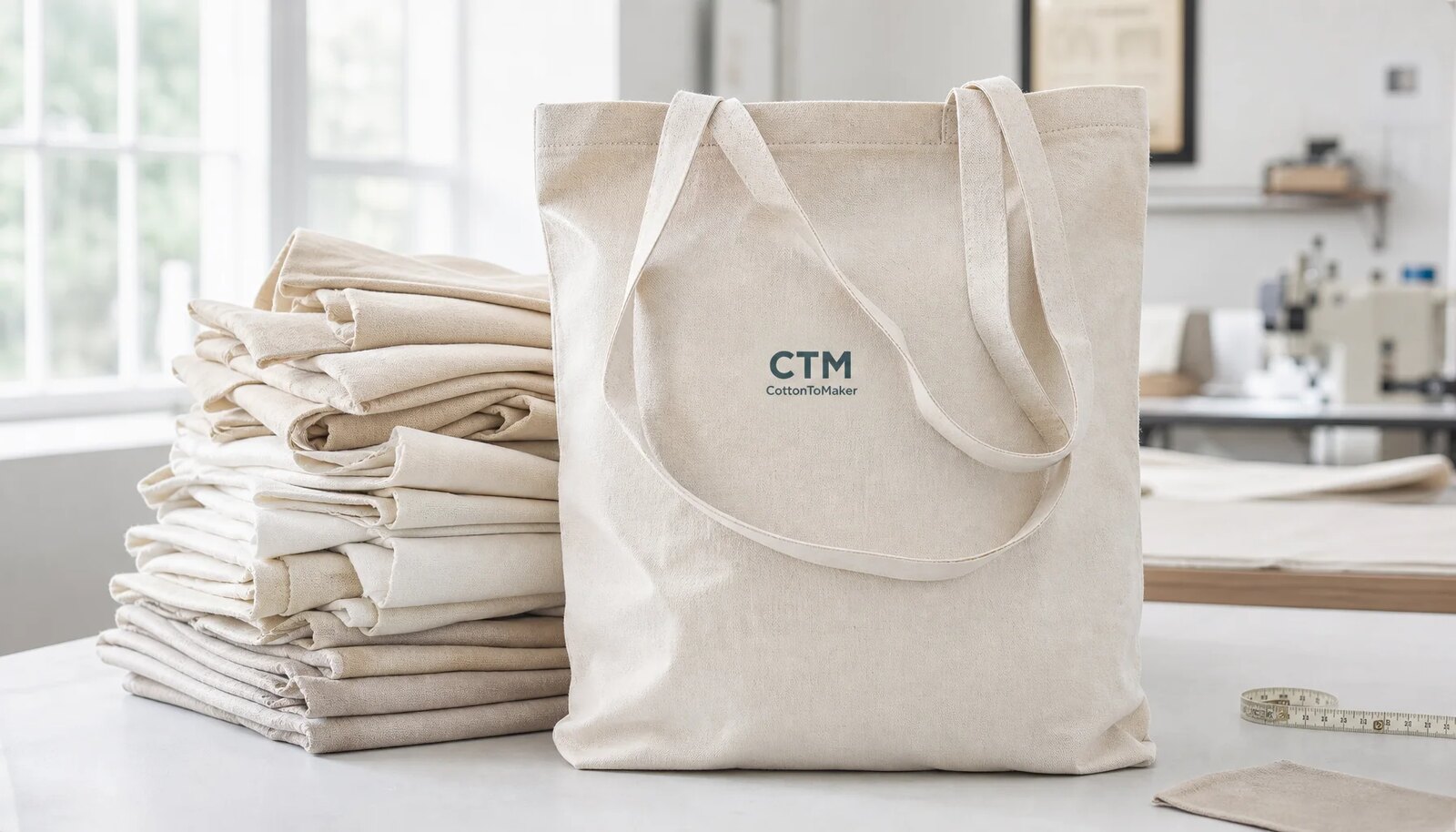
Start with the load, not the logo
A corporate gifting tote is a carrying product before it is a branding surface. The logo matters, but the recipient first notices whether the bag feels appropriate for the gift, whether the handles are comfortable, and whether the seams look clean when the tote is full.
Before requesting prices, list every item in the kit with approximate dimensions and weight. A T-shirt, insert card, and sticker sheet create a very different load than a ceramic mug, hardback notebook, bottle, charger, or boxed sample set. The same 180 GSM tote may work well for one program and feel underbuilt for another.
The distribution route also changes the best specification. An empty event handout can be lighter and flatter. A pre-packed employee gift may need better shape, stronger handles, cleaner folding, and more controlled cartonization. A tote shipped inside a mailer may need to fold compactly, while a tote used as the visible presentation piece may need more structure.
Align stakeholders before sampling. Marketing may want a premium hand feel, sustainability may prefer natural unbleached cotton and reduced plastic, logistics may focus on carton volume, and procurement needs comparable quotes. Turn those preferences into a written specification before suppliers price the order.
- Document contents, item dimensions, and estimated loaded weight.
- Decide whether the tote is packaging, a reusable gift, or a premium presentation item.
- Confirm hand carry versus shoulder carry; handle drop affects comfort and cost.
- Compare supplier prices only after use case, construction, packing, and delivery term are defined.
Use GSM carefully
GSM means grams per square meter. It is the easiest shared number for fabric weight, but it is not a full durability rating. Weave density, yarn, seam construction, handle attachment, stitch density, and loading conditions all affect performance.
For light handouts, 140-160 GSM can be practical. It folds compactly and can work for cards, thin brochures, T-shirts, and soft goods. It is usually not the right choice for boxed gifts, drinkware, or a program where the tote itself needs to signal higher value.
For many corporate programs, 180-200 GSM is the balanced starting range. It gives a better hand feel and more stable print surface than very light promotional totes while keeping cost, sewing time, and freight manageable. With suitable reinforcement, it can work for notebooks, apparel, brochures, and moderate mixed kits.
For premium or heavier gifts, 220-240 GSM gives more body. At 260 GSM and above, the bag moves toward a canvas-style feel. That can suit executive gifting or repeated use, but buyers should expect higher fabric consumption, larger cartons, and closer control of creasing and sewing quality.
Load numbers should be treated as project-specific test targets, not universal promises. If a supplier says a construction is suitable for a certain weight, ask how they know and test the approved sample with the actual or representative contents.
- 140-160 GSM: light event use and folded inserts.
- 180-200 GSM: balanced range for many corporate gifting totes.
- 220-240 GSM: stronger hand feel for heavier or more premium kits.
- 260 GSM and above: canvas-style structure with higher cost and freight impact.
Make tolerances measurable
Words like thick, premium, standard, and strong are weak procurement language. A useful RFQ turns expectations into measurable specifications: target GSM, finished dimensions, handle drop, reinforcement, logo placement, packing method, carton details, and inspection tolerance.
Finished dimensions mean the sewn bag after hemming, not the cut fabric panel. Specify width and height, plus side gusset and bottom gusset if used. Add top hem width, handle total length, handle width, and handle drop. Handle drop is especially important because it determines whether the bag can sit comfortably on the shoulder.
For many sewn tote orders, buyers use practical tolerances such as plus or minus 1 cm on standard finished dimensions and plus or minus 3-5 mm on logo placement, when the design allows. Larger bags, boxed construction, difficult fabrics, or artwork that aligns to seams may need different tolerances.
Put tolerances in the PO, approval sheet, or technical file. This gives the factory clear production criteria and gives inspection teams objective grounds for approval, sorting, repair, discount discussion, or rejection.
- State target GSM and supplier-confirmed bulk range.
- Define finished sewn measurements, not only panel size.
- Use handle drop as a required field.
- Agree dimension and logo placement tolerances before cutting fabric.
Specify the construction
Two totes with the same GSM can have very different costs and performance. A flat bag with short handles is not comparable to a gusseted shoulder tote with a reinforced top hem and box-X handle stitching. If the RFQ simply says organic cotton tote with logo, suppliers will fill in the missing details differently.
Choose the body shape first. A flat tote suits documents, apparel, and slim gifts. A side gusset gives extra room for bulky items. A bottom gusset helps the bag sit better with boxes or grouped products. Quote gussets as finished depth, such as 8 cm side gusset or 10 cm bottom gusset, rather than using broad words such as roomy.
Handle construction deserves real attention. Shoulder-length self-fabric handles are common for gifting, but narrow straps can feel uncomfortable with heavier kits. Cotton webbing handles may add structure and strength, though they can change cost, MOQ, and appearance.
Name the reinforcement method. A simple stitched handle base is not the same as bar tack, box stitch, cross stitch, or box-X reinforcement. For heavier contents, ask the factory to recommend a method and confirm whether reinforcement will be visible.
- Define flat, side gusset, bottom gusset, or boxed construction.
- Quote gussets as finished depth and confirm usable internal space.
- Specify handle material, width, total length, drop, and reinforcement.
- Include top hem width, seam type, stitch density, and thread color when presentation matters.
Treat organic documentation as a spec
Organic cotton documentation should be handled before quotation, not after shipment. The word organic in a product description is not enough for many corporate procurement or ESG teams. Buyers need to know what the supplier can document for this order and what claims those documents support.
Relevant paths may include GOTS or OCS scope certificates for certified organizations, transaction certificates for certified material movement, fabric invoices or declarations, processing records, and documentation from dyeing, printing, cutting, and sewing facilities. Availability depends on the supply chain and whether the finished tote itself is certified or only the cotton material is certified.
A common risk is finished-product claim overreach. A supplier may have organic cotton fabric documentation but not certification covering the finished sewn and decorated bag. That may still meet an internal material preference, but it may not support a finished-product claim in marketing copy, packaging, or public reporting.
Ask whether documents can reference the order, material, quantity, and processing route. If your company requires GOTS, OCS, or another standard, state whether it applies to fiber, fabric, processing, or finished product. Confirm this internally before the PO so marketing, sustainability, and legal teams do not discover a claim gap after production.
- Ask for GOTS or OCS scope certificates where relevant.
- Ask whether a transaction certificate can be issued for the order.
- Separate fabric-level documentation from finished-product certification.
- Write approved claim language and documentation requirements into the PO.
Select the right finish and logo method
Natural unbleached cotton has the warm tone many buyers associate with organic cotton bags. It may show seed flecks, small slubs, and shade variation. That character can support a sustainability-led campaign, but it can surprise brand teams expecting a clean white background.
Bleached white cotton gives stronger contrast for some logos but makes dirt, oil marks, thread ends, and carton dust easier to see. Dyed organic cotton supports campaign colors but requires lab dip approval, dye lot control, shade tolerance, and rubbing or crocking checks where relevant.
Decoration should match fabric weight, color, artwork detail, quantity, and expected use. Screen printing is often efficient for simple one- or two-color logos at volume. Transfers can help with multi-color art, gradients, or bright marks on dark fabric, but check edge lift, heat press marks, stiffness, odor, and cracking after flexing.
Embroidery, woven labels, and patches can feel premium, but they need the right base fabric. Heavy embroidery can pucker thin cotton. A thick patch can pull on a light panel. A woven label needs consistent placement and flat stitching.
Approve decoration on the actual production fabric and construction. A strike-off on a random cotton panel is useful, but it does not prove how the logo will look after hemming, folding, packing, and loading.
- Use natural cotton when flecks and warm shade support the brand story.
- Use bleached or dyed cotton when logo contrast and brand color control matter more.
- Send vector artwork with Pantone references, size, placement, and minimum line requirements.
- Sample the chosen decoration on the exact GSM, color, and finish.
Compare quotes on real variables
A strong quote comparison sheet prevents false savings. Every supplier should quote the same GSM, dimensions, gusset, handle construction, reinforcement, decoration, packing, documentation requirement, quantity, and Incoterm. If one field is missing, mark it as a gap instead of assuming it matches your request.
A simple supplier comparison might show Supplier A at MOQ 1,000, unit price 2.15 USD, screen setup 60 USD, sample 45 USD, production lead time 18 days, carton CBM 0.085 per 100 pieces, and FOB terms. Supplier B might quote MOQ 3,000, unit price 1.88 USD, setup included, sample 80 USD, production lead time 28 days, carton CBM 0.105 per 100 pieces, and EXW terms. Supplier C might quote 2.35 USD DDP with domestic delivery included. Those are not automatically cheaper or more expensive until logistics, timing, documentation, and carton volume are normalized.
Ask for price ladders at the same specification, such as 1,000, 3,000, 5,000, and 10,000 pieces. Separate sample fees, setup charges, lab dips, print screens, patch tooling, packing materials, inspection support, export cartons, and documentation costs.
MOQ may be driven by fabric roll quantities, dyeing minimums, cutting efficiency, print setup, or packing materials. Ask for MOQ by component: blank bag, custom fabric color, decoration, label or patch, and individual packing.
- Compare landed value, not only unit price.
- Normalize EXW, FOB, CIF, DDP, or domestic delivery terms.
- Include carton CBM and pieces per carton in the comparison.
- Treat missing documentation, unclear packing, or vague lead time as quote risk.
Approve samples by using them
A pre-production sample should prove that the tote works for the actual gifting program. Do not approve it only because the logo looks centered in a flat photo. Fill the bag with the intended contents or close substitutes, lift it, carry it, set it on a table, and fold it as it will be packed.
Measure the sample against the specification: width, height, gusset depth, top hem, handle length, handle drop, handle width, logo size, and logo placement. A one-centimeter loss can matter if a gift box is already tight.
Inspect sewing under good light. Check side seams, bottom corners, top hem, handle attachment, stitch consistency, loose threads, skipped stitches, twisting, and fabric damage. Pull gently at stress points using the intended load range to catch obvious underbuilding.
For heavier kits, ask the supplier to run a simple agreed load hang test on the exact approved construction. This does not create a universal load guarantee; it provides project-specific evidence that the sample construction is suitable for the planned contents.
Seal a golden sample after approval. Ideally, both buyer and factory keep one. It becomes the reference for hand feel, shade, stiffness, folding, stitching, and decoration quality during production and inspection.
- Load the sample with actual or equivalent contents.
- Measure all finished dimensions before approval.
- Check stress points, thread trimming, print quality, odor, and cleanliness.
- Keep a signed or sealed golden sample for QC comparison.
Control packing and shipment
Packing affects presentation, landed cost, and warehouse handling. Bulk packing may reduce material and labor, but poorly folded totes can arrive wrinkled, dusty, or hard to count. Individual packing can improve cleanliness and presentation, but it adds labor, volume, and sometimes plastic that conflicts with sustainability policies.
Define whether totes are flat packed, folded once, folded into thirds, bundled by 25 or 50, paper banded, individually bagged, inserted into kits, or packed by SKU. If plastic reduction matters, discuss paper bands, carton liners, or other lower-plastic options early.
Ask for carton quantity, carton dimensions, net weight, gross weight, and carton material before finalizing the PO. Heavier GSM and gusseted construction can increase volume enough to affect freight and storage. A slightly higher unit price can sometimes be offset by better carton efficiency.
Carton marks should support warehouse work. Include item name, SKU, PO number, quantity, carton number, destination, version, and any handling marks required by the forwarder or fulfillment center. If multiple logo versions or regional variants ship together, version control is critical.
Before shipment, request photos of folded goods, open cartons, sealed cartons, and carton marks. For presentation-focused gifts, check whether compression creates permanent creases or print transfer.
- Specify fold method, bundle count, and inner packing before pricing.
- Request carton dimensions, quantity per carton, net weight, and gross weight.
- Use carton marks that support PO matching and destination sorting.
- Confirm packing protects cleanliness, shape, and print surface.
Build the inspection plan early
Inspection should be designed from the specification, not improvised when cartons are ready. The QC team needs the approved sample, artwork, measurement sheet, tolerance table, packing instructions, and any documentation requirements. Without those references, inspection becomes subjective.
Check fabric first: GSM, shade, hand feel, finish, visible cotton character, odor, stains, oil marks, mildew signs, and contamination. Natural cotton can have acceptable flecks or slubs, but the boundary between natural character and defect should be agreed before production.
Then check construction: dimensions, gusset depth, handle drop, reinforcement, stitch density, seam straightness, top hem, corners, and loose thread trimming. Inspect across random pieces and cartons, not only the best samples from the top of the stack.
Decoration inspection should cover logo size, placement, color, opacity, registration, edge sharpness, cracking, transfer adhesion, embroidery puckering, patch placement, odor, and reverse-side strike-through. If the tote includes a QR code or small legal text, scan and read it on the actual sample.
Finally, confirm packing and documentation. Count pieces per bundle and carton, check carton marks, verify version separation, and collect required organic documents before balance payment or release where your process allows.
- Give inspectors the golden sample, spec sheet, artwork, and tolerances.
- Inspect fabric, sewing, decoration, packing, and carton marks as separate checkpoints.
- Use project-specific load testing where contents are heavy or handles are a concern.
- Resolve documentation gaps before shipment release whenever possible.
Specification comparison for buyers
| Buyer variable | Practical option or range | Best fit | Risk to verify before PO |
|---|---|---|---|
| Fabric weight | 140-160 GSM | Light event handouts, folded mailer inserts, T-shirts, cards, thin brochures, and soft items | Can feel transparent or temporary; test print strike-through, twisting when loaded, and handle comfort |
| Fabric weight | 180-200 GSM | Most corporate welcome kits, notebooks, apparel, brochures, and small mixed gifts | Confirm bulk GSM tolerance, handle reinforcement, finished dimensions, and sample load performance |
| Fabric weight | 220-240 GSM | Premium gift kits, boxed items, drinkware sets, heavier notebooks, and retail-style presentation | Higher fabric cost and carton volume; inspect seam puckering, fold marks, and print quality on thicker fabric |
| Fabric weight | 260 GSM and above | Canvas-style totes for executive gifting, resale, or repeated use | Longer sewing time, larger cartons, possible higher MOQ, and stricter pressing or packing needs |
| Body construction | Flat tote | Documents, apparel, slim gifts, and high-volume event distribution | Limited usable depth; quote finished width, height, top hem, handle drop, and reinforcement |
| Body construction | Side or bottom gusset | Gift boxes, bottles, pouches, sample kits, and items that need standing volume | Gusset must be quoted as finished depth; uneven cutting can reduce capacity |
| Handle specification | 2.5-3.0 cm shoulder handle with reinforcement | Recipients carrying bags through events, hotels, offices, or transit | Ask for handle drop, not only total length; inspect alignment, twisting, bar tack or box-X strength |
| Fabric finish | Natural unbleached organic cotton | Sustainability-led campaigns and designs that suit a warm base shade | Expect flecks and shade variation; define acceptable character versus oil marks, mildew odor, or contamination |
| Fabric finish | Bleached white or dyed organic cotton | Strict brand color programs, high-contrast logos, or campaign-specific tote colors | Requires shade tolerance, lab dip approval, crocking checks for dyed colors, and cleaner packing controls |
Buyer checklist before sampling
- List actual gift contents, dimensions, and estimated total loaded weight before choosing GSM.
- Classify the tote as event packaging, a pre-packed gift bag, a mailer insert, a reusable employee kit, or a premium presentation item.
- Specify target GSM and acceptable bulk tolerance, for example 200 GSM target with supplier-confirmed range, rather than using only terms such as heavy cotton or canvas.
- Define finished sewn dimensions: width, height, side gusset, bottom gusset, top hem width, seam allowance if needed, handle total length, handle drop, and handle width.
- State fabric finish: natural unbleached, bleached white, stock dyed color, or custom dyed color matched to approved lab dip.
- Identify required organic documentation before quotation, including GOTS or OCS scope certificate where relevant, transaction certificate availability, fabric-level evidence, and any finished-product claim limits.
- Send vector artwork with Pantone references, logo size, placement from top edge and side seam, print area, clear space, minimum line thickness, and small text or QR code requirements.
- Request a decorated sample or print strike-off on the exact production fabric weight, color, and finish, not only on a generic cotton panel.
- Define decoration acceptance checks: screen print opacity, transfer edge adhesion, embroidery density, woven label placement, patch stitching, odor, and reverse-side strike-through.
- Specify packing method, pieces per carton, carton dimensions, carton marks, moisture control expectations, and whether individual polybags are allowed.
Factory quote questions to send
- What target GSM is included in this quote, how is it tested, and what bulk production tolerance do you allow?
- Is the fabric natural unbleached, bleached, dyed, washed, or otherwise finished, and what shade variation should we expect between rolls or lots?
- Which organic cotton documents can be provided for this order: GOTS scope certificate, OCS scope certificate, transaction certificate, fabric invoice details, processing records, or finished-product certification?
- Does the documentation support a finished bag claim, or only a material-level claim for the organic cotton fabric?
- What finished bag width, height, side gusset, bottom gusset, top hem width, seam allowance, handle length, handle drop, and handle width are included?
- Which handle reinforcement is included by default, and what is the cost or lead-time effect for bar tack, box stitch, cross stitch, or box-X reinforcement?
- What stitch density, thread type, and thread color will be used for the bag body, top hem, and handle attachment?
- What load do you recommend for this exact construction, and can you run a simple agreed load hang test on the approved sample for this project?
- Which decoration method do you recommend for this artwork on this GSM and fabric color, and what smallest text height or minimum line thickness can you hold clearly?
- What are the MOQ, unit price, setup charges, sample cost, sample lead time, production lead time, carton CBM, pieces per carton, and Incoterm for each quantity break?
Quality-control points to confirm
- Production fabric weight is checked against the written GSM range using an agreed method, not accepted only from a catalog description.
- Fabric composition, finish, shade, hand feel, and visible cotton character match the approved swatch or golden sample within agreed tolerance.
- Finished width, height, gusset depth, top hem width, handle total length, handle drop, and handle width are measured against the approved specification.
- Dimensional tolerance is written before production, such as plus or minus 1 cm for many standard totes or another supplier-confirmed range for larger or complex bags.
- Handle attachment points are aligned, reinforced as specified, and free from skipped stitches, loose bar tacks, weak joins, twisting, or uneven handle drop.
- Seams, top hem, bottom corners, stitch density, seam straightness, thread trimming, and corner closing are inspected across random pieces, not only the first sample.
- Logo size, position, angle, color, registration, and placement match the approved artwork and golden sample within the agreed tolerance, commonly plus or minus 3-5 mm where practical.
- Screen prints are checked for sharp edges, pinholes, opacity, bleed, ink build-up, cracking, misregistration, odor, and unacceptable reverse-side strike-through.
- Transfers are checked for heat press marks, edge lift, cracking after flexing, excessive stiffness, odor, and alignment.
- Embroidery, woven labels, and patches sit flat without puckering, loose edges, missed stitches, adhesive marks, or fabric distortion.