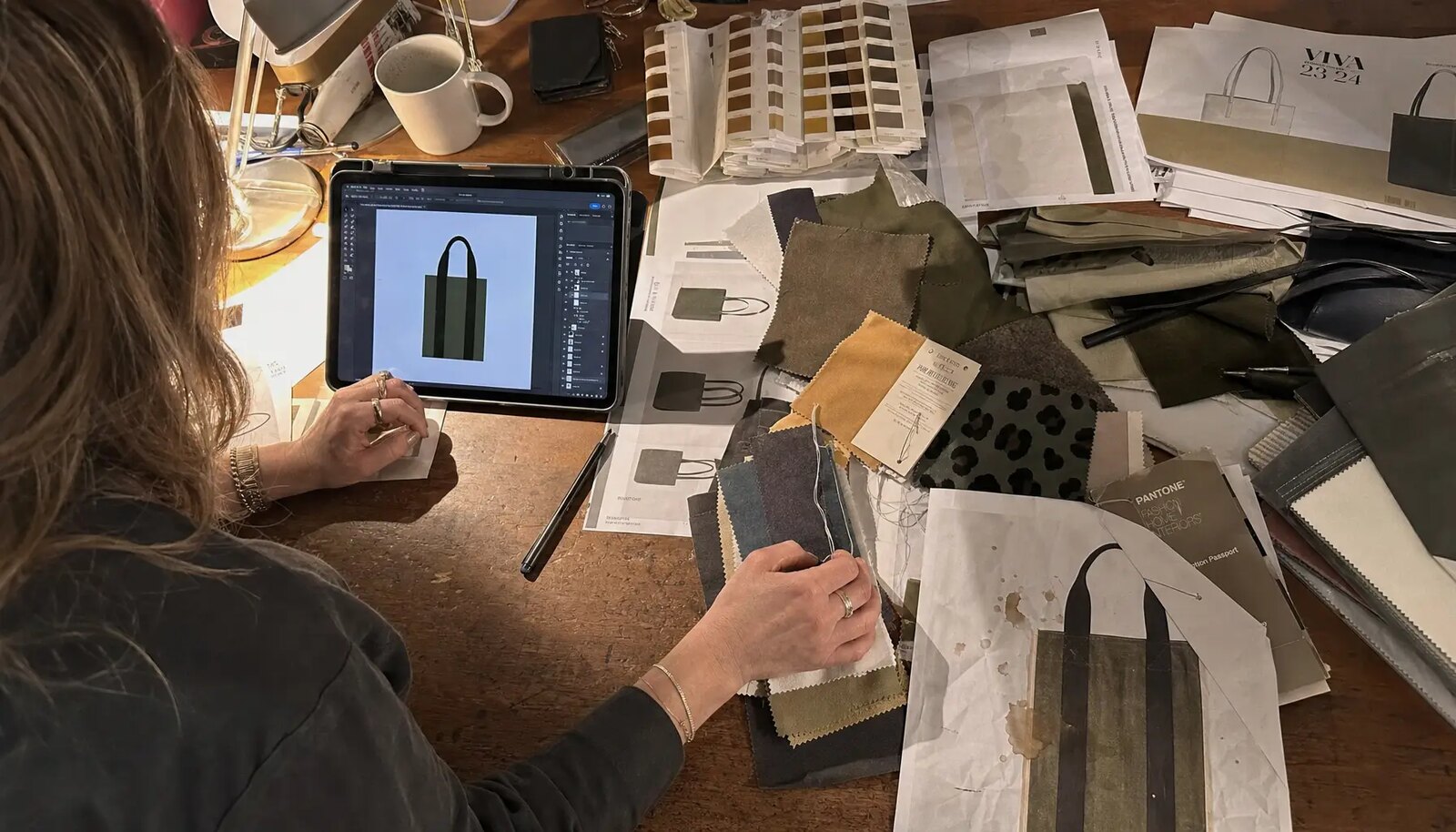
Why coffee roasters need a stricter tote specification than a normal promo bag
A tote for a coffee roaster is not the same as a low-cost conference giveaway. In a café or specialty retail environment, the bag may carry multiple bags of beans, a ceramic mug, brew filters, tasting cards, small brewing tools, apparel, or a gift bundle. It also appears next to premium coffee packaging, so customers read the tote as part of the brand system. If the handle pulls out, the side seam opens, or the logo cracks after a few uses, the problem is not only product failure; it is a visible procurement and brand-quality issue.
The most common sourcing mistake is sending a vague RFQ such as “organic cotton tote with logo.” That wording leaves the supplier to decide finished GSM, weave tightness, handle width, seam construction, stitch density, print process, curing, label wording, and packing. Two suppliers can quote the same short description while offering very different products. One may price a 180 GSM lightweight promotional tote. Another may price a 240 GSM canvas tote with reinforced handles and tighter print QC. The cheaper unit price may simply reflect missing specification, not better value.
For B2B buying, the tote’s intended use should drive the specification. A one-day event giveaway can tolerate lighter construction. A retail tote sold beside coffee beans needs stronger handles, cleaner sewing, controlled shrinkage, and better logo durability. A multi-location café program also needs repeatability: the second and third orders should match the first approved lot in hand feel, shade, handle drop, and print placement.
A practical starting point for many coffee retail totes is 220–240 GSM finished organic cotton canvas. This range is not mandatory, but it often balances strength, print surface, sewing efficiency, and freight weight. Heavier fabrics can feel more premium but raise cost and carton weight. Lighter 180–210 GSM fabrics can work for low-load giveaways, but they should not be presented internally as equivalent to a reusable retail tote.
- Define the tote’s role before requesting prices: resale, café checkout, wholesale gift pack, event giveaway, subscription insert, or staff merchandise.
- Translate use into load examples: “four 340 g coffee bags,” “two 1 lb bags plus one mug,” or “3–5 kg retail carry.”
- Compare quotes only after finished GSM, handle construction, print method, label, packing, and QC criteria are aligned.
- Keep one signed approved sample and written spec as the benchmark for future replenishment orders.
Fabric, GSM, weave, shrinkage, and organic cotton claims
Fabric is usually the largest cost driver and the biggest source of performance variation. Buyers should request finished GSM after dyeing, washing, or finishing, not only raw greige fabric weight. Finished GSM is what the customer feels and what inspection can verify on received goods. If a supplier quotes raw fabric GSM, the finished tote may be lighter after processing, or the supplier may use a fabric that looks acceptable in photos but feels thin in hand.
For a core coffee roaster retail tote, 220–240 GSM finished organic cotton canvas is a reasonable baseline. A tote with a large gusset, shoulder-length handles, or heavier merchandise use may need 240 GSM or stronger reinforcement. A 180–210 GSM option may be appropriate for short-term event distribution or sampling, but it should be clearly listed as a lighter-use SKU. Ask suppliers to state GSM tolerance, commonly managed as a percentage such as ±5% or a defined lot range, and confirm how they measure it.
Weave matters as much as weight. Tight plain weave or canvas weave gives a more stable print surface and reduces bag distortion under load. Loose weave can make fine typography appear fuzzy, cause uneven logo edges, and increase twisting after damp exposure. For natural undyed cotton, slubs, seed flecks, and shade variation are normal to a degree, but customer-facing panels should not have heavy defects in the main logo area unless the brand intentionally accepts that look.
Organic claims require careful documentation. If “organic cotton” appears on the tote, label, hangtag, invoice, ecommerce page, or retail listing, ask what the supplier can support. Depending on the claim and sales channel, buyers may require a scope certificate, transaction certificate, material declaration, or approved invoice wording. Do not let a factory add certification marks, hangtag language, or product claims without written approval. Also confirm the composition of handles, labels, and threads if the claim is product-level rather than fabric-only.
- Specify “finished GSM” and a tolerance, not just “canvas” or “heavy cotton.”
- List weave type, fabric color, finishing method, and whether the fabric is pre-shrunk or stabilized.
- Set shrinkage limits separately for width, height, gusset, and handle drop after the approved wash, steam, or damp-conditioning check.
- Clarify whether organic documentation is needed for internal purchasing, retail labeling, customer claims, or customs documents.
- Approve natural cotton shade and slub level with a physical swatch, not only a digital photo.
Durability testing checklist for wholesale organic cotton totes for coffee roasters
Durability testing should be simple enough for factory use and specific enough for B2B dispute resolution. For coffee roaster totes, the essential checks are load carry, handle attachment, seam stress, print rub, print fold-flex, shrinkage, measurement, and packing impact. The goal is not to simulate years of use in a factory inspection room. The goal is to catch weak sewing, poor reinforcement, unstable fabric, and uncured print before the goods ship.
Start testing from the approved pre-production sample, then repeat checks on early bulk pieces. A beautiful sample-room tote does not guarantee the same result from the production line. Bulk sewing may involve different operators, thread tension, needle condition, cutting stacks, or print curing timing. If the tote will be sold as merchandise, inspection should be stricter than for a free event item because end customers expect repeat use.
Define the load in writing. A practical buyer-side test might use 3–5 kg, or a defined coffee profile such as two 1 lb coffee bags plus a mug. Hang or carry the tote by the handles for the agreed time or cycle count, then inspect all four handle roots, side seams, bottom seam, gusset corners, and the fabric around stress points. The pass/fail wording should mention no seam opening, no broken stitches, no handle detachment, and no fabric tearing.
Print testing is equally important. Coffee roaster logos often use bold one-color marks, small text, badges, or line illustrations on natural cotton. Screen print is usually practical for simple logos, but ink must be cured. Heat transfer may suit short runs or complex artwork, but fold cracking is a known risk. Use dry rub, damp rub if relevant, and fold-flex checks on the same fabric and packing fold planned for bulk.
- Load carry test: use the agreed load profile, then inspect handle roots, seams, gusset corners, and body distortion.
- Handle pull check: apply repeated tension to each handle end and reject stitch opening, thread breakage, or fabric tearing.
- Seam stress check: pull side seams, bottom seam, and gusset junctions under controlled hand tension or the factory’s agreed method.
- Print dry rub: rub the print 20–30 passes with moderate pressure and inspect smearing, flaking, powdering, or visible ink transfer.
- Fold-flex check: fold through the likely packing line and inspect cracking, especially on heat transfers or heavy ink coverage.
- Shrinkage check: measure before and after the approved wash, steam, or damp-conditioning method and compare to written limits.
- Measurement check: verify width, height, gusset, handle drop, print size, and print placement against tolerance.
- Packing impact check: inspect printed panels after carton compression to confirm the fold does not damage the logo.
Construction details: handles, seams, gussets, thread, and stitch density
Most tote failures happen at stress concentration points: handle attachments, upper side seams, bottom corners, and gusset intersections. These areas should be specified, sampled, and inspected rather than left to the factory default. For coffee roaster use, the handle needs enough width and reinforcement to support repeated carrying without cutting into the hand or pulling out of the tote body.
Common handle choices include self-fabric handles and cotton webbing. Self-fabric handles can look natural and consistent with organic cotton branding, but they must be reinforced correctly. Webbing handles can provide a stronger and more consistent grip, but buyers should confirm width, fiber composition, and whether it affects product-level organic claims. A practical handle width is often around 25–30 mm for comfortable retail carry, but the final choice depends on bag size and brand preference.
Handle drop should match the use case. A shorter hand-carry bag may be enough for café checkout. A shoulder-carry tote needs a longer handle drop and stronger attachment because longer handles increase leverage at the stitch points. Reinforcement methods may include box-X stitching, bar tacks, double-row stitching, or a combination. The buyer should approve the look and the performance standard. A visually neat box-X is not enough if stitch tension is weak.
Gussets improve capacity for coffee bags and merchandise but add seam complexity. An 8–10 cm gusset is common for retail usefulness, but bottom corners must be clean and strong. For flat event totes, gusset strength is less important, but side seam and handle quality still matter. Ask for stitch density and seam allowance targets where the factory can control them. A common working range may be 7–9 stitches per inch on many cotton tote seams, but the supplier should confirm what is appropriate for fabric weight, needle size, and thread.
- Specify handle material, width, total length, finished drop, and whether the tote is hand-carry or shoulder-carry.
- Require an approved reinforcement method at each handle end: box-X, bar tack, double row, or buyer-approved equivalent.
- Reject skipped stitches, loose tension, broken thread, exposed raw edges, uneven seam allowance, and open seam ends.
- Inspect all four handle ends, not only the front side, because failures are often inconsistent across operators.
- For gusseted totes, check bottom corners under load and after folding, not only while the bag lies flat.
- Confirm thread color and type, including whether it should match fabric, contrast intentionally, or coordinate with the logo.
Print method, ink control, and logo durability for coffee branding
The logo is the most visible part of the tote, but print durability depends on fabric texture, ink choice, artwork detail, curing, and packing. Coffee roaster artwork often includes wordmarks, badges, fine lines, small typography, or one- to three-color graphics. For these designs, screen printing is often the best bulk default because it is repeatable and cost-effective when artwork and quantity support it.
Screen printing still needs controls. Cotton canvas absorbs ink differently than coated synthetic substrates, and natural fabric texture can reduce edge sharpness. Fine lines may fill in, small text may lose clarity, and light ink on darker fabric may require an underbase or additional passes. A digital mockup cannot show ink absorption, fabric slubs, or curing performance. Request a physical strike-off or pre-production print on the actual fabric before releasing bulk production.
Heat transfer can be suitable for short runs, full-color artwork, gradients, or designs that are not economical to screen print. The tradeoff is fold and crack risk, especially if the factory folds the tote through the artwork for packing. If heat transfer is recommended, require fold-flex and rub checks using the exact transfer material and temperature/pressure settings planned for bulk. For a retail tote, a transfer that looks good only at delivery is not enough.
Color control should also be physical. Pantone references are useful, but natural cotton shade, ink thickness, and fabric texture affect perceived color. If the coffee brand has strict color standards, approve a print strike-off and define tolerance. For replenishment orders, retain a signed sample from the first approved lot and compare future production to that sample under consistent lighting.
- Use screen print for most simple roaster logos, badges, and one- to three-color artwork when quantity supports it.
- Use heat transfer for complex or low-quantity artwork only after fold-flex and rub checks pass.
- Approve physical strike-offs, not only digital mockups, for color, edge clarity, and print hand feel.
- Set print placement tolerance from top edge, side edge, and centerline, commonly ±0.5–1 cm depending on size and artwork.
- Check curing with dry rub, damp rub if relevant, and post-fold inspection before the full lot is packed.
- Avoid placing heavy ink coverage exactly on the required packing fold.
How to compare supplier quotes without being misled by unit price
A low unit price is useful only after the specification is equal. Tote quotes often differ because suppliers assume different fabric weights, handle lengths, stitch density, print method, label requirements, packing formats, carton quality, or inspection levels. If the RFQ is incomplete, the cheapest quote may simply be the one with the most missing details.
Build a comparison sheet with the same finished GSM, dimensions, gusset, handle type, handle reinforcement, print method, print size, number of colors, labels, packing count, carton marks, and QC requirements. Ask each supplier to state what is included and excluded. A serious quote should show sample charges, print setup, label setup, unit price, MOQ, packing method, carton details, lead time, payment terms, and quotation validity.
Landed cost matters more than ex-factory cost. Organic cotton totes are bulky, and heavier GSM increases carton weight. Carton dimensions affect freight and warehouse receiving. A cheaper tote that arrives deeply creased, dusty, mislabeled, or miscounted can create sorting and repacking costs that erase the initial savings. If the tote is for retail resale, poor presentation can also reduce perceived value.
Compare risk as well as cost. A supplier that provides detailed sampling steps, incoming fabric checks, in-line inspection, final inspection, and a written substitution policy may quote higher than a supplier offering a one-line price. For procurement teams, the higher quote can be more defensible when it reduces rework, late shipments, and receiving disputes.
- Normalize every quote by finished GSM, size, gusset, handle construction, print method, label, packing, and QC standard.
- Ask suppliers to separate fabric, cutting/sewing, printing, labels, hangtags, packing, setup, and sample charges where possible.
- Confirm whether the price includes export cartons, carton marks, final inspection support, strike-off print, and approved packing method.
- Compare carton dimensions, gross weight, and pieces per carton because cube efficiency affects freight cost.
- Flag any quote that cannot state finished GSM, handle reinforcement, print process, lead time, or MOQ per SKU.
- Calculate landed cost, including freight, duty, brokerage, warehousing, receiving labor, and possible rework.
Sampling and approval gates before bulk production
Sampling protects the buyer only when it follows a controlled sequence. A material swatch confirms fabric hand feel, shade, weave, and approximate weight. A lab dip may be needed for dyed fabric. A print strike-off confirms artwork behavior, ink color, edge quality, and curing on the chosen cloth. A pre-production sample confirms the complete tote: size, gusset, handle, seams, labels, print, fold, and packing concept.
The pre-production sample should be made from the same fabric weight, handle material, thread, print method, curing process, and label plan intended for bulk. If any component is a substitute, the supplier should mark it clearly. Do not approve a sample that is “similar” unless the differences are written and corrected before bulk cutting. A sample approved with verbal comments is a common source of disputes.
For higher-risk orders, request a top-of-production sample from the first bulk output before the entire lot is sewn, printed, or packed. This check is valuable when the tote is a new style, uses a new print method, includes a retail label, or ships to multiple warehouses. The top-of-production sample should be compared against the signed master for measurements, stitching, print placement, hand feel, and packing fold.
Treat the signed sample as the production master. Keep one at the buyer side and one at the factory. Add photos and written notes for any approved deviations, such as “logo to move 1 cm lower in bulk” or “handle drop to increase from 24 cm to 26 cm.” This prevents subjective arguments during final inspection.
- Approve fabric swatch before full sample if fabric hand feel or shade is important.
- Approve print strike-off before bulk printing, especially for fine-line logos or strict brand colors.
- Approve the complete pre-production sample before fabric cutting or bulk sewing begins.
- Record sample comments in writing; do not rely on calls or chat messages alone.
- Use top-of-production checks for first orders, high-value orders, or strict retail programs.
- Retain approved samples for replenishment comparison and supplier accountability.
MOQ, SKU planning, and replenishment control
MOQ is tied to fabric purchasing, dyeing or finishing lots, cutting efficiency, print setup, labor planning, labels, and packing materials. If a buyer splits one order into multiple sizes, colors, handle types, print placements, or label versions, the factory may treat each version as a separate SKU with its own minimum and setup cost. This can raise unit price and complicate inspection.
For a first coffee roaster tote program, a narrow SKU plan is usually safer. Start with one core size, one fabric color, one main logo placement, and one label version. Once the product is proven in retail or café use, add a seasonal print, larger gusset, or alternate handle if there is a commercial reason. Too many launch variants make it harder to identify which construction works and which inventory actually sells.
Ask MOQ questions at SKU level. A supplier’s advertised MOQ may apply only to a stock natural cotton tote with one simple print. Custom dyed fabric, custom woven labels, special hangtags, shoulder handles, inner pockets, zippers, snaps, or multiple artwork versions can each change the minimum. If a low MOQ is critical, simplify the build rather than weakening the durability spec.
For repeat programs, protect consistency with a change-control rule. The supplier should not change fabric mill, finished GSM, handle material, thread, print ink, label, folding method, or carton count without written approval. Reorders often fail when a supplier substitutes a nearly equivalent material without telling the buyer. The retained sample and written spec should prevent that.
- Ask MOQ per fabric color, per size, per print design, per label version, and per packing format.
- Reduce MOQ pressure by simplifying SKUs, not by removing key durability requirements.
- Separate first-order development needs from long-term replenishment requirements.
- Require written approval for any fabric, handle, thread, print, label, or packing substitution.
- Use the same approved master sample for reorder comparison unless the buyer intentionally revises the spec.
Packing, labeling, carton marks, and warehouse receiving controls
Packing affects freight cost, retail presentation, receiving accuracy, and defect rates. Totes packed too loosely can arrive dusty, wrinkled, or miscounted. Totes packed too tightly can develop deep crease lines, especially across printed artwork. For coffee roasters shipping to café locations, 3PL warehouses, distributors, or wholesale accounts, carton labeling and inner pack consistency are operational requirements, not minor details.
Specify whether totes are individually folded, grouped in inner polybags, paper-banded, or bulk packed. Some buyers prefer reduced plastic packaging, but the supplier still needs a count-control and moisture-protection method. If plastic reduction is required, define the acceptable alternative and confirm how goods will be protected from dirt, dampness, and mixing during transit.
Carton marks should include SKU, style code, fabric color, print version, quantity, PO number, carton number, and destination if needed. If goods are received by a retailer or 3PL, confirm barcode, GS1, FNSKU, or retailer-specific labels before production. Missing or incorrect carton labels can delay receiving even when the totes themselves pass inspection.
Cotton goods can absorb moisture and odor. Organic cotton totes should not be packed damp or stored near strong smells. If ocean freight or humid-season shipping is planned, discuss carton strength, desiccants where appropriate, pallet condition, and warehouse storage. Coffee brands are especially sensitive to presentation because customers associate the tote with a product category that depends on freshness and sensory quality.
- Set inner pack count, pieces per carton, carton dimensions, gross weight, and maximum carton weight for safe handling.
- Choose a folding method that avoids a hard crease through the main printed logo whenever possible.
- Require carton marks by SKU, artwork version, color, PO, quantity, carton number, and destination.
- Confirm barcode labels, hangtags, woven labels, care labels, and organic claim labels before sewing and packing.
- Ask for packing photos and carton photos before shipment release on first orders.
- Inspect carton count accuracy during final inspection to avoid warehouse recounting costs.
- Check cartons for moisture, odor, compression damage, weak sealing, and mixed SKUs.
Lead time risk: where tote orders slip and how buyers can prevent delays
Tote production delays often begin before sewing starts. Common bottlenecks include artwork approval, organic documentation, fabric booking, lab dip approval for dyed fabric, print strike-off revisions, pre-production sample comments, label artwork, carton mark confirmation, and payment timing. A supplier’s quoted production lead time may start only after deposit, final artwork, approved sample, and fabric availability are complete.
Build the schedule backward from the in-store, event, or wholesale delivery date. Include time for at least one sample revision on first orders, especially if handle drop, print color, or logo placement is important. Also allow time for final inspection and possible sorting or rework. A schedule with no buffer assumes every step is correct the first time, which is rarely safe for a new custom tote.
Ask suppliers to break the timeline into stages: artwork review, swatch or lab dip, print strike-off, pre-production sample, fabric purchase, cutting, sewing, printing, curing, trimming, inspection, packing, and shipment handover. This stage view reveals where time is really spent. If a supplier promises unusually fast delivery, ask whether they are using stock fabric, skipping sample stages, or making assumptions about substitution.
Peak seasons can affect fabric mills, sewing lines, print houses, and freight. Holiday coffee promotions, café openings, trade shows, and seasonal gift programs should be booked earlier than simple reorders. For ongoing programs, share a rolling forecast so the factory can plan fabric and capacity. Better forecasting can reduce the need for expensive rush production or air freight.
- Separate sample lead time, bulk production lead time, inspection time, and transit time.
- Confirm what starts the production clock: deposit, artwork approval, fabric arrival, or signed pre-production sample.
- Freeze artwork, label wording, and carton marks early to avoid production holds.
- Add buffer for one sample revision and one inspection/rework window on first-time programs.
- Ask which steps are exposed to peak season, fabric shortages, dyeing delays, print queues, or freight congestion.
- For reorders, keep the approved spec stable unless a revision is intentional and documented.
Specification comparison for buyers
| Spec decision | Recommended option | When it fits | Buyer risk to check |
|---|---|---|---|
| Finished fabric weight | 220–240 GSM finished organic cotton canvas for the core retail tote; 180–210 GSM only for light giveaway use | Reusable café retail bags, coffee merchandise, gift sets, subscription inserts, and customer carry programs | Quotes may use raw greige GSM or a lighter finished GSM. Require finished GSM with tolerance, for example ±5% or an agreed lot range. |
| Fabric construction | Tight plain weave or canvas weave, even yarn density, low visible slub level on customer-facing panels | Stable logo print surface and better resistance to stretching when loaded with coffee bags and mugs | Loose weave can distort after damp exposure, create uneven print edges, and make the tote feel cheaper than the spec suggests. |
| Finished dimensions | Typical medium tote: 35–38 cm width x 38–42 cm height; optional 8–10 cm bottom/side gusset | Two to four retail coffee bags, a mug, filters, cards, or small brewing accessories | Ask for tolerances: width/height commonly ±1 cm, gusset ±0.5–1 cm, handle drop ±1 cm, unless your retail program needs tighter control. |
| Handle construction | 25–30 mm cotton webbing or self-fabric handles with box-X, bar tack, or double-row reinforcement | Repeated hand or shoulder carry under realistic coffee retail loads | Thin handles, low stitch density, or weak attachment points fail before the body fabric. Test all four handle roots, not only one side. |
| Seam and stitch spec | Lockstitch with consistent tension; reinforced side, bottom, and gusset junctions; no skipped stitches or open seams | B2B repeat orders where construction consistency matters across lots and locations | Ask for stitch density target, such as 7–9 stitches per inch where appropriate, and confirm the factory’s standard for different seam zones. |
| Load expectation | Define a practical load such as 3–5 kg for retail carry validation, or a coffee-specific load profile | Coffee roaster totes used for beans, mugs, merchandise, or event kits | A vague “strong tote” claim is not inspectable. State load, duration, number of cycles if used, and pass/fail observations. |
| Print method | Screen print for simple one- to three-color logos; heat transfer only for short runs, gradients, or artwork that cannot screen economically | Most coffee roaster wordmarks, badges, and line illustrations | Screen print still needs curing control. Heat transfer needs fold-flex and crack checks, especially if folded through the artwork. |
| Organic cotton claim | Confirm certification scope, transaction documents if required, approved label wording, and whether claim appears on product, invoice, or packaging | Brands using organic claims in retail, wholesale, or ecommerce descriptions | Do not allow unsupported certification marks, vague hangtag wording, or mixed-material components to create claim risk. |
| MOQ strategy | Start with one size, one fabric color, one logo placement, and one label version | First launch, café chain rollout, or wholesale merchandise validation | Multiple SKUs split fabric, cutting, print setup, labels, and QC. Each variant may carry its own MOQ and setup charge. |
Buyer checklist before sampling
- Define the commercial use first: retail resale tote, café checkout bag, gift-with-purchase, subscription insert, wholesale account packaging, event giveaway, or staff merchandise.
- Write the target load in coffee terms, such as “four 340 g / 12 oz coffee bags,” “two 1 lb coffee bags plus one ceramic mug,” or “3–5 kg retail carry test.”
- Specify finished dimensions, gusset depth, handle length, handle drop, handle width, and whether the tote must work for hand carry, shoulder carry, or both.
- State finished GSM after dyeing, washing, or finishing. Ask for GSM tolerance by lot, for example ±5%, and how the supplier measures it during incoming fabric inspection.
- Confirm fabric construction: organic cotton canvas or plain weave, yarn density expectation if available, natural/dyed color, pre-shrink or finishing process, and acceptable slub or shade variation.
- Clarify organic cotton documentation before quoting: certificate scope, transaction certificate needs, material declaration limits, and whether the word “organic” appears on the bag, label, hangtag, invoice, or web listing.
- Lock the print method, ink type, number of colors, artwork size, logo placement, print position tolerance, curing method, and acceptable color tolerance before comparing supplier pricing.
- Request a pre-production sample made from the same finished fabric, handle material, thread, stitch construction, print process, curing method, label, and packing fold as bulk production.
- Define pass/fail limits in writing for shrinkage, seam opening, handle attachment, stitch defects, load test, print rub resistance, fold-flex behavior, measurement tolerance, and carton count.
- Ask the supplier to measure and report at least 5–10 early bulk pieces for width, height, gusset, handle drop, print placement, print size, and GSM before the full lot is packed.
Factory quote questions to send
- What is the exact fabric composition, weave, finished GSM, color, finishing process, and GSM tolerance after all dyeing, washing, or finishing steps?
- Do you quote based on finished GSM or greige/raw fabric GSM, and what GSM measurement method do you use for incoming fabric inspection?
- What organic cotton documentation can be provided for this order: scope certificate, transaction certificate, material declaration, invoice statement, or other buyer-approved paperwork?
- Are the handles organic cotton, conventional cotton, blended fiber, or another material, and how does that affect any product-level organic claim?
- What are the finished measurement tolerances for bag width, height, gusset, handle drop, handle width, print size, and print placement?
- Which stitch type, thread type, seam construction, stitch density, seam allowance, and reinforcement method do you use for side seams, bottom seams, gusset corners, and handle attachment?
- What handle attachment test do you perform in production, and what load, duration, or pull method defines pass/fail?
- Will the approved sample and bulk order use the same fabric mill, fabric lot approach, print method, ink or transfer material, curing process, label, folding method, and carton pack?
- What is your MOQ per size, fabric color, print design, label version, and packing format, and which changes trigger a separate setup charge?
- What are the sample stages and fees: fabric swatch, lab dip if dyed, print strike-off, pre-production sample, top-of-production sample, and final approval sample?
Quality-control points to confirm
- Incoming fabric inspection should verify finished GSM, weave consistency, shade, odor, stains, holes, heavy slubs on front panels, contamination, fabric hand feel, and comparison to the retained approved swatch.
- Finished measurements should be checked after the tote is sewn, pressed or conditioned consistently, and laid flat. Common working tolerances are width/height ±1 cm, gusset ±0.5–1 cm, handle drop ±1 cm, and print placement ±0.5–1 cm unless otherwise agreed.
- Handle attachment must be inspected at all four handle ends. Reject loose threads, skipped stitches, broken stitches, unbalanced box-X patterns, weak bar tacks, uneven handle length, or fabric tearing around the stitch box.
- Side seams, bottom seams, and gusset corners should be examined under light tension because failures often appear at stress points, seam intersections, and bottom corners rather than on the flat body fabric.
- Load testing should use the buyer’s written coffee-roaster load profile, such as 3–5 kg or a defined set of coffee bags and mugs. Inspect handle roots, side seams, bottom seam, gusset corners, and fabric distortion after the test.
- Print alignment should be checked from top edge, side edge, and centerline. Off-center front logos, tilted artwork, inconsistent print size, or registration drift on multi-color logos should be treated as customer-facing defects.
- Print curing and adhesion should pass agreed dry rub, wet or damp rub if relevant, and fold-flex checks with no obvious smearing, flaking, powdering, cracking, or unacceptable ink transfer.
- Shrinkage and damp-conditioning checks should confirm width, height, gusset, handle drop, twisting, skewing, color transfer, and print damage remain within written limits after the buyer-approved method.
- Labels, hangtags, barcode stickers, care labels, and organic claim wording should match approved artwork and compliance instructions. Reject unapproved certification marks or claim language not supported by documentation.
- Carton inspection should verify SKU, color, style, size, count, carton mark, carton sequence, inner pack count, carton weight, moisture condition, compression damage, odor, and whether the fold line avoids the main printed artwork.