Start with the date the bags must be usable
For a coffee roaster tote program, the only date that really matters is the date the bags need to be in hand at the warehouse, store, or event site. A September retail launch, a holiday gift-with-purchase campaign, and a trade-show giveaway all create different urgency levels, but each one has the same basic requirement: the bags need to arrive before the window opens. Procurement gets into trouble when it starts from the purchase order date instead of the deadline that matters to sales.
The useful way to think about lead time is as a chain of separate gates: spec lock, sample approval, material booking, bulk production, packing, transit, and receiving. If a supplier gives you a single number without saying where the clock starts, that number is incomplete. Ask whether the quote assumes artwork is already approved, whether fabric is already reserved, and whether the timeline includes packing. If any of those steps are left out, the apparent lead time is shorter than the real one.
- Work backward from the in-hands date, not the PO issue date.
- Treat transit as separate unless the supplier explicitly includes it.
- Require calendar dates for each approval gate, not only a total number of days.
- Build the latest acceptable ship date into the RFQ so every supplier quotes against the same target.
Quote the tote as a buildable product, not a loose idea
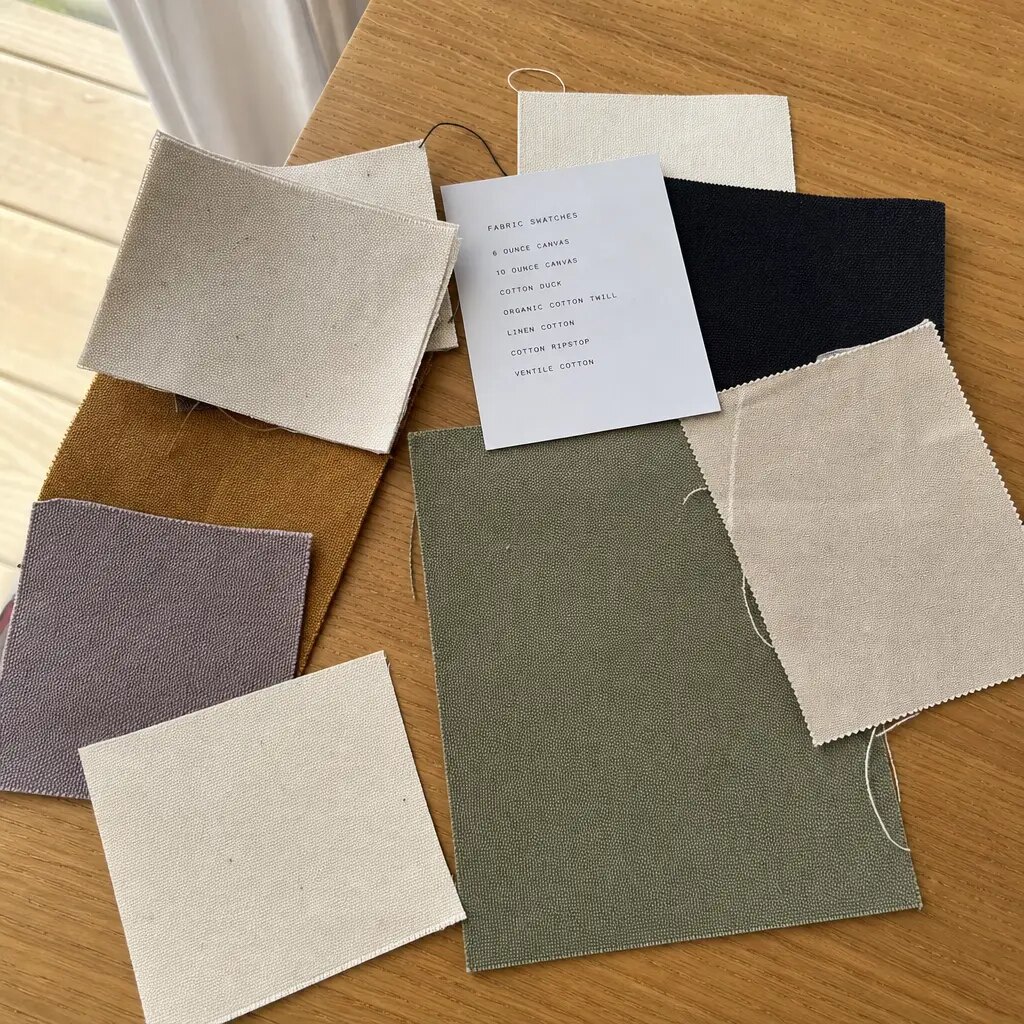
A tote can look simple and still be underspecified. Finished size, gusset depth, handle length, fabric weight, weave, decoration area, and packing style all affect cost and schedule. If a buyer only asks for an organic cotton tote with a printed logo, the factory will fill in the blanks according to its own habits. That is how you end up comparing quotes for different products that happen to share the same name.
The fastest way to reduce quoting churn is to send a spec sheet that a sewing line can actually use. Include a reference bag if you have one. Include the final artwork file version. State whether the bag must be unbleached natural cotton, bleached white, or a dyed color. If the tote needs to sit on a retail shelf, say so. If it only needs to hold beans, samples, and a flyer, say that too. The use case determines whether the factory should quote a light promotional bag or a more structured retail item.
- Specify body width, height, gusset, and handle drop together.
- State fabric weight in gsm or oz, plus weave and finish if those matter.
- Confirm whether the print area is on one side, two sides, or a gusset panel.
- Add the intended use case so the supplier does not overbuild or underbuild the bag.
Choose the production route by schedule risk, not by headline price
The same tote can have a very different lead time depending on how it is sourced. A stock blank with local printing is the fastest route when the blank already matches your size and organic documentation needs. A standard cut-and-sew order with reserved fabric is usually the right fit for planned coffee retail programs. A fully custom order takes longer because the factory has to confirm fabric, cut, sew, decorate, pack, and document the order as one connected workflow.
Short lead times often hide an assumption. A supplier may be quoting from print approval, not from PO receipt. Another may be assuming stock is already on the shelf. A third may be skipping the packaging step in the number it gives you. Before you compare prices, compare the route. If the supplier cannot explain how the tote gets from raw material to packed carton, the lead time is not yet real.
- Stock blank plus local print is best for short windows, but only if the blank really fits the spec.
- Reserved-fabric cut-and-sew works best when you can lock the spec and artwork early.
- Fully custom production gives the most control, but it needs the longest planning runway.
- Rush orders are usually a tradeoff: fewer options, higher cost, and less room to correct mistakes.
Use a calendar example instead of trusting a generic promise
If the launch date is fixed, a calendar beats a slogan. For a coffee roaster release on September 15, a conservative planning schedule might look like this: RFQ issued in late May, quotes compared in early June, spec locked by mid-June, blank sample approved by late June, strike-off approved in early July, pre-production sample approved by mid-July, bulk production released by late July, and packed cartons ready in mid-August. That leaves room for ocean transit, warehouse receiving, and one correction cycle if something slips.
The same logic works for domestic replenishment. If the bags are already in stock locally and only decoration is pending, the schedule can compress to one or two weeks. But if the bags need new fabric, custom sewing, or revised packing, the calendar expands quickly. The right internal question is not whether the supplier said 30 days. It is whether 30 days starts from artwork approval, fabric booking, or sample sign-off. If those triggers are different, the result is different.
- For a fixed launch, add one full approval cycle to the supplier's first estimate.
- If transit matters, plan the ship date, not just the factory completion date.
- If the order is the first run with a new supplier, add extra time for sampling and documentation.
- If the artwork is still changing, do not treat any quoted lead time as reliable.
Treat sampling as a hard gate, not a courtesy step
A tote program should have at least three checkpoints before bulk release. First is the blank or size sample, which confirms the bag body, handle feel, and construction. Second is the print proof or strike-off, which confirms color, registration, and placement. Third is the pre-production sample, which should reflect the final fabric, final decoration, final label, and final packing method. Skipping any of those steps creates downstream disputes that are expensive to fix after the line is running.
The approval rule should be explicit. Measure the finished bag, compare the artwork against the reference, and test the handle stress point under real handling conditions. If the sample is visually acceptable but outside the size tolerance, it is still a rejection unless the spec sheet is revised. If the print looks good on a flat sample but shifts badly on the sewn bag, the print method or placement needs correction before bulk begins. A signed golden sample is not a formality; it is the contract reference for the run.
- Blank sample: check dimensions, handle length, gusset, and seam behavior.
- Print proof: check color, alignment, and artwork scale before the line starts.
- Pre-production sample: check the final build, final packing, and carton count.
- Keep one approved sample with the supplier and one with the buying team.
Prove the organic claim before you approve the artwork
Organic cotton needs documentation, not just a descriptive word in the product name. If the supplier says the fabric is organic, ask what standard supports that statement and what part of the supply chain is covered. A useful procurement packet usually includes a scope certificate for the factory, a transaction certificate or shipment-level document where applicable, and traceability that links the fabric lot to the finished goods. If the claim is only based on fiber content or a vendor statement, do not let the marketing copy overstate it.
The wording matters as much as the fabric. A bag can be made from certified organic cotton, organic-content cotton, or cotton that is simply described as eco-friendly by a supplier. Those are not interchangeable claims. If your brand needs a certified claim, ask the factory to show exactly how the certificate scope applies to the mill, the sewing facility, and the shipment you are buying. If the document trail does not support the wording, change the wording before the bags are printed or labeled.
- Ask for the actual certification scope, not just a logo or verbal claim.
- Match the finished product wording to the documentation you can substantiate.
- Confirm whether the claim applies to the fabric, the factory, or the shipment lot.
- Do not use vague language like organic-inspired or eco cotton if the claim needs substantiation.
Control MOQ and landed cost as one decision
MOQ is not a single number; it is usually a set of thresholds that change by size, artwork, and packing style. A supplier may allow a low total quantity but only if you accept one print color, one side of decoration, and a standard flat fold. Another may look more expensive on the unit price but include the packing and labeling you actually need. Procurement should compare the true finished product, not just the bag shell.
Landed cost should be built line by line. Include fabric, cutting, sewing, print setup, packing labor, sample cost, inland movement, freight, duties, and receiving costs. A low ex-factory quote can become the most expensive option once carton volume, repacking, or urgent freight are added. For a launch program, the cleanest approach is usually to simplify the first order, validate the product, and reserve variations for the replenishment run.
- Ask for MOQ by size, artwork version, and packing format.
- Separate ex-factory cost from freight and import costs before choosing the winner.
- If two quotes use different trade terms, normalize them before comparing.
- For the first order, reduce complexity where possible so setup cost does not dominate the run.
Write QC into the PO so the factory knows what good looks like
A tote can pass a quick visual check and still fail in use. The control points that matter most are the fabric weight, seam behavior, handle reinforcement, print durability, carton accuracy, and moisture condition on arrival. If you want predictable quality, define measurable acceptance criteria before bulk starts. A reasonable procurement default is AQL 2.5 for major defects and AQL 4.0 for minor defects, unless your company standard is stricter.
Tolerances should be specific. Body dimensions can usually tolerate +/- 0.5 in / 12 mm, while handle length often needs tighter control at +/- 0.25 in / 6 mm. Print placement should be measured from a fixed edge so the factory knows what centered means. For many logo placements, +/- 0.125 in / 3 mm is a practical target for the main art block, with a slightly wider tolerance for large multi-panel prints. Add a simple load or hang test if the tote will carry heavier product, and state the exact weight and duration you expect.
- Check stitch density and consistency on visible seams and reinforcement points.
- Require fully formed bar-tacks and no skipped stitches, loose ends, or popped seams.
- Measure finished dimensions, handle length, and print placement against the approved sample.
- Reject cartons that arrive damp, compressed, badly labeled, or inconsistent with the packing list.
Plan replenishment before the first shipment is gone
The first order is only part of the program. Coffee roaster tote demand often comes in waves tied to launches, holidays, and subscription promotions. If the tote sells faster than expected, a replenishment run can easily miss the next commercial window unless it is planned early. The safest approach is to decide now whether the tote is a one-time campaign item or a recurring SKU that needs an ongoing supply plan.
For recurring programs, place the next order before inventory drops into the danger zone. If the tote requires custom production, the reorder point needs to account for production time plus transit plus receiving time. If the tote is a stock blank with local printing, the reorder window can be shorter. The practical tradeoff is simple: the more custom the bag, the earlier the reorder has to start. That is especially true when the second order is supposed to match the first one exactly.
- Set a reorder point based on lead time plus safety stock, not on emotion or sales optimism.
- If the first run was custom, expect the replenishment run to need the same or similar approval gates.
- Keep the golden sample and the approved spec sheet ready for the second PO.
- If demand is uncertain, buy the simplest version first and add variants later.
Build the RFQ so every supplier quotes the same bag
A strong RFQ for wholesale organic cotton totes for coffee roasters reads like a build sheet. It should include the finished size, gusset depth, handle length, fabric weight, print method, artwork file, print placement, packing method, carton count, target ship date, and the exact organic claim you need supported. If any one of those items is missing, the supplier will guess. Different guesses create quotes that are not directly comparable.
The RFQ should also explain the commercial context. Is the tote a premium retail item, a gift-with-purchase item, a subscription insert, or a trade-show giveaway? Each use case changes the acceptable fabric weight, finish quality, and packing labor. A good RFQ does not over-spec a promotional bag into a luxury item, and it does not under-spec a bag that has to sit on a shelf next to premium coffee.
- Attach the artwork file version and state whether it is one-side or two-side decoration.
- Include the sample sequence you expect and the date by which each sample must be approved.
- Specify the carton pack count, outer carton marks, and whether palletization is required.
- Ask for a quote breakdown that separates fabric, sewing, decoration, packing, and freight.
Specification comparison for buyers
| Production route | Typical timeline before transit | Best fit | Main lead-time risk |
|---|---|---|---|
| Stock blank + local print | 7-14 calendar days after artwork approval if stock is on hand | Small launches, event dates, or emergency replenishment | The blank may not match your size, handle, or organic documentation needs |
| Standard cut-and-sew with reserved fabric | 30-45 calendar days after sample approval | Planned coffee retail programs and repeat replenishment | Fabric may not truly be reserved unless the supplier names the booked mill or stock lot |
| Fully custom cut-and-sew with fabric booking and organic paperwork | 45-75 calendar days after spec lock | New tote shapes, new fabric weights, or first-time suppliers | More approval gates mean more schedule drift if samples are not signed off quickly |
| Rush order with simplified spec | 10-21 calendar days, depending on route and packing | Deadline-driven launches with a narrow scope | Fewer options, higher cost, and less room for correction if print or packing changes late |
| Material | organic cotton canvas, batch documentation where available, undyed or low-impact dyed fabric, and shrinkage control | Before price comparison | Different cloth weights, backing, or certification claims make quotes hard to compare |
| Construction | seam allowance, handle reinforcement, label attachment, fabric pre-shrink note, and batch shade control | Before sampling | Weak stress points create returns and failed inspections |
| Decoration | water-based print, embroidery, woven organic label, or low-impact transfer checked against certification claims | Before artwork approval | The wrong method can crack, bleed, pucker, or fail on the chosen fabric |
| MOQ | Base MOQ plus change drivers | During quote review | Custom colors, trims, and packing can change minimums |
Buyer checklist before sampling
- Set the in-hands date first, then work backward to the RFQ date, sample approval date, and bulk production start.
- Define the finished size, gusset depth, handle length, fabric weight, weave, and whether the tote is natural, bleached, dyed, or post-finished.
- State the organic claim you want the supplier to support, including the wording you expect on the bag, carton, or documents.
- Specify print method, number of colors, print sides, placement, and whether a strike-off or pre-production sample is required.
- Ask for MOQ by size, color, artwork version, and packing configuration instead of accepting a single total MOQ number.
- Require a quote that separates fabric, cutting, sewing, decoration, packing, documents, and freight or export handling.
- Confirm pack format: flat fold, retail fold, polybag, barcode label, hangtag, set packing, and carton count.
- State your QC expectations in measurable terms, including size tolerance, print placement tolerance, and defect acceptance level.
- Ask whether fabric is already booked, whether the factory owns the production schedule, and what triggers the lead time clock.
- Request the ship-by date, not only the production completion date, so transit and receiving can be planned realistically.
Factory quote questions to send
- What exact route are you quoting: stock blank plus local print, cut-and-sew with reserved fabric, or fully custom production?
- What is the start point for the lead time: PO receipt, artwork approval, sample approval, fabric booking, or deposit?
- Can you name the organic standard, certification scope, and document set that support the claim for this order?
- What is the MOQ by size, color, print version, and packing style, and where do surcharges begin?
- What sample stages are included, how long does each stage take, and what is the approval deadline for each stage?
- Which print method are you pricing, how many screens or setup steps are included, and what changes if we add another color?
- What is included in the base packing spec, and what extra time or cost applies for retail-ready folding, labels, or set packing?
- What is your tolerance for finished dimensions, print placement, overrun or underrun quantity, and defect replacement?
- What carton count, carton size, moisture protection, and outer markings are included in the quote?
- Which shipment documents can you provide with the goods: test reports, scope certificate copy, transaction certificate, invoice, and packing list?
Quality-control points to confirm
- Use an AQL target in the PO, typically AQL 2.5 for major defects and AQL 4.0 for minor defects unless your company standard is stricter.
- Finished body dimensions should stay within +/- 0.5 in / 12 mm, and handle length should stay within +/- 0.25 in / 6 mm unless the bag design requires tighter control.
- Print placement should stay within +/- 0.125 in / 3 mm for centered logo work, or within +/- 0.25 in / 6 mm for larger artwork panels.
- Stitch density should be consistent and typically fall in the 7-9 stitches-per-inch range on visible seams, with bar-tacks fully formed and evenly placed.
- No skipped stitches, loose thread chains, exposed raw edges, popped seams, or twisting at the handle attachment points.
- Ink should cover evenly with no pinholes, cracking at the fold line, ghosting, or obvious bleed into the fabric weave.
- Lot-to-lot shade variation should stay within the approved reference sample, and the approved sample should be kept as the golden standard.
- Cartons should arrive dry, clean, and odor-free, with no visible water marks, compression damage, or loose debris inside the pack.
- Carton counts and inner-pack counts should match the PO exactly, and carton labels should match the shipment documents and SKU structure.
- If the tote is intended to carry heavier product, require a documented load or hang test at the intended use weight before bulk release.