Start With the Selling Job
A farmers market tote is not a generic giveaway bag. It is a working container for produce, jars, bread, flowers, and mixed purchases that can weigh more than the buyer expects. Before quoting, define the carry mode, the load, whether the tote must stand open at checkout, and whether the bag needs to fold flat for storage or display. Those use details decide the construction more than the artwork does.
If the use case is vague, every supplier fills in the blanks differently. One factory will quote a soft canvas, another a structured twill, and a third will quietly change the handle build to protect margin. The result is a set of prices that cannot be compared. Buyers should treat the function of the tote as the first line in the spec, not as a side note.
The most common mistake is starting with the logo or the approximate size. That creates a cosmetic quote, not a procurement quote. Start with load, carry style, and handling behavior. Once those are fixed, the rest of the bag can be designed around a real working requirement rather than an assumed one.
- Name the primary carry mode: hand carry, shoulder carry, or both.
- Write the intended contents in real terms such as produce, jars, flowers, or mixed retail items.
- State whether the tote must stand open, fold flat, or do both.
- Use size as a result of the use case, not the starting point.
Build a Spec Sheet Suppliers Can Quote Without Guessing
A buyer-grade tote spec should read like a build sheet, not a concept note. Suppliers need finished dimensions, fabric details, handle construction, decoration method, packing format, and any organic claim wording that applies. If those details are not written down, each supplier will make different assumptions and the price gap will be meaningless.
The spec should include finished width, finished height, gusset depth, handle drop, top hem style, seam allowance, and logo or label placement. Add tolerances for the dimensions that matter in receiving and resale. Without tolerances, a tote can be close enough to pass a casual look but still fail a warehouse inspection or a shelf plan.
Separate included and excluded costs. Sample charges, setup fees, label sewing, hangtags, carton marks, testing, and special packaging should be called out as separate lines. If the quote only shows a unit price, the buyer still does not know the full commercial shape of the order. That is how seasonal programs get surprised later by missing scope.
A clean RFQ package usually has four parts: one technical sheet, one artwork file, one packing sheet, and one organic-claim note if relevant. Ask the supplier to confirm each line in writing. That makes the quotation usable for purchase order control and later inspection.
- Lock finished dimensions and tolerances before asking for price.
- Attach artwork with print limits and color references.
- List label type, carton marks, and inner pack requirements.
- Ask the supplier to confirm excluded costs in writing.
Verify Organic Sourcing Before You Compare Price
Organic cotton is not just a marketing term. Buyers should ask which certification standard applies, who holds the certificate, and which site actually made the bag. For most procurement programs, GOTS or OCS are the first documents to request, but the important part is not the logo on the certificate. It is whether the scope covers the legal entity, factory location, and product type being quoted.
Ask for a documentation hierarchy, not a vague promise. At minimum, the buyer should request the scope certificate, the transaction or shipment document linked to the order, and the invoice or packing list that matches the legal seller. If the supplier uses subcontracting, ask how that is controlled and whether the subcontractor is also in scope. A claim can look clean on a sales sheet and still be unsupported if the document trail does not connect the raw material to the shipped tote.
Also ask what fiber claim is being made. 'Made with organic cotton' is not the same as a fully certified organic product, and a channel that allows one wording may reject another. The buyer should state the exact claim language in the RFQ and require the supplier to confirm the same wording on labels, hangtags, or cartons. That prevents a manufacturing quote from turning into a compliance problem later.
The practical test is simple: if the supplier cannot show the document chain without rewording the claim, the claim is not ready for production. Procurement should verify the paper trail before price comparison, not after the order is placed.
- Ask which standard applies: GOTS, OCS, or another defined program.
- Request the scope certificate, transaction or shipment document, and matching invoice trail.
- Confirm the factory site and legal entity named on the documents.
- State the exact claim wording required for labels, hangtags, or listings.
Choose Fabric Weight, Weave, and Finish Separately
For most wholesale organic cotton totes for farmers market vendors, 200-240 GSM woven organic cotton canvas is a practical starting point. It gives the bag enough structure to resist collapse while still folding efficiently in bulk cartons. Lighter cloth can work for promotional use, but once the bag is expected to handle repeat loads, the fabric needs more body and better seam support.
GSM is only one part of the story. Weave density, yarn size, and finish affect how the bag behaves after loading and handling. A tighter canvas or twill usually holds shape better than a loose weave at the same weight. A soft or brushed finish can feel good in hand and still bag out when the tote is filled. If the bag must stand open, say so directly; that functional requirement may justify a different weave or a more structured build.
Ask whether the fabric is prewashed, stabilized, or treated in any way that affects shrinkage or hand feel. Buyers should also ask for measurements from production fabric, not just a sample that may have been cut from a better lot. A smooth sample room piece can hide the difference between a good fabric and one that will relax or distort after use.
The point is to separate material identity from performance. The organic claim tells you what the fiber is. The fabric spec tells you how the tote will actually behave in retail use.
- Request measured GSM on production fabric, not only on the sample.
- Use tighter canvas or twill when shape retention matters.
- Ask how the fabric is finished and whether shrinkage is controlled.
- Treat organic fiber content and fabric performance as separate specs.
Get the Tote Geometry Right the First Time
Bag geometry changes both function and cost. A 38 x 42 cm tote with a 10 cm gusset is not the same product as a 40 x 45 cm tote with a 15 cm gusset. The second bag carries more and stands more squarely, but it also uses more cloth, changes print placement, and increases carton cube. The buyer should choose the geometry for use, then price it, not the other way around.
The gusset matters in market use because it helps the bag stay open and carry mixed items without collapsing inward. If the tote will sit on a table or floor while vendors load it, that detail becomes a working feature, not a cosmetic one. Buyers should also decide whether the base is plain, boxed, or reinforced, since those builds affect durability at the bottom corners and how the bag stacks in cartons.
Write a tolerance range for every dimension that matters. A common procurement starting point is +/- 1 cm on width and height and +/- 0.5 cm on gusset depth and handle drop, but the exact range is less important than the fact that it is written. If there is no written tolerance, receiving has no objective standard to use when the shipment arrives.
Think about geometry as a loading problem. The bag must be easy to fill, comfortable to carry, and efficient to pack. If one of those breaks, the tote becomes a poor wholesale item even if the logo looks good.
- Lock finished width, height, and gusset depth before quoting.
- State whether the bottom is plain, boxed, or reinforced.
- Write acceptable dimensional tolerance into the spec.
- Confirm that the tote opens wide enough for the contents you expect.
Handles and Reinforcement Are Where Bags Usually Fail
Handles carry the load, absorb repeated lifting, and reveal weak construction first. For heavier market use, cotton webbing in the 25-38 mm range is usually the safer choice because it spreads stress better and resists twisting. Self-fabric handles can look cleaner and may lower material cost, but they need more consistent sewing and better reinforcement to perform the same job.
Do not accept a handle description that only says 'cotton handle.' Ask for width, length, material, anchor style, and stitch pattern. Bar-tacks, X-box stitching, and double-row lockstitch constructions are all common, but the factory should state exactly what is included. The anchor area matters more than the handle strip itself because that is where the load concentrates when the bag is full.
Handle drop needs to be checked on a loaded sample, not just in an empty sample room. A tote that feels right in the hand can ride too high on the shoulder or pull awkwardly once produce or bottles are inside. Measure the handle on the finished bag, then repeat after loading it to the target weight. If the bag changes shape too much, the handle spec is wrong even if the sample looked good.
Also inspect symmetry. A strong handle that sits unevenly can still read as poor quality on a shelf or at a market stall. Buyers should inspect the spacing from the side seams, the stitch line balance, and the way both sides settle under load.
- Use webbing for heavier loads or frequent carry cycles.
- Specify the reinforcement pattern at each handle anchor.
- Confirm handle drop on the finished, loaded sample.
- Reject visible handle asymmetry if the tote will be sold retail.
Keep Decoration and Organic Claims Separate
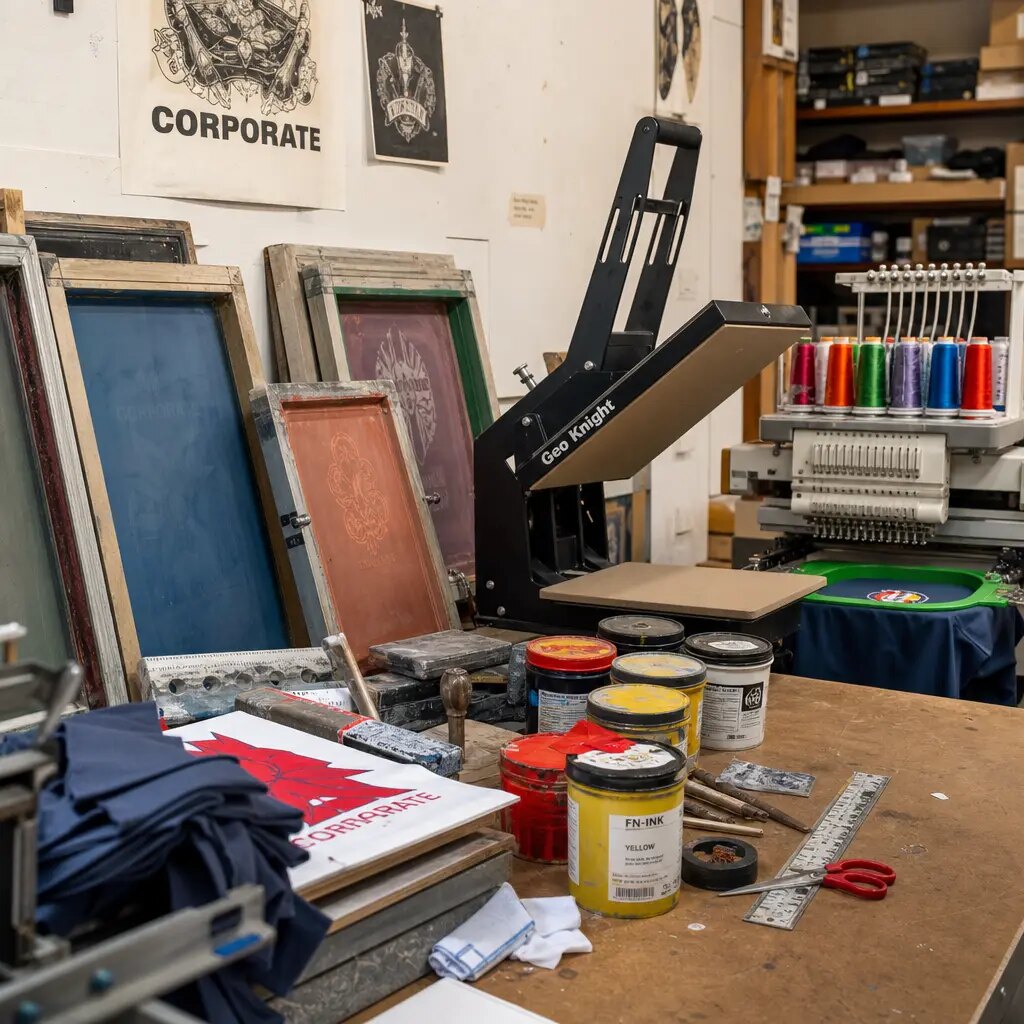
Decoration should match the fabric and the use pattern. For a simple one- or two-color logo, screen print is often the best commercial choice on organic cotton canvas because it is repeatable, easy to price, and straightforward to inspect. The real question is whether the print survives folding, handling, and the light abrasion a market tote gets every day.
Complex artwork raises risk quickly. Fine text, tiny lines, and gradients are more likely to fail on textured canvas than on smooth packaging stock. If the tote needs a clean retail look, keep the design simple and leave enough blank space around the logo. Main-panel placement is safer than printing across seams, gussets, or handle anchors, where distortion appears once the bag is loaded and folded.
Organic claims should not be mixed into decoration instructions. If the channel requires specific fiber-content wording, label text, hangtag language, or proof, put that in a separate line in the RFQ. Some programs only need a fiber statement. Others need a controlled claim with certification references. Buyers should not assume the factory understands the exact wording their channel expects.
The clean approach is to ask for print method, claim language, and documentation as three separate items. That keeps branding, compliance, and construction from being blended into one vague instruction.
- Use screen print for straightforward logos that need repeatable results.
- Keep fine text and thin lines away from seam-affected areas.
- Ask how the print behaves after folding and light abrasion.
- State the exact organic claim language required by the channel.
Use a Durability Test That Gives You a Pass or Fail
A sample is not approved because it looks neat on the table. It is approved when it survives the same use pattern the buyer expects in the field. Build the test around static load, repeated lifting, and post-test inspection. Fill the tote with a known weight, hold it for a defined period, lift it repeatedly, and check for handle creep, anchor distortion, seam failure, or print damage. A clean sample can still fail once the load moves through the handles and bottom corners.
Use the same method for every supplier. That is the only way to compare quotes and sample quality without drifting into opinion. A practical buyer test for a market tote is an 8-10 kg static hold for 30 minutes, followed by 25 lift-and-set cycles. If the bag is expected to carry less, lower the weight but keep the method the same. The value is in repeatability, not in making the test look dramatic.
After the load test, measure the tote again. Check whether width, height, gusset, and handle drop stayed inside tolerance. Then inspect the anchor stitches, seams, corners, and print. If the tote will be folded and reused often, add a 20-stroke rub test to the printed area with moderate hand pressure. The bag should not shed ink, crack visibly, or show transfer that would be obvious to the end user.
If a sample fails, record where and how it failed. Weak thread tension, poor reinforcement, loose weave, and unstable finishing leave different fingerprints. That is what the factory needs to correct before bulk production starts.
- Static hold test at 8-10 kg for 30 minutes, or your agreed load.
- Run 25 lift-and-set cycles and watch for creep, tear-out, or seam opening.
- Reject visible print cracking, ink transfer, or edge flaking after the rub test.
- Measure the tote after testing and compare it to the approved dimensions.
- Write the test method and acceptance criteria into the approval record.
Compare Quotes on the Same Basis
The fastest way to get unusable quotes is to send only artwork and a rough size. Suppliers will fill the gaps with different fabric weights, handle builds, seam allowances, and packing assumptions. A proper RFQ removes that ambiguity. It should specify the finished dimensions, fabric GSM, weave, handle construction, print method, packing format, carton marks, and any organic claim wording that applies.
The RFQ should also separate the commercial pieces. Ask for sample cost, setup fees, testing charges, label application, freight assumption, and payment terms as distinct items. If the price sheet does not show what is fixed and what is variable, the buyer cannot tell whether one supplier is truly cheaper or just quoting a narrower scope. That becomes especially risky in a seasonal program where there is no time to rework a hidden omission after the PO is issued.
Compare quotes on the same Incoterm, same carton count, same label method, and same testing scope. A lower ex-factory price can still cost more if the packing is inefficient or if receiving labor rises because carton marks and counts are unclear. Procurement should compare landed cost, not just unit cost, when the bag is a repeat replenishment item.
For reorders, keep the approved sample, signed spec sheet, and packing standard in the same file. That keeps the second run from drifting because someone on either side remembered the first one differently. Reorder control is one of the easiest ways to save time and one of the easiest ways to lose quality if no one owns the document set.
- State finished dimensions, fabric GSM, weave, handles, print, and packing in one sheet.
- Ask the supplier to confirm every line item in writing.
- Separate setup fees from repeat-run costs.
- Require the Incoterm and freight assumption on every quote.
Hold the Bar on Packing, Receiving, and Reorders
Packing is part of product quality. If the tote is overstuffed into cartons, handles can crease, print can rub, and the fabric can arrive with marks that look like defects. Flat-packed bulk cartons are usually the most practical choice for wholesale distribution because they reduce cube, keep the product cleaner, and simplify receiving. The pack still needs a defined inner count, master carton count, folding method, carton strength, and any overage allowance.
Labeling needs the same discipline. Some programs need a sewn side label, others use a hangtag, and some only require carton marks and SKU coding. State the label method before quoting so the factory prices the correct labor. Put the SKU, size code, color code, and piece count on the carton requirement so warehouse staff can receive the order without guessing what is inside.
Ask for carton dimensions and gross weight with the quote. That helps the buyer estimate palletization, storage, and freight exposure. In tote buying, freight is not separate from the product. It is part of the commercial reality, and bulky packing can cost more in shipping and handling than the tote saved in ex-factory price.
For reorders, use one controlled file: approved sample photos, measured spec, QC notes, and carton configuration. That prevents slow drift in shape, print, or packing across seasons. The best reorder is the one that does not need a fresh argument.
- Default to flat-packed bulk cartons unless retail rules require individual bagging.
- Specify inner pack count, master carton count, and carton mark content.
- Request carton dimensions and gross weight in the quote.
- Define how handles should be folded or nested to prevent creasing.
- State whether overage is allowed and how extras should be packed.
Specification comparison for buyers
| Spec decision | Recommended option | When it fits | Buyer risk to check |
|---|---|---|---|
| Fabric weight | 200-240 GSM woven organic cotton canvas | Daily farmers market use with produce, jars, flowers, and repeat carry cycles | Below 180 GSM usually feels too soft for retail load-bearing use; above 260 GSM can raise freight cost and reduce foldability |
| Organic documentation | GOTS or OCS claim supported by scope certificate plus shipment or transaction documents | Retail programs, marketplace listings, or private-label programs that need defensible organic wording | A supplier may quote organic fiber content without showing the exact documents tied to the selling entity and production site |
| Finished size tolerance | +/- 1 cm on width and height, +/- 0.5 cm on gusset depth and handle drop | Bulk orders that need repeatable receiving and reorders | If the tolerance is not written, warehouse inspection becomes subjective |
| Handle construction | 25-38 mm cotton webbing or double-fold self-fabric with bar-tacks or X-box reinforcement | Bags that will carry heavier loads or see frequent lift-and-set use | Single-row stitching at the anchor can creep or tear under repetition |
| Durability test method | Static load hold plus repeated lift cycles and post-test measurement | Any program where the tote is a working bag, not a giveaway | If the factory cannot repeat a defined test method, sample approval is not comparable across suppliers |
| Print method | One- to two-color screen print on the main panel | Simple logos that need repeatable, durable decoration | Fine lines, gradients, and prints across seams can crack, blur, or distort |
| Packing format | Flat-packed bulk cartons with a defined inner pack and carton mark set | Wholesale distribution where cube, cleanliness, and count control matter | Overstuffed cartons can crease handles, rub print, or hide count errors |
| Reorder control | Approved sample, signed spec sheet, and carton packing standard kept in one file | Seasonal buyers who will reorder the same bag next cycle | Without version control, the second order often drifts from the first approved standard |
Buyer checklist before sampling
- Define the real use case first: hand carry, shoulder carry, or both.
- Write the actual contents the bag must hold, such as produce, jars, flowers, or mixed retail goods.
- Set a target load in kilograms and include a margin above normal use.
- Lock finished width, height, gusset depth, and handle drop before asking for price.
- Decide whether the tote must stand open, fold flat, or do both.
- Specify the fabric weight, weave, and any finish, not just the fiber content.
- State the exact organic claim language needed for the channel and the proof expected.
- Choose the print method and keep artwork within that method's practical limits.
- Require a pre-production sample, a documented load test, and a signed approval sample.
- Confirm carton pack, label placement, carton marks, and piece counts before the order starts.
Factory quote questions to send
- What fabric GSM, weave, yarn count, and finishing are included in the quoted tote?
- Is the fabric prewashed, stabilized, or otherwise treated, and what shrinkage should we expect after handling or washing?
- Which organic standard applies to this order, and can you provide the scope certificate and shipment or transaction documents for the factory and product?
- What is the finished size target and the tolerance you will hold for width, height, gusset depth, and handle drop?
- What handle material, width, length, and reinforcement method are included in the price?
- Which print method are you pricing, how many colors are included, and what setup fees apply?
- What is the MOQ per size, color, print variation, and label type?
- What is the sample cost, sample lead time, and whether the sample fee is credited later?
- What are the production lead time and the approval gate before bulk starts?
- What are the carton pack, inner pack, gross weight, and carton dimensions?
Quality-control points to confirm
- Measure fabric GSM on production fabric, not only on a hand sample; flag any lot that falls more than 5% below the agreed spec.
- Confirm finished width, height, gusset depth, and handle drop against the approved spec; reject dimension misses beyond +/- 1 cm on body size and +/- 0.5 cm on gusset or handle drop unless your spec allows more.
- Check handle symmetry, spacing from side seams, and reinforcement placement on both sides; reject visible offset or skipped bar-tacks at the anchor.
- Inspect seam density, skipped stitches, loose thread ends, and needle damage at stress points; require clean reinforcement with no broken stitches at the handle base or bottom corners.
- Static load test the bag at the expected use weight plus margin, such as 8-10 kg for a standard farmers market tote, and hold for 30 minutes without seam failure, anchor slippage, or visible distortion greater than 5 mm.
- Perform 25 lift-and-set cycles on the loaded bag and watch for handle creep, elongation, or tearing; any anchor movement that changes the handle drop by more than 5 mm is a fail.
- Rub-test the logo after folding and light abrasion for 20 back-and-forth strokes with moderate hand pressure; reject cracking, flaking, or ink transfer that is visible to the naked eye.
- Verify shrinkage or dimensional change after wet handling if the bag will be reused or cleaned; flag movement beyond the tolerance written in the spec.
- Open cartons and count pieces against the packing list before warehouse receipt; no carton should be shorted, mixed, or overpacked without written allowance.
- Check for stains, holes, oil marks, puckering, and broken packaging under bright light; define an AQL-style lot reject rule before production so the factory knows the standard it must meet.