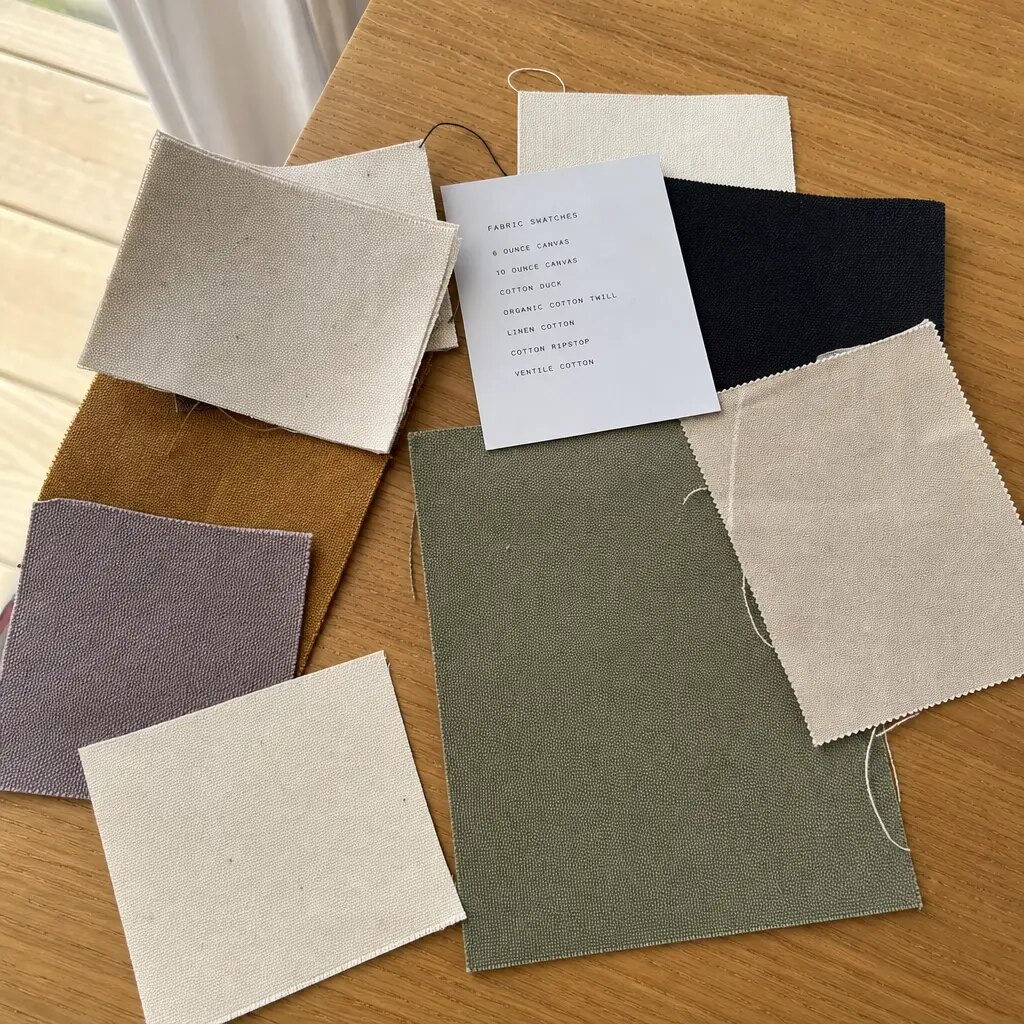
The real buying problem: choosing a tote that looks premium without paying for unnecessary fabric
For eco apparel brands, organic cotton totes often sit between packaging, merchandising, and resale product. That creates a common sourcing problem: the marketing team wants a thicker bag because it feels premium, while procurement wants the lowest landed cost, and the factory quotes several GSM options without explaining what actually changes in use. The result is often a tote that is too light for retail, too heavy for a giveaway, or priced low at first and then increased after print, packing, and reinforcement details appear.
Fabric weight is the main decision because it changes more than feel. It affects unit price, freight, print behavior, handle construction, folding thickness, carton count, and even complaint rates after the bags reach stores. A 140 GSM tote and a 240 GSM tote may look similar on a spec sheet, but they perform very differently when loaded with folded tees, hoodies, or denim accessories. The right decision starts with use case, not with a generic request for an organic cotton tote.
- Use 140-160 GSM when the tote is mainly a branded carrier or event bag
- Use 180-220 GSM when the tote itself is part of the merchandise experience
- Use 240-280 GSM when load capacity and structure matter more than lowest cost
- Do not compare supplier quotes unless GSM, size, print area, and handle spec are aligned
How GSM changes appearance, function, and quote logic
GSM is the fabric weight per square meter, but buyers should read it as structure and cost. In organic cotton totes, lighter GSM usually means a softer drape, lower material usage, easier folding, and lower freight. Heavier GSM gives stronger body, less transparency, better shelf presence, and more resistance to bottom sag. However, many quote comparisons fail because one supplier offers 5 oz style fabric, another offers 8 oz canvas, and both are described simply as organic cotton. Without a GSM range, the unit price is not comparable.
There is also a production issue behind GSM. Light plain-weave fabric can skew during cutting and sewing if not stabilized, which may create a bag that twists after stitching. Heavy canvas is more stable but demands stronger needles, more consistent stitch tension, and sometimes different handle attachment methods. A reliable RFQ should therefore link GSM with intended load, print method, and handle build. Otherwise one factory may protect itself by overengineering the bag, while another may cut quality to keep the quoted price low.
- 140-160 GSM: lower cost, lighter hand feel, good for promotional volume
- 180-220 GSM: balanced retail option, better opacity and body
- 240-280 GSM: premium utility tote, stronger shape retention, higher freight impact
- Higher GSM alone does not guarantee durability if handle and seam construction stay basic
Recommended fabric weight by apparel brand use case
For apparel buyers, the easiest way to choose is by what will go inside the tote and how the bag will be presented. If the tote will carry a tee, cap, brochure, or event materials for a one-time campaign, 140-160 GSM is usually enough. It keeps the unit price controlled and allows more pieces per carton. If the tote is sold at retail or included with a purchase as a visible brand touchpoint, 180-220 GSM is usually the safer range because the fabric looks more substantial without becoming freight-heavy.
For heavier product loads such as sweatshirts, knitwear bundles, or denim accessories, 240 GSM and above may make sense, but only if the bag is also designed to handle the weight. Buyers often upgrade body fabric and forget to upgrade handles. A thick body with narrow self-fabric handles can still fail in use or feel uncomfortable in hand. If the tote needs a premium utility position, webbing handles and reinforced stitch boxes are often a better spend than simply moving from 220 to 280 GSM.
- Brand giveaway or event tote: 140-160 GSM
- Online order add-on or retail merch tote: 180-220 GSM
- Book, hoodie, or multi-item carry tote: 220-280 GSM with handle reinforcement
- Natural color fabric usually shows print cleaner than dark-dyed totes at lower MOQs
Print method should be chosen with GSM, artwork, and MOQ together
Screen printing remains the most practical option for organic cotton totes with simple branding. It performs well for one or two solid colors and gives predictable costs at bulk volume. On lighter fabrics, water-based screen print keeps a softer hand feel, but artwork opacity can shift depending on the natural base tone of the cotton. On heavier canvas, print edges often appear cleaner because the fabric surface is more stable. Buyers should approve strike-offs on the actual fabric lot rather than relying on a paper color callout.
Digital printing works better when artwork has gradients, multiple colors, or frequent design changes across smaller runs. It can reduce screen setup cost, but the per-piece print cost may become high relative to the tote itself. Embroidery can create a premium look for small logos, yet on lower GSM fabric it may pucker unless backed properly. Heat transfer is sometimes proposed for low MOQ orders, but it often creates a less natural hand feel and may not align with the eco positioning of the product if not carefully specified.
- Screen print: best for simple logos and repeat orders
- Digital print: useful for detailed graphics and lower artwork MOQs
- Embroidery: premium look for small logos on medium or heavy fabric
- Approve print strike-off for color, coverage, registration, and hand feel
- State print placement tolerance, for example plus or minus 0.5 cm from approved location
MOQ logic: why the cheapest tote quote may not be the best route
MOQ on organic cotton totes is driven by more than sewing capacity. Fabric source matters first. If a factory uses stock greige organic fabric and applies custom cutting and print, MOQs can be lower. If the buyer wants custom-dyed fabric, custom weave, special wash, or uncommon dimensions, the supplier may need to meet mill minimums before cutting even starts. This is why two tote suppliers can quote the same style with very different MOQs. One is building from stock materials; the other is booking a custom fabric run.
Buyers testing a new tote program should often separate launch quantity from long-term quantity. For example, a brand may use a stock natural organic cotton base for the first run to validate sales, then move to a custom-dyed repeat order once volume stabilizes. This route avoids sitting on expensive custom fabric while the team is still validating dimensions, print placement, or retailer response. The RFQ should request MOQ by route: stock fabric with custom print, and custom fabric with full customization.
- Lower MOQ usually means fewer custom fabric options
- Natural stock fabric is the easiest route for test orders
- Custom dye, custom weave, and special finishes increase MOQ and lead time
- Request price breaks at realistic quantity points such as 1,000, 3,000, 5,000, and 10,000 pcs
Sample approval: the point where most avoidable bulk mistakes can still be stopped
A factory swatch approval is not enough for tote production, because the product performance comes from the combination of fabric, cutting, stitching, and print. The safest path is to approve three things separately: the fabric swatch, the print strike-off, and a complete pre-production sample. Procurement teams sometimes skip the last step to save time, then discover in bulk that the handle drop is too short for shoulder use, the tote opening twists, or the folded packing looks bulky for ecommerce fulfillment.
The pre-production sample should be measured and used, not just viewed. Put real apparel items inside, test the carrying comfort, inspect the inside seam neatness, and check whether the logo still sits correctly when the bag is filled. If the bag is for resale, review the fold presentation and whether the tote can be neatly packed with barcode sticker, swing tag, or belly band without deforming the print. These are practical retail issues that never show up on a simple approval photo.
- Sample checks should include GSM, dimensions, handle drop, print placement, and fold size
- Load the sample with the intended product category before approval
- Review stitch density and reinforcement at handle join points
- Approve final carton count only after seeing how the tote folds in real packing
Quality thresholds that matter more than generic pass or fail language
Many import issues come from vague approval language such as good quality or export standard. Tote bag QC works better with measurable thresholds. For fabric, set a GSM tolerance and inspect on unprinted panels because thick ink can mislead the reading. For dimensions, allow a realistic tolerance by size and by whether the tote is washed or unwashed. For print, define acceptable registration shift, color difference standard if relevant, and visual defect rules such as no smudging on the front panel.
Seam and handle quality should also be stated functionally. A tote made from 220 GSM fabric still fails if the handle stitch box is inconsistent or skipped. For appearance, natural cotton products need practical acceptance criteria because slight flecking or tone variation may be inherent to the material. Buyers should decide early which natural characteristics are acceptable and which are not, then include those in the approval file. This prevents friction later when the supplier treats the fabric variation as normal but the brand team rejects it as defective.
- GSM tolerance example: plus or minus 5 percent on approved fabric
- Dimension tolerance example: plus or minus 0.5 cm for small parts, plus or minus 1 cm on body dimensions
- Print tolerance example: centered within plus or minus 0.5 cm from approved artwork position
- No open seams, severe skew, oil marks, or visible needle damage on saleable pieces
- State whether natural seed specks or minor shade variation are acceptable on organic cotton
Packing details change freight cost, warehouse handling, and retail readiness
Packing is usually treated as an afterthought, but for tote programs it directly affects landed cost and warehouse labor. Flat folding is standard and efficient, but the exact fold size matters if the totes are going into ecommerce bins, retail back stock, or distributor pick-and-pack operations. A bag with a heavy gusset or long handles may require a different fold direction to avoid thick bundles and crushed print surfaces. If the tote is part of a resale program, individual labeling and tidy fold consistency may matter as much as carton efficiency.
Carton planning should be done by both piece count and weight. Overloaded cartons save carton count but increase handling damage, make recounting harder, and create compliance issues in some warehouses. Polybag quantity also matters. Large inner bundles reduce packing labor, but smaller bundles often help receiving teams recount faster and keep different SKU variants organized. These are small line items in the quote but large cost drivers after arrival if they are wrong.
- Typical bulk packing: 25 or 50 pcs per inner polybag, then export carton
- Keep export carton gross weight under buyer handling limits, often around 12-15 kg
- Use moisture protection for ocean freight and humid storage conditions
- If barcodes are needed, state sticker location and whether applied on bag, polybag, or carton
- Avoid vacuum packing unless crease risk on print and presentation is acceptable
Lead time and schedule risk: where tote orders slip without obvious warning
Lead time on organic cotton totes usually looks simple, but most delays happen before sewing starts. Waiting for fabric confirmation, final artwork, print strike-off approval, and packing sign-off can push the order later than the buyer expects. Custom fabric or dyed colors add mill scheduling risk, and peak seasons can reduce available print capacity even if the sewing line is open. Procurement teams should separate each milestone instead of working from one bulk ex-factory date only.
A more reliable schedule uses stage dates: fabric booking, lab dip or base fabric approval if needed, print strike-off, pre-production sample, mass cutting, inline inspection, final inspection, and shipment booking. This helps identify which side owns each delay. It also makes quote comparison more meaningful because one factory may promise a short total lead time while assuming same-day approvals and stock fabric, while another gives a longer but more realistic timeline based on custom weaving.
- Stock natural fabric usually shortens lead time versus custom-dyed organic fabric
- Artwork approval delays often create print slot loss in busy periods
- Pre-production sample approval should be built into the schedule, not treated as instant
- Book inspections and vessel space earlier if shipment is tied to retail launch dates
How to compare supplier quotes on landed value instead of headline unit price
The lowest quoted tote price often stops being the cheapest once the missing details are exposed. A proper quote comparison should split cost into fabric, making, print, packing, sampling, and extras such as labeling or compliance support. Organic cotton tote pricing is highly sensitive to material weight and print area, so a quote that looks 8 percent cheaper may simply be based on 150 GSM instead of 180 GSM, smaller print coverage, or looser packing assumptions. Procurement teams should normalize all quotes to the same spec before making a shortlist.
Landed value also includes defect risk and operational fit. A supplier offering a slightly higher FOB price may still be the better source if the fabric is more stable, the print approval process is stronger, or the carton plan fits the buyer warehouse better. For importers and distributors, these operational differences can erase any unit-price savings from a weak factory quote. The right comparison is not who sells the cheapest tote, but who can produce the approved spec with the lowest total risk and the clearest cost logic.
- Compare on the same FOB basis and same quantity tier
- Normalize GSM, size, print colors, handle spec, and packing before analysis
- Identify excluded costs such as sample fees, barcode work, inspection support, or document charges
- Consider freight impact of heavier GSM and bulkier fold size
- Treat unclear certification scope as a commercial risk, not only a compliance issue
Specification comparison for buyers
| Spec decision | Recommended option | When it fits | Buyer risk to check |
|---|---|---|---|
| Fabric weight for giveaway tote | 140-160 GSM organic cotton plain weave | Brand events, gift-with-purchase, light apparel items, high-volume campaigns | Can feel too thin for premium retail if bottom sag or show-through is not accepted |
| Fabric weight for retail merch tote | 180-220 GSM organic cotton | Store sale, online merch, everyday carry, folded packing with better hand feel | Some suppliers quote lower GSM then use heavy print to fake body; verify fabric before printing |
| Fabric weight for heavier product load | 240-280 GSM organic cotton canvas | Sweatshirts, denim accessories, books, higher perceived value programs | Freight cost rises fast; handle attachment and seam allowance must be upgraded too |
| Print method for simple logo | Water-based screen print on pre-washed fabric | 1-2 color branding, soft hand feel, stable repeat orders | Shade variation on natural cotton can shift print contrast; approve print strike-off on bulk fabric |
| Print method for detailed artwork | Reactive digital print or pigment digital print depending wash requirement | Multi-color graphics, seasonal drops, lower MOQ artwork changes | Digital print cost can exceed bag savings at small size orders; check colorfastness and artwork edge sharpness |
| Handle construction | Self-fabric handles for 140-180 GSM; cotton webbing handles for 220+ GSM or heavier loads | Use webbing when bag is sold as reusable shopping or daily utility tote | Factories may keep fabric heavy but leave handle weak; specify stitch count and reinforcement box stitch |
| MOQ route | Stock greige fabric with custom print for lower MOQ; custom woven organic fabric for repeat programs | Good for testing a tote before committing to dyed fabric or custom dimensions | Stock fabric may vary in tone lot to lot; custom weaving needs longer lead time and higher minimum |
| Packing style | Flat packed 25-50 pcs per polybag, export carton by weight limit under 15 kg | Standard for distributors and importers needing easy recount and lower handling damage | Vacuum packing saves freight but can crease prints and distort folded retail presentation |
| Supplier quote basis | Quote with fabric GSM tolerance, print size, handle length, packing ratio, and certification scope stated line by line | Best for comparing factories fairly and avoiding hidden add-ons after sample approval | A low headline unit price is often missing inner packing, print coverage, or document fees |
Buyer checklist before sampling
- Match tote use case to actual load: giveaway, retail merch, or utility bag, then choose GSM accordingly
- State fabric type clearly: organic cotton plain weave or organic cotton canvas, not just cotton tote
- Define acceptable GSM tolerance in RFQ, for example plus or minus 5 percent
- Specify finished size, gusset, handle width, and handle drop in centimeters
- Confirm whether dimensions are taken before or after washing if fabric is pre-washed
- Request print method by artwork type: screen print, digital print, transfer, or embroidery
- Approve fabric swatch, print strike-off, and full pre-production sample before bulk
- Set seam, handle reinforcement, and appearance standards for topstitching and loose thread
- Define packing ratio per polybag and per carton plus carton weight limit
- Request certification copies only for the material and process actually quoted, not generic factory claims
Factory quote questions to send
- What is the exact fabric construction, weight in GSM, and GSM tolerance after finishing?
- Is the quoted material certified organic cotton, and does the certification cover the supplied fabric lot or only other products in the mill?
- Is the fabric stock-based or custom woven for this order, and how does that affect MOQ and lead time?
- What are the bag body dimensions, gusset dimensions, and handle measurements included in the quote?
- How many print colors, what print size, and what print method are included in the unit price?
- Does the quoted price include fabric pre-wash, shrinkage control, and print strike-off approval?
- What seam construction and handle reinforcement are standard for this GSM?
- What is the sample cost, what sample type is included, and is the fee refundable after bulk order?
- What is the standard packing method, carton size, pieces per carton, and carton gross weight?
- What tests can the factory support for colorfastness, azo, heavy metals, or load bearing if required by the buyer?
Quality-control points to confirm
- Fabric weight should match approved tolerance; random GSM checks should be taken from unprinted panels
- Bag body dimensions and handle drop should stay within approved tolerance, commonly plus or minus 0.5-1.0 cm depending on size
- Logo position must be centered within approved tolerance and print edges should be clean without pinholes or smudging
- Print color should match approved standard under agreed lighting; natural cotton base tone must be considered
- Handle stitching should be secure with no skipped stitches, open seams, or uneven reinforcement boxes
- Top hem and side seams should be straight with no twisting that distorts bag opening
- Loose threads, oil marks, needle damage, and mildew odor should be treated as appearance defects
- Polybag, carton count, carton marks, and barcode placement should match packing approval
- Load-bearing spot checks should reflect intended use, especially for 220 GSM and above retail totes
- Carton moisture protection should be adequate for ocean shipment, especially during monsoon or humid storage periods