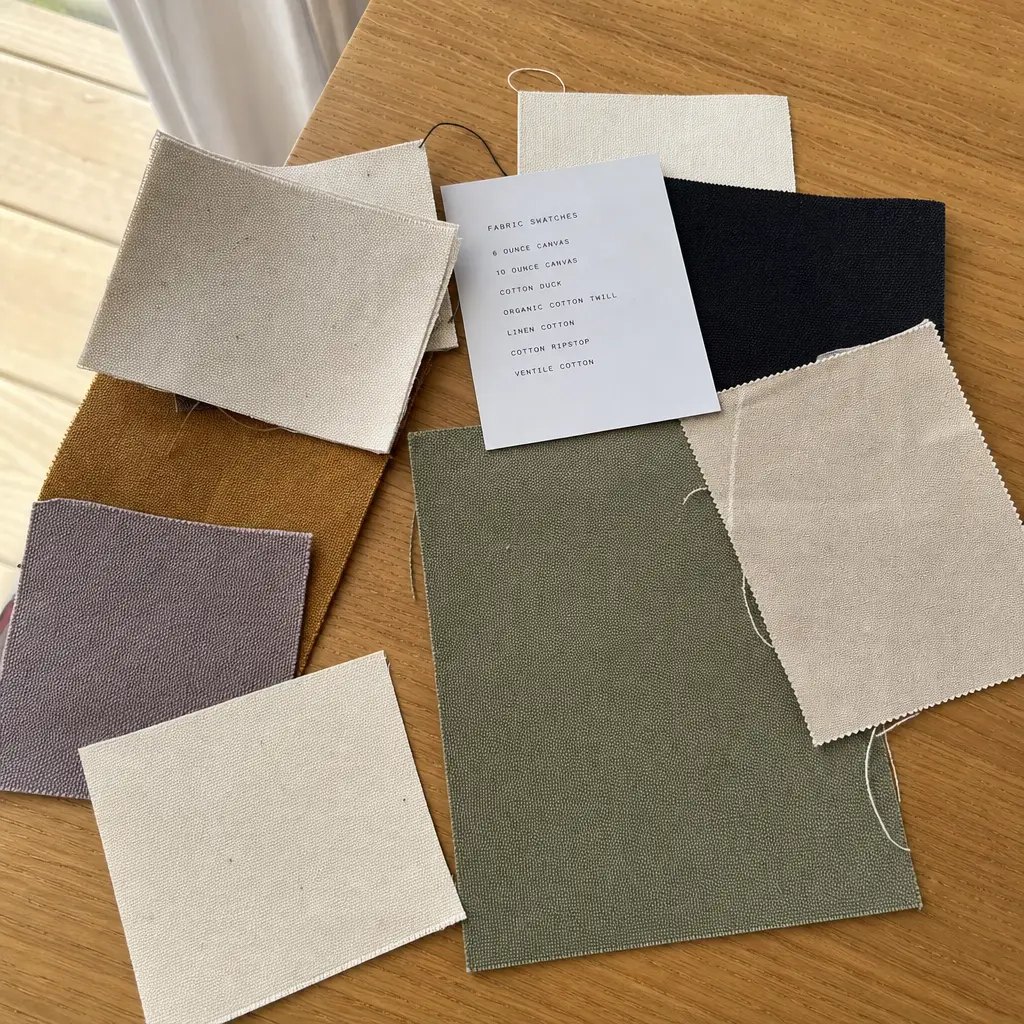
Start With the Use Case, Not the Tote Photo
Wholesale organic cotton totes for wellness studios are easy to approve too quickly. The sample looks clean. The natural cotton shade feels aligned with a calm wellness brand. The logo sits nicely on the front panel. That first impression matters, but it does not answer the procurement question: will the tote survive the way members, guests, and retail customers will actually use it?
Most problems appear after the order leaves the factory. A member adds a water bottle, towel, shampoo, notebook, boxed supplement, phone, and keys. A retreat guest carries the bag between a hotel, class space, and airport. A spa customer places glass bottles or candles inside. If a handle tears, a side seam opens, or the print cracks across a fold, the issue is usually not bad luck. It is a missing specification.
The right tote is not always the heaviest tote. It is the tote construction that fits the load, price point, brand promise, packing method, delivery schedule, and documentation requirement. A free studio giveaway can be simpler. A paid retail tote needs better workmanship. A distributor program needs consistent cartons, SKU separation, and repeatable inspection standards. Procurement should classify the tote before asking factories for prices.
- Free giveaway tote: lighter GSM can work when the load is low, artwork is simple, and the bag is not sold as premium merchandise.
- Paid retail tote: needs stronger fabric, cleaner seams, better print finish, consistent folding, and lower tolerance for stains or loose threads.
- Welcome kit tote: should be tested with actual bottles, towels, boxes, inserts, and any sharp-edged packaging.
- Retreat or event tote: must prioritize schedule discipline, destination sorting, carton marks, and field-ready packing.
- Multi-location rollout: needs carton labels, SKU separation, approved shade range, and repeatable construction across batches.
- Distributor resale product: needs documentation control, barcode accuracy, carton count accuracy, and a defined final inspection standard.
Fabric Weight, Weave, and Organic Cotton Proof
The first serious quote comparison should begin with fabric, not with the unit price. A supplier may call several different materials organic cotton: light sheeting, medium canvas, heavy canvas, twill, or a stock fabric already sitting in the warehouse. Those fabrics can behave very differently even when the bag dimensions look identical on a quote sheet.
For low-load promotional use, 8 oz organic cotton, about 220-240 GSM, can be enough. It suits flat totes for brochures, vouchers, light apparel, and launch gifts. For repeated carry, boutique resale, and welcome kits, 10 oz to 12 oz is usually the safer quoting range. A 10 oz canvas is commonly around 280-300 GSM, while a 12 oz canvas is often around 340-360 GSM, depending on yarn, weave, and finishing.
Always ask whether the GSM is finished fabric weight. Greige fabric, dyed fabric, washed fabric, calendared fabric, and enzyme-washed fabric may not finish at the same weight or hand feel. A quote that looks cheaper may simply be based on lighter fabric after finishing. Buyers should require both oz and GSM so factories quoting in different systems are still comparable.
Organic cotton documentation also needs early confirmation. The claim level affects cost, lead time, and sometimes MOQ. There is a difference between a supplier declaration, a fabric lot document, a transaction certificate, and a finished product claim supported through the correct scope. Do not assume documentation is included unless the quote says so clearly.
- State fabric weight as finished GSM and oz, not vague wording such as heavy, premium, thick, or eco cotton.
- Clarify construction: plain weave canvas, twill, sheeting, or another weave because strength, drape, and print surface differ.
- Confirm finish: natural, bleached, dyed, enzyme washed, pre-shrunk, or unwashed because each affects shade, shrinkage, and hand feel.
- Ask for shrinkage data if the tote will be described as washable or if end users may machine wash it after studio use.
- Define an approved natural cotton shade range for repeat orders because organic cotton tone can vary by lot and finish.
- Confirm whether certification documents are included, charged separately, or unavailable for the final finished product.
Turn Load Expectations Into Testable Specs
Durability starts with a scale. Procurement teams should weigh the heaviest realistic kit instead of estimating from a product list. A 500 ml bottle, folded towel, leggings, notebook, shampoo, candle, supplement box, and printed inserts do not create the same stress pattern. Bottles move. Boxes push corners. Towels add volume. A tote that passes with paper brochures may fail when filled with the real kit.
A useful B2B spec separates normal working load from test load. If the actual kit weighs 2.5 kg, the buyer might require repeated lifting at 3.5 kg or 4 kg, depending on the program and safety margin. A small promotional order can use a lower margin. A paid retail tote, retreat kit, importer order, or distributor resale product should use a more conservative margin because customers will add personal items after receiving the bag.
The load target belongs in the technical sheet. So do the pass-fail rules. Passing should mean more than the handles staying attached. Inspectors should check for broken stitches, seam opening, stitch slippage, fabric tearing around handle corners, top hem distortion, bottom corner deformation, and permanent twisting after the test. Photos should become part of the approved sample file.
- Weigh the actual filled kit and record the normal working load in kilograms before approving fabric or handle design.
- Set a test load above the normal load, with a higher safety margin for paid retail, retreat, and multi-location programs.
- Place contents inside the tote during testing instead of hanging weight directly from the handles because internal shape changes seam stress.
- Inspect the bag after testing for stitch breakage, seam opening, top hem distortion, fabric tearing, and permanent shape change.
- Record pass-fail limits before production, such as no broken stitches, no visible tearing, and no seam opening beyond the agreed limit.
- Keep test photos with the approved sample record so the factory, buyer, and inspector use the same standard.
Handles Usually Fail First
On cotton totes, the handle area often fails before the body fabric. Strong canvas will not save the order if the handles are too narrow, inserted too shallowly, stitched too close to the edge, or sewn with poor thread tension. Wellness studio totes often carry bottles, towels, apparel, notebooks, retail products, and personal items. That creates vertical pulling during lifting and side-to-side movement during walking.
The RFQ should define handle material, width, drop, insertion depth, reinforcement pattern, and thread. For shoulder carry, many wellness totes use a handle drop around 25-30 cm, although the right value depends on bag height, target user, and whether the tote must fit over outerwear. A handle width of about 2.5-3.8 cm is common for comfort and load distribution. Wider cotton webbing or folded self-fabric handles generally feel better than narrow tape.
A properly sized box-X stitch spreads stress better than a short single bar tack on light fabric. Still, the reinforcement pattern should be tested on the complete finished tote. A supplier's loose handle tape strength does not prove the top hem, stitch box, and body fabric will hold together. After static and repeated lift testing, look closely at puckering, elongated stitch holes, loose tension, broken thread, hem distortion, and small tears at stitch corners.
- Specify handle width, handle drop, handle material, insertion depth, and reinforcement shape in the technical sheet.
- Use box-X or an equivalent reinforced pattern for bags expected to carry bottles, towels, books, or retail products.
- Measure left and right handle drop for symmetry because uneven handles reduce perceived quality and comfort.
- Check whether handle ends are folded into the top hem or surface-stitched after the hem is closed because strength can differ.
- Reject handle attachment that puckers heavily, opens at stitch corners, tears fabric, or shows thread breakage during sample testing.
- Require production handle testing on finished printed bags, not only on loose handle tape or unprinted fabric panels.
Seams, Gussets, and Shape Retention
Side seams, bottom seams, and the top hem decide whether the tote keeps its shape after loading. A flat tote with poor seam allowance can twist when filled. A gusseted tote with weak bottom corners can distort quickly under boxed products. The bag may still hold together, but it will look cheap if it leans, collapses, or pulls out of shape on a retail shelf.
For wellness kits with bottles, skincare, candles, supplements, folded apparel, or towels, a gusset can be worth the additional fabric. It gives contents a more stable base and reduces stress pushed into the side seams. Flat totes are still useful for apparel, folders, vouchers, and simple gifts. The mistake is choosing the lowest-cost flat construction and then filling it like a boxed retail carrier.
Seam choice should match the product position. A basic overlock seam may be acceptable for lightweight promotional bags. A French seam gives a cleaner interior and better edge protection, though it usually takes more sewing time. Overlock plus safety stitch can be efficient if the factory controls seam allowance, thread tension, and trimming. Buyers should inspect the inside of the sample, not only the front view.
- Flat tote: lower fabric consumption and lower carton volume; best for apparel, folders, vouchers, and lightweight gifts.
- Gusseted tote: higher cost but better for bottles, towels, boxed products, candles, supplements, and premium retail kits.
- French seam: cleaner inside finish and better edge protection, usually with higher sewing time and cost.
- Overlock plus safety stitch: efficient option when seam allowance, trimming, and thread tension are controlled.
- Top hem depth: must support handle stitching without edge fraying, distortion, or visible stress after load testing.
- Bottom corner inspection: should be done after filling because weak gusset corners often show only under load.
Print Durability and Logo Approval
Print approval should never rely on a digital mockup alone. Organic cotton has texture, shade variation, and absorbency that affect the final logo. Fine text can soften. Pale ink can disappear into natural cotton. Dark ink may look sharp at first but still transfer if curing is poor. Large ink blocks may feel stiff or crack on fold lines.
Most wellness studio logos work well with screen printing. Water-based screen print is often chosen for a softer hand feel on natural cotton. Pigment systems or additional passes may be needed for stronger opacity, especially with white or pastel colors. Extra ink can improve coverage, but it can also change hand feel, drying time, curing behavior, and fold performance. That tradeoff should be approved on production-equivalent fabric.
Placement matters too. A large logo printed low on a gusseted tote may bend when the bag is filled. Printing too close to side seams can make registration look inconsistent. Printing over thick seam areas may reduce ink coverage. The RFQ should include artwork size, placement from fixed edges, color references, registration tolerance, and any no-crease zone. If the logo will sit on a fold line in the carton, test that fold before bulk printing.
- Use screen print for clean one to four color logos and repeatable bulk production on natural or dyed cotton.
- Use embroidery only for smaller logos when the fabric weight can support stitch density without puckering.
- Avoid large heavy ink blocks on lightweight cotton because the print may feel stiff and the fabric may distort.
- Define print placement from fixed bag edges and include tolerance for position and multi-color registration.
- Check dry rub, damp rub, fold pressure, curing, tackiness, and fine-line clarity on production-equivalent fabric.
- Approve the folding method before bulk printing if the logo might sit on a fold line inside the carton.
MOQ, Unit Cost, and Landed-Cost Drivers
MOQ for organic cotton totes is not only a sewing question. The real minimum may come from fabric booking, organic cotton documentation, dyeing, printing setup, woven labels, hangtags, barcode labels, belly bands, or retail packing. A factory may agree to sew 500 bags while the mill requires more fabric for a specific GSM, finish, or color. A custom label may carry its own MOQ that is higher than the bag order.
A useful quote separates fixed, semi-fixed, and variable costs. Sample development, artwork setup, screens, testing, and certain documents may not scale directly with quantity. Fabric, sewing, printing, trims, cartons, packing materials, inland delivery, and inspection time usually move with order volume. When two suppliers show similar unit prices, the details decide which quote is actually stronger.
Landed cost deserves the same attention as factory price. A larger gusset, heavier canvas, individual packing, stronger cartons, and destination sorting can all raise CBM, gross weight, and warehouse handling time. Those costs may be worth it for retail presentation, but they should not be discovered after production. Ask for carton dimensions and estimated CBM per 1,000 pieces before approving the final spec.
- Fabric cost rises with GSM, bag size, gusset depth, finish, shrinkage control, custom dyeing, and documentation requirements.
- Sewing cost rises with reinforced handles, French seams, pockets, labels, tighter tolerances, and extra inspection steps.
- Printing cost rises with color count, print area, opacity, strike-off rounds, curing requirements, and special placement.
- Packing cost rises with individual bags, belly bands, hangtags, barcode labels, carton segregation, and SKU sorting.
- Freight cost rises with carton CBM and gross weight, not only with factory unit quantity.
- Reorder cost can change if fabric, labels, screens, documentation, or testing must be remade or reissued.
Sample Approval and Pre-Production Control
A good sample is more than a nice-looking tote. It should prove that the supplier can produce the agreed fabric, size, handle structure, seam construction, print, label, and packing method at production standard. The buyer should measure it, load it, rub the print, fold it, photograph it, and compare it with the RFQ before releasing bulk fabric cutting or printing.
Substitutions must be recorded. If the sample uses stock fabric, substitute thread, a different handle tape, or a different ink system, it is not a full pre-production sample. That may be acceptable for an early development round, but it should not become the approval standard by accident. Before mass production, the factory should make a production-equivalent sample or strike-off that matches the materials and process to be used in bulk.
The approval process should create a physical control standard. One signed sample should stay with the buyer, and one sealed sample should stay at the factory. If a third-party inspector is used, provide sample photos, measurement points, tolerance tables, defect definitions, carton requirements, and the approved sample reference. The inspector then has a real standard for shade, print hand feel, logo position, handle drop, stitch density, label placement, and folding method.
- Measure width, height, gusset, handle drop, handle width, handle position, top hem depth, print size, and print placement.
- Load the sample with the intended kit and lift repeatedly from both handles, then inspect stitch boxes and seams.
- Rub the print with dry and lightly damp white cloth to screen for transfer, smearing, or poor curing.
- Fold the tote as it will be packed and check creasing, print stress, ghosting, or surface marking after pressure.
- Photograph the approved sample next to a ruler and color reference for production and inspection control.
- Record all sample deviations in writing so substitute materials are not accidentally approved for bulk production.
Durability Testing Checklist for Bulk Orders
Durability testing for wellness studio totes should be practical and repeatable. The goal is not to create an expensive laboratory program for every giveaway. The goal is to catch predictable failures before the tote reaches members, retreat guests, retail customers, or distributor warehouses. Small internal campaigns may need only buyer-side sample checks. Paid retail, importer, distributor, and large multi-location orders often justify third-party inspection or lab-supported testing.
A simple protocol should cover static load, repeated lift, carry movement, corner stress, print rub, fold pressure, and optional wash screening. Put the load inside the tote rather than hanging weight directly from the handles. Internal shape matters. Bottles create movement and point load. Boxes stress corners. Rolled textiles push outward. After the test, inspect the whole bag, not just the handle attachment.
Write the pass-fail conditions before production. Pass might mean no broken stitches, no visible fabric tearing, no handle detachment, no seam opening beyond the agreed limit, no major print transfer, and no unacceptable distortion after the test. If washability is claimed, test shrinkage, print change, seam twisting, label damage, and handle drop reduction. Without wash testing, the safer care position is reusable and spot-clean only.
- Static load: place the agreed test weight inside the tote, hold or hang for the agreed time, and inspect handles, top hem, and seams.
- Repeated lift: lift and set down the loaded tote multiple times to simulate checkout, class, car, and home handling.
- Carry simulation: walk with the loaded tote or swing gently to check side-to-side stress on handles and seams.
- Corner stress: fill with box-shaped contents and inspect bottom corners, gusset seams, and side seam distortion.
- Print rub: check dry and damp rubbing risk before approving dark, saturated, or large-area logo colors.
- Fold pressure: pack folded samples under carton-like pressure and inspect print cracking, crease marks, and dirt transfer.
- Basic wash screen: if washability is claimed, test shrinkage, print change, seam twisting, and shape distortion before marketing approval.
Inspection Tolerances, AQL, and Defect Rules
Final inspection should be built into the purchase order, not argued after cartons are sealed. For sewn cotton totes, buyers commonly use an AQL-based approach, but the inspection level, sample size, and defect definitions need to be agreed before production. The inspection should cover workmanship, measurements, print quality, labels, packing, carton count, shipping marks, and documentation.
Measurement tolerances should be realistic for sewn cotton goods. A common starting point is +/- 1 cm for width and height, with separate tolerances for gusset depth, handle drop, print placement, and label position. Tighter tolerances may be possible, but they should be quoted because they require better cutting control, sewing discipline, and inspection time. Natural cotton shade should be compared with an approved range rather than a single screen color.
Defect classification keeps the final decision clear. Critical defects may include contamination, mold, unsafe sharp objects, wrong SKU, or an incorrect certification claim. Major defects may include handle failure, open seams, severe stains, wrong print, heavy misregistration, wrong size beyond tolerance, missing labels, or incorrect carton quantity. Minor defects may include a short loose thread, slight shade variation within range, or a small non-visible sewing irregularity. State which defects require rework, replacement, shipment hold, or commercial discussion.
- Use a written inspection plan covering measurements, workmanship, print, labels, packing, carton count, and shipping marks.
- Set realistic tolerances such as +/- 1 cm for sewn width and height unless tighter limits are quoted and approved.
- Classify defects as critical, major, and minor before inspection so the factory knows what must be reworked.
- Measure print placement from fixed bag edges and check registration, color, hand feel, and rub risk against the approved sample.
- Inspect packed cartons for SKU mix, quantity shortage, destination split, carton damage, and incorrect marks.
- Hold shipment release until inspection results and any required rework are documented.
Specification comparison for buyers
| Spec decision | Recommended option | When it fits | Buyer risk to check |
|---|---|---|---|
| Main fabric weight | 10 oz / about 280-300 GSM finished organic cotton canvas for most wellness studio retail and welcome-kit totes | Balanced for apparel, towels, small bottles, class notebooks, supplements, and boutique resale without making freight unnecessarily heavy | Quotes based on 6-8 oz fabric may look attractive but can feel promotional, distort around large prints, or fail at handles and bottom corners |
| Lightweight promotional option | 8 oz / about 220-240 GSM finished organic cotton for flat, low-load giveaways | Suitable for brochures, vouchers, T-shirts, launch gifts, event check-in bags, and other low-load distribution | Do not apply premium retail expectations; test the actual filled kit and avoid oversized gussets that invite overloading |
| Heavy retail option | 12 oz / about 340-360 GSM canvas when premium hand feel and repeated carry are priorities | Suitable for higher-priced studio retail, retreat merchandise, boxed products, brand collaborations, and repeat-use member bags | Higher GSM increases unit cost, carton gross weight, CBM, drying or curing time after print, and shrinkage risk if finishing is not controlled |
| Fabric construction | Plain weave canvas for most totes; twill only when the buyer approves hand feel, drape, and print behavior | Canvas gives a familiar tote structure and stable print surface; twill can feel softer but may drape or skew differently | A supplier may quote sheeting or lighter stock fabric if weave is not specified; strength and perceived value can change even at similar GSM |
| Handle construction | Self-fabric or cotton webbing handles, 2.5-3.8 cm width, box-X reinforcement, and defined handle drop | Works for daily studio carry, bottles, towels, and retail bundles; wider handles improve comfort and distribute load | Narrow handles, shallow insertion, weak thread, or short bar tacks can fail before the bag body fails |
| Bottom and side seam | French seam or overlock plus safety stitch with controlled seam allowance and reinforced top hem | Best for bulk orders carrying bottles, books, candles, skincare boxes, folded apparel, or spa retail products | Single lockstitch on raw edges may unravel after load movement, washing, or carton compression |
| Print method | Water-based screen print for simple branding; pigment print or additional passes when opacity is required on natural cotton | Works for one to four color wellness logos, member campaigns, retreat merchandise, and boutique retail packaging | Ink hand feel, curing, dry rub, damp rub, registration, and fold cracking must be approved on production-equivalent fabric |
| Size and gusset | 38 x 42 cm flat tote or 38 x 42 x 10 cm gusseted tote, adjusted to kit volume | Flat totes fit apparel and documents; gusseted totes fit towels, bottles, boxed candles, supplements, and retail bundles | Oversizing increases fabric consumption, carton CBM, and import freight even when sewing cost changes only slightly |
| Wash expectation | Position as reusable and spot-clean unless fabric, thread, label, and print have been wash tested | Appropriate for studio retail where appearance, shape retention, and logo quality matter more than machine-wash claims | Uncontrolled shrinkage can distort print placement, reduce handle drop, twist seams, and trigger complaints after consumer washing |
Buyer checklist before sampling
- Define whether the tote is a free studio gift, paid retail item, event kit bag, retreat welcome bag, e-commerce pack-in, or distributor resale product because each use case has a different durability target and acceptable landed cost.
- Specify organic cotton fabric weight in both oz and GSM, and require the supplier to state whether the quoted value is finished fabric weight after dyeing, washing, calendaring, or other finishing.
- Confirm the organic cotton documentation needed for your market and claim level, such as scope certificate, transaction certificate, lot traceability document, or supplier declaration, and state whether document cost is included in the quote.
- Lock finished bag width, height, gusset depth, handle drop, handle width, handle insertion depth, seam type, top hem depth, print placement, label position, care label wording, and target load before comparing unit prices.
- Ask every supplier to quote the same quantity breaks and separate bag body cost, print cost, label cost, hangtag cost, packing cost, sample charge, screen charge, testing charge, certification document cost, inspection support, and inland delivery to port.
- Request a pre-production sample using production-equivalent fabric, the same handle tape, thread type, stitch density target, print ink, label, and packing method planned for mass production.
- Test sample loading with the heaviest realistic studio kit, then add a safety margin; do not approve durability from an empty bag, a photo, or a lightweight display set.
- Review print curing, dry rub, damp rub, fold cracking, ink hand feel, color match, fine-line clarity, and registration before approving artwork for bulk production.
- Confirm carton quantity, carton dimensions, carton ply, gross weight, net weight, folding method, inner packing, shipping marks, destination split, and estimated CBM per 1,000 pieces because these affect warehouse receiving and freight cost.
- Set written acceptance limits for loose threads, skipped stitches, stains, oil marks, print misregistration, size tolerance, handle strength, shade variation, barcode accuracy, carton shortage, and mixed-SKU packing before final inspection.
Factory quote questions to send
- What organic cotton standard, scope certificate, transaction certificate, lot document, or supplier declaration can you provide for this fabric, and is documentation included in the quoted price or charged separately?
- What is the exact finished fabric weight in oz and GSM, what tolerance do you control during production, and is the quoted value before or after washing, dyeing, calendaring, or other finishing?
- Is the quoted fabric plain weave canvas, twill, or sheeting, and what yarn count or construction information can you provide to support the quoted strength and hand feel?
- What shrinkage performance do you expect in warp and weft after one domestic wash, and is the fabric pre-shrunk, sanforized, enzyme washed, or supplied as unwashed natural cotton?
- What seam construction, seam allowance, thread type, thread count, needle size, and stitch density will be used on side seams, bottom seams, top hem, and handle reinforcement?
- What handle width, handle drop, handle material, handle insertion depth, and reinforcement pattern are included in the base quote, and can you quote wider handles as an option?
- Which print method is quoted, how many colors are included, what ink system will be used, and what curing temperature, curing time, wash, or ironing limitations should be stated to end users?
- What is the MOQ for the bag body, organic cotton fabric purchase, custom dyed fabric, custom print, woven label, hangtag, barcode label, belly band, and individual retail packaging if required?
- How many calendar days are needed for sampling, artwork strike-off, material booking, cutting, printing, sewing, inline inspection, final inspection, and export packing after deposit and approval?
- What carton dimensions, pieces per carton, carton gross weight, carton ply, inner packing, and estimated CBM per 1,000 pieces are used in your packing plan?
Quality-control points to confirm
- Fabric weight should be verified by cutting and weighing a measured sample area from production fabric; do not rely only on the supplier's fabric invoice, mill tag, or nominal catalog weight.
- Finished bag size should stay within the agreed tolerance, commonly +/- 1 cm for width and height on sewn cotton totes unless tighter control is quoted and approved in writing.
- Gusset depth should be checked at multiple points and also on filled bags because gussets can measure correctly when flat but distort with box-shaped retail products.
- Handle drop should be measured from the top edge of the bag to the highest point of the handle loop, with left and right handles checked for symmetry.
- Handle attachment should withstand the agreed static load and repeated lift test without seam opening, thread breakage, stitch slippage, top hem distortion, or fabric tearing around the stitch box.
- Stitch density should be consistent across handles and seams, with no skipped stitches in stress areas, no loose lockstitch tension, no broken thread, and no exposed raw edges unless intentionally specified.
- Top hem depth and handle insertion should match the approved sample because shallow hems reduce pull strength even when the visible stitch pattern looks acceptable.
- Print should pass dry rub evaluation and basic fold handling without visible flaking, heavy color transfer, color bleeding, tackiness, or cracking on the approved production fabric.
- Print placement should be measured from fixed bag edges, not estimated visually, and multi-color artwork should meet the agreed registration tolerance before bulk approval.
- Natural cotton shade variation should be controlled within the approved range, especially when multiple fabric rolls, dye lots, or production lots are used for one rollout.