The Buying Problem Behind Craft Fair Totes
Wholesale organic cotton totes for craft fairs sit between promotional packaging and retail merchandise. They need to look good on a booth table, carry real products during a busy market day, and support an organic or low-impact brand message without creating a claim-control problem. A cheap tote that works for a one-time giveaway may not survive ceramics, candles, soap bars, glass jars, stationery bundles, or apparel purchases.
The RFQ should therefore define a functional bag, not just a unit price target. The most common buying mistake is asking several suppliers for an organic cotton tote without locking the fabric weight, gusset, handle length, print method, certification evidence, and packing format. Each supplier then quotes a different bag, and the lowest price usually hides a lighter fabric, weaker handle, vague organic documentation, or bulk packing that does not match the buyer's warehouse process.
- Use the RFQ to compare the same finished tote, not supplier interpretations of a reference image.
- Treat organic claim evidence as a quote line, not a casual statement in an email.
- Prioritize carry strength, print clarity, and packing efficiency over a small unit-price difference.
- Decide whether the tote is a resale item, gift-with-purchase item, or booth packaging before approving the spec.
Choose Fabric Weight by Product Load
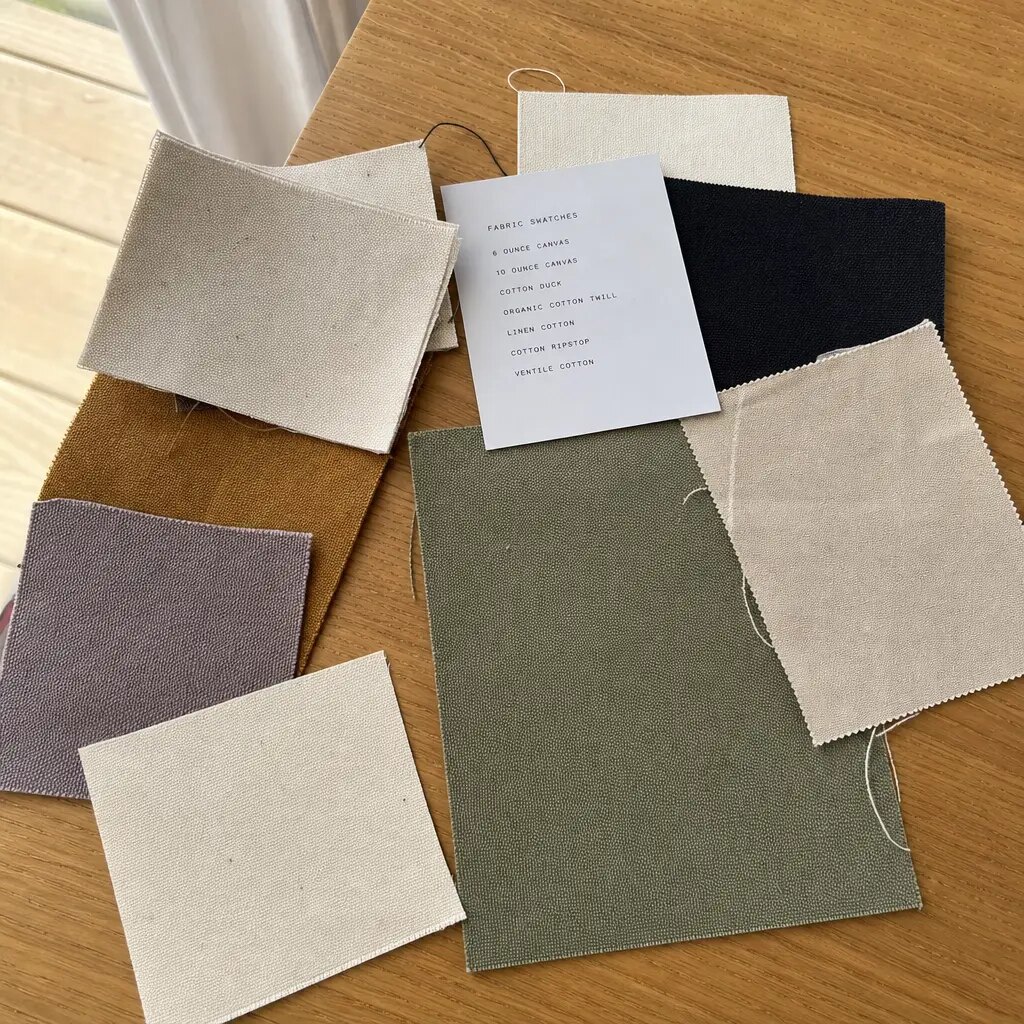
For craft fair use, the practical starting range is 8 oz to 10 oz organic cotton canvas, roughly 270-340 GSM depending on weave and finishing. An 8 oz tote can work for paper goods, textiles, lightweight cosmetics, and event merchandise. A 10 oz tote feels more structured and sells better as a branded retail item, especially when the buyer expects customers to carry heavier goods or reuse the bag many times.
Lighter organic cotton sheeting can reduce cost, but it changes the customer experience. A thin fabric may show through, wrinkle badly after carton packing, and deform when filled. Heavier canvas above 12 oz improves structure but raises fabric cost, sewing difficulty, carton weight, and freight cube. The RFQ should state both the target weight and acceptable tolerance, because ounce descriptions can vary by supplier and may not match the final GSM after bleaching, dyeing, washing, or compacting.
- 6 oz to 7 oz: use only for lightweight giveaways or short-term event packing.
- 8 oz: suitable for general craft fair retail and lower freight impact.
- 10 oz: better for resale totes, premium maker brands, and heavier product categories.
- 12 oz and above: consider only when structure matters more than freight and sewing cost.
- Natural unbleached fabric may show seed flecks; define whether this is acceptable or a defect.
Build the Tote Around Real Booth Use
A craft fair tote should be easy to load, comfortable to carry, and stable enough to sit on a table or hang from a booth hook. A flat tote is cheaper and packs tightly, but it is not the best choice for boxy handmade products. A bottom gusset of 8-12 cm gives the bag useful volume without turning it into a bulky grocery tote. If the buyer sells ceramics, candles, jars, toys, or bundled gift sets, the gusset is usually worth the small added cost.
Handle length is another RFQ detail that affects customer satisfaction. For shoulder carry, a finished handle length around 55-65 cm normally works better than short hand-carry handles. Width should usually be 2.5-3 cm to avoid a cheap feel and reduce pressure on the shoulder. The handle attachment should be box-and-cross stitched or reinforced with bartacks, because the failure point is often the handle seam rather than the fabric body.
- Specify finished width, height, bottom gusset, side gusset if any, and handle length.
- Define handle drop separately if your retail team evaluates shoulder comfort.
- Require reinforced handle stitching on any tote expected to carry dense goods.
- Avoid changing only bag width without checking print placement and carton dimensions.
- Ask for a loaded sample photo using a realistic weight, not an empty beauty shot.
Match Print Method to Artwork and Organic Positioning
Most craft fair tote orders use simple logos, event artwork, or maker-market graphics. For 1-3 solid colors, water-based screen printing is usually the cleanest balance of cost, hand feel, durability, and brand positioning. It keeps the fabric hand softer than heavy plastisol-style prints and suits organic cotton messaging. The limitation is that color on natural cotton can look warmer or duller than the Pantone book, so a physical strike-off matters.
Digital printing can handle gradients, small batches, and full-color artwork, but the buyer should review color saturation, edge sharpness, and wash resistance on the actual fabric. Heat transfer can look sharp at first but may feel less aligned with an organic product story and can crack or peel if the wrong film is used. Embroidery is possible for small logos but adds cost, stitch density risk, and puckering risk on lighter fabrics.
- Use vector artwork for screen printing and define print size in centimeters.
- Reference Pantone colors but approve the physical strike-off on production fabric.
- State whether the print must pass dry rub, wet rub, or light wash testing.
- Avoid fine reversed text on rough natural canvas; it can fill in during printing.
- Keep large solid ink blocks away from seam folds if the bag will be packed tightly.
Set MOQ Logic Before Comparing Unit Prices
MOQ for organic cotton totes is driven by fabric availability, cutting efficiency, print setup, certification paperwork, and packing labor. A supplier may accept 300 pieces if stock natural organic fabric is available and the print is simple. A more realistic custom RFQ often starts at 500-1,000 pieces per size, fabric color, and artwork. If several craft fair designs share the same tote body, the buyer can sometimes consolidate fabric cutting and split only the printing.
The RFQ should separate total order quantity from operational MOQ. A 3,000-piece order divided into six artworks, three sizes, and two fabric colors is not the same as one 3,000-piece run. Each split creates setup time, screen changes, packing segregation, label control, and inspection complexity. Procurement teams should ask suppliers to quote price breaks by clean production scenarios instead of negotiating one blended price that later changes after artwork is finalized.
- Quote Scenario A: one size, one fabric color, one print layout.
- Quote Scenario B: one size, one fabric color, three print layouts.
- Quote Scenario C: two sizes, one fabric color, shared artwork position.
- Quote Scenario D: natural fabric versus dyed organic cotton fabric.
- Request setup costs separately so repeat-order pricing is easier to judge.
Control Organic Claim Evidence
Organic cotton claims can become a commercial risk when the buyer sells through retailers, marketplaces, or distributor catalogs. The supplier's phrase organic cotton is not enough if the brand will make a product claim on a hangtag, website, invoice, or retail label. The RFQ should state which evidence is required: fiber certificate, mill document, transaction certificate, finished goods scope certificate, or another document accepted by the buyer's compliance team.
Not every order needs the same documentation, but the decision must be made before price comparison. Full chain documentation can affect MOQ, lead time, supplier route, and cost. If the tote is only an internal packaging item, the buyer may use a simpler claim such as made with organic cotton if legally suitable in the selling market. If the tote is sold as an organic cotton retail product, the evidence standard should be stricter and written into the purchase order.
- Define the exact claim that will appear on packaging, hangtags, and online listings.
- Match the requested document to that claim before approving artwork.
- Do not allow suppliers to substitute conventional cotton if organic fabric is delayed.
- Keep fabric lot documents linked to purchase order, carton labels, and inspection report.
- If certification is mandatory, reject vague statements such as certificate available on request.
Approve Samples With Production Conditions
A sample is useful only if it represents bulk production. For organic cotton totes, the pre-production sample should use actual fabric weight, actual fabric color, actual handle construction, actual thread, and the selected print method. A showroom sample from another order can confirm sewing ability, but it should not be used as final approval for your size, print, or fabric claim.
The sample approval sheet should record measurable data, not only comments like looks good. Measure width, height, gusset, handle length, print size, print position, fabric feel, stitch density, and carton fold method. If the buyer approves a sample with a slightly crooked print or thin handle, the factory may treat that as the accepted standard. Clear approval notes prevent arguments during final inspection.
- Keep one signed sample with the buyer and one matching sealed sample with the factory.
- Photograph the approved sample beside a ruler and color reference.
- Record approved tolerance for print placement and body dimensions.
- Test a loaded sample using the expected product weight for at least several minutes.
- Do not approve bulk cutting until fabric and print strike-off are accepted.
Packing Decisions Affect Freight and Retail Handling
Packing is not just a warehouse detail. It changes carton cube, labor cost, moisture risk, retail presentation, and sustainability perception. Bulk packing 50 pieces per carton is common for wholesale distribution, but the right quantity depends on fabric weight, gusset size, handle stiffness, and carton weight limit. A carton that exceeds a buyer's warehouse handling limit can create extra repacking cost after arrival.
Individual polybags protect against dust and moisture, but they add material cost, packing time, plastic waste, and carton volume. For craft fair totes, many buyers prefer bulk packing with one inner liner or kraft banding if the receiving process is controlled. If the totes will be shipped directly to multiple stores or event booths, then inner packs of 10 or 25 pieces may reduce counting errors. The RFQ should specify the final handling route so the supplier does not choose the cheapest packing by default.
- Request estimated carton length, width, height, gross weight, and pieces per carton.
- Set a carton gross weight limit that matches your warehouse or parcel carrier rule.
- Define whether bags are folded once, folded twice, or packed flat.
- Specify carton marks, SKU labels, barcode labels, and mixed-carton restrictions.
- Use desiccants or inner liners when shipping during humid seasons or long ocean transit.
Build Lead Time Around Critical Path Steps
Lead time for wholesale organic cotton totes depends on whether fabric is in stock, whether certification documents are ready, how many artworks are involved, and whether printing is done in-house. A simple repeat order using available natural fabric may move quickly. A first order with custom fabric, dyed color, multiple print strike-offs, hangtags, and retailer carton labels needs more planning. Procurement teams should not treat the quoted production time as starting from the first email; it usually starts after deposit, artwork approval, sample approval, and material confirmation.
A practical schedule separates sampling, material sourcing, cutting, printing, sewing, trimming, inspection, packing, and export handover. This prevents hidden delays from being discovered after the craft fair season is already locked. If the goods are needed for a dated event, add buffer for sample courier time, artwork revision, peak-season factory capacity, weather-related drying delays for water-based inks, and customs or port congestion.
- Request a dated production timeline, not only 25-35 days after approval.
- Identify which step starts only after certification or fabric lot confirmation.
- Approve print strike-offs before bulk printing, not after bags are sewn.
- Reserve inspection time before the cargo leaves the factory.
- Avoid launching a new custom dyed fabric order too close to a fixed craft fair date.
Compare Quotes by Total Landed Impact
The lowest FOB unit price is not always the best purchasing result. A lighter tote may reduce unit cost but increase returns, brand complaints, or inability to sell the bag as planned. A poor packing method may save a few cents per piece while increasing carton volume and freight cost. Missing certification evidence may force relabeling or prevent a retail buyer from accepting the goods. Quote comparison should include the commercial use of the tote, not only sewing cost.
Build a landed-cost view that includes sample charges, screen setup, certification documents, hangtags, labels, inland freight, export carton cube, inspection cost, duty basis, and repacking risk. If one supplier quotes a higher unit price but provides controlled fabric documents, stronger handle construction, accurate carton dimensions, and faster sample response, that supplier may be cheaper at landed and retail execution level.
- Normalize all quotes to the same fabric weight, size, gusset, handle, print, and packing.
- Separate one-time charges from repeat-order charges.
- Calculate freight using supplier carton dimensions, not estimated pieces per carton only.
- Value faster sample correction when launch dates are fixed.
- Reject quotes that cannot identify fabric source, print method, or certification scope.
Specification comparison for buyers
| Spec decision | Recommended option | When it fits | Buyer risk to check |
|---|---|---|---|
| Fabric weight for craft fair selling | 8 oz to 10 oz organic cotton canvas, about 270-340 GSM | Good balance for maker markets, bookstore tables, gift sets, and paid retail totes | Some suppliers quote lighter sheeting as canvas; require GSM tolerance and fabric photo under daylight |
| Bag construction | Bottom gusset 8-12 cm with reinforced handle cross-stitch | Needed when buyers carry candles, ceramics, jars, apparel, or multiple small craft purchases | Flat totes look cheaper in quotes but lose shape and fail faster under dense products |
| Print method | Water-based screen print for 1-3 solid colors | Best for organic positioning, clean logos, simple event artwork, and medium-volume runs | Ink color shifts on natural cotton; approve a strike-off on production fabric before bulk printing |
| MOQ structure | 500-1,000 pcs per size/color/print layout | Suitable for distributors consolidating several craft fair clients or brands testing seasonal inventory | Low MOQ quotes may use stock fabric and limited QC; compare unit price together with setup and inland charges |
| Certification evidence | Transaction certificate or organic fiber certificate aligned with order scope when required | Important for retail buyers making organic claims on hangtags, websites, or wholesale catalogs | A mill certificate alone may not cover finished bag production; define what document is needed in the RFQ |
| Packing format | Bulk pack 50 pcs per export carton with inner polybag only if needed for moisture protection | Best for craft fair distributors and brands that will sticker, tag, or kit bags locally | Individual polybags increase cost, carton volume, labor, and plastic-use objections |
| Handle specification | Self-fabric handles 2.5-3 cm wide, 55-65 cm long, box-and-cross stitched | Comfortable shoulder carry for fair visitors walking between booths | Narrow handles cut into shoulders; short handles turn the tote into a hand-carry bag |
| Supplier route | Direct factory for custom fabric, print, packing, and carton control | Best when the RFQ includes organic claim control, custom size, repeat orders, and export packing | Trading quotes can look faster but may hide fabric source, print subcontracting, and carton dimension changes |
Buyer checklist before sampling
- Define finished tote size with width, height, gusset, handle length, and measurement tolerance instead of sending only a reference photo.
- State fabric as organic cotton with target GSM or ounce weight, weave type, color, shrinkage expectation, and required certification document.
- Separate bag quantity by size, fabric color, print artwork, and packing method so each supplier quotes the same MOQ basis.
- Attach logo files in vector format and specify print position, print size, Pantone references, and whether color approval is by digital proof or physical strike-off.
- Require a pre-production sample using actual fabric, actual handle construction, and actual print method before cutting bulk fabric.
- List carton packing expectation, carton weight limit, carton marks, moisture protection, barcode or hangtag needs, and whether individual polybags are prohibited.
- Ask for quoted lead time split into material sourcing, sample making, bulk cutting/sewing, printing, packing, and shipment readiness.
- Compare quotes using finished bag spec, certification scope, sample cost, mold or screen charge, carton cube, payment terms, and inspection allowance.
- Set acceptance criteria for fabric GSM tolerance, print placement tolerance, stitch density, handle pull strength, and visible defect level.
- Confirm whether the supplier is producing in-house or subcontracting printing, dyeing, washing, or sewing, and request control points for each step.
Factory quote questions to send
- What organic cotton certification or transaction document can be supplied for this specific order, and at what MOQ or cost?
- Is the quoted fabric 8 oz, 10 oz, or another weight, and what is the GSM tolerance after finishing?
- Will the sample and bulk production use greige, natural, bleached, dyed, or washed organic cotton fabric?
- What is the recommended MOQ per artwork, per fabric color, and per tote size if several craft fair designs are combined?
- Which print method is included in the quote, and are screen charges, color matching, and strike-off samples included or separate?
- What stitch type, stitch density, seam allowance, and handle reinforcement are included for the quoted construction?
- What finished size tolerance will be accepted for width, height, gusset, and handle drop after sewing and pressing?
- How many pieces are packed per carton, what are the estimated carton dimensions and gross weight, and can cartons stay under our warehouse limit?
- What is the production schedule from artwork approval to ex-factory date, and which steps are on the critical path?
- Can you provide photos or videos of fabric inspection, cutting, print curing, sewing, needle checking, and final carton packing during production?
Quality-control points to confirm
- Fabric GSM should be verified by cutting a measured sample from production fabric, not estimated from supplier description.
- Finished size tolerance should normally be controlled within plus or minus 1 cm for body dimensions and plus or minus 1.5 cm for handle length unless the design requires tighter control.
- Print placement should be measured from top edge and side seams with a tolerance agreed before bulk printing, commonly plus or minus 0.5 cm to 1 cm.
- Handle attachment should use box-and-cross or reinforced bartack stitching with no skipped stitches, loose threads, or seam slippage under reasonable load testing.
- Stitch density should be consistent, commonly around 8-10 stitches per inch for canvas totes depending on fabric thickness and machine setup.
- Natural cotton fabric should be inspected for contamination, oil marks, dark slubs, weaving defects, and unacceptable color panel variation.
- Print curing or drying should be checked by rub test and wash or wet-cloth test when the tote may be reused frequently.
- Cartons should be dry, export grade, correctly marked, and packed to avoid distorted handles, deep creases, and crushed corners.
- Final inspection should separate critical defects such as wrong artwork, wrong fabric, broken seams, severe stains, and missing certification labels.
- Needle and metal control should be documented when the totes are sold into retail channels with stricter product safety procedures.