Start with the craft fair selling situation, not only the tote size
The right material for wholesale organic cotton totes for craft fairs depends on what the bag is expected to do at the event. A tote used as a low-cost vendor giveaway is not the same product as a tote sold by a craft brand next to ceramics, candles, prints, or handmade apparel. Procurement teams often start with dimensions and target price, but the better first question is how the final customer will judge the bag in the first five seconds: fabric hand feel, print clarity, handle comfort, and whether it stands up to the items being carried.
For craft fairs, buyers should treat the tote as both packaging and merchandise. The same bag may carry products during the event, appear in photos, and be reused after the purchase. If the fabric is too thin, the organic claim will not save the product from feeling cheap. If the fabric is too heavy, landed cost and carton volume may remove the margin advantage. A practical RFQ should define the selling role before the factory quotes.
- Giveaway tote: prioritize clean print, low weight, and acceptable seam strength.
- Vendor merchandise tote: prioritize better hand feel, reinforced handles, and retail packing options.
- Distributor stock tote: prioritize repeatable material, standard carton packing, and flexible print MOQ.
- Premium retail tote: prioritize higher GSM, consistent finishing, and stricter inspection thresholds.
Choose GSM by load, hand feel, and freight impact
Fabric weight is one of the fastest ways to change both product perception and cost. For organic cotton totes, a common usable range is about 140 GSM to 340 GSM. Light plain weave cotton around 140-180 GSM can work for promotional or short-use craft fair bags, but it will not carry the same retail feel as a 220-280 GSM canvas. For most wholesale craft fair programs, 220-280 GSM organic cotton canvas is the safer middle ground because it feels durable without becoming bulky.
Heavy canvas around 300-340 GSM gives a more premium result, especially when the tote is sold as a branded item rather than handed out. It also increases fabric consumption cost, sewing time, carton weight, and freight volume. If an importer compares only FOB unit price, the heavier bag may look acceptable. Once ocean freight, warehouse handling, and carton storage are included, the landed cost difference becomes clearer.
- 140-180 GSM: suitable for low-cost event bags, small purchases, or flyer and textile carrying.
- 200-220 GSM: workable bridge option when the buyer wants better feel but tight pricing.
- 220-280 GSM: strong default range for craft fair wholesale totes and reseller programs.
- 300-340 GSM: premium appearance but higher fabric, sewing, print curing, and freight implications.
- Request GSM tolerance in writing; a quoted 240 GSM fabric should not arrive as a noticeably lighter lot.
Natural, dyed, bleached, or washed organic cotton changes the buying risk
Natural undyed organic cotton is popular for craft fairs because it supports a simple handmade or eco-focused visual style. It is also usually easier to position than heavily dyed material. However, natural cotton shade can vary between fabric lots. Some lots appear cream, some more oatmeal, and some have visible cotton seed flecks. Those variations may be acceptable for an artisan market look, but they must be aligned with the brand owner before bulk production.
Dyed organic cotton gives stronger brand color control, but it adds dyeing MOQ, shade approval, and potential colorfastness testing. Bleached cotton creates a cleaner print base but may conflict with the buyer's intended sustainability message if not explained properly. Washed canvas has a softer hand and casual finish, but washing can change size, shrinkage, and production yield. For wholesale programs, material finish should be chosen before artwork approval because the same ink looks different on natural, dyed, and washed fabric.
- Natural cotton: good for earthy craft positioning; manage shade variation and seed flecks.
- Dyed cotton: better brand matching; requires lab dip or color swatch approval.
- Bleached cotton: cleaner white base; confirm how the product claim will be worded.
- Washed cotton canvas: softer premium feel; confirm shrinkage, size tolerance, and color variation.
- For multi-design orders, keep one fabric base where possible to protect MOQ and consistency.
Construction details decide whether the tote survives a real fair day
Craft fair shoppers rarely load a tote evenly. One customer may add candles, a mug, a notebook, and a glass jar on the same side of the bag. The failure points are usually handle attachments, side seams, bottom corners, and stress around gussets. A buyer can avoid many complaints by specifying handle width, handle length, stitching method, and seam construction instead of simply writing "standard tote" in the RFQ.
For most craft fair totes, self-fabric handles around 2.5-3.0 cm wide are more comfortable than narrow cotton tape when the bag carries weight. A handle drop around 25-30 cm can fit shoulder use, while shorter handles fit hand-carry event totes. Handle reinforcement should be visible and consistent. A box stitch with cross stitch, bartack, or dense reinforced stitching at the attachment point is more reliable than a single horizontal stitch hidden inside the top hem.
- Flat tote: lower cost, easier folding, suitable for prints, textiles, catalogs, and light goods.
- Bottom gusset: better for jars, candles, boxed crafts, and mixed market purchases.
- Side gusset: improves volume but increases sewing complexity and carton bulk.
- Top hem: should be even and secure, not loose or twisted around handle insertions.
- Thread: cotton-look polyester thread is often stronger; pure cotton thread may suit positioning but needs strength review.
Print method should match the artwork and the cotton surface
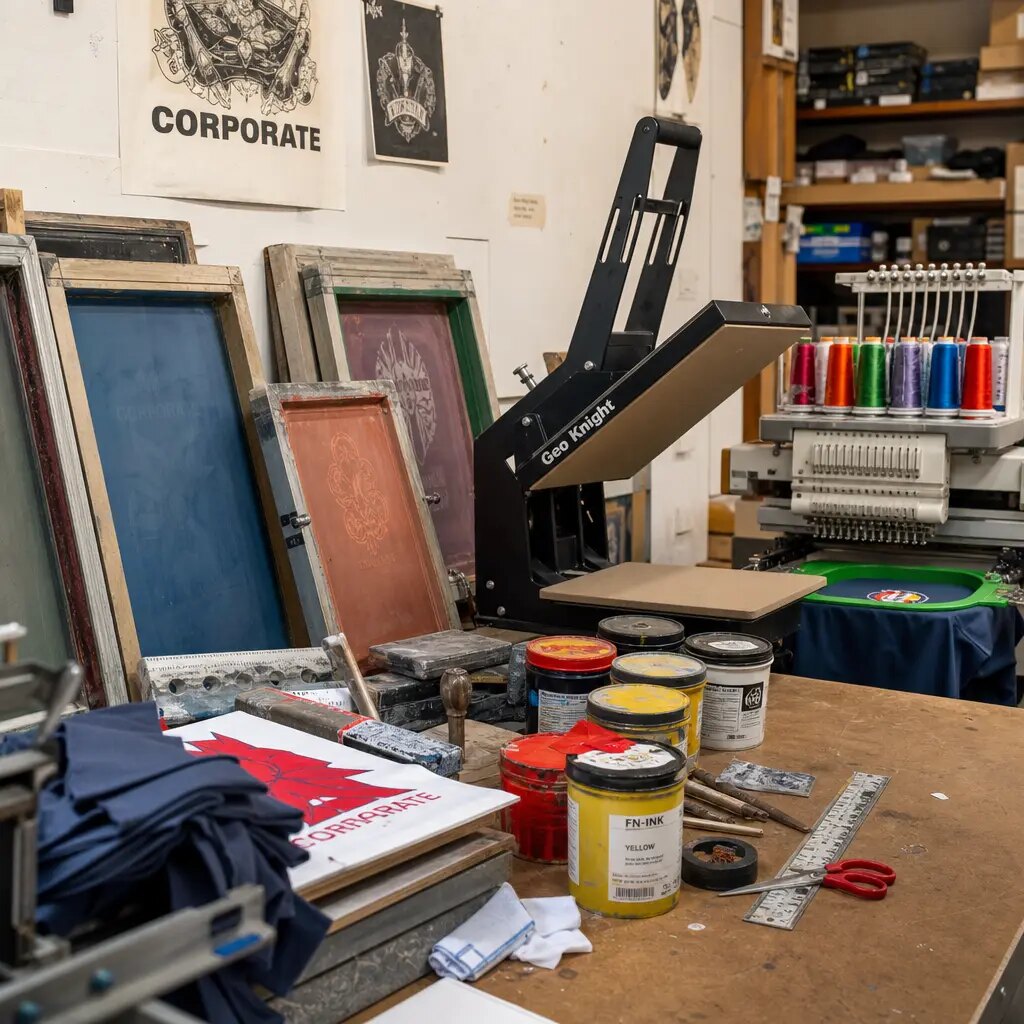
Water-based screen printing is usually the practical option for wholesale organic cotton totes when the artwork uses one to three spot colors. It gives good hand feel, works well on natural cotton, and has better unit economics once setup is spread across bulk quantity. For craft fair brands, simple line art, maker logos, botanical illustrations, and text-based designs often print well by screen if the line thickness and ink coverage are designed for fabric rather than paper.
DTG printing can handle gradients and full-color artwork, but it is normally more suitable for short runs, sampling, or complex designs where screen setup costs are not efficient. Heat transfer may be useful for some detailed graphics, but it can feel less natural on organic cotton and may not align with a premium craft fair product. Embroidery can elevate the tote but increases cost, lead time, and stitch-density risk on lighter fabrics. The print method should be chosen with fabric weight and artwork coverage together.
- One-color logo under moderate size: water-based screen print is usually efficient.
- Large solid ink areas: test hand feel, curing, cracking, and fabric distortion.
- Fine line artwork: confirm minimum line width and negative space before screens are made.
- Full-color illustration: compare DTG sample cost and durability before approving bulk.
- Embroidery: avoid very thin fabrics unless backing and stitch density are properly controlled.
MOQ logic is more than the number of bags
A common mistake in sourcing organic cotton totes is treating MOQ as one single number. The factory may accept 500 or 1,000 bags, but the fabric supplier may require a higher minimum for a specific organic cotton canvas, dyed shade, or washed finish. Printing may have its own setup economics, especially if the order is split across several craft fair vendor logos. Labels, hangtags, paper bands, and individual packing can also create separate minimums.
For distributors and importers, the best commercial structure is often one common tote body with several print designs. This allows the buyer to meet fabric MOQ while offering variety to downstream craft fair clients. The RFQ should state total order quantity, number of designs, quantity per design, and whether all designs use the same bag body, fabric color, handle, and packing. This prevents a supplier from quoting an attractive unit price based on one design and later adding small-run surcharges.
- Separate MOQ lines: fabric MOQ, sewing MOQ, print MOQ, label MOQ, and packing MOQ.
- Clarify whether MOQ is per color, per artwork, per size, or per shipment.
- For split designs, request a setup charge and unit price by design quantity tier.
- If organic certification documents are required, confirm whether they affect minimum quantity.
- A lower MOQ is not always cheaper if setup, sampling, and local handling are repeated.
Sample approval should prove production reality, not only appearance
A good sample is not just a pretty tote for a meeting. It should represent the fabric, sewing method, handle reinforcement, print ink, label, and packing that will be used in bulk production. If the factory makes the sample from available stock fabric while the bulk order will use a newly sourced organic cotton lot, the buyer still has unresolved risk. The sample approval record should clearly state what is approved and what remains provisional.
For craft fair totes, the buyer should handle the sample like an end user. Put realistic weight inside it, carry it by hand and shoulder, fold and unfold it, rub the print surface, and review whether the fabric feels appropriate for the selling price. The factory should receive specific comments, not general approval. A sample with approved size but rejected handle length should not be treated as fully approved.
- Measure height, width, gusset, handle drop, and handle width against the specification.
- Weigh or verify fabric GSM; do not rely only on hand feel.
- Load test the tote with a realistic craft fair weight such as books, jars, or boxed goods.
- Rub the printed area with a dry and slightly damp white cloth for obvious ink transfer.
- Confirm folding method, retail banding, hangtag position, and carton count if presentation matters.
- Keep one approved sample with the buyer and one sealed reference sample at the factory.
Quote comparison should use landed cost per sellable tote
Two supplier quotes can look similar while delivering very different economics. A 260 GSM gusseted tote with reinforced handles, retail paper band, and water-based print is not comparable to a 180 GSM flat tote with basic stitching and bulk carton packing. Procurement teams should build a quote sheet that separates material, construction, print, packing, sampling, testing, and freight-sensitive data. This makes cost drivers visible before negotiation.
For wholesale organic cotton totes, landed cost per sellable unit is more useful than FOB price alone. Heavier GSM increases carton gross weight. Gussets increase folded volume. Individual packing adds labor and material, but may reduce repacking cost in the destination warehouse. A slightly higher factory price can be cheaper overall if it reduces damage, sorting, or relabeling after arrival. Buyers should also consider defect allowance: a cheaper quote with weak QC can reduce the number of sellable bags.
- Compare FOB unit price only after matching GSM, size, handle, print, and packing.
- Request carton dimensions and gross weight before estimating freight and warehouse cost.
- Include sample cost, print setup charge, label cost, testing fees if needed, and inspection cost.
- Calculate cost per sellable unit, not only cost per produced unit.
- Record assumptions for exchange rate, freight method, duty code review, and destination handling.
Packing decisions affect presentation, moisture risk, and warehouse labor
Organic cotton totes are often packed in bulk cartons to reduce material use and cost. For distributors and event suppliers, bulk packing can be correct if the totes will be handed to vendors or repacked locally. However, bulk packing must still protect the bags from moisture, dirt, heavy creasing, and carton failure. Natural cotton shows stains easily, so carton cleanliness and inner liner decisions matter more than buyers sometimes expect.
Retail-focused craft fair totes may need paper bands, hangtags, or individual recycled polybags depending on the sales channel. Each option changes labor, MOQ, and packing speed. A paper band can present the tote neatly without the plastic-heavy appearance of individual polybags, but it must be sized correctly so it does not crush the folded bag or slide off during transit. If destination warehouses require barcodes, carton marks, or SKU separation, those details should be included in the quote, not handled after production as an emergency.
- Bulk pack: lowest packing cost, suitable for distributor cartons and event programs.
- Paper band: good retail presentation, adds labor and printed material MOQ.
- Individual polybag: protects from moisture and dirt, but may conflict with sustainability positioning.
- Carton gross weight: keep manageable for warehouse handling and courier limitations.
- Moisture control: use clean export cartons and appropriate inner protection for ocean shipments.
Lead time risk usually sits in fabric and approval steps
The production calendar for wholesale organic cotton totes should be built around approval gates. Material sourcing, lab dip or shade approval, sample making, print proofing, bulk cutting, printing, sewing, packing, final inspection, and export handover each need time. The most common schedule problems come from late artwork approval, unclear certification requirements, custom dyed fabric, or sample changes after the buyer has already announced an event date.
For repeat programs, buyers can reduce risk by locking the base fabric and construction first, then rotating artwork. For first orders, allow time to approve fabric swatches and printed samples before bulk cutting. If the order must arrive before a craft fair season, the purchase order should include the latest acceptable shipment date, not just the desired delivery date. Air freight can rescue timing but may destroy margin on heavy canvas totes.
- Fastest route: stock natural organic cotton fabric, standard tote size, simple screen print, bulk packing.
- Higher-risk route: custom dyed fabric, multiple artwork versions, retail packing, certification documents, and tight event deadline.
- Freeze artwork before screen making; late changes create setup waste and schedule slip.
- Approve production sample before bulk cutting if GSM or construction is new.
- Build inspection time into the plan instead of inspecting after the vessel cutoff is already missed.
Specification comparison for buyers
| Spec decision | Recommended option | When it fits | Buyer risk to check |
|---|---|---|---|
| Fabric weight for general craft fair resale | 220-280 GSM organic cotton canvas | Balanced choice for printed vendor totes, gift shop resale, and brand merchandise where the bag must feel substantial but still fold flat | Below 220 GSM can feel promotional; above 280 GSM may raise freight, sewing time, and unit cost without improving sell-through |
| Fabric weight for lightweight giveaway | 140-180 GSM organic cotton plain weave or light canvas | Budget-sensitive events, swag inserts, small item purchases, or short carrying periods | Handles and bottom seams must be reinforced because buyers may still load ceramics, candles, or books |
| Fabric weight for premium maker market tote | 300-340 GSM organic cotton canvas | Retail-priced tote programs, museum shops, premium craft fair merchandise, or designs with heavy ink coverage | Thicker cloth may need stronger needles, slower sewing, and print curing adjustments; request a pre-production sample |
| Handle construction | Self-fabric handles, 2.5-3.0 cm width, cross-stitched at attachment | Most craft fair totes where customers carry mixed small goods and want a natural material look | Narrow handles cut into the hand; unreinforced handle ends fail first under load |
| Bottom style | Flat tote for low-cost bulk orders; gusseted bottom for retail utility | Flat bags suit brochures, textiles, prints, and light purchases; gussets suit jars, candles, packaged crafts, and farmers market crossover use | A gusset adds fabric consumption and sewing operations; carton dimensions also increase |
| Print method | Water-based screen print for 1-3 spot colors; DTG only for short runs or complex artwork | Screen printing gives better unit economics for wholesale quantities and natural cotton branding | Dense ink on organic cotton may change hand feel; confirm curing, wash fastness, and artwork line thickness |
| Certification positioning | Use certified organic cotton claim only when chain-of-custody documents are included in the quote scope | Retail buyers, eco-focused brand owners, museum shops, and distributors needing compliant product descriptions | Do not print or advertise certification logos unless the supplier confirms authorization and transaction documents |
| MOQ structure | Separate MOQ by fabric, dyeing, print color count, and label/packing requirements | Importers comparing suppliers or consolidating several craft fair customer designs under one fabric base | A low bag MOQ may hide higher MOQs for organic fabric procurement, custom labels, or individual polybag packing |
| Packing format | Bulk pack folded by size, with optional paper band or recycled polybag only when needed | Wholesale cartons for distributors, retail backrooms, and event fulfillment where speed and clean presentation matter | Overpacking raises labor and material cost; underpacking risks moisture, creasing, and carton damage during ocean transit |
Buyer checklist before sampling
- Define the bag use before quoting: giveaway, resale tote, vendor merchandise, or premium retail item.
- Specify organic cotton fabric type, GSM range, natural or dyed color, and whether certification documents are required.
- State bag dimensions with tolerance, handle length, handle width, bottom style, and seam reinforcement method.
- Provide artwork size, ink colors, print position, coverage area, and whether the design crosses seams or gussets.
- Request fabric swatches and a printed sample using the intended fabric weight, not a substitute cloth.
- Separate required MOQ for fabric, printing, labels, hangtags, retail packing, and carton marking.
- Set acceptance criteria for fabric weight tolerance, shrinkage, color deviation, print registration, and seam strength.
- Confirm carton quantity, carton dimensions, gross weight limits, inner packing, and palletization if required.
- Ask for a production timeline showing material sourcing, sample approval, printing, sewing, packing, inspection, and export handover.
- Compare quotes using landed cost per sellable bag, including defects allowance, freight impact from GSM, and repacking labor at destination.
Factory quote questions to send
- What organic cotton fabric options are available for this tote: plain weave, canvas, or twill, and what GSM tolerance applies?
- Is the quoted organic cotton certified, and what documents can be supplied with the shipment if we need to make an organic claim?
- What is the MOQ for this exact fabric weight and color, and does it change if we split the order across several printed designs?
- Can you quote flat tote and gusseted tote versions separately using the same artwork and handle specification?
- What handle reinforcement is included in the quoted price: single stitch, box stitch, cross stitch, or bartack?
- Which print method do you recommend for our artwork, and what are the setup charges, color limits, and curing requirements?
- Can the sample be made with production fabric, production thread, production print ink, and final packing method?
- What are your normal tolerances for size, GSM, print position, and color matching on natural organic cotton?
- How many units per export carton, what carton size, and what estimated gross weight for each material option?
- What lead time applies after sample approval, and which step is most likely to move the schedule: fabric procurement, printing, sewing, or packing?
Quality-control points to confirm
- Fabric GSM verified by cutting and weighing a representative fabric sample before bulk cutting.
- Bag dimensions measured after sewing with agreed tolerance, typically tighter on width and height than on handle drop.
- Handle attachment tested by pull load or repeated lift test suitable for the expected retail load.
- Seams inspected for skipped stitches, open seams, loose threads, needle holes, and uneven topstitching.
- Print checked for registration, ink coverage, curing, cracking, rubbing, and position against approved sample.
- Natural cotton shade sorted within acceptable range because undyed organic cotton can vary by lot.
- Labels, hangtags, care labels, and carton marks verified against purchase order and destination requirements.
- Packing checked for moisture control, folding consistency, carton strength, carton weight, and accurate count per carton.
- Final AQL inspection or agreed shipment inspection completed before balance payment or container handover.