Start With The Gift Use Case, Not The Tote
A corporate gifting tote is not the same product as a grocery bag or a trade show giveaway. The buyer has to decide what the bag must do in the hand, on a desk, and in transit. If it will carry a notebook, bottle, and brochure set, the tote needs more fabric weight, stronger handles, and better print control than a light promo bag.
The first RFQ should define the end use before it asks for a unit price. State the event type, expected contents, target audience, and whether the bag will be handed out at a venue or shipped in advance. That context tells the factory whether to recommend 100-120gsm, 140-160gsm, or a heavier build, and it keeps low-grade substitutions out of the quote.
- Write the use case into the PO: conference handout, VIP gift set, staff welcome kit, or retail resale.
- Set the carrying load target if the tote must hold a bottle, catalog, or boxed gift.
- Choose one reference bag style and keep the shape fixed across supplier quotes.
- Avoid asking for a generic organic cotton tote without dimensions or intended contents.
Fabric Weight And Finish Decide The First Impression
For corporate gifting, fabric weight is one of the few spec choices a buyer can feel immediately. Around 140-160gsm is usually the practical zone for a bag that should look substantial without becoming bulky. Lower weights can work for light promotional handouts, but they often drape poorly, show contents, and crease too easily in transit.
Finish matters almost as much as GSM. A tight plain weave with controlled shrinkage will print more cleanly than a loose, hairy fabric with uneven yarn tension. If the order is sold as organic cotton, ask what finish is used after weaving and whether the factory can hold size after a light wash or steam process.
- Ask for the fabric GSM measured on the actual bulk cloth, not on a catalog description.
- Request one cut piece that shows weave density and surface finish before bulk starts.
- If the tote will carry heavier gifts, move up in weight or reinforce the seam and handle zones.
- Do not compare unbleached and bleached cloth as if they were the same input; they behave differently in print and color.
Decoration Method Should Match Artwork And Volume
Most corporate gifting programs work best with one- to three-color screen print. It is the most stable option for cotton totes because it gives strong coverage, repeatable registration, and a clean cost structure once the setup is absorbed. Water-based ink usually gives a softer hand feel on organic cotton, which helps the bag look less plastic and more premium.
The wrong decoration choice creates avoidable defects. Fine gradients, tiny text, and overcomplicated multi-color art are hard to keep sharp on a woven surface. If the logo is small and the tote is meant to feel premium, a woven side label or restrained embroidery can work, but the buyer should test the result on the actual fabric before approving a full run.
- Limit the number of print colors unless the artwork truly needs more.
- Make the factory quote the screen or setup cost separately from the unit price.
- Confirm the exact print size and placement in millimeters, not just in a mockup.
- Reject any plan that hides a complex decoration method behind a low tote price.
MOQ And Quote Logic Are Where Buyers Lose Comparison Control
The cheapest quote often wins on paper because it leaves out the hidden parts of production. For organic cotton totes, the true cost can include fabric sourcing, cutting wastage, screen setup, packing materials, carton marks, and export paperwork. A buyer should ask for a quote that separates these items so the factory cannot blur them into one number.
MOQ logic also matters. A factory may offer one low unit price but require a high minimum per color, per print version, or per packing format. That is acceptable if the order is large and stable. It is a problem if the buyer needs several gift tiers, multiple branch logos, or a regional rollout that will split volumes across SKUs.
- Ask for price breaks by quantity band and by artwork version.
- Separate the price of the blank tote from the print and packaging charges.
- Verify whether MOQ is calculated by style, color, or total order value.
- Check whether sample charges are refundable after bulk placement, and under what conditions.
Compare Supplier Routes Before You Compare Supplier Prices
A direct factory, a trader, and a local decorator can all quote the same tote, but they do not carry the same risk. A direct factory gives better control over material, stitching, and print consistency when the order repeats. A trader may be useful when the buyer needs mixed items or a lower minimum, but the quote can hide extra handling steps and slower defect resolution.
A local decorator can make sense when the schedule is tight and the blanks are already approved. The tradeoff is that the buyer must control the base tote quality separately, because the decorator may only own the print step. For organic cotton programs, this route can also complicate traceability if the blank bag source and the print facility are not aligned on paperwork.
- Use direct factory sourcing when the tote is a repeat corporate program.
- Use a trader only if you need mixed SKUs or do not have enough volume for a factory MOQ.
- Use a local decorator when delivery speed matters more than full manufacturing control.
- Do not accept a quote until you know which party owns fabric, cutting, printing, and packing.
Supplier Evidence Should Match The Organic Claim
If the program depends on an organic cotton claim, the buyer should ask for current, usable evidence rather than a vague promise. That means the factory should be able to show what raw material it buys, where it is processed, and what documents it can attach to the shipment. For many buyers, the key point is not marketing language but traceability at the lot level.
The factory should also be able to show how it handles incoming inspection, cutting control, and print-line checks. A nice sample does not prove a stable process. Ask for recent production photos, quality records, and the team structure that will actually run the order. The person selling the tote should not be the only person who understands the build.
- Request current scope or traceability documents if the organic claim will be used in sales material.
- Ask who signs off on incoming fabric, in-process print, and final packing.
- Review whether the factory can identify the same construction on a repeat reorder.
- Treat generic certificates and undated photos as support material, not proof.
Sample Approval Must Freeze The Real Production Inputs
A sample is only useful if it captures the final fabric, final print method, and final packing spec. A blank sample or a photo proof tells you almost nothing about the bulk result. The most reliable route is a pre-production sample that is approved against a sealed reference piece, then held by both sides until the shipment is complete.
The buyer should inspect the sample like a production control document. Check dimensions, handle symmetry, print position, seam behavior, and bag shape when folded and opened. If the bag will be used as a gift, also check presentation: no stray threads, no dark marks from handling, no crushed corners, and no visible packing damage.
- Approve one physical golden sample and keep it tied to the PO.
- Measure the sample after steaming or light conditioning if shrinkage matters.
- Make artwork changes before production starts, not after the sample is signed off.
- Do not rely on a digital proof when you need print texture or color judgment.
Packing Details Protect The Gift Experience
Corporate gifting buyers often focus on the bag and ignore how it arrives. That is a mistake. A tote that prints well can still arrive wrinkled, dusty, or unevenly folded, which makes the whole gift set look less disciplined. Packing should match the distribution path: event handout, office distribution, or retail resale.
For flat-pack corporate gifts, the factory should agree the fold line, carton count, and inner wrap before production begins. If individual presentation matters, a tissue wrap or paper band can keep the bag clean without adding the bulk of a full retail polybag. If the product is going into a larger gift box, the tote should fit the box layout without forcing the handles to bend sharply.
- Confirm the fold direction so the print remains visible when the bag is opened.
- Specify whether each tote needs a polybag, tissue wrap, paper band, or no inner pack.
- Ask for carton dimensions and carton quantity so logistics can plan storage space.
- Check that carton marks match the PO, SKU, and destination label.
Lead Time Risk Usually Starts With Artwork And Fabric
A tote order can look short on paper and still slip badly if the buyer changes the art or the fabric after sampling. Lead time is not only cutting and sewing. It also includes fabric availability, screen preparation, print approval, packing material sourcing, and final inspection. If the order lands near a holiday or trade show season, those steps compress fast.
A practical schedule usually needs buffer time for sample correction and bulk approval. For a standard run, factories may quote a sample window and then a longer bulk window after approval. Buyers should treat that as a starting point, not a promise. The safest way to protect the event date is to freeze artwork and packaging early, then avoid midstream changes unless the schedule can absorb them.
- Build extra time into the plan if the order needs organic fabric sourcing or special packing.
- Freeze the art file before the sample is approved.
- Ask the factory what would delay the ship date: fabric, print, packing, or inspection.
- Plan a reorder window if the bag may be used in multiple campaigns.
Compare Landed Cost, Not Just Factory Cost
The cleanest comparison is the landed cost at your warehouse or event point, not the ex-factory unit price. A low quote can become expensive once you add freight, duties, inland handling, packing upgrades, and rework from a weak sample. This is especially true for corporate gifting, where the bag often has a fixed delivery date and little room for recovery if something is wrong.
Buyers should ask each supplier to quote on the same basis. If one quote is FOB and another is DDP, you do not have a real comparison until freight and import costs are normalized. Once the numbers are aligned, the supplier with better control over defect rate, packaging, and documentation is often the better commercial choice even if the unit price is higher.
- Normalize every quote to the same Incoterm before comparing.
- Add freight, duties, packing upgrades, and inspection cost to the model.
- Include the cost of replacing rejected bags or repacking damaged cartons.
- Choose the supplier with the lowest landed risk, not only the lowest unit number.
Specification comparison for buyers
| Spec decision | Recommended option | When it fits | Buyer risk to check |
|---|---|---|---|
| Fabric weight | 140-160gsm organic cotton for a premium corporate gift; 100-120gsm only for light promo use | Best for buyers who want the tote to feel substantial, hold brochures or small gifts, and photograph well at events | Thin fabric can look cheap, show contents, and shrink or twist after finishing |
| Weave and finish | Tight plain weave with a clean scour or light bleach finish, then a controlled shrinkage process | Best when the logo needs a smooth print surface and the gift program needs a consistent color across batches | Loose weave, slubs, and lint create uneven print edges and a less refined hand feel |
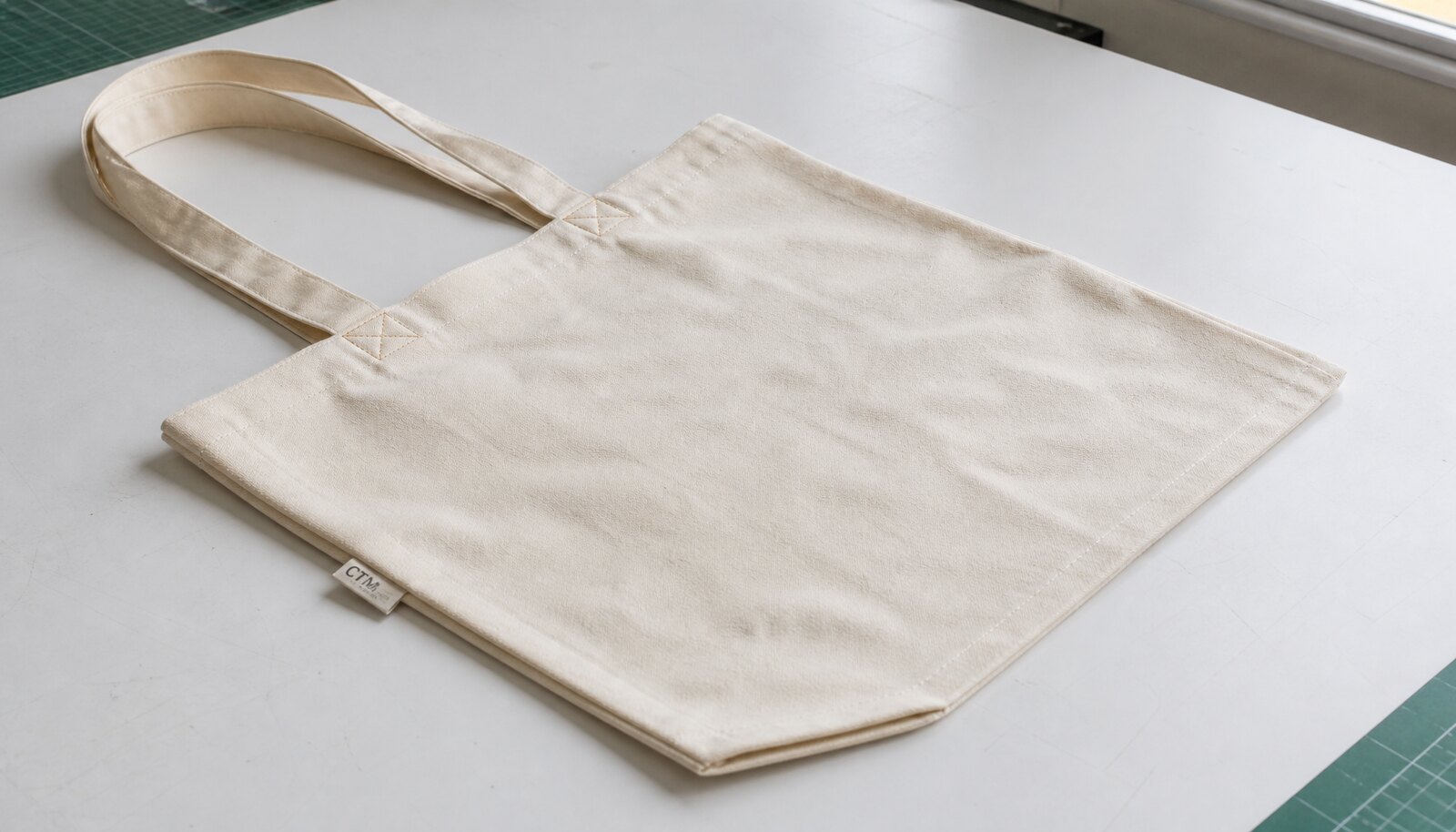
| Handle construction | Self-fabric handles with folded edges, bar-tacks or X-box reinforcement at stress points | Best for heavier gift sets, catalogs, or orders that will be carried at a conference or product launch | Handle length variance and weak stitch reinforcement are the fastest route to complaints and returns |
| Decoration method | Water-based screen print for simple logos and spot colors; embroidery or woven label only for smaller premium marks | Best for repeat corporate programs where artwork is stable and the order volume justifies setup | Low-resolution artwork, poor registration, and ink strike-through are common when the method does not match the fabric |
| Sample route | Approve a pre-production sample made from final fabric, final print method, and final packing | Best for first orders, new suppliers, or any buyer who needs a reliable reference for future reorders | A photo sample or blank sample does not protect you from production drift |
| Supplier route | Direct factory for repeat volume, trader for mixed items or very low MOQ, local decorator for urgent domestic delivery | Best when the buyer matches the route to lead time, volume, and control needs | Margin stacking, unclear traceability, and weak process control can hide in trader quotes |
| Packing format | Flat bulk pack in master cartons with clean tissue or a paper band; individual polybag only if the end user needs it | Best for corporate gifts that will be distributed in-house or inserted into event kits | Overpacked cartons crease the bag; loose packing creates dirt and crease claims |
| Quote basis | FOB with separate freight and duties when comparing overseas factories; DDP only if all landed costs are transparent | Best when procurement needs a true apples-to-apples comparison across suppliers | A low unit price can hide screen fees, inner packing, inland freight, or weak export documentation |
Buyer checklist before sampling
- Confirm the final tote size, gusset, handle length, and finished bag tolerance before you ask for pricing.
- Specify fabric weight in GSM, fabric color, and whether the cotton is bleached, unbleached, or dyed after weaving.
- Send print-ready artwork with Pantone references, logo placement, print size, and acceptable color deviation.
- State whether the order needs a pre-production sample, a sealed golden sample, or a photo-only approval path.
- Define the packing method: bulk carton, tissue wrap, paper band, individual polybag, or retail insert card.
- Ask the factory to separate unit price, print setup, sample charge, carton charge, and freight in the quote.
- Request the factory's current material traceability documents if the order will be sold or marketed as organic.
- Set an inspection standard for stitching, print registration, dimensions, and carton count before shipment.
- Confirm the target ship date against your event date and build in time for sample correction or rework.
- Plan a reorder path now if the corporate program may repeat, so the factory can hold fabric and print settings.
Factory quote questions to send
- What exact fabric GSM, weave, and finishing process will you use for this tote?
- What is the MOQ by color, by print version, and by packing configuration?
- Which decoration method do you recommend for this artwork, and why?
- What does the unit price include: print setup, sample, carton, inner packing, and export marks?
- What is the lead time from sample approval to bulk completion, and what changes it?
- What shrinkage allowance have you built into the finished size?
- What inspection standard do you use for major, minor, and critical defects?
- Can you provide current traceability documents or scope evidence for the organic cotton claim?
- How do you pack the bags to avoid creasing, dirt, or handle distortion in transit?
- What extra charges apply if we change the logo, color, carton spec, or delivery term after approval?
Quality-control points to confirm
- Check that the finished GSM matches the order spec within the agreed tolerance band, not just the uncut fabric.
- Measure finished dimensions, gusset depth, and handle length on multiple pieces from the sample and bulk run.
- Inspect handle attachment points for bar-tacks, stitch density, and symmetry; reject loose or wandering stitches.
- Verify print placement, registration, ink coverage, and opacity under normal indoor light, not only in photos.
- Test for color variation between the sample, top-of-batch piece, and the rest of the lot.
- Check for holes, broken threads, oil stains, yarn slubs, and visible lint on the front panel and seams.
- Confirm the bag keeps its shape after a light steam or wash test if shrinkage matters to the program.
- Open cartons and count the packing ratio, inner wrap, carton marks, and quantity against the packing list.
- Verify that the golden sample, PO, artwork file, and packaging instructions all match before release.
- Hold shipment if the factory cannot explain a defect pattern or show a corrective action for repeat issues.