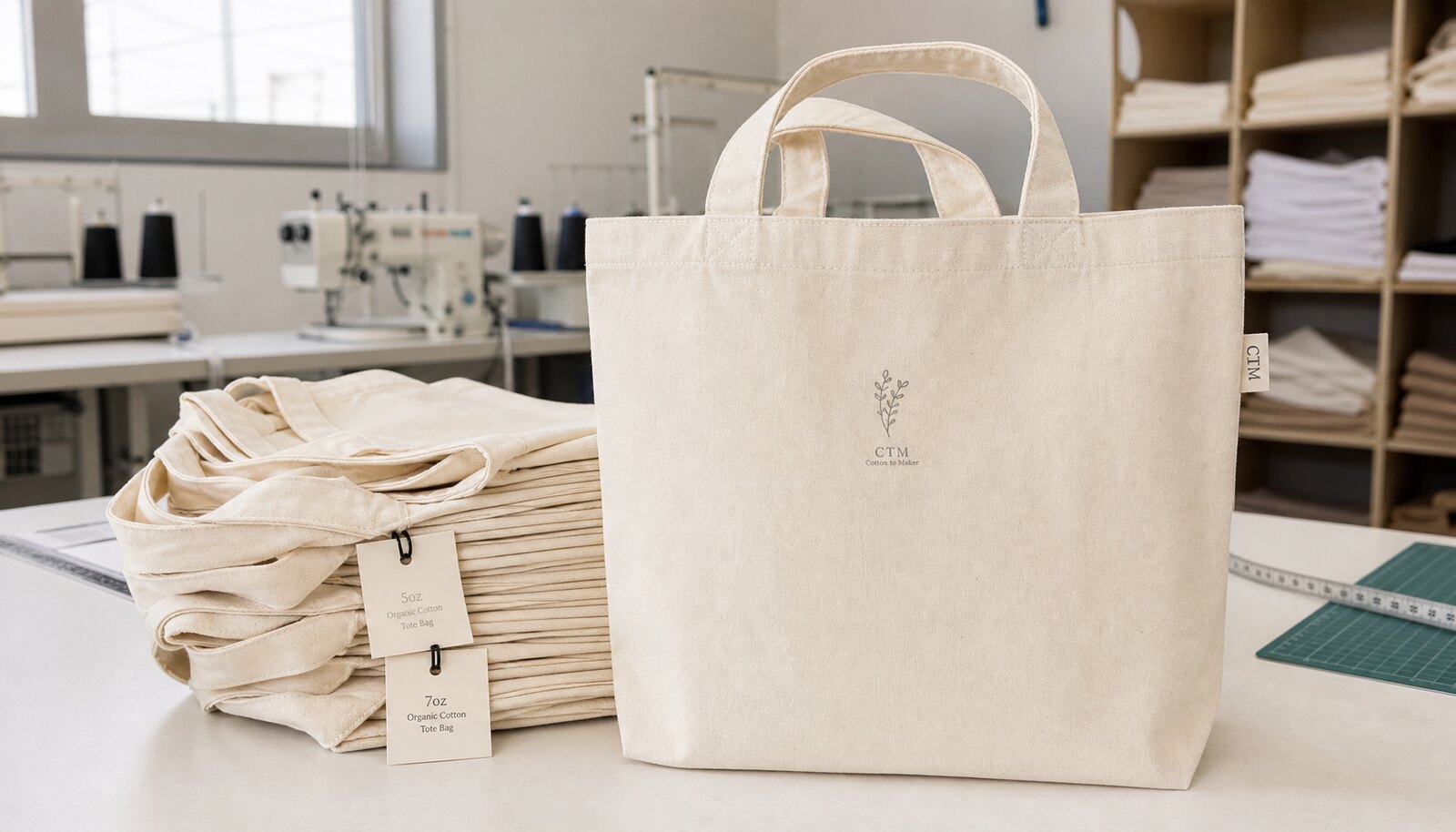
Start with the real buying job
A corporate gifting tote is not just a blank bag with a logo. It may need to carry an onboarding kit, protect a gift box, present well at a conference booth, support a sustainability claim, or arrive sorted by department. Those requirements change the fabric, handle construction, print method, packing, inspection plan, and minimum order quantity.
Before negotiating MOQ, define the use case in operational language. A lightweight trade-show giveaway can accept a different fabric and packing plan than a VIP gift kit holding a bottle, notebook, and boxed product sample. A distributor stock item needs reorder consistency. A one-time event order may value speed more than custom trim.
The strongest buyer position is a clear list of what cannot move and what can. Finished size, handle strength, logo quality, and claim documentation may be fixed. Individual wrapping, a custom side label, second print position, or special fold may be optional. This lets the supplier propose useful alternatives instead of guessing.
- State whether the tote is a giveaway, gift container, daily-use bag, retail-style item, or stock item.
- List the actual contents and estimated packed weight.
- Separate must-have requirements from nice-to-have presentation details.
- Confirm the event date, ship-to locations, and whether split deliveries are needed.
- Ask for first-order MOQ, reorder MOQ, and price breaks in one quote.
Write the RFQ as a tote specification
An RFQ that says "organic cotton tote with logo" will produce mismatched quotes. One supplier may price a light plain-weave bag, another a heavier canvas tote, and another a stock blank with local decoration. The unit prices may look comparable, but the products are not.
Use finished measurements, not cutting dimensions. A common flat tote around 38 x 42 cm works for documents and many welcome kits. Add an 8-12 cm gusset for boxes, drinkware, folded apparel, or thicker bundles. Define handle width, total handle length, handle drop, and reinforcement at the handle join.
Fabric should be described in measurable terms: GSM, weave or fabric type, color, and handfeel expectation. As a practical range, 140-160 GSM can suit light gifting and events. For premium kits or heavier contents, 180-220 GSM is usually safer, though it increases fabric cost and carton volume. Ask whether the fabric is stock, booked from a mill, or custom dyed.
- Specify GSM, weave, color, finished size, gusset, handle width, handle length, and reinforcement method.
- Include vector artwork, print size, print position, print colors, and Pantone references.
- Ask suppliers to quote the same spec before comparing unit prices.
- Identify whether natural shade variation, seed flecks, or slubs are acceptable.
- Include target quantity, delivery date, Incoterm, and packing format in the RFQ.
Find the MOQ driver
MOQ is usually a chain of smaller minimums. The visible number may come from fabric booking, cutting efficiency, screen-print setup, custom labels, insert cards, carton sorting, or organic-claim documentation. A supplier quoting 1,000 pieces is not automatically less flexible than one quoting 300 pieces; they may be pricing different assumptions.
Ask the supplier to name the driver. If fabric is the constraint, stock natural organic cotton may lower the entry quantity. If print setup is the issue, fewer artworks or one print position may help. If labels or paper bands create the minimum, a standard label or bulk packing option may be more efficient.
Per-artwork MOQ is especially important for corporate programs. A factory may accept 2,000 pieces total but require 500 pieces per logo because each artwork needs setup, printing, drying, sorting, and inspection. Moving event dates or department names to insert cards can preserve customization without fragmenting the tote production.
- Request MOQ by blank tote, printed tote, fabric color, artwork, label, insert card, and packing style.
- Ask whether one base tote run can be split across several logos or destinations.
- Compare stock fabric versus custom fabric MOQ.
- Confirm whether the quoted MOQ applies to reorders.
- Be cautious with very low MOQ offers unless the exact fabric, print method, and documents are confirmed.
Negotiate tradeoffs that protect quality
MOQ negotiation works best when it gives the factory a workable production route. Asking for a lower quantity with no change often leads to a refusal, a higher unit cost, or hidden substitutions. Protect the items that affect performance and brand trust first: fabric weight, handle reinforcement, logo approval, documentation, and inspection.
Tiered pricing is the cleanest starting point. Ask for 500, 1,000, 2,500, and 5,000 pieces using the same specification. The curve shows where setup, fabric use, or packing labor becomes efficient. If the drop from 500 to 1,000 is large, consolidation may be worth it. If the drop is small, the supplier may already be near the efficient cost floor.
Commercial levers are safer than quality concessions. You can offer paid setup charges, accept a longer lead time, standardize the base tote, use bulk packing, reduce print colors, or combine department orders. Avoid reducing seam strength or skipping sample approval just to hit a lower number.
- Ask for tier pricing at identical specs, not downgraded specs.
- Offer to pay screen, sample, or setup charges separately if it lowers production MOQ.
- Combine several department orders into one base tote run.
- Simplify artwork before reducing fabric weight or handle reinforcement.
- Keep pre-production sample approval and final inspection in the plan.
Compare supplier routes side by side
The best route depends on risk, timing, and control. A direct tote factory is strong for repeat programs, detailed specs, and consistent QC. It can usually explain fabric, sewing, printing, and packing constraints more clearly because it manages production.
A trading company or sourcing consolidator can be useful when the tote is one part of a larger gift kit with notebooks, bottles, apparel, cards, or fulfillment. The tradeoff is that technical answers may take longer because the actual tote factory or printer must be consulted.
A local decorator may be the right answer for urgent domestic campaigns or late artwork changes. This route often uses imported blank organic cotton totes and prints them locally. It may support smaller quantities, but blank options, fabric consistency, and claim documentation can be limited. In any route, define who owns defects, replacement, rework, and inspection release.
- Use direct factory sourcing for repeat tote programs and tight specification control.
- Use a consolidator when multi-item kit coordination is the bigger risk.
- Use local decoration when speed and late artwork flexibility matter most.
- Ask who controls fabric sourcing, printing, packing, and corrective action.
- Make the approved sample binding for all parties.
Normalize the quote before award
Organic cotton tote quotes often bundle costs differently. One supplier may include print setup, export cartons, and a pre-production sample. Another may exclude sample freight, barcode labels, insert cards, document fees, or inspection support. A low unit price can become less attractive once the missing parts are added.
Build a quote comparison grid with the same fields for each supplier: GSM, finished size, gusset, handle construction, print method, print colors, label, packing format, carton data, lead time, Incoterm, currency, payment terms, sample charge, document support, and price validity. Record assumptions that often sit only in email, such as whether the print is one side or two sides.
Carton data matters because tote bags are bulky for their value. Heavier GSM, gussets, belly bands, insert cards, and individual polybags can increase carton volume. Ask for pieces per carton, carton dimensions, net weight, and gross weight before calculating landed cost or choosing air versus ocean freight.
- Compare quotes on the same Incoterm, currency, payment term, and validity period.
- Require line items for fabric, sewing, print, labels, packing, samples, documents, cartons, and freight basis.
- Ask whether screen charges, artwork revisions, strike-offs, and sample freight are included.
- Collect carton dimensions and gross weight before landed-cost review.
- Flag vague terms such as "eco cotton" or "premium canvas" without GSM and document detail.
Control samples and artwork early
Sampling is where the tote becomes a product instead of a concept. A digital mockup can confirm logo position, but it cannot prove fabric opacity, handfeel, seam strength, print edge quality, or folding behavior. For corporate gifting, the approval sample should use production fabric, production thread, final handle construction, actual print process, final label placement, and intended packing.
Test the sample with the real contents or a realistic substitute. Load the notebook, bottle, box, catalog, apparel bundle, or kit the recipient will receive. Check handle comfort, seam strain, bag distortion, and logo visibility when filled. A tote that looks clean lying flat may not present well once packed.
Cotton texture affects artwork. Fine lines, tight gaps, small type, and large solid ink areas can behave differently than they do on coated paper. Ask for a strike-off on production fabric, especially for brand colors. Approve against a physical sample under consistent lighting, not only a phone photo.
- Approve a pre-production sample rather than relying on a stock counter sample.
- Test the sample with actual contents and approximate final weight.
- Confirm minimum line thickness, text height, print position, and Pantone targets before screens are made.
- Keep a signed reference sample for inspection and reorders.
- Require a revised sample if fabric, print method, handle construction, label, or packing changes.
Set QC rules before production
Quality control should be written before cutting starts. Tote bags are sewn goods, so small variation is normal. The goal is to define acceptable tolerance and defect levels before the supplier produces bulk goods. For many standard totes, finished width and height within +/-1 cm is practical. Handle length may allow around +/-1.5 cm. Tighter limits may be needed if the tote must fit a gift box or retail sleeve.
Handle joins deserve special attention because they carry the load. State the reinforcement method, such as box stitch or cross tack, and inspect skipped stitches, loose thread, broken thread, open seams, uneven placement, and weak stress points. For heavy contents, discuss a simple load check or pull-test expectation during sample approval.
Print QC should include placement, tilt, color, ink coverage, rubbing, and normal folding. A common print placement tolerance is around +/-0.5-1 cm, depending on artwork size and bag construction. Inspectors should check smudging, pinholes, bleeding, ghosting, registration issues, cracking after folding, and ink transfer between stacked bags.
- Define measurement tolerances for width, height, gusset, handle length, and print placement in the PO.
- Classify critical, major, and minor defects before inspection.
- Check handle reinforcement, seam security, fabric stains, shade variation, odor, and thread trimming.
- Inspect print color against the approved physical strike-off.
- Verify labels, insert cards, barcodes, carton marks, and packing count after final packing.
Treat packing as a cost and quality variable
Packing changes cost, MOQ, freight, and the recipient experience. Bulk packing is usually best when a distributor, warehouse, or fulfillment center will repack the totes locally. It is efficient, but it may not give the polished presentation required for direct gifting.
Presentation packing may include a fixed fold size, paper belly band, insert card, barcode sticker, individual polybag, tissue wrap, or gift-box placement. Each step adds materials, labor, and inspection points. If the tote must arrive gift-ready, approve a packed sample and define fold direction, logo visibility, insert orientation, barcode position, and carton count.
Packing also affects freight and product condition. Cotton can compress, but over-compression may create hard creases, distorted handles, or print offset. Individual packing can protect against moisture and warehouse handling, but it may conflict with the buyer's packaging goals. Ask whether polybags are operationally necessary or simply assumed.
- Quote bulk packing and presentation packing as separate options.
- Define fold size, logo visibility, insert card, barcode sticker, and carton mark requirements.
- Ask for pieces per carton, carton dimensions, net weight, and gross weight.
- Approve a packed sample when the tote enters a gift kit or fulfillment workflow.
- Include packing count, carton condition, and moisture protection in final inspection.
Check organic claim documents before printing
For procurement, organic cotton is not only a fabric description. It may appear in marketing copy, ESG reporting, tender files, customer compliance documents, labels, or insert cards. Evidence requirements should be set before final pricing because they can affect supplier eligibility, fabric availability, MOQ, and lead time.
Different programs require different support. Some internal gifting orders may need only a supplier material declaration. Others may need certification evidence, transaction certificates, or chain-of-custody support tied to the order, depending on the customer's policy, market, and claim wording. Standards such as GOTS or OCS use specific terminology and document scopes, so buyers should confirm requirements with their compliance or legal team rather than assuming a general certificate proves a specific shipment.
Review claim wording before labels or inserts are printed. If the tote uses organic cotton fabric but includes polyester thread, synthetic labels, mixed trims, or separate packaging, broad wording may be inappropriate. Store the documents with the PO, approved sample, packing list, and inspection report. Recheck them when the supplier, fabric lot, color, or production route changes.
- Define the required organic documentation before requesting final price.
- Ask whether documents are supplier-level, mill-level, or order-specific.
- Confirm whether claim language refers to the fabric, the tote shell, or the finished product.
- Check trims, thread, labels, inks, and packaging before approving broad claims.
- Keep documentation with the purchasing and inspection file for future reorders.
Specification comparison for buyers
| Route or spec scenario | Best fit | MOQ and cost behavior | Buyer control points |
|---|---|---|---|
| Stock natural tote plus 1-color logo | Fast event giveaways, small corporate gift runs, distributor stock testing | Usually the lowest MOQ route because fabric and blank construction may already exist; screen setup still applies per artwork | Confirm GSM, finished size, handle length, stock availability, print area, and whether organic documentation covers the stock fabric |
| Custom fabric color tote | Brand-color programs, retail-style gifts, higher visibility campaigns | MOQ often rises because dyeing or fabric booking may have a minimum; lead time and shade approval add steps | Approve lab dip or fabric swatch, define shade tolerance, check colorfastness expectations, and confirm document scope after dyeing |
| Shared base tote with multiple logos | Multi-department, regional, campus, agency, or distributor programs | Can reduce sewing MOQ pressure by using one base production run; print MOQ or setup charge may still apply per design | Keep dimensions, fabric, handles, and packing identical; quote per-artwork setup, strike-offs, and carton sorting separately |
| Premium heavy canvas tote | VIP gifts, heavier kits, catalogs, bottles, employee onboarding packs | Higher GSM increases material cost, carton volume, and sometimes sewing time; MOQ depends on fabric availability | Test real contents, verify handle reinforcement, approve folding behavior, and collect carton dimensions before freight costing |
| Local decoration on imported blanks | Urgent domestic campaigns or late artwork changes | Lower decoration MOQ may be possible, but blank options and organic documentation may be limited | Verify blank tote origin, document trail, print durability, stock quantity, and who owns defects between blank supplier and decorator |
| Factory-packed gift-ready tote | Direct-to-recipient gifting, fulfillment centers, retail-style presentation | Packing can create separate MOQs for bands, inserts, barcodes, polybags, or carton sorting | Approve a packed sample, check barcode data, fold size, logo visibility, carton count, and moisture protection |
Buyer checklist before sampling
- Define the buying use: trade-show giveaway, employee onboarding, customer thank-you gift, distributor stock, retail-style resale, or VIP kit.
- List what the tote must carry, including maximum item size, approximate total weight, sharp corners, bottles, boxes, catalogs, or apparel bundles.
- Specify finished measurements: width, height, gusset depth, handle total length, handle drop, handle width, and whether the bag must stand or fold flat.
- State fabric in measurable terms: organic cotton, GSM, weave or fabric type, color, expected handfeel, and whether fabric should be stock or custom made.
- Clarify the organic claim requirement before quotation: supplier declaration, certificate copy, transaction certificate, chain-of-custody support, or customer compliance file.
- Send vector artwork and define print method, print size, print position, number of colors, Pantone references, and small-text limits.
- Ask whether MOQ applies to total order, blank tote style, fabric color, print artwork, print color, label, insert card, or packing format.
- Request a line-item quote covering fabric, cutting and sewing, printing, labels or tags, insert cards, packing, sample cost, inspection support, export cartons, and shipping basis.
- Require a pre-production sample made with production fabric, production thread, final handle construction, actual print process, final label placement, and intended packing.
- Set PO tolerances for finished size, handle length, print placement, print color, stitch quality, shade variation, and packing count accuracy.
Factory quote questions to send
- What exact organic cotton fabric are you quoting: GSM, weave, yarn or fabric description, width, color, stock status, and expected shrinkage?
- Which document can you provide for the organic cotton claim, and is it supplier-level, mill-level, or order-specific?
- Is your MOQ based on fabric booking, blank tote production, printed tote production, each artwork, each fabric color, each trim, or each packing style?
- Can one fabric booking be split across several logo artworks, departments, delivery dates, or ship-to locations if the base tote specification stays identical?
- What finished size tolerance, handle length tolerance, gusset tolerance, print placement tolerance, and carton count tolerance do you normally accept?
- What stitch type, seam construction, stitch density, and reinforcement method will be used at handle joins, side seams, bottom seams, and top hems?
- Which print method do you recommend for our artwork, and what minimum line thickness, gap size, and text height should we avoid on this cotton surface?
- How many print colors, print positions, screens, setup charges, and artwork revisions are included in the quoted price?
- Can you provide a strike-off on production fabric before bulk printing, and how many days should we reserve for review and correction?
- Will the pre-production sample use production fabric, production thread, actual logo print, final side label, final insert card, and final folding method?
Quality-control points to confirm
- Finished width and height should normally be within +/-1 cm unless the approved spec sheet sets a tighter tolerance for retail or gift-box fit.
- Gusset depth, if used, should be even on both sides and within the agreed tolerance so boxed gifts do not distort the bag.
- Handle length should usually be within +/-1.5 cm, with left and right handles visually matched, aligned, and securely sewn into the top hem or body panel.
- Handle joins should have the approved reinforcement, such as box stitch or cross tack, with no skipped stitches, loose thread, broken thread, open seams, or weak stress points.
- Stitch density should match the approved sample or PO requirement, and seams should be straight enough that the bag hangs square when empty and when lightly loaded.
- Fabric GSM, shade, weave appearance, opacity, and handfeel should match the approved swatch within the agreed commercial tolerance.
- Visible fabric panels should be free from oil marks, heavy stains, holes, major yarn defects, unacceptable slubs, mildew odor, or severe shade variation between front and back panels.
- Print placement should stay within the approved tolerance, often +/-0.5-1 cm for standard totes, with no obvious tilt when the bag is laid flat.
- Print quality should show clean edges, acceptable ink coverage, no major bleeding, smudging, pinholes, ghosting, cracking after normal folding, or transfer onto other bags.
- Brand colors should be checked against the approved physical strike-off under consistent lighting, not judged only from phone photos.