Why coffee roaster tote sourcing fails when the RFQ is too loose
An organic cotton tote for a coffee roaster is not just a fabric bag with a logo. It may be sold as café merchandise, shipped with a subscription, used for holiday bundles, handed out at a cupping event, or distributed through wholesale accounts. Each use changes the required fabric weight, handle strength, gusset, print durability, packing method, and documentation standard.
Most quality problems start before production. A buyer asks for an “organic cotton canvas tote with logo,” and suppliers price different assumptions. One uses 8 oz fabric, another quotes 12 oz canvas, one includes reinforced handles, one uses a flat tote, and another excludes strike-offs or individual packing. The unit prices look comparable, but the products are not comparable.
A stronger RFQ reduces this risk. Define GSM, finish, dimensions, gusset, handle construction, print method, artwork position, tolerances, packing, organic cotton documentation, and inspection criteria. Then supplier quotes can be compared on the same basis. This is especially important for wholesale organic cotton totes for coffee roasters because coffee packs are dense, brand presentation matters, and unsupported organic wording can create downstream compliance issues.
- Avoid vague terms such as premium canvas, heavy cotton, eco tote, or organic style unless they are backed by specifications.
- Keep one controlled approval file: PO, specification sheet, fabric swatch, print strike-off, approved sample, packing photo, carton mark, and QC checklist.
- Ask every supplier to state inclusions and exclusions for samples, lab dips, print setup, labels, packing, carton upgrades, and documentation support.
- Treat the tote as a retail product if customers will pay for it; inspect it more strictly than a one-time event giveaway.
Start with the coffee load, not the logo size
Coffee loads expose weak tote design quickly. Four 250 g bags, two 1 kg bags, a mug and coffee set, or a boxed gift kit all create compact weight that stresses side seams, bottom seams, gussets, and handles. A flat sample can look acceptable in photos but sag badly once filled.
Before quoting, define the maximum realistic load and the customer use pattern. A paid merchandise tote should feel credible when empty and stable when filled. A subscription pickup tote needs dependable handles and efficient packing. An event giveaway can be lighter, but it should still match the roaster’s brand position.
Sample testing should be practical. Put actual filled coffee packs, mugs, boxes, or inserts into the tote. Lift it, carry it, set it on a counter, and check the print panel. If the logo folds into the gusset or tilts under load, adjust bag shape before approving production.
- State the intended load in the RFQ instead of letting the factory guess.
- Use the same load test for all supplier samples to compare construction fairly.
- Check handle comfort under load; narrow handles may cut into the hand with dense coffee packs.
- Review whether the tote must stand, hang, fold, or fit into subscription cartons.
- For merchandise, check the bag loaded and empty because both presentations matter in store.
Fabric weight, weave, and finish must be numeric
Fabric is a major cost driver and one of the easiest specifications to blur. For resale, café retail, gift bundles, and repeat-use shopper bags, 10 oz to 12 oz organic cotton canvas, roughly 280-340 GSM, is often a practical starting range. It gives better body, better perceived value, and cleaner logo presentation than lightweight cloth.
For cupping events, launch giveaways, leaflets, and low-load promotions, 6 oz to 8 oz organic cotton, roughly 170-230 GSM, may be acceptable. It is not wrong; it is simply a different product. Problems occur when buyers expect a sturdy retail tote but receive light promotional fabric because the RFQ did not include GSM and tolerance.
Finish also changes the outcome. Natural unbleached cotton can look right for specialty coffee but may include seed flecks, small slubs, and slight shade variation. Washed natural fabric may feel softer but should be checked for size behavior. Bleached white can improve print contrast. Dyed black, brown, or brand-color fabric needs lab dip approval, bulk shade review, and rub checks.
- Put GSM tolerance on the PO, such as +/-5% or the supplier’s declared production tolerance.
- Approve a physical swatch for shade, surface texture, stiffness, opacity, and handfeel.
- Do not assume ounce weight converts perfectly across markets; confirm GSM as the control value.
- For dyed fabric, ask for lab dips before production and a bulk swatch when available.
- Define acceptable natural cotton characteristics so normal seed flecks are not confused with stains.
Gusset, dimensions, and handles decide whether the tote works in store
Flat dimensions do not tell the whole story. A tote can be wide enough on paper but still carry coffee poorly if the base collapses and the front panel wrinkles. For coffee packs, mugs, and gift boxes, a bottom gusset or side-and-bottom gusset is usually more functional than a flat tote.
Plan the gusset around real pack dimensions. A slim two-bag tote does not need the same depth as a holiday bundle tote. Boxed corners can improve structure and table presentation, but only if sewing is consistent. Uneven boxed corners look poor when the tote is loaded and make folded packing irregular.
Handles need their own specification. For sturdier retail totes, 25-30 mm handle width is common, but the best choice depends on load and style. Specify handle total length, handle drop, attachment method, reinforcement, thread color, stitch density target, and tolerances. “Long handles” is not enough for procurement.
- Specify finished width, height, gusset depth, handle total length, handle drop, handle width, seam allowance, label position, and usable print area.
- Use realistic tolerances, for example +/-10 mm on main sewn dimensions and tighter print placement only when the supplier confirms capability.
- For heavier coffee loads, prefer box stitch, cross stitch, or reinforced back-tack at handle points.
- Reject twisted handles, unequal handle pairs, missing reinforcement, or placement that pulls the panel off center.
- Measure the tote both flat and loaded if retail presentation is important.
Printing must be approved on the final fabric, not only on a PDF
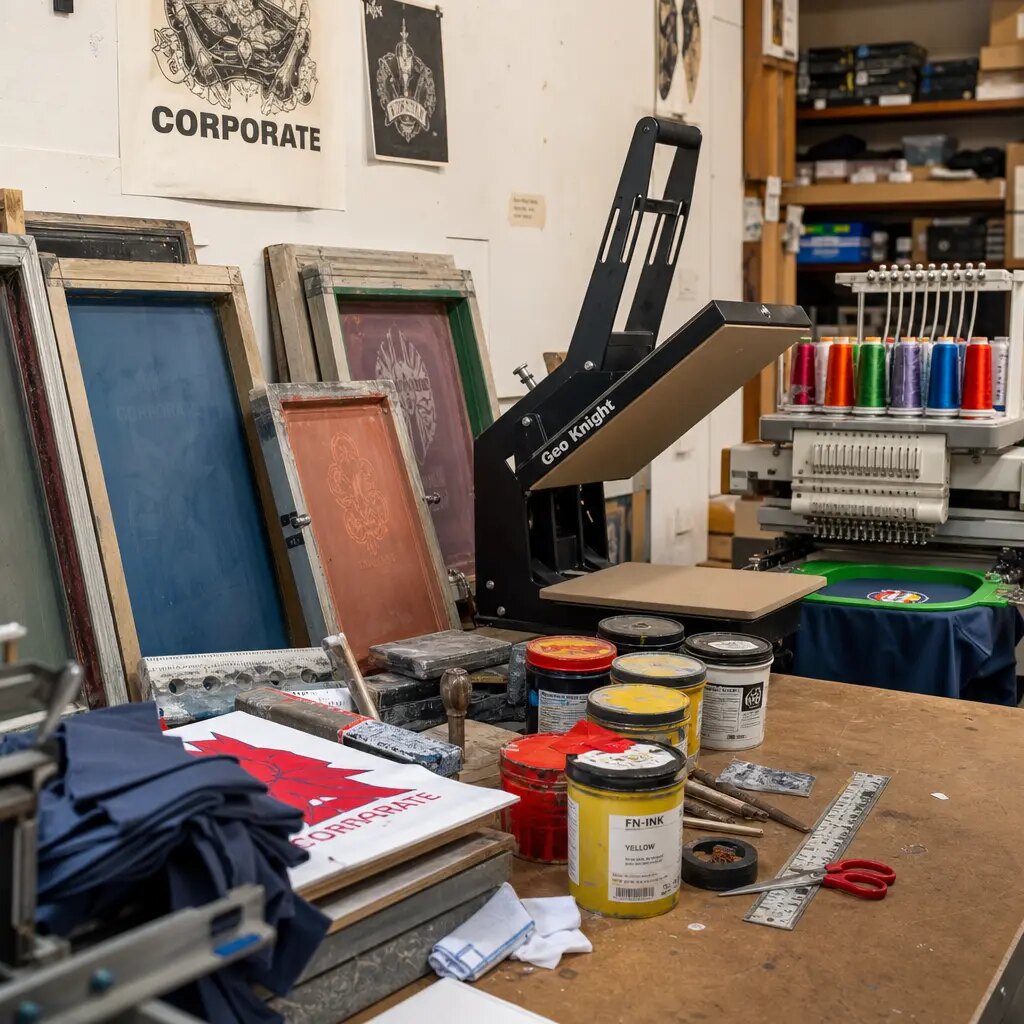
Coffee roaster artwork often uses a wordmark, crest, origin map, small illustration, or café slogan. For one to three solid colors, water-based screen printing is commonly suitable for wholesale runs. It can offer a clean handfeel and efficient unit cost once screen setup is justified.
The same artwork behaves differently on natural, bleached, or dyed cotton. A dark brown logo on natural canvas may look premium, but it can lose contrast if the fabric is too beige or the ink deposit is light. Black or dark fabric may require an underbase, which changes price, handfeel, opacity, and edge definition.
Digital print, DTG, or transfer can be useful for gradients, many colors, microlot campaigns, seasonal artwork, or lower MOQ. The tradeoff is that buyers must inspect handfeel, transfer edge, pretreatment marks, opacity, cracking risk, and repeat consistency. For merchandise sold in cafés, visual standards should be tighter than for a free event bag.
- Approve a strike-off on the final fabric color and texture before bulk printing.
- Define Pantone target or approved visual standard, print size, placement reference points, and placement tolerance.
- Confirm whether an underbase is needed and whether it is included in price and sample approval.
- Inspect for skew, ghosting, pinholes, smears, low opacity, ink buildup, cracking, powdering, and shade drift.
- Keep artwork version numbers in the PO and carton records to avoid mixing old and new logos.
Organic cotton documentation should match the exact claim
Organic cotton is both a sourcing decision and a marketing claim. If a roaster sells or advertises the tote as organic cotton, procurement should ask what documents can be tied to the order. A generic certificate, factory profile, or website badge may not prove the finished goods shipment supports the wording used on labels or invoices.
Common document types may include a supplier declaration, fabric traceability record, scope certificate reference, transaction certificate where applicable, purchase invoice descriptions, packing list wording, and chain-of-custody records relevant to the supplier’s system. Availability depends on the actual supply chain and certification arrangement, so buyers should ask before confirming the PO.
The important rule is alignment. The invoice, packing list, hangtag, care label, website copy, sales sheet, and distributor description should not say more than the supplier can document. If the factory can only support organic cotton fabric but not a certified finished product claim, the marketing language may need to be adjusted.
- Ask which documents are shipment-linked and which are general company or material references.
- Confirm whether support applies to fiber, yarn, fabric, finished product, or finished-goods shipment.
- Do not use “certified organic tote” wording unless the documents support that exact claim.
- For repeat orders, confirm whether new transaction records or supplier declarations are needed each shipment.
- Keep documentation in the procurement file with the PO, artwork, and approved label wording.
MOQ and quote structure: compare full landed value, not headline unit price
MOQ is affected by fabric purchase, dye lot, cutting efficiency, sewing setup, print method, thread color, labels, packing labor, and carton planning. A program with five bag sizes, three fabric colors, and ten artworks is not the same production run as one standardized tote body with several prints.
A practical approach is to standardize the physical bag where possible. Use one fabric weight, one body size, one gusset, and one handle specification, then vary artwork by location, season, or roaster brand. This helps importers, distributors, café groups, and roaster collectives reduce complexity while still offering tailored designs.
Request line-item pricing. One factory may include strike-offs, screen charges, carton liners, and documentation handling; another may add them later. The lowest ex-factory price can become expensive if rework, sorting, freight volume, packing changes, or missing documents are discovered late.
- Ask for scenario pricing: one artwork, multiple artworks on one body, dyed fabric, bulk packing, and individual packing.
- Clarify MOQ by fabric color, fabric weight, body size, print colorway, label type, and packing method.
- Changing fabric color may reset MOQ because dyeing, shade approval, thread matching, and cutting are separate.
- Very low MOQ may favor digital print, but compare total cost after setup, samples, inspection, and freight.
- Compare cost per usable retail unit, not only quoted unit price.
Preproduction approval should test construction, print, and packing together
A development sample is not automatically a production standard. The approved preproduction sample should use actual bulk fabric or a clearly documented equivalent, final print method, final handle construction, final labels, and intended folding and packing. If any element differs, record the difference and approve it deliberately.
Review the sample actively. Load it with the intended coffee products, hang it by the handles, carry it briefly, set it on a table, and check the front panel. Measure width, height, gusset, handle drop, handle length, print size, print position, and label placement. Inspect stitch density, seam finishing, thread trimming, handle reinforcement, and edge construction.
Packing should also be approved before production. A good tote can arrive looking poor if the fold creates a deep crease through the logo or the cartons are too compressed. Confirm pieces per bundle, fold direction, strap placement, carton liner, carton count, carton marks, barcode location, and whether individual polybags are required.
- Do not approve mass production from photos alone for a new supplier or new construction.
- Keep a signed physical sample or controlled digital file with approval date, artwork version, spec sheet, and PO reference.
- Include hangtags, barcode labels, side labels, care labels, and carton marks in the approval file.
- Check one preproduction sample loaded and one sample folded as it will ship.
- If the sample fails the load or print test, revise the specification before cutting bulk fabric.
Final quality inspection: use sampling, AQL, and defect classes
Inspection should separate normal natural-fiber character from true commercial defects. Small seed flecks, minor slubs, and slight natural shade variation may be acceptable if approved in the fabric standard. Oil stains, mildew odor, wrong logos, open seams, weak handles, heavy shade panels, and short counts are not normal variation.
For final inspection, many B2B buyers use an AQL-based plan such as ANSI/ASQ Z1.4 or ISO 2859-1, general inspection level II. A common starting point is Critical 0, Major 2.5, Minor 4.0, but the correct limits depend on buyer risk, channel, order value, and whether the tote is sold as retail merchandise. The acceptance rule must be agreed before inspection.
Inline inspection is also useful. Check first print output for color, placement, opacity, and registration before the full lot is printed. Check early sewing for handle placement, stitch tension, gusset accuracy, and seam finishing. At final inspection, pull samples across cartons, colors, and artwork versions, not only the easiest cartons to reach.
- Critical examples: mold, severe odor, unsafe contamination, wrong product, required label missing, or handle failure during agreed load test.
- Major examples: open seam, broken load-point stitching, wrong logo, wrong color, GSM outside tolerance, visible print misplacement, heavy stain, short count, or wrong assortment.
- Minor examples: small loose thread, slight fold crease, small approved slub, or minor shade variation in a non-prominent area.
- Simple load test: place the agreed load in the tote, hang for 2-5 minutes, carry briefly, and check for seam opening, tearing, or handle distortion.
- Simple dry-rub check: rub printed or dyed area with clean white cotton cloth for 10-20 strokes; reject obvious transfer, peeling, tackiness, powdering, or cracking.
- Measurement checks should include width, height, gusset, handle drop, handle length, handle width, print size, print placement, and label placement.
- Carton checks should include style, color, artwork, quantity, PO, destination, carton number, gross/net weight where required, and packing list consistency.
Packing and logistics protect the quality you approved
Packing affects freight cost, warehouse receiving, café distribution, and arrival condition. Individual polybags can keep totes clean and easy to scan, but they add cost, labor, volume, and material. For many wholesale coffee roaster programs, bulk packing by dozen with a carton liner is sufficient if goods will be unpacked in a warehouse, café back room, or kitting area.
Fold method matters. A crease through the logo can make retail merchandise look damaged even when the print is technically correct. Heavy canvas also holds fold memory more than light fabric. Ask for packing photos or a packing sample, especially for large front prints, dyed fabric, or totes intended for shelf display.
Cotton should be protected from moisture, odor, and carton damage. Cartons must be strong enough for stacking, not overfilled to the point of crushing, and not underfilled so bags shift and wrinkle. For humid routes or longer transit, carton liners or other suitable moisture protection may be worth specifying.
- Use individual polybags only when retail cleanliness, barcode scanning, unit distribution, or channel rules require them.
- For bulk packing, confirm pieces per bundle, fold direction, strap placement, carton liner, and pieces per carton.
- Avoid cartons that are too heavy for safe handling or too weak for pallet stacking.
- Inspect for mildew smell, damp cartons, crushed corners, burst seams, logo creases, dust marks, and inconsistent counts.
- Include carton dimensions and gross weight in the quote because freight cost per tote can change the landed cost.
Specification comparison for buyers
| Spec decision | Recommended option | When it fits | Buyer risk to check |
|---|---|---|---|
| Retail café merchandise fabric | 10 oz to 12 oz organic cotton canvas, approximately 280-340 GSM; agree GSM tolerance in writing, often +/-5% or supplier standard | Coffee bean retail, paid café merchandise, subscription pickup, gift bundles, and repeat-use shopper bags | Some quotes use lighter plain weave while calling it canvas; require GSM, approved swatch, and bulk fabric reference |
| Light promotion fabric | 6 oz to 8 oz organic cotton, approximately 170-230 GSM | Cupping events, leaflets, discount cards, light launch giveaways, and low-load promotional use | Too thin for dense coffee loads; check seam stress, transparency, sagging, and weak brand feel |
| Fabric finish | Natural unbleached, washed natural, bleached white, stock dyed, or custom dyed with approved swatch or lab dip | Natural fits specialty coffee positioning; dyed black, brown, or brand colors support premium retail ranges | Natural shade varies by lot; dyed fabric needs shade approval and rub-mark or color-transfer checks |
| Bag construction | Bottom gusset or side-and-bottom gusset with boxed corners; define gusset depth and tolerance | Coffee bags, mugs, boxed gift sets, retail bundles, and stable shelf presentation | Flat totes are cheaper but often carry coffee awkwardly and distort printed panels |
| Handle construction | 25-30 mm handle width; specified handle drop; box stitch, cross stitch, or reinforced back-tack | Heavier roasted bean packs, repeat use, resale merchandise, and subscription pickup | Single-line stitching lowers cost but increases failure risk; inspect handle alignment, twisting, and reinforcement |
| Logo printing | Water-based screen print for 1-3 solid colors; Pantone or approved visual reference; final print size and position | Roaster wordmarks, café slogans, origin graphics, and medium-to-large wholesale runs | Digital proofs hide fabric absorption, opacity, and placement issues; approve strike-off on final fabric |
| Complex or small-run artwork | Digital print, DTG, or transfer after preproduction approval | Seasonal campaigns, microlot art, gradients, many colors, or low MOQ | Check handfeel, transfer edge, pretreatment marks, opacity, rub performance, and repeat consistency |
| Organic cotton documentation | Shipment-linked support appropriate to the claim, such as transaction certificate where applicable, scope certificate reference, supplier declaration, fabric traceability record, invoice wording, and packing list alignment | Retail merchandise, audited accounts, sustainability programs, distributor sales, and labeled organic cotton products | A general certificate or marketing badge may not cover the finished shipment; avoid claims stronger than the documents support |
| Packing format | Bulk pack by dozen with carton liner unless unit-level cleanliness, barcode scanning, or retail presentation needs individual bags | Café warehouse distribution, kitting, multi-location replenishment, and wholesale receiving | Overpacking raises landed cost; underpacking causes dust, moisture pickup, logo creasing, wrong counts, and slow receiving |
Buyer checklist before sampling
- Define the end use: paid retail merchandise, café giveaway, subscription pickup, event bag, gift bundle, distributor program, or internal packaging support.
- State the maximum realistic load: leaflets only, two 250 g coffee bags, four 250 g bags, one or two 1 kg bags, mug bundle, boxed set, or mixed retail kit.
- Specify organic cotton fabric by GSM, ounce description if used, weave, finish, color standard, and tolerance; do not rely on “premium canvas” wording.
- Choose natural unbleached, washed natural, bleached white, stock dyed, or custom dyed fabric; request a swatch, lab dip, or bulk shade approval for color-sensitive programs.
- Confirm finished width, height, gusset depth, handle total length, handle drop, handle width, seam allowance, print area, and label placement with tolerances.
- Require handle reinforcement details: box stitch, cross stitch, reinforced back-tack, stitch density target, thread color, and loose-thread trimming standard.
- Approve the print method based on artwork complexity, number of colors, fabric color, opacity requirement, handfeel, MOQ, and expected handling performance.
- Request a print strike-off on the final fabric color and texture, with final artwork size, print position, Pantone target, and underbase if used.
- Request a preproduction sample using actual bulk fabric or clearly documented bulk-equivalent fabric, final handles, final labels, final print, and intended fold method.
- Define normal organic cotton appearance, including acceptable seed flecks, small slubs, and slight natural shade variation, so inspectors do not reject normal material character.
Factory quote questions to send
- What fabric is included in the quote: GSM, ounce description if used, yarn count if available, weave, finish, shrinkage behavior, and GSM tolerance?
- Is the quoted material certified organic cotton, and what shipment-linked documents can you provide for this order, such as transaction certificate where applicable, scope certificate reference, supplier declaration, or fabric traceability record?
- Is the fabric natural, greige, washed, bleached, stock dyed, or dyed to order, and what swatch, lab dip, or bulk shade approval process do you use?
- What finished size tolerance, handle-length tolerance, handle-drop tolerance, gusset tolerance, print-placement tolerance, and GSM tolerance are included in production?
- Which print method is included in the price, and how many colors, print positions, screens, underbases, setup charges, and maximum print dimensions are assumed?
- Are strike-offs, lab dips, counter samples, courier costs, screen charges, barcode labels, hangtags, carton marks, carton liners, polybags, or documentation handling included or billed separately?
- What is the MOQ by bag size, fabric weight, fabric color, print colorway, label type, and packing method?
- Can multiple artworks share the same body fabric, cutting run, and sewing specification, or will each artwork be treated as a separate MOQ?
- How are the handles attached, what handle tape width and total length are included, what stitch count per inch is typical, and what reinforcement is standard?
- Can you provide a preproduction sample in bulk fabric with final print, final label, final fold, and final packing before mass production?
Quality-control points to confirm
- Use a written sampling plan for final inspection. For general visual and workmanship checks, many buyers use ANSI/ASQ Z1.4 or ISO 2859-1 single sampling, general inspection level II, with agreed AQL limits such as Critical 0, Major 2.5, Minor 4.0 unless the buyer requires stricter limits.
- Pull cartons from different pallet positions or carton stacks, not only top cartons. Sample across sizes, colors, artworks, and production dates where applicable.
- Critical defects should have zero tolerance unless otherwise agreed: mold, strong mildew or chemical odor, unsafe contamination, wrong product, wrong required label, sharp foreign object, or handle/seam failure under the agreed load test.
- Major defects include open seams, broken load-point stitches, missing reinforcement, GSM outside tolerance, wrong fabric color, wrong logo, visibly off-center print, heavy stains, wrong assortment, short count, or barcode/carton mark errors that affect receiving.
- Minor defects include small loose threads, slight non-prominent fold creases, minor slubs within approved standard, light natural shade variation, or very small print specks that do not affect retail appearance.
- Verify fabric GSM from random units or fabric cuttings according to the agreed method and compare against the PO tolerance and retained approved swatch.
- Measure finished width, height, gusset depth, handle total length, handle drop, handle width, print size, and print placement against the approved specification.
- Check gusset symmetry and boxed corners by loading sample totes with the intended coffee packs; the front panel should not twist severely or pull the logo obviously off center.
- Apply a simple pass/fail load check on approved samples or inspection samples: load the tote to the agreed program weight, hang for a defined period such as 2-5 minutes, then carry briefly; no handle detachment, open seam, tearing, or severe stitch distortion should occur.
- Apply a simple dry-rub check for printed or dyed surfaces using a clean white cotton cloth with moderate hand pressure for a set number of strokes such as 10-20; no obvious ink powdering, peeling, tackiness, or unacceptable color transfer should appear.