1. Start With the Coffee Load, Not the Tote Catalog
A coffee roaster tote has a specific job. It may carry retail coffee from the café counter, sell as branded merchandise, support a subscription launch, present a gift bundle, or supply wholesale café partners. That job should determine the fabric weight, gusset, handle specification, print method, and packing plan. Starting with a catalog tote can produce a low quote, but it often misses how dense and rectangular coffee packaging behaves inside a bag.
Write the expected load into the RFQ. For example, “four 250 g coffee bags,” “two 340 g bags plus a mug,” or “one 1 kg bag plus paper inserts” is more useful than “strong tote.” Coffee bags concentrate weight, push against the printed panel, and can make a flat tote sag. A bottom gusset or boxed base may improve loading and presentation more than simply moving from 10 oz to 12 oz fabric.
The sales channel also changes the standard. A cupping-event giveaway can be lighter because the main goal is reach. A paid tote on a merch wall needs better handfeel, cleaner stitching, stronger handles, and a print that still looks good after reuse. A distributor SKU needs carton labels, item codes, and count accuracy. A gift-set carrier needs a neat fold and a base that holds shape after shipping.
- Light promotion: 6-8 oz / about 180-260 GSM for paper inserts, coupons, and one light coffee pack.
- Main café retail: 10 oz / about 300-340 GSM as a practical starting spec for paid reusable totes.
- Premium gift or grocery style: 12 oz / about 360-410 GSM when structure and higher perceived value matter.
- Heavy canvas: 14 oz+ only when stiffness, rugged look, higher freight, and higher unit cost are acceptable.
- Construction first: match flat, gusseted, or boxed-bottom construction to the coffee load before upgrading fabric weight.
2. GSM, Ounces, Weave, and Finish: What Buyers Must Specify
Fabric weight is usually quoted in GSM, ounces, or loose language such as light canvas or heavy cotton. For procurement, use GSM and ounces together. GSM means grams per square meter. Ounce ratings usually refer to ounces per square yard. A tote described as 10 oz may land around 300-340 GSM, but the exact feel depends on yarn, weave density, finishing, and supplier convention.
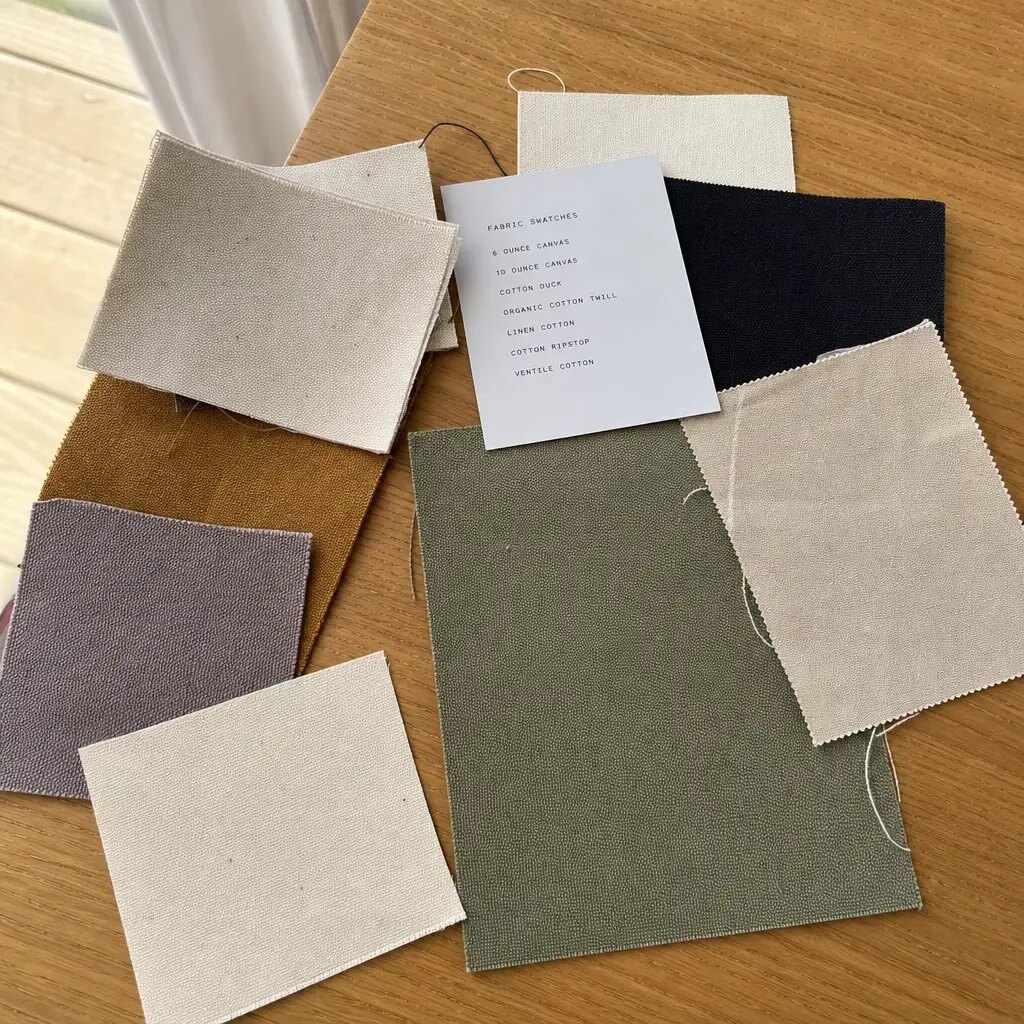
Weave changes performance. A 300 GSM plain weave can feel different from a 300 GSM duck canvas. Canvas and duck canvas tend to feel more structured and are common for reusable totes. Twill has a diagonal texture and drapes differently. If you only request “organic cotton tote,” suppliers may quote different fabrics while appearing to meet the same brief.
Finish affects appearance, print, shrinkage, and cost. Natural unbleached organic cotton usually has seed flecks, slubs, and a warmer shade. Bleached cotton gives a cleaner print ground. Dyed cotton creates shade and colorfastness questions. Washed or preshrunk fabric can feel softer, but may affect dimensional tolerance and lead time. Define these choices before sampling.
- Request fabric weight in GSM and oz, with tolerance such as plus or minus 5% if acceptable.
- Define weave: plain weave, canvas, duck canvas, twill, or other construction.
- Define finish: natural, bleached, dyed, washed, preshrunk, or unwashed.
- Ask for finished bag weight per piece, not only fabric weight before cutting.
- Set realistic dimensional tolerance, often plus or minus 0.5-1 cm for standard totes unless tighter tolerances are engineered and priced.
3. Fabric Weight Guide for Coffee Roaster Totes
For many roasters buying wholesale organic cotton totes, 10 oz is the best default starting point, not a universal rule. It usually gives a credible retail handfeel, carries several coffee bags, works well with simple screen printing, and keeps freight more controlled than heavier canvas. It is a sensible first sample when the product will be sold beside beans, filters, mugs, and brew gear.
Lighter 6 oz or 8 oz totes are still valid when the goal is low landed cost, compact storage, and broad distribution. They fit café openings, events, subscription inserts, and promotional campaigns. The risk is positioning. If customers pay a premium price, a thin tote can disappoint even if it technically carries the load.
A 12 oz tote fits premium merchandise or heavier gift sets. It feels more substantial, especially with a gusseted base and reinforced handles. However, 12 oz increases material use, seam bulk, sewing effort, carton weight, and sometimes air-freight cost. Above 14 oz, the tote becomes a deliberate heavy-canvas product. It can suit a rugged brand, but it should be validated with a real sample and retail-price model.
- 6 oz / 180-200 GSM: economical, foldable, best for low-load giveaways.
- 8 oz / 240-260 GSM: stronger than 6 oz, suitable for upgraded promotional or entry retail use.
- 10 oz / 300-340 GSM: practical starting point for mainstream café retail and everyday reuse.
- 12 oz / 360-410 GSM: premium structure for heavier bundles and higher retail price points.
- 14 oz+ / 420 GSM and above: specialty heavy canvas where bulk, stiffness, and cost are intentional.
4. Construction Details That Outperform Extra Fabric Weight
A heavier body fabric does not compensate for weak construction. A 10 oz tote with reinforced handles and a proper bottom gusset may perform better than a 12 oz tote with narrow handles and poor stitching. Coffee loads stress handle attachments, top hems, gusset corners, and bottom seams. These details belong in the purchase order, not only in sample comments.
Gusset choice is a commercial decision. Flat totes are cheaper and easy to fold, but they do not hold rectangular coffee bags neatly. Side gussets add volume. Bottom gussets and boxed bases create a more stable shape for gift sets, online product photography, and counter display. If the tote will be pre-packed with coffee and accessories, a boxed base can justify its added sewing cost.
Handles influence comfort and repeat use. A shoulder drop around 25-30 cm works for many retail totes. Width around 2.5-3.8 cm is more comfortable than very narrow tape when customers carry several coffee bags. Short handles can look gift-like, but reduce everyday utility. Reinforcement can be cross-stitch, box-stitch, bar tack, or another approved method.
- Specify flat, side-gusseted, bottom-gusseted, or boxed-bottom construction.
- Define handle drop, handle width, handle material, and reinforcement method.
- Use reinforced handle attachments for paid merchandise and multi-bag coffee loads.
- Test samples with the actual coffee bags, mugs, jars, boxes, or brew accessories.
- Inspect top hem, handle ends, gusset corners, bottom seam, stitch density, and panel symmetry.
5. Print and Branding Choices on Organic Cotton Canvas
Coffee roaster artwork often includes small origin names, roast notes, icons, line illustrations, or distressed vintage marks. Organic cotton canvas has texture, especially at 10 oz and 12 oz. Fine lines can fill in, serif text can blur, and distressed graphics can become muddy. Approve a strike-off on the actual production fabric at actual size.
Water-based screen printing is a practical default for one to three spot colors. It offers a soft handfeel and fits the positioning of organic cotton merchandise. It is also efficient for repeat programs. Still, opacity and edge sharpness can vary on natural, dyed, or rough canvas. Confirm Pantone or agreed color reference, print size, print location, line thickness, and text height.
For gradients, many colors, or short seasonal drops, DTF transfer, digital print, discharge, or reactive printing may be considered. These are not automatically better; they need testing. Transfers can feel plasticky, lift at edges, show heat marks, or crack after folding. Embroidery and woven labels can be premium, but they add trim MOQ, placement inspection, and sometimes pucker or needle damage.
- Screen print: best for simple logos, one to three colors, and repeat café merchandise.
- Water-based ink: soft feel; test opacity on darker or dyed fabrics.
- Transfer or DTF: useful for complex art; test edge lift, rub, bending, folding, cracking, and handfeel.
- Embroidery: premium texture; confirm backing, pucker risk, thread color, and needle damage.
- Woven labels: subtle and durable; confirm label MOQ, placement tolerance, seam security, and colorfastness.
- Version control: assign artwork numbers for each café location, origin graphic, or seasonal design.
6. Organic Cotton Claims, GOTS, OCS, and Documentation
Organic cotton claims require precise documentation. A supplier statement that the fabric is organic is not the same as support for a retailer compliance form, finished-product label, hangtag, or product-page claim. Ask what evidence is available before price approval, because documentation can affect sourcing, administration, lead time, and cost.
Common frameworks include GOTS, the Global Organic Textile Standard, and OCS, the Organic Content Standard. Depending on the claim and supply chain, buyers may ask for a scope certificate, transaction certificate, fabric certificate, supplier declaration, invoice wording, or internal traceability records. Not every supplier can support every document for every order size. If a third-party retailer will sell the tote, ask the retailer what wording and evidence they require before labels are printed.
Claim wording should match the evidence. “Made with organic cotton,” “organic cotton fabric,” and a certified finished-product claim may have different support requirements. If only fabric-level evidence is available, do not assume finished-product certification. Record approved claim language in the specification, hangtag artwork, invoice instructions, and product listing notes.
- Confirm whether GOTS, OCS, scope certificate, transaction certificate, fabric certificate, or supplier declaration is available.
- Ask whether document handling is included in unit price or charged separately.
- Align claim language across hangtags, product pages, invoices, cartons, and wholesale line sheets.
- Do not print certification marks or make chain-of-custody claims unless usage is authorized.
- Approve natural cotton appearance standards: seed flecks and minor slubs may be acceptable; stains, mildew, holes, and severe shade variation are not.
7. MOQ and Cost Tradeoffs: A Simple Quote Comparison
MOQ is not one number. Fabric, dyeing, cutting, sewing, printing, trims, packaging, and documentation can each drive a minimum. Stock natural organic cotton with one-color screen print is usually easier for a first order than custom dyed fabric, contrast handles, woven labels, hangtags, or retail belly bands.
A useful comparison should include unit price and landed-cost drivers. Example: Supplier A quotes an 8 oz flat tote at a low unit price with bulk packing. Supplier B quotes a 10 oz bottom-gusset tote with wider handles, reinforced stitching, one-color water-based screen print, and higher carton weight. Supplier A may win for a free event giveaway. Supplier B may be commercially better for a paid café tote because it feels more durable, stands better with coffee bags, and supports a higher retail price. Supplier C may quote 12 oz with a boxed base and retail band; it could be best for a $30 gift bundle but too expensive for a mass handout.
The correct choice depends on sell price, quantity, freight mode, storage, and failure risk. If the tote is free, avoid overbuilding. If the tote is sold, avoid underspecifying. If the order will be split across six seasonal artworks, screen setup and picking complexity may matter more than a small fabric-price difference.
- First-order low risk: stock natural fabric, standard size, one-color print, bulk packing.
- Premium program: 10-12 oz, gusseted base, reinforced handles, approved retail fold, optional hangtag or label.
- Watch hidden costs: screens, strike-offs, trim MOQ, document fees, inspection, overage, carton labels, and freight.
- Ask suppliers to quote at the same dimensions, same GSM tolerance, same print method, same packing, and same documentation level.
- Compare finished bag weight and CBM to understand landed cost, not just FOB unit price.
8. Pre-Production Sample Approval
A production-ready sample must prove the full commercial specification. It should use the intended fabric weight, weave, finish, dimensions, gusset, handle construction, stitch reinforcement, print method, ink color, label placement, and fold. If substitute fabric is used, mark the sample as visual reference only.
Load the sample with real products. Put in the actual 250 g, 340 g, 500 g, or 1 kg coffee bags. Add mugs, jars, boxed drippers, or inserts if they are part of the bundle. Carry it long enough to judge handle comfort, twisting, bottom distortion, and print appearance when full. Then fold it exactly as it will be packed to see whether the main logo creases or scuffs.
Keep one approved sample sealed as the inspection reference. Record finished bag weight, dimensions, fabric GSM, handle drop, print placement, color reference, label position, and carton packing method. For multiple artworks, approve a strike-off for each artwork version.
- Measure width, height, gusset, handle drop, handle width, print size, and print distance from fixed edges.
- Weigh the finished sample and compare it with the quoted finished piece weight.
- Check fabric shade, seed flecks, slubs, stains, odor, and surface cleanliness under normal retail light.
- Rub, bend, and fold the print to check curing, cracking, transfer lift, and scuffing.
- Label the approved sample with date, supplier, style code, artwork version, and approval status.
9. Bulk QC Tolerances and Defect Standards
Quality control should separate natural fabric character from defects. Seed flecks, small slubs, and minor shade variation can be acceptable for natural organic cotton if they match the approved sample. Holes, oil stains, mildew odor, weaving breaks, dirty handling marks, severe shade mismatch, damp cartons, and broken yarns should be rejected.
Functional defects deserve extra attention because coffee totes carry dense loads. Inspect handle attachments, top hems, bottom seams, and gusset corners more strictly than low-stress areas. Skipped stitches at handle ends, open seams, weak bar tacks, uneven handle drop, and broken needle damage can create returns or safety issues.
Print QC should cover color, position, coverage, and durability. Check the approved strike-off, measure placement from fixed edges, and inspect for pinholes, smearing, ghosting, missing ink, bleeding, cracking, poor curing, heat marks, or transfer edge lift. Packing QC should verify item code, artwork version, carton count, barcode, PO reference, destination label, and dry export-worthy cartons.
- Fabric weight: verify by measured-area cut-and-weigh method with agreed tolerance.
- Dimensions: measure flat; common tote tolerance is plus or minus 0.5-1 cm unless otherwise agreed.
- Print placement: plus or minus 5 mm is often workable for standard totes; tighter tolerance should be priced first.
- Sewing: reject loose handles, skipped stitches at stress points, open seams, broken seams, and uneven shape.
- Odor and moisture: reject musty, damp, mold-like, or chemical-heavy odor.
- Carton audit: verify quantity, item code, artwork version, carton label, barcode, PO, and packing method.
10. Packing, Carton Data, and Landed Cost Control
Fabric weight changes more than factory unit price. It affects finished piece weight, carton gross weight, carton dimensions, CBM, warehouse handling, courier cost, and air-freight volumetric weight. A 12 oz tote may look only slightly more expensive than a 10 oz tote at unit-price level, but the landed cost can shift once shipping and storage are included.
Request carton quantity, carton dimensions, net weight, gross weight, and CBM at quotation stage for every fabric weight and packing option. A boxed-bottom tote with wide handles and a retail belly band may occupy more space than a flat tote. If shipping by sea, carton strength and moisture control matter. If shipping by air, actual and volumetric weight both matter.
Packing should match the sales channel. Bulk packing by 25-50 pieces is efficient for events, warehouse replenishment, and distributor orders. Individual packing protects each tote but adds material, labor, and sometimes conflicts with plastic-reduction goals. Hangtags, belly bands, and barcode labels are useful when the tote is a retail SKU, but they must be included in the cost and sample approval.
- Request carton quantity, carton length, width, height, net weight, gross weight, and total CBM.
- Set maximum carton gross weight based on café, warehouse, or distributor handling limits.
- Use bulk packing for low-cost distribution and replenishment.
- Use retail folding, hangtag, belly band, or barcode only when the sales channel needs it.
- Avoid folding directly across the main logo or heavy ink area.
- Confirm item code, country-of-origin language, PO number, barcode, and customer-specific carton labels before production.
Specification comparison for buyers
| Fabric weight range | Best use for coffee roasters | Typical MOQ impact | Freight and storage impact | Retail positioning |
|---|---|---|---|---|
| 6 oz / about 180-200 GSM | Launch giveaways, cupping event handouts, subscription inserts, light paper collateral, one small coffee bag | Often easier if stock natural fabric is available; custom dyeing or trims can still raise MOQ | Lowest piece weight and compact cartons; efficient for events and air shipments | Promotional, not premium merchandise |
| 8 oz / about 240-260 GSM | Budget café merch, higher-quality event tote, light retail add-on, market day bag | Usually manageable with stock fabric; print setup may drive the real minimum for multiple designs | Moderate weight and carton size; still easy to store and distribute | Entry retail or upgraded promotional |
| 10 oz / about 300-340 GSM | Default starting spec for paid café totes, roastery merch walls, online shop add-ons, several 250 g, 340 g, or 500 g coffee packs | Common balance of availability, sewing efficiency, and price; custom colors or labels may add separate MOQ | Higher than 8 oz but still controlled for sea or mixed freight; carton data matters | Mainstream reusable retail tote |
| 12 oz / about 360-410 GSM | Premium gift sets, grocery-style reuse, boxed coffee plus mug sets, higher-priced merchandise | May require more planning if exact fabric or finish is not in stock; sewing time and needle choice matter | Noticeably heavier and bulkier; can change air-freight cost and warehouse handling | Premium reusable tote with stronger handfeel and structure |
| 14 oz+ / about 420 GSM and above | Limited drops, rugged workwear-style brand image, heavy grocery tote positioning | Often more custom; may raise fabric MOQ, sewing difficulty, and sample approval time | Highest carton weight and CBM; expensive to ship and store if demand is unproven | Specialty premium, not a universal upgrade |
| Construction choice | Flat, side-gusseted, bottom-gusseted, or boxed-bottom tote based on actual coffee load | Custom gussets or boxed bases may affect cutting and sewing MOQ | Gussets increase volume and may reduce pieces per carton | Affects perceived usefulness more than fabric weight alone |
| Handle and reinforcement | 2.5-3.8 cm handle width; about 25-30 cm shoulder drop for reusable retail totes | Custom webbing, contrast handles, or reinforced tape can add material MOQ | Wider or padded handles add small weight but improve comfort | Important for paid merch and repeat use |
| Organic documentation | Certified organic cotton fabric with defined document support, such as GOTS, OCS, or supplier chain-of-custody evidence where applicable | Formal transaction certificate or scope certificate handling may add admin time or cost | No major freight impact, but late document issues can delay release or retailer onboarding | Supports product-page, hangtag, and wholesale compliance claims |
Buyer checklist before sampling
- Define the commercial use first: free giveaway, paid café merchandise, coffee gift set carrier, subscription insert, trade show item, distributor replenishment, corporate gift, or retail SKU.
- State the real load: two 340 g bags, four 250 g bags, one 1 kg bag, coffee plus mug, boxed dripper set, paper inserts only, or another tested bundle.
- Specify fabric weight in GSM and oz with tolerance; avoid vague terms such as thick cotton, eco tote, heavy canvas, or premium organic bag.
- Choose weave and finish: plain weave, canvas, duck canvas, twill, natural unbleached, bleached, dyed, washed, preshrunk, or unwashed.
- Define bag dimensions, gusset style, handle drop, handle width, seam allowance, stitch density, and handle reinforcement in the quote request.
- Use 6-8 oz for low-load promotion, 10 oz as a practical starting spec for mainstream café retail, 12 oz for premium reuse or heavier gift sets, and 14 oz+ only for deliberate heavy-canvas positioning.
- Confirm organic claim support: supplier declaration, fabric certificate, GOTS or OCS scope certificate reference, transaction certificate support, retailer-specific paperwork, or no formal claim documentation.
- Request finished bag weight per piece, carton quantity, carton dimensions, net weight, gross weight, and CBM for each fabric weight and packing option.
- Require a pre-production sample made with the same fabric, weave, finish, print method, handle construction, label placement, and packing fold planned for bulk production.
- Approve artwork at actual size with Pantone or agreed color reference, print size, print position, minimum line thickness, text height, and artwork version number.
Factory quote questions to send
- What exact organic cotton fabric weight are you quoting in GSM and oz, and what tolerance applies to bulk fabric weight?
- Is the fabric plain weave, canvas, duck canvas, twill, or another weave, and is it natural, bleached, dyed, washed, preshrunk, or unwashed?
- Is the fabric from stock or made to order, and does lead time depend on mill availability, dyeing, washing, printing, or certification document processing?
- Which certification framework or traceability evidence can be supplied: GOTS, OCS, a scope certificate, a transaction certificate, fabric-level certificate, supplier declaration, or another document?
- Is certification or transaction certificate support included in the quoted unit price, or charged separately?
- What are the finished bag width, height, side gusset, bottom gusset, handle drop, handle width, seam allowance, stitch density, and handle reinforcement method?
- What is the estimated finished bag weight per piece, and is it based on a physical sample, pattern calculation, or previous production?
- What carton quantity, carton size, net weight, gross weight, and CBM are quoted for this exact style and packing method?
- Which print method is quoted, how many colors are included, what ink or transfer type is used, and are screen, plate, or setup charges separated?
- What minimum line thickness and minimum text height do you recommend for our artwork on this fabric weight and weave?
Quality-control points to confirm
- Verify fabric weight by cutting and weighing a measured fabric area, with sample size, method, and acceptable tolerance agreed before production.
- Measure finished width, height, side gusset, bottom gusset, handle drop, handle width, seam allowance visibility, and print position from fixed edges.
- Check handle attachment against the approved reinforcement, such as cross-stitch, box-stitch, bar tack, or other written construction standard.
- Inspect handle alignment for twisting, uneven drop, unequal spacing, loose handle ends, skipped stitches, and weak back-tack or reinforcement stitching.
- Check print position against the approved tolerance; plus or minus 5 mm is common for standard totes, while tighter placement should be priced and agreed before production.
- Inspect screen print for pinholes, smearing, ghosting, uneven coverage, ink bleeding, cracking after bending, poor curing, and panel-to-panel color variation.
- Inspect transfer or digital prints for edge lifting, heat marks, plastic handfeel, abrasion resistance, cracking after folding, and adhesion on the actual fabric finish.
- Inspect seams for even stitch density, no skipped stitches at stress points, no loose threads that affect appearance, no broken needle damage, and no open seam areas.
- For natural organic cotton, accept approved seed flecks and minor slubs while rejecting holes, oil marks, mildew odor, severe shade variation, weaving breaks, dirty handling marks, and damp cartons.
- Confirm packing keeps handles flat, protects printed panels from heavy creasing, follows the approved fold, and uses the approved quantity per inner pack and master carton.