Start With the Packing Problem, Not Only the Tote Design
Wholesale organic cotton totes for tech startups are often purchased for events, onboarding kits, investor packs, recruiting campaigns, or online merch drops. The bag design matters, but the carton packing plan often decides whether the order lands smoothly. A tote that looks fine in a sample room can become expensive if it ships in oversized cartons, arrives with crushed corners, or needs repacking at a 3PL before distribution.
Procurement teams should treat carton planning as part of the product specification, not as a warehouse detail left until the last week. The factory needs to know where the totes are going, how they will be received, and whether cartons must fit pallet layouts, courier limits, retail DC rules, or event venue handling. Without that information, two suppliers quoting the same tote can produce very different landed costs.
- For event giveaways, bulk carton packing usually gives the lowest handling cost.
- For employee kits, individual packing or paper bands may be needed for cleaner presentation.
- For retail resale, carton labels, barcodes, and SKU separation become part of the compliance requirement.
- For distributor shipments, carton strength and standard piece counts make receiving and inventory easier.
Choose Organic Cotton Fabric by Use Case and Carton Weight
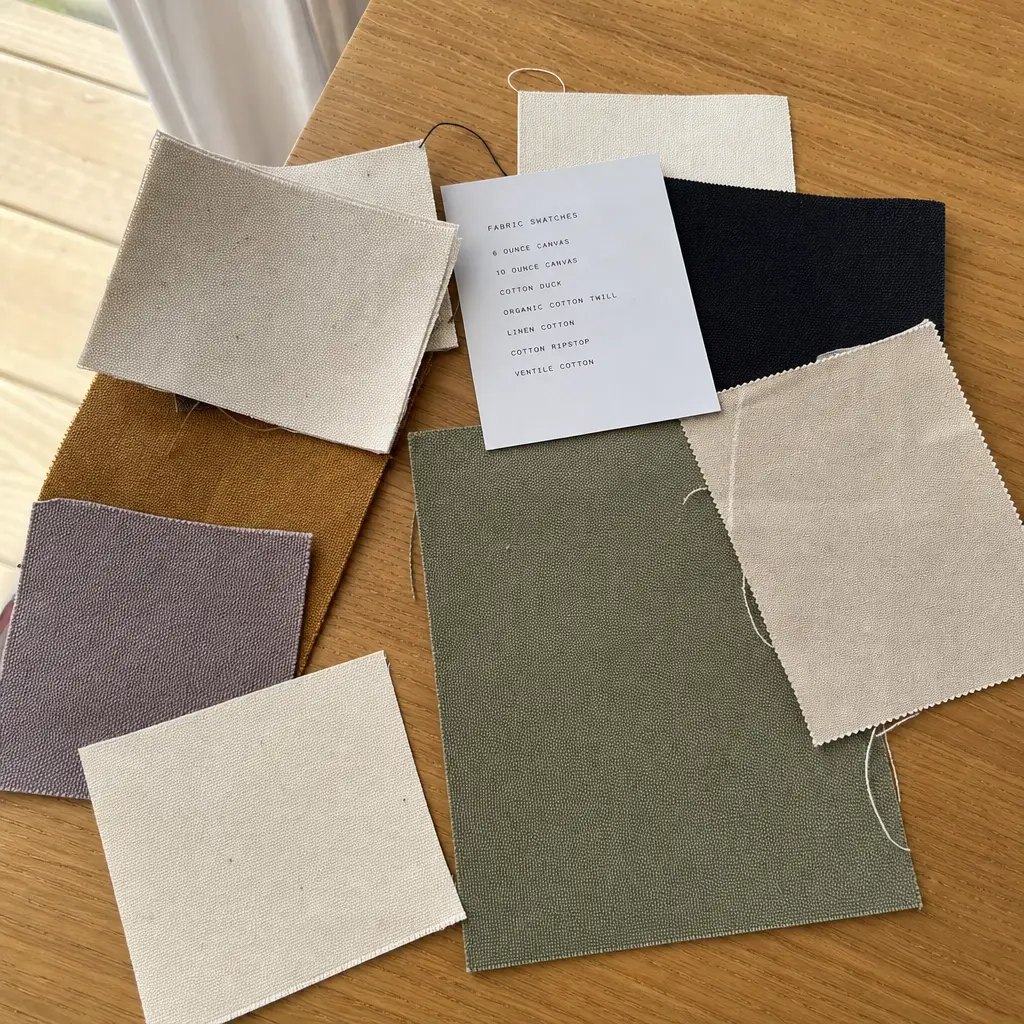
Organic cotton tote fabric is usually discussed by GSM, but the right GSM depends on both product feel and shipping efficiency. A 180-220 GSM tote is common for conferences and lightweight brand promotion. It folds flat, keeps carton weight manageable, and gives enough surface stability for a clean one-color logo. For tech startup merchandise or onboarding kits, 240-280 GSM provides better structure and perceived value, but it also increases net weight, carton gross weight, and freight cost.
The buyer should not request the heaviest fabric automatically. Heavier canvas may require stronger needles, more careful seam tension, and larger cartons if the fold stack becomes too thick. Very light organic cotton, on the other hand, can look transparent in natural color and may distort under large prints. The better RFQ gives a target GSM, fabric type, finished size, and intended load so the factory can quote a practical construction.
- Light event tote: 180-200 GSM, suitable for brochures, shirts, small accessories, and short-term use.
- Standard brand tote: 220-240 GSM, better balance between hand feel, print quality, and freight cost.
- Premium merch tote: 260-280 GSM, stronger body and higher perceived value, but fewer pieces per carton.
- Heavy canvas tote: 300 GSM and above, useful for paid retail bags but requires carton and handle load review.
Define Dimensions, Handle Drop, and Load Expectations
A common mistake is to specify only width and height, then leave gusset, handle drop, and reinforcement open to interpretation. For tech buyers, the tote often carries a laptop sleeve, notebook, bottle, hoodie, or event materials. If shoulder carry is expected, the handle drop needs to be long enough after sewing. If the bag is only for handout materials, a shorter handle may reduce fabric consumption and packing bulk.
Finished dimensions should be measured after sewing, pressing, and normal relaxation. Organic cotton can shrink or move slightly during washing, printing, and pressing, so cutting size is not the same as finished size. The RFQ should include finished measurement tolerance and whether a bottom gusset is required. Gussets improve capacity but make folding and carton stacking less flat, which affects pieces per carton.
- Typical flat tote size: around 38 x 42 cm for general event use.
- Shoulder-friendly handle drop: often 25-30 cm depending on bag height and target market.
- Bottom gusset: useful for onboarding kits, boxed items, or retail shopping use.
- Reinforcement: cross-stitch or box-stitch at handle points should be stated for any loaded use.
- Finished size tolerance: define acceptable variation before production, commonly within 1 cm for basic totes.
Match Print Method to Logo Detail and Production Risk
Most startup tote orders use a simple logo, slogan, or event mark. For this work, water-based screen printing is usually the practical choice because it gives a matte look, works well on natural cotton, and keeps unit cost stable at volume. If the artwork uses gradients, photographic effects, or many small colors, digital printing may be considered, but the buyer should expect different hand feel, color behavior, and cost structure.
Large solid ink areas on organic cotton need careful testing. Natural cotton color can affect perceived Pantone shade, and textured canvas can break fine lines. A print strike-off on the actual bulk fabric is more useful than a digital mockup. The buyer should approve print size, position, ink color, curing, and rub resistance before mass production, especially when the totes are packed tightly and may rub during transit.
- Use screen print for clean one-color or two-color startup logos.
- Use digital print only when artwork complexity justifies the higher process risk.
- Avoid very small reversed text on rough canvas unless tested on actual fabric.
- Define print placement from fixed edges, such as top opening and side seam.
- Request a cured print sample, not only an ink color photo under unknown lighting.
Build MOQ Logic Around Fabric, Artwork, and Packing
MOQ is not only a sales number. In tote production, minimum quantity is shaped by fabric sourcing, cutting efficiency, print setup, sewing line changeover, and packing instructions. A single natural organic cotton tote with one black logo can usually be produced more efficiently than four fabric colors with four different event logos. If a startup wants several team versions or regional slogans, each version should be treated as a separate SKU in the quote.
For importers and distributors, MOQ should also be linked to carton planning. Mixed designs inside one carton may reduce warehouse handling at the receiving end, but it increases packing control risk at the factory. Separate cartons per SKU make inspection, inventory, and claims easier. The RFQ should state whether mixed cartons are acceptable and whether each carton must contain one SKU only.
- Lowest-risk setup: one fabric color, one logo, one packing method, one delivery destination.
- Higher-risk setup: multiple artworks with similar colors packed into mixed cartons.
- Retail-ready setup: SKU-level carton labels, barcode control, and fixed carton quantities.
- Distributor setup: separate carton series by customer, destination, or sales channel.
- Reorder setup: keep artwork screens, packing spec, and carton data archived for repeat runs.
Use Carton Planning to Compare Real Landed Cost
A low unit price can disappear once carton CBM, gross weight, and repacking labor are included. Organic cotton totes are soft goods, but they are not weightless. Fabric GSM, handle construction, gusset, folding method, and individual packaging all affect how many pieces fit in one export carton. If Supplier A quotes a lower unit price but packs fewer pieces per carton in larger boxes, Supplier B may be cheaper after freight.
The packing plan should include carton dimensions, pieces per carton, net weight, gross weight, carton material, and total CBM. For courier shipments, gross weight and dimensional weight both matter. For ocean or air freight, CBM and pallet efficiency matter. For 3PL receiving, standard carton counts reduce counting time and inventory errors. The buyer should request this data at quote stage, not after production.
- Compare FOB unit price together with carton CBM and gross weight.
- Set a maximum carton gross weight if cartons will be manually handled.
- Avoid cartons so large that they crush, bow, or fail during stacking.
- Confirm whether the quote includes export cartons strong enough for the shipping route.
- Request a carton mock pack photo showing fold direction, stack height, and carton closure.
Specify Folding, Inner Packing, and Label Rules
The way a tote is folded affects presentation, carton efficiency, and post-shipment labor. Flat folding is usually efficient for bulk event cartons. A half fold may show the front logo better when cartons are opened for quick distribution. Individual polybags protect the product but add cost, plastic use, and warehouse waste. Paper bands or belly bands can improve presentation without full plastic packaging, but they add labor and need size control.
Labeling rules are especially important for tech startup orders shipping to event venues, 3PLs, or multiple office locations. Cartons should carry buyer name, PO number, SKU, color, quantity, carton number, gross weight, and destination if required. Retail buyers may need barcode labels or carton compliance formats. The factory should receive label artwork before packing materials are produced.
- Bulk pack: lowest cost and suitable for internal handling or event tables.
- Paper band: cleaner presentation for welcome kits while keeping packaging lighter.
- Individual polybag: useful for e-commerce or dust protection, but not always brand-aligned.
- Mixed carton: only use with a clear packing matrix and carton-level label control.
- Single-SKU carton: best for inspection, receiving, resale, and distributor inventory.
Approve Samples That Represent Bulk Production
A sample is useful only if it represents the production method. A tote sewn from available stock fabric with a sample-room print may look acceptable but still fail to predict bulk behavior. For a serious order, the pre-production sample should use the nominated organic cotton fabric, target GSM, final thread color, final handle construction, final logo print, and the same folding method planned for shipment.
The sample approval should include physical checks, not just a photo approval. Measure the finished dimensions, handle drop, fabric weight, print position, and seam reinforcement. Put practical weight into the bag and lift it from the handles. Fold it as planned and see whether the logo creases in a visible area. If the tote will be packed with other kit items later, test that sequence before the factory starts mass packing.
- Approve fabric hand feel and color under normal office daylight.
- Measure GSM from bulk fabric or a confirmed production swatch.
- Review print edge clarity on the actual cotton texture.
- Confirm handle comfort by carrying a realistic load.
- Test folding to see whether the print cracks, transfers, or creases badly.
- Keep one approved sample at the factory and one with the buyer for reference.
Set QC Thresholds Before Cutting and Packing
Quality control for organic cotton totes should be simple, measurable, and tied to buyer risk. The main inspection points are fabric weight, stains, weaving defects, finished size, handle alignment, seam strength, print accuracy, and carton packing. Natural cotton may have small fiber flecks, but oil stains, dirty handling marks, broken stitches, and distorted logos should not be accepted as normal character.
The buyer should define major and minor defects before production. A missing logo, wrong print color, open seam, weak handle, incorrect carton quantity, or mislabeled carton is a major issue because it affects usability or delivery. Small thread ends may be minor if easily trimmed. For larger import orders, use a recognized inspection approach such as AQL sampling, but make the defect list product-specific.
- Major defect: wrong fabric, wrong artwork, wrong print position, open seam, weak handle, or stained front panel.
- Minor defect: small loose thread, slight natural cotton fleck, or minor pressing mark within agreed tolerance.
- Measurement point: finished bag width, height, gusset, and handle drop after sewing.
- Print point: color, position, adhesion, registration, and visible smudging.
- Packing point: correct pieces per carton, correct labels, no over-compression, and no wet cartons.
Plan Lead Time Around Approvals, Not Only Production Days
Lead time problems usually start before sewing. Organic cotton fabric availability, logo file corrections, Pantone approval, sample shipping, buyer feedback, and packing material confirmation can all delay the schedule. A quote that says production takes 20-30 days may not include the time needed for sample making, sample transit, approval revisions, final deposit, inspection booking, and freight handover.
For startup launches and trade shows, the delivery date is fixed even if production is late. Work backward from the event or kit assembly date. Include buffer for customs clearance, domestic trucking, 3PL receiving, and any repacking. If the totes must arrive at a venue, avoid delivery on the final day before the event. A slightly earlier production plan is cheaper than emergency air freight after a missed approval.
- File review and quotation: allow time for logo cleanup and spec clarification.
- Sampling: include sample production plus courier transit and buyer review.
- Bulk material booking: confirm fabric and carton materials after deposit or PO release.
- Printing and sewing: schedule depends on artwork complexity, quantity, and factory load.
- Inspection and packing: reserve time for corrections before final shipment.
- Freight handover: include customs documents, pickup booking, and warehouse receiving windows.
Specification comparison for buyers
| Spec decision | Recommended option | When it fits | Buyer risk to check |
|---|---|---|---|
| Fabric weight for startup event totes | 180-220 GSM organic cotton canvas or plain weave | Works for conference giveaways, recruiting fairs, and light laptop accessory carry | Below 160 GSM can look thin, show print-through, and deform during tight carton packing |
| Fabric weight for retail or onboarding kits | 240-280 GSM organic cotton canvas with reinforced seams | Fits higher perceived value, employee welcome packs, and paid merchandise | Heavier cloth increases carton weight and may reduce pieces per carton, changing freight cost |
| Logo print method | Water-based screen print for 1-3 solid colors | Best for clean startup logos, matte hand feel, and stable unit cost at volume | Fine gradients, tiny QR codes, and large ink coverage need strike-off approval before bulk |
| Handle construction | Self-fabric handles with cross-stitch reinforcement | Good for everyday use and consistent natural fabric appearance | Handle drop must match use case; short handles fail shoulder-carry expectations |
| Carton quantity | Pack by confirmed carton size, gross weight target, and fold method | Useful when shipping to 3PL, event venue, retail DC, or distributor warehouse | A quote based only on pieces per carton may ignore actual carton strength and pallet loading |
| Individual packing | Bulk pack for event handout; recyclable paper band or polybag only when required | Controls labor and packaging cost while matching sustainability claims | Unnecessary polybags can conflict with brand policy and increase repacking work |
| MOQ logic | One fabric color and one print artwork per production lot | Keeps dyeing, cutting, printing, and packing efficient for startup launch orders | Multiple colorways below MOQ create hidden setup fees or mixed carton errors |
| Sample approval | Pre-production sample using bulk fabric, final print ink, final folding, and carton mock pack | Reduces mismatch between approved sample and shipped goods | Approving only a flat printed panel does not validate shrinkage, handle strength, or carton fit |
| Supplier evidence | Factory quote with GSM tolerance, carton dimensions, packing method, lead time split, and QC standard | Allows procurement to compare offers on landed cost, not only EXW or FOB unit price | Low quotes often omit carton spec, inner packing, organic documentation, or rework responsibility |
Buyer checklist before sampling
- Define tote use: event giveaway, onboarding kit, retail merch, distributor resale, or internal brand store.
- Specify organic cotton fabric type, GSM target, acceptable tolerance, color, shrinkage expectation, and handle length.
- Provide logo file with Pantone references, print size, print position, and whether ink hand feel matters.
- State whether packing should be bulk, paper banded, individual polybagged, barcode labeled, or carton-sorted by destination.
- Set maximum carton gross weight and preferred carton dimensions before final quote comparison.
- Require sample approval for fabric, print, stitching, folding method, carton quantity, and shipping marks.
- Confirm MOQ by fabric color, print design, and delivery destination instead of only total order quantity.
- Request quote data for unit price, carton CBM, gross weight, lead time, sample cost, setup charges, and document fees.
Factory quote questions to send
- What organic cotton fabric construction and GSM are included in the quoted price, and what tolerance will be accepted in production?
- Is the quoted MOQ based on total pieces, one fabric color, one print artwork, or one packing method?
- Which print method is included, and are screen setup, Pantone matching, strike-off samples, and curing tests charged separately?
- What are the finished tote dimensions, handle drop, seam type, and reinforcement method included in the sample and bulk order?
- How many pieces are packed per carton, what is the carton size, gross weight, net weight, and total CBM for the full order?
- Can the factory provide a carton mock pack photo before mass packing starts?
- What is the planned production schedule from sample approval to bulk completion, inspection, and vessel or courier handover?
- Which quality defects are considered major, and what AQL level or inspection standard will be used before shipment?
- Are organic cotton transaction certificates, fabric test reports, or chain-of-custody documents available if required by our sales channel?
- What happens if cartons arrive crushed, underfilled, overweight, mislabeled, or packed against the approved packing plan?
Quality-control points to confirm
- Fabric GSM measured from bulk cloth should stay within the agreed tolerance, commonly plus or minus 5 percent unless otherwise approved.
- Finished tote size should be checked after sewing and pressing, not only from cutting panels.
- Handle drop and reinforcement stitches should be measured because shoulder-carry comfort depends on usable drop, not handle length alone.
- Print position tolerance should be defined in millimeters from top edge and side seam.
- Screen print adhesion should pass basic rub testing after curing before packing begins.
- Seam strength should be pull-tested on handles and side seams using a practical loaded sample test.
- Carton gross weight should stay within the buyer's warehouse and courier handling limits.
- Carton fill should prevent compression marks, bent handles, and deformed folded edges.
- Shipping marks, destination labels, SKU labels, and carton numbering should match the packing list.
- Random cartons should be opened at inspection to verify actual pieces per carton and packing sequence.