Why boutique winery totes need a procurement file, not just a print quote
A tote for a boutique winery sits between promotional merchandise and retail packaging. It has to look good on a tasting-room shelf, survive bottle carry use, and support brand claims that may be repeated in a store listing or seasonal campaign. That is why procurement needs a supplier compliance checklist rather than a casual artwork approval. A nice sample can hide weak fabric, a vague organic claim, or a packing method that creates damage on receipt.
The main buyer risk is not that the bag is unusable; it is that the bag looks acceptable at sample stage and then changes subtly in bulk. A one-size shift, a thinner fabric batch, a looser seam, or a different label attachment can create a product that still ships but does not meet the retail standard the winery expects. Once the bags are on shelves or bundled with bottle purchases, quality problems are harder to unwind and often more expensive to correct.
For procurement teams, the goal is to make supplier comparisons repeatable. Each quote should be assessed against the same evidence set: material proof, construction details, packaging format, sample record, QC approach, and shipment documentation. If those items are not written into the RFQ, the commercial review becomes guesswork and the cheapest quote often turns out to be the most expensive landed cost.
- Treat the tote as a branded retail item with compliance, not as a generic promo bag.
- Require evidence for fabric, construction, print, packing, and shipping before order release.
- Use the same RFQ structure across suppliers so quote gaps are obvious instead of hidden.
Start with a use-case spec: bottle carry, gift retail, or event giveaway
Before you ask for price, define what the tote is supposed to do. A winery tote for bottle carry needs stronger handles, a firmer base, and enough gusset depth to keep the contents stable. A tote sold in a tasting room as a premium accessory may prioritize clean printing, stitch finish, and shelf presentation. A giveaway bag for an event can tolerate a simpler spec, but the buyer still needs to protect the brand from obvious flaws.
This use-case decision drives nearly every commercial choice. If the tote must carry one bottle plus inserts, the fabric, seam allowance, and handle reinforcement matter more than a slight change in unit price. If the bag is primarily a retail impulse item, a crisp print and neat folding may matter more than extra load capacity. Suppliers can quote more accurately when they know the intended use, and buyers can reject specs that are too weak for the job.
For winery procurement, it helps to write a short use-case paragraph into the spec sheet. That paragraph should say whether the tote is sold, gifted, bundled with bottles, or used for event traffic. It should also say what the buyer will consider unacceptable: print blur, weak handles, bag distortion, or carton damage. This is simple, but it prevents many RFQ misunderstandings later.
- State whether the bag must hold one bottle, two bottles, or bottles plus collateral.
- Specify whether the tote is retail-sold, free-with-purchase, or for event distribution.
- Define what failure would cost the winery: shelf rejection, guest complaint, or warehouse rework.
Fabric and construction: the details that separate a real tote from a placeholder sample
Organic cotton is the headline, but the real purchasing decision is the fabric and construction behind that claim. In this category, buyers commonly start with a medium-weight woven cotton that balances handfeel and structure. Rather than quoting only a broad style name, ask the supplier for GSM, weave type, finish, shrinkage allowance, and whether the fabric is pre-shrunk, washed, or left raw. Those details affect both appearance and cost.
A tote that feels strong in a showroom can still fail in production if the fabric is thinner than approved or if the sewing line compensates by tightening seams in a way that distorts the bag. For winery use, handle reinforcement and base construction deserve particular attention. Ask how the handles are attached, whether the stitching is single- or double-row, what seam allowance is used, and whether stress points are bar-tacked or otherwise reinforced. If the supplier cannot explain that clearly, the QC file is too weak for bulk approval.
The buyer should also decide whether natural, bleached, or dyed fabric fits the retail plan. Natural organic cotton often works best for winery branding because it feels authentic and photographs well, but some programs need a brighter base for logo contrast. If color is involved, ask how shade consistency will be controlled across lots and whether color variation is acceptable between sample and bulk. The quote should state the fabric basis exactly, because 'organic cotton canvas' is too vague to compare meaningfully.
- Request GSM, weave, finish, and shrinkage allowance in writing.
- Check handle attachment method, seam allowance, and reinforcement at stress points.
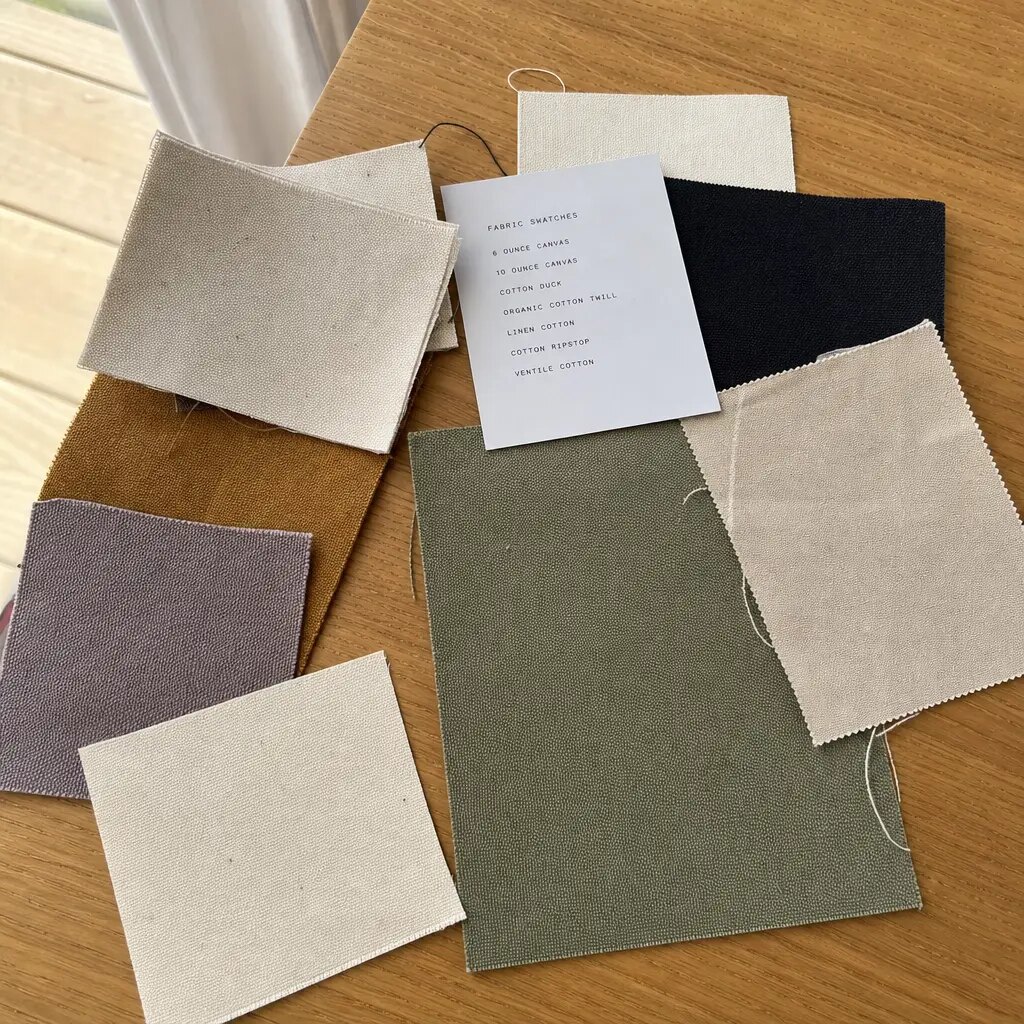
- Approve fabric only after seeing a swatch, not only a finished-bag photo.
- If color matters, ask how the supplier controls shade variation between lots.
How to compare supplier routes before comparing price
Supplier type changes both risk and document burden. A direct sewing factory can be the strongest option when the buyer wants tighter control over stitching, sample-to-bulk consistency, and direct corrective action. A trading company can be useful when the order includes several items, mixed pack-out, or coordination across multiple factories. A specialized bag workshop is often the best fit for repeat tote programs with clear construction requirements. A low-price general supplier may look competitive, but the buyer has to test whether the savings are real after QC, packing, and claim verification are included.
The right comparison is not 'which supplier is cheapest,' but 'which route gives the cleanest total cost and lowest execution risk for this order.' If one supplier includes inspection photos, carton segregation, and document support while another only quotes the bag shell, the unit price is not comparable. Landed cost should include sample fees, print setup, packing upgrades, freight term differences, and any extra work your warehouse must do on receipt.
For procurement buyers, the simplest rule is this: do not accept a claim of flexibility without asking what is being flexibilized. Sometimes low MOQ means stock fabric and standard packing. Sometimes faster lead time means the supplier has already booked materials, which could limit customization. Sometimes a direct factory is cheaper only because it excludes tasks that a trading company has bundled into the quote. The comparison table below is useful only if the team uses it to drive follow-up questions, not as a final verdict.
- Compare quotes on the same Incoterm, packing basis, and artwork scope.
- Ask who controls fabric sourcing, QC decisions, and rework authority.
- Separate unit price from sample, setup, packing, and freight costs before choosing a route.
Supplier comparison table: commercial differences that matter to procurement
Use the table below to decide what kind of supplier fits your winery program. The most useful differences are not marketing claims; they are practical differences in MOQ, sample behavior, lead time, and paperwork burden. For example, a low-price supplier can be acceptable for a simple event giveaway, but it becomes risky if the order requires organic proof tied to a specific lot and retail-ready packing.
The procurement team should not ask every supplier to behave the same way. Instead, match the route to the order. If you need tight compliance and repeatability, prioritize the factory or specialized workshop route. If you need variety and bundled service, a trading company may be acceptable, but only with stronger document control. The wrong route can make even a good product expensive because the receiving team, QC team, or brand team has to absorb the hidden work.
Build the RFQ so every quote can be audited line by line
A strong RFQ removes ambiguity. It should not read like a design brief or a marketing note; it should read like a purchasing document. Include the finished dimensions, fabric basis, handle size, print method, number of print colors, label requirements, folding method, carton count, Incoterm, and delivery destination. If the tote will be bundled with bottles or sold in multiple winery locations, say that. The supplier needs that context to propose a suitable construction and packing method.
Also include what the buyer will not accept. For example: no fabric substitution without approval, no change in label position, no mixed SKUs in the same carton unless pre-approved, no unapproved polybag use, and no change in print process after sample sign-off. These negative requirements are important because many disputes begin when the supplier assumes a substitution is acceptable. If you do not state the boundary, the supplier may not realize the buyer sees it as a defect.
A practical RFQ for wholesale organic cotton totes for boutique wineries supplier compliance checklist use should be structured as a short spec sheet plus a document request list. Keep the product spec tight and the evidence request explicit. Ask for the exact proof you need, not a vague assurance that everything is available. That saves time during quote comparison and makes it easier to escalate if the final shipment does not match the agreed file.
- State bag size, gusset, handle drop, print area, and number of print colors.
- List unacceptable changes: fabric substitution, label shift, packing changes, or print-process changes.
- Request a named shipment file so invoice, packing list, and organic evidence can be checked together.
Organic proof and chain-of-custody: what is acceptable and what to reject
This is where many sourcing files stay too vague. For a buyer who needs to protect organic claims, it is not enough to hear that the supplier can 'provide a certificate.' The procurement file should identify what proof is acceptable, how it links to the order, and what happens if the link is missing. Acceptable document types vary by supplier and certification scope, but the buyer should ask for evidence that ties the material to the production lot or shipment—not just a generic copy of a certificate with no lot connection.
At minimum, ask the supplier to identify the document type, document number, issuing body, and what part of the production chain it covers. If the supplier cannot say whether the file will include lot traceability, invoice linkage, or transaction documentation, the buyer should treat the claim as incomplete. The same is true if the supplier can provide a certificate for the mill but not for the finished tote shipment. A certificate alone does not prove that the tote you receive is the tote that was quoted.
A useful rule: if the evidence cannot be linked to the PO, fabric batch, or shipment file, do not accept it as compliance support. Ask what they can provide before production, what they can provide after packing, and what arrives with the shipment. Reject answers that rely on generic marketing language or unrelated certificates. A real sourcing file should let an internal reviewer trace the claim from order to fabric to finished goods without guessing.
In practice, buyers should ask for the following: the exact document name, the document number, the covered lot or shipment reference, and whether the document will be included in the final shipment file. If those items are missing, the risk is not only legal or brand-related; it is also commercial. A missing document can delay customs clearance, internal approval, or retail onboarding. If the supplier cannot link the paper trail to your order, the safest decision is to pause the PO until they can.
- Accept only document types that link to the production lot or shipment, not generic proof files.
- Reject claims that cannot be tied to the PO, fabric batch, or final shipment file.
- Require the supplier to name the document number, issuing body, and lot reference in writing.
- Do not release bulk if the organic evidence is still 'available on request' rather than committed to the order file.
MOQ, sampling, and landed cost: how to avoid false savings
MOQ affects more than inventory. It changes setup economics, sample behavior, and the likelihood of waste if the winery changes artwork later. A small MOQ can be useful for a seasonal retail launch or a pilot run across a few tasting rooms, but lower quantities often carry a higher piece price because the factory is spreading setup, cutting, print, and QC time across fewer units. That is not automatically a bad deal, but it must be understood as a commercial trade-off rather than a bargain.
Sampling deserves equal attention. In many tote programs, the sample charge is a signal of how custom the order really is. A supplier may charge for a first sample, a print strike-off, or a revised pre-production sample. The buyer should ask whether the sample charge is refundable or creditable, whether the sample is made on the same fabric as bulk, and whether a revision creates a new fee. If you skip that clarification, the sample budget can creep up quickly before bulk starts.
To compare landed cost properly, ask each supplier to separate the following items: base bag price, print setup, sample charge, label or tag cost, inner packing, carton cost, freight term, and any inspection or document fee. This is especially important when one supplier quotes FOB and another quotes DDP, or when one quote includes retail-ready packing and another assumes bulk fold only. Once those differences are normalized, the real cost gap is usually smaller than the headline unit price suggests.
For boutique wineries, a slightly higher unit price can still be the better buy if it reduces receiving labor, avoids rework, and protects the brand on shelf. Landed cost is not only freight and duty; it also includes the time your team spends counting cartons, relabeling bags, or handling defects. Procurement decisions should reflect that broader cost picture, especially when the tote will be used in a visible customer-facing setting.
- Ask whether sample charges are credited back, and under what order value.
- Normalize quotes for freight term, packing, setup, and document fees before comparing.
- Evaluate the cost of receiving labor and rework, not just the factory unit price.
QC checklist: measurable acceptance criteria for body, print, seam, and pack
QC is where the buyer protects margin. A useful tote inspection program should include measurable criteria, not only visual approval. Start with dimensions: define acceptable variation for body width, body height, gusset depth, and handle drop. Then move to construction: stitch density, seam alignment, reinforcement points, and handle attachment. Finally, cover appearance and packing: print placement, ink coverage, label position, fold consistency, carton count, and carton marks.
For visual defects, classify what counts as major and minor before production begins. A minor defect might be a loose thread that can be trimmed without affecting presentation. A major defect might be a hole, a skipped seam, a significant print misalignment, a stain, or a mixed SKU carton. The supplier should know the rework threshold in advance. If they do not, the buyer may face arguments at shipment stage because the factory has a different tolerance standard.
The most practical way to run QC is to use an agreed inspection method for the final packed lot. AQL or an equivalent sampling plan is useful because it avoids one-off judgment calls, but the buyer still needs a defect matrix. In other words, the inspection must say not just how many bags were checked, but what counts as a failure. If the order is for retail-facing winery totes, inspect after final packing and check the cartons that will actually ship, not only loose units on a sewing table.
For load performance, a real-use test matters. A winery tote may never carry heavy industrial loads, but it does need to survive a bottle and insert combination without the handles cutting into the seam or the bottom stretching out of shape. Buyers should ask for a simple test plan: fill weight, carry duration, visual check after handling, and a pass/fail note on seam opening or permanent deformation. That is much more useful than a vague statement that the bag is 'strong enough.'
- Set dimensional tolerances before production: width, height, gusset, and handle drop.
- Classify defects into major and minor with a written rework or reject rule.
- Use a final-packed-lot inspection plan, not only in-line visual checks.
- Include a realistic bottle-carry load test for handle and seam performance.
Packing and receiving: the hidden source of avoidable cost
Packing can turn a good tote into a receiving problem if it is not specified clearly. For wholesale orders, the buyer should define how the tote is folded, how many units are packed per carton, whether the cartons are mixed or single-SKU, and what label appears on each carton. A warehouse can usually handle simple packing quickly, but it will spend extra labor if cartons are mixed, counts are inconsistent, or SKU marks are incomplete.
Inner polybags are not automatically wrong, and they are not automatically necessary. For some winery programs, especially retail-facing ones, a simple protective wrap may help keep the bags clean and consistent on arrival. For other programs, the buyer may want to minimize plastic use and keep the presentation natural. The correct decision depends on the brand and channel. What matters is that the packing instruction is written, approved, and reflected in the quote, not decided ad hoc after production starts.
Ask the supplier to confirm carton count, carton dimensions, gross weight target, moisture protection, and palletization if relevant. If the bags are being shipped with several winery names or seasonal designs, insist on SKU separation and carton segregation. Mixed cartons create delays in counts, mislabels in inventory, and frustrating receiving exceptions. These are small issues in a factory report but large issues in a warehouse or tasting-room replenishment process.
- Specify fold method, carton count, and carton marks in the PO.
- Use SKU-separated cartons when multiple artwork versions are ordered.
- Decide whether inner wrapping is for protection, presentation, or not required at all.
- Confirm carton weight and dimensions if the warehouse has receiving limits.
Specification comparison for buyers
| Supplier option | What to verify | Commercial advantage | Buyer risk to control |
|---|---|---|---|
| Direct sewing factory | fabric batch documents, dye-lot photos, approved sample archive, and final QC record | Better sample-to-bulk control and faster production feedback | May be weaker on export paperwork or branded packing unless checked early |
| Trading company | Factory name, production photos, trim-source proof, and who owns QC decisions | Can coordinate small mixed orders and extra services | Markup can hide real factory capability and slow defect decisions |
| Specialized bag workshop | seam allowance, handle reinforcement, label attachment, fabric pre-shrink note, and batch shade control | More practical for detailed construction, trims, and repeat programs | Capacity may be limited during peak seasons |
| Low-price general supplier | organic cotton canvas, batch documentation where available, undyed or low-impact dyed fabric, and shrinkage control | Useful for simple promotional runs with loose specs | Material downgrades, weak packing, and vague inspection scope can erase savings |
| Retail-ready supplier | plastic-reduction request, recycled carton note, bundle count, carton mark, and moisture protection without overpacking | Can handle labels, SKU separation, carton marks, and receiving rules | Higher unit cost must be compared against reduced warehouse work |
| Compliance-focused supplier | Fabric records, labeling review, test plan, and production traceability | Safer for retail programs and repeat brand orders | Documentation claims need evidence, not only sales language |
| Local sample room plus bulk factory | Signed sample, bulk factory handoff, first-piece photos, and deviation owner | Good for complex branding before large production | Sample room quality may not match bulk line unless handoff is controlled |
Buyer checklist before sampling
- Define the tote spec before RFQ: finished size, gusset depth, handle drop, fabric GSM, color, print area, and intended bottle-carry load.
- Ask each supplier to identify the exact organic proof they can provide, and reject any answer that says only 'certificate available' without naming the document type.
- Quote on the same Incoterm, packing basis, and label requirements so unit price and landed cost are comparable.
- Require a pre-production sample that matches the intended fabric, print method, handle construction, and pack format; do not approve a concept sample as bulk-ready.
- Set measurable acceptance limits for dimensions, stitch quality, print alignment, carton count, and visible surface defects before production starts.
- Confirm whether the quote includes sample charge, artwork setup, plate or screen fees, inner packing, carton marks, and inspection photos.
- Request a production schedule that separates material booking, sample approval, in-line check, final inspection, and freight handoff dates.
- Ask for an escalation path: who fixes a failed sample, who signs off a rework, and whether delays trigger partial shipment or remake at supplier cost.
- Verify whether mixed art versions, handle colors, or alternate packing styles will change MOQ and lead time.
- Check that the supplier can issue a packing list, commercial invoice, and shipment file consistent with the approved PO and sample record.
Factory quote questions to send
- What is the exact fabric construction you are quoting: GSM, weave, finish, and whether the fabric is pre-shrunk or washed after sewing?
- Which document can you provide to link the organic cotton claim to the production lot: transaction certificate, certificate number, invoice chain, lot trace record, or other shipment-file evidence?
- Is your quote based on EXW, FOB, or DDP, and what cost items are included or excluded in the unit price?
- What is the MOQ for this tote size and print method, and how does it change if we add a second print location, woven label, or custom color handle?
- What is your sample charge, and under what condition is it credited back against the bulk order?
- Will the bulk order use the same fabric source, print process, and sewing line as the approved sample, or can substitutions occur?
- What are your dimensional tolerances for body width, body height, gusset depth, handle length, and seam allowance?
- What inspection report can you share before shipment: in-line report, final inspection record, defect photos, carton count sheet, and packing photos?
- How do you classify and handle rework for defects such as loose threads, stain marks, missed stitches, print misregistration, and handle asymmetry?
- What is your expected production lead time after sample approval, and which steps are most likely to extend it?
Quality-control points to confirm
- Fabric verification: confirm GSM against the agreed tolerance using a weighted fabric test or equivalent measurement method, not only by supplier statement or visual feel.
- Construction check: inspect seam type, stitch density, backtack length, and reinforcement at handle joins and bottom corners; loose or skipped stitches at stress points should be treated as a major defect.
- Dimensional tolerance: set acceptable variation for width, height, gusset, and handle drop before production; finished bags outside the approved tolerance should be reworked or rejected according to the PO.
- Print quality: compare logo position, edge sharpness, ink coverage, and color consistency against the signed-off sample; visible ghosting, off-center placement, or pinholes should trigger rework.
- Load-use test: for winery programs, test the tote with a realistic bottle-and-collateral load and inspect handle stretch, seam opening, and base deformation after carrying.
- Surface defects: classify slubs, oil marks, stains, loose fibers, puckering, and fabric holes into minor and major defect lists with explicit acceptance limits.
- Pack accuracy: verify fold style, inner packing if required, carton count, SKU segregation, and master carton marks against the approved packing instruction.
- Carton integrity: inspect carton condition, seal strength, and moisture protection; crushed, wet, or open cartons should not be cleared for shipment.
- Inspection method: use an agreed AQL or equivalent sampling plan for visual defects and count accuracy, and make sure the lot is inspected after final packing, not before.
- Escalation rule: any recurring defect across multiple cartons should trigger root-cause review, partial hold, and documented rework or replacement before shipment release.