Start With the Organic Claim, Not the Artwork
For wholesale organic cotton totes for artisan bakeries, the first sourcing question is not logo size or handle color. It is the claim the bakery intends to make. A natural cotton tote, a tote made with organic cotton fabric, and a finished bag supported by a recognized chain-of-custody route can look almost identical in a supplier photo. Commercially, they are different products. They carry different document needs, label rules, cost drivers, and buyer risks.
This matters because bakery totes often sit close to a values-led story: local flour, handmade bread, reusable packaging, farmers-market retail, seasonal pastry boxes, and lower-waste gifting. If the tote, hangtag, invoice, product page, or store sign says organic, the procurement file should support that exact wording. A supplier line such as “organic cotton available” is not enough. Ask what is certified, who is certified, which process is in scope, and what order-specific evidence can be issued.
Put the claim level into the RFQ before price comparison. If the tote is an internal event giveaway with no consumer-facing organic language, a material declaration may be enough for your risk level. If it will be sold at checkout, shipped to distributors, or supplied to a retailer, certification scope, transaction documentation where applicable, labeling review, and traceability records should be part of supplier qualification. This avoids the awkward late-stage problem where the unit price is approved but the paperwork cannot support the sales copy.
- Write the required claim in plain language: certified finished tote, OCS-supported tote, GOTS-supported tote, organic cotton fabric claim only, or natural cotton tote with no organic claim.
- Ask whether certificate scope covers finished bag processes such as cutting, sewing, printing, labeling, and packing, not only yarn or fabric supply.
- Keep claim wording consistent across artwork, hangtag, care label, purchase order, invoice, product page, carton description, and customs description.
- Require compliance review before approving organic wording on packaging, especially if the tote is sold rather than given away.
- If certification-backed wording is not needed, remove vague organic claims and focus the specification on fabric content, quality, and traceability.
Translate Bakery Use Into Fabric Specs
Fabric weight is one of the quickest ways to find out whether two quotes are really comparable. Cotton tote fabric is often quoted in ounces per square yard, and some suppliers also provide GSM. A 5 oz bag and a 10 oz canvas bag can both be described as cotton totes. They will not perform the same when a customer carries sourdough loaves, pastry boxes, coffee bags, jars, tins, or branded merchandise.
For artisan bakeries, fabric weight should follow the use case. A street-fair giveaway can prioritize low unit price and simple one-color printing. A reusable shopping tote needs better body, handle comfort, and repeated-use durability. A premium counter-sold tote should feel like merchandise, not leftover packaging. Heavier fabric is not automatically better, though. It increases carton weight, freight cube, and storage space, so the decision should be commercial as well as aesthetic.
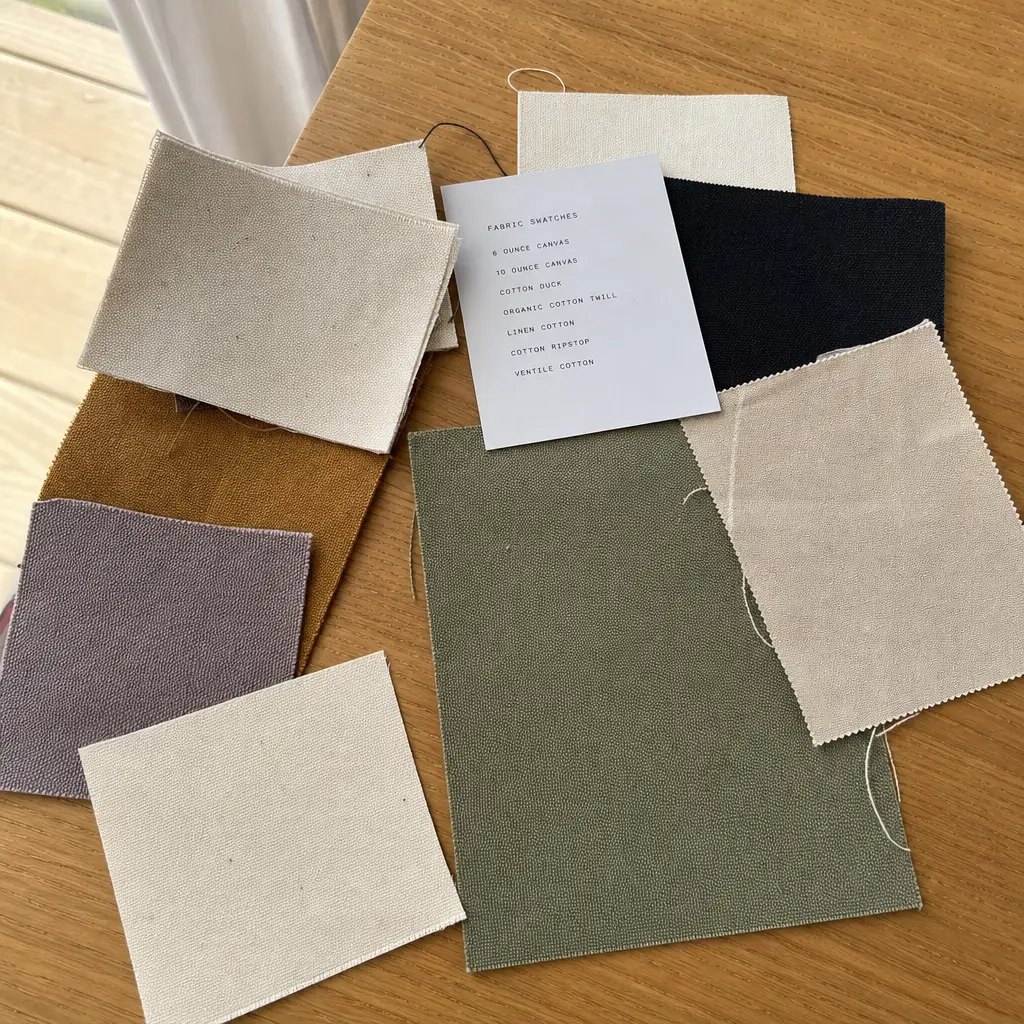
The RFQ should also state fabric finish. Greige, scoured, washed, bleached, dyed, brushed, softened, or preshrunk fabric can differ in handfeel, shade, shrinkage, lint, odor, and print absorption. Do not compare a supplier quoting unfinished lightweight fabric against another quoting washed 10 oz canvas as if the offers are equivalent. Ask for the weight basis and the finishing stage, then tie both to the approved sample.
- 5-6 oz cotton: budget giveaways, short-term events, and light bread-only use where price is the main driver.
- 7-8 oz cotton: practical middle range for reusable bakery shopping totes, mixed baked goods, coffee bags, and light retail add-ons.
- 10-12 oz canvas: stronger handfeel for premium merchandise, gift bundles, and heavier bread-plus-jar loads.
- Ask for GSM or oz/yd², fabric finish, and whether the weight is measured before or after washing, dyeing, or finishing.
- Confirm expected shrinkage, typical shade range, acceptable slubs, lint level, and odor standard before sampling.
- Avoid comparing quotes unless fabric weight, finish, handle construction, print method, and packing are aligned.
Specify Dimensions, Gusset, Handles, and Load
Generic tote dimensions often fail in bakery use. A bag designed for books may be too narrow for a square pastry box, too shallow for a long baguette sleeve, or too weak for jars and seasonal gift items. The purchase order should state finished width, height, side gusset, bottom gusset, handle length, handle drop, and handle width. It should also say how measurements are taken: flat, edge-to-edge, after final pressing, and before or after folding.
Handles deserve more attention than they usually get. They affect comfort, retail presentation, and failure risk. Narrow handles reduce cost but can feel poor with dense loads. Long shoulder handles suit farmers-market customers, yet they may look oversized on smaller gift totes or cover the front print when folded. Same-fabric handles give a clean natural look. Cotton webbing can add stability if shade is controlled. Reinforcement should be specified as box stitch, cross stitch, bar tack, or another approved method.
Write the load expectation into sample approval. A tote meant for two loaves is different from one carrying bread, jam, honey, coffee, and ceramic mugs. The supplier does not need laboratory testing for every low-cost giveaway, but the buyer should require a practical load check, handle pull review, and inspection of the attachment points before bulk production. If the tote will be sold as a durable retail item, the load check should be treated as a release condition, not a nice-to-have.
- State size as finished width x height x gusset, and identify whether the gusset is side, bottom, or full box construction.
- Use written tolerances such as plus or minus 10 mm for body dimensions and handles unless the program needs tighter control.
- Define handle length, drop, width, material, reinforcement stitch, thread color, and acceptable shade difference between handle and body.
- Provide the largest bakery item to fit, such as a pastry box size, baguette sleeve length, or gift-bundle footprint.
- Keep print-safe zones clear of seams, gussets, fold lines, and handle stitching to avoid distorted logos.
- Test the approved sample with a realistic bakery load, not only empty on a table.
Control Printing and Retail Presentation
Bakery artwork may look simple, but print execution still causes disputes. Many bakery logos use one to three colors, which makes screen printing a common wholesale choice. It can give stable coverage on natural cotton and works well for line art, slogans, and repeat programs. Still, unbleached cotton is not a white synthetic surface. Base shade and weave texture can soften ink color, reduce edge sharpness, and shift the perceived Pantone match.
Digital printing can suit detailed illustrations, gradients, seasonal artwork, or multiple bakery locations with different designs. Heat transfer can reproduce fine detail, although it may show a film edge or feel less aligned with a natural cotton story. Embroidery and woven labels can lift the retail value, but they add cost, backing, puckering risk, and minimum line-width limits. The supplier should recommend a method based on artwork, quantity, fabric weight, wash expectation, and retail positioning, not just the cheapest setup.
Labels, hangtags, and barcodes are controlled components. Treat them that way. A hangtag may contain organic claim language, care instructions, price, SKU, country-of-origin wording, or brand story. A woven side label must be positioned consistently and sewn securely. For distributors and bakery chains, barcode readability and carton-level SKU separation may matter more than decorative trim. Put those details into the approval route before production starts.
- Provide vector artwork, Pantone or LAB references, print size, placement, color count, minimum line thickness, and approved orientation.
- Approve a physical strike-off on the actual or nominated fabric before mass printing; do not rely only on a digital mockup.
- For screen print, confirm screen charges, ink type, curing method, coverage limit, and large-solid-area risk.
- For digital print, approve color, edge sharpness, handfeel, pretreatment marks, and wash result where wash durability matters.
- For heat transfer, check film edge, flexibility, cracking risk, and whether the finish conflicts with the natural cotton positioning.
- For labels and hangtags, confirm claim wording, barcode data, attachment method, SKU code, care statement, and carton-level separation.
Build Supplier Compliance Evidence Early
A supplier compliance checklist should separate material-claim evidence from manufacturing-control evidence. Organic cotton certificates, scope certificates, transaction documents where applicable, fabric invoices, and lot records support the material story. Factory licenses, process maps, subcontractor disclosure, restricted-substance declarations, needle-control logs, and inspection records support production control. B2B buyers usually need both when the tote is sold, imported, or supplied to a retailer.
Evidence requirements should match risk. A small local giveaway with no consumer-facing organic wording may need a lighter file than a retail tote sold across multiple bakery locations. Even then, ask early. Evidence is hard to rebuild after fabric has been cut and printed. If the program needs OCS or GOTS support, the supplier should explain which documents can be issued for the specific order, not only show a generic certificate from an upstream mill.
Subcontracting is common in bags. Printing, embroidery, washing, labeling, or packing may be outsourced. That is not automatically a problem. Hidden subcontracting is the issue because it can create traceability gaps, shade variation, inconsistent sewing, and unclear responsibility when defects appear. A stronger supplier will show the process flow, disclose outside processes before order confirmation, and name who owns corrective action.
- Material evidence: certificate scope, fabric purchase record, lot reference, transaction certificate route where applicable, and confirmation that bulk material matches the quote.
- Factory evidence: business license, production location, process flow, subcontractor disclosure, in-line QC method, final inspection format, and needle-control procedure.
- Chemical evidence: ink declaration, restricted-substance support where required, finishing-treatment disclosure, and confirmation of no buyer-prohibited chemical treatment.
- Labeling evidence: approved claim wording, care label content, country-of-origin handling, barcode file, hangtag proof, and packaging artwork approval.
- Shipment evidence: packing list, carton marks, final inspection report, loading photos if requested, and documents matching the purchase order.
- Document control: name the buyer-side reviewer, supplier document owner, approval deadline, and rule that substitutions require written approval.
Use MOQ Tiers to Reveal Real Costs
MOQ is not only a sales preference. It reflects fabric sourcing, cutting yield, print setup, sewing efficiency, certification-document handling, packing labor, and carton planning. A supplier may offer a low MOQ for stock blank totes but require a higher minimum for custom organic cotton fabric, custom gussets, special handles, certified claim support, retail-ready packing, or multiple artwork versions.
Procurement teams should request tiered pricing at the same specification. Useful bakery program tiers are often 500, 1000, 3000, and 5000 pieces. This shows whether cost is driven by setup, fabric, printing, packing, or documentation. It also helps multi-location bakery groups decide whether to use one consolidated design or split artwork by store. If every location has its own logo, screen charges and setup complexity can outweigh the benefit of localization.
MOQ analysis should include freight and storage. A 12 oz canvas tote may sell better at the counter but will increase carton weight and warehouse cube. A large order may reduce unit price but create slow-moving seasonal inventory if the artwork expires. The best quote is not always the lowest unit price. It is the lowest total cost at an acceptable compliance and quality risk.
- Ask for identical specs at 500, 1000, 3000, and 5000 pieces to expose true price breaks.
- Separate fabric MOQ, print MOQ, packing MOQ, trim MOQ, and certificate-document requirements.
- Confirm whether each bakery location artwork counts as a separate setup, separate MOQ, or only an added screen charge.
- Ask whether fabric can be held for phased orders and what shade or storage risk that creates.
- Compare total landed cost including samples, screens, inspection, cartons, freight cube, duty, warehouse handling, and expected overage.
- Do not force a low MOQ if it causes undocumented material substitution, rushed sampling, or weak QC.
Make Sample Approval a Controlled Process
A photo can confirm progress. It cannot approve fabric handfeel, thickness, odor, print texture, handle comfort, true shade, or folding behavior. The pre-production sample should use the nominated fabric weight, intended construction, real handle method, print method, labels, and proposed packing. If substitute fabric is used because bulk material is not ready, mark the sample as a construction reference only and require later fabric confirmation.
Sample approval should create a small but complete specification record. The buyer should measure width, height, gusset, handle length, handle drop, handle width, print size, print placement, label position, stitch type, shade, and folded presentation. A simple email saying “approved” is weak evidence if bulk goods later have short handles, different fabric shade, shifted print, or wrong packing.
Sampling also catches commercial usability problems. A logo may sit too low after folding. A shoulder handle may cover the print in retail display. A gusset may distort the front panel. A pastry box may not sit flat despite the quoted dimensions. These are not just design preferences. They affect customer satisfaction, retail display, and receiving acceptance.
- Approve fabric swatch and print strike-off before full bag sampling when shade, handfeel, or claim support matters.
- Require the full sample to use nominated fabric, approved construction, actual print method, labels, hangtags, folding method, and proposed packing where possible.
- Record actual measurements and photos rather than relying only on supplier product specifications.
- Review the tote with intended bakery loads such as bread, pastry boxes, coffee bags, jars, tins, or gift items.
- Photograph handle reinforcement, inside seams, print placement, label position, folded presentation, and carton mark.
- Keep sealed approval samples with both buyer and factory, and state that final inspection will compare bulk goods against them.
Define Tolerances and Defect Classes Before Cutting
Organic cotton totes are simple products, but vague acceptance criteria still create expensive disputes. Common defects include dirty marks on natural fabric, oil stains, mildew odor, skewed panels, uneven handles, weak handle stitching, open seams, print pinholes, print bleeding, shade mixing, wrong carton count, missing labels, and barcode errors. Name these defects before cutting begins.
Many buyers use an AQL-based final inspection framework, but the exact level depends on risk. A short-term giveaway may tolerate small cosmetic imperfections that would be unacceptable for a retail tote sold at a bakery counter. A chain program with barcodes and warehouse rules needs packing accuracy as much as sewing quality. The inspection plan should state sample size method, defect classification, measurement tolerance, print placement tolerance, and release rule.
Natural cotton needs clear visual standards. Small slubs and fiber specks may be normal for unbleached cotton. Oil marks, mildew odor, and obvious shade mixing are not. The approval sample should define the acceptable natural appearance range. If the buyer wants a cleaner, more uniform retail look, the supplier may need better fabric inspection, different finishing, or a higher rejection allowance.
- Classify wrong material claim, wrong artwork, mildew odor, broken handle reinforcement, open major seams, sharp foreign objects, and metal contamination as critical or major defects.
- Classify visible front-panel stains, strong shade mismatch, print smearing, severe skewing, missing labels, wrong barcode, and carton shortage as major defects.
- Classify small loose threads, minor natural slubs, and slight shade variation within the approved range as minor defects if retail appearance is not harmed.
- Use written tolerances such as plus or minus 10 mm for body dimensions and handles and plus or minus 5 mm for standard print placement unless otherwise approved.
- Inspect packing details including carton count, folding method, inner pack, barcode, hangtag, carton mark, PO number, destination, and gross weight.
- Require defect photos, measurement table, carton count result, and release decision before balance payment or cargo release.
Plan Packing, Cartons, and Receiving Rules
Packing affects unit cost, landed cost, warehouse handling, and the customer’s first impression. Bulk packing reduces packaging material and labor but can cause creasing, rubbing, dust exposure, and mixed-SKU confusion. Individual polybags protect retail merchandise but may conflict with sustainability goals. Paper belly bands, hangtags, and folded retail packs improve presentation but add labor and carton volume.
Carton planning is especially important for heavier cotton canvas. A carton packed with too many 10-12 oz totes can exceed warehouse lifting limits. A carton packed too lightly wastes freight space. Buyers should request pieces per carton, carton dimensions, net weight, gross weight, carton strength assumption, and pallet preference at quote stage. If goods are sent to a retailer or distributor, carton marks and barcode rules may decide whether receiving is smooth or rejected.
Moisture protection needs a practical balance. Many bakery brands want less plastic, and that goal is reasonable. At the same time, unprotected natural cotton can absorb odor or moisture during storage and transit. Options include master polybags, carton liners, moisture-control packets where appropriate, paper bands, or recyclable individual bags where available. The right choice depends on route, climate, transit duration, storage conditions, and retail presentation needs.
- Define pieces per carton, maximum gross weight such as 15 kg or 20 kg if required, folding method, inner pack quantity, and allowed protective materials.
- For retail-ready totes, provide barcode files, hangtag artwork, price-ticket rules, folding diagram, SKU list, and carton mark template before sample approval.
- For sustainability programs, state the plastic policy clearly: banned, reduced, master-bag only, recyclable where available, or buyer-approved alternative.
- For mixed bakery SKUs, require carton marks showing design, color, quantity, PO number, destination, and carton number.
- Request carton dimensions and gross weight at quote stage so forwarders can estimate LCL, air, or container cost accurately.
- Ask how the supplier prevents moisture, mildew odor, dust, rubbing, and carton abrasion during storage, inland trucking, and export transit.
Compare Quotes With Lead Time and Incoterms
A usable quote for wholesale organic cotton totes includes much more than unit price. Buyers need Incoterm, currency, validity, MOQ, fabric weight, fabric finish, size, gusset, handle specification, print method, color count, sample cost, setup charge, document cost, packing method, carton details, lead time, payment terms, and inspection standard. Without those details, the cheapest quote may become expensive after sample revisions, document gaps, failed inspection, or unexpected freight volume.
Lead time should be broken into milestones. Fabric procurement, document confirmation, artwork approval, strike-off approval, sample revision, screen making, printing, curing, sewing, trimming, packing, final inspection, and freight booking all affect cargo-ready date. A supplier may quote short production time but exclude the days needed for material sourcing and sample approval. Seasonal bakery campaigns should plan backward from in-store date, not only shipment date.
Incoterms can distort comparison. EXW may look low but leaves inland transport, export handling, and risk transfer details to the buyer. FOB is often more comparable for importers using their own forwarder. CIF includes freight to the destination port but not destination charges, duty, or final delivery. DDP can simplify landed-cost planning, but buyers must check carefully what is included. Compare suppliers under the same Incoterm whenever possible.
- Separate sample lead time, fabric lead time, production lead time, inspection window, document preparation, freight booking, and delivery buffer.
- Freeze artwork, Pantone references, label files, barcode data, and carton marks before screen making to avoid resetting production preparation.
- Ask for quote validity because cotton prices, freight rates, exchange rates, and document-related costs can change.
- Compare EXW, FOB, CIF, and DDP using the same destination assumptions and forwarder-validated carton cube and weight.
- Include sample fees, screen charges, document fees, inspection costs, packing labor, carton cube, payment terms, and expected overage in comparison.
- Require written approval for changes to fabric weight, finish, construction, print method, packing, subcontractor, or claim support after quote acceptance.
Specification comparison for buyers
| Supplier option | What to verify | Commercial advantage | Buyer risk to control |
|---|---|---|---|
| Direct sewing factory | fabric batch documents, dye-lot photos, approved sample archive, and final QC record | Better sample-to-bulk control and faster production feedback | May be weaker on export paperwork or branded packing unless checked early |
| Trading company | Factory name, production photos, trim-source proof, and who owns QC decisions | Can coordinate small mixed orders and extra services | Markup can hide real factory capability and slow defect decisions |
| Specialized bag workshop | seam allowance, handle reinforcement, label attachment, fabric pre-shrink note, and batch shade control | More practical for detailed construction, trims, and repeat programs | Capacity may be limited during peak seasons |
| Low-price general supplier | organic cotton canvas, batch documentation where available, undyed or low-impact dyed fabric, and shrinkage control | Useful for simple promotional runs with loose specs | Material downgrades, weak packing, and vague inspection scope can erase savings |
| Retail-ready supplier | plastic-reduction request, recycled carton note, bundle count, carton mark, and moisture protection without overpacking | Can handle labels, SKU separation, carton marks, and receiving rules | Higher unit cost must be compared against reduced warehouse work |
| Compliance-focused supplier | Fabric records, labeling review, test plan, and production traceability | Safer for retail programs and repeat brand orders | Documentation claims need evidence, not only sales language |
| Local sample room plus bulk factory | Signed sample, bulk factory handoff, first-piece photos, and deviation owner | Good for complex branding before large production | Sample room quality may not match bulk line unless handoff is controlled |
Buyer checklist before sampling
- Define the tote's business use: retail merchandise, gift-with-purchase, loyalty program item, farmers-market carry bag, catering packaging, event giveaway, or distributor program because fabric weight, tolerance level, packing, and compliance evidence change by channel.
- State the exact organic claim level required: certified finished tote where available, OCS-supported claim, GOTS-supported claim, organic cotton fabric claim only, buyer-private material claim with no consumer certification language, or natural cotton tote with no organic claim.
- Ask whether the supplier's certificate scope covers cutting, sewing, printing, labeling, and packing for finished bags or only yarn/fabric sourcing, and confirm which order-specific documents can be issued before the purchase order is approved.
- Specify finished dimensions as width x height x gusset, with handle length, handle drop, handle width, seam construction, reinforcement style, and whether measurements are taken flat after final pressing or packing.
- Select fabric by use case: 5-6 oz for low-cost events, 7-8 oz for practical reusable bakery shopping totes, and 10-12 oz for premium retail merchandise, gift bundles, and heavier bread-plus-jar loads.
- Request fabric composition, weave or canvas type where available, GSM or oz per square yard, greige/scoured/bleached/dyed/washed status, shrinkage expectation, odor control, shade tolerance, lint level, and acceptable natural slub range.
- Provide artwork as vector files with Pantone or LAB references, print size, print location, color count, minimum line thickness, ink restrictions, barcode files, hangtag artwork, and any food-adjacent handling requirements.
- Require approval of fabric swatch, print strike-off, and pre-production sample before bulk cutting, covering handfeel, shade, sewing, handle strength, print color, print placement, labels, barcodes, folding, carton mark, and inner packing.
- Set written inspection criteria for stains, oil marks, mildew odor, needle damage, broken stitches, loose threads, skewed panels, weak handle attachment, print defects, shade mixing, wrong packing, carton shortage, barcode errors, and foreign objects.
- Ask for carton dimensions, gross weight, net weight, pieces per carton, inner pack quantity, polybag or paper band policy, pallet preference, warehouse lifting limit, moisture protection method, and whether cartons meet destination receiving rules.
Factory quote questions to send
- Which organic cotton standard can you support for this tote order, and does your certificate scope cover finished bag manufacturing, printing, labeling, and packing, or only upstream fabric sourcing?
- If the finished tote cannot be sold as certified, what exact claim language can your documents support, and what wording should we avoid on hangtags, invoices, carton marks, product pages, and retail signs?
- What natural organic cotton fabric weights can you quote at 500, 1000, 3000, and 5000 pieces, and how does each weight affect MOQ, fabric availability, carton weight, freight cube, and lead time?
- Is the quoted fabric greige, scoured, washed, bleached, dyed, brushed, softened, preshrunk, or otherwise finished, and what shrinkage, shade, odor, handfeel, and lint tolerances should we approve?
- Will cutting, sewing, printing, labeling, trimming, needle inspection, and packing be performed in your own facility or subcontracted, and can each subcontracted process be disclosed before purchase order confirmation?
- Which print methods do you recommend for our artwork: screen print, digital print, heat transfer, embroidery, woven label, or patch, and what are the limits for line width, color count, coverage, placement, curing, and wash durability?
- What charges are separate from unit price, including sample fee, courier cost, screen charge, artwork adjustment, strike-off fee, certificate document fee, hangtag application, barcode label, inner packing, carton mark, inspection support, and export handling?
- What are your standard measurement tolerance, stitch density range, handle-strength check, print placement tolerance, shade tolerance, and defect classification for organic cotton tote bags?
- How many pieces are packed per carton, what are the estimated carton dimensions, net weight, and gross weight, and can you keep cartons below our warehouse lifting limit such as 15 kg or 20 kg if required?
- Can you provide a packing proposal that reduces single-use plastic while still protecting natural cotton from moisture, mildew odor, dust, rubbing, carton abrasion, and mixed-SKU errors during transit?
Quality-control points to confirm
- Fabric weight must match the approved swatch within the agreed tolerance, commonly plus or minus 5 percent for cotton canvas unless the purchase order specifies a tighter range and test method.
- Fabric composition, organic claim support, certificate reference, and lot identification should match the approved quote and document file; do not accept bulk material substitutions without written buyer approval.
- Finished tote measurements should be checked flat after final pressing or packing for width, height, side gusset, bottom gusset, handle length, handle width, and handle drop against the signed tolerance sheet.
- Typical tolerances should be written before production: body dimensions plus or minus 10 mm, handle length plus or minus 10 mm, handle drop plus or minus 10 mm, and print placement plus or minus 5 mm unless the design requires tighter control.
- Handle attachment must show consistent reinforcement stitching, no skipped stitches at load points, no loose thread ends, no tearing after the approved pull or load check, and no distortion that harms retail appearance.
- Seams should have consistent stitch density, secure back-tacking, clean corner turns, and no open seams, puckering, needle cuts, unraveling, or exposed raw edges beyond the approved construction.
- Print color should be compared under consistent light to the approved Pantone reference, LAB target, or physical strike-off, with no obvious pinholes, ghosting, smearing, ink bleeding, cracking, under-curing, or transfer marks.
- Natural cotton shade variation should be controlled by fabric batch; visibly mixing cream, beige, greyish, or yellowish panels in the same SKU can create retail complaints and should be classified as a major defect when outside the approved range.
- Finished bags must be free from oil marks, mildew smell, insect contamination, broken needles, sharp trims, excessive lint, metal contamination, loose blades, and foreign objects inside cartons.
- Labels, hangtags, barcodes, care instructions, country-of-origin handling, carton marks, carton count, and packing method must match the purchase order, approved sample, SKU list, and destination receiving requirements.