Start MOQ Negotiation From the Bag Function
For artisan bakeries, organic cotton totes are usually not a generic giveaway. They may carry bread loaves, boxed pastries, jars of jam, coffee bags, retail merchandise, or subscription pickup items. MOQ negotiation becomes easier when the factory understands the real load, sales channel, and shelf presentation. A bakery tote used as a paid retail item can justify heavier fabric and better handle reinforcement. A promotional opening bag may need lower cost and faster production, but it still must not look disposable.
Before asking for the lowest MOQ, define whether the buyer is trying to reduce inventory risk, test a new design, split quantities across bakery locations, or meet a fixed launch date. Each reason points to a different negotiation route. A factory may reduce MOQ for standard natural fabric and one print color, but not for custom dyed organic cotton with four bakery logos and individual retail packaging.
- For bread and pantry retail, start around 10 oz canvas so the tote has enough body without becoming expensive to ship.
- For high-end bakery merchandise, 12 oz canvas can feel more durable, but MOQ and freight cost usually increase.
- For low-cost event handouts, 7 oz to 8 oz organic cotton may work if the load is light and the buyer accepts a softer structure.
- For grocery-style use, confirm gusset depth early because a flat tote and a box-bottom tote consume fabric differently.
Separate Total Quantity From Real Factory MOQ
Many RFQs say, for example, 1,000 pieces assorted designs. That is not enough information for a factory to quote accurately. In tote production, MOQ may be driven by fabric booking, cutting efficiency, print setup, sewing line changeover, or packing assortment. A supplier may accept 1,000 total pieces only if all use the same fabric, same size, same handle, and one print design. If the buyer wants four bakery branch logos at 250 pieces each, the production risk and print setup work change.
A useful MOQ discussion breaks the order into layers. The first layer is fabric: natural organic cotton is usually easier than dyed cotton. The second layer is construction: one tote size is easier than several sizes. The third layer is decoration: each artwork and print color may need its own screen, setup, and approval. The fourth layer is packing: mixed cartons, store labels, or individual barcode stickers add handling time even when the sewing quantity is unchanged.
- State total pieces, pieces per artwork, pieces per size, pieces per fabric color, and shipment split.
- Ask whether the factory can group several artworks under one fabric MOQ but charge separate print setup fees.
- Avoid forcing a very low quantity per design if exact color matching and retail labeling are required.
- Use one standard construction for the first order, then expand sizes or colors after sales data is known.
Choose Fabric Weight Before Chasing Unit Price
Organic cotton tote quotes can look close on paper while the actual bags feel very different. A 7 oz tote and a 12 oz tote should not be compared only by unit price. Fabric weight affects body, sewing difficulty, print opacity, carton weight, freight cost, and perceived retail value. For artisan bakeries, 10 oz to 12 oz canvas is often the practical range when the tote is meant to be reused and sold or given with premium purchases.
Ask the supplier to quote fabric in both oz and GSM where possible. Ounce labels are commonly used in bags, but GSM makes cross-supplier comparison clearer. Request the finished bag weight too, because handle length, gusset, and seam allowance all change cotton consumption. If one quote is much cheaper, it may be using lighter fabric, narrower handles, a smaller bag, or less reinforcement.
- 8 oz organic cotton: useful for lighter promotional totes and tight budgets, but may collapse when displayed empty.
- 10 oz organic cotton: balanced choice for bakery retail, farmers markets, and repeat customer use.
- 12 oz organic cotton: better hand feel and strength, but higher fabric cost and freight weight.
- 14 oz organic cotton: possible for premium merchandise, but not always necessary for bakery packaging programs.
Use Print Method as a Negotiation Lever
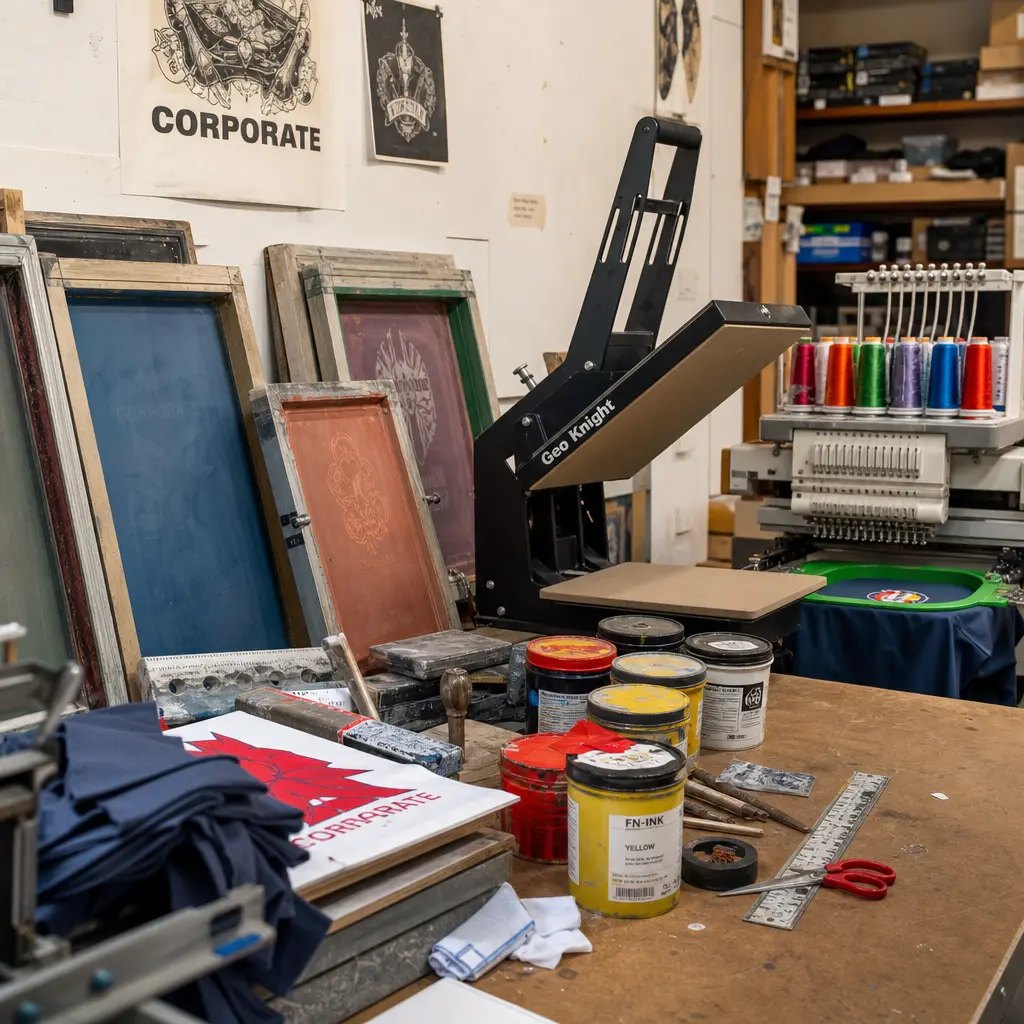
Most bakery artwork can be handled by screen printing, especially single-color logos, wheat icons, bread illustrations, and simple typography. Water-based screen print is usually suitable on natural cotton because it gives a softer hand feel than heavy plastisol and fits the environmental positioning of organic cotton. It is also more MOQ-friendly than complicated multi-process decoration.
The risk appears when the artwork includes tiny serif text, distressed flour texture, fine line drawings, or multiple close Pantone colors. Canvas texture is not smooth paper. Ink can spread slightly, and small gaps may fill in. A bakery buyer should approve artwork at actual print size, not only as a PDF on screen. For MOQ negotiation, reducing color count from three colors to one or two can lower setup costs and make a smaller order more realistic.
- One-color water-based screen print is usually the simplest route for low MOQ organic cotton totes.
- Two-color print is workable, but registration tolerance should be accepted before bulk production.
- Heat transfer can reproduce details, but may feel less natural and may not match the organic cotton brand story.
- Embroidery adds perceived value but can pucker lighter cotton and usually increases cost and lead time.
Negotiate MOQ With Tradeoffs, Not Pressure
The strongest MOQ negotiation is not simply asking the factory to cut the number. It offers tradeoffs that reduce production friction. A buyer can accept natural undyed fabric, use a standard size, keep one handle length, reduce print colors, approve bundled packing instead of individual packaging, or consolidate shipment timing. These choices may allow the supplier to quote a lower starting quantity without hiding costs in quality reduction.
A weak negotiation asks for custom fabric, many artworks, urgent delivery, strict color tolerance, retail packaging, and the lowest MOQ at the same time. The factory may still say yes, but the quote will include risk margin or the production may be pushed behind larger orders. For importers and distributors, it is better to define must-have items and flexible items in the RFQ. This helps the supplier propose a realistic MOQ ladder.
- MOQ ladder example: 500 pieces at higher unit price, 1,000 pieces at standard setup efficiency, 3,000 pieces at better fabric purchasing efficiency.
- Flexible item: carton bundle packing instead of individual recycled paper bands for the first order.
- Must-have item: organic cotton documentation and approved fabric weight cannot be replaced by conventional cotton.
- Negotiation lever: use one blank tote body across several bakery customers and print each logo separately when quantities justify it.
Build the RFQ Around Quote Data
A good RFQ reduces the supplier's guessing and prevents misleading low quotes. For wholesale organic cotton totes, include the bag drawing or target dimensions, fabric weight, organic cotton requirement, handle style, print artwork, print size, print colors, quantity by artwork, packing preference, destination port or delivery term, and required timeline. Without these details, two factories may quote different products while appearing to compete on the same line item.
The buyer should request a cost breakdown where possible, even if the supplier does not reveal every internal cost. At minimum, separate unit price, screen setup, sample fee, packing upgrade, inland freight, inspection support, and export carton cost if applicable. This makes MOQ negotiation more factual. If the unit price decreases sharply at 2,000 pieces, the reason may be fabric purchasing efficiency or setup cost spread, not sewing magic.
- Include finished size, not only cut size, because cotton shrinkage and sewing allowance matter.
- Attach vector artwork and specify print width or height in centimeters.
- List Incoterm preference such as EXW, FOB, CIF, DDP only if your team is ready to compare that basis correctly.
- Request carton dimensions and gross weight because freight can change the true landed cost.
Approve Samples in the Right Order
For a new bakery tote, sample approval should not jump directly from digital artwork to bulk production. A blank sample confirms size, fabric feel, gusset, handle drop, seam finish, and folding behavior. A print strike-off confirms ink color, line clarity, coverage, and curing. A pre-production sample combines the approved construction and approved print before the factory cuts or prints the full order.
This staged approach adds time, but it protects the buyer from expensive mistakes. If the handle drop is too short, customers carrying long baguette bags or multiple boxes may find the tote uncomfortable. If the logo sits too low, it can disappear when the bag is filled. If the ink is too thick, the tote may feel less premium. Sample comments should be measurable, not subjective.
- Measure finished width, height, gusset, handle width, and handle drop on the blank sample.
- Rub the printed area lightly after curing to see whether ink dusting or cracking appears.
- Fold the printed sample as it will be packed to see if the logo creases badly.
- Photograph approved samples with a ruler and keep them as the production control reference.
Set Practical QC Acceptance Criteria
Organic cotton fabric can have natural slubs and shade variation, especially in natural undyed material. That does not mean every mark is acceptable. The QC standard should distinguish between acceptable natural texture and defects that hurt retail presentation. Marks in the logo area, oil stains, dark contamination, broken stitches, needle damage, twisted handles, and strong odor should be treated as defects.
The buyer should also define measurement tolerances before inspection. Standard sewn cotton totes are flexible products, so a small size variance may be normal. However, inconsistent handle drop, crooked print placement, or weak reinforcement can create customer complaints. For bakery buyers, handle strength and print appearance usually matter more than minor internal seam neatness, but both should be inspected.
- Common size tolerance: plus or minus 1 cm for width and height unless a tighter retail requirement is agreed.
- Print placement tolerance: define centerline and distance from top seam before bulk printing.
- Stitching: no skipped stitches or loose reinforcement at handle stress points.
- Cleanliness: no visible dirt, oil, mildew smell, or transfer marks from packing materials.
Plan Packing for Bakery Distribution
Packing is often treated as a small detail, but it affects receiving efficiency and brand presentation. A bakery chain may need cartons labeled by store, while an importer may need neutral export cartons with SKU marks. A distributor may prefer bundles of 25 or 50 so warehouse teams can count quickly. Individual polybags keep pieces clean but may not fit the sustainability message of organic cotton totes.
For sea freight, moisture control matters. Cotton bags can absorb odor or humidity if cartons are weak or stored poorly. Ask for carton size, pieces per carton, gross weight, and inner protection method. If the bags are folded too tightly, heavy canvas can hold creases, and printed areas may press against each other. Packing should protect the print while keeping carton weight manageable for warehouse handling.
- Bundle by 25 or 50 pieces for easy counting and lower packaging waste.
- Use carton labels showing PO number, SKU, artwork code, quantity, and carton number.
- Avoid over-heavy cartons that slow warehouse unloading and increase damage risk.
- For retail-ready programs, price stickers or barcodes should be quoted separately from basic export packing.
Control Lead Time and Schedule Risk
Lead time should be counted from final sample approval and deposit or payment arrangement, not from the day of inquiry. Organic cotton fabric availability, artwork revisions, print screen preparation, and packing instructions can all delay production before sewing begins. Bakery launches, holiday gifting, farmers market seasons, and distributor catalog deadlines need a schedule with approval milestones.
A realistic timeline includes RFQ clarification, sample making, sample shipping, buyer review, revision if needed, bulk fabric preparation, cutting, printing, sewing, trimming, inspection, packing, and export handover. If the deadline is fixed, reduce complexity instead of removing sample steps. The fastest safe route is usually standard natural fabric, one tote size, one-color print, bundled packing, and clear artwork from day one.
- Reserve time for one sample revision if the first printed sample has placement or color issues.
- Provide final artwork before negotiating urgent lead time; unfinished artwork makes every schedule unreliable.
- Confirm whether lead time changes during peak production months or before major holidays.
- Book inspection before cartons are sealed if the buyer needs detailed assortment verification.
Specification comparison for buyers
| Spec decision | Recommended option | When it fits | Buyer risk to check |
|---|---|---|---|
| Fabric weight for bakery retail totes | 10 oz to 12 oz organic cotton canvas, approximately 270-340 GSM | Gift bread, pastry, coffee, or pantry item purchases where the bag must stand better than a thin shopper | Do not compare quotes using only ounce labels; request GSM, yarn count if available, shrinkage data, and finished bag weight |
| Lower MOQ starting point | Use stock-width natural organic cotton with standard tote dimensions | First seasonal run, new bakery opening, or distributor test order needing controlled inventory exposure | Custom dyed fabric, non-standard width cutting, or uncommon gusset depth can push MOQ back up even if the bag quantity looks small |
| Print method for bakery logos | Water-based screen print for 1-2 color artwork on natural canvas | Most bakery logos, sourdough line art, simple brand marks, and farmers market bags | Fine flour-dust style gradients, tiny QR codes, and very thin serif text may need artwork adjustment or a different print method |
| Handle construction | Self-fabric cotton handles with cross-stitch reinforcement | Reusable retail tote used for bread loaves, jars, packaged cookies, and repeat store visits | Cheap quotes may reduce handle width, stitch density, or reinforcement size; request clear photos of the handle stress area |
| MOQ split by artwork | One bag size and fabric, multiple print artworks only if each artwork meets minimum print setup quantity | Bakery group with several locations or distributor supplying multiple bakery brands | A low total MOQ may still carry separate screen setup charges, color matching time, and carton sorting costs for each artwork |
| Sample approval route | Blank size sample first, then printed pre-production sample using approved artwork | When dimensions, handle drop, and print placement all matter to retail presentation | Approving only a digital mockup can miss fabric shrinkage, print hand feel, and whether the logo sits too low after the bag is filled |
| Packing format | Individually folded in bundles of 25 or 50 with carton label by SKU | Bakery chains, wholesale distributors, and retail buyers needing clean receiving and store allocation | Individual polybags may conflict with sustainability positioning and add labor cost; carton moisture protection still needs planning |
| Lead time buffer | Allow fabric confirmation, sample revision, bulk production, QC, and export packing before vessel or courier booking | Orders tied to openings, holiday gift programs, farmers market launches, or trade promotions | Compressed schedules often remove sample revision time; the real risk is not sewing speed but delayed artwork, fabric booking, and print approval |
Buyer checklist before sampling
- Define the exact tote use case: bread carrier, retail gift bag, market tote, subscription pickup bag, or bakery merchandise item.
- Specify organic cotton status required for the order and request supporting documentation before comparing quotes.
- State finished dimensions, gusset style, handle length, fabric weight in GSM or oz, and acceptable tolerance.
- Provide artwork files in vector format with Pantone or reference color and minimum readable text size.
- Separate total order quantity from SKU quantity, artwork quantity, and shipment quantity so MOQ discussion is clear.
- Request blank sample, print strike-off, and pre-production sample stages when the artwork or construction is new.
- Confirm whether quoted MOQ includes one print design only or allows mixed designs under one fabric booking.
- Require carton packing details: pieces per carton, carton size, gross weight, inner bundle method, and carton marks.
- Ask for production lead time from final sample approval, not from first inquiry or deposit date.
- Compare quotes by landed cost per usable approved tote, including setup, sample, packing, inland freight, and inspection costs.
Factory quote questions to send
- What is the lowest MOQ for this organic cotton fabric weight if we use natural color and standard tote dimensions?
- Does the MOQ apply per order, per fabric color, per bag size, per print artwork, or per shipment destination?
- What fabric weight in GSM and oz are you quoting, and what is the estimated finished weight per bag?
- Can you quote 8 oz, 10 oz, and 12 oz versions with the same dimensions so we can compare cost and hand feel?
- Which print method do you recommend for our logo, and what line thickness or text size may fail on canvas texture?
- What are the screen setup, color matching, sample, and artwork change charges outside the unit price?
- How many days are needed for blank sample, printed sample, bulk production, final inspection, and export packing?
- What tolerance do you apply for finished size, handle drop, print position, fabric weight, and carton quantity?
- Can you provide photos of previous similar tote construction without revealing other customer brands?
- How will the bags be folded, bundled, protected against moisture, labeled, and packed for distributor receiving?
Quality-control points to confirm
- Finished tote width and height within agreed tolerance, commonly plus or minus 1 cm for standard sewn cotton totes.
- Gusset depth consistent enough that bakery boxes or bread bags fit without twisting the side seams.
- Handle drop measured after sewing and pressing, not only from the pattern specification.
- Handle attachment reinforced with X-stitch or box-stitch and no loose thread at stress points.
- Fabric weight verified against approved sample because small GSM reductions can change structure and perceived value.
- Print registration, color, opacity, and curing checked after rubbing and light folding on the printed area.
- Logo placement measured from top seam and side seam to avoid a visibly off-center retail presentation.
- No oil marks, dirty folding stains, needle holes, broken stitches, heavy slubs in the logo area, or odor.
- Carton quantity and assortment verified against purchase order before export packing.
- Moisture protection and carton strength suitable for sea freight, courier handling, or warehouse storage.