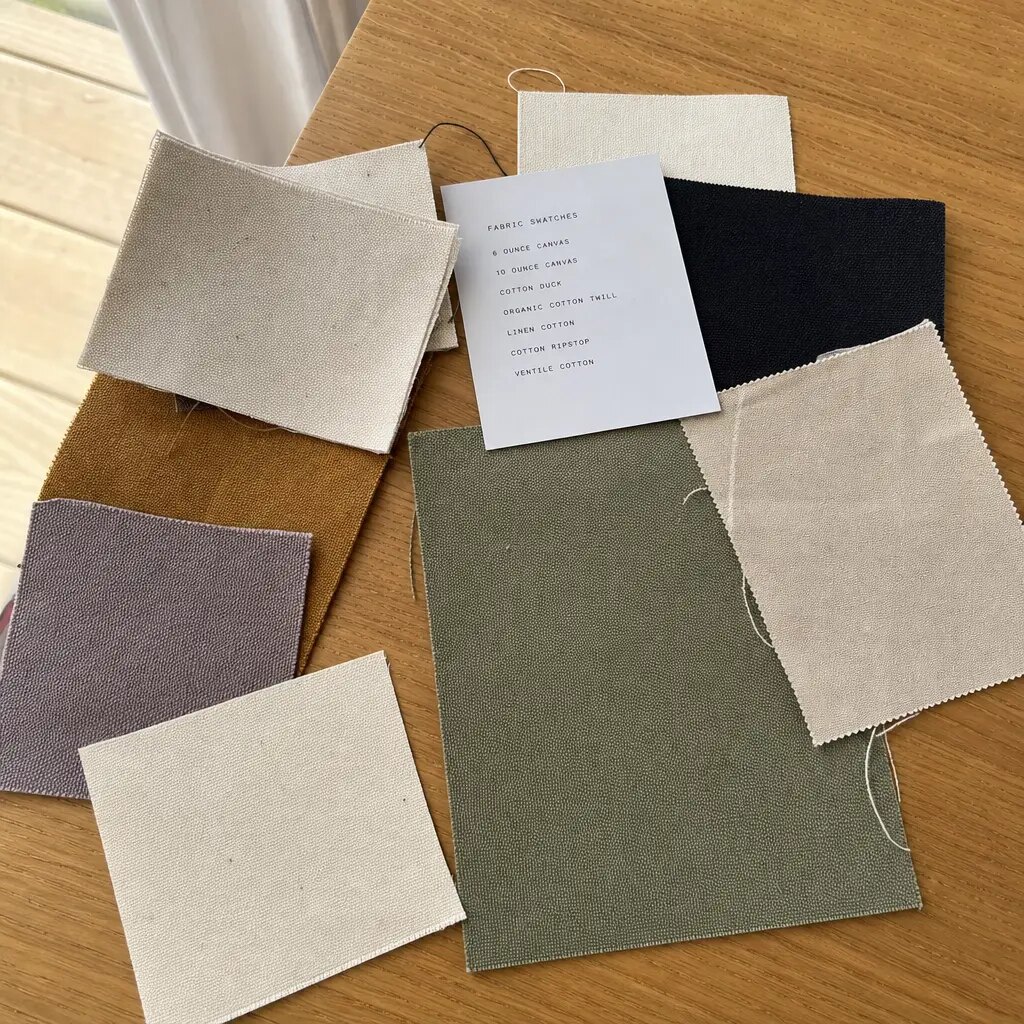
Start with the hotel retail use case, not the fabric catalog
Wholesale organic cotton totes for hotel retail sit between two categories: useful guest packaging and sellable merchandise. A tote used as a complimentary welcome bag can be lighter, simpler, and packed in bulk. A tote displayed in a resort shop must hold shape on a shelf, carry a higher perceived value, and survive guest use after checkout. If procurement sends only a general request for organic cotton tote bags, suppliers will quote different weights, different handle constructions, and different packing assumptions. The prices will look comparable, but the products will not be comparable.
The first buying decision is the commercial role of the bag. A spa may need a soft tote for robe, towel, and skincare items. A beach hotel may need a wide-gusset tote that holds sunscreen, sandals, and bottled drinks. A city boutique hotel may want a compact shopping tote for books and small gifts. These use cases change the right GSM, handle length, gusset, printing method, and carton plan. The best RFQ starts with the load, retail price point, and display method before discussing artwork.
- For paid retail merchandise, prioritize handfeel, seam finish, print durability, and shelf presentation.
- For gift-with-stay programs, prioritize stable MOQ, repeatability, packing efficiency, and cost control.
- For spa or beach use, increase gusset depth and handle strength before adding decorative trims.
- For small hotel shops, avoid too many size and color variants because MOQ and stock holding can increase quickly.
Choose fabric weight by performance and retail positioning
Organic cotton tote fabric is usually quoted by oz per square yard and sometimes by GSM. For practical comparison, 7 oz is roughly 240 GSM, 10 oz is roughly 340 GSM, 12 oz is roughly 407 GSM, and 14 oz is roughly 475 GSM. The exact conversion varies by weave and finishing, but these numbers are good enough for sourcing discussions. A hotel buyer should not accept vague terms such as standard canvas, heavy cotton, or premium fabric without an actual weight reference.
For most hotel retail totes, 10 oz to 12 oz organic cotton canvas is the safest range. It feels more durable than a promotional cotton shopper but does not become too stiff or expensive to ship. If the tote is sold as a premium boutique item, 12 oz to 14 oz can work, especially with a washed finish. For a welcome gift, conference amenity, or in-room packaging bag, 7 oz to 8 oz can be suitable if the seam and handle design are reinforced. The mistake is using lightweight fabric with a luxury price tag or using very heavy fabric for a giveaway program where freight absorbs the budget.
- 7 oz to 8 oz: economical, foldable, good for gifts and amenity packing.
- 10 oz: balanced cost and handfeel for mid-level hotel retail.
- 12 oz: stronger shelf presence and better perceived value.
- 14 oz and above: premium feel but higher material cost, sewing difficulty, and carton weight.
Organic cotton claims need evidence, not just a fabric name
Hotel groups and retail distributors often need to support sustainability claims in catalog copy, hangtags, internal ESG records, or customs documentation. If the product is described as organic cotton, clarify whether you need certified organic cotton fabric, a transaction certificate, scope certificate from the mill or supplier, or only a material declaration. The supplier quote should state what documentation is included and what requires extra cost or longer lead time.
Not every factory holds every certification directly. Some bag factories purchase certified organic fabric from approved mills and can provide mill documents or chain-of-custody evidence. Others can produce cotton totes from organic fiber but cannot support a formal retail claim. This difference matters if your hotel boutique hangtag says certified organic cotton. Procurement should align the claim, label language, and documentation before sample approval, not after the goods are ready for shipment.
- Use plain wording in the RFQ: certified organic cotton fabric required, documents required with shipment.
- Separate material claim from factory certification; they are not always the same thing.
- Confirm whether labels, hangtags, and product copy will mention organic cotton or certified organic cotton.
- If documentation is mandatory, include it in the quote comparison rather than treating it as an afterthought.
Size, gusset, and handle design decide whether the tote feels useful
A common hotel retail tote size is around 38 cm wide by 42 cm high for a flat shopper, but resort and spa totes often need a gusset. A 10 cm to 15 cm bottom gusset changes the product from a flat souvenir bag into a practical bag for towels, boxed skincare, wine, or sandals. The gusset also changes fabric consumption, cutting layout, sewing time, and carton volume. A buyer comparing quotes should ensure every supplier has quoted the same finished dimensions, not only a similar-looking tote.
Handle drop is another frequent source of disappointment. Short handles may look neat in photos but do not sit comfortably on the shoulder. For hotel retail, a handle drop around 25 cm to 30 cm is common when shoulder carry is expected. Handle width around 2.5 cm to 3.8 cm is usually comfortable, depending on fabric weight. The handle insertion should use box stitch or cross-stitch reinforcement, especially when the bag may carry bottles, books, or beach items.
- Record finished dimensions in centimeters or inches and define whether measurements are taken flat.
- Specify top width, height, bottom gusset, side gusset if any, handle length, handle drop, and handle width.
- For shoulder carry, do not approve handles based only on total handle length; check actual drop on the sample.
- For heavier contents, use reinforced handle stitching and test with the intended load.
Printing method should match fabric texture and hotel artwork
Water-based screen printing is usually the best starting point for organic cotton hotel totes with one to three solid colors. It keeps a natural fabric handfeel and works well for logos, property names, simple line art, and resort icons. However, natural unbleached cotton is not pure white, so print colors may look warmer and slightly muted. Fine serif fonts, thin lines, and small registration details can also lose sharpness on open-weave canvas.
For detailed artwork, heat transfer or digital printing may be proposed, but each has tradeoffs. Transfers can produce sharper graphics and more colors, but they may feel like a film on the surface and may not suit a premium natural cotton story. Digital printing can handle gradients and multicolor artwork, but color brightness depends heavily on fabric pretreatment and base color. Embroidery is possible for premium totes but adds cost, weight, and puckering risk on lighter fabrics. The buyer should approve a print strike-off on the selected fabric before bulk production.
- Screen print: best for solid logos, repeat orders, and natural handfeel.
- Heat transfer: useful for detailed or multicolor artwork but check surface feel and edge adhesion.
- Digital print: useful for complex artwork but check color strength on natural cotton.
- Embroidery: premium appearance, but avoid very large filled areas on lightweight cotton.
- Woven side label: good for subtle brand detail and repeat retail programs.
Understand MOQ logic before reducing the order too far
MOQ for wholesale organic cotton totes is not only a sewing factory decision. It can be driven by organic cotton fabric availability, dyeing minimums, printing setup, label production, and packing material. Natural unbleached organic cotton in common weights may have a lower MOQ because fabric is easier to source. Custom dyed organic cotton usually requires a higher fabric minimum, longer lead time, and shade approval process. Washed canvas can also raise MOQ because the washing process is more efficient in larger batches.
Artwork variation affects MOQ as well. A hotel group may want the same tote with different property names. If the fabric and bag construction stay the same, the factory may combine sewing volume and separate only the printing batches. But each print color, screen setup, transfer film, woven label, or barcode sticker still has a setup cost. A practical RFQ should list total order quantity and quantity per design so the factory can quote accurately.
- Lower MOQ is easier with natural fabric, standard size, one print color, and bulk carton packing.
- MOQ rises with custom dyeing, washed finish, zipper closure, multiple labels, and many artwork versions.
- Combining several hotel properties may reduce sewing cost but may not eliminate print setup charges.
- If forecast volume is uncertain, start with one core fabric and size, then vary print artwork only.
Build the quote around cost drivers, not only unit price
Two supplier quotes can show the same unit price while hiding different assumptions. One may include 12 oz organic canvas, reinforced handles, water-based print, individual paper belly band, and export cartons. Another may use 8 oz cotton, simple lockstitch handles, one-side print, and bulk packing. The difference may not appear until the sample arrives. Procurement should request a quote breakdown that identifies fabric, trims, printing, packing, testing, documentation, and carton data.
Landed cost is especially important for hotel retail buyers because heavy cotton bags increase shipping weight and carton volume. A 14 oz tote may look excellent but can reduce pieces per carton and increase CBM. If the product is sold in hotel shops with limited storage, carton size and packing count can affect replenishment handling. The best material choice balances retail value, durability, freight efficiency, and the selling price the hotel can support.
- Fabric is usually the largest cost driver, especially when moving from 8 oz to 12 oz or 14 oz.
- Printing cost depends on color count, print area, sides printed, and setup method.
- Closures, inner pockets, lining, snaps, and zippers add sewing time and inspection points.
- Individual retail packing improves shelf control but increases material cost and packing labor.
- Carton CBM and gross weight influence freight quotes and warehouse handling.
Sample approval should prove the production route
A development sample is useful for reviewing size and design, but it may not prove bulk production quality. For hotel retail totes, the pre-production sample should use the confirmed organic cotton fabric, final GSM, approved handle construction, final print method, and intended trims. If the sample is made from substitute fabric because bulk fabric is not yet available, the buyer should treat it as a construction sample only and require a second approval before mass cutting.
Sample checking should be done like a small inspection. Weigh the fabric if possible, measure the finished size, test handle comfort, load the bag with realistic items, rub the print with a dry and slightly damp cloth, and fold the tote the same way it will be packed. Natural cotton can show slubs, seed flecks, and shade variation; these may be acceptable if they match the organic natural look, but stains, oil marks, and mildew odor are not acceptable.
- Approve one sealed reference sample for factory production and one duplicate for buyer inspection.
- Mark approved print color, position, fabric shade, handle drop, seam finish, and packing method.
- Do a practical load test using the contents the hotel expects guests to carry.
- Reject samples with twisting seams, uneven handles, rough print edges, or strong odor.
- Do not release bulk cutting until fabric shade and print strike-off are approved.
Set QC thresholds that an inspector can actually use
Quality control for organic cotton totes should not rely on subjective comments such as good quality or premium finish. The inspection standard should include measurable tolerances. For example, finished size tolerance may be plus or minus 1 cm for width and height on a medium tote, with tighter control if the bag must fit retail packaging. Print placement tolerance can be defined by distance from the top edge and side seams. Handle drop should be measured because mismatched handles are visible and affect use.
Functional checks matter more than perfect natural fabric appearance. Organic cotton may have small natural specks or slubs, especially in unbleached fabric. Buyers should define acceptable natural variation and unacceptable defects. Loose stitches, skipped stitches, broken reinforcement, stains, odor, incorrect logo color, crooked print, and weak handles are commercial defects. If the tote includes snaps, zippers, magnets, or inner pockets, those features need separate function checks.
- Suggested size tolerance: commonly around plus or minus 1 cm for width and height, depending on design.
- Suggested print position tolerance: define in millimeters from fixed reference points.
- Handle pull test: set a load based on intended use, such as books, bottles, towels, or retail goods.
- Print rub check: dry rub and damp rub should not cause obvious transfer or smearing.
- Carton inspection: verify count, labels, carton strength, moisture condition, and packing method.
Packing decisions affect both presentation and freight
Hotel retail buyers often focus on the tote itself and decide packing late. That can create problems. Flat packing keeps creases under control and helps the tote present better when unpacked in a hotel shop. Folding reduces carton size but can leave visible fold lines on heavier canvas. Individual polybags protect against moisture and dirt but may conflict with a hotel brand's plastic reduction policy. Paper belly bands or recycled paper sleeves can support retail presentation, but they add cost and require careful sizing.
Carton planning should be part of the quote, not only a shipping department detail. Request pieces per carton, carton dimensions, gross weight, net weight, and total CBM for the order. Cotton canvas is heavy, so cartons should not be packed beyond safe handling weight. If the hotel buyer needs mixed designs by property, carton labels should show design code, quantity, color, PO number, and barcode if required. Poor carton marking creates receiving errors at hotel warehouses and distributor centers.
- Flat pack premium retail totes when shelf appearance matters.
- Fold lightweight amenity totes if freight savings are more important than crease control.
- Use inner protection if goods may face humidity during ocean transport.
- Avoid over-tight compression for washed or heavy canvas because creases may remain.
- Require carton marks that match the purchase order, artwork code, and destination routing.
Specification comparison for buyers
| Spec decision | Recommended option | When it fits | Buyer risk to check |
|---|---|---|---|
| Fabric weight for hotel retail tote | 10 oz to 12 oz organic cotton canvas, about 340 to 407 GSM | Most resort shops, spa retail, welcome gift programs, and paid merchandise where the bag must feel substantial | Below 280 GSM can feel like a giveaway bag; above 450 GSM raises freight and may reduce foldability at checkout |
| Budget organic cotton option | 7 oz to 8 oz plain weave or light canvas, about 240 to 270 GSM | Amenity bags, conference room gifts, low-price hotel shop add-ons, and folded in-room packaging | Handles and seams must be reinforced because lighter fabric stretches more under bottle or towel weight |
| Premium retail handfeel | 12 oz to 14 oz washed organic cotton canvas, about 407 to 475 GSM | Boutique hotel merchandise, beach clubs, luxury resorts, and products sold as reusable shopping bags | Washing adds shrinkage variation and higher cutting wastage; print sharpness should be approved after wash sample |
| Print method for simple hotel logo | Water-based screen print with controlled ink penetration | One to three solid colors, natural cotton look, mid to high volume repeat orders | Too much ink pressure can bleed on open-weave cotton; request print strike-off on bulk fabric, not only paper proof |
| Print method for fine artwork | Heat transfer or digital print, approved by rubbing and washing tests | Gradient artwork, small icons, QR-style graphics, or many color designs | Transfers can feel plasticky on premium cotton; digital print may look dull on unbleached natural fabric |
| Handle construction | Self-fabric handles with cross-stitch or reinforced box stitch, 2.5 cm to 3.8 cm width | Retail totes expected to carry books, bottles, towels, or guest purchases | Narrow handles cut into the hand; weak handle insertion is a common failure point during load testing |
| Closure and inner details | Open top for checkout retail; magnetic snap or zipper only for premium SKUs | Open top keeps cost, packing thickness, and production risk lower; closures fit higher retail price points | Zippers and snaps increase needle damage risk, inspection points, and metal compliance documentation |
| Packing method | Flat packed 50 to 100 pcs per export carton with moisture protection and carton drop strength | Wholesale hotel retail orders where shelf presentation and landed freight matter | Over-compression creates permanent creases; loose packing increases carton volume and freight cost |
Buyer checklist before sampling
- Define the tote use case before quoting: paid retail item, guest gift, spa merchandise, conference amenity, or in-room packaging.
- Specify organic cotton type clearly: certified organic cotton fabric, natural unbleached color or dyed color, and whether certification documents are required for your market claim.
- State fabric weight in oz and GSM, not only words like heavy canvas or premium cotton.
- Provide finished size, gusset size, handle length, handle width, and target carrying weight.
- Attach artwork files with print size, Pantone references, placement distance from edges, and whether the print is one side or two sides.
- Request pre-production sample approval using bulk fabric and bulk print method before mass cutting.
- Set measurable QC limits for size tolerance, print registration, seam strength, handle pull, stains, odor, and carton packing.
- Confirm packing format: flat, folded, individual polybag, paper belly band, hangtag, barcode sticker, or carton-only bulk packing.
- Request carton dimensions, gross weight, net weight, pieces per carton, and estimated CBM before approving the final quote.
- Build lead time around fabric availability, dyeing, print approval, production queue, inspection, and export booking rather than only sewing days.
Factory quote questions to send
- What exact organic cotton fabric do you propose: construction, GSM, oz weight, yarn count if available, and natural or dyed finish?
- Is the quoted fabric made from certified organic cotton, and what documents can be supplied with the shipment if we make an organic claim on retail packaging?
- What is the MOQ for this fabric and color, and does the MOQ change if we choose dyed cotton, washed canvas, zipper closure, or multiple artwork designs?
- Can you quote two fabric options, such as 8 oz and 12 oz, with the same size and print so we can compare landed cost and retail positioning?
- Which print method is included in the quote, and is the ink suitable for the fabric color, artwork detail, and expected wash or rub performance?
- Will the pre-production sample use bulk fabric, bulk trims, and final print method, or is it a development sample made from substitute material?
- What size tolerance, handle pull test, seam allowance, and print tolerance do you use for final inspection?
- How many pieces per carton, what carton dimensions, and what gross weight do you estimate for our selected specification?
- What is the production lead time after sample approval and deposit, and which steps are most likely to affect the schedule?
- Which cost items are excluded from the unit price, such as hangtags, retail barcode labels, inner packing, testing, inspection, palletizing, or destination charges?
Quality-control points to confirm
- Fabric weight must be checked against approved standard, with realistic tolerance agreed before bulk production.
- Finished size should be measured flat at top width, bottom width, height, gusset, handle drop, and handle width.
- Handle attachment should pass a practical load test based on intended use, not only visual inspection.
- Print color, print position, edge sharpness, ink coverage, and rubbing resistance should match the approved strike-off.
- Seams should be straight, with no skipped stitches, broken threads, loose backstitching, or needle holes around stress points.
- Natural cotton shade variation should be controlled within approved range, especially when reordering.
- Bags should be free from oil marks, mildew odor, excessive lint, dirt, water stains, and strong chemical smell.
- Metal trims, snaps, zippers, and magnets should be checked for function, alignment, and corrosion risk when used.
- Cartons should be export-grade, dry, correctly labeled, and not overpacked beyond safe manual handling weight.
- Packed bags should not be crushed so tightly that permanent creases affect retail presentation.