Why Logo Placement Is a Procurement Specification
For wholesale organic cotton totes for artisan bakeries, logo placement is not a finishing touch to discuss after the bag is chosen. It affects panel cutting, print setup, sewing sequence, inspection method, folding, carton packing, and how the tote looks at the bakery counter. A front-center mark that feels balanced on a flat PDF can sit too low once a sourdough loaf pushes out the gusset. It can look crooked when the side folds open. Long handles may also fall across the artwork when the tote hangs on a retail hook.
The buyer's specification should turn design preference into measurable production language. Define the finished bag size, printable panel, top-edge reference point, horizontal center line, logo width and height, print method, seam clearance, and allowed tolerance. Also state how the bag will be judged: flat, hanging, folded, and filled. A soft sewn cotton product changes shape in each view, so a single flat mockup is not enough.
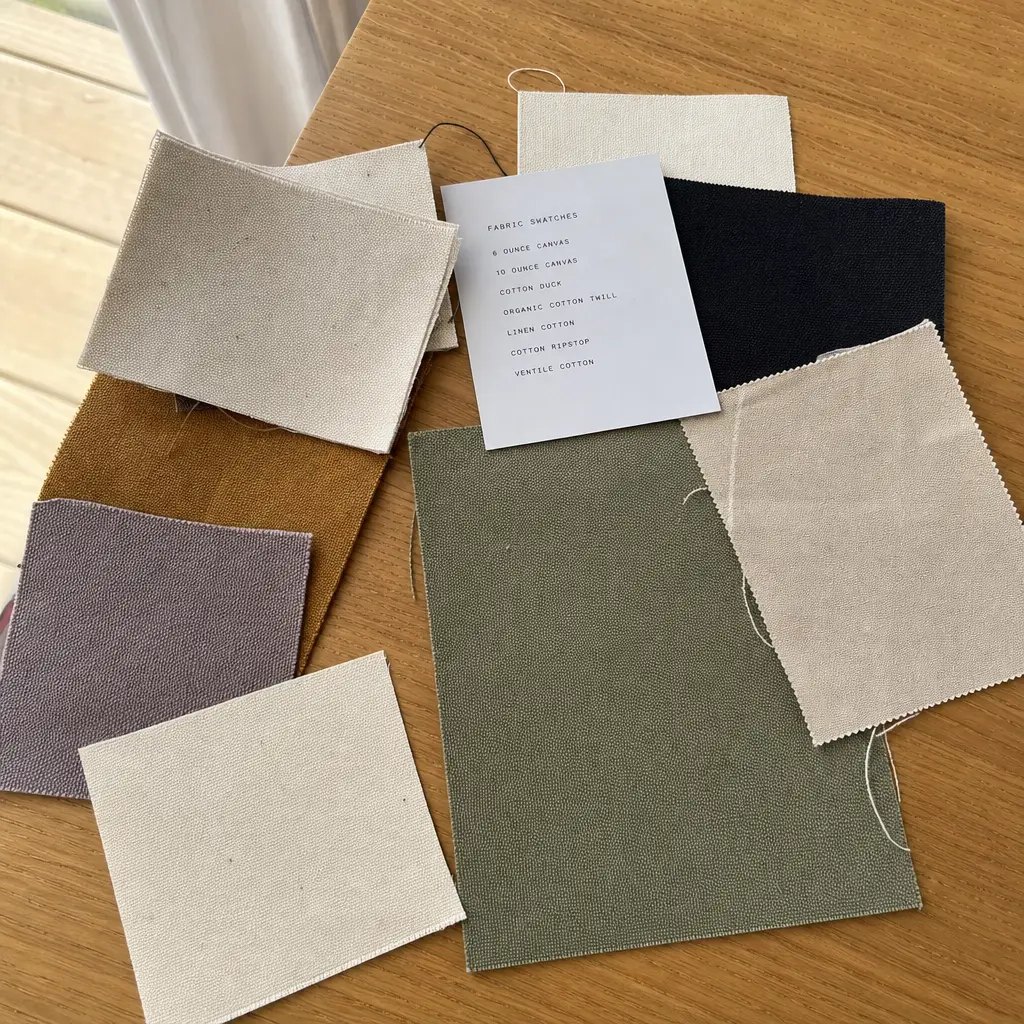
Organic cotton adds one more layer of control. Natural unbleached canvas often has a warm shade, visible flecks, occasional slubs, and lot-to-lot tone variation. Many bakery brands like that texture, but it can reduce contrast for pale ink, thin type, small QR codes, and delicate pastry illustrations. Approving artwork only on a white-background digital proof leaves too much room for surprise.
- Use finished-bag measurements for placement unless the factory provides both panel-before-sewing and finished-bag references.
- Keep bakery names, icons, dates, QR codes, and small type away from top hems, handle stitch boxes, side seams, gusset folds, and bottom crease lines.
- Approve the logo on a filled sample if the tote will carry cake boxes, bread bags, bottled drinks, jars, coffee packs, or retail gift sets.
- State that the factory may not resize, move, rotate, simplify, thicken, or recolor artwork without written buyer approval.
- Mark the approved sample with placement measurements so printing, sewing, and inspection teams use the same reference.
Start With the Bakery Use Case
The best tote spec starts with the way the bakery will use the bag. A paid retail tote needs a cleaner print, stronger alignment control, better handle reinforcement, and more consistent carton presentation than a one-day opening giveaway. A daily bread tote needs enough gusset depth for volume. A gift tote for boxed pastries needs stability around rigid corners. A bakery café selling coffee beans, jam, and bread may need a higher logo position because the lower front panel bulges once the bag is full.
Before requesting prices, list the expected products, approximate loaded weight, display method, carry style, sales channel, and distribution model. A single artisan bakery may prefer a discreet lower-corner mark for a premium look. A regional bakery group may need one shared body construction with ten branch logos and strict carton sorting. A distributor may care most about SKU separation, carton marks, and predictable replenishment.
This step prevents both overbuying and under-specifying. A simple giveaway may not need a wash-tested multi-color print. A retail merchandise tote, however, should not be quoted with vague fabric weight, no placement tolerance, and weak handle reinforcement. Good procurement connects the logo decision to the tote's real job.
- For bread and pastry counters, prioritize an upper-middle front logo that remains visible while carried.
- For boxed gift bundles, test the tote with the actual box size because rigid corners can distort the lower print area.
- For franchise or branch programs, keep one body spec and one placement grid to reduce sorting and inspection errors.
- For paid merchandise, require stronger rub, wash, color, and handle tests than for promotional packaging.
- For hook display, confirm whether shoulder handles cover part of the print when the tote hangs empty.
Core Tote Specs That Affect Print Accuracy
Most reusable bakery tote programs work well in the 10 oz to 12 oz organic cotton canvas range, approximately 280-340 gsm. That range usually gives enough substance for bakery retail without making cartons excessively bulky or seams harder to sew. Lighter canvas may be suitable for lower-cost promotional use. Heavier canvas can feel premium, but it may create stronger fold memory, thicker seam intersections, higher needle stress, and more freight volume.
Finished dimensions matter more than catalog names. A common bakery reference is about 38 x 42 cm with an 8-10 cm gusset, but the correct size should be checked against the buyer's actual loaf bags, pastry boxes, coffee packs, and gift bundles. Gusset construction changes the visible front face. A boxed bottom or deeper side gusset improves capacity, yet it reduces the flat area where a centered logo stays visually stable.
Handles are part of the logo plan. A 55-65 cm shoulder handle is convenient for shoppers, but it may drop over the front print when the tote is displayed. A shorter handle keeps the front panel clearer at the counter, though it may be less comfortable for customers carrying several items. The RFQ should state handle width, handle drop, top hem depth, stitch density, and reinforcement style, such as box stitch, cross stitch, bartack, or another approved construction.
- Use 280-340 gsm organic cotton canvas as a retail-grade starting range, then adjust by target price, freight, and durability needs.
- Set finished dimensions after sewing and pressing, not only cut-panel dimensions.
- Keep important artwork at least 25-35 mm from side seams, bottom folds, gusset folds, top hems, and handle stitch boxes where possible.
- Ask the factory to show the printable zone on a dimension drawing before artwork approval.
- Avoid placing small text below the natural load bulge if the tote often carries heavy boxed goods.
Logo Placement Options for Bakery Branding
For many bakery programs, the safest choice is a centered front logo in the upper-middle panel. On a standard tote, the top of the artwork often starts about 80-100 mm below the finished opening, with the mark centered horizontally on the front face. This position usually clears the handle stitch box and avoids the lower curve where the bag bends around bread, boxes, and jars.
Other placements can work, but they carry different production risks. A lower-right logo can feel refined and boutique, yet the lower panel is more affected by gusset folds, sagging fabric, and carton creases. A large full-front illustration gives strong shelf impact, but it leaves less room for sewing and printing variation. A side seam woven label creates a premium detail and can support shared blank inventory, although label MOQ and sewing alignment need separate control.
For bakery groups, repeatability often matters more than novelty. If several branch logos share one tote body, keep the same placement grid, the same approximate print size range, and the same carton marking logic. The artwork can change by branch, but the physical control points should stay stable.
- Front center print is best for clear brand visibility, simple inspection, event totes, and multi-location programs.
- Upper-middle print is best when the tote will be filled with bulky products that bend the lower panel.
- Lower-right print is best for minimalist branding, but it needs wider tolerance and filled-sample approval.
- Side seam woven label is best for subtle premium branding, private label programs, or shared blank tote inventory.
- Front patch label is best for high-touch retail lines, but patch fabric, edge finish, shrinkage, and sewing cost must be quoted separately.
Artwork and Print Method Controls
Water-based screen printing is usually the first option to quote for simple bakery logos on organic cotton canvas. It suits one to three solid colors, gives a matte hand feel, and works well for dark brown, black, forest green, navy, and other bakery-friendly colors. It is also practical for repeat wholesale orders when the artwork, size, and screen setup remain unchanged.
Artwork should arrive production-ready. Vector files are preferred for wordmarks, icons, wheat motifs, oven illustrations, and line-drawn pastries. Ask the factory for minimum printable line thickness, minimum readable text height, trap or registration needs for multiple colors, and guidance on reversed type. A design that looks crisp on coated paper may fill in, feather, or break up on cotton weave.
Digital printing may help with full-color seasonal graphics or many artwork versions, but it still needs testing on the final fabric. Heat transfer can hold sharp detail, yet buyers should check edge lift, cracking, gloss, and flexibility. Embroidery can work for a small premium mark, but it may pucker lighter canvas and will not suit every detailed bakery illustration.
- Send vector artwork for screen print, with final logo width, height, color references, and placement dimensions.
- Approve final color on the actual organic cotton shade, not only on a monitor, paper proof, or white fabric swatch.
- Ask for the factory's minimum line width and minimum text height on the chosen 280-340 gsm canvas.
- Use water-based screen print for solid 1-3 color bakery logos and repeat wholesale runs.
- Use digital print, transfer, woven label, patch, or embroidery only after testing durability, hand feel, and appearance on the final fabric.
Quote Structure, MOQ, and Cost Drivers
A wholesale tote quote should not be reduced to one unit price and one MOQ. Organic cotton tote programs may have separate minimums for fabric sourcing, dyeing if used, cutting, sewing, screen setup, each artwork version, woven labels, patch labels, inner packing, carton assortment, and branch-level sorting. A supplier may say 500 pieces are possible, but the economics change quickly if the order has four store logos, two print colors, separate cartons, and a custom side label.
Ask for tiered prices at 500, 1000, 3000, and 5000 pieces when possible. The tiers show how setup costs, handling, and fabric utilization change with volume. They also clarify reorder economics. A low first-order price is less attractive if every reorder requires new screens, new labels, high sample charges, or expensive carton sorting.
Separate the blank bag from decoration and packing. This makes supplier comparison easier and gives the buyer more flexibility if artwork changes. Major cost drivers include fabric weight, bag size, gusset depth, handle length, number of print sides, number of ink colors, print area, label type, sewing complexity, packing format, documentation requirements, and inspection readiness.
- Ask for separate lines for blank tote, print setup, per-color printing, additional print side, woven label, patch label, inner pack, carton, and inspection support.
- Confirm whether repeat orders can reuse screens, placement jigs, artwork files, labels, and carton layouts.
- Keep one sewing specification if several bakery branches need different logos; vary artwork only where needed.
- Ask whether seasonal artwork requires new screens, new digital setup, a new pre-production sample, or new carton marks.
- Compare suppliers only when fabric weight, dimensions, print method, tolerances, packing, documentation, and Incoterm are aligned.
Organic Cotton Documentation and Material Control
Organic cotton claims need documentation before the purchase order is issued, not after goods are packed. Some buyers only need internal procurement evidence. Others need chain-of-custody records connected to the finished shipment, especially when a retailer or consumer-facing claim is involved. Depending on the supplier's certification scope and supply chain, available documents may include a scope certificate, transaction certificate, fabric supplier certificate, chain-of-custody document, invoice declaration, or supplier declaration.
Do not assume that natural cotton, unbleached cotton, or eco-style fabric is organic. The RFQ should state the required claim level and the document expected with shipment. If finished-product certification or transaction-linked documentation is required, that requirement can affect supplier selection, lead time, and cost.
Material control is visual control as well. Natural organic cotton canvas may vary in shade between lots, particularly in unbleached constructions. Flecks and seed particles can be acceptable when agreed in advance, but dark contamination, oil marks, and foreign fibers in the print area should be treated more strictly. When logo contrast matters, approve a swatch from the planned production lot or require the pre-production sample to use the same lot intended for bulk.
- State whether organic proof is needed for procurement records, retailer compliance, import files, or consumer-facing claims.
- Request the exact document type available with shipment and confirm which company name appears on it.
- Approve shade limits if reorders must match previous stock or if logo contrast is critical.
- Clarify whether fabric weight is measured before finishing, after finishing, after washing, or on finished goods.
- Retain an approved fabric swatch and signed sample for reorder comparison.
Sampling: What Must Be Physical
A digital mockup is useful for scale, but it cannot approve cotton shade, ink absorption, print edge sharpness, seam movement, handle balance, or fold marks. The pre-production sample should use the final fabric weight, final organic cotton source where required, final dimensions, final print method, final artwork size, final logo position, final handle construction, and final packing fold.
If the supplier sends a substitute sample, label it as reference only. A different fabric weight, tote size, ink system, or handle construction can hide the exact issue the sample is meant to reveal. Bulk production should be released only after the buyer approves a sample that represents the order specification, or after the buyer accepts every remaining difference in writing.
Review the sample like a bakery customer would use it. Fill it with representative products, including rigid boxes and heavier jars if they are part of the program. Check the logo flat on a table, hanging from a hook, folded as packed, and carried by the handles. This catches low placement, handle interference, weak stitching, oversized artwork, poor ink contrast, and unstable proportions before bulk panels are printed.
- Measure logo distance from the finished top opening, left edge, right edge, center line, and bottom fold after sewing.
- Photograph the approved sample flat, hanging, folded, and filled with typical bakery products.
- Record approved ink color under daylight and typical indoor bakery retail lighting.
- Keep one signed approval sample at the factory and one matched sample with the buyer or inspection company.
- Do not release bulk production from factory photos only when logo placement is a commercial selling point.
QC Thresholds for Placement, Print, and Sewing
Logo placement needs numeric tolerances. For many cotton totes, +/-5 mm to +/-10 mm from the approved position is a practical starting range, depending on artwork size, construction, and print method. Small circular badges, centered wordmarks, QR codes, and symmetrical marks usually need tighter control because small movement is easy to see. Larger illustrations may tolerate more variation, but the reference should still be the finished front panel, not a shifting side seam.
Print durability should match the sales channel. A tote sold as reusable bakery merchandise deserves stricter checks than a free event bag. Common controls include dry rub, wet rub, flexing, tape pull where appropriate, and sample wash testing if washing is expected. Judge color on the approved fabric shade because natural cotton undertones can make warm browns, creams, and pale inks look different from proofs.
Sewing QC should cover both strength and appearance. Handle attachment, top hem consistency, skipped stitches, seam puckering, loose threads, needle damage, twisted handles, and distorted gussets should be classified before production. The buyer and supplier should agree which defects are critical, major, and minor so shipment inspection does not turn into a subjective debate.
- Major placement defect: logo exceeds agreed tolerance, tilts visibly, crosses a seam, enters a fold line, or is not centered as specified.
- Major print defect: ink smearing, poor adhesion, wrong color, misregistration, pinholes in critical artwork, or unreadable small text.
- Major sewing defect: weak handle stitching, skipped stitches in load-bearing areas, open seams, twisted handles, or distorted gussets.
- Minor defect: small natural cotton slub outside the critical logo area if agreed as acceptable in the inspection standard.
- Critical issue: mold, odor, oil stains, sharp fragments, incorrect organic claim labeling, wrong artwork, unauthorized substitution, or mixed cartons.
Packing, Lead Time, and Landed-Cost Review
Packing protects the printed panel and shapes the first impression when a bakery, distributor, or franchise warehouse opens the carton. Flat packing usually protects a front logo better than tight rolling, especially when the artwork has solid ink coverage. If folding is required, keep fold lines away from QR codes, thin typography, detailed illustrations, and the center of large wordmarks. Approve the fold pattern before production packing begins.
Carton details affect landed cost. Cotton totes are bulky compared with many small promotional items, so carton volume can erase a small unit-price saving. Request units per carton, carton dimensions, gross weight, net weight, CBM, carton ply, carton marks, inner pack method, and moisture-control approach. These details let procurement compare freight, warehouse handling, and store-level unpacking accurately.
Lead time should be mapped from artwork proof to shipment handover. Organic documentation, fabric availability, label weaving, sample revisions, print curing time, inspection booking, carton marking, and branch-level packing can all affect schedule. A quote that skips these steps may look faster than it is. For seasonal bakery campaigns, freeze artwork, packing, and assortment rules before fabric cutting.
- Define units per carton, folding method, inner pack style, carton ply, carton marks, gross weight limit, and moisture-control requirements.
- Request carton dimensions, gross weight, net weight, CBM, and packing photos before comparing freight or landed cost.
- Avoid fold lines through small typography, QR codes, detailed bakery illustrations, or the center of a large wordmark.
- Build a lead-time schedule for proofing, material confirmation, sampling, revision, production, inspection, packing, and shipment booking.
- Compare suppliers only when each quote uses the same fabric weight, print method, packing method, documentation level, and Incoterm.
Specification comparison for buyers
| Spec decision | Recommended option | When it fits | Buyer risk to check |
|---|---|---|---|
| Fabric weight for bakery retail use | 10 oz to 12 oz organic cotton canvas, approximately 280-340 gsm, with the test basis stated: greige fabric, finished fabric, washed fabric, or finished bag reference | Reusable bakery merchandise, bread loaves, pastry boxes, coffee bags, jars, and premium gift bundles | Below about 240 gsm can feel promotional and wrinkle more; above about 380 gsm increases freight volume, seam bulk, needle stress, and fold marks |
| Bag size and gusset | Finished body around 38 x 42 cm with an 8-10 cm boxed or side gusset, adjusted to the buyer's actual bakery packaging | General bakery retail use where customers carry loaves, pastry boxes, packaged coffee, preserves, and small add-on products | Too little gusset bends the load and distorts the logo; too much gusset reduces the flat printable face and increases sewing variation |
| Front logo placement | Centered front print, often with the top of artwork 80-100 mm below the finished opening, clear of handle stitch box, top hem, side seams, and gusset folds | Most bakery wordmarks, icons, event totes, loyalty merchandise, franchise retail bags, and distributor programs | Logo can skew or distort near the top hem, bottom fold, side seam, or the bulge created by boxed goods |
| Logo size range | Medium artwork placed in the upper-middle panel, with 25-35 mm minimum clearance from seams, folds, handle stitching, and hem lines where possible | Clean shelf visibility without pushing artwork into high-variation sewing or folding areas | Oversized artwork increases placement rejection risk; very small artwork may lose legibility on flecked natural cotton |
| Print method | Water-based screen print for 1-3 solid colors on natural, white, or dyed organic cotton canvas | Matte bakery-style branding, dark brown or black logos, repeat wholesale orders, and simple line artwork | Fine reversed type, gradients, pale colors, halftones, and QR codes need line-width tests and may require another print method |
| Alternative branding | Woven side label, cotton patch, small hem label, or appliqué panel quoted separately from the bag body | Premium retail lines, subtle private-label programs, shared blank tote inventory, or branch differentiation | Label MOQ, yarn color limits, label lead time, sewing tolerance, and shrinkage can control schedule and cost |
| MOQ logic | Separate MOQ for fabric, sewing, print artwork, screen setup, label, patch, carton assortment, and store-level packing | Bakery groups, distributors, seasonal campaigns, and multiple branch logos | A single quoted MOQ can hide screen charges, label minimums, artwork setup, carton sorting labor, and sampling fees |
| Handle construction | Self-fabric cotton handles about 25-30 mm wide, with reinforced top hem and box stitch, cross stitch, or dense bartack confirmed on sample | Shoulder or hand carry for bread, drinks, jars, daily bakery purchases, and retail merchandise | Weak bartacks or loose stitch density fail before the bag body; long handles can cover the logo when hanging |
| Measurement tolerance | Common starting point: body width/height +/-10 mm, gusset +/-5-8 mm, handle drop +/-10 mm, logo position +/-5-10 mm, adjusted to construction and buyer risk | Wholesale programs that need realistic inspection standards without over-rejecting sewn cotton goods | Unwritten tolerances cause disputes because cotton fabric, cutting, sewing, pressing, and manual printing all introduce variation |
Buyer checklist before sampling
- Define finished bag width, height, gusset depth, handle drop, handle width, top hem depth, fabric weight in gsm and oz, stitch type, and target load such as bread boxes, loose loaves, coffee bags, jars, or gift bundles.
- Specify that dimensions are finished-bag measurements after sewing and pressing, and set separate tolerances for body size, gusset, handle drop, handle width, handle alignment, and logo position.
- Send vector artwork with Pantone, CMYK, or physical color reference, exact print size, placement from the finished top edge, horizontal center line, and clearance from side seams, gusset folds, and bottom fold.
- State whether the cotton must be certified at yarn, fabric, or finished-product transaction level, and request the exact certificate, transaction certificate, scope document, or supplier declaration available with shipment.
- Ask the supplier to quote blank bag, fabric surcharge, print setup, per-color print cost, additional print side, woven label, patch label, sample, carton marking, inner packing, inspection support, and artwork changes as separate lines.
- Confirm whether multiple bakery logos share one bag body specification or require separate cutting lots, screens, printing queues, packing lists, carton labels, and inspection records.
- Approve a physical pre-production sample under bakery-like lighting, with the tote measured flat, hanging, folded, and filled with typical products before releasing bulk production.
- Measure logo placement and check print durability after dry rub, wet rub, flexing, tape pull where appropriate, and sample washing if the tote will be sold as reusable merchandise.
- Confirm carton quantity, carton dimensions, gross weight, net weight, CBM, folding method, moisture protection, carton ply, carton marks, and whether the printed panel faces inward or outward when folded.
- Require a production photo set before shipment showing fabric roll, fabric shade, cutting, printing, curing or drying, sewing, trimming, packed cartons, carton marks, and random finished units from multiple cartons.
Factory quote questions to send
- What exact fabric weight are you quoting in gsm and oz, and is the weight measured on greige fabric, finished fabric, washed fabric, or finished bags?
- What organic cotton documentation can be supplied with shipment: scope certificate, transaction certificate, fabric supplier certificate, chain-of-custody document, invoice declaration, or supplier declaration only?
- What are the finished dimensions, dimensional tolerances, gusset construction, top hem depth, handle drop, handle width, stitch density, and handle reinforcement included in the price?
- What is the maximum safe printable area on the proposed tote after allowing clearance for top hem, handle stitch box, side seams, gusset folds, bottom fold, and expected load bulge?
- Which print method is included, how many colors are included, what ink type is used, how is ink cured or dried, and what is the extra charge for each additional color, screen, side, or artwork version?
- Can you quote the same tote with front-center print, upper-middle print, lower-right print, side seam woven label, and sewn front patch as separate options?
- What is the MOQ for the blank bag body, each print artwork, screen setup, woven label, cotton patch, and carton assortment if bakery branches are packed separately?
- How many calendar days are needed for artwork proof, material sourcing, organic document confirmation, sample making, sample revision, bulk production, inspection, packing, and shipment handover?
- What sample will be treated as the signed approval sample, where will it be retained, and how will placement tolerance be controlled during bulk printing and sewing?
- What carton size, units per carton, gross weight, net weight, CBM, folding pattern, inner pack, carton ply, and carton marking format are used in the quote, and can you provide a packing simulation before production?
Quality-control points to confirm
- Fabric weight tolerance should be agreed before order; many cotton canvas programs use +/-5 percent as a practical starting point, but tighter control may affect price, fabric availability, and inspection rejection rate.
- Finished bag dimensions should be measured after sewing and pressing, with separate tolerances for width, height, gusset depth, handle drop, handle width, top hem depth, and handle position.
- Logo placement tolerance should be written in millimeters from the finished top opening, side edge, and center line; visual judgment alone is not enough for bulk inspection.
- Print adhesion should be checked by dry rub, wet rub, flexing, tape pull where appropriate, and sample wash testing if the tote is sold as reusable bakery merchandise.
- Ink color should be reviewed on the actual organic cotton shade because natural cotton flecks and warm undertones change contrast compared with white digital proofs or paper Pantone guides.
- Handle attachment should be tested with a practical load equal to or greater than the heaviest expected bakery purchase, held long enough to reveal stitch weakness, seam strain, or handle twist.
- Needle holes, skipped stitches, seam puckering, loose threads, broken bartacks, uneven top hems, and twisted handles should be classified before inspection so rejection standards are clear.
- Natural cotton slubs should be accepted only within an agreed limit; slubs inside the logo area, dark contamination, oil marks, stains, and foreign fibers should be treated more strictly.
- Cartons should be strong enough for export handling, with carton marks matching PO number, SKU, artwork version, quantity, gross weight, destination, and any branch-level assortment.
- Mixed artwork, wrong carton assortment, mold, odor, sharp objects, wet cartons, incorrect organic labeling, and unauthorized artwork changes should be escalated as serious shipment risks, not simple appearance issues.