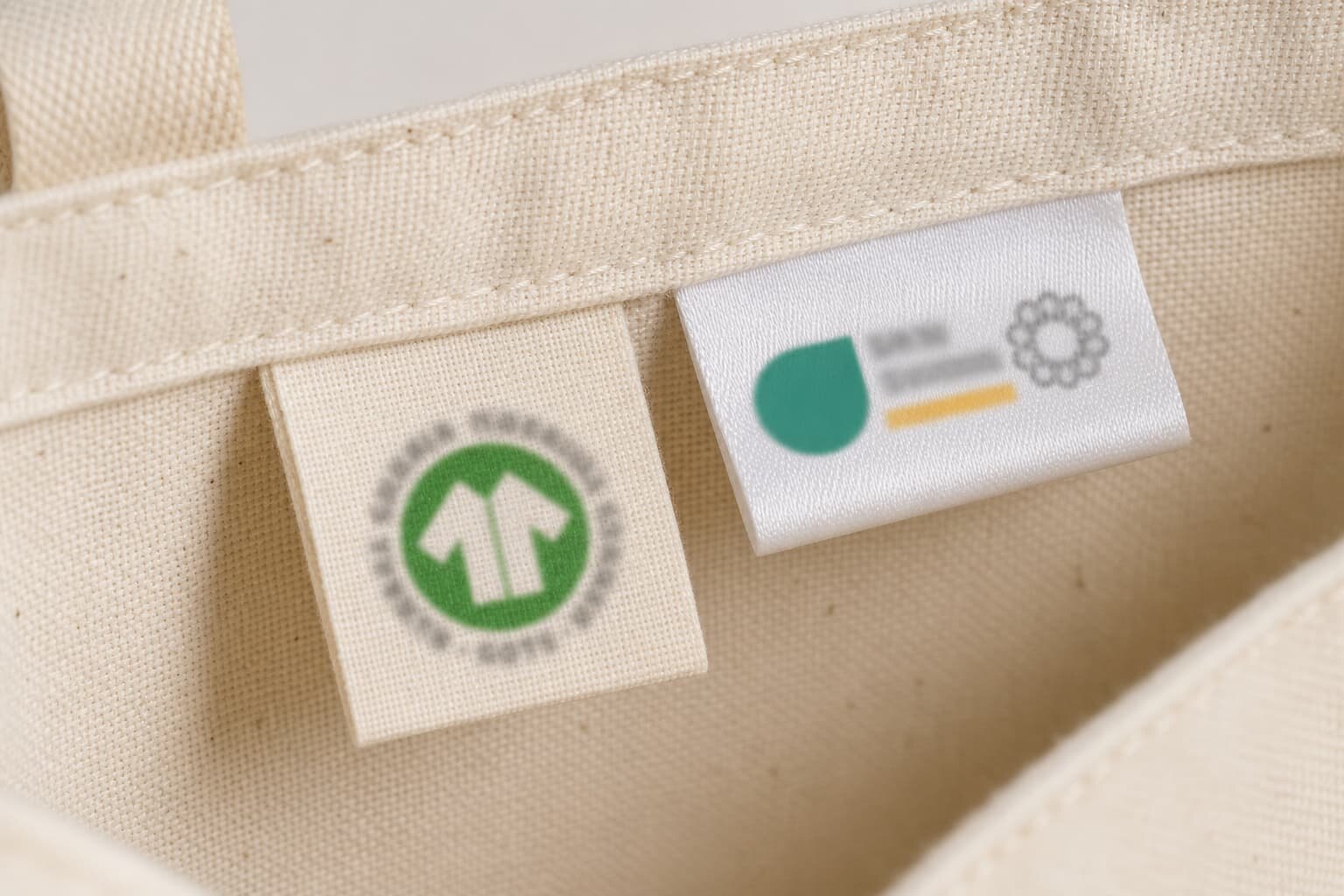
1. Buyer Scenario: Why Similar Organic Cotton Bag Quotes Are Often Not Comparable
A procurement team may send one simple request to five factories: “Please quote organic cotton tote bags with logo.” The replies can look easy to compare because every supplier provides a unit price. In reality, each quote may describe a different product. One supplier may assume 150 GSM natural cotton with simple line-stitched handles. Another may quote 280 GSM canvas with reinforced handles. A third may include certified organic material documentation, while a fourth may mean conventional cotton in an unbleached color.
This checklist is written for B2B buyers who need supplier quotes that can survive purchasing review, compliance review, and final inspection. The aim is not to make the RFQ longer for its own sake. The aim is to remove hidden assumptions before price negotiation. A correct quote should show what fabric is being used, what organic documentation is included, how the logo is produced, what packing is supplied, what lead time is realistic, and what the factory will be measured against at inspection.
Some content briefs may label this topic as “wholesale organic cotton bags supplier checklist 07.” Treat the “07” as an internal checklist version or campaign code, not as product wording to put on customer-facing pages, labels, or RFQs. In procurement documents, use clear terms such as wholesale organic cotton tote bag, certified organic cotton drawstring pouch, or organic cotton retail bag RFQ.
- Compare suppliers only after the same fabric weight, construction, print method, packing, and documentation requirements are defined.
- Ask suppliers to state exclusions; many low quotes omit sample freight, screen charges, barcode labels, or special packing.
- Do not approve a new supplier from photos alone; cotton texture, opacity, print hand feel, and handle strength need physical review.
2. Start With End Use, Load, and Sales Channel Before Selecting Fabric
Fabric weight is a major cost driver, but it should follow the bag’s job. A light muslin pouch can be suitable for soap, cosmetics, jewelry, or apparel accessories. It is not automatically suitable for a bookstore tote or grocery bag. A heavy canvas tote may feel premium, but it increases fabric cost, carton volume, and freight cost. The best specification is the one that fits the load, expected reuse, branding method, retail presentation, and budget.
For wholesale organic cotton bags, buyers should describe the use case in the first RFQ line. Is the bag free promotional packaging, paid merchandise, a product dust bag, a subscription box insert, a produce bag, or a reusable retail tote? This context helps the supplier recommend plain weave, muslin, canvas, or twill and prevents a factory from quoting the cheapest possible construction just to win the first round.
Opacity also matters. Light natural cotton can look attractive in photos but may become too transparent when holding dark products or printed inserts. Print coverage matters as well. Large solid logos need a stable fabric surface; very light fabric can wrinkle under the print or show ink through to the back side. If the bag will be resold, request a swatch card and a finished sample before approving bulk.
- 120-180 GSM: common for light pouches, dust bags, soap bags, and soft packaging where load is low.
- 150-220 GSM: common for economy event totes and light promotional bags where compact packing matters.
- 240-320 GSM: common for reusable retail totes with better body, durability, and print appearance.
- 340 GSM and above: suitable for premium canvas merchandise, but check freight volume and fold marks.
- Ask whether the weight is stated in GSM or ounces, and whether ounces refer to fabric weight per square yard.
3. Define Organic Cotton Documentation Before Price Negotiation
The word organic should never be left undefined in a supplier RFQ. In sourcing conversations, it may refer to certified organic cotton, an organic cotton blend, a natural unbleached look, or a marketing preference. If your company, distributor, retailer, or tender requires proof of organic content, the required documentation must be stated before the factory books fabric. Documentation cannot be reliably added after conventional material has entered production.
Buyers should ask for current certificate copies that show the relevant company name, scope, validity period, and material or process coverage. If your program requires transaction-level documents, say so in the RFQ and ask whether the supplier can support that process for the order quantity, fabric source, and finished goods route. Do not assume that a sewing factory can issue every document unless the certified material chain has been arranged correctly.
Certification advice should also be tied to claim language. A hangtag that says “made with organic cotton,” “100% organic cotton,” or “certified organic cotton” may trigger different internal review depending on your market and customer. The supplier can provide available documents, but the buyer’s compliance team should confirm what claims are allowed on packaging, websites, invoices, and retail listings.
- Request current scope certificate copies before PO if organic claims are part of the program.
- State whether you need fabric-level proof, finished-goods certification support, or order-level transaction documentation.
- Confirm whether trims, labels, sewing thread, drawcords, or packaging carry any claim or only the main fabric does.
- Avoid vague RFQ wording such as eco cotton, organic style, natural cotton, or sustainable cotton if proof is required.
- If certification is not required, state that clearly so suppliers do not add unnecessary cost or delay.
4. Lock Size, Gusset, Handle, Closure, and Sewing Construction
A cotton bag quote is not complete with width and height only. Finished size, gusset, top hem, seam type, bottom construction, handle size, drawstring channel, and reinforcement method all affect fabric consumption and labor time. A 38 x 42 cm flat tote is not the same item as a 38 x 42 x 10 cm gusseted tote. The gusseted version uses more fabric, takes more sewing time, changes carton volume, and may require a different print placement.
Handle construction deserves special attention because handle failure is one of the most visible complaints in reusable bags. A short hand-carry handle may be suitable for small retail packaging, while a shoulder tote usually needs longer handles. Wider handles feel more comfortable but use more fabric. Box-X stitching, bartacks, or reinforced stitching cost more than a single line of sewing, but they reduce risk for bags expected to carry weight.
Drawstring and pouch bags have their own construction details. Cord material, cord diameter, channel width, knot style, and single or double drawstring design all affect function. A beautiful pouch that is difficult to open or close will create user complaints. For zipper bags, specify zipper type, color, puller, and whether the zipper is nylon, metal, or coil. These details should be in the RFQ, quote, sample approval, and inspection checklist.
- State finished size as width x height x gusset, with an agreed sewn-product tolerance such as plus or minus 1 cm where appropriate.
- For totes, specify handle total length or handle drop, handle width, fabric type, and reinforcement method.
- For drawstring bags, specify cotton cord, tape, or other cord material; cord diameter; channel width; and single or double drawstring.
- For lined bags, pockets, zippers, snap buttons, or magnetic closures, request separate cost lines because they change labor and QC time.
- Confirm whether measurements are taken flat, after pressing, after washing, or after final packing.
5. Match Print Method to Artwork, Fabric Texture, and Acceptance Criteria
Water-based screen printing is often the practical choice for wholesale organic cotton bags with simple logos and medium or large quantities. It can provide a softer hand feel than heavier ink systems and usually fits natural cotton branding. However, screen printing is not automatically the best choice for every design. Fine lines, gradients, photo artwork, oversized solid blocks, and multiple artwork versions may require a different method or a print test before bulk approval.
The cotton base changes color perception. A Pantone shade printed on natural unbleached cotton will not match the same shade on white coated paper. Rough canvas can make fine edges less sharp. Light muslin may show ink penetration or shadowing. Digital pigment, DTF, heat transfer, embroidery, woven labels, and cotton labels can all be good options when chosen for the right reason. The RFQ should include artwork size, position, number of colors, file type, and required durability level so the supplier can recommend a method with clear limitations.
Acceptance criteria should be discussed before the print strike-off. Buyers should define print position tolerance, color tolerance, maximum acceptable pinholes or unevenness, rub resistance expectation, and whether the print can cross seams or gussets. If the logo is mission-critical, approve the print on the actual bulk fabric or an approved equivalent, not only on a separate test cloth.
- Screen print: efficient for solid logos, limited colors, repeat orders, and larger quantities.
- Digital pigment: useful for multi-color artwork or shorter runs, but approve color, wash behavior, and hand feel.
- DTF or heat transfer: useful for detail, but test edge feel, cracking, and whether the finish matches the brand position.
- Embroidery: premium for small logos on heavier fabric, but can pucker thin cotton and is slower for large artwork.
- Labels: woven, printed cotton, or side-seam labels can reduce print risk and standardize branding across several bag styles.
6. Understand MOQ Drivers Instead of Negotiating Blindly
MOQ is usually not a random number. It may be driven by fabric availability, certified material sourcing, dyeing vats, printing setup, label minimums, cutting efficiency, sewing line setup, or packing components. A natural unbleached fabric already used by the factory may have a lower practical MOQ than a custom dyed certified organic canvas. A small pouch in stock fabric may be easy to produce, while a multi-color retail tote with custom woven labels and printed cartons may have several separate minimums.
Procurement teams should ask for MOQ by style, color, size, artwork, and packing version. This is especially important when a brand has multiple store locations, campaign graphics, or product lines. A factory might accept 2,000 total pieces but require 500 pieces per print design. Another may allow mixed artwork if the bag body, print size, and print method stay the same. Knowing the MOQ driver helps buyers consolidate SKUs without forcing unrealistic production splits.
MOQ also affects price breaks. Instead of requesting only one quantity, ask for two or three tiers that match realistic demand. For example, 1,000, 3,000, and 5,000 pieces may reveal whether cost is driven by setup or fabric consumption. If the price barely changes, the fabric or sewing cost may dominate. If the price drops sharply, print setup or cutting efficiency may be the main issue.
- Fabric MOQ: affected by GSM, weave, width, certification requirement, and stock availability.
- Dyeing MOQ: applies to custom fabric or bag colors and may require extra time for lab dips and shade approval.
- Printing MOQ: affected by screens, number of colors, artwork changes, print size, and curing setup.
- Trim MOQ: applies to woven labels, hangtags, drawcords, zippers, barcode labels, and custom packaging.
- Packing MOQ: affected by printed cartons, inner sleeves, retail labels, and warehouse compliance requirements.
7. Use Samples to Confirm Bulk Production, Not Just Appearance
A sample is only valuable if everyone understands what it represents. A reference sample may show size and sewing style, but not final organic fabric. A print strike-off may show color and ink behavior, but not the final bag construction. A pre-production sample should represent the approved bulk method as closely as possible: same fabric, same GSM, same print method, same thread, same handle construction, same trims, same labels, and same packing method.
Buyers should separate sample approval into clear questions. Does the fabric feel and weigh as expected? Does the bag hold the intended load? Is the logo size correct? Is the print centered according to measurements, not just by eye? Does the folded bag fit the intended carton or retail sleeve? Are label claims and barcode positions correct? If any part of the sample is substituted, write the exception in the approval comments and confirm when the final element will be checked.
Keep signed approval samples under control. One approved sample should stay with the buyer or inspection company, and one should stay with the factory. For remote programs, use a detailed sample approval sheet with photos, measurements, and comments, but do not rely on photos alone for a new construction or new supplier. Physical review is especially important for organic cotton because hand feel, thickness, odor, shade, and print texture are difficult to judge through images.
- Request the right sample type: stock reference, fabric swatch, lab dip, print strike-off, custom sample, or full pre-production sample.
- Measure the sample flat with a ruler and record width, height, gusset, handle drop, handle width, and cord length.
- Check fabric weight or request a GSM test when the program depends on a specific material grade.
- Fold the sample into the proposed packing format to check crease marks, print transfer, and retail presentation.
- Approve, reject, or approve with written changes; avoid informal comments that cannot be inspected later.
8. Set QC Criteria and Inspection Tolerances Before Bulk Cutting
Quality control should not begin when cartons are already sealed. For organic cotton bags, many defects become expensive to correct after printing or sewing: wrong fabric weight, incorrect shade, poor print curing, weak handles, loose drawstrings, misaligned labels, and carton packing errors. The buyer and supplier should agree on inspection checkpoints before bulk cutting begins.
A practical QC plan includes incoming fabric check, print check, inline sewing check, final inspection, and packing verification. Incoming inspection confirms fabric color, weight, width, stains, holes, and obvious weaving defects. Print inspection checks color, placement, registration, curing, rub resistance, and visible contamination. Sewing inspection checks dimensions, seam allowance, stitch density, loose threads, handle reinforcement, cord function, and overall workmanship. Packing inspection confirms quantity, labels, carton marks, carton strength, gross weight, and barcode scannability.
Acceptance criteria should be measurable. Instead of saying “good stitching,” define no broken stitches in stress points, no open seams, no severe puckering, and reinforcement matching the approved sample. Instead of saying “logo centered,” state tolerance from the top edge, side seam, handle seam, or bottom fold. If you use AQL, define critical, major, and minor defects for this product type and confirm who pays for reinspection if the lot fails.
- Critical defects: unsafe contamination, mold, wrong claim label, wrong material, or any issue that makes the bag unusable or legally risky.
- Major defects: wrong size outside tolerance, weak handle stitching, poor print curing, heavy stains, open seams, missing labels, or wrong packing.
- Minor defects: small loose threads, slight wrinkles, minor shade variation within approved tolerance, or small cosmetic issues that do not affect use.
- Inspection timing: check early production before the full lot is printed or sewn, not only after final packing.
- Reference standard: use the signed pre-production sample, artwork sheet, packing spec, and defect list together.
9. Complete Packing, Carton, and Logistics Details in the RFQ
Packing is not a small afterthought for wholesale cotton bags. It affects cleanliness, moisture risk, carton efficiency, warehouse handling, retail readiness, and landed cost. Individual polybags protect bags from dirt and moisture, but they may conflict with a plastic-reduction policy. Bulk packing reduces plastic use but increases exposure to dust, lint, abrasion, and humidity. Paper bands, kraft sleeves, grouped inner packs, carton liners, or recycled-content polybags can be considered if they fit the brand and distribution channel.
The RFQ should state exactly how bags are folded, how many pieces go into each inner pack, how many pieces go into each export carton, and what marks are required. If bags will go directly to retail or distributor warehouses, barcode labels, carton labels, purchase order numbers, SKU numbers, country-of-origin labels, warning labels, and carton dimensions may be mandatory. Missing or misplaced labels can delay receiving even if the bags themselves are acceptable.
Carton size and weight also affect cost. Heavy canvas bags packed too tightly may arrive with deep fold marks. Thin cotton bags packed loosely may shift, wrinkle, or collect lint. Buyers should request carton dimensions, gross weight, net weight, and estimated CBM before confirming the purchase order, especially for air freight, courier shipments, or multi-SKU consolidation. Packing should be shown in the pre-production sample or confirmed through a pilot carton before full packing.
- Define individual pack, grouped inner pack, paper band, carton liner, or bulk pack before pricing is finalized.
- Set maximum carton gross weight based on your warehouse handling rules and destination requirements.
- Confirm fold method and whether the printed area can be folded without transfer, cracking, or heavy creasing.
- Request carton dimensions, pieces per carton, gross weight, net weight, and estimated CBM for landed cost planning.
- Approve barcode, carton mark, hangtag, warning label, and SKU label placement before mass packing.
- Discuss desiccant or moisture precautions for ocean shipments, humid seasons, or long storage periods.
10. Compare Suppliers With a Scorecard, Not Unit Price Alone
Once quotes arrive, procurement teams need a decision method that is fair and practical. Unit price matters, but it should not be the only score. A supplier with a slightly higher price may be the better choice if the quote includes correct certification handling, stronger stitching, realistic lead time, complete packing details, and responsive sample support. A low quote can become expensive if it excludes documentation, uses lighter fabric, misses the launch date, or fails final inspection.
A simple scorecard helps buyers compare factories consistently. Weight the categories according to your program. For a certified retail program, documentation and QC may deserve more weight than the lowest price. For a one-time event giveaway, lead time and packing accuracy may be more important. For paid merchandise, construction, print quality, and sample reliability should carry more weight. The point is to make trade-offs visible before issuing a purchase order.
Red flags should trigger clarification or disqualification. Be cautious if a supplier refuses to identify fabric weight, says certification can be added later without process details, avoids physical samples, cannot separate print charges, gives unrealistic lead time, or changes specifications after price negotiation. Also watch for quotes that use broad product names without confirming bag size, gusset, handle reinforcement, packing, and Incoterm. A complete RFQ protects both sides because the factory knows what to produce and the buyer knows what will be inspected.
- Suggested score weights: specification match 25%, documentation capability 15%, sample quality 20%, price and payment terms 15%, lead time reliability 15%, communication and QC support 10%.
- Red flag: supplier quotes “organic cotton” but cannot explain whether material is certified, blended, or simply natural colored.
- Red flag: unit price excludes key items such as screen setup, labels, packing, cartons, or documentation, but this is not stated upfront.
- Red flag: sample uses different fabric or print method without written explanation and a plan to confirm bulk conditions.
- Final RFQ review: confirm specification sheet, artwork, approved sample, quote, payment terms, production schedule, inspection plan, and packing sheet all match before PO release.
Specification comparison for buyers
| Spec decision | Recommended option | When it fits | Buyer risk to check |
|---|---|---|---|
| Reusable retail tote fabric | 10 oz canvas or 280-320 GSM organic cotton | Grocery, bookstore, subscription box, retail merchandise, medium-load promotional use | Confirm whether GSM is measured before or after finishing; approve physical fabric, not only a stated weight |
| Economy giveaway fabric | 5-7 oz plain weave or 150-220 GSM organic cotton | Events, light apparel packaging, mailer inserts, low-load handouts | Thin fabric may show print-through, low opacity, or weak shape; test with the actual product or expected load |
| Premium heavy canvas | 340 GSM and above, subject to availability | Paid merchandise, premium gift bags, heavier retail goods | Higher freight volume, deeper fold marks, and longer drying or printing time can affect landed cost |
| Solid logo print | Water-based screen print | Simple branding, 1-4 spot colors, medium to large runs | Approve color on the actual cotton base; unbleached fabric changes Pantone appearance |
| Detailed or multi-color artwork | Digital pigment, DTF, or transfer after testing | Short runs, gradients, campaign artwork, multiple colorways | Check hand feel, edge cracking, wash/rub resistance, and whether the look fits an organic product position |
| Tote handle construction | Self-fabric handles with bartack or box-X reinforcement | Reusable totes expected to carry books, produce, bottles, or packaged goods | Specify handle length, width, and reinforcement; low quotes may include narrow handles and simple line stitching only |
| Drawstring closure | Cotton cord or matching organic cotton tape, diameter defined | Pouches, produce bags, dust bags, gift packaging | Cord material, channel width, and single versus double drawstring change cost and usability |
| Certification documentation | Current scope certificate and order-level documentation when required | Brands, retailers, distributors, or tenders making organic claims | Do not accept vague terms such as organic style cotton; define required documents before PO and confirm claim wording with compliance |
| Packing method | Flat pack in export cartons with inner pack quantity defined | Most wholesale orders where carton efficiency and clean arrival matter | Plastic reduction goals must be balanced with moisture, dirt, barcode, and retail handling requirements |
Buyer checklist before sampling
- Define the bag type first: tote, drawstring pouch, produce bag, dust bag, shoulder bag, wine bag, or packaging bag.
- State finished size as width x height x gusset with tolerance, not only cutting size or a reference photo.
- Specify fabric construction: plain weave, canvas, twill, or muslin, plus GSM or ounce weight.
- Confirm whether cotton must be certified organic and what document your sales channel requires.
- List fabric color: natural unbleached, bleached white, dyed stock color, or custom dyed Pantone reference.
- For totes, provide handle width, handle total length or handle drop, and reinforcement method.
- For drawstring bags, provide cord material, cord diameter, channel width, and single or double drawstring requirement.
- Send vector artwork with print size, print placement, Pantone references, number of colors, and number of print positions.
- Choose print method only after reviewing artwork coverage, fabric texture, quantity, hand feel, and durability expectations.
- Ask what drives the quoted MOQ: fabric, dyeing, printing setup, label production, sewing efficiency, or packing components.
Factory quote questions to send
- Is the quoted material certified organic cotton, an organic cotton blend, recycled/organic blend, or conventional cotton in a natural color?
- Which certificate copies can you provide before PO, and can order-level transaction documentation be arranged if required?
- Which fabric weight is being quoted, and is it measured before washing, after finishing, or on finished bags?
- What is the fabric construction, expected shrinkage, and normal size tolerance for this bag style?
- What is the minimum fabric quantity for this GSM, color, and certification requirement?
- What print method is included in the unit price, and how many colors, print positions, and setup charges are included?
- What is the maximum recommended print area on this bag size without distortion near seams, handles, gussets, or drawstring channels?
- Are bartacks, box-X handle stitching, reinforced seams, or extra seam allowance included in the quoted construction?
- What sample type will be provided: stock reference, fabric swatch, print strike-off, custom sample, or full pre-production sample?
- How many days are needed for sample making after artwork, fabric, certification requirement, and payment are confirmed?
Quality-control points to confirm
- Measure finished bag size after pressing or packing, including width, height, gusset, handle drop, handle width, channel width, and cord length.
- Check fabric GSM using a cutting scale or approved lab method when GSM is critical; do not rely on hand feel only.
- Compare fabric color against the approved swatch under consistent lighting, especially for natural, bleached, and dyed organic cotton.
- Inspect print placement from bag edge, handle seam, gusset, and bottom fold; do not judge by visual center only.
- Check print color against approved strike-off, allowing for agreed tolerance on natural cotton base fabric.
- Rub test the printed area after curing to identify poor ink fixation, crocking, or residue.
- Check print cracking or color loss after a simple fold and stretch test on canvas fabric where appropriate.
- Pull-test handles and drawstrings according to the expected use of the finished bag, and record the method used.
- Inspect seam allowance, skipped stitches, loose threads, needle holes, broken stitches, puckering, and reinforcement areas.
- Confirm labels, hangtags, care labels, barcode labels, and organic claim wording match approved artwork and compliance guidance.