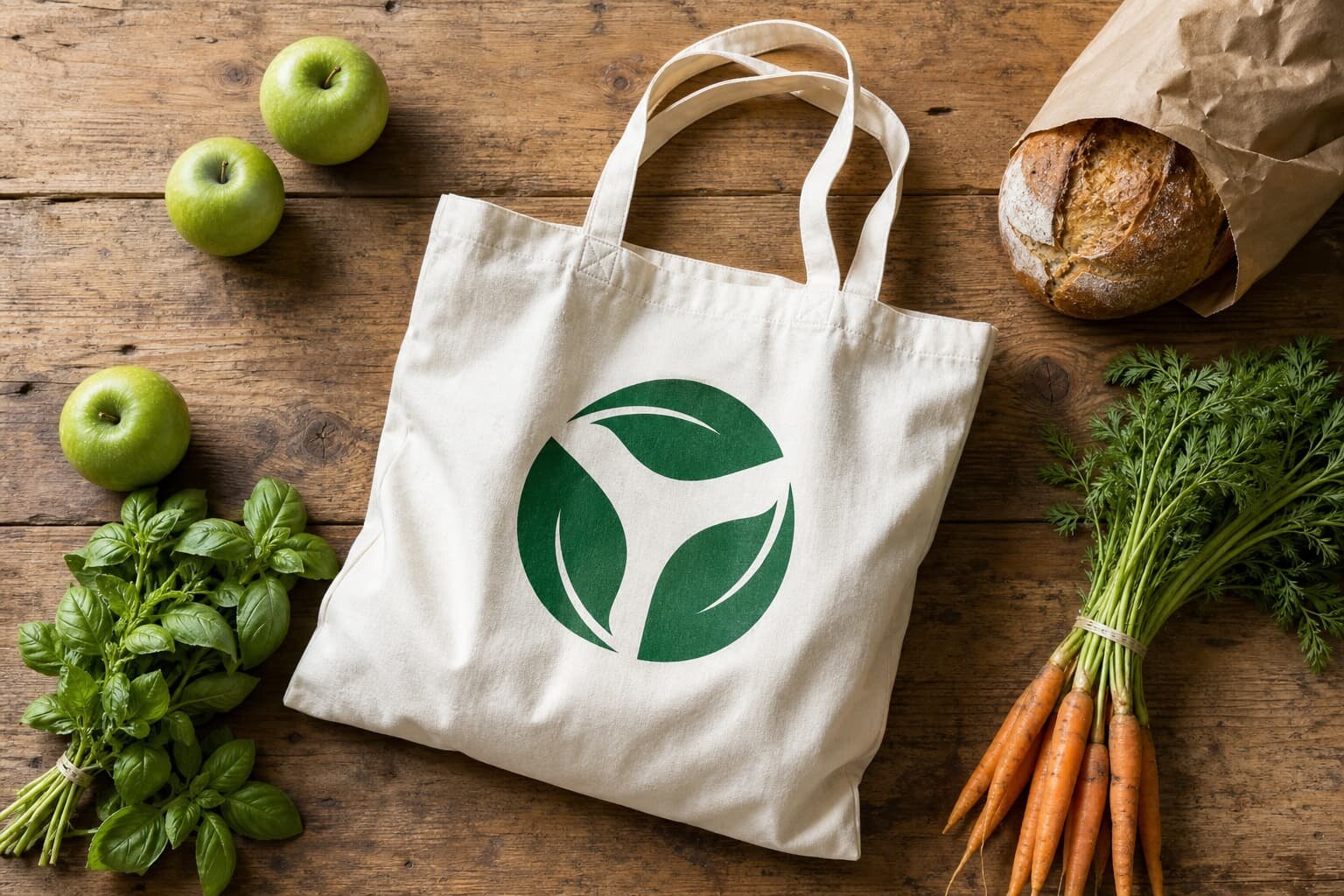
1. Start with the buying problem, not the bag shape
Most quote problems on organic cotton bags start before the supplier even prices the job. Buyers send a rough size, a logo file, and a target unit price, then compare quotes that are not actually the same product. The result is predictable: one factory is quoting 140 GSM with basic single stitching, another is quoting 180 GSM with reinforced handles and printed inner labels, and the lowest price wins even though the spec is weaker.
For wholesale organic cotton bags, the real buying problem is quote comparability. Your RFQ has to tell suppliers what the bag must do in use, what features matter, and where flexibility is allowed. If you define the use case first, the factory can recommend the right GSM, seam construction, print method, and packing standard instead of guessing.
- Define use case: retail carry, grocery, event giveaway, gift packaging, or brand merchandise.
- Define load expectation: light apparel, books, produce, bottles, or mixed contents.
- Define commercial priority: lowest cost, premium handfeel, better print quality, or stronger durability.
- Define which elements are fixed and which are open to supplier recommendation.
2. Lock the fabric spec before asking for price
Organic cotton bags are not a single material category. The quote changes materially with GSM, weave density, finishing, and whether the fabric is naturally colored, bleached, or dyed. A 140 GSM tote and a 180 GSM tote can both look like “cotton bags” on paper, but they behave differently in cutting, sewing, print absorption, and shipping weight. If you do not specify the fabric properly, the supplier may quote the lightest acceptable construction for their interpretation of the design.
For buyers, the safest approach is to decide whether the bag is meant to feel soft and promotional, or structured and retail-ready. That choice drives everything else. A light event tote often works well at 140–160 GSM. A more durable retail or grocery bag usually needs 160–180 GSM, sometimes higher if the handle load is serious. If the fabric is too light, the bag may wrinkle, show print-through, and lose shape. If it is too heavy, the cost rises and stitch quality becomes more critical.
- State fabric weight in GSM, not just “thick” or “premium.”
- Clarify weave if relevant: plain weave is common; tighter weave improves print clarity.
- Ask whether the quoted GSM is finished fabric weight or raw fabric weight.
- Confirm if the fabric is natural, bleached, or colored, because each affects print and shade control.
- If you need a natural organic look, ask for shade tolerance against a physical reference sample.
3. Choose the print method based on artwork and order size
Print method has a direct effect on both quote accuracy and final appearance. For simple logos and repeat brand marks, screen printing is usually the most controllable method at wholesale scale. It gives good opacity on organic cotton and is easier to compare between factories because setup, ink type, and color count are visible cost items. If your artwork has gradients, small type, or multiple colors, the quote may shift toward transfer or digital methods, but those options can create different handfeel, durability, and lead-time profiles.
The buyer mistake is to ask for “logo print” without stating the print size, location, color count, or finish expectation. A logo placed 35 mm from the top edge behaves differently from one printed across the full front panel. Fine details near seams can distort. Ink coverage on natural cotton can vary if the fabric is too open. Ask for print placement measured from seams, not only from the bag edge.
- For 1–2 color logos, screen print is usually the simplest wholesale option.
- For complex artwork, ask if the supplier can convert the design without losing legibility.
- Specify print width and height in millimeters or inches.
- Ask for a dry and cured sample to review rub resistance and edge sharpness.
- If the bag will be washed or reused often, request the supplier’s recommendation on ink type and curing method.
4. Compare MOQ logic instead of only comparing the headline MOQ
MOQ is one of the easiest numbers to misunderstand in organic cotton bag sourcing. Some factories quote an MOQ per size, some per print color, some per fabric color, and some only after adding a new print setup or label version. A supplier with a low headline MOQ can still become expensive if they charge separately for each design variation. Another supplier may look stricter but offer better total economics if they combine multiple colorways into one production schedule.
Ask the factory to break MOQ into its real components. You need to know the minimum by size, by fabric shade, by print color count, and by packaging style. That is the only way to judge whether a quote is truly practical for your launch volume. For distributors and retail buyers, MOQ logic also affects SKU planning. If the supplier cannot support your planned range of sizes or labels, the quote may not be scalable even if the unit price looks acceptable.
- Ask for MOQ per size, per color, per print version, and per label version.
- Check whether mixed sizes can be combined into one production run.
- Confirm if sample charges are deducted from bulk order value or billed separately.
- Ask whether the factory requires a master carton MOQ or a pack ratio MOQ.
- Review whether low MOQ pricing includes slower lead time or higher setup cost.
5. Use sample checks to prevent bulk mistakes
A good sample process is the fastest way to protect quote accuracy. The sample should not only show the logo; it should prove the bag can be made to spec. That means checking size, handle length, seam finish, fabric handfeel, print placement, and packaging. If the sample is wrong, the bulk order will likely repeat the same mistake unless the supplier receives a clear correction record.
The best sample check is practical, not cosmetic. Measure the finished bag with a tape, inspect the bottom seam, pull the handles by hand, and compare print position from the top edge and side seam. If the bag has a label or side mark, check that it is attached cleanly and consistently. For example, if you request a simple CTM side label or woven brand label, confirm placement, stitch density, and alignment before approving bulk.
- Check finished dimensions after pressing, not only after sewing.
- Compare the sample against your spec sheet line by line.
- Confirm logo placement against seam reference points.
- Test handle comfort and stitching strength with realistic contents.
- Approve a pre-production sample before fabric cutting or full printing starts.
6. Read the quote like a factory engineer, not a catalog buyer
A wholesale quote for organic cotton bags should be readable as a production plan. If the quote only shows unit price and MOQ, it hides the variables that create most disputes later. You need to see what fabric is quoted, what print setup is included, how packing is handled, and whether sample approval is built into the lead time. Good factories usually welcome this level of detail because it reduces revision cycles and prevents false comparisons.
When you review supplier quotes, split the price into production elements. Fabric, cutting, sewing, print setup, packing, and export carton handling are the main cost buckets. If one quote is lower, identify whether it is due to lighter fabric, simpler print, less reinfocement, or reduced packing labor. That is the commercial truth behind the number.
- Ask suppliers to separate material cost, print setup, sewing labor, packing, and carton charges.
- Check whether sample fees, screen fees, or plate fees are one-time or recurring.
- Confirm if the quote includes inspection, polybag, desiccant, or barcode label.
- Compare incoterms consistently: EXW with EXW, FOB with FOB.
- Request a quote validity period and exchange-rate assumption if relevant.
7. Use this comparison table to avoid spec drift
A direct product comparison is often more useful than a long supplier narrative. Organic cotton bags are easy to under-spec because the product looks simple. In practice, a small change in fabric weight, stitching, or packing can change unit cost and failure risk. This table gives buyers a practical way to decide where to hold the line and where to allow supplier flexibility.
If your program has multiple SKUs, compare each spec decision separately. Do not let a good price on one variable hide a weak point on another. For example, a lower GSM may be acceptable for a light retail tote, but not if the bag must survive repeated use or heavier fills. The right option depends on the use case, not the supplier’s default build.
- Use one line item per spec decision when comparing quotes.
- Mark any supplier deviation from your requested construction.
- Ask the factory to confirm if an alternative spec changes lead time.
- Do not approve mixed assumptions inside one quote sheet.
8. Packing, labeling, and carton data matter more than many buyers expect
Packing errors are expensive because they create warehouse delays after the goods arrive. For wholesale organic cotton bags, carton count, inner packing method, and label format should be stated before order confirmation. A simple change like folding direction or the use of individual polybags can affect carton density and freight cost. If the buyer does not define packing clearly, the factory will choose a standard that may not fit your distribution workflow.
Retail buyers and distributors should request packing information in the quote itself, not as an afterthought. Ask for the number of pieces per carton, carton dimensions, gross weight, and whether the bags will be flat-packed or nested. If the bags are printed, make sure print faces are protected from scuffing during transit. If the order is going into e-commerce or retail distribution, barcode and SKU label rules should also be confirmed.
- Confirm whether each bag is folded, rolled, or flat-packed.
- Ask for master carton count and whether cartons are mixed or single SKU.
- Request carton dimensions for freight planning and warehouse receiving.
- Specify if polybags are required, and if so, whether they must be recyclable or unprinted.
- Check if labels should show size, color, PO number, or origin details.
9. Lead time is a sequence, not a single number
A credible lead time should show the steps, not just the final shipping date. For organic cotton bags, the schedule often includes fabric confirmation, sample approval, bulk cutting, printing, sewing, packing, and final inspection. If the supplier gives only one total number, you cannot tell where the delay risk sits. That becomes a problem when your launch date depends on print approval or when a fabric color must be sourced before production starts.
Ask the factory to separate sample lead time from bulk lead time. A supplier may be fast on production but slow on sample revision, or vice versa. If your artwork is new, leave room for one correction round. If your bag has multiple print colors or special labels, build extra time into the plan. Buyers who treat lead time as a process map usually avoid the most common late-shipment disputes.
- Ask for sample lead time, bulk production lead time, and dispatch lead time separately.
- Confirm what starts the clock: PO receipt, deposit, artwork approval, or sample approval.
- Check whether peak season or fabric booking changes the schedule.
- Get written confirmation of any critical milestone dates.
- Ask how a print correction or packaging revision affects the calendar.
10. Use one final acceptance checklist before PO release
The final step is to convert all of the above into a release checklist. This protects buyers from accepting a quote that still has hidden assumptions. If the supplier has answered the right questions, you should be able to repeat the bag spec in one paragraph without guessing. If you cannot do that, the quote is not ready for purchase order release.
A good approval packet for wholesale organic cotton bags should include the approved sample, the spec sheet, the print reference, the packing standard, and the agreed lead time. Once those five items are aligned, your procurement team can compare suppliers on true commercial differences rather than on incomplete data.
- Approved sample matches size, GSM, print, handle, and packing.
- Quote includes all setup and packing items with no hidden assumptions.
- Supplier has confirmed MOQ logic by size and print version.
- Lead time milestones are written and tied to approval steps.
- Inspection criteria are clear enough for bulk and pre-shipment checks.
Specification comparison for buyers
| Spec decision | Recommended option | When it fits | Buyer risk to check |
|---|---|---|---|
| Fabric weight | 140–180 GSM for everyday retail bags | Promo carry, grocery, events, light retail use | Too thin will show print-through and weak handle recovery; too heavy increases cost and sewing difficulty |
| Fabric finish | Combed or carded organic cotton with clean scouring | Brands that want a natural look and stable print surface | Over-bleached fabric can change handfeel and shade; untreated cloth may have lint and ink pickup issues |
| Print method | 1–2 color screen print for clean logos; heat transfer only for small runs or complex artwork | Simple branding with controlled repeatability | Small text can fill in; color registration and wash rub must be checked |
| Handle construction | Reinforced cross-stitch or box stitch at stress points | Retail bags expected to carry heavier contents | Handle seam failure if stitch density and thread type are not specified |
| Closure option | Open top for low-cost retail; drawstring or zipper only when product function needs it | When security or dust protection matters | Each closure adds labor, hardware, and lead time; avoid paying for features you will not use |
| Packing method | Bulk pack by count with master carton spec and size sticker | Import programs with warehouse receiving | Loose packing or mixed sizes create receiving disputes and count errors |
Buyer checklist before sampling
- Confirm exact bag size with seam allowance, not just nominal width and height.
- Specify organic cotton fabric weight in GSM and whether the fabric is bleached, natural, or dyed.
- State print method, print size, ink type, number of colors, and placement distance from seams.
- Ask for sewing construction details: side seam, bottom seam, handle stitch pattern, and thread color.
- Define target use case so the supplier can recommend the right fabric weight and handle reinforcement.
- Request carton pack count, carton dimensions, gross weight, and barcode or size label rules.
- Ask for pre-production sample approval before bulk cutting starts.
- Confirm lead time separately for fabric booking, sample approval, production, and sea or air dispatch.
- Compare quotes only after all suppliers quote the same spec sheet and packing method.
Factory quote questions to send
- What fabric GSM are you quoting, and is that the finished fabric weight or greige weight?
- Is the cotton certified organic by the source mill or only described as organic cotton fabric?
- What exact print method do you recommend for this artwork, and what are the setup charges by color?
- How many stitch points are reinforced on the handle, and what thread type is used?
- What is your MOQ by size, color, and print variation?
- What is included in the quoted price: sample, print setup, polybag, carton, and export packing?
- Can you provide a pre-production sample and a size spec sheet before mass production?
- What is the production lead time after sample approval, and what factors could extend it?
Quality-control points to confirm
- Check finished size tolerance on width, height, and handle drop against the approved spec sheet.
- Measure fabric GSM from a real production roll, not only from a supplier description.
- Inspect print sharpness, color density, edge bleed, and rub resistance after curing.
- Test handle stitches under a realistic load to confirm no seam slippage or thread breakage.
- Check that internal seams are trimmed cleanly and that loose threads are removed before packing.
- Verify carton count, bundle count, and size labeling against the purchase order.
- Confirm sample-to-bulk color consistency under the same light source used for approval.
- Inspect packaging for moisture protection and transit damage risk, especially on sea shipments.