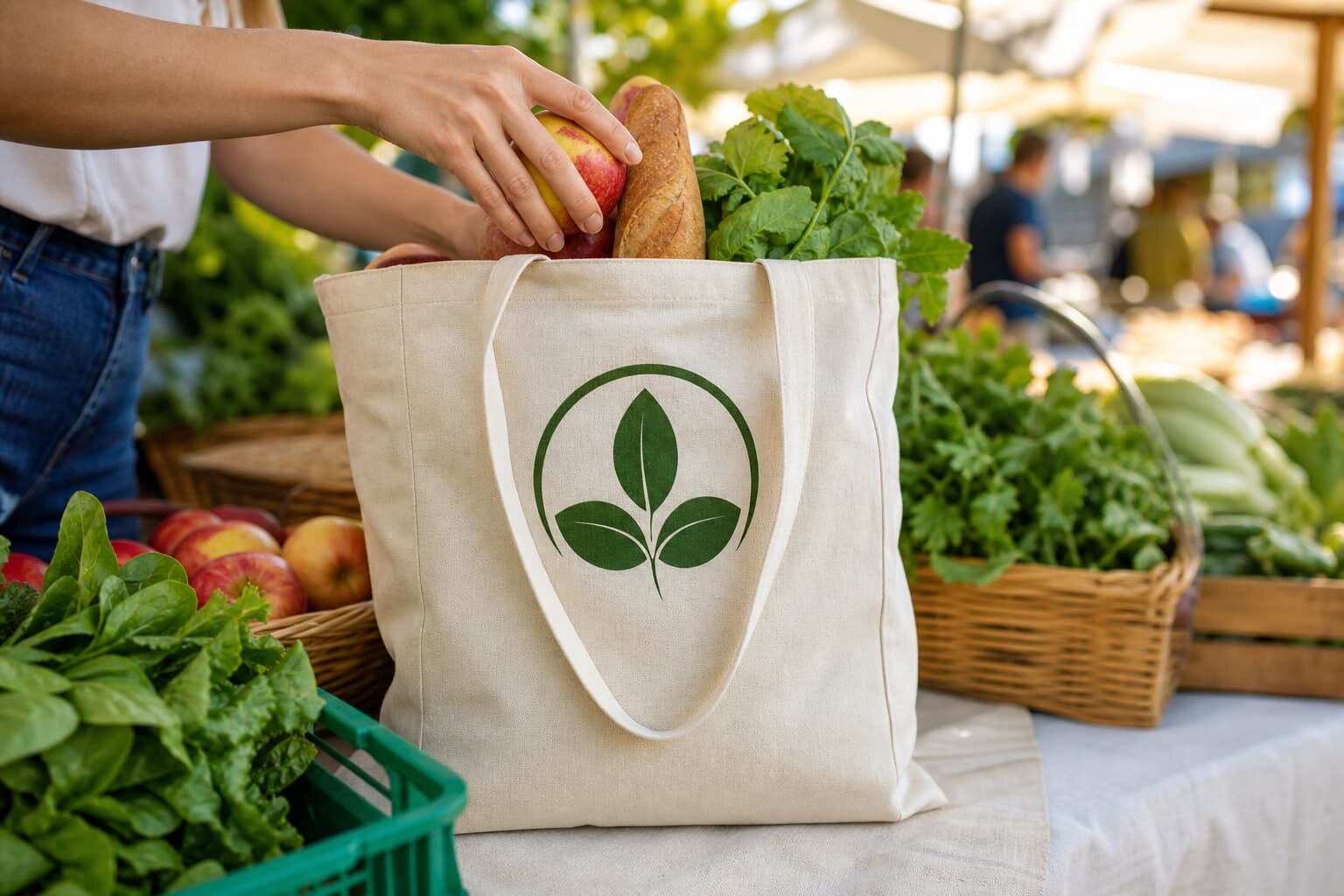
1. Why sample review matters more for organic cotton bags
A wholesale organic cotton bag sample is not just a visual approval item. It is the buyer’s first evidence of whether the supplier can turn a sustainability claim, artwork file, fabric choice, and delivery date into a repeatable product. Many problems in bulk production start when a buyer approves a nice-looking sample that does not define the fabric source, certification scope, stitch method, print tolerance, or packing standard.
The goal of sample review is to convert preference into measurable approval. A buyer may like the natural texture, but procurement needs to know whether the material is 6 oz or 10 oz, whether the shade variation is acceptable, whether the handles can hold the intended load, and whether the print will remain clear on a textured cotton surface. This is especially important when the bag will be used as retail packaging, merchandise, promotional giveaway, event kit, or reusable shopping tote.
A useful sample review also protects the supplier. If the buyer approves a sealed pre-production sample with clear tolerances, the factory has a fair reference for cutting, printing, sewing, and packing. Without that reference, every later discussion becomes subjective: the fabric feels thinner, the logo looks low, the shade is different, or the fold is not what the brand expected.
- Treat the first sample as evidence, not as a final approval by default.
- Separate design approval from production approval when fabric, print, or packing is not final.
- Use one signed control sample for the buyer, one for the factory, and one for inspection when order value justifies it.
- Record approval date, sample version, fabric reference, print method, and open comments in the PO file.
2. Start with the organic claim, not the tote shape
The most expensive misunderstanding in organic cotton bag sourcing is usually not the bag shape. It is the claim. Buyers may ask for organic cotton bags while suppliers interpret that request in different ways. One supplier may quote certified organic fabric. Another may quote natural unbleached cotton that looks eco-friendly but has no organic documentation. A third may have a fabric certificate but no right to support finished-product labeling language. These offers can look similar in a sample photo but are not commercially equivalent.
Before you request samples, decide what your brand or customer needs to say. If the product page, hangtag, retailer file, or packaging copy will state a certified organic claim, ask what proof will be supplied and whose certificate covers the relevant process. If the claim is only internal, such as choosing organic cotton fabric for a campaign bag without consumer-facing certification language, the document requirement may be different. Procurement should involve compliance or legal review before artwork is printed with sustainability wording.
The buyer should also check whether dyeing, washing, printing, or finishing affects the document trail. A natural organic cotton canvas bag may be easier to document than a custom dyed bag with multiple finishing steps. If the order needs retailer compliance files, plan time for document review before production, not after the bags are packed.
- Ask whether the supplier can support your exact wording, not just the general phrase organic cotton.
- Request certificate scope and transaction document availability where certified claims are required.
- Avoid printing certification logos or sustainability claims until your compliance team confirms usage rights.
- If documentation is not required, still describe the material accurately to avoid unsupported marketing claims.
3. Build a specification that suppliers can actually quote
A strong RFQ for organic cotton bags should describe the product in terms a factory can cost and reproduce. The basic fields are bag style, width, height, gusset, handle length, handle width, fabric construction, GSM or ounce weight, color, print method, print size, quantity, packing, and delivery term. If any of these fields are missing, suppliers fill the gap with their own assumptions. That is why two quotes for a cotton tote can differ by 25 percent or more while both appear valid.
Procurement buyers should avoid asking only for the cheapest organic cotton tote. A cheaper quote may use lighter fabric, shorter handles, single-line handle stitching, lower carton strength, or no certification documentation. Instead, ask suppliers to quote the same base specification and then request alternates. For example, ask for the same bag in 6 oz, 8 oz, and 10 oz, or with bulk packing versus individual packing. This produces a real cost-performance comparison.
The sample should carry a spec tag or sample sheet. At minimum, it should identify fabric weight, fabric color, bag size, handle details, print method, print colors, and sample date. If the sample arrives without this information, ask the supplier to confirm it in writing before your team comments on quality.
- Use GSM and ounce weight together when possible to avoid regional interpretation issues.
- State whether dimensions are finished measurements, measured flat, and whether tolerance is included.
- Attach artwork at final size or provide a print placement drawing with reference edges.
- Ask suppliers to disclose assumptions rather than letting them quote silent substitutes.
4. Fabric review: weight, weave, shrinkage, and natural variation
Fabric is the largest driver of cost, hand feel, print result, and shipping weight. A 5 oz to 6 oz organic cotton plain weave can be suitable for garment packaging, lightweight drawstring bags, or event giveaways. An 8 oz to 10 oz canvas is often a practical starting point for reusable retail totes. A 12 oz canvas feels more premium and durable, but it increases sewing difficulty, carton weight, and freight cost. Heavier is not automatically better if the bag is used only for light packaging.
During sample review, inspect the weave and surface. Canvas has a more robust feel but can show thicker yarn texture. Plain weave may print more smoothly at lighter weights. Twill can offer a different drape and diagonal texture. Natural unbleached cotton may include seed flecks, slight slubs, and shade variation. These details can support an organic look, but they must be acceptable to the brand and consistent enough for bulk inspection.
Shrinkage matters if the bag will be washed by end users or if the fabric is washed before production. Ask whether fabric weight is measured before or after washing, dyeing, or finishing. If the bag size is critical for a boxed product, catalog item, or retail display, request shrinkage information or test the sample according to expected use. For most procurement files, the key is not to over-test every small order; it is to know which fabric properties affect your intended use.
- 5 oz to 6 oz: best for light packaging, event bags, and low-load applications.
- 8 oz to 10 oz: common range for reusable totes, brand merchandise, and retail packaging.
- 12 oz and above: stronger feel but higher unit cost, heavier cartons, and more seam stress.
- Approve a natural shade range if unbleached fabric is used; do not expect paper-white uniformity.
5. Construction review: the small sewing details that determine failure rate
Organic cotton tote bags often fail at predictable points: handle attachment, top hem, bottom corners, and side seams. A sample may look clean when empty, but a weak handle stitch can fail when the bag is filled with books, bottled products, samples, or grocery items. Procurement should review construction based on intended load, not only appearance.
Measure the sample on a flat table. Record finished width, height, gusset, handle drop, handle width, and seam allowance. Handle drop should match the carrying style: short handles for hand carry, longer handles for shoulder carry, and wider handles for comfort under load. If the bag is meant for repeated use, specify reinforcement such as cross-stitch, box stitch, or bartack at the handle points. A simple straight stitch may be acceptable for lightweight packaging but should not be assumed for reusable retail totes.
Interior finishing also matters. Overlocked seams, folded seams, French seams, or bound seams change cost and durability. Raw edges may fray and make the product feel unfinished. If the bag will be used for premium retail packaging, inside construction can influence customer perception even if it is not visible in a product photo.
- Check handle length consistency between left and right handles.
- Pull gently at handle bases to see whether stitches open or fabric distorts.
- Review bottom corners and gusset folds for skipped stitches and bulk handling problems.
- Specify thread color, stitch density expectation, and reinforcement type when these affect appearance or strength.
- For heavier contents, request a load test method rather than relying on a general durable claim.
6. Decoration review: screen print, digital print, labels, and embroidery
Logo decoration is where many sample approvals become misleading. A clean digital mockup does not show how ink behaves on natural cotton texture. Water-based screen printing is a strong choice for simple one- to three-color logos because it usually gives a softer hand feel on cotton. However, small text, fine lines, QR codes, and reversed details can fill in on coarse canvas. A buyer should see a printed strike-off on the same or very similar fabric before approving bulk print quality.
Digital print and heat transfer can be useful for multicolor artwork, short runs, or personalization, but they have different hand feel and durability considerations. Embroidery can look premium but may pucker lighter fabrics and is not ideal for every logo. Woven labels are useful when the brand wants durable identification without a large printed panel, but label MOQ and stitching placement must be checked.
Color approval should be practical. Pantone references are helpful, but the base fabric color changes the result. A black print on natural cotton is usually easier to control than a pale pastel on unbleached canvas. If exact color is critical, ask the supplier to define tolerance and show the print under consistent lighting. Also confirm placement from fixed edges. A logo that is 1.5 cm too low may look wrong even when the print itself is acceptable.
- Request a same-fabric print strike-off for new artwork, small text, or color-sensitive logos.
- Avoid placing key artwork across seams, gussets, and fold lines unless sampled.
- Confirm ink hand feel, opacity, edge sharpness, and drying or curing quality.
- For QR codes, test scanning on the actual printed fabric before bulk approval.
- For labels, check wording, sewing alignment, and whether sustainability claims are approved.
7. Supplier comparison: how to read beyond the unit price
A real supplier comparison should explain why prices differ. One supplier may quote 8 oz cotton with bulk packing and no document fee. Another may quote 10 oz certified organic canvas with a printed strike-off, individual packing, and stronger cartons. If the buyer compares only the unit price, the cheaper supplier may appear better while offering a different product.
Use a comparison sheet with the same rows for every supplier: fabric, certification evidence, size, handle construction, print method, packing, MOQ, sample cost, bulk lead time, tolerances, payment terms, and exclusions. If a supplier cannot answer basic specification questions before sampling, that is a warning sign for bulk production control. If a supplier explains trade-offs clearly, that is often more valuable than a fast low quote.
Procurement teams can also ask for controlled alternates. Instead of letting each factory choose its own cost-saving method, ask all suppliers to quote the same three options. For example: Option A, 6 oz natural organic cotton bulk packed; Option B, 8 oz canvas with one-color screen print; Option C, 10 oz canvas with reinforced handles and individual paper band. This makes internal decision-making easier because the cost difference is connected to visible product differences.
- Compare production-ready cost, not headline unit price only.
- Ask for exclusions in writing: screens, sampling, freight, testing, documentation, labels, and carton upgrades.
- Check whether the sample is made by the same facility that will produce bulk goods.
- Give suppliers the same artwork, size, packing, and quantity assumptions to avoid false savings.
- When a quote is unusually low, ask what specification changed.
8. MOQ and lead time: what really controls the schedule
MOQ for wholesale organic cotton bags is often driven by fabric and decoration, not only sewing capacity. Stock natural fabric may allow smaller orders, while custom dyed organic cotton can require mill minimums, lab dips, and dye lot control. Screen printing adds setup by artwork and color. Woven labels, hangtags, barcode stickers, and custom packing can each have separate minimums. A supplier’s advertised MOQ may not apply to your exact combination.
Lead time should be broken into stages. A typical order may include fabric confirmation, sample making, sample freight, buyer review, sample revision, deposit, bulk fabric booking, cutting, printing, sewing, finishing, packing, inspection, and delivery to port or warehouse. If certification documents or retailer files are required, add review time. If custom dyeing is involved, add lab dip approval and possible shade revision.
The buyer should ask when the production clock starts. Many suppliers quote 25 to 35 days, but that usually begins after deposit, artwork approval, and signed pre-production sample. If the buyer takes one week to approve artwork, the shipment may move more than one week if the factory misses a fabric or printing slot. For launch programs, build a schedule with decision deadlines on the buyer side as well as factory milestones.
- Separate MOQ by fabric, color, artwork, label, and packing component.
- Ask whether natural stock fabric is available for urgent or smaller programs.
- Confirm whether sample lead time includes real fabric and real print, not shape only.
- Reserve time for internal compliance approval if organic claims appear on tags or artwork.
- Do not book launch dates based on an unapproved first sample.
9. Packing, carton planning, and warehouse handover
Packing is part of the product experience and part of landed cost. Organic cotton wrinkles, and a fold through a printed logo can create a visible crease. Bulk packing may be fine for distributor stock or back-of-house use. Individual polybags may be needed for light-colored bags, retail handling, or e-commerce kitting. Paper bands can reduce plastic use and improve presentation, but they add labor and must be tested for fit. Hangtags and barcode labels add another artwork and approval step.
Carton planning should happen before production is complete. Confirm pieces per carton, carton dimensions, gross weight, net weight, carton marks, SKU separation, and pallet rules if required. Heavier 12 oz canvas totes can create cartons that are awkward for warehouse handling if quantities are too high. Retailers and 3PL warehouses may reject or rework shipments with wrong carton marks, missing barcodes, mixed SKUs, or weights outside receiving expectations.
Sample review should include a packing check whenever presentation matters. Ask the supplier to show the exact folding method, whether the logo faces outward, where labels sit, and how many pieces are stacked per carton. If the order uses individual bags, specify material type, warning text where required, ventilation holes, barcode position, and whether recycled content is requested.
- Approve the folding direction before production if logo presentation matters.
- Avoid tight folds across thick ink areas when possible.
- Define carton marks by SKU, PO number, quantity, color, size, and destination as needed.
- Confirm carton strength if goods will be exported, palletized, or handled multiple times.
- Include packing materials in the quote so there is no late-stage cost surprise.
10. Final approval, inspection, and production release
The final sample approval should be written, versioned, and specific. A message that says approved, please improve stitching is not a production standard. If the sample is approved with comments, list each correction and state whether a revised sample, photo confirmation, or production-line correction is required. For new products, a signed pre-production sample is the safest control point. For simple repeat orders, a photo or swatch approval may be enough if the supplier and fabric are already proven.
Before shipment, inspection should compare bulk goods with the sealed approval sample and the latest specification. Inspectors should check material, dimensions, stitching, handle reinforcement, print quality, labels, stains, odor, folding, carton quantity, and carton marks. Defects should be classified so the supplier can correct them properly. For example, a loose thread is not the same severity as handle failure, and slight natural shade variation is not the same as fabric substitution.
Procurement teams should close the loop after the first order. Keep the approved sample, final inspection report, supplier quote, certificate documents, and any buyer complaints in the sourcing file. If the product will repeat, this file becomes the baseline for faster reorders and better negotiation. The strongest sourcing process is not the longest checklist; it is a clear chain from claim, specification, sample, quote, production, inspection, and delivery.
- Issue approval with sample version, date, specification reference, and remaining tolerances.
- Do not release bulk fabric cutting if organic claim, fabric weight, artwork, or packing is still unresolved.
- Use the approved physical sample as the inspection reference, not only a digital mockup.
- Confirm corrective action for any failed inspection before shipment release.
- Archive documents and samples for repeat-order consistency.
Specification comparison for buyers
| Supplier comparison point | Stronger offer | Weaker offer | Buyer action before approval |
|---|---|---|---|
| Organic cotton evidence | Supplier identifies whether the material is certified fabric, certified yarn, or organic cotton supplied with transaction documentation where applicable | Supplier uses vague terms such as eco cotton, organic style, natural cotton, or green material without document scope | Ask for certificate scope, material proof, transaction document availability, and approved claim wording before quoting retail labels |
| Fabric specification | Quote states weave, GSM, ounce weight, color treatment, shrinkage expectation, and whether sample fabric matches bulk fabric | Quote only says cotton canvas or organic tote with no weight or construction detail | Request swatch card or cut-weight test and require the same fabric base for print strike-off and pre-production sample |
| Sample representativeness | Sample is made in the proposed bulk fabric, same print method, same handle reinforcement, and same packing fold | Sample is made from stock fabric only to show shape, with print or packing to be decided later | Label the first sample as design sample only; do not release bulk production until production-standard sample is signed |
| Price transparency | Unit price is tied to clear assumptions: quantity, fabric weight, print colors, packing, trade term, document cost, and validity | Low unit price excludes screen charges, sample freight, certification paperwork, carton upgrade, packing labels, or inland transport | Compare landed and production-ready cost, not only EXW or FOB unit price |
| QC readiness | Supplier can state AQL or inspection method, dimension tolerances, print tolerances, and load test approach for handles | Supplier says quality will be good but gives no measurable standards | Add tolerances to PO and inspection checklist; keep approved sample sealed for comparison |
| Lead time control | Timeline is broken into fabric booking, sample approval, material preparation, printing, sewing, packing, inspection, and shipping handover | Supplier gives one short lead time without saying when the clock starts | Confirm lead time starts after deposit, artwork, and sample approval; reserve time for document review and sample revision |
| Decoration capability | Supplier explains print method limits on natural canvas, offers strike-off, and warns about fine lines or color shift on unbleached fabric | Supplier accepts artwork without checking line thickness, ink coverage, base color, or placement near seams | Request same-fabric strike-off, print placement drawing, and color tolerance before mass printing |
| Packing and warehouse fit | Packing quote includes folding style, carton quantity, gross weight, barcode or carton marks, and material choices | Packing is left as factory standard and may change after production | Approve a packed sample or packing photo set before final inspection and shipment booking |
Buyer checklist before sampling
- Define the market claim first: certified organic cotton, made with organic cotton fabric, natural cotton look, or internal sustainability preference. The wording affects sourcing, documents, MOQ, and label approval.
- Ask the supplier to identify the certification scope: yarn, fabric mill, dyeing/finishing facility, bag factory, or trader. Do not assume a fabric certificate covers finished-bag labeling claims.
- Confirm fabric construction in writing: canvas, plain weave, twill, muslin, or jersey; target GSM and ounce weight; natural, bleached, dyed, washed, or unwashed finish.
- Compare the physical sample to the quote. If the sample says 10 oz but the quote does not mention GSM, ask for a revised specification before approving price.
- Measure the bag flat and relaxed: body width, height, gusset, handle width, handle length, handle drop, top hem, seam allowance, and print position from fixed edges.
- Review natural cotton appearance under consistent light. Approve acceptable levels of seed flecks, slubs, shade variation, odor, and small weaving irregularities.
- Check stitching at stress points: handle attachment, top hem, side seams, bottom corners, gusset folds, and any label seams. Record loose threads, skipped stitches, puckering, or exposed raw edges.
- Confirm print method and limitations. Require a same-fabric strike-off for detailed logos, small text, QR codes, high-contrast colors, or artwork placed near seams and folds.
- Perform a practical load check using the intended product weight plus a safety margin. Watch for handle stitch breakage, seam tearing, fabric distortion, and uncomfortable handle twisting.
- Approve folding and packing before production: bulk pack, individual bag, paper band, hangtag, barcode, carton marks, carton quantity, and whether folds cross printed areas.
Factory quote questions to send
- What exactly is organic in this offer: certified organic cotton fiber, certified yarn, certified fabric, or finished bags made from organic cotton fabric? Which documents can be supplied with shipment?
- Is the quoted factory, mill, dye house, or trader covered by the certificate scope? Can the finished product carry the buyer’s intended claim, or only a material claim?
- What is the fabric weave, GSM, ounce weight, yarn count if available, and tolerance? Is the weight measured before or after washing, dyeing, or finishing?
- Will the sample fabric be identical to the bulk fabric? If not, what differences should we expect in shade, hand feel, shrinkage, and print performance?
- What is the MOQ for the exact fabric, color, bag size, print method, label, and packing style? Which MOQ changes if we split artwork, colorways, or ship-to markets?
- Which decoration method is quoted: water-based screen print, pigment print, digital print, heat transfer, embroidery, woven label, hangtag, or a combination?
- Can you provide a printed strike-off on the same bulk fabric before production? Is the strike-off cost included, and how many revisions are included?
- What are your standard tolerances for dimensions, GSM, color shade, print placement, print color, handle length, and carton quantity?
- How are the handles attached and reinforced: single stitch, box stitch, cross-stitch, bartack, or top-hem insertion? Can you share load test method or internal standard?
- What is the step-by-step lead time after deposit, artwork approval, fabric confirmation, and signed pre-production sample? Which stage is currently the longest risk?
Quality-control points to confirm
- Verify fabric GSM against the approved specification by cut sample or lab method when the order value or claim risk justifies it. Hand feel alone is not a QC standard.
- Check whether the fabric is the same as the approved swatch: weave, thickness, natural shade, slub level, odor, finishing, and surface cleanliness.
- Measure body dimensions flat with agreed tolerances for width, height, gusset, top hem, handle width, handle drop, and seam allowance.
- Inspect handle attachment under load. The key failures are stitch breakage, seam tearing at the top hem, fabric distortion, and uneven handle length.
- Review stitch density and seam quality: skipped stitches, broken threads, loose ends, seam puckering, uneven SPI, exposed raw edges, and crooked top hems.
- Measure print placement from fixed reference points such as top edge and side edge. Do not approve print position from angled photos only.
- Check print quality for opacity, edge sharpness, pinholes, bleeding, cracking, tackiness, color difference, and distortion over fabric texture.
- For labels and hangtags, verify wording, barcode readability, placement, stitching, and whether any organic or sustainability statement matches the approved claim.
- Check folding against the packed approval sample. Folds through heavy ink, uneven rolling, or tight compression can create poor retail presentation.
- Confirm carton quantity, carton dimensions, net weight, gross weight, carton marks, SKU separation, and pallet requirement before shipment booking.