1. What actually sets MOQ for organic cotton bags
MOQ for wholesale organic cotton bags is rarely a single factory number. It is the point where the factory can source fabric, prepare decoration, schedule sewing, and pack the order without creating waste. A simple natural tote may be feasible at a few hundred pieces if the mill already has stock fabric and the print is basic. The same bag can jump sharply in minimum quantity once the buyer changes the color, adds a zipper, requests woven labels, or asks for retail-ready packing.
For procurement teams, the useful question is not only “what is your MOQ?” but “which cost element creates the MOQ?” That distinction matters because a low quote can hide a future increase in sampling, decoration, or documentation. If one supplier is quoting a natural bag from existing stock and another is quoting a dyed bag from a reserved fabric run, the unit prices cannot be compared directly. The smarter approach is to compare the actual production path, not just the headline minimum.
In practice, MOQ tends to be driven by four factors: fabric minimums, decoration setup, sewing complexity, and packing requirements. Certification can also act as a gate if the supplier needs a certified mill or a shipment document from a specific chain of custody. Once you identify which step creates the floor, you can decide whether to simplify the spec, raise volume, or accept a higher unit price for a lower run.
- Stock natural fabric usually gives the lowest commercial barrier.
- Custom color, heavy canvas, or complex construction usually raises MOQ.
- Packing and labeling can add more constraint than the bag body itself.
- Certification scope can limit which mills and subcontractors are eligible.
2. Start with the use case, not the lowest piece price
A bag for an exhibition giveaway does not need the same build as a paid retail tote or grocery bag. That sounds obvious, but many RFQs still start with quantity only. The result is a quote that looks cheap because it ignores real use conditions. If the bag must carry books, bottles, or heavier merchandise, the buyer should define load expectation, usage frequency, and the image the brand wants to project.
A 5-6 oz organic cotton tote may be acceptable for folded garments, literature, or event handouts. It is not the best fit for repeated grocery use or a premium storefront program where the buyer expects a firmer hand feel. Once the use case is clear, the factory can recommend a fabric weight, handle width, and seam finish that fit the order instead of guessing from a photo.
This is especially important for wholesale buyers who need repeatability across stores or distributors. If a program will reorder every quarter, the first order should not be a one-off spec that only works because the supplier found a temporary fabric lot. The buyer should favor a build that can be repeated without seasonal surprises. That usually means a stable fabric weight, common construction, and decoration that does not depend on exotic setup.
- Give the intended load in plain terms: documents, cosmetics, apparel, groceries, wine, or produce.
- State whether the bag is promotional packaging or a retail SKU.
- Describe expected reuse frequency: one event, short seasonal use, or daily utility.
- Use reference photos only after the dimensions and fabric weight are defined.
3. Fabric weight, weave, and shrinkage are the first real cost levers
Organic cotton bags are commonly specified in ounces or GSM. For procurement, the number matters because it changes both feel and cost. A lighter plain-weave bag can reduce freight and keep the order easy to source, but it may not hold its shape or load well. A heavier canvas bag creates a more premium impression, yet it also increases material cost, sewing time, and shipping weight. Buyers should treat GSM as a functional spec, not just a pricing line.
As a working guide, 5-6 oz cotton is roughly 150-180 GSM, 8 oz is about 240 GSM, 10 oz is about 300 GSM, and 12 oz is about 360 GSM. These are practical reference points, not universal constants, because weave density and finishing can shift the result. The RFQ should ask for the actual measured GSM range and shrinkage behavior after any finishing or washing process.
Natural unbleached cotton is often the most efficient route for lower MOQ because it avoids dyeing and can be pulled from common inventory. But buyers should accept that natural shade is not a perfect bright white. If the brand wants a bright, even white or a specific color, the order moves into finishing, bleaching, or dyeing territory, and MOQ usually rises. For commercial buying, it is better to approve a realistic shade tolerance than to reject normal cotton variation.
Weave also matters. A plain weave or muslin body is softer and better for pouches or dust bags. A canvas weave is firmer and better for totes that need shape and durability. If the order is meant for a premium retail shelf, the buyer should ask for a swatch with the final weave, not just a lab GSM note.
- 150-180 GSM is a common starting point for light promotional totes and pouches.
- 240-300 GSM is a balanced range for retail totes and repeated reuse.
- 300 GSM and above is better for heavier loads but increases cost and freight.
- Ask for shrinkage expectations when the bag will be washed or refolded often.
4. Decoration choices change both MOQ and how the bag feels to the buyer
Print method is one of the fastest ways to turn a simple order into a higher-MOQ order. Screen printing usually works best for wholesale organic cotton bags when the artwork is one to three solid colors. It has predictable setup and a familiar hand feel, but each color requires its own screen and curing step. That means a logo with multiple colors can be affordable at one quantity and inefficient at another.
Digital print or heat transfer can be useful for low-volume artwork tests, gradient graphics, or multi-SKU launches. The tradeoff is that the print may feel different from a classic screen print, and wash or rub performance can vary by ink system and fabric surface. If the order is for a retail brand that wants a soft, textile look, the buyer should confirm how the print ages after handling and folding. If the order is for a one-off event, speed may matter more than long-term durability.
The procurement logic is simple: keep setup-heavy decoration for volumes that can absorb it. For lower quantities, simplify the artwork, reduce color count, and avoid oversized coverage that stiffens the fabric. Large solid blocks of dark ink on thin cotton can increase opacity problems, drying time, and the risk of show-through on the reverse side. That is not a supplier problem alone; it is a spec problem the buyer can control.
When color accuracy matters, a strike-off on the actual fabric is more valuable than a general promise of Pantone matching. Cotton is not paper, and natural fabric shade will affect the final look. The buyer should lock the print size, position tolerance, and approval sample before bulk release.
- One-color or two-color screen print is usually the cleanest MOQ solution.
- Multi-color or oversized artwork should be priced with setup cost in mind.
- Digital print can help small runs, but validate hand feel and wash behavior.
- Ask for a strike-off when brand color or logo sharpness is commercially sensitive.
5. Certification and chain-of-custody checks that matter in commercial sourcing
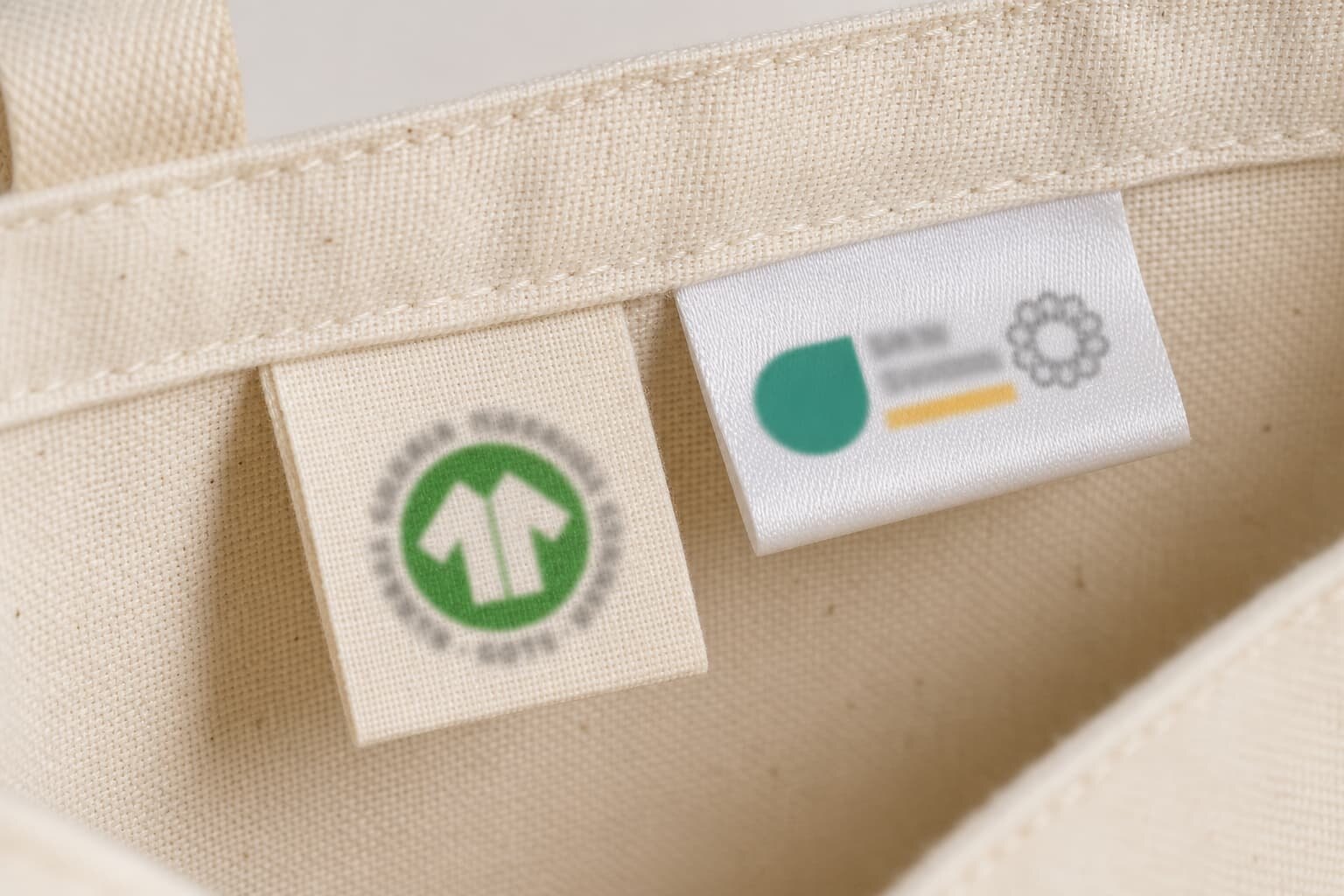
Organic claims are where many procurement files become vague. For wholesale organic cotton bags, the buyer should separate three different things: the organic content of the fiber, the processing certification of the product, and the shipment-level paperwork. A supplier may have organic cotton available, but that does not automatically mean the final bag can be sold as a certified organic product in every market.
GOTS and OCS are not interchangeable. GOTS is the more comprehensive textile standard and covers processing criteria as well as organic content and chain of custody across the relevant certified supply chain. OCS verifies organic material content and chain of custody, but it does not carry the same processing requirements as GOTS. For a buyer, that means a GOTS product program usually needs more documentation discipline, while an OCS-based claim may be simpler but also narrower in what it supports.
The practical procurement checks are straightforward. Confirm the supplier’s scope certificate is current and that the product type, site, and activity are included. Check whether the mill, dye house, printer, and final sewing factory are all inside the certified chain or formally covered through the approved route. If the order needs a shipment document such as a transaction certificate, state that requirement before quoting so the factory knows which source and process to use.
Do not assume the word organic on a sales sheet is enough for a retail claim. If the packaging, hangtag, or customer file needs certified wording, the certification path must be locked before bulk production. Correcting the paperwork after the order is sewn is often more difficult than changing the fabric itself.
- Verify the current scope certificate, expiry date, and named site before awarding the order.
- Check whether the bag body, print, label, and packing are within the certified process chain.
- State whether you need GOTS-style product certification, OCS content traceability, or internal compliance only.
- Request shipment-level documentation early if your channel requires it for receiving or retail claims.
6. Choose the MOQ path that matches the order: stock, custom color, or custom build
The cheapest MOQ route is usually stock natural fabric, standard sewing, and basic print. That path works because the factory can cut from existing rolls and avoid a new dye lot or special finishing. It is the best choice when the buyer wants to test a market, launch a store program, or build a simple merchandise line without tying up too much cash in inventory. For many wholesale buyers, this is the safest place to start.
A custom dyed bag is a different project. Dyeing adds lab dip approval, extra lead time, shade control, and a higher risk of rework if the lot drifts. The MOQ rises because the color work must be spread over enough pieces to be efficient. In practical sourcing terms, custom dyeing is worth it only when color is part of the product identity or when the order is large enough to absorb the setup. Otherwise, the buyer is paying for a visual preference that may not improve sell-through.
Custom construction also lifts MOQ because the pattern, sewing sequence, and accessory list become less standard. Gussets, inner pockets, zippers, snaps, and specialty labels can all push the factory into more complex setup. A procurement team should compare the value of each custom element. If the logo is the main brand signal, keep the bag body simple and put the brand message into print and label. If the bag itself is the product, then a more customized build may be justified despite the higher floor.
A practical rule for buyers: start with what can be sourced from stock, then add only the custom features that have a clear commercial return.
- Best low-MOQ route: natural stock fabric, standard tote shape, one-color print, bulk packing.
- Moderate MOQ route: stock fabric with custom size, gusset, label, and simple retail marking.
- Higher MOQ route: custom dyed fabric, multiple decorations, and retail-ready packing.
- Most expensive route: custom color plus custom construction plus certified documentation plus strict retail packaging.
7. Sampling should reduce risk, not just generate a prettier sample
A sample is useful only if it matches the real production path. For a simple tote, a blank size sample and a printed strike-off may be enough to verify dimensions and decoration. For a higher-value retail bag, the buyer should request a pre-production sample made from the actual fabric, with the final handle, label, print, folding method, and packing style. That sample becomes the reference for both internal approval and final inspection.
The most common sampling mistake is approving a showroom sample that looks good but does not reflect the actual order. It may be made from a different GSM, a cleaner fabric lot, or a different factory process. Once the buyer approves that sample without notes, the later production gap becomes a dispute instead of a normal variance issue. A better approach is to document the sample with measurements, fabric data, print method, and photo records.
Sampling should also answer commercial questions. Does the print hold sharp edges on the chosen weave? Does the bag fold as expected? Does the handle drop feel right in the hand? Does the natural shade look acceptable next to the brand’s other packaging? These are not just design concerns; they affect customer acceptance and therefore repeat order potential.
If the order is intended for a chain store, distributor, or marketplace program, it is worth keeping the approved sample in the PO file and in the warehouse receiving file. That makes final inspection faster and reduces argument over what was approved.
- Blank size sample checks dimensions, gusset, handle drop, and seam type.
- Fabric swatch checks GSM, weave, shade, and shrinkage behavior before bulk cutting.
- Printed strike-off checks ink color, opacity, curing, edge quality, and print position.
- Pre-production sample checks the actual bag build, label placement, folding, and packing.
- Keep signed sample records so the final inspection team has one clear reference.
8. Packing and logistics can change the true landed cost more than the quote suggests
Packing is often treated as a minor line item, but it can alter the real landed cost and even the MOQ. Bulk pack in export cartons is usually the most efficient option for wholesale buyers who plan to repack locally or distribute through a warehouse. It reduces material use and keeps handling simple. Retail-ready packing, by contrast, may require individual sleeves, hangtags, barcode labels, tissue, or branded carton marks, each of which adds labor and often raises the practical minimum run.
Organic cotton bags are soft goods, so carton planning matters. Too many heavy canvas totes in one carton can push gross weight high enough to create handling issues. Too few pieces per carton raises freight volume and can make carton rates inefficient. As a procurement target, many buyers try to stay in a manageable gross carton weight range for manual handling, then confirm whether the origin warehouse and destination DC have tighter limits. The carton plan should be solved before the order starts, not after packing begins.
The buyer should also check folding method and compression. A loose fold can create more volume but reduce creasing; a tight fold saves space but can make the bag look poorly presented on arrival. For retail programs, the wrong folding method can create shelf-ready problems even when the bag itself meets spec. If the order will ship through multiple handoffs, carton strength deserves attention as much as the bag body does.
For the RFQ, request pieces per carton, carton dimensions, gross weight, and carton marking format. That data lets the procurement team compare landed cost more accurately and reduces surprise fees at receiving.
- Bulk pack is usually lowest cost and best for distributors or repackers.
- Individual packing improves presentation but increases labor and material use.
- Barcode, hangtag, and carton mark requirements should be written into the spec.
- Confirm whether the destination warehouse has a gross-weight or carton-size limit.
9. Lead time should be planned from approval milestones, not from the first inquiry
A lead time quote is only useful if the starting point is clear. Many suppliers quote production days without including artwork revision, sample approval, material reservation, certification checks, or holiday slowdowns. For procurement planning, the timeline should start after the supplier has confirmed the specification, approved sample, deposit or payment arrangement, and material availability. Anything earlier is still pre-production.
The timeline should be broken into milestones. First comes technical review and quote confirmation. Then sampling, which may be just a strike-off or may be a full pre-production sample. After approval, the factory prepares materials, cuts the fabric, prints or decorates, sews, trims, presses, inspects, and packs. If the bag needs dyed fabric, add lab dip approval, dyeing, and shade check time. That is often where low-MOQ orders lose schedule flexibility.
For buyers managing seasonal launches or retail replenishment, the safest approach is to ask for milestone timing rather than one total number. That makes it easier to see where the project can slip. It also helps internal teams decide whether to simplify the order, move from dyed fabric to natural fabric, or reduce decoration complexity to protect the ship date. In sourcing, every extra custom step is not only a cost decision; it is a schedule risk.
When a supplier says they can deliver quickly, the buyer should still confirm what happens if print approval changes or the fabric lot shifts. Short lead times are most reliable when the order is built around stable stock materials and simple decoration.
- Separate pre-production time from bulk production time and transit time.
- Use milestone dates for quote review, sample approval, material booking, and final QC.
- Custom dyeing usually adds more schedule risk than buyers first expect.
- Simple stock-fabric orders are usually the fastest to stabilize.
10. How to compare quotes and write the PO so the order is actually enforceable
A useful quote for wholesale organic cotton bags should be specific enough that two suppliers can be compared without guesswork. Unit price alone is not enough. The quote should show fabric composition, GSM, weave, finished size, print method, number of colors, packing format, MOQ, sample cost, lead time, payment term, and document support. Otherwise, the lowest number may only be the least complete number.
A good procurement habit is to request tiered pricing against one identical specification. Ask for 500, 1000, 3000, and 5000 pieces with the same bag body, same print, same packing, and same documentation requirement. That reveals the real cost curve. If the price drops sharply at a certain tier, the buyer can see whether the savings come from fabric usage, print setup, sewing efficiency, or packing labor.
The PO should then convert the approved sample into measurable acceptance criteria. That means listing the agreed dimensions, GSM range, shade range, print position tolerance, seam details, label content, packing quantity, and carton markings. For organic claims, the PO should name the exact documentation required and the approved wording for any packaging or label statement. That is the cleanest way to prevent a mismatch between sales language and production reality.
In short, the buying goal is not only to get a low MOQ. It is to get a repeatable spec, a defensible organic claim, and a landed cost that still makes sense after inspection, freight, and receiving.
- Quote basis should be stated clearly: EXW, FOB, FCA, CIF, or DDP if applicable.
- Use identical spec tiers to reveal true volume breakpoints.
- Put sample approval, tolerance limits, and document requirements into the PO.
- Do not rely on price alone when organic labeling or retail presentation matters.
Specification comparison for buyers
| Spec decision | Recommended starting point | MOQ and cost effect | Buyer tradeoff to check |
|---|---|---|---|
| Fabric weight for giveaway totes | 5-6 oz organic cotton, about 150-180 GSM | Usually the easiest path to a lower MOQ because mills and cutting rooms can work from common stock | Can feel thin for grocery or retail use; confirm shrinkage, seam quality, and handle reinforcement |
| Fabric weight for retail totes | 8-10 oz organic cotton canvas, about 240-300 GSM | Raises fabric cost and shipping weight, but supports better perceived value | Check whether the quote is based on pre-shrunk fabric and whether handle stitches are reinforced |
| Heavy-duty reusable bags | 10-12 oz organic cotton canvas, about 300-360 GSM | Often pushes MOQ higher because material cost, sewing time, and freight all rise | Strong bag body can still fail if handle stitching and seam allowance are not upgraded |
| Bag construction | Flat tote with standard self-fabric handles | Lowest setup burden and most predictable sewing cost | Less structure and lower load stability than a gusseted or boxed-bottom tote |
| Gusset or boxed-bottom build | Add only when the use case needs more volume or better standing shape | Raises cutting and sewing time, which can move MOQ upward | Confirm the buyer is paying for function, not just a visual upgrade |
| Print method | One-color or two-color screen print on natural fabric | Best balance of unit cost and setup efficiency for most wholesale orders | Requires screen setup per color; require strike-off approval for color and position |
| Small-run decoration | Digital print or heat transfer for artwork-heavy trials | Useful for multi-SKU launches or low-volume tests | May change hand feel, wash behavior, and brand perception versus a classic screen print |
| Fabric color | Natural unbleached organic cotton | Usually the fastest and safest MOQ route because it avoids dye lot risk | Shade variation is normal; approve a realistic range, not a paper-white target |
| Custom dyed fabric | Only when brand color is commercially important | Raises MOQ because of lab dip, dye lot, and shade control | Confirm whether the dye house, finishing mill, and final bag factory are all in scope |
Buyer checklist before sampling
- Define the bag type first: tote, drawstring pouch, wine bag, produce bag, or zipper pouch, because MOQ changes by cutting layout and sewing steps.
- State finished dimensions in width x height x gusset, plus handle length or drawcord length, instead of only sharing a reference image.
- Specify fabric weight in GSM or ounces and ask the supplier to confirm the actual measured tolerance, not just the nominal number.
- Clarify whether the body is natural, bleached, dyed, or printed before comparing prices, since each option changes sourcing and approval steps.
- Explain the intended load and use case: event giveaway, bookstore retail, grocery reuse, cosmetic packaging, or apparel packing.
- List handle width, handle drop, reinforcement type, and whether the bag needs cross-stitching or bar-tack reinforcement.
- Attach artwork with exact print size, number of colors, Pantone references, print location, and any prohibited artwork changes.
- State the certification requirement clearly: GOTS finished product, OCS content claim, or internal organic material traceability only.
- Ask for quantity tiers using the same specification so the buying team can see where the real price break happens.
- Set acceptance tolerances for size, shade, print position, seam quality, carton quantity, and gross weight before the PO is issued.
Factory quote questions to send
- What is the real MOQ if we use stock natural organic cotton, one-color screen print, and bulk packing?
- What changes the MOQ the most in this build: fabric availability, decoration setup, labels, or carton packing?
- Can you quote 500, 1000, 3000, and 5000 pieces using the same specification so we can compare the breakpoints clearly?
- If we require custom dyed fabric, what is the minimum dye lot, and which party controls lab dip approval?
- Which certification documents can you support for this order: GOTS scope, transaction certificate, OCS chain records, or supplier declaration?
- Are all relevant processing steps in the certification scope, including weaving, dyeing or printing, cutting, sewing, and packing?
- What is the measured GSM tolerance for the proposed fabric, and can you share a fabric test report?
- Which print method is included in the price, and what are the limits on color count, coverage, and print area?
- What sample stages do you recommend before bulk production, and which sample charges are refundable or credited?
- Please provide carton dimensions, gross weight, pieces per carton, and estimated production lead time after sample approval and deposit.
Quality-control points to confirm
- Verify fabric GSM with a measured sample cut and weighing method, not only by hand feel; keep the measurement basis on file.
- Check fabric tensile performance with an agreed lab method such as ISO 13934-1 or ASTM D5034 when the bag is intended for heavier reuse.
- Inspect handle attachment strength with a pull test tied to the intended load; record the force applied and failure point or pass/fail outcome.
- Measure finished bag dimensions after pressing and allow a reasonable shrinkage and sewing tolerance that matches the approved sample.
- Review seam allowance, stitch density, backstitching, bar-tacks or cross-stitches, loose threads, and corner reinforcement on every lot.
- Compare bulk shade against the approved standard under consistent light, especially for natural unbleached cotton and any dyed fabric.
- Check print adhesion and rub resistance with an agreed method such as ISO 105-X12 or AATCC 8 for crocking, plus a visual print-position check.
- If wash performance matters, request wash fastness testing such as ISO 105-C06 or AATCC 61 for the finished print or fabric decoration.
- For retail orders, confirm carton strength with compression testing such as ASTM D642 or an equivalent warehouse stack test.
- Use a carton-drop or distribution check based on an agreed method such as ISTA 1A/3A or an internal equivalent before shipment release.