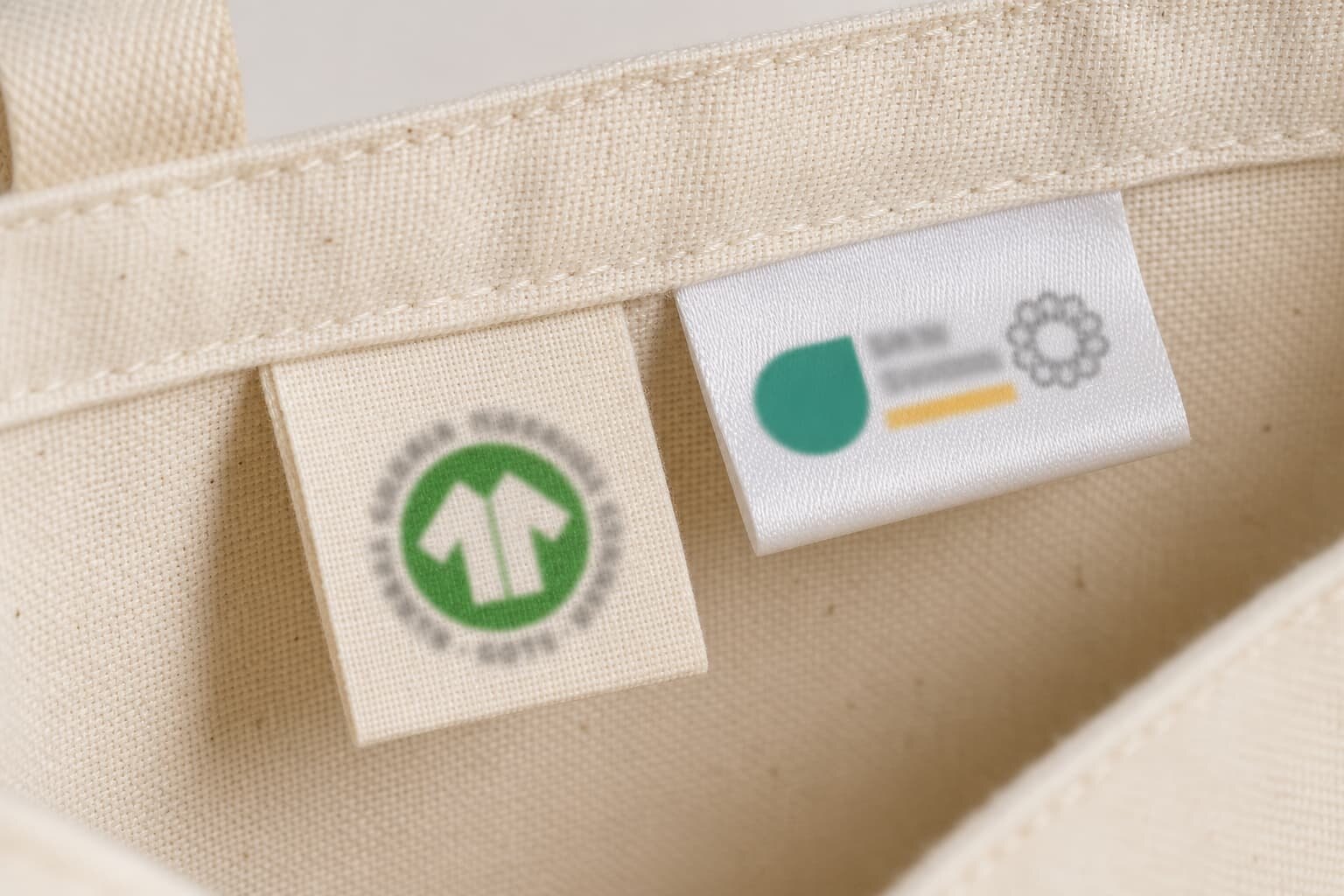
1. The Audit Problem: Organic Claims Are Easy to Quote and Harder to Prove
When a supplier quotes wholesale organic cotton bags, the first risk is not the sewing price. The first risk is whether the material and process behind the quote can support the claim your sales team will print on packaging, product pages, or retailer compliance forms. A bag can look natural, unbleached, and eco-friendly without being organic cotton. During a factory audit, procurement should separate three things: fabric identity, production capability, and documentation scope.
A practical audit does not need to become a legal investigation, but it must test whether the quote is commercially real. If the factory cannot explain where the fabric comes from, what GSM is being quoted, which print method is included, and how the MOQ is calculated, the low price may disappear after sampling. Worse, the order may ship with substitute fabric, weak stitching, incorrect claim wording, or packing that fails your warehouse requirements.
- Confirm whether the factory produces bags in-house or only trades finished bags from another workshop.
- Ask to see actual fabric rolls, fabric labels, purchase records, or lot references linked to the quoted material.
- Check whether organic documentation is available for the fabric only or for the complete finished product.
- Make the audit outcome a PO release condition, not a discussion after deposit.
2. Start With the Bag Use, Not the Supplier’s Standard Catalogue
Most quote problems begin because the buyer sends a general request such as “organic cotton tote bag, 10,000 pcs, logo printed.” That is not enough for a factory to quote accurately. Organic cotton bags vary by fabric weight, weave, handle type, print area, finishing, and packing. A 6 oz natural cotton tote for an event and a 12 oz retail bag with reinforced handles are not the same product, even if the front size looks similar in a catalogue photo.
Before auditing the factory, write the use case into the RFQ. Is the bag for supermarket reuse, cosmetics gift set packaging, apparel retail, book fair distribution, subscription box packing, or wine and food gifting? The answer changes the fabric weight, handle strength, print durability, and carton packing. A factory audit should check whether the supplier understands this use case and can recommend suitable construction rather than pushing the cheapest existing sample.
- For light campaign use, 5-6 oz cotton may work, but it can feel thin and may show dark objects through the fabric.
- For normal retail tote use, 8 oz / about 270 GSM is often a safer balance of handfeel, print surface, and freight weight.
- For premium reuse, 10-12 oz canvas gives better structure but increases sewing difficulty, carton weight, and cost.
- For grocery or heavy product use, audit handle reinforcement and seam strength instead of relying on fabric weight alone.
3. Verify Fabric GSM, Construction, and Shrinkage Before You Compare Prices
GSM is one of the most common places where quotes become misleading. Some suppliers quote greige fabric weight before bleaching, dyeing, washing, or finishing. Others quote nominal oz weight from an old catalogue, while the actual finished fabric is lighter. For organic cotton bags, the buyer should ask for finished GSM tolerance and confirm whether the value is measured from the fabric roll used for bulk production.
During a factory audit, request a GSM cutter check or an equivalent weighed sample from the actual fabric lot. Also look at the weave. Plain weave cotton can be softer and lower cost. Canvas has a tighter, stronger handfeel but may affect ink penetration and needle selection. If the bag will be washed, dyed, or softened, ask about shrinkage and twisting. Organic cotton is still cotton; it can shrink, wrinkle, and distort if the process is not controlled.
- State GSM as a range, such as 270 GSM ±5%, instead of only writing “8 oz cotton.”
- Ask whether fabric is natural, bleached, dyed, washed, or enzyme finished because each process affects feel and measurement.
- Measure sample size after pressing and after 24 hours of relaxation if dimension accuracy matters.
- For dyed organic cotton, confirm color fastness and dye lot control; small repeat orders may not match exactly.
4. Audit the Organic Cotton Claim and Documentation Scope
Buyers often ask, “Can you provide certificate?” The better question is, “What exactly does your document cover?” Organic cotton documentation may relate to raw fiber, yarn, fabric, dyeing, printing, trading, or finished product handling. If the finished bag carries an organic claim in a regulated retail market, your compliance team may require more than a factory declaration or a fabric supplier screenshot.
Do not ask the factory to invent a claim after the PO is placed. Decide early whether you need certified organic cotton fabric, certified finished goods handling, transaction certificate support, or only a lower-risk material statement for internal sustainability reporting. The audit should confirm that the factory’s documentation path matches your claim wording. A buyer saying “made with organic cotton” may create different requirements than “certified organic cotton bag.”
- Request sample documents with sensitive values hidden if needed, so you can see format and issuing chain.
- Check whether the exporter name, processor name, and product category align with your shipment route.
- Ask if printing, dyeing, washing, or subcontracted sewing affects the documentation scope.
- Avoid approving packaging artwork with organic logos or certification references until compliance confirms usage rights.
5. Print Method Audit: Ink Choice, Curing, and Color Expectation
For wholesale organic cotton bags, the print method is not only a design issue. It affects cost, lead time, handfeel, durability, and the credibility of the product. Water-based screen printing is commonly used for simple brand logos because it suits natural cotton and keeps the handfeel softer than heavy plastisol-style effects. Digital pigment printing can work for full-color artwork or many SKUs, but color brightness on natural cotton may be lower than on white polyester or coated paper.
A factory audit should look at the print room, screen storage, drying or curing equipment, and sample records. Ask how the supplier controls ink mixing, curing temperature, and print position. Under-cured ink may look acceptable at shipment but fail rubbing or washing later. Over-thick ink can crack on folded areas or feel unsuitable for a natural organic product. Do not approve bulk production from a computer artwork file only; approve a physical strike-off or pre-production sample.
- Define print size in centimeters and print position from bag top and side seam.
- Specify Pantone reference but accept a practical tolerance for natural cotton base shade variation.
- Require dry rub and wet rub checks for dark prints, large solid areas, and prints near handle stress zones.
- Ask whether ink is included in any restricted substance program required by your retailer.
6. MOQ Logic: Why the Lowest Minimum May Not Be the Best Supplier
MOQ for organic cotton bags is usually driven by more than sewing line setup. Fabric availability, organic fabric procurement, dye lot, print setup, label ordering, and carton marking all influence the real minimum. A supplier may say they can accept 500 pcs, but that may mean using existing fabric only, charging a high unit price, limiting size options, or mixing your order with another production lot.
During audit and quote review, ask the factory to break MOQ by decision point. You want to know the minimum for the fabric weight, fabric color, bag size, handle construction, and each print design. For distributors managing many logos, the best approach may be one shared fabric and construction with multiple print designs. For retail buyers, fewer SKUs with stable fabric lots can reduce color variation and sample approval work.
- One fabric, one size, several print designs: check per-design setup charge and print scheduling.
- Several fabric colors: expect higher MOQ because dye lots and shade matching become separate controls.
- Several bag sizes: cutting markers and sewing setup change; ask if price differs by size even at same fabric GSM.
- Private labels and hangtags: check accessory MOQ because labels may have higher minimums than bags.
7. Sample Approval Must Match Bulk Production Conditions
A beautiful sample is not enough if it was made from sample-room fabric, printed by a different method, or sewn by the most skilled worker only. The purpose of a pre-production sample is to freeze the product standard for mass production. For organic cotton bags, the sample should confirm fabric weight, handle drop, seam construction, print color, print position, label placement, and packing method.
Procurement should define which sample is for appearance and which sample is for production approval. A first counter sample may use available fabric to confirm shape and dimension. A pre-production sample should use the actual booked fabric and print method where possible. If timing does not allow full actual material, write down the deviations and require bulk inspection to check those points first.
- Keep one signed sample at the factory and one with the buyer or inspection team.
- Mark approved tolerances directly in the sample approval record, not only by email comments.
- Check bag dimensions flat, including gusset if any, and measure handle drop from top edge to handle peak.
- For large print areas, fold the sample as it will be packed to check whether ink marks, sticks, or cracks.
8. Packing Audit: Sustainability Claims Still Need Warehouse Discipline
Many organic cotton bag buyers want plastic-free packing. That is possible in many cases, but it must be designed carefully. If bags are packed loose in cartons without inner bundles, warehouse counting becomes slower and cotton may absorb moisture or carton dust. If bags are individually polybagged, the packing may conflict with the sustainability message or retailer requirements. The best solution depends on your distribution channel.
Audit the packing area, not just the sewing line. Check how finished bags are cleaned, folded, counted, bundled, and protected before export carton sealing. Ask for carton dimensions and estimated CBM at quote stage, because freight cost can change the real landed cost. Heavy canvas bags in oversized cartons may cause carton bursting or pallet instability, while over-compressed packing can create hard creases across printed logos.
- For wholesale warehouse delivery, inner bundles of 25, 50, or 100 pcs can improve counting.
- For retail-ready goods, confirm hangtag, barcode, care label, price sticker, and country-of-origin placement.
- For plastic-free packing, consider paper bands, kraft inner boxes, or bulk bundles with moisture control.
- Set carton gross weight limits, especially for 10-12 oz canvas bags; heavy cartons increase handling damage.
9. Lead Time Audit: Split the Schedule Before You Believe the Ship Date
A quoted lead time such as “30 days after deposit” is not detailed enough for a serious PO. Organic cotton fabric may need booking, documentation, dyeing, or special finishing. Printing cannot start until artwork and sample approval are complete. Sewing cannot run efficiently if handles, labels, or packing accessories are late. A factory audit should check whether the supplier’s planning department can break the schedule into real production steps.
Ask for a timeline that separates sample development, material purchasing, cutting, printing, sewing, trimming, QC, packing, final inspection, and export paperwork. This helps procurement identify the true critical path. If your delivery date is fixed, you may need to approve fabric first, then print strike-off, then packing layout. If you wait to approve everything at once, the supplier may compress curing, inspection, or packing time, which increases defect risk.
- Fabric booking time is often the first hidden delay when organic fabric is not in stock.
- Print approval can delay bulk cutting if the design position affects panel cutting or pocket placement.
- Accessory lead time matters for woven labels, hangtags, barcode stickers, and special cartons.
- Final inspection should be scheduled after at least 80-100% production completion and packing, depending on your inspection plan.
10. Quote Data: Build a Comparison Sheet That Exposes Hidden Differences
A low unit price is useful only if the quote includes the same product and service level. For wholesale organic cotton bags, quote variance often comes from missing details: lighter GSM, smaller print area, no certification support, no hangtag, cheaper carton, different Incoterm, or unrealistic MOQ. The factory audit should support your quote comparison by confirming which supplier can actually meet the written specification.
Build your comparison sheet around cost drivers rather than supplier promises. Include fabric GSM, bag dimensions, handle type, print method, number of colors, sample cost, setup charge, documentation availability, packing method, carton CBM, lead time, payment terms, and Incoterm. If a supplier cannot fill these fields clearly, the buying risk is higher than the price difference suggests.
- Compare FOB to FOB, EXW to EXW, or DDP to DDP; do not mix terms without adding freight and clearance assumptions.
- Ask if the quote includes print setup, artwork adjustment, pre-production sample, export carton, and inner packing.
- Record estimated carton CBM because freight can change landed cost more than a small unit-price discount.
- Request validity date for organic fabric price; cotton and currency movement can affect long quote cycles.
Specification comparison for buyers
| Spec decision | Recommended option | When it fits | Buyer risk to check |
|---|---|---|---|
| Fabric weight for general retail tote | 8 oz / 270 GSM organic cotton canvas | Reusable shopping bags, bookstore totes, event merchandise, mid-weight brand bags | Confirm finished GSM after washing or finishing; some quotes list greige fabric weight instead of final fabric weight |
| Fabric weight for premium brand bag | 10-12 oz / 340-400 GSM organic cotton canvas | Gift-with-purchase, fashion retail, heavier catalog or apparel use | Check whether handle reinforcement, needle size, and carton weight are adjusted for thicker fabric |
| Fabric for low-cost campaign bag | 5-6 oz / 170-200 GSM organic cotton plain weave | Short-term promotions where light handfeel is acceptable | Risk of see-through fabric, weak seams, and poor print opacity on natural fabric |
| Print method for simple logo | Water-based screen print, 1-2 colors | Most organic positioning projects, natural cotton look, stable repeat orders | Ask for curing temperature and rub test; under-cured ink can crack or transfer |
| Print method for full-color artwork | Digital pigment print with pre-tested artwork file | Small quantity designs, many SKUs, photographic graphics | Color may look muted on natural cotton; require sample approval under D65 or agreed light source |
| Organic claim control | Transaction certificate or fabric lot traceability where required | Retail brands, distributor compliance, sustainability claims | Do not accept only a factory sales statement; match certificate scope to fabric, dyeing, printing, and final product where applicable |
| MOQ structure | Combine same fabric and bag construction; separate MOQ by print design | Multi-logo programs, distributor catalogs, regional campaigns | Low total MOQ may hide high per-design setup charges, fabric surplus, or mixed-carton packing cost |
| Packing method | Flat pack 50-100 pcs per export carton with inner bundle or paper band | Wholesale shipments, warehouse receiving, Amazon-style prep before relabeling | Check carton size, carton weight, moisture control, barcode position, and whether individual polybags conflict with sustainability rules |
Buyer checklist before sampling
- Confirm the supplier can show organic cotton fabric lot records, not only a finished bag photo.
- Ask whether quoted GSM is greige fabric, finished fabric, or allowable tolerance after cutting and sewing.
- Check sample dimensions after pressing and after normal relaxation; cotton bags can shrink or twist if not controlled.
- Review handle construction: self-fabric, cotton webbing, cross-stitch, bartack, or inner reinforcement patch.
- Request print method, ink type, curing process, print area size, and print position tolerance in writing.
- Check whether the MOQ is based on fabric dye lot, organic fabric minimum, print setup, or sewing line efficiency.
- Require a pre-production sample using actual fabric, actual print, actual handle, and actual packing when possible.
- Define acceptable defects: stains, slubs, loose threads, needle holes, off-center print, carton crushing, and odor.
- Confirm packing details: units per inner bundle, carton dimensions, gross weight, barcode or hangtag placement, and plastic-free option.
- Ask for lead time split by fabric booking, sample approval, bulk cutting, printing, sewing, inspection, and export packing.
Factory quote questions to send
- Is the organic cotton fabric in stock, reserved, or made to order after deposit?
- What is the exact fabric construction: plain weave or canvas, yarn count if available, finished GSM, and GSM tolerance?
- Which parts are organic cotton: bag body, handles, drawstring if any, sewing thread, labels, or only the main fabric?
- Can you provide fabric lot traceability or transaction certificate documentation if our market requires it?
- What is the minimum order by fabric weight, bag size, fabric color, and print design?
- Is the quoted price based on natural cotton, bleached cotton, dyed fabric, or washed fabric?
- Which print method is included in the quote, and what is the maximum print size included before extra charges apply?
- Are screen setup, digital file handling, pantone matching, strike-off sample, hangtag, barcode label, and export carton included?
- What tolerances do you apply for bag size, handle length, GSM, print position, and print color?
- How many days are needed for counter sample, pre-production sample, bulk production, final inspection, and shipping document preparation?
Quality-control points to confirm
- Measure finished bag width, height, gusset, and handle drop against approved sample and PO tolerance.
- Weigh fabric using GSM cutter or equivalent method and record finished fabric GSM, not only supplier label data.
- Check handle stitching density, bartack length, cross-stitch alignment, and seam allowance at stress points.
- Inspect print position from top edge and side edge, print size, ink coverage, curing, edge sharpness, and color consistency.
- Run dry and wet rub checks on printed areas, especially dark ink on natural cotton.
- Check for cotton contamination, oil stains, dark yarns, weaving slubs, broken yarn, mold odor, and uneven bleaching.
- Verify labels, hangtags, barcode stickers, care labels, and country-of-origin marking against buyer artwork.
- Confirm packing count per carton, inner bundle count, carton strength, carton markings, and moisture protection.
- Review retained production sample and bulk goods from the same fabric lot before shipment release.
- Record defect photos by carton or production batch so claims can be traced to cutting, printing, or sewing stage.