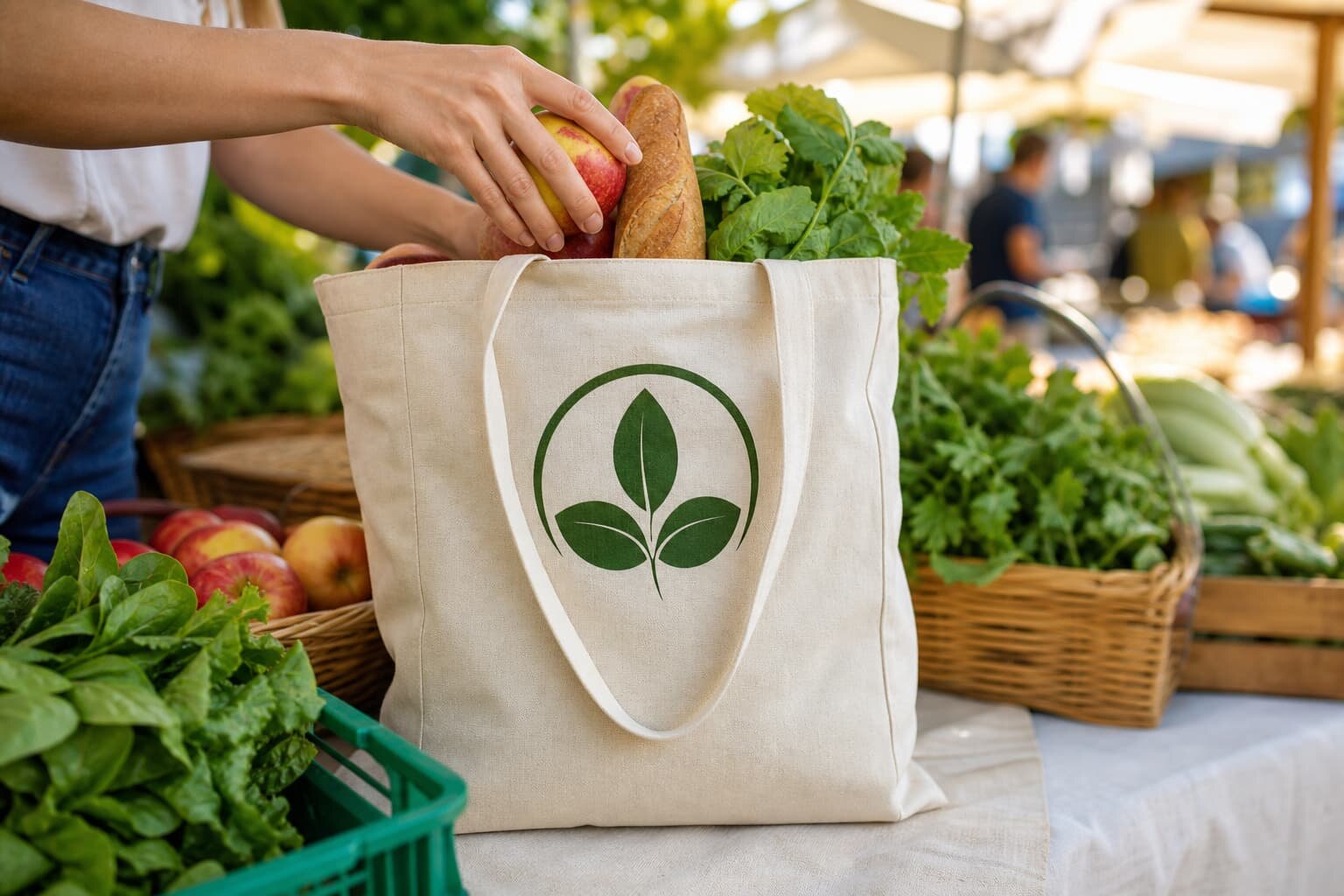
1. The buying problem: organic cotton bag quotes rarely compare the same item
A buyer may send one drawing for a wholesale organic cotton tote and receive five prices that look impossible to compare. One supplier prices 6 oz fabric, another assumes 10 oz canvas, one includes certified organic transaction documents, and another simply quotes natural cotton fabric. The unit price difference may look like a supplier margin issue, but in many cases the quote is built on different fabric weights, print coverage, handle construction, packing, and MOQ assumptions.
This cost report focuses on one practical problem: how to control quote variance before purchase order release. For organic cotton bags, the largest cost drivers are usually finished GSM, fabric source, print method, order quantity per variant, labor in sewing details, packing format, and compliance documentation. If these are not locked at RFQ stage, the cheapest offer often becomes expensive after sample corrections, failed print tests, carton changes, or certification questions from the importer.
- Treat every quote as a technical response, not only a price offer.
- Ask suppliers to confirm assumptions in writing when your RFQ is incomplete.
- Compare cost by the same finished GSM, not by product name such as tote bag or cotton shopper.
- Separate organic certification requirements from natural color or eco-style marketing language.
2. Lock finished GSM before discussing price reduction
Fabric weight is the first cost lever and the first place where quotes become misleading. Organic cotton bag fabric may be described in ounces, GSM, or supplier house terms such as light canvas, medium canvas, or heavy canvas. For export buying, use finished GSM plus ounce reference. A 6 oz fabric may sit around 170-180 GSM, 8 oz around 230-240 GSM, 10 oz around 280-300 GSM, and 12 oz around 340-360 GSM, but these are practical ranges, not universal conversion promises.
Buyers should ask whether the GSM is measured before finishing, after finishing, after dyeing, or after washing. Some cotton canvas loses width, changes hand feel, or gains stiffness through finishing. If your approved sample feels strong because it is 10 oz finished fabric, but your PO only says natural organic cotton tote, a later 8 oz production can pass a weak written spec while failing your retail expectation. GSM must be part of the commercial contract, not only sample discussion.
- For event giveaways: 6-8 oz can work if load requirement is low and print coverage is simple.
- For retail merchandise: 10 oz is often a safer starting point for handle strength and perceived value.
- For premium reusable bags: 12 oz or heavier may be suitable, but freight volume and sewing difficulty increase.
- Set a tolerance, for example finished GSM target with an agreed acceptable range, instead of one untestable number.
3. Organic cotton claim: cost depends on evidence, not only fiber
The word organic can mean different things in supplier quotations. One factory may use certified organic cotton fabric with chain-of-custody documentation. Another may use cotton described as organic by a fabric vendor but without order-level transaction evidence. A third may quote natural unbleached conventional cotton because the product visually looks similar. These are not the same commercial or compliance positions.
Before asking for a lower price, procurement teams should decide what proof is required for the sales channel. If the bag will carry an organic claim on a retail hangtag, packaging, or marketplace listing, ask what certificates are available and whether documentation can be issued for your actual order. Certificate handling, fabric booking, and mill MOQ may affect both price and lead time. If the bag is only a natural cotton reusable bag with no organic claim, state that clearly and do not pay for documentation you do not need.
- Use precise wording: certified organic cotton bag, organic cotton blend bag, or natural cotton bag.
- Ask whether certificate copies are sample documents or documents linked to your production batch.
- Confirm whether labels and hangtags will use organic wording, recycled wording, or no sustainability claim.
- Do not approve artwork with compliance claims until your documentation route is confirmed.
4. Print method can change unit cost more than the bag body
Many organic cotton tote RFQs show the bag size but understate the print requirement. A 100 x 80 mm one-color logo on one side is a very different job from a full-panel water-based print, a two-side design, or a multi-color graphic with tight registration. Screen printing remains a common choice for wholesale cotton bags because it is efficient for repeated artwork, especially one to three colors. The cost comes from screen setup, ink, labor, drying, reject allowance, and the number of print positions.
Water-based ink is often selected for cotton bags because it has a softer hand feel and fits the natural product positioning, but it can absorb into unbleached cotton and appear less bright than on coated material. Plastisol, pigment, digital, heat transfer, or DTF may solve some artwork problems but create other concerns: hand feel, cracking, wash resistance, odor, or buyer perception. The right RFQ should not only say logo printed. It should state print size, color count, Pantone target, location, artwork file format, and acceptance standard.
- For solid logos: ask for screen print cost by color and by side.
- For large coverage: request a strike-off because ink consumption and drying control are material cost factors.
- For gradients or photos: compare digital or transfer options, but test hand feel and wash behavior.
- For dark fabric: check whether underbase printing is needed, because it adds setup and ink cost.
5. MOQ logic: the real minimum is by fabric, artwork, and packing variant
A factory may say MOQ is 1,000 pieces, but that does not always mean any combination of colors, prints, and packing styles can be mixed freely. Organic cotton fabric may be purchased by roll or batch. Dyed organic cotton may have a mill minimum by color. Printing has setup time by artwork. Cutting and sewing efficiency drops when each SKU has different label placement, handle color, or fold method.
Procurement teams should build the RFQ around variant logic. If you need 4,000 pieces total with four regional logos, ask for 1,000 pieces per artwork and confirm whether pricing changes. If you need natural, black, and custom-dyed fabric, ask MOQ by fabric color. If retail packing differs by buyer channel, separate that as another cost line. This prevents the common problem where a supplier quotes a clean bulk price, then adds charges after the buyer reveals SKU splitting.
- Ask for price tiers at realistic quantities: for example 1,000, 3,000, 5,000, and 10,000 pieces per artwork.
- Confirm whether leftover fabric, cutting loss, or shade lot separation affects small repeat orders.
- Group artwork versions by the same print size and color count when possible to reduce setup complexity.
- Avoid mixing too many packing styles in one small order unless the channel requires it.
6. Construction details that quietly increase or reduce cost
The bag body looks simple, but sewing construction affects labor, strength, and reject rate. A flat tote with no gusset is faster than a boxed-bottom tote. French seams, binding, inside overlock, bottom gusset, reinforced handles, and inner pockets all change machine time. Handle width and length also matter. A long shoulder handle uses more fabric than a short hand-carry handle, and wider handles may require more accurate folding and stitching.
For wholesale organic cotton bags used in retail or distribution, the handle attachment is a high-risk area. A low quote may use simple straight stitching only, while a stronger bag uses cross stitch, box stitch, bartack, or additional reinforcement at the handle base. Buyers should not assume reinforcement is included. Put the stitch type, stitch size, thread color, and acceptance criteria into the spec, especially if the bag will carry bottles, books, cosmetics, or grocery items.
- Define handle drop, not just handle length, because drop affects actual carrying comfort.
- State whether seams are overlocked, folded, bound, or French-seamed.
- Request stitch density guidance, such as stitches per inch range, if load strength matters.
- Ask whether the quoted price includes trimming loose threads and final pressing.
7. Sampling sequence: approve fabric and print before approving the bag
A full pre-production sample is useful, but it should not be the first technical checkpoint. For organic cotton bags, the correct sequence is usually fabric swatch, print strike-off, then complete sample. The fabric swatch confirms shade, hand feel, GSM, weave, shrinkage tendency, and whether the material matches the buyer’s organic positioning. The strike-off confirms ink behavior on that exact fabric. Only after these are approved should the factory sew a complete sample for size, handle, seam, label, and packing review.
Skipping this sequence creates avoidable delays. If the complete sample has wrong print color because the ink absorbed into natural cotton, the factory must rework artwork or ink. If the fabric feels too thin, the entire pricing basis changes. A buyer can save time by giving clear sample comments with measurable targets: move logo 15 mm upward, change handle drop to 260 mm, increase fabric to 10 oz finished canvas, use box stitch at handle attachment, and pack folded once with barcode label outside.
- Fabric swatch approval: GSM, shade, hand feel, odor, weave, and shrinkage expectation.
- Print strike-off approval: color, edge sharpness, coverage, opacity, position guide, and hand feel.
- Pre-production sample approval: size, sewing, handle strength, label, folding, and carton plan.
- Keep one signed or sealed approval sample for factory production reference and final inspection.
8. Packing and carton data affect landed cost, not just factory cost
Organic cotton bags are not heavy compared with hardware, but they can take carton volume quickly when fabric is thick, handles are bulky, or each piece is individually packed. A quote that looks cheaper at ex-factory level can become more expensive after freight if the carton size is not controlled. Ask for pieces per carton, carton dimensions, gross weight, net weight, and whether cartons are compressed or loosely packed.
Packing should match the sales channel. Distributor stock may only need bulk folding in export cartons. Retail-ready programs may require individual recycled polybags, paper bands, hangtags, barcode stickers, or master carton labels by SKU. Each step adds material, labor, and inspection points. If the brand wants to avoid plastic, paper bands or direct carton packing may work, but moisture protection during ocean shipment should still be considered. A practical RFQ asks the supplier to price base packing and optional retail packing separately.
- Base packing: folded flat, bulk packed in export carton, carton marks printed or stickered.
- Retail packing: individual bag, paper belly band, barcode, hangtag, size label, or channel label.
- Freight data: carton L x W x H, pieces per carton, gross weight, and estimated CBM per 1,000 pieces.
- Moisture control: carton liner, desiccant, or dry storage procedure may be needed for long transit routes.
9. Lead time is driven by fabric booking and approval speed
Buyers often ask for production lead time after deposit, but for organic cotton bags the true schedule starts earlier. Fabric sourcing, certificate confirmation, dyeing if required, swatch approval, print strike-off, sample sewing, and sample courier time all sit before bulk cutting. A supplier may be able to sew quickly after fabric arrives, but cannot recover time lost during artwork revision or certificate clarification.
A realistic sourcing workflow should separate development time from bulk production time. Ask the factory for a timeline with milestones rather than one total number. For example: fabric availability confirmation, swatch dispatch, strike-off dispatch, pre-production sample, bulk fabric arrival, cutting start, printing window, sewing window, inline inspection, final inspection, and booking-ready date. This gives procurement teams a way to identify delay causes and decide where faster approvals or simplified specs can reduce risk.
- Do not place a shipment booking based only on a verbal lead time before sample approval.
- If the launch date is fixed, reduce variant count or use stock fabric rather than pushing an unrealistic production schedule.
- Ask whether peak season, cotton mill schedule, or dyeing queue affects your order.
- Set a deadline for buyer approvals so the factory is not blamed for waiting on artwork or label confirmation.
10. Quote format that makes suppliers comparable
The best quote format is not the longest spreadsheet. It is the one that makes every supplier price the same commercial item. For wholesale organic cotton bags, request a unit price plus confirmed assumptions: finished size, finished GSM, fabric type, print method, print size, number of colors, handle construction, labels, packing, carton data, MOQ, sample cost, lead time, payment term, and quote validity. If certification documents or lab tests are required, ask suppliers to show them as included or excluded line items.
When prices differ, compare the quote data before negotiating. A higher price may include 10 oz finished certified organic cotton, strong handle reinforcement, retail packing, and carton labels. A lower price may include 8 oz natural cotton, basic stitching, one-side small print, and bulk packing. Procurement should not reward the quote that answers the least detail. Ask the low bidder to re-quote against the complete spec, then negotiate based on confirmed differences.
- Use one RFQ sheet and require suppliers to fill blank fields instead of rewriting the product description.
- Ask for exclusions clearly: tests, certification handling, local freight, customs documents, special packing, or artwork redrawing.
- Request photos of similar production details only as reference, not as a substitute for your sample approval.
- Keep quote version control so sample changes are reflected in the final purchase order price.
Specification comparison for buyers
| Spec decision | Recommended option | When it fits | Buyer risk to check |
|---|---|---|---|
| Fabric weight for retail tote | 10 oz / approx. 280-300 GSM organic cotton canvas | Paid retail bag, bookstore tote, brand merchandise, moderate load use | Some mills quote greige weight while others quote finished weight after washing or finishing; confirm actual finished GSM tolerance. |
| Fabric weight for low-cost giveaway | 6-8 oz / approx. 170-240 GSM organic cotton | Event bag, light catalog bag, short-term campaign where cost is sensitive | Thin fabric can show contents, wrinkle more, and produce more print strike-through; request physical swatch before approval. |
| Print method for solid logo | Water-based screen print, 1-3 colors | Simple brand logo, flat artwork, medium to large order volume | Ink absorption changes on unbleached cotton; require strike-off approval for color and edge sharpness. |
| Print method for full-color artwork | DTF, heat transfer, or digital pigment print after testing | Small quantity, gradient artwork, photo-style graphic, many SKUs | Hand feel, wash resistance, and organic positioning may be questioned; define test requirement and acceptable finish. |
| Handle construction | Self-fabric handles with reinforced cross stitch or box stitch | Reusable tote expected to carry groceries, books, or retail products | Quotes may omit reinforcement or use narrow handles; specify width, length, and stitch pattern. |
| Packing format | Folded flat in export carton, optional individual paper band or recycled polybag | Most wholesale shipments, distributor inventory, retail replenishment | Individual packing adds labor and material cost; carton size affects freight volume and landed cost. |
| MOQ strategy | Order by fabric color, GSM, and print setup, not just total pieces | Multiple artwork versions or regional logos in one program | A supplier may accept total MOQ but charge setup, dyeing, or cutting loss separately for each variant. |
| Certification evidence | Transaction certificate or scope certificate requirement stated before quote | Certified organic cotton claim on packaging, retail compliance, importer documentation | Certificate handling may change lead time and cost; do not assume all organic cotton fabric is certifiable for your order. |
Buyer checklist before sampling
- State finished bag size, gusset size, handle length, handle width, seam allowance, and accepted size tolerance.
- Specify finished fabric GSM or ounce weight and ask whether the quoted weight is greige, finished, washed, or pre-shrunk.
- Confirm whether the fabric is certified organic cotton, organic cotton blend, or conventional cotton with natural color only.
- Attach artwork with exact print size, print location, Pantone references, number of colors, and required print hand feel.
- Ask for fabric swatch, pre-production sample, and print strike-off before bulk cutting.
- Define stitch construction: side seam type, bottom seam, handle reinforcement, thread color, and minimum stitches per inch.
- Separate costs for fabric, printing, labels, packing, sampling, testing, certification handling, and inland freight where possible.
- Confirm MOQ by fabric GSM, fabric color, print method, artwork version, and packing style.
- Request carton dimensions, carton gross weight, pieces per carton, and loading estimate for landed cost comparison.
- Set approval rules for shade, shrinkage, print color, print position, stains, loose threads, odor, and needle damage.
Factory quote questions to send
- What is the quoted fabric weight in GSM and oz, and is it based on finished fabric after processing?
- Is the cotton certified organic for this order, and what certificate documents can be supplied after production?
- What is the minimum order quantity for this GSM and fabric color, and does it change by artwork version?
- Which print method are you quoting, and what are the setup charges, screen charges, or plate charges per color?
- What print size and coverage did you assume when calculating the price?
- What shrinkage tolerance should we expect after finishing, printing, or washing?
- Can you provide a fabric swatch and a print strike-off before the pre-production sample?
- What stitching reinforcement is included on the handles and bottom seams?
- How many pieces per export carton, what carton size, and what gross weight are included in your quote?
- What is the realistic production lead time after sample approval and deposit, including fabric booking?
Quality-control points to confirm
- Verify finished GSM with a cut sample and calibrated GSM cutter or agreed lab method, not only supplier fabric tag.
- Check bag size after sewing and pressing, including width, height, gusset, handle drop, and handle width.
- Inspect fabric shade lot consistency under standard light, especially for natural, ecru, black, and dyed organic cotton.
- Compare print color, position, edge sharpness, ink penetration, and hand feel against approved strike-off.
- Perform basic rub, tape, and wash simulation checks on print when the bag is intended for repeated use.
- Pull-test handles and inspect reinforcement stitching for skipped stitches, broken thread, or weak bartacks.
- Check inside seams for fraying, raw edge exposure, needle holes, and loose threads.
- Confirm labels, hangtags, organic claim wording, and country of origin marking match the approved artwork.
- Review folding direction, individual packing, carton marking, carton strength, and moisture protection before shipment.
- Record defect rate by type so future reorders can tighten the spec instead of repeating the same problem.