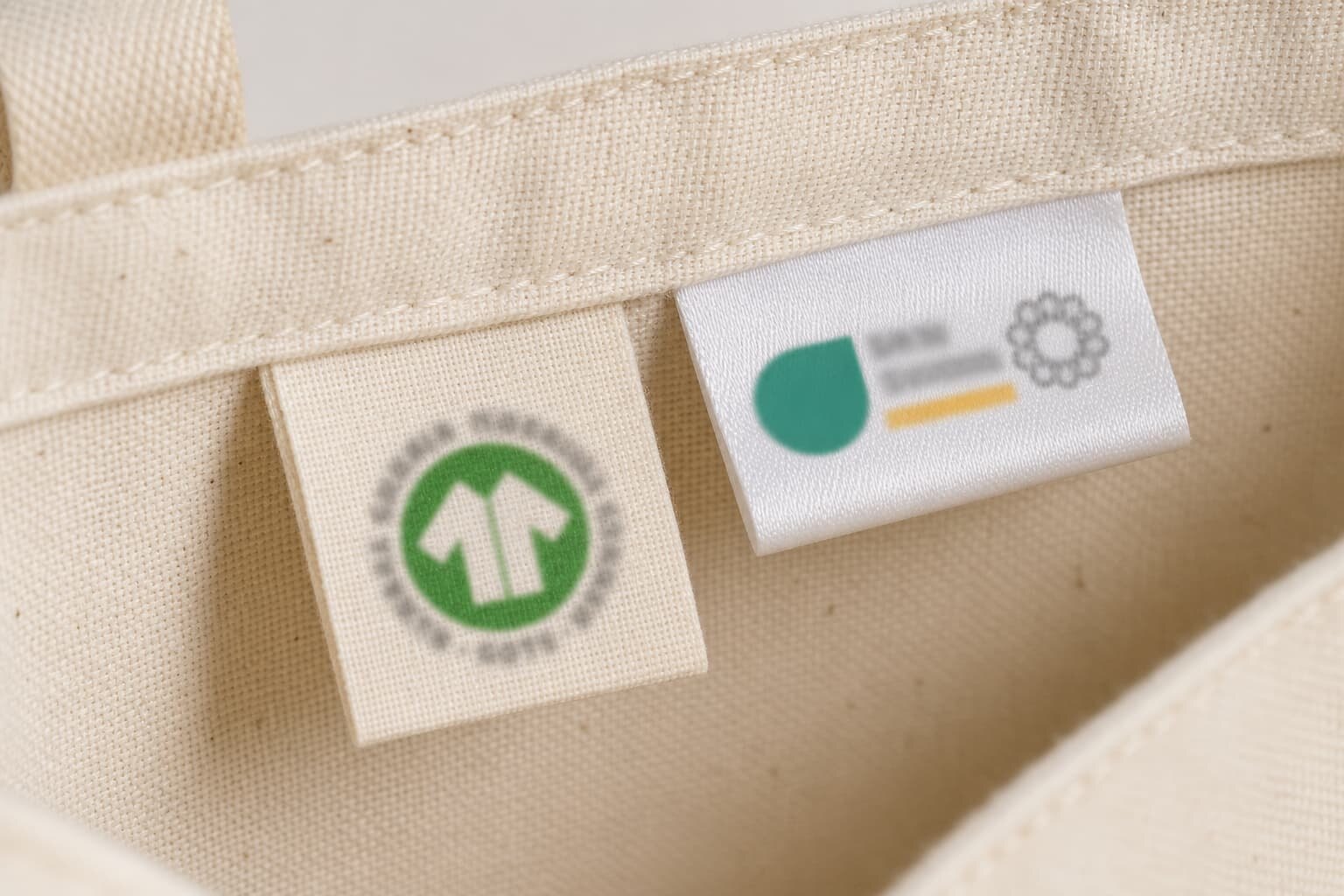
1. The real cost problem in organic cotton bag sourcing
Wholesale organic cotton bags are often quoted too loosely. One supplier prices a 5 oz plain weave bag with a small one-color print, while another prices an 8 oz canvas bag with reinforced handles and individual packing. Both quotes may look like the same tote bag on a spreadsheet, but they are not the same product. This wholesale organic cotton bags cost report 01 focuses on quote control: how to make sure each supplier is pricing the same construction, document level, print process, and packing method.
The biggest mistake is treating organic cotton as one material grade. Organic cotton can be light plain weave, medium canvas, heavy canvas, twill, washed fabric, natural undyed fabric, or dyed fabric. Each option changes the fabric price, cutting yield, sewing difficulty, carton volume, and even the print result. If your RFQ only says organic cotton tote bag, you are asking suppliers to guess, and each guess creates a different cost base.
- Do not compare quotes until GSM, bag size, print area, handle construction, packing, and documentation level are aligned.
- Ask suppliers to state exclusions clearly, especially certification documents, sample freight, barcode labeling, and special packing.
- Use one approved reference sample, but convert it into measurable specifications before requesting price.
2. Fabric GSM is the first cost driver, not an afterthought
Fabric normally takes the largest share of the bag cost. A small change from 6 oz to 8 oz can be felt in hand, seen in the bag shape, and reflected in the total fabric consumption. For retail buyers, 8 oz organic cotton canvas is a common balanced option: strong enough for regular reuse, still foldable, and not too bulky for export cartons. For low-budget campaigns, 5-6 oz fabric may work, but it will feel lighter and may not support a premium positioning.
Ask the factory to quote fabric in both oz and GSM. In bag sourcing, oz is often used commercially, while GSM gives better technical control. Approximate conversion depends on fabric construction, but buyers often compare 5 oz around 170 GSM, 6 oz around 200 GSM, 8 oz around 270 GSM, 10 oz around 340 GSM, and 12 oz around 400 GSM. The exact number should come from the factory test or mill data, not from a marketing label.
- For giveaways: 5-6 oz can reduce cost but may show lower structure and lower opacity.
- For standard branded totes: 8 oz is a practical RFQ baseline.
- For premium retail: 10-12 oz improves body but increases fabric cost, carton weight, and freight volume.
- Set a GSM tolerance, for example plus or minus 5%, if your buyer manual requires measurable acceptance criteria.
3. Organic cotton documentation can change the quote
Organic cotton claims are not only a fabric choice; they may also be a documentation requirement. Some orders need certified organic input and chain-of-custody documents. Other projects only require the supplier to use organic cotton fabric but do not make a certified claim on product labeling. The cost and feasibility are different, so the RFQ must state the required document level before the supplier quotes.
If the bag will be sold with an organic claim, your compliance team should decide the wording before production. Factories can often support fabric sourcing documents, but transaction certificates, scope certificates, labeling approvals, and buyer-specific compliance files may require extra time and cost. A low quote may exclude these items. That exclusion becomes expensive when goods are ready but documents are incomplete.
- State whether the bag, hangtag, label, or website will use the word organic.
- Ask what documents are available for the specific order, not only for the factory in general.
- Confirm whether certification document fees, audit support, and courier costs are included.
- Do not approve bulk labels until compliance wording and country-of-sale requirements are checked.
4. Bag size, gusset, and handle length affect both material use and carton CBM
A tote bag with the same front width and height can have very different cost if it includes a gusset, boxed bottom, lining, pocket, or long shoulder handles. Gussets increase fabric consumption and sewing steps. Long handles use more fabric tape or self-fabric strips. A boxed bottom improves usable capacity, but it adds cutting and sewing complexity. These details must be fixed before quote comparison.
For buyers, the most useful RFQ format is a dimension block: width x height x gusset, handle width, handle length, handle drop, seam allowance if critical, and finished tolerance. Handle drop is especially important for retail bags because a short handle may fit hand carry only, while a longer drop works over the shoulder. If you only say standard handle, each factory may use a different pattern.
- Specify finished size, not flat cutting size.
- Define handle as same fabric, webbing, cotton tape, or contrast material.
- For load-bearing bags, request cross-stitch or box-X reinforcement at handle joints.
- Ask for estimated pieces per carton and CBM because larger gussets and heavy fabric raise landed cost.
5. Print method decisions: screen print is not always the cheapest total answer
For most wholesale organic cotton bags with simple artwork, water-based screen print is the practical starting point. It gives a soft handfeel on cotton, works well for one to three solid colors, and is familiar to most tote bag factories. The cost changes with print size, color count, number of print positions, ink type, and setup. A small chest logo and a full front panel artwork are not the same print cost even if both are one color.
Digital pigment printing or heat transfer can be useful for full-color designs, gradients, or smaller trial runs, but they need testing. Cotton texture affects sharpness. Heavy ink coverage can change handfeel. Some transfer films may crack or feel plastic-like if the wrong material is selected. For brand owners, the correct approach is to request a printed strike-off on the actual production fabric before approving bulk.
- State artwork size in centimeters, not only as a percentage on a PDF.
- Provide Pantone references, but allow a realistic tolerance on natural cotton fabric.
- Ask if dark fabric requires underbase printing, which increases cost and handfeel.
- Confirm whether the print price includes setup screens and whether repeat orders will reuse screens.
6. MOQ logic: the lowest unit price may be hiding too many variables
MOQ for organic cotton bags is not only a sewing line number. It may come from fabric mill minimums, dye lot minimums, printing setup, label production, carton printing, or packing material purchase. A factory may accept a small sewing quantity if it has suitable fabric in stock, but a custom GSM, dyed shade, or certified fabric batch can raise the MOQ quickly.
When buyers request multiple artwork versions, the key is to group them intelligently. If the bag size, fabric, and print method are the same, several designs may be combined under one fabric purchase, while each artwork carries its own print setup. If each design uses a different fabric color, handle color, and packing style, the order becomes many small productions, and the cost rises even if the total quantity looks attractive.
- Ask MOQ by fabric type, fabric color, bag size, print artwork, and packing method.
- Clarify price breaks at realistic quantities, for example 500, 1000, 3000, and 5000 pieces.
- Do not force a low MOQ without checking whether the factory will substitute fabric.
- For seasonal programs, consider one common blank bag with several print designs to control MOQ.
7. Sample checks should prevent cost surprises before bulk production
A good sample process is cheaper than fixing a failed production run. For organic cotton bags, the buyer should not rely only on a photo sample. Request fabric swatches, a printed strike-off, and a pre-production sample using final fabric or the closest approved substitute. If the factory uses substitute fabric for the first sample, that should be clearly marked so the buyer does not approve the wrong handfeel.
The pre-production sample should lock the construction: dimensions, handle length, seam type, print position, label, packing method, and carton plan if possible. After approval, one sealed sample should stay with the factory production team and one with the buyer or inspection company. This avoids arguments during final inspection when someone says the bulk is close enough.
- Check fabric shade, thickness, and stiffness against the target market expectation.
- Measure bag size after sewing, especially gusset width and handle drop.
- Rub the print by hand and review curing, edge sharpness, and cracking risk.
- Check label wording and placement before bulk cutting or sewing begins.
- Record approved sample date, version number, and any allowed deviations.
8. Packing choices can move both unit cost and landed cost
Packing is often treated as a small line item, but it affects labor time, material cost, carton quantity, warehouse receiving, and plastic compliance. Bulk packing is usually the most economical for distributors and B2B programs. Individual polybags protect each bag and support barcode control, but they add cost and may create sustainability concerns if the brand is promoting organic cotton.
If retail-ready packing is required, define it early. Kraft paper bands, hangtags, barcode stickers, size stickers, care labels, and carton marks all need artwork and approval. A factory quote that includes only bulk cartons will be lower than a quote that includes individual folding, banding, barcode application, and master carton labeling. These are not minor differences when the order has thousands of pieces.
- Specify pieces per inner pack and pieces per export carton.
- Set maximum carton gross weight if your warehouse has handling limits.
- Ask for carton dimensions and estimated CBM for freight planning.
- Confirm whether desiccants, moisture bags, or palletization are required.
- Check if individual packing material must be recyclable, compostable, or plastic-free.
9. Lead time: count from the right approval point
Many lead-time disputes happen because buyer and factory start the clock from different moments. A factory may quote production lead time from deposit and artwork confirmation, while the buyer assumes it starts when the PO is issued. For organic cotton bags, fabric availability and document requirements can also affect timing. If fabric must be woven, dyed, or purchased against certification requirements, the schedule must include that step.
A practical timeline separates sample time, approval time, material purchase time, bulk production, inspection, packing, and export handover. The buyer controls some of these steps, especially artwork approval, sample comments, and label confirmation. If your sales launch is fixed, ask the factory to show the critical path instead of only one total lead-time number.
- Ask whether lead time starts after deposit, artwork approval, fabric approval, or pre-production sample approval.
- Request separate timing for sampling, fabric procurement, printing, sewing, packing, and inspection.
- Confirm the latest date for artwork and label approval to keep the ship date.
- Avoid changing print size, fabric weight, or packing after sample approval unless the schedule is revised.
10. How to compare factory quotes without choosing the wrong supplier
A useful quote comparison sheet should separate base bag cost from all variable items. Put fabric GSM, bag size, print method, color count, print size, label, packing, sample cost, document cost, carton data, MOQ, lead time, and payment terms into separate columns. If one supplier gives only a single unit price, ask for clarification before ranking the quote. The cheapest number may exclude the details your buyer manual requires.
Also compare the quality assumptions behind the quote. A factory that includes stronger handle stitching, fabric testing, pre-production sample control, and accurate carton data may look slightly higher at first but reduce risk. For importers and distributors, the real target is not the lowest EXW or FOB price; it is a stable landed cost with fewer surprises at inspection, customs, and retail delivery.
- Reject quotes that do not state fabric weight and print method.
- Normalize all quotes to the same Incoterm, currency, packing method, and quantity.
- Ask for CBM and gross weight before estimating freight.
- Check if sample fees are refundable or credited after bulk order, if that matters to your costing.
- Keep a quote revision log so later changes in artwork, GSM, or packing are visible.
Specification comparison for buyers
| Spec decision | Recommended option | When it fits | Buyer risk to check |
|---|---|---|---|
| Fabric weight for standard retail tote | 8 oz / about 270 GSM organic cotton canvas | Good balance for grocery, event, and lifestyle retail bags with moderate load | Ask whether GSM is finished fabric weight and confirm shrinkage after washing or steaming |
| Fabric weight for budget giveaway bag | 5-6 oz / about 170-200 GSM organic cotton plain weave or light canvas | Large campaign orders where unit cost and freight volume matter more than heavy handfeel | Thin fabric may show print-through, weak body shape, and lower perceived value |
| Fabric weight for premium merchandise | 10-12 oz / about 340-400 GSM organic cotton canvas | Brand shop, bookstore, cosmetics, and subscription packaging bags needing stronger structure | Higher fabric cost, higher CBM, and needle marks are more visible on dark prints |
| Print method for simple logo | Water-based screen print, 1-2 colors | Best cost control for clean logos, slogans, and flat artwork on natural cotton | Confirm print size, color count, curing, and whether ink is certified or low-VOC if required |
| Print method for full-color design | Digital pigment print or heat transfer after testing | Short runs, gradients, photographs, or many colors where screens are expensive | Color fastness, handfeel, cracking, and artwork edge sharpness must be checked on production fabric |
| Handle construction | Self-fabric handles, cross-stitch reinforced at bag opening | Most reusable tote bag programs and retail bags carrying 5-10 kg depending on fabric | Handle width, length, stitch density, and reinforcement pattern must be specified, not assumed |
| MOQ planning | Consolidate artwork versions by same fabric and bag size | Importers buying several designs for one season while controlling fabric purchase quantity | Too many colorways or print methods can break MOQ logic and increase setup charges |
| Packing method | Bulk pack 100 pcs per export carton with inner polybag or paper band as requested | B2B distribution, warehouse receiving, and lower unit packing cost | Individual packing increases labor, material cost, carton volume, and plastic compliance questions |
Buyer checklist before sampling
- Define bag size using width, height, gusset, and handle drop in centimeters or inches, not only a reference photo.
- State organic cotton fabric type and target weight, for example 8 oz organic cotton canvas or 200 GSM organic cotton plain weave.
- Clarify whether organic claim requires transaction certificate, scope certificate, hangtag wording review, or only fabric sourcing statement.
- Provide artwork with final print size, Pantone references, print position, and acceptable tolerance from edge or seam.
- Confirm print method preference and ask the factory to propose alternatives only with cost and quality trade-offs stated.
- List required packaging: bulk, individual polybag, kraft paper band, barcode sticker, carton marks, and carton weight limits.
- Ask for sample type sequence: material swatch, printed strike-off, pre-production sample, and sealed production reference.
- Request quote split by bag cost, print setup, label, packing, sample fee, document fee if any, and inland freight if applicable.
- Set inspection criteria for fabric defects, seam strength, print registration, color tolerance, dimensions, and carton packing.
- Check MOQ by fabric, color, size, print artwork, and packing method before comparing supplier prices.
Factory quote questions to send
- Is the quoted fabric certified organic cotton, and what documents can be provided for this order level?
- What is the exact fabric construction and weight: plain weave, canvas, twill, oz, GSM, yarn count if available, and dyed or natural?
- Is the GSM measured before or after finishing, washing, or calendaring?
- What MOQ applies separately to fabric purchase, bag sewing, print setup, label production, and packing material?
- What print method is included in the base quote, and what is the cost change for one extra color or larger print area?
- Can you quote the same bag in 6 oz, 8 oz, and 10 oz organic cotton so we can compare landed cost and perceived value?
- What sample stages are recommended, what do they cost, and how many working days does each stage require?
- What are the normal dimension tolerances, fabric weight tolerances, and print position tolerances for this product?
- What export carton size, pieces per carton, gross weight, and estimated CBM are used in the quote?
- What production lead time is counted from deposit only, and what lead time is counted from approved pre-production sample and confirmed artwork?
Quality-control points to confirm
- Check fabric weight with a GSM cutter or agreed measurement method against the approved specification.
- Measure finished bag width, height, gusset, handle length, and handle drop using the sealed sample as reference.
- Review fabric shade under consistent lighting because natural organic cotton can vary from cream to grey-beige between lots.
- Test seam strength at handle attachment, side seams, bottom seam, and gusset corners using a realistic load test.
- Inspect print adhesion, color, registration, edge sharpness, curing, and rubbing resistance on the actual production fabric.
- Confirm label placement, organic wording, care label content, and country of origin marking before bulk sewing.
- Check needle holes, skipped stitches, loose threads, puckering, and seam allowance consistency.
- Verify individual or bulk packing count, barcode position, carton marks, carton strength, and moisture protection.
- Separate critical, major, and minor defects before inspection so the supplier and buyer use the same acceptance standard.
- Keep one sealed pre-production sample and one approved print strike-off for production line comparison.