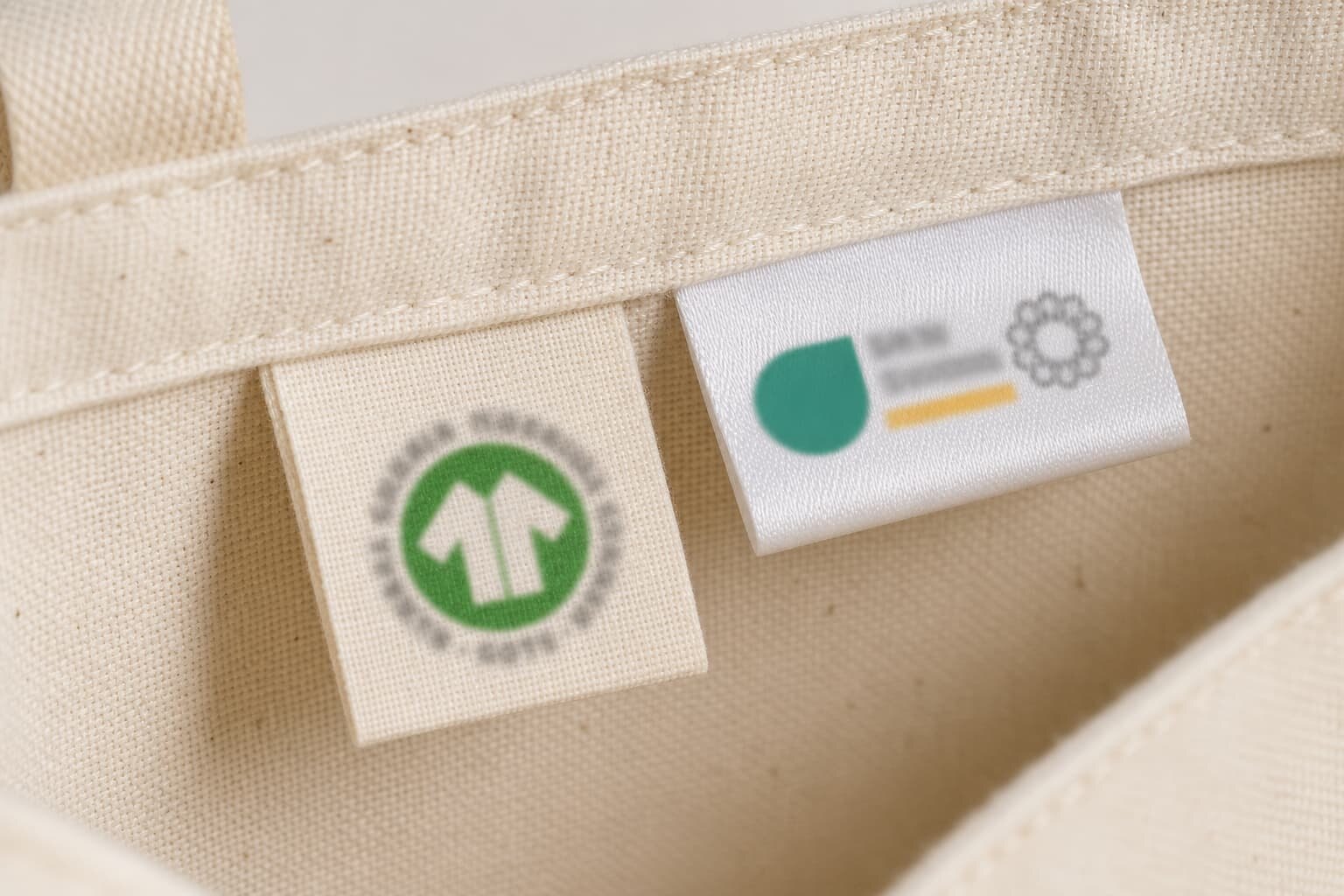
1. The buying problem: organic cotton bags are easy to misquote
Most quote problems with wholesale organic cotton bags come from incomplete specifications. A buyer asks for an organic cotton tote, several factories quote different GSM, different fabric constructions, different handle reinforcement, and different assumptions about certification. The lowest quote then looks attractive, but it may be based on a lighter fabric, a smaller print area, single-line handle stitching, or basic packing that will not survive distribution.
For procurement teams, the goal is not to make the RFQ complicated. The goal is to remove assumptions. A good RFQ should let suppliers price the same bag, the same print, the same packing, and the same compliance level. If you are comparing suppliers without locking these points, you are comparing production interpretations rather than real factory cost.
- Use finished bag dimensions, not only approximate capacity or shopping use.
- Quote by GSM and fabric type together, for example 220 GSM organic cotton canvas.
- Separate material certification requirement from general eco-friendly wording.
- State print size and number of colors before asking for target price.
- Ask whether packing, carton marks, and export documents are included.
2. Define what organic cotton means for your purchase
The phrase organic cotton can mean different things in a commercial order. Some buyers need certified organic cotton with traceability documents because the bag will be sold at retail or used in regulated sustainability claims. Other buyers only need fabric made from organic cotton yarn and a supplier declaration for internal brand use. These are not the same cost structure or document workload.
Before RFQ release, decide what proof is required by your sales channel. If the bag will carry a hangtag or website claim, ask your compliance team what wording is allowed. A factory can usually support material discussion early, but certification documents, transaction certificates, labeling rules, and chain-of-custody requirements must be confirmed before production, not after goods are packed.
- For retail claims, confirm if transaction-level documentation is required.
- For promotional distribution, confirm whether a material declaration is enough.
- Do not ask suppliers to quote certified and non-certified versions in one line; request separate quote options.
- If using a woven label or printed claim, provide exact approved sustainability wording.
- Keep fabric lot information with the final production file for future reorders.
3. Choose fabric GSM by use, not by habit
Fabric weight is one of the biggest cost and quality drivers. A 120 GSM cotton bag and a 300 GSM cotton canvas bag can both be called cotton totes, but they serve different purposes. Lightweight bags fold small and keep freight lower, but they may feel thin for retail merchandise. Heavy canvas feels stronger and more premium, but it increases fabric cost, carton weight, and shipping volume.
For many wholesale organic cotton bags, 180-220 GSM is a practical starting range for standard tote programs. It has better body than thin promotional cotton and still packs efficiently. For bookstore, apparel, cosmetics, or higher-value retail use, 260-340 GSM organic cotton canvas gives a stronger hand-feel. If the buyer expects the bag to stand upright for display, discuss fabric stiffness and finishing, not just GSM.
- 120-160 GSM: foldable giveaway bags, light events, low-load usage.
- 180-220 GSM: common reusable tote range for brand and retail distribution.
- 260-340 GSM: heavier canvas for premium retail or repeated shopping use.
- Above 340 GSM: check sewing needle marks, folding bulk, and freight cost carefully.
- Always ask for GSM tolerance; fabric weight is not perfectly exact in bulk weaving.
4. Size, gusset, and handle details that affect real usability
Bag size should be written as finished dimensions after sewing, not fabric cutting size. A typical flat tote may be quoted as width by height, while a grocery-style bag may also need side and bottom gusset. If the gusset is missing from the RFQ, factories may quote a flat bag and your landed cost comparison will be wrong. A gusset uses more fabric, more sewing time, and changes packing thickness.
Handle drop is another detail buyers often under-specify. Short handles work for hand carry, but shoulder carry usually needs a longer drop. For retail shopping bags, handle width also matters because narrow handles can cut into the hand when the bag is loaded. If your customer will carry bottles, books, or apparel bundles, specify reinforcement and load expectation instead of relying on a generic tote construction.
- Flat tote example: 38 cm W x 42 cm H, no gusset, 2.5 cm handle width.
- Gusset tote example: 35 cm W x 40 cm H x 10 cm bottom gusset.
- Hand carry handle drop is often shorter; shoulder carry usually needs a longer drop.
- For repeated use, request box stitch or cross stitch at handle attachment.
- State whether the bag must fold to a specific size for subscription boxes or retail shelves.
5. Print method selection for organic cotton surfaces
Water-based screen printing is a common choice for organic cotton bags because it gives a softer hand-feel than many heavy plastisol prints and works well for solid brand graphics. It is usually efficient for larger quantities and one to three colors. The buyer should still confirm ink color, curing, rub resistance, and how the print behaves on natural cotton texture, because cotton slubs and seed specks can affect visual smoothness.
Digital printing can be useful for complex artwork, gradients, or smaller sample quantities, but it may not be the most economical for simple bulk logos. Heat transfer can produce sharp detail, but buyers should test edge feel, wash behavior, and cracking risk depending on the transfer type. Embroidery is possible on heavier canvas, but it can pucker lighter fabrics and adds cost. The best print method is the one that fits the artwork, fabric weight, quantity, and acceptable hand-feel.
- Use vector artwork for screen printing and confirm Pantone references.
- Ask if the quoted price includes one-side or two-side printing.
- For natural cotton fabric, approve a physical print sample because fabric shade affects logo color perception.
- For large solid ink areas, check stiffness, curing marks, and possible ink odor.
- For fine text, request a print test to confirm minimum line thickness.
6. MOQ logic: why the minimum changes with fabric, color, and logo
MOQ is not only a sales rule. It is connected to fabric sourcing, cutting efficiency, printing setup, dyeing minimums, label production, and packing labor. A natural color organic cotton tote with a one-color logo usually has a lower practical MOQ than a custom dyed bag with four-color printing, woven labels, barcodes, and retail polybags. When buyers ask for one MOQ without specification, the answer is usually not useful.
To compare suppliers, ask for MOQ by version. If you need three colors of bag or multiple artwork versions, ask whether MOQ applies per total order, per fabric color, per logo design, or per SKU. This matters for distributors and retail buyers because SKU splitting can make a quote jump. A factory may accept a smaller total order if it uses stock fabric and a simple print, while custom dyed organic cotton may require a much higher fabric commitment.
- Lower MOQ is more realistic with natural fabric and simple one-color print.
- Custom dyed fabric usually raises MOQ because of dye lot minimums.
- Multiple logos increase screen setup and inspection workload.
- Custom woven labels have their own MOQ and lead time.
- Retail barcode labeling may increase handling cost even when bag quantity is unchanged.
7. Sample approval should test construction, not only appearance
A nice-looking sample is not enough. For organic cotton bags, the sample should confirm fabric hand-feel, finished size, seam type, handle reinforcement, print quality, label placement, and packing method. If the sample is made with available substitute fabric, the supplier must clearly mark that point. Otherwise the buyer may approve a sample that cannot represent bulk production.
Procurement teams should keep sample comments practical and measurable. Instead of saying the bag should feel premium, specify heavier GSM, longer handle drop, tighter stitch density, or cleaner print edge. A signed pre-production sample is especially important when the order involves a custom fabric color, a retail claim, or a logo color that must match brand standards.
- Measure finished size and compare against the RFQ drawing.
- Check handle length by actually carrying the bag on hand and shoulder.
- Rub the print lightly with a white cloth after curing to check obvious transfer.
- Inspect inside seams and loose threads, not only the front logo.
- Approve the sample with dated comments so bulk QC has a reference.
8. Packing choices affect freight, moisture risk, and retail handling
Packing is often treated as a small detail, but it can change cost and complaint risk. Flat bulk packing is economical and works for many wholesale programs. Individual polybags may be required for retail, warehouse cleanliness, or barcode scanning, but they add material cost and packing labor. If the brand wants to reduce plastic, ask about paper bands, recycled polybags, or master carton packing without individual bags, but check whether the destination warehouse accepts it.
For sea shipment, organic cotton bags should be protected from moisture, dirt, and carton compression. Natural cotton can show stains more easily than dark dyed fabric. Carton strength, inner lining, desiccant use, and palletization should be discussed when the order is large or shipping through humid routes. Also confirm carton gross weight limits, because heavy canvas bags can make cartons difficult to handle if packed too densely.
- State pieces per carton and maximum gross weight if your warehouse has limits.
- Confirm whether bags are folded, flat packed, or rolled.
- For retail distribution, provide barcode location and label format early.
- Ask for carton dimensions to estimate freight before confirming supplier choice.
- Use clear carton marks if the order has multiple SKUs, colors, or destinations.
9. Lead time planning: separate the real production stages
Lead time should not be quoted as one vague number. Organic cotton bag production may include fabric booking, dyeing or finishing, sample making, print screen setup, bulk cutting, sewing, printing, curing, trimming, QC, packing, and export preparation. If a buyer approves artwork late or changes packing after sample approval, the production clock effectively changes.
A useful supplier quote should show sample lead time and bulk lead time separately. Buyers should also ask when bulk fabric will be reserved and what approval is required before cutting. For seasonal campaigns, trade shows, retail launches, or subscription box packing windows, build in time for inspection and possible rework. Rushing curing, packing, or moisture control can create problems that only appear after arrival.
- Ask for sample lead time after artwork and material confirmation.
- Ask for bulk lead time after deposit and pre-production sample approval.
- Confirm whether lead time changes during peak export seasons.
- Reserve time for third-party inspection if your company requires it.
- Do not approve mass cutting until size, fabric, and handle construction are final.
10. Quote data that makes supplier comparison fair
A professional quote for wholesale organic cotton bags should show more than a unit price. It should identify the exact fabric, GSM, bag size, handle specification, print method, number of print colors, packing method, MOQ, sample terms, lead time, Incoterm, and quote validity. Without this data, procurement teams cannot explain why one supplier is higher or lower, and they may select a quote that excludes important work.
When comparing quotes, look for hidden differences. One supplier may include reinforced handles and export cartons while another includes only basic stitching and local packing. One may quote natural organic cotton, while another quotes certified material with documentation support. If the RFQ is clear, the remaining price difference is easier to analyze: fabric sourcing, production efficiency, quality control level, overhead, or service scope.
- Request itemized options for different GSM levels if the final target price is not fixed.
- Ask suppliers to state exclusions instead of assuming everything is included.
- Compare carton quantity and estimated CBM, not only unit price.
- Check payment terms and quote validity before internal approval.
- Keep the final approved quote, artwork, sample comments, and packing file together as the production record.
Specification comparison for buyers
| Spec decision | Recommended option | When it fits | Buyer risk to check |
|---|---|---|---|
| Fabric weight | 180-220 GSM organic cotton canvas for standard retail totes | Good balance for grocery, events, subscription boxes, and light merchandise | Too light may feel promotional; too heavy can increase freight and folding bulk |
| Premium fabric weight | 260-340 GSM organic cotton canvas | For bookstore, apparel, cosmetics, and reusable shopping programs needing better structure | Handle stitching, shrinkage, and carton weight must be checked before bulk approval |
| Print method | Water-based screen print for 1-3 solid colors | Best for clean logos, brand graphics, and larger volume orders | Pantone tolerance, ink hand-feel, and show-through on natural fabric |
| Small detail branding | Woven label or cotton side label plus simple print | Useful when the main bag should stay minimal but still carry brand identity | Label placement, wash shrinkage, and sewing alignment can vary if not specified |
| Bag construction | Reinforced cross-stitch handles with 2.5-3 cm width | Recommended for repeated use and heavier retail contents | Weak handle attachment is a common failure point if only single-line stitched |
| Packing method | Flat pack by carton with inner polybag only when required | Reduces creasing and keeps carton cube controlled for wholesale shipments | Over-packing adds cost; under-packing can cause moisture, dirt, or print rub marks |
Buyer checklist before sampling
- Confirm whether the order requires certified organic cotton or simply organic cotton material declaration.
- Specify fabric type: plain weave cotton, canvas, or twill; do not quote only by the word cotton.
- State fabric GSM, color, dye requirement, and whether natural specks are acceptable.
- Provide finished bag size with width, height, gusset, handle width, and handle drop.
- Define acceptable size tolerance after sewing and pressing, normally as a finished measurement.
- Attach artwork as vector file and specify Pantone or brand color reference.
- Choose print method and state print position, print size, and whether both sides are printed.
- Ask for MOQ by fabric weight, color, print method, and packing style, not only one general MOQ.
- Request pre-production sample approval before bulk cutting if logo, color, or construction is important.
- Confirm carton packing, carton dimensions, gross weight limits, barcode or carton mark needs.
Factory quote questions to send
- Is the quoted fabric certified organic cotton, and what certificate or transaction document can be supplied for this order if required?
- What exact fabric construction and GSM are included in the quote, and what is the normal GSM tolerance?
- Is the fabric greige, natural, bleached, or dyed, and are dyeing and shrinkage control included?
- What finished size tolerance do you propose for the bag body, gusset, and handle drop?
- Which print method is quoted, how many colors are included, and what artwork format do you need?
- Is the price based on one-side or two-side printing, and what is the maximum print area included?
- What handle reinforcement is included: single stitch, double stitch, box stitch, or cross stitch?
- What is the MOQ for this specification, and what changes if we reduce quantity or split colors?
- How many samples are included, what is the sample lead time, and are sample charges refundable or separate?
- What packing is included per carton, and what are estimated carton dimensions and gross weight?
Quality-control points to confirm
- Check finished GSM or fabric hand-feel against the approved sample, not only the supplier invoice description.
- Measure bag width, height, gusset, handle width, and handle drop on random finished pieces.
- Pull-test handles manually and inspect whether reinforcement stitching matches the approved sample.
- Inspect print position, registration, color, ink coverage, cracking, and rub resistance after curing.
- Check natural cotton shade consistency across cartons, especially if production uses multiple fabric lots.
- Confirm loose threads are trimmed and seam ends are backstitched or secured.
- Inspect stains, oil marks, needle holes, slubs, and unacceptable fabric defects under normal light.
- Verify individual packing, carton count, carton marks, barcode labels, and gross weight before shipment.
- Review moisture protection for sea shipment, especially during humid seasons or long storage.
- Keep one signed pre-production sample and one sealed bulk reference sample for dispute control.