Start With the Bookstore Use Case
Wholesale jute tote bags for university bookstores sit in a different category from generic event giveaways. They may be sold at the register, stocked beside apparel, bundled with hoodies and mugs, handed out at orientation, or ordered by departments for smaller campus campaigns. Each use creates a different risk profile. A paid retail tote needs a cleaner selling face and better SKU control than a one-day tabling bag. A welcome-kit tote may need stronger bottom seams because it carries multiple items at once.
The specification should therefore begin with use, not with a product photo. A broad request such as “natural jute tote with campus logo” leaves too much room for interpretation. Buyers need to define the finished size, gusset, GSM, lamination, handle type, logo method, print placement, packing route, carton labeling, and inspection plan before comparing unit prices. Otherwise, two suppliers may quote bags that look similar on a screen but perform very differently when loaded with books.
Jute also has natural behavior that must be managed. The fiber can show shade variation, slubs, loose yarns, and a rough print surface. It can hold moisture and develop musty odor if stored or packed poorly. None of this makes jute unsuitable for bookstore programs. It simply means the buyer should separate acceptable natural character from defects that damage retail value, brand presentation, or customer trust.
- Classify the order as retail sale, checkout add-on, orientation kit, alumni gift, department giveaway, or premium bundle bag.
- Require every quote to list GSM, finished dimensions, gusset, handle material, print method, packing, carton quantity, lead time, and Incoterm.
- Treat the sealed pre-production sample as the production standard for fabric shade, stiffness, print quality, stitching, odor, and packing.
- Reject mildew, oil marks, holes, severe shade mismatch, weak handles, damp cartons, and wrong licensed artwork as non-negotiable issues.
- Align procurement, licensing, bookstore operations, receiving, and inspection teams before bulk production starts.
Define Size, GSM, and Load Before Price
The most useful early question is simple: what will the tote carry? A student may load textbooks, a laptop sleeve, stationery, a hoodie, and a drink bottle into the same bag. That is not the same duty cycle as a lightweight tote carrying a brochure and pen at a department fair. If load expectations are not written into the RFQ, suppliers may quote a lighter bag that photographs well but fails during real use.
For many paid bookstore totes, 270-330 GSM natural jute is a practical starting range. Event bags with limited load can sit closer to 220-260 GSM. Heavy gift bundles, deeper shopping totes, or welcome-kit bags often need 320-380 GSM, stronger seams, and wider handles. These are useful procurement ranges, not universal standards. The purchase order should still state the exact target, allowed GSM tolerance, and whether the number refers to base jute or the laminated composite.
Finished dimensions must be measured after sewing. A flat tote around 35 x 40 cm works for smaller retail use, while a shopping-style tote with a 12-15 cm gusset is better for apparel, boxed gifts, or bundled merchandise. Handle drop also deserves its own line item. Around 20-25 cm suits hand carry; 25-30 cm is more comfortable for shoulder carry but adds stress at the handle attachment points. Write the load test around the intended use, not around a vague promise of “strong quality.”
- Light event use: 220-260 GSM jute, simple artwork, limited carrying load, bulk packing, and separate defect grading.
- Bookstore retail use: 270-330 GSM jute, reinforced cotton handles, clean front panel, controlled print placement, and dry cartons.
- Heavy bundle use: 320-380 GSM jute or reinforced laminated construction, deeper gusset, wider handles, and documented load testing.
- Premium presentation: structured or lined jute, tighter crease control, hangtag or kraft band, barcode label, and consistent shelf appearance.
- Repeat replenishment: locked fabric grade, retained control sample, SKU-level packing data, quote validity, and reorder tolerance.
Make Fabric Construction Measurable
GSM disputes are common because jute can feel sturdy for reasons unrelated to the base fabric weight. Lamination adds stiffness. A lining adds body. A tightly packed sample may feel heavier than it is. To keep supplier comparisons fair, the RFQ should define target GSM, tolerance, lamination or lining, color shade range, and the method used to verify fabric weight.
Unlaminated jute gives the most natural hand feel and often supports sustainability-focused positioning. It also frays more easily and provides a rougher surface for logo printing. Laminated jute stands up better on a shelf and can give cleaner print edges, but buyers must check for bubbles, peeling, cracking, hard creases, and odor. Lining can improve the inside finish, yet it adds cost and introduces more seams and possible delamination points.
Natural jute will never look like a synthetic woven bag, and it should not be judged that way. Small slubs, mild yarn irregularity, and slight shade movement are normal. Paid retail goods still need a clean face. Mold spots, oil stains, holes, broken yarn clusters, excessive loose fiber, severe front-back mismatch, and strong musty odor should be listed as defects before the first roll is cut.
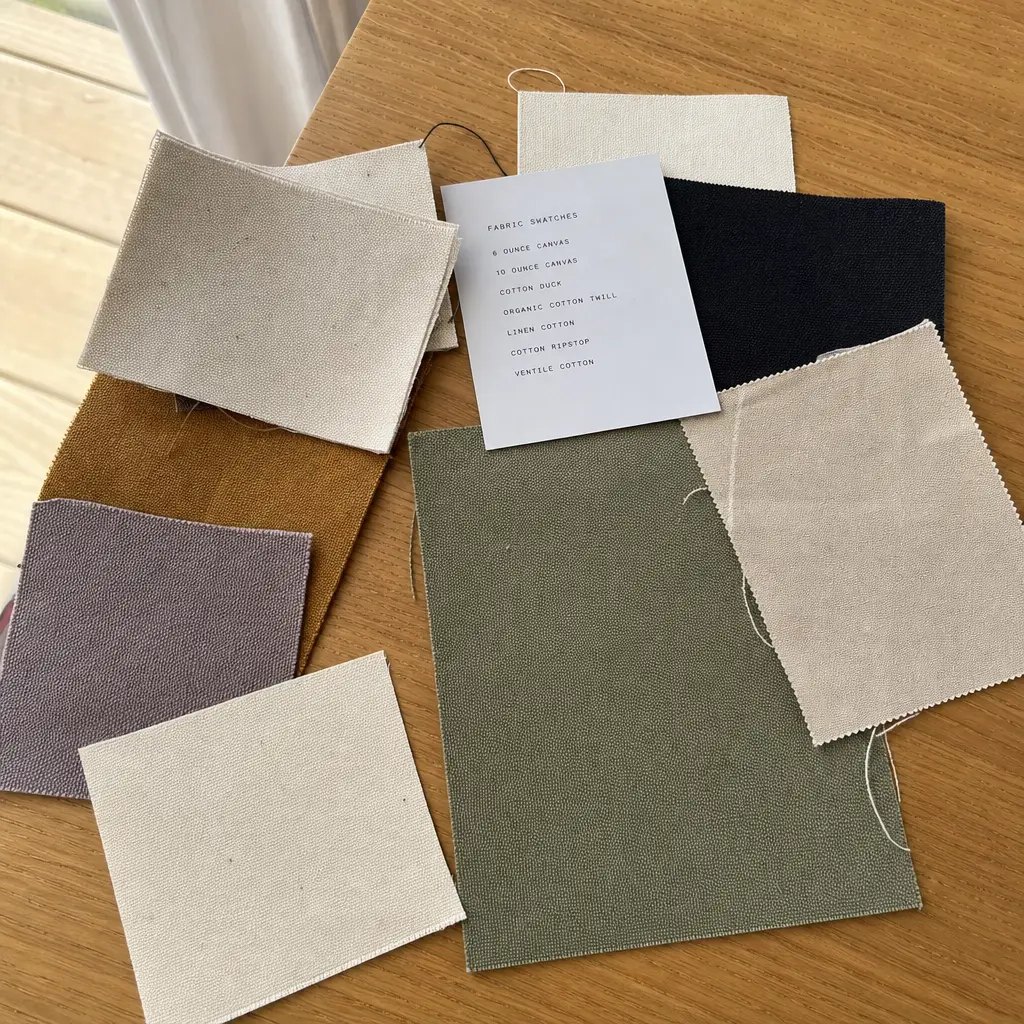
- Request a fabric swatch from the same quoted grade, not a generic showroom swatch.
- State whether GSM tolerance applies to base jute fabric, laminated fabric, or total composite material.
- Approve a physical shade range and keep it with the sealed control sample.
- Inspect incoming rolls for moisture, odor, oil marks, mold spots, holes, loose weave, broken yarn, edge damage, and lamination bubbles.
- Do not accept vague terms such as “premium jute” without measurable GSM, construction, and sample references.
Engineer Handles Like a Failure Point
Handles create many of the most visible failures in jute tote programs. The body fabric can be acceptable while the bag still disappoints because the handles pull out, twist, feel sharp, or sit unevenly. Two quotes may both say “cotton webbing handle,” yet one includes wider webbing, denser stitching, and a larger reinforcement box while the other uses a narrow attachment with loose thread.
Cotton webbing is common for university bookstore totes because it feels smoother than jute and can be coordinated with campus colors. Jute handles give a more natural look but may feel rougher and can fray if edge finishing is weak. Wider handles improve comfort and distribute load better, but they also affect cost, print layout, and the look of the front panel.
A practical handle specification should name the material, width, color, drop, placement, stitch pattern, thread, reinforcement size, and load-test method. The inspector should check handle symmetry, stitch density, skipped stitches, open seams, loose threads, twisted handles, and attachment margins. If the tote will carry books, do not rely on a visual review alone; perform the agreed load test and record the result.
- Specify handle material: cotton webbing, jute webbing, padded cotton, rope, or another approved construction.
- Define handle width, commonly 2.5-3.8 cm for bookstore totes depending on comfort, load, and appearance.
- Set handle drop, commonly 20-25 cm for hand carry and 25-30 cm for shoulder carry.
- Require box-stitch, cross-stitch, bartack, or another approved reinforcement pattern at each stress point.
- Reject skipped stitches, loose thread at handle bases, twisted handles, uneven drops, and narrow attachment margins.
- Sample handles across multiple cartons because defects may trace to one sewing operator or line segment.
Test University Artwork on Real Jute
University artwork often includes licensed marks, shield graphics, mascots, alumni messages, department names, and official colors. Jute makes those graphics harder to control because the surface is tan, textured, absorbent, and uneven. Thin lines, small text, gradients, and tight registration can lose clarity. This is why artwork feasibility should be checked before a delivery date is promised.
Screen printing is usually the best fit for bold one-color or two-color campus marks. It is efficient for larger runs and can look natural on jute, but opacity and edge definition must be tested. Heat transfer can help with multicolor art, gradients, or fine detail, yet it may feel less integrated with the fabric and must be reviewed for cracking, edge lifting, and adhesion. Embroidery can work for selected premium designs, but dense stitching may distort coarse jute panels.
Digital proofs are not enough. They show layout, not ink absorption, weave interference, or true color on tan fiber. Artwork approval should include vector files, Pantone direction, final print size, placement measured from sewn edges, and licensing notes. If the factory prints flat panels before sewing, the tolerance must allow for panel shift. If it prints finished bags, the factory must control pressure and distortion around seams and gussets.
- Use screen printing for bold bookstore names, shield marks, simple mascots, department logos, and one- or two-color designs.
- Use heat transfer only when fine detail, gradients, or multicolor artwork cannot be held well by screen printing.
- Avoid very small text and hairline strokes unless the supplier proves readability on the approved jute fabric.
- Define print placement tolerance, often plus or minus 0.5-1 cm depending on logo scale and construction.
- Check color against the approved sample or Pantone direction under consistent lighting.
- Test adhesion with dry rub, light wet rub, tape pull, scratching, and panel flexing before mass production.
Normalize MOQ and Landed Cost
MOQ for jute tote bags is rarely just one number. It may apply by total order, bag size, fabric color, handle color, print design, label version, packing style, or SKU. A supplier may support a lower MOQ for a standard natural jute tote with one-color printing, then require a higher minimum for dyed handles, a custom gusset, lining, multiple department logos, or individual retail packing.
Procurement teams should separate total units from units per design. An order for 3,000 pieces across six department marks is not the same as 3,000 pieces of one artwork. Each design can require its own screen setup, proofing, sorting, barcode label, carton mark, and inspection step. When many small campus groups need their own artwork, it is often cleaner to standardize the bag body and vary only the print or hangtag.
Quote comparison should focus on landed cost per sellable unit, not only FOB unit price. Ask for price breaks at realistic levels such as 500, 1,000, 3,000, and 5,000 pieces per design or SKU. Confirm whether sample fees, screens, artwork cleanup, testing, inspection, barcode labels, hangtags, polybags, desiccants, palletization, inland freight, duties, and warehouse handling are included or excluded.
- Clarify whether MOQ applies by total order, bag size, fabric color, handle color, print design, label version, packing route, or SKU.
- Ask for price breaks at realistic quantities and separate recurring unit costs from one-time setup charges.
- Confirm whether retail packing, barcode labels, hangtags, desiccants, reinforced cartons, and palletization are included.
- Compare landed cost after freight, duties, inspection, defect allowance, warehousing, and receiving labor.
- Do not approve a cheaper quote until the supplier confirms the same GSM, handles, print area, packing, carton count, and inspection standard.
Use Samples as the Contract Standard
A pre-production sample should be treated as the working contract for the order. It needs to use the final fabric, target GSM range, handle material, stitching, print method, label, and packing components. For university bookstore products, photo approval alone is risky. A photo cannot confirm hand feel, odor, stiffness, handle comfort, print adhesion, true shade, or finished dimensions.
Sample comments should be specific enough for production to follow. “Move logo slightly lower” is weak; “move logo 2 cm lower from the top sewn edge” is actionable. “Handle feels narrow” should become a required webbing width. “Print looks light” should become an opacity or ink adjustment, with confirmation of whether curing time or cost changes. Any approved-with-comments decision should be reflected in the PO or tech pack before cutting begins.
A sealed sample system prevents many disputes. Keep one signed sample with the buyer, one with the factory production team, and one with the inspection team if a third-party inspector is used. Label each sample with PO, style, date, revision, and SKU. Final inspection should compare production against this sample for fabric range, workmanship, print quality, label placement, packing, and odor.
- Approve a physical sample made with final fabric, handle, stitching, print, label, and packing method.
- Measure width, height, gusset, handle drop, handle placement, print size, and print location on the approved sample.
- Record all sample changes in writing and add them to the purchase order or production specification sheet.
- Run a basic load test, print rub test, and odor review before releasing bulk production.
- Seal and label control samples for the buyer, factory, and inspection team.
- Do not begin bulk production until artwork, licensing, packing, barcode, and SKU details are approved.
Control Fabric, Sewing, and Printing Inline
Inspection should not wait until cartons are packed. If unacceptable fabric enters cutting, the factory may create hundreds or thousands of bags with the same visible problem. Incoming inspection should check GSM records or cut samples, roll shade, moisture, odor, oil stains, mold spots, holes, broken yarn clusters, loose weave, roll-edge damage, and lamination quality where relevant.
Cutting and sewing deserve the same attention. Jute can fray, shift, and stretch more than tightly woven cotton. Inspectors should review panel dimensions, grain direction, seam allowance, gusset symmetry, matched panel shades, stitch density, thread tension, skipped stitches, open seams, bottom-corner strength, thread trimming, and handle alignment. A tote can look clean from the front while the inside seams are weak.
Printing should be checked early enough to stop a bad run. If panels are printed before sewing, the main risk is placement shift after assembly. If finished bags are printed after sewing, the risks are uneven pressure, distortion near seams, and inconsistent ink coverage. Inline print checks should compare color, opacity, registration, curing, edge quality, rub resistance, and placement against the approved sample.
- Incoming fabric checks: GSM, roll shade, moisture, odor, stains, holes, loose weave, broken yarn, and lamination bubbles.
- Cutting checks: panel dimensions, straight grain, matched shades, correct gusset pieces, fraying control, and clean cut edges.
- Sewing checks: seam allowance, stitch density, thread tension, skipped stitches, handle placement, bottom corners, and thread trimming.
- Printing checks: color direction, opacity, registration, curing, edge quality, rub resistance, and placement after sewing.
- Packing-line checks: correct SKU, artwork, hangtag, barcode, bundle count, carton quantity, and carton marks.
- Document inline issues with photos and corrective action so the same defect does not continue through the full run.
Set AQL and Defect Classes Up Front
Final inspection should include random carton sampling, measurement checks, workmanship review, functional tests, print checks, odor review, carton verification, and SKU confirmation. For a paid retail tote, visible stains, crooked logos, wrong barcodes, and poor front-panel appearance carry more risk than they would for a disposable event giveaway. The inspection plan should match how the tote will be sold and received.
AQL is only useful when defect classes are defined before inspection. Critical defects can include wrong licensed marks, severe mildew, unsafe contamination, broken handles, or unusable construction. Major defects may include wrong finished size beyond tolerance, open seams, obvious front-panel stains, severe crooked print, weak adhesion, missing label, incorrect SKU packing, or handle failure during the agreed test. Minor defects may include small slubs, shade variation within the approved range, or thread trimming issues that do not affect saleability or function.
The final inspection report should show sample size, carton selection method, defect counts by class, measurement results, functional test results, print rub results, carton condition, and photos. SKU accuracy matters as much as workmanship for bookstore operations. A well-made tote still creates receiving problems if department logos, barcode labels, carton marks, or quantities are mixed.
- Critical defects: wrong university mark, severe mildew, unsafe foreign object, broken handle, major contamination, or unusable construction.
- Major defects: open seam, wrong size beyond tolerance, obvious stain, severe crooked print, poor adhesion, wrong barcode, or failed load test.
- Minor defects: small slub, slight shade variation within approved range, minor fiber irregularity, or small thread trimming issue.
- Measurement checks: width, height, gusset, handle drop, handle placement, print size, and print position.
- Functional checks: handle pull, practical loading, seam stress, bottom-corner review, closure test if applicable, and print rub test.
- Packing checks: carton count, SKU mix, barcode accuracy, hangtag placement, carton marks, dry cartons, and export carton strength.
Pack for Transit and Bookstore Receiving
Packing affects more than freight cost. It influences shelf condition, receiving labor, odor risk, barcode accuracy, and campus packaging expectations. Bulk packing may work for event orders. Retail bookstore programs may need bundle packing, carton liners, hangtags, barcode labels, kraft bands, or individual polybags. Decide the packing route before quoting because it changes labor, carton dimensions, gross weight, inspection time, and cost.
Individual polybags are not always the best choice. They protect against dust and keep labels clean, but they add plastic and may conflict with campus packaging preferences. Bundle packing with a paper band, kraft belly band, or clean carton liner can be a practical compromise. If totes go straight to shelf, hangtag and barcode consistency matter most. If they move through a central warehouse first, carton marks and SKU separation may be the bigger issue.
Jute should be packed dry and protected from compression. Damp cartons can create odor during long transit, while over-compression can crease laminated panels, distort gussets, or mark printed surfaces. For humid routes or long export schedules, discuss desiccants, container condition, warehouse storage, and pre-shipment odor checks. Carton marks should match the receiving process: PO number, SKU, style or artwork reference, quantity, carton number, gross weight, net weight, and destination reference where needed.
- Use bundle packing for lower plastic use, stockroom efficiency, and easy quantity verification.
- Use individual packing only when dust control, barcode protection, premium presentation, direct shelf placement, or SKU separation requires it.
- Avoid over-compression that damages print surfaces, laminated panels, gussets, or handle shape.
- Confirm carton quantity early because it affects freight estimates, inspection sampling, receiving labor, and storage planning.
- Require dry export cartons, clear carton marks, correct SKU separation, desiccant where specified, and no damp carton odor.
- Check palletization rules if the university warehouse has limits for carton weight, pallet height, or receiving labels.
Specification comparison for buyers
| Procurement decision | Recommended specification | Best-fit bookstore use | Inspection risk to control |
|---|---|---|---|
| Standard retail checkout tote | 270-330 GSM natural jute, finished size around 35 x 40 cm or 38 x 35 x 12-15 cm, cotton webbing handles 2.5-3.8 cm wide, reinforced stitch box, one- or two-color screen print | Campus bookstore shelf stock, checkout add-on, apparel and notebook purchases, semester replenishment | Verify finished dimensions within agreed tolerance, handle strength, front-panel cleanliness, print opacity, odor, and carton dryness |
| Heavy gift or orientation bundle tote | 320-380 GSM jute or reinforced laminated jute, deeper gusset, wider handles, stronger bottom seam, practical load test specified in PO | Welcome kits, alumni gifts, bookstore bundles with mugs, hoodies, textbooks, or boxed products | Reject weak bottom corners, narrow seam allowance, handle pull-out, excessive creasing, and cartons packed above safe weight |
| Low-cost event giveaway tote | 220-260 GSM jute, simple construction, limited print area, bulk or bundle packing, lower cosmetic requirement if not sold at retail | Department events, tabling, one-day campaigns, light handouts | Do not allow giveaway-grade fabric to be substituted into paid retail SKUs; define acceptable load and defect grading separately |
| Stock blank tote with domestic decoration | Approved blank jute tote with known GSM range, handle construction, shade range, carton condition, and test print on actual jute surface | Rush events, low-MOQ department orders, late artwork approval, smaller bookstore campaigns | Blank stock may vary by batch; inspect the blanks before printing and confirm local ink adhesion on rough jute |
| Custom overseas production with factory printing | Sealed pre-production sample using final fabric, final handles, final artwork, final label, and final packing; production controlled by PO tolerances and AQL inspection | Private-label bookstore programs, licensed university marks, repeat reorder SKUs, retail presentation needs | Late trademark approval, panel shift, wrong Pantone direction, weak curing, mixed SKUs, and moisture during export transit |
| Laminated jute construction | Jute laminated with PP or similar backing where structure and print surface are priorities; lamination quality defined and inspected | Structured shopping totes, upright shelf presentation, sharper print edge, higher perceived stiffness | Lamination can mask lighter base fabric; check bubbling, cracking, peeling, odor, recyclability messaging, and crease marks |
| Unlaminated natural jute construction | Jute without plastic backing, with allowance for natural slubs and shade variation, and tighter controls on fraying and print coverage | Sustainability-focused bookstore assortment, natural hand feel, reusable shopping bags | Print edges may be softer; inspect shedding, loose weave, seam fraying, stains, moisture, and logo readability |
| Trading company or distributor sourcing | Quote must identify factory capability, sample source, GSM, packing, AQL plan, and production inspection access | Mixed orders shipping with apparel, stationery, drinkware, or bookstore gift items | Extra margin can hide substitutions; require the same sealed sample, defect classes, and carton checks as direct factory sourcing |
| Retail packing route | Bundle packing with carton liner for most stockroom use; individual polybag, kraft band, hangtag, or barcode label only when merchandising requires it | Backroom receiving, direct shelf replenishment, premium gift presentation, SKU-controlled retail inventory | Balance plastic reduction with dust control; verify barcode accuracy, bundle count, carton strength, desiccant use, and moisture protection |
Buyer checklist before sampling
- Define the selling use first: paid retail tote, checkout add-on, orientation kit, alumni gift, department giveaway, or bundled merchandise bag.
- Specify finished dimensions after sewing: width, height, gusset depth, handle drop, handle width, handle placement, seam allowance, and acceptable measurement tolerance.
- State fabric construction clearly: target GSM, allowed GSM tolerance, laminated or unlaminated, lining requirement, color shade range, and whether GSM refers to base jute or composite fabric.
- Set a practical carrying requirement such as books and apparel load simulation, plus the exact test method, hold time, and pass/fail rule to be used before shipment.
- Send vector artwork with Pantone references, licensed trademark notes, final print size, placement measured from fixed sewn edges, and minimum text or line-size warnings if applicable.
- Require a pre-production sample made with final fabric, final handle material, final stitching, final print method, final label, and intended retail or bulk packing.
- Record tolerances in the purchase order: common starting points are plus or minus 1 cm for main dimensions, plus or minus 0.5-1 cm for print placement, and an agreed shade range for natural jute.
- Include odor, moisture, oil stains, mildew, holes, broken yarn clusters, lamination bubbles, fraying, panel mismatch, loose fiber, and carton dampness in the QC checklist.
- Approve print quality on actual production-grade jute using dry rub, light wet rub, tape pull, flexing, edge-lift review, and color comparison under consistent lighting.
- Confirm SKU-level packing details before production: carton quantity, inner bundle count, barcode labels, hangtags, desiccant, carton marks, gross weight, pallet rules, and receiving address references.
Factory quote questions to send
- What exact jute GSM is quoted, what is the GSM tolerance, and does the figure refer to base jute fabric only or to laminated composite material?
- Can you provide a swatch cut from the same production-grade fabric and a previous finished jute tote sample with similar GSM, gusset, handle, and print method?
- Is the quoted bag laminated, unlaminated, lined, dyed, or natural, and how does that choice affect stiffness, print sharpness, moisture behavior, odor risk, and recyclability messaging?
- What are the finished width, height, gusset depth, handle drop, handle width, handle placement, and measurement tolerances after sewing, not before sewing?
- What handle material, color, webbing width, stitch pattern, thread type, stitch density target, reinforcement size, and load-test method are included in the price?
- Which print method is quoted for this artwork, how many colors are included, what is the maximum print area, and what Pantone or visual matching limit can you realistically support on natural jute?
- Will the artwork be printed on flat panels before sewing or on completed bags after sewing, and how do you control placement shift, distortion, opacity, and registration?
- What MOQ applies by total order, bag size, fabric color, handle color, print design, label version, and SKU, and where do the meaningful price breaks begin?
- Which one-time charges are excluded from the unit price, including samples, screens, artwork cleanup, testing, inspection, hangtag application, barcode labels, palletization, and inland freight?
- How many calendar days are required for swatch, blank sample, printed sample, buyer approval, bulk production, inline QC, final inspection, export packing, and handover after artwork approval?
Quality-control points to confirm
- Finished size should be measured after sewing with the bag laid flat and gussets set naturally; for standard totes, plus or minus 1 cm is a common PO tolerance unless the design requires tighter control.
- Fabric GSM should be verified from incoming fabric records or cut samples using a defined method, not judged by hand feel after the order is packed.
- Natural jute shade variation should be accepted only within an approved range; obvious front-back-gusset mismatch on the same bag should be classified as a major cosmetic defect for retail goods.
- Incoming fabric inspection should check roll shade, odor, moisture, oil stains, mold spots, holes, broken yarn clusters, loose weave, roll-edge damage, and lamination bubbles before cutting.
- Moisture should be checked before packing where possible; jute that feels cool, damp, or musty should not be sealed into export cartons for long transit.
- Handle attachment should show consistent stitch density, no skipped stitches, no open seams, no loose thread at stress points, and reinforcement matching the approved sample.
- Handle placement should be symmetrical; left and right attachment points should align within the written tolerance and handle drops should not vary noticeably between sides.
- A practical load test should use the agreed weight and method, such as loading the tote, lifting, holding for a defined period, and checking for seam opening, fabric tearing, or handle pull-out.
- Print placement should be measured from sewn bag edges, not only from a flat-panel production guide; panel shift during sewing must be included in the tolerance.
- Print color should be checked against the approved sample or Pantone direction under consistent lighting, with realistic allowance for the rough, tan surface of natural jute.