Define the Bookstore Use Case First
Wholesale jute tote bags for university bookstores are bought for different jobs, and those jobs should drive the specification. A checkout tote can be simple and cost-controlled. A sellable bookstore tote needs better shelf presentation, consistent logo quality, barcode control, and comfortable handles. An orientation tote may need department-level carton marks and delivery by event date. A textbook tote needs enough gusset and a real handle-strength requirement.
Start the RFQ with the commercial purpose before discussing fabric or decoration. If buyers only ask for a jute tote with a university logo, suppliers may quote different GSM, shorter handles, lighter stitching, simpler packing, or a decoration method that does not suit the artwork. That makes the lowest price unreliable because the quotes are not for the same product.
A useful internal decision is whether the tote is a margin item, a service item, or an event cost. Margin items justify tighter appearance control and retail-ready packing. Service items need predictable cost and availability. Event items need deadline protection and accurate split packing. This keeps the program practical without overbuilding every bag.
- Bookstore retail: prioritize display shape, barcode accuracy, logo clarity, handle comfort, and repeat-order consistency.
- Checkout use: prioritize unit cost, quick replenishment, bulk packing, and acceptable strength for mixed purchases.
- Orientation kits: prioritize capacity, carton marks by department or event, and delivery milestones.
- Textbook use: specify load test, gusset, handle reinforcement, and finished handle loop length.
- Alumni or gift retail: consider cleaner panels, patch branding, hangtags, and tighter appearance checks.
Lock the Finished Specification
Jute tote pricing changes with finished size, gusset, fabric weight, lamination, handle material, reinforcement, decoration, labels, and packing. The specification should be complete enough that each supplier prices the same bag. Finished measurements matter more than cut-panel descriptions because sewing, folding, and gusset construction change the usable size.
A practical bookstore tote often falls around 14-16 inches wide by 15-17 inches high, with a 4-6 inch gusset. Many reusable retail programs start around 270-320 GSM jute, though the correct weight depends on load, display needs, target price, and freight cost. Heavier fabric can improve structure but may increase carton cube and freight spend.
Handles deserve exact language. Cotton webbing is common because it feels smoother than jute webbing and can be matched to school colors. Specify handle width, finished loop length, stitch pattern, reinforcement, and target load. Most customer failures are noticed at the handle seam, not in the product description.
- Finished size: state width, height, gusset, measuring method, and tolerance.
- Fabric: specify jute GSM, natural or dyed shade, laminated or unlaminated construction, and acceptable variation.
- Handles: state material, width, color, loop length, placement tolerance, and reinforcement method.
- Construction: define side seam, bottom seam, gusset fold, stitch density expectation, and loose-thread standard.
- Branding: include artwork file, print size, placement, color target, decoration method, and approval sample.
- Packing: define bulk pack, bundle, individual bag, hangtag, barcode, inner carton, carton marks, and destination split.
Choose Lamination With Cost in Mind
Laminated and unlaminated jute totes should not be priced as interchangeable products. Lamination can help a bag stand upright, resist light moisture, and look more structured on a retail shelf. It can also change the hand feel, create fold marks, add material cost, increase carton volume, and affect the environmental language used on hangtags or product pages.
Unlaminated jute gives a softer, more natural hand and may fold flatter for storage. It is more sensitive to moisture and odor during transit, so carton protection and pre-shipment inspection become more important. If the bag will carry books in damp weather or sit upright on a display, lamination may be worth the cost. If the program is a simple reusable giveaway, unlaminated jute may be sufficient.
Procurement teams should keep material claims factual. A finished tote can include jute fabric, cotton handles, polyester thread, screen-print ink, PP or PE lamination, heat transfer film, woven labels, hangtags, and packaging. Claims such as natural, biodegradable, compostable, recyclable, or plastic-free should only be used when they match the exact bill of materials and applicable rules.
- Use laminated jute when upright display, shape retention, and light moisture resistance matter.
- Use unlaminated jute when natural hand feel, flatter folding, and simpler material positioning matter.
- Ask whether lamination is PP, PE, internal, external, matte, glossy, or another coating.
- Request a packed sample because lamination can hold creases after tight carton packing.
- Retain approved material swatches for shade, GSM, lamination hand feel, handle tape, and thread.
Plan MOQ by SKU Variation
Bulk pricing improves when the order is easy to produce. A 5,000-piece order in one size, one jute shade, one handle color, one print, and one packing method is very different from 5,000 pieces split across six departments, three logos, two handle colors, separate barcodes, and multiple destinations. Each variation can create material separation, screen changes, label changes, packing instructions, and inspection risk.
The best pricing plan usually starts with a base model. Keep body size, GSM, gusset, handle width, handle color, reinforcement, and packing consistent across as many campus programs as possible. If departments need different logos, keep the same print size, color count, and placement to reduce setup complexity.
MOQ may apply to more than the total order quantity. It can apply by body size, fabric color, dyed lot, handle webbing color, print artwork, transfer, patch, label, hangtag, barcode, individual pack, carton mark, or destination split. A SKU table prevents surprises because it shows which variations are real cost drivers.
- List each SKU by campus, department, logo, quantity, destination, and required in-store date.
- Ask which SKUs can be combined for production and which trigger separate MOQ.
- Separate body-color MOQ from handle-color MOQ because webbing is purchased as separate trim.
- Treat custom dyed jute and school-color handles as higher-risk shade and MOQ items.
- Request first-order and repeat-order pricing separately when setup charges are significant.
Build a Practical Bulk Pricing Model
A useful bulk pricing plan shows more than the lowest FOB unit price. It separates the base bag, decoration, setup, labels, packing, inspection, freight, duty, delivery, and defect allowance. This structure helps university bookstore buyers compare commercial tradeoffs instead of guessing whether a cheaper quote is actually cheaper after shipping and receiving.
Use realistic quantity breaks, such as 1,000, 3,000, 5,000, 10,000, and 20,000 pieces. Ask each supplier to quote the same specification at each break and show one-time fees separately. For example, a first order may carry sample, screen, strike-off, or label setup charges that do not repeat at the same level on reorders.
A simple landed-cost formula is: landed cost per sellable bag = (factory goods + setup amortization + retail packing + inspection + international freight + duty and import fees + domestic delivery + rework or defect allowance) divided by sellable quantity. Sellable quantity should account for expected shortages, rejected goods, or unsellable defects if the buyer carries that risk.
The table below is a model structure, not a price promise. Actual costs depend on size, GSM, decoration, Incoterm, destination, freight market, duties, and packing cube. Its purpose is to show how a buyer can compare quantity breaks with the same assumptions.
- 1,000 pcs model: base bag is usually least efficient; setup fees and sample freight have the highest per-piece impact.
- 3,000 pcs model: useful for pilot bookstore programs; decoration setup becomes easier to absorb but SKU splits can still hurt price.
- 5,000 pcs model: often a practical campus-system order size when several locations share one body spec.
- 10,000 pcs model: better material buying and production efficiency, but carton storage and cash flow must be planned.
- 20,000 pcs model: strongest volume leverage when specs are stable, repeat demand is proven, and destinations are organized.
- Cost components to request: base bag, decoration running charge, setup fees, label or barcode, packing, inspection, freight, duty, delivery, and defect remedy.
Use Incoterms and Landed Cost Correctly
Incoterms decide who pays for and manages each part of the shipment. They do not replace product specifications, inspection rules, or delivery deadlines. A low EXW or FOB price can look attractive, but the bookstore or importer still must add inland freight, export handling, ocean or air freight, insurance, customs, duty, taxes, destination handling, warehousing, and delivery.
FOB is useful when the buyer or importer controls freight. CIF can simplify international freight comparison but still leaves destination costs and customs responsibilities to confirm. DAP or DDP can help bookstore teams budget a delivered cost, but the quote must state exclusions such as liftgate service, inside delivery, campus appointment fees, storage, demurrage, taxes, or split deliveries.
For procurement approval, compare offers on the same commercial basis. If one supplier quotes FOB and another quotes delivered-to-warehouse, convert both to landed cost per sellable bag. Include carton dimensions and gross weight because jute totes are bulky; freight cube can erase a small factory-price saving.
- EXW: buyer manages pickup from factory and most export work; use only with strong logistics support.
- FOB: supplier delivers goods to the named port or handoff point; buyer controls main freight and destination costs.
- CIF: supplier includes cost, insurance, and freight to the named port; buyer still handles import clearance and local delivery.
- DAP: supplier delivers to a named destination, but import duty and taxes may remain with buyer unless agreed otherwise.
- DDP: supplier includes delivery with duty paid; confirm exclusions, delivery address limits, and customs responsibility.
- Quote rule: require Incoterm, named place, shipment mode, carton data, delivery exclusions, and validity period.
Match Decoration to Campus Artwork
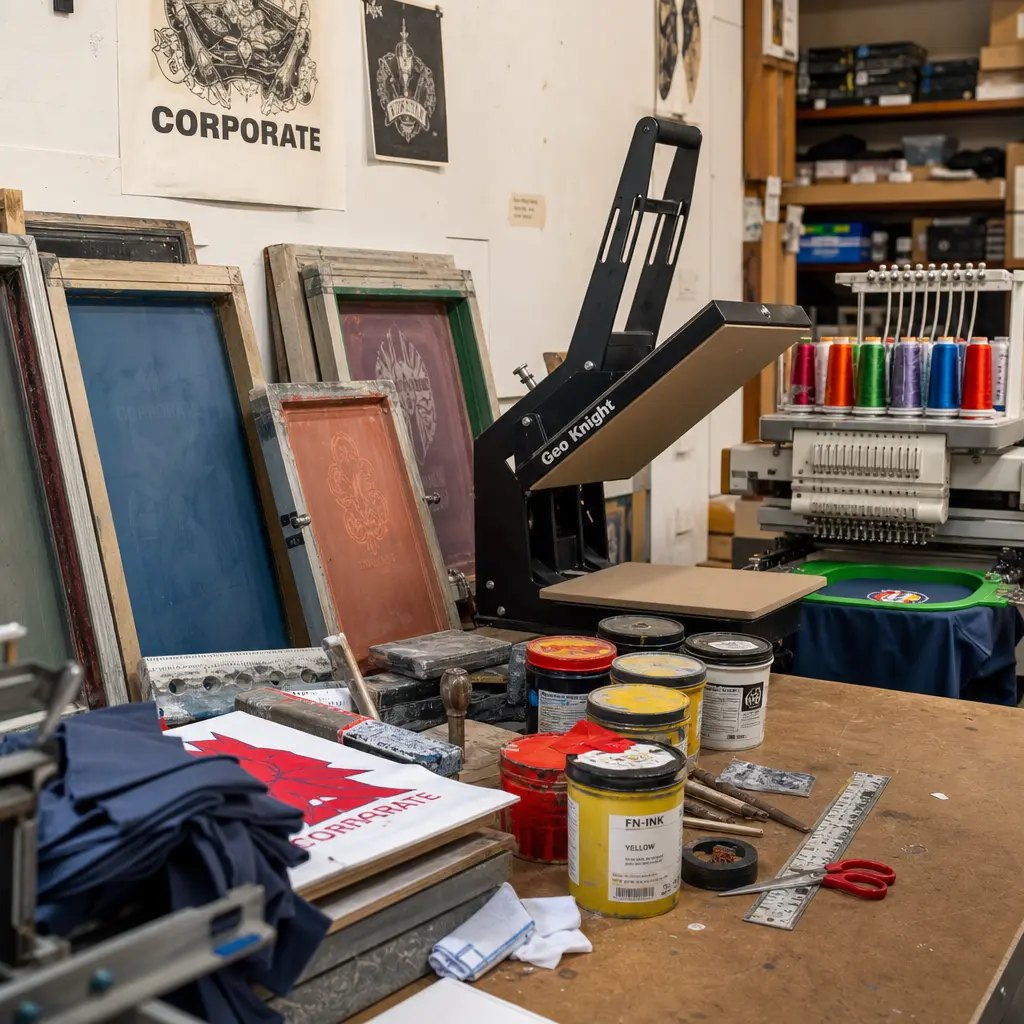
Jute is coarse and textured, so decoration should be selected from the artwork backward. Screen printing is usually cost-effective for bold one- to three-color marks, large bookstore names, simple mascots, and open lettering. It is less reliable for tiny type, thin outlines, gradients, and detailed crests because ink can spread, skip, or lose edge sharpness on the fiber surface.
For licensed marks or premium retail, heat transfer, canvas patch, woven patch, or sewn label may produce cleaner detail. These methods add cost and handling, but they can reduce rejected artwork and improve perceived value. The right question is not which method is cheapest; it is which method meets the brand standard at the target landed cost.
A digital mockup is only a layout tool. The approval point should be a physical strike-off on the selected jute fabric. Record print size, placement from top edge and side seam, color target, file name, decoration method, registration tolerance, and approved date. If a buyer approves artwork without a physical strike-off, the risk of poor contrast or blurred detail rises.
- Screen print: best for bold logos, solid colors, large type, and simple campus graphics.
- Heat transfer: useful for small detail, gradients, or tighter color blocks; test adhesion and cracking.
- Canvas patch: useful for premium alumni or bookstore retail programs where logo clarity adds value.
- Woven label: useful for subtle side branding, not usually for a main front-panel logo.
- Artwork controls: minimum line thickness, minimum text height, color target, print area, placement tolerance, and strike-off approval.
Control Samples and Production Milestones
Sampling should be staged so buyers approve the right evidence at the right time. A construction sample can check size and handle comfort, but it should not become the bulk standard unless it uses the final jute, lamination, handle tape, thread, decoration, label, hangtag, barcode, folding, and packing. Label each sample version clearly to avoid approving the wrong reference.
A strong sequence is swatches first, artwork review second, strike-off third, pre-production sample fourth, and packed sample when folding or retail presentation matters. Keep one approved sample with the buyer and one with the factory. Record finished measurements, handle loop, handle width, reinforcement, logo placement, label position, barcode location, hangtag method, and carton fold.
Lead-time milestones should work backward from the required in-store date. Include artwork cleanup, swatch approval, strike-off approval, pre-production sample approval, material booking, cutting, printing, sewing, internal QC, final inspection, packing, shipment booking, export handoff, customs, domestic delivery, receiving, ticketing, and shelf placement. Orientation, back-to-school, homecoming, and graduation dates are fixed, so late changes should be treated as cost and schedule events.
- Approve swatches for jute shade, GSM, lamination, handle tape, thread, and odor before bulk cutting.
- Approve strike-off for logo clarity, ink coverage, color, placement, rub resistance, and registration.
- Approve pre-production sample with final materials, trims, decoration, label, barcode, hangtag, and folding.
- Set change cutoffs for artwork, handle color, barcode, packing, destination split, and delivery date.
- Schedule final inspection before shipment release and leave time for sorting, rework, or replacement.
Set QC Rules Before Shipment
Natural jute has slubs, fiber variation, and shade movement. Those traits should be separated from workmanship defects. A quality agreement should define what is acceptable natural variation and what is a defect: holes, stains, mildew odor, oil marks, broken yarn clusters, wrong logo, weak handles, wet cartons, missing barcodes, or mixed SKU packing.
For university bookstore programs, the main QC risks are handle strength, logo quality, and packing accuracy. A broken handle becomes a customer complaint. A poor logo can create brand or licensing issues. A wrong barcode or mixed carton creates receiving labor during peak season. Inspection should cover construction, decoration, measurement, packing, and carton condition.
Use defect classes and a sampling plan reference before production begins. Many consumer-goods buyers use AQL-style inspection with critical, major, and minor defects. The exact level should be agreed with the supplier or inspection provider based on order size and risk. The purchase order should also state the remedy: sort, rework, replace, credit, or reject if defects exceed the agreed limit.
- Critical defects: mold, insect contamination, sharp objects, unsafe needle fragments, severe odor, or goods unfit for sale.
- Major defects: broken seams, weak handles, missing or wrong logo, severe print shift, holes, stains, wet cartons, missing barcodes, or mixed SKUs.
- Minor defects: small thread ends, slight slubs, minor shade variation within approved range, or small cosmetic issues that do not affect saleability.
- Measurements: finished body, gusset, handle loop, handle placement, print placement, label location, and carton quantity.
- Load test: define weight, hold time, lifting method, sample size, and pass criteria on finished bags.
- Inspection report: require photos, defect counts, SKU checks, carton counts, measurement results, and approved sample reference.
Plan Packing and Receiving
Jute totes are bulkier than many cotton or nonwoven bags, so packing directly affects landed cost. A laminated wide-gusset tote may improve shelf presentation but reduce pieces per carton and increase freight cube. An unlaminated tote may fold flatter but needs protection from moisture, odor, and crushing. Carton dimensions are not afterthoughts; they are part of the price comparison.
Packing should match bookstore operations. Bulk pack reduces factory cost and improves density. Bundle pack helps counting. Individual polybags or tissue separation protect premium retail items but add material, labor, inspection points, and waste. Hangtags and barcode stickers improve retail readiness but must be checked by SKU, campus, and department.
Carton marks should be specific enough for receiving staff to route goods without opening every box. Include purchase order, SKU, logo version, body color, handle color, quantity, campus, department, destination, and carton number. For multi-location programs, align carton marks with the packing list and purchase order before production ends.
- Request carton data before award: pieces per carton, dimensions, gross weight, net weight, carton material, and pallet pattern if used.
- Keep carton weights practical for bookstore backrooms, campus receiving docks, and manual handling.
- Define packing: bulk, bundle, individual bag, hangtag, barcode, inner carton, retail-ready carton, or split pack.
- Require dry export cartons and moisture protection when goods move through humid routes or long storage.
- Check receiving documents against PO, packing list, carton marks, barcode, SKU, and destination split.
Specification comparison for buyers
| Commercial choice | Typical cost effect | When it saves money | Risk to price before award |
|---|---|---|---|
| One standard bag body across all campuses | Lower cutting, sewing, carton, and inspection complexity; usually improves tier pricing. | Best when departments can share one size, gusset, GSM, handle width, and packing method while changing only the logo. | Confirm whether each logo still triggers separate screen, transfer, patch, label, barcode, or packing charges. |
| Multiple sizes or gussets | Higher unit cost at lower SKU quantities because each size may need separate cutting, folding, packing, and inspection. | Useful only when one size cannot serve both retail sales and event kits. | Ask for MOQ and price by size, not only the blended total order quantity. |
| Natural jute with standard cotton handles | Often the most predictable cost structure for bookstore retail because materials are common and comfortable. | Fits checkout bags, textbook totes, campus gift bags, and orientation kits that need a reusable retail feel. | Specify handle width, loop length, color, reinforcement, and load test so the quote is not based on a weak handle. |
| Dyed jute or custom handle colors | Adds material MOQ, shade approval, trim separation, and possible reorder color variation. | Worth considering for premium school-color programs or licensed retail collections. | Ask for shade tolerance, lab dip or swatch approval, reorder matching limits, and separate MOQ by fabric or webbing color. |
| Direct screen print | Usually lowest decoration cost for bold one- to three-color artwork. | Best for large bookstore names, simple mascots, wordmarks, and open lettering. | Price screen charges, color count, strike-off, registration tolerance, and minimum line thickness on jute. |
| Heat transfer or sewn patch | Higher decoration cost but better for small text, crests, gradients, or strict brand detail. | Useful for alumni retail, licensed logos, or premium gift programs where clarity matters more than lowest unit price. | Test adhesion, edge lift, cracking, fold marks, rubbing, and compatibility with laminated or unlaminated jute. |
| Bulk pack | Lowest packing labor and material cost; usually better carton density. | Works for backroom replenishment, checkout bags, and simple event distribution. | Receiving may require extra counting, ticketing, sorting, or barcode application after delivery. |
| Retail-ready pack with hangtag or barcode | Raises packing and inspection cost but reduces bookstore handling time. | Best for sellable merchandise, multi-location programs, or SKU-controlled campus retail. | Price hangtags, barcode stickers, individual bags, inner cartons, carton marks, and barcode accuracy inspection. |
| FOB factory or port pricing | Makes factory price comparison clear but leaves freight, duty, customs, and delivery to the buyer. | Works for experienced importers or university systems with freight contracts. | Do not compare FOB alone against delivered quotes; calculate landed cost per sellable bag. |
Buyer checklist before sampling
- Define the program type: bookstore retail item, checkout bag, orientation kit, alumni gift, department event bag, or gift-with-purchase packaging.
- Write the finished specification: width, height, gusset, jute GSM, lamination, handle material, handle width, finished loop length, reinforcement, thread color, logo method, label, packing, and target load.
- Separate total quantity from SKU-level quantity by size, fabric color, handle color, logo, barcode, packing method, campus, department, and destination.
- Ask for price breaks at realistic quantities such as 1,000, 3,000, 5,000, 10,000, and 20,000 pieces, with setup charges shown separately.
- Compare landed cost per sellable bag, not only FOB unit price. Include decoration, packing, inspection, freight, duty, domestic delivery, and expected defect allowance.
- Confirm Incoterms in writing, such as EXW, FOB, CIF, DAP, or DDP, and list which party pays freight, insurance, customs clearance, duty, taxes, and final delivery.
- Approve material swatches before sampling: jute shade range, GSM, lamination hand feel, handle tape, thread, and any dyed or custom color components.
- Approve a physical strike-off on the selected jute fabric before bulk decoration, especially for licensed marks, small lettering, mascots, or multi-color graphics.
- Release bulk production only after a pre-production sample shows the intended materials, print, label, barcode, hangtag, folding, and packing method.
- Set inspection rules before shipment: defect classes, measurement tolerances, load test method, AQL or sampling plan reference, photo requirements, and remedy process.
Factory quote questions to send
- Which Incoterm is quoted, and what costs are excluded from the price: inland freight, export fees, ocean or air freight, insurance, duty, taxes, customs brokerage, destination delivery, or split shipments?
- What is the base bag price at 1,000, 3,000, 5,000, 10,000, and 20,000 pieces for the same size, GSM, handle, reinforcement, and packing method?
- Which costs are one-time and which repeat every order: sample fee, screen fee, transfer setup, patch setup, label setup, artwork cleanup, barcode setup, carton mark setup, and courier freight?
- What is the MOQ per body size, fabric color, handle color, logo artwork, print color count, transfer design, patch, woven label, hangtag, barcode, packing method, and destination split?
- What finished size, gusset depth, jute GSM, lamination type, handle material, handle width, handle loop length, thread, and reinforcement are included in the quoted price?
- What tolerances apply to body dimensions, gusset, handle loop, handle placement, logo placement, print registration, and carton quantity?
- Can you provide jute swatches and handle tape before sampling, and will the approved swatch range be retained as the bulk inspection reference?
- Which decoration method do you recommend for our artwork, and what minimum text height, line thickness, print area, and registration tolerance should we follow?
- Can you make a physical print strike-off on the approved jute fabric before bulk screens, transfers, or patches are released?
- What load test is used for finished bags: test weight, hold time, lifting cycles if any, sample quantity, and pass or fail criteria?
Quality-control points to confirm
- Finished body dimensions should normally be checked against the approved sample and written tolerance, often plus or minus 1 cm for width and height unless a tighter fixture or insert requirement applies.
- Gusset width should be measured after sewing and folding; uneven, twisted, or collapsed gussets reduce usable capacity for books, apparel, bottles, and boxed gifts.
- Handle loop length should be measured on the finished bag from attachment point to attachment point, with hand-carry and shoulder-carry loops controlled separately.
- Handle attachment should match the approved construction, such as box stitch, cross stitch, bar tack, or reinforcement patch, with no skipped stitches, loose thread, broken stitches, or weak stress points.
- A finished-bag load test should state weight, hold time, lifting method, sample size, and pass criteria; generic claims such as reinforced handles are not enough.
- Natural jute shade should be judged against an approved swatch range, not a digital image. Water marks, mildew, oil marks, holes, and severe panel mismatch should be treated as defects.
- Logo placement should be measured from fixed reference points on the finished bag, commonly top edge and side seam, with tolerance stated on the artwork sheet.
- Screen print should be checked for ink coverage, readable edges, registration, pinholes, smears, color consistency, and dry-rub resistance using a clean white cloth.
- Heat transfers and patches should be inspected for edge lifting, wrinkling, cracking, bubbling, crooked placement, and damage after folding into the intended carton pack.
- Carton inspection should verify SKU, quantity, barcode, logo version, department or campus mark, carton condition, moisture, odor, gross weight, and match to the packing list.