Start With the Startup Use Case, Not the Tote Size
Wholesale jute tote bags for tech startups are often bought under deadline pressure: a SaaS conference, investor launch, recruiting roadshow, onboarding batch, or partner kit has a fixed date and the bag seems like a simple line item. The durability risk starts when the RFQ only says natural jute tote with logo. A bag that works for stickers and brochures may not work for a stainless bottle, notebook, charger pouch, folded hoodie, or boxed device accessory.
Before comparing unit prices, define the job the tote must do. A recruiting giveaway may be carried for one afternoon. A new-hire kit may need to arrive clean, hold several dense items, and still look presentable in an unboxing photo. A customer success kit may move through a 3PL warehouse and then be shipped again. These scenarios need different fabric, handle, seam, packing, and QC decisions.
- Brochure-only event bag: usually under 2 kg, lower durability requirement, print clarity still important.
- SaaS welcome kit: often 3-5 kg with bottle, notebook, shirt, charger pouch, stickers, and inserts.
- Recruiting swag: needs comfortable handles and clean logo presentation because candidates carry it in public.
- Investor or launch deadline: needs stronger sample approval and inspection timing because replacement time is limited.
- Retail or partner bundle: needs cleaner packing, carton labeling, and more consistent finished appearance.
Choose a Spec Tier Before Requesting Quotes
A common procurement mistake is asking five suppliers for the same size bag and assuming the prices are comparable. In jute bags, the visible size can be identical while the real construction is very different. GSM, weave density, lamination, handle tape, stitch reinforcement, print method, trimming, carton strength, and packing quantity all change cost and durability.
Use specification tiers to control the conversation. An event-light tier can be valid when the bag carries only paper and light swag. A standard startup kit tier is better for onboarding and conference kits with moderate weight. A premium reuse tier is justified when the tote is part of the brand experience and expected to last beyond one event. The buyer does not need the most expensive bag every time; the buyer needs the tier that matches the load and distribution path.
- Event-light: prioritize cost and acceptable logo appearance for light contents.
- Standard kit: balance 13-15 oz jute, reinforced handles, and practical packing for 3-5 kg use.
- Premium reuse: upgrade weave consistency, handle comfort, seam strength, and trimming quality.
- Moisture-protection: add lamination control, carton liner, and packed-storage review.
- Print-focused: select a cleaner jute face and simplify artwork for sharper logo results.
Fabric Weight, Weave, and Surface Quality
Jute tote durability begins with the fabric, but fabric weight alone is not enough. A practical branded tote range is often around 13-15 oz, roughly 370-425 GSM, for startup kits and event bags that carry more than paper. Lighter material can be acceptable for low-cost giveaways, while heavier material can increase carton volume and freight without solving weak handle stitching or poor seam construction.
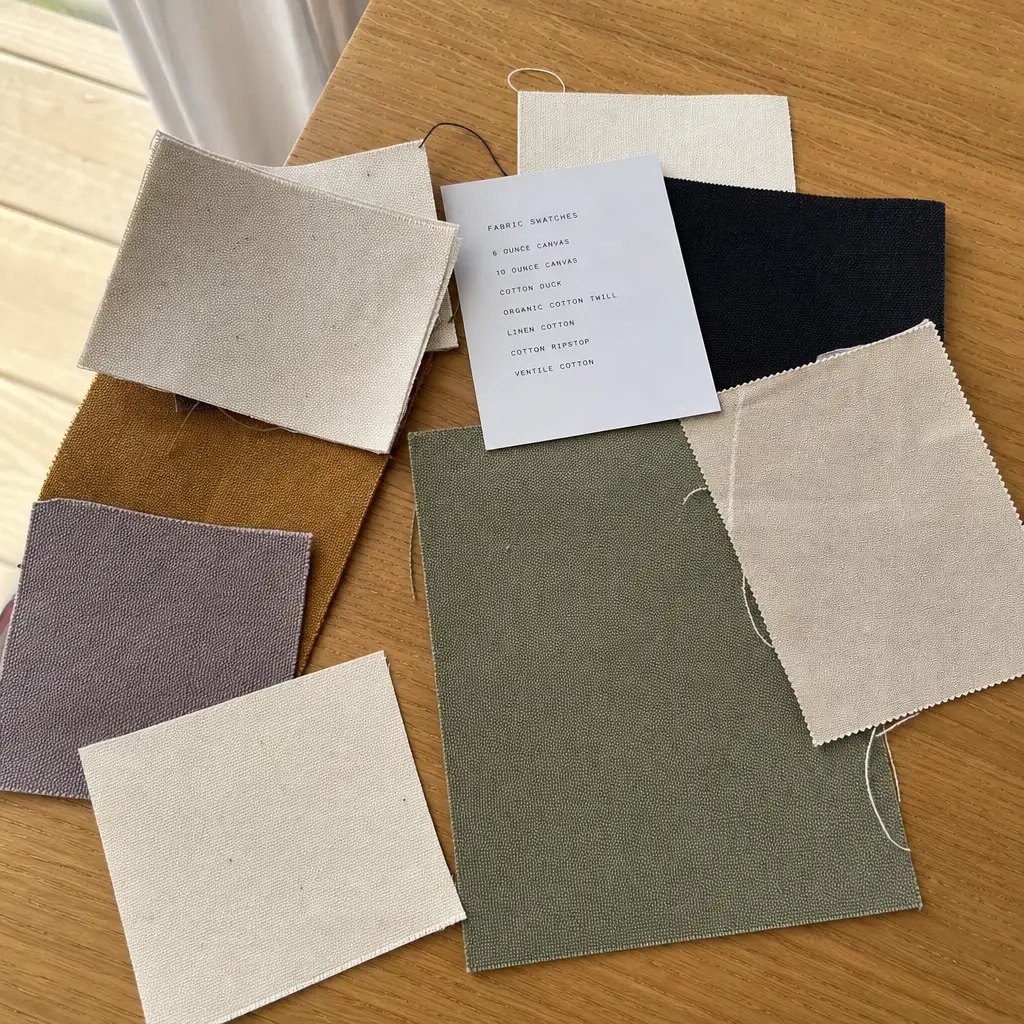
Weave quality matters because jute is a natural, coarse fiber. Open weave can reduce seam holding strength and make logo edges look broken. Excessive hairiness can create print rub problems and a rougher hand feel. Ask for a current swatch from the fabric planned for bulk production, then compare it with the pre-production sample and final inspection units.
- State the target GSM or oz and the acceptable tolerance in the purchase order.
- Hold the fabric against light to identify open weave and inconsistent yarn thickness.
- Rub the print face by hand to check loose fibers before approving artwork scale.
- Confirm whether the approval sample uses stock fabric or reserved bulk fabric.
- Treat major shade difference, heavy odor, contamination, or weak fabric as approval issues, not normal variation.
Lamination Decisions for Kits and Warehousing
Inside PP lamination is useful when the tote must stand upright, resist light moisture, protect paper inserts, or look more structured in kit photos. For many startup programs, 20-30 microns is a practical discussion range, but the right lamination depends on stiffness, fold behavior, odor, and packing compression. A laminated jute tote can look better at first inspection but perform poorly if it cracks on fold lines or bubbles after storage.
Unlaminated jute has a softer natural feel and may be enough for light event use. Laminated jute is usually better for onboarding kits, distributor handling, and humid transit routes. The key is to test it as packed, not only as a loose sample. A front logo panel that looks clean on a table can develop permanent creases if the carton is over-compressed.
- Ask whether lamination is PP or another material and record the thickness.
- Check odor after the bag is sealed overnight in a carton or polybag.
- Fold and pack samples for 24-48 hours, then inspect logo creases and laminate cracking.
- Reject bubbling, peeling, sharp cracking, or strong odor beyond the agreed tolerance.
- Do not let suppliers substitute laminated for unlaminated, or the reverse, without written approval.
Handles and Seams Carry the Real Load
Most tote failures occur at handle attachments, top hems, bottom corners, and gusset intersections. The middle of the jute panel may look strong while a shallow handle insertion or loose stitch pattern fails quickly. For startup welcome kits carrying bottles, notebooks, and accessories, handle construction should be specified as carefully as fabric weight.
Cotton webbing handles around 35-40 mm wide are often preferred for comfort and a cleaner branded feel. Jute tape handles can match the body but may feel rougher. Either option needs defined length, drop, insertion depth, stitch pattern, and reinforcement. Bottom gusset corners need special inspection because dense contents press into those points during carrying and carton stacking.
- Specify total handle length and drop length, especially if shoulder carry is expected.
- Require insertion depth inside the top hem, not only visible stitch size.
- Use box-and-cross or equivalent reinforcement for bags carrying more than light paper loads.
- Inspect stitch density, skipped stitches, loose threads, and seam allowance consistency.
- Classify handle detachment, open bottom seams, and tearing at gusset corners as major or critical defects.
Print Artwork That Works on Jute
Tech startup branding often uses thin wordmarks, clean icons, fine geometry, and precise color rules. Jute is not a smooth coated paper or polyester surface, so artwork must be adapted. Screen printing is usually the safest method for one or two-color logos because it can deposit enough ink on an uneven woven surface. Fine QR codes, tiny legal text, gradients, and hairline graphics are risky.
The buyer should approve print size and placement by measurement, not by a photo alone. Natural jute shade affects ink appearance, especially white, light gray, and bright colors. If the logo must look very sharp, choose a tighter, less hairy jute face and test the real print before bulk production. A simple, slightly bolder logo usually performs better than a delicate full-color layout.
- Provide vector artwork, Pantone references, print size, and placement from top and side edges.
- Set a minimum line thickness based on supplier sampling, not only brand guideline files.
- Avoid QR codes unless the supplier proves scan performance on the selected jute grade.
- Run dry rub and light damp rub checks with a white cotton cloth before mass approval.
- Confirm acceptable texture show-through because some jute character will remain visible.
Durability Testing Checklist With Pass Fail Rules
A durability testing checklist is only useful if it includes pass/fail criteria. For most startup tote orders, the buyer does not need expensive lab testing for every shipment, but the supplier should test finished bags under realistic load and provide evidence. The test load should reflect the actual kit plus a safety margin. If the expected contents weigh 3 kg, a 4.5-5 kg hanging test is a reasonable practical screen for sample approval.
Testing should combine static load, handling movement, seam inspection, print rub, and packed-storage review. One perfect sample is not enough for a large order. During production or final inspection, test multiple randomly selected finished bags from different cartons. Record what fails: handle stitches, fabric tear, seam opening, lamination crack, print transfer, or carton damage.
- Static hanging test: load finished bags at about 1.5 times expected carrying weight for at least 2 hours with no handle pullout, seam opening, or fabric tearing.
- Carry-cycle test: lift and carry the loaded bag for 20-30 cycles with no stitch break, handle slippage, or bottom corner distortion beyond agreed tolerance.
- Handle pull check: apply force to finished handle attachments and record whether failure occurs at stitch, fabric, or tape.
- Stitch failure limit: no open seam, no handle detachment, and no progressive unraveling; isolated loose threads may be minor if trimmed and not structural.
- Print rub test: dry rub and light damp rub should not create obvious logo smearing or heavy pigment transfer.
- Packed-storage test: keep packed samples compressed for 24-48 hours, then inspect creasing, odor, lamination bubbling, and shape recovery.
Sampling Plan, AQL, and Inspection Evidence
Final inspection should not rely on a few attractive photos. Use a written sampling plan such as ANSI/ASQ Z1.4 or ISO 2859-1 when appropriate, commonly General Inspection Level II for normal inspection. A typical consumer goods approach may use 0 critical defects, AQL 2.5 for major defects, and AQL 4.0 for minor defects, but the buyer and supplier should agree the levels before production.
Defect classification matters. A missing logo, broken handle, open bottom seam, mildew, wrong size, wrong carton count, or severe odor can affect acceptance. Minor fiber variation or small natural shade differences may be acceptable if they match the approved sample. The QC report should connect evidence to a decision: pass, conditional pass with rework, or fail requiring corrective action.
- Critical defects: unsafe sharp contamination, mildew, severe odor, or any issue that makes the bag unusable or non-compliant.
- Major defects: handle detachment, open structural seams, wrong material, wrong print, severe stains, wrong quantity, or failed load test.
- Minor defects: trim threads, small jute slubs, slight shade variation, or minor print edge roughness within approved limits.
- Photo evidence: include random units, defect closeups, measurements, print placement, carton marks, and packed carton condition.
- Acceptance decision: tie pass or fail to PO specification, sealed sample, AQL result, and agreed rework rules.
Packing, Cartons, and Moisture Control
Packing affects durability before the bags ever reach the event. Over-tight bundling can crease laminated panels and stress seams. Loose packing can waste CBM and increase freight. A practical plan often uses flat packing, 25-50 pieces per inner bundle, a moisture bag or carton liner, and export cartons kept under roughly 18-20 kg gross weight for safer handling.
For startup programs with multiple office locations or event venues, carton accuracy is as important as bag construction. Receiving teams need clear carton marks, consistent pieces per carton, and reliable counts. If individual polybags are not required, specify inner bundles and moisture protection so bags remain clean without unnecessary plastic. If retail or 3PL handling requires polybags, include that cost and packing time in the quote.
- Confirm pieces per carton, gross weight, net weight, carton dimensions, and CBM before PO approval.
- Avoid folding directly across large front logos when a different fold plan is possible.
- Use carton liners or moisture protection for sea freight, humid routes, or long storage.
- Run carton drop checks on packed export cartons, not empty cartons or single bags.
- Request mass-packing photos before all cartons are sealed and palletized.
MOQ, Lead Time, and Quote Comparison
MOQ depends on fabric availability, handle color, lamination, print setup, labels, and packing style. Standard natural jute with simple screen print may be feasible at 500-1,000 pieces when materials are available, while dyed jute, custom handle colors, unusual sizes, woven labels, or special packing can push the practical MOQ higher. Low MOQ is useful for startup pilots, but the buyer should know what is being simplified.
Lead time should be broken into artwork proof, sample making, sample shipping, revision, bulk material preparation, production, inspection, packing, and freight. Startup deadlines are often immovable, so the purchase order should list both required ex-factory date and required arrival date. For fair comparison, evaluate unit price together with setup charges, CBM, carton weight, defect controls, sample rules, and incoterm.
- Separate MOQ for body fabric, handle color, label, print color count, lamination, and packing style.
- Confirm whether lead time starts after deposit, artwork approval, or signed sample approval.
- Compare CBM per 1,000 pieces as well as unit price to understand landed cost.
- Do not mix EXW, FOB, CIF, and delivered pricing in one comparison without adjustment.
- Reserve time for one sample correction if logo clarity, handle drop, or packing fold is not acceptable.
Specification comparison for buyers
| Specification tier | Typical construction | Best startup use case | Durability and QC risk to control |
|---|---|---|---|
| Event-light tier | 11-12 oz jute, unlaminated or light lamination, simple cotton or jute handles, basic screen print | Conference booth giveaways, brochure bags, recruiting fairs, lightweight SaaS event swag under about 2 kg | Do not use for bottles, laptop accessories, or heavy kits without load testing; check open weave, weak bottom seams, and print show-through |
| Standard startup kit tier | 13-15 oz jute, roughly 370-425 GSM, 20-30 micron inner PP lamination optional, 35-40 mm cotton webbing handles, reinforced top hem | Onboarding kits, investor day packs, launch event bags, notebook-plus-bottle sets around 3-5 kg | Set pass/fail load tests, verify handle insertion depth, inspect bottom gusset corners, and confirm lamination does not crack after packing |
| Premium reuse tier | Higher-density 15 oz class jute or selected tighter weave, reinforced seams, wider soft handles, controlled lamination stiffness, cleaner trimming | Executive gifting, retail bundles, customer success kits, premium partner programs where the tote is expected to be reused | Watch CBM and carton weight; heavier fabric can raise freight cost and still needs print rub, odor, moisture, and carton-drop checks |
| Moisture-protection tier | Laminated jute with agreed PP thickness, moisture liner in carton, flat packing, controlled carton compression | Multi-location fulfillment, humid warehouse storage, sea freight, event kits containing paper inserts or apparel | Require 24-48 hour packed storage review, odor check after sealing, lamination peel inspection, and carton drop test on packed export cartons |
| Print-focused tier | Tighter, less hairy jute face, one or two-color screen print, moderate artwork size, defined placement tolerance | Startup wordmarks, clean SaaS logos, sponsor marks, campus recruiting graphics, investor launch bags | Avoid small QR codes, thin lines, gradients, and oversized ink coverage; run dry rub and light damp rub checks before bulk approval |
| Material | laminated or unlaminated jute, cotton-jute blend, inner coating, odor control, yarn thickness, and color shade variation | Before price comparison | Different cloth weights, backing, or certification claims make quotes hard to compare |
| Construction | handle stitching, side gusset, lamination edge control, inner seam cover, and fiber shedding tolerance | Before sampling | Weak stress points create returns and failed inspections |
| Decoration | screen print, transfer patch, cotton label, or embroidery selected for rough fiber texture and ink holdout | Before artwork approval | The wrong method can crack, bleed, pucker, or fail on the chosen fabric |
Buyer checklist before sampling
- Define the actual carrying load: brochures only, SaaS welcome kit, bottle-and-notebook set, charger pouch, laptop sleeve, boxed accessory, hoodie, or retail bundle.
- Select a specification tier before requesting quotes: event-light, standard startup kit, premium reuse, moisture-protection, or print-focused.
- Specify jute weight in oz or GSM with tolerance, and require a current bulk fabric swatch rather than a showroom swatch.
- Confirm lamination requirement, target thickness, stiffness level, odor tolerance, and whether the tote must stand upright after packing.
- Lock handle material, width, total length, drop length, insertion depth, stitch pattern, and reinforcement method.
- Provide vector artwork with Pantone references, print size, placement measurements, minimum line thickness, and acceptable jute texture show-through.
- Request a pre-production sample made with bulk fabric, final handle tape, final thread, final lamination, final print method, and proposed packing fold.
- Set durability pass/fail rules for hanging load, carry cycle, handle pull, stitch failure, print rub, moisture exposure, odor, and carton drop.
- Use AQL-based final inspection or another written sampling plan, with critical, major, and minor defects defined before production.
- Compare quotations using the same size, GSM, lamination, handle, print colors, packing quantity, carton dimensions, CBM, gross weight, lead time, and incoterm.
Factory quote questions to send
- What exact jute fabric weight and weave grade are included, and what GSM or oz tolerance applies to bulk production?
- Is the quoted bag laminated or unlaminated, and what lamination material, thickness, finish, and stiffness are included?
- What handle material, width, total length, drop length, insertion depth, stitch pattern, and reinforcement method are included in the unit price?
- Does the price include reinforced top hem, bottom gusset stitching, inside overlock, top stitch, trimming, and loose-thread removal?
- Which print method is quoted, how many colors are included, and what print size and minimum line thickness do you recommend for this jute grade?
- What MOQ applies separately to natural jute, dyed jute, custom handle color, woven label, lamination change, and special packing?
- How many days are required for artwork proof, sample making, sample shipping, sample revision, bulk production, inspection, and packing?
- What are the pieces per carton, carton dimensions, gross weight, net weight, total CBM, and recommended maximum stacking height?
- Which durability tests can you perform before shipment, including load hanging, handle pull, print rub, moisture exposure, odor check, and carton drop?
- Can you provide dated photos or a QC report showing fabric weight, handle stitching, print placement, packed cartons, carton marks, and test results?
Quality-control points to confirm
- Fabric weight should be checked from random production cuttings using a documented method, not only from a supplier sample card.
- A practical final inspection can use ANSI/ASQ Z1.4 or ISO 2859-1 sampling, commonly with General Inspection Level II and agreed AQL limits such as 0 critical, 2.5 major, and 4.0 minor when appropriate for the order.
- Loaded hanging tests should use finished bags with the buyer's expected load plus safety margin; for a 3 kg kit, test about 4.5-5 kg for at least 2 hours with no handle detachment, seam opening, or stitch tearing.
- Short carry-cycle checks should include lifting and walking with the loaded bag, such as 20-30 lift cycles and a brief carry test, with no visible seam failure or handle slippage.
- Handle pull testing should be performed on finished bags, not loose handle tape, and should record whether stitches break, fabric tears, or the handle pulls out of the top hem.
- Seam inspection should focus on bottom corners, gusset intersections, top hem joins, handle attachment points, skipped stitches, loose threads, and seam allowance consistency.
- Print rub testing should include dry rub and light damp rub with a white cotton cloth; obvious ink transfer, logo smearing, or unacceptable fiber lift should trigger review before shipment.
- Moisture-storage simulation should seal packed samples or production bags for 24-48 hours in realistic warehouse conditions, then check odor, mildew risk, lamination bubbling, and logo creasing.
- Carton drop testing should be performed on packed export cartons, such as drops on one corner, three edges, and six faces from a practical handling height agreed with the supplier, with no carton rupture or product damage affecting saleable bags.
- Final QC reports should include dated photos of random units, measurements, print placement, defect examples, carton marks, carton count, gross weight, and acceptance or rejection decision tied to the purchase order.