Treat the tote as an event-critical item
Wholesale jute tote bags for trade show exhibitors can look like a simple promotional buy until the event calendar gets involved. The bag has to carry printed materials, protect the exhibitor's brand, survive handling, arrive counted, and meet a fixed warehouse or booth deadline. A low unit price is not useful if the shipment arrives with weak handles, unreadable logos, heavy odor, short cartons, or packing that slows down kit assembly.
The best procurement process starts with a controlled specification, not a product photo. Every supplier should quote the same finished size, jute GSM, lamination type, handle material, reinforcement, decoration method, print area, packing method, Incoterm, inspection scope, and delivery deadline. Otherwise the buyer is comparing different products dressed up as the same tote.
A supplier compliance checklist also keeps internal teams aligned. Marketing needs logo clarity and presentation. Procurement needs cost, MOQ, and payment terms. Logistics needs carton size, CBM, labels, and receiving dates. Quality needs tolerances and defect limits. Put those needs into the RFQ before pricing starts, and the order becomes much easier to control.
- Compare quotes only after all suppliers price the same GSM, size, gusset, handle, decoration, packing, Incoterm, and inspection scope.
- Use the approved pre-production sample as the control standard for fabric, lamination, handle, print, sewing, odor, folding, and packing.
- Build the timeline backward from the event move-in date, allowing time for sampling, revision, inspection, shipping, customs, and final delivery.
- Name the person who can approve production deviations so the supplier does not receive conflicting instructions from marketing, procurement, and logistics.
- Attach written acceptance criteria to the PO so inspection is based on agreed limits instead of subjective disappointment.
Start with the real event use case
The right jute tote depends on what will go inside it and how it will be distributed. A light brochure giveaway can use a simpler construction than a sponsor kit packed with catalogs, apparel, drinkware, samples, or boxed demo items. A bag handed out loose from a booth has different requirements from a tote that must pass through a fulfillment center and be inserted into prepacked event kits.
For a simple giveaway, a flat tote around 35 x 40 cm or 38 x 42 cm may be enough if the contents are light. A catalog carrier or meeting kit usually benefits from a gusset, such as 35 x 40 x 15 cm, because the bag stands better and holds thicker materials more cleanly. VIP gifts or retail-style sponsor totes may call for cleaner jute, a tighter shade range, a canvas patch, a woven label, individual packing, or stricter workmanship limits.
Distribution details belong in the RFQ. Booth giveaway bags may only need counted bundles. Fulfillment components need stable folded size and accurate bundle counts. Exhibition warehouse deliveries need carton marks, pallet labels if required, appointment rules, and cartons that can handle multiple touchpoints. These details change the supplier's labor, the quote, and the risk profile.
- Brochure giveaway: flat or shallow-gusset body, medium GSM, simple one-color print, counted bundles, and economical export cartons.
- Catalog carrier: gusseted body, reinforced cotton handles, laminated inner surface, stronger seams, and carton weights suitable for manual handling.
- Sponsor kit: cleaner fabric, controlled shade range, premium patch or label option, stricter final inspection, and presentation-focused packing.
- Retail-style tote: barcode or hangtag option, tighter workmanship limits, odor control, individual packing or paper bands, and SKU-level carton labels.
- Fulfillment component: stable folded size, predictable carton quantity, bundle counts, and packing that supports fast assembly without re-sorting.
Specify jute fabric before discussing price
Jute fabric weight is one of the largest cost drivers, and it is also one of the easiest details to blur in a quote. For many trade show jute tote bags, 250-300 GSM is a practical starting range. Lighter fabric can work for low-cost brochure distribution, but it may wrinkle more, collapse when standing, shed more fiber, or give less consistent print coverage. Heavier fabric can feel sturdier and hold shape better, but it adds material cost, sewing difficulty, carton weight, and freight volume.
GSM alone does not define the bag. Buyers should confirm whether the body is pure jute, cotton-jute blend, burlap-style fabric, laminated jute, unlaminated jute, or jute with an added cotton lining. Yarn thickness, weave openness, fiber cleanliness, base shade, roll width, and lamination all affect the final product. Natural jute will vary, so approve a shade range with physical swatches instead of expecting the uniformity of coated nonwoven or dyed polyester.
Lamination is common for trade show totes because it gives more structure, reduces internal fiber shedding, and can make the inside look cleaner. It also changes what sustainability language the brand can use. Laminated jute is not the same as an uncoated natural fiber bag. From a quality standpoint, lamination must be checked for bonding, odor, edge behavior, and flexibility at folds, corners, and seams.
- Quote by actual GSM and construction, not vague labels such as standard, premium, thick, or export quality.
- Use 250-300 GSM as a starting point for general exhibitor totes, then adjust after sample testing and expected load review.
- State whether the bag is laminated, unlaminated, cotton-lined, cotton-jute blend, or another construction.
- Ask for the acceptable GSM range and confirm how the factory verifies incoming fabric.
- Check lamination at gusset folds, seam turns, corners, and handle attachment areas where peeling or cracking is more likely.
- Confirm whether bulk fabric will come from the same lot as the approved sample when shade consistency matters.
Lock dimensions and tolerances in writing
Bag dimensions should be listed as finished measurements. The RFQ should name finished width, height, gusset depth, handle width, handle drop, print size, and print placement from fixed reference points. If the bag must hold a catalog, box, bottle, apparel bundle, or sample kit, place the actual contents in the sample before approval. A tote can look large on a spec sheet and still fail in use if the gusset is too shallow or the opening collapses during packing.
Tolerances must be realistic for sewn jute goods. For simple promotional totes, plus or minus 1 cm on finished width and height is a common starting point. Gusset depth, handle drop, and print placement may need separate tolerances. Handle drop deserves special attention because a small difference can decide whether the bag works as a shoulder tote. Print placement matters when logos must align with seams, pockets, patches, or sponsor layouts.
Inspection disputes often come from unclear measuring methods. State whether the bag is measured flat or opened, where gusset depth is taken, and how handle drop is measured. A practical method is to measure from the top edge of the finished bag to the inside top of the handle loop while the bag lies flat. Whatever method you choose, write it down and use it on the sample and the final inspection.
- Record finished width, height, gusset depth, handle width, handle drop, print width, print height, and print offset from edges or seams.
- Use plus or minus 1 cm as a common starting tolerance for simple totes, then tighten only where the use case requires it.
- Define handle-drop tolerance separately because shoulder comfort and booth usability depend on it.
- Define print-placement tolerance separately because visual alignment can matter more than small body-size variation.
- Measure the approved sample and attach the measurement record to the purchase order and inspection checklist.
- For kit packing, test the actual contents inside the sample before approving final dimensions.
Engineer handles for comfort and load
Handles are a common failure point because many RFQs describe the bag body carefully and leave the handle as an assumption. Common options include cotton webbing, jute webbing, rope, padded cotton, and specialty trims. Cotton webbing is often practical for trade show use because it is comfortable, consistent, and comparatively easy to sew. Jute webbing supports a natural look but can feel rougher and show more texture variation. Rope handles can look premium, but they need careful anchoring and may complicate folding.
The RFQ should state handle material, color, width, drop length, stitch pattern, and reinforcement method. Common handle widths are approximately 2.5-3.8 cm, depending on the desired look and carrying comfort. A shoulder-friendly drop is often around 25-30 cm, but the best measurement depends on bag height, expected contents, and whether visitors may carry the tote over a coat. Do not rely on trim length before sewing; measure the finished sample.
Load testing should be practical. Instead of accepting a broad heavy-duty claim, pack the sample with realistic event contents and lift it repeatedly. After the test, inspect the handle base, stitch holes, seam stress, and gusset shape. If the tote will carry catalogs, bottles, or boxed samples, specify stronger reinforcement such as box stitch with cross reinforcement, bar tack, reinforcement patches, or an approved equivalent.
- Confirm handle material: cotton webbing, jute webbing, rope, padded cotton, or another trim.
- Specify handle width, handle drop, color, softness, weave appearance, and whether the bag must work as shoulder carry.
- Approve the exact reinforcement pattern on the sample, including stitch density and thread color if appearance matters.
- Test with realistic contents instead of relying on generic load claims that may not match the actual construction.
- Inspect the inside handle base for loose threads, skipped stitches, weak anchoring, or tearing around stitch holes.
- For heavier kits, ask whether additional reinforcement patches or longer handle insertion can be used.
Choose decoration by artwork risk
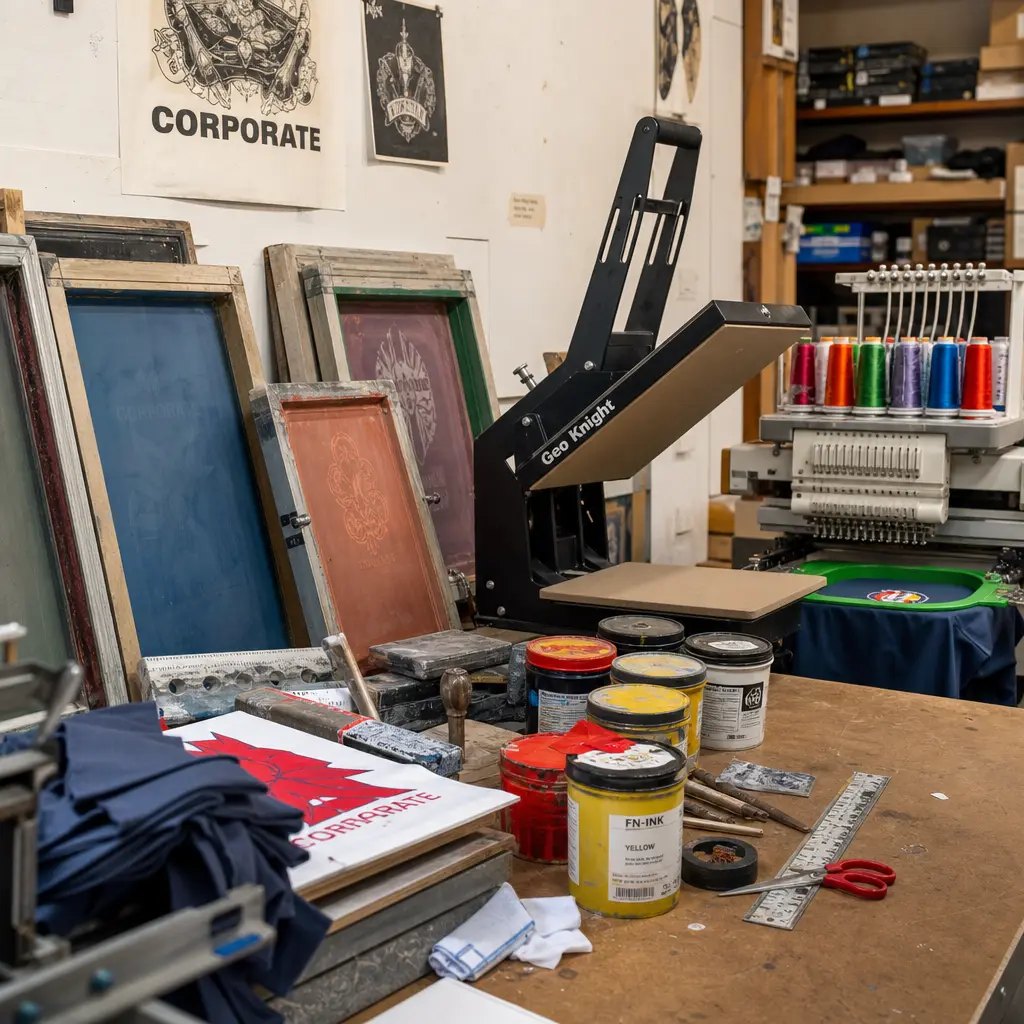
Jute is a rough, open-texture surface, so decoration needs a reality check before bulk production. Screen printing is usually the most practical method for wholesale trade show totes with bold logos, sponsor names, and one to three spot colors. It is economical at quantity and works well when the buyer accepts some texture show-through, softened edges, and base-fabric influence. A digital mockup cannot show those effects, so it should not be treated as final approval.
Fine artwork needs a different plan. Small type, QR codes, gradients, thin lines, detailed sponsor grids, and strict brand colors may not reproduce cleanly when printed directly on natural jute. A cotton canvas patch, printed panel, woven label, or transfer applied to a smoother patch can improve readability and color control. These options add cost and approval steps, but they may be appropriate for sponsor kits, retail-style merchandise, or high-visibility brand activations.
Artwork files should be supplied in vector format with Pantone references, intended print size, number of colors, minimum text height, line thickness, and exact placement. Ask the supplier to confirm what can print reliably before accepting the quote. If the bag includes QR codes, booth numbers, multiple sponsor marks, or legal copy, test readability on the physical sample at the expected viewing or scanning distance.
- Screen print: best for bold spot-color logos, large sponsor names, and economical production at wholesale quantities.
- Canvas patch: useful for cleaner edges, fine logo details, better color control, and premium presentation on rough jute.
- Woven label: suitable for small brand marks, side labels, subtle logo placement, or retail-style finishing.
- Heat transfer: approve only after adhesion, curing, peel, and rub testing on the actual jute or patch surface.
- Embroidery: usually safer on a patch or reinforced panel because direct embroidery on coarse jute can distort fine detail.
- QR codes: test actual scan performance from the printed sample before bulk production.
Make supplier quotes comparable
Wholesale jute tote quotes can look inconsistent because suppliers are often pricing different products. One quote may include 220 GSM unlaminated jute, short handles, and loose bundle packing. Another may include 300 GSM laminated jute, shoulder-length cotton handles, reinforced stitching, desiccants, and printed carton marks. Those are not competing offers until the technical specification is aligned.
MOQ is shaped by material purchasing, cutting efficiency, print setup, trim availability, and sewing-line scheduling. A small order may be possible, but setup costs are spread across fewer pieces. Larger quantity breaks can improve unit economics, especially when screen setup, cutting, and line preparation are already in place. Ask for price breaks at relevant quantities such as 500, 1,000, 3,000, 5,000, and 10,000 pieces instead of negotiating from one quantity alone.
Bring hidden charges into the comparison table early. Common extras include sample fees, screen charges, artwork adjustment, patch setup, woven label setup, hangtags, carton printing, desiccants, palletization, inspection support, local trucking, export documents, and delivery to a forwarder. A higher unit price may include stronger materials and fewer downstream costs. The goal is not to expose the supplier's private costing; it is to understand the real landed and operational cost of the order.
- Material drivers: GSM, lamination, shade control, roll availability, lining, handle grade, trim waste, and fabric lot consistency.
- Decoration drivers: color count, print area, screen setup, patch sewing, woven label type, transfer testing, and revision fees.
- Labor drivers: gusset complexity, reinforced handles, pockets, zippers, inner binding, special folding, and mixed packing.
- Packing drivers: counted bundles, paper bands, individual polybags, carton liners, desiccants, carton strength, pallets, and printed carton marks.
- Schedule drivers: late artwork, sample remakes, rush production, overtime, split shipments, air freight, or warehouse relabeling.
- Commercial drivers: Incoterm, payment timing, inspection responsibility, rework ownership, and final delivery point.
Verify supplier evidence and documents
Supplier compliance should be based on order-specific evidence. Catalog photos and broad factory claims are not enough. Useful evidence includes current jute roll photos, close-ups of handle stitching, lamination detail, print strike-off images, cutting or sewing line photos, carton packing examples, and a clear production flow. For a fixed trade show deadline, a supplier who asks detailed questions about artwork, carton marks, inspection, and delivery timing is usually helping reduce risk.
Documentation needs depend on the buyer's market, distribution channel, and product claims. Procurement may need material declarations, restricted-substance information, packaging details, labeling review, social compliance documents, or importer records. Request these before PO placement because missing paperwork can delay shipment or internal approval. Documents still do not replace product control. Most tote problems come from unclear specifications, weak samples, poor printing, bad packing, or late decisions.
Clarify who is producing the goods. A trading company can add value through coordination, export support, and mixed-order management. A direct factory may offer faster technical feedback. A specialized workshop may handle construction better but have tighter capacity. The useful compliance question is not the supplier label; it is whether production responsibility, QC authority, documentation, and subcontracting risk are transparent.
- Request close-up photos of handle stitching, inner lamination, gusset seams, print edges, and carton packing before awarding the order.
- Ask whether the supplier has made the same size, GSM, handle style, lamination, and decoration method before.
- Confirm whether printing, lamination, sewing, patch making, or packing will be subcontracted.
- Review a sample packing list showing carton count, pieces per carton, gross weight, net weight, and CBM.
- Confirm who owns final inspection: factory QC, buyer agent, third-party inspector, importer team, or a combined process.
- Request any required compliance documents before PO placement, not after cargo is ready.
Approve samples with measurable criteria
The pre-production sample should use actual bulk jute, actual handle, final decoration method, final sewing construction, and the proposed folding or packing method. A substitute sample can help with early costing, but it should not release mass production. If the schedule requires material booking before final approval, document exactly what is frozen and what still needs confirmation.
Sample approval should be a measured record. Record finished width, height, gusset depth, handle width, handle drop, print size, print position, fabric shade, lamination feel, odor, stitch quality, folding method, and carton plan. Photos help, but physical samples are stronger. Ideally, one signed sample stays with the buyer and one stays with the factory. If a third-party inspector will be used, provide the approved sample photos, measurements, tolerances, and defect definitions before inspection day.
Acceptance criteria should match the use. A low-cost giveaway can allow more natural fabric variation than a retail-style sponsor tote. A press kit carrying expensive samples needs stronger handle testing than a light brochure bag. A fulfillment kit may need tighter folded size and carton count accuracy. Clear limits turn quality approval from a mood into a standard.
- Measure the sample and record all finished dimensions, handle measurements, print size, and print placement from fixed reference points.
- Rub the print after curing and check for ink transfer, cracking, flaking, or smearing under normal pressure.
- Load the bag with actual or equivalent event contents, lift repeatedly, and inspect handle-base stress and seam strain.
- Seal a sample in a carton or bag for 24 hours, then reopen and assess odor instead of judging only in open air.
- Approve shade tolerance using physical samples because natural jute will vary across lots and rolls.
- Attach approved sample photos, measurement records, and tolerances to the PO, supplier confirmation, and inspection checklist.
- Define the remedy for out-of-tolerance goods: sort, repair, remake, discount, partial shipment, or rejection.
Inspect production, cartons, and count
Inspection should cover materials, workmanship, decoration, count accuracy, and packing. For larger programs, an inline inspection is useful because defects can still be corrected before all units are sewn and packed. Final inspection should compare bulk goods against the approved sample and written criteria. If an AQL approach is used, define the inspection level, defect categories, and critical points before the inspector arrives.
Functional checks include finished size, handle drop, handle pull, seam integrity, gusset shape, print adhesion, print placement, odor, lamination bonding, and carton count. Cosmetic checks include shade range, stains, loose fibers, wrinkles, thread trimming, print edges, and general presentation. Natural jute should not be judged like smooth synthetic fabric, but that does not mean every flaw is acceptable. The sample and tolerance list should define normal variation versus unacceptable workmanship.
Packing inspection is especially important for trade show orders. Random carton opening verifies piece count, bundle count, folding, moisture control, and carton marks. Carton weighing can help detect shortages or inconsistent packing. Final photos should show carton marks, sealing method, pallet condition if used, and loading condition. These checks are modest compared with discovering shortages or mislabeled cartons at the venue.
- Use inline inspection when production volume is high, timing is tight, or the decoration method is new for the supplier.
- At final inspection, compare bulk goods against the signed sample, written tolerances, artwork approval, and packing instruction.
- Classify defects before inspection: critical safety or compliance issues, major functional defects, and minor cosmetic defects.
- Open random cartons to verify piece count, bundle count, folding method, packing materials, and carton mark accuracy.
- Weigh sample cartons to detect count shortages, mixed quantities, or packing inconsistency before shipment.
- Check moisture, odor, and carton condition before cargo is released to the forwarder or exhibition warehouse.
Specification comparison for buyers
| Supplier option | What to verify | Commercial advantage | Buyer risk to control |
|---|---|---|---|
| Direct sewing factory | jute roll photos, lamination sample, odor-control process, handle pull evidence, and pre-shipment carton condition photos | Better sample-to-bulk control and faster production feedback | May be weaker on export paperwork or branded packing unless checked early |
| Trading company | Factory name, production photos, trim-source proof, and who owns QC decisions | Can coordinate small mixed orders and extra services | Markup can hide real factory capability and slow defect decisions |
| Specialized bag workshop | handle stitching, side gusset, lamination edge control, inner seam cover, and fiber shedding tolerance | More practical for detailed construction, trims, and repeat programs | Capacity may be limited during peak seasons |
| Low-price general supplier | laminated or unlaminated jute, cotton-jute blend, inner coating, odor control, yarn thickness, and color shade variation | Useful for simple promotional runs with loose specs | Material downgrades, weak packing, and vague inspection scope can erase savings |
| Retail-ready supplier | airing time, moisture absorber, carton liner, bundle wrap, odor separation, and warehouse ventilation before loading | Can handle labels, SKU separation, carton marks, and receiving rules | Higher unit cost must be compared against reduced warehouse work |
| Compliance-focused supplier | Fabric records, labeling review, test plan, and production traceability | Safer for retail programs and repeat brand orders | Documentation claims need evidence, not only sales language |
| Local sample room plus bulk factory | Signed sample, bulk factory handoff, first-piece photos, and deviation owner | Good for complex branding before large production | Sample room quality may not match bulk line unless handoff is controlled |
Buyer checklist before sampling
- Define the event use case first: brochure giveaway, catalog carrier, sponsor kit, VIP gift, retail-style tote, staff bag, or fulfillment component.
- Specify finished width, height, gusset depth, handle drop, handle width, print size, print location, and exact measuring points in the RFQ.
- State target jute GSM, acceptable GSM range, laminated or unlaminated construction, fabric shade range, and whether any lining or cotton-jute blend is included.
- Confirm handle material, color, weave, width, drop length, reinforcement stitch, comfort target, and realistic load expectation for the event contents.
- Send vector artwork with Pantone references, number of colors, minimum text height, line thickness, maximum print area, and placement from fixed bag edges or seams.
- Select decoration by artwork risk: direct screen print for bold marks, patch or label for fine details, and physical testing for QR codes, gradients, small sponsor logos, or legal copy.
- Require a pre-production sample made with actual bulk jute, actual handle, final decoration method, final sewing construction, and proposed folding or packing method.
- Write acceptance criteria for fabric shade, odor, loose fiber, lamination, print adhesion, print placement, stitching, handle strength, size tolerance, and carton count.
- Request carton dimensions, gross weight, net weight, pieces per carton, estimated CBM, pallet plan if any, and carton mark layout before purchase order approval.
- Confirm bundle counts, individual packing if needed, carton liners, desiccants, pallet labels, exhibition warehouse labels, and receiving documents before bulk packing begins.
Factory quote questions to send
- What exact jute GSM, GSM tolerance, weave appearance, shade range, and lamination type are included in this quoted unit price?
- Is the bag body pure jute, cotton-jute blend, burlap-style fabric, laminated jute, unlaminated jute, or jute with an added cotton lining?
- What are the finished bag dimensions, gusset depth, handle width, handle drop, and measurement tolerances you will use for bulk production?
- What handle material is quoted, what reinforcement stitch will be used, and can you show a close-up photo of the same handle attachment from a recent order?
- Which decoration method do you recommend for this artwork, what print size and number of colors are included, and what limitations apply to fine lines or small text?
- Are screen setup, sample charges, artwork adjustment, patch setup, woven label setup, hangtag attachment, carton printing, desiccants, and inspection support included or separate?
- What is the MOQ for this exact construction, and what are the price breaks at 500, 1,000, 3,000, 5,000, and 10,000 pieces if those quantities are relevant?
- How many working days are needed for artwork review, material booking, sample making, sample revision, bulk cutting, printing, curing, sewing, inspection, and export packing?
- Can you provide carton size, carton weight, pieces per carton, estimated CBM, pallet loading information, and a carton mark template before PO approval?
- Who performs inline and final inspection, what AQL level or written acceptance criteria will be used, and who pays for sorting or rework if goods fail agreed limits?
Quality-control points to confirm
- Finished size tolerance should be agreed before production. For simple promotional totes, plus or minus 1 cm is common, while kit packing or retail presentation may need tighter control.
- Jute GSM should be checked against the approved sample and purchase order by weighing a measured fabric area or reviewing batch material records, not by visual thickness alone.
- Natural jute shade should be approved as a range using physical samples or swatches because the material will not match the uniformity of dyed synthetic fabric.
- Lamination should be even and bonded without bubbling, peeling, heavy wrinkles, sharp seam edges, delamination at folded corners, or strong chemical odor after sealed-carton storage.
- Handle attachment must use the agreed reinforcement method, such as box stitch with cross reinforcement, bar tack, or another approved pattern suitable for the expected event load.
- Handle drop should be measured on finished bags because a 2-3 cm difference can change whether the tote works comfortably as a shoulder bag.
- Print color should be compared under consistent lighting against the approved strike-off or Pantone target, allowing realistic tolerance for natural jute texture and absorbency.
- Print adhesion should be tested only after proper curing; ink should not smear, flake, or transfer easily to white paper under normal hand rubbing.
- Small text, QR codes, sponsor marks, and fine lines should be checked on the physical sample at actual viewing or scanning distance before bulk approval.
- Seams should have no open stitching, skipped stitch clusters, loose handle bases, exposed sharp thread ends, distorted gussets, or seam allowance failures.