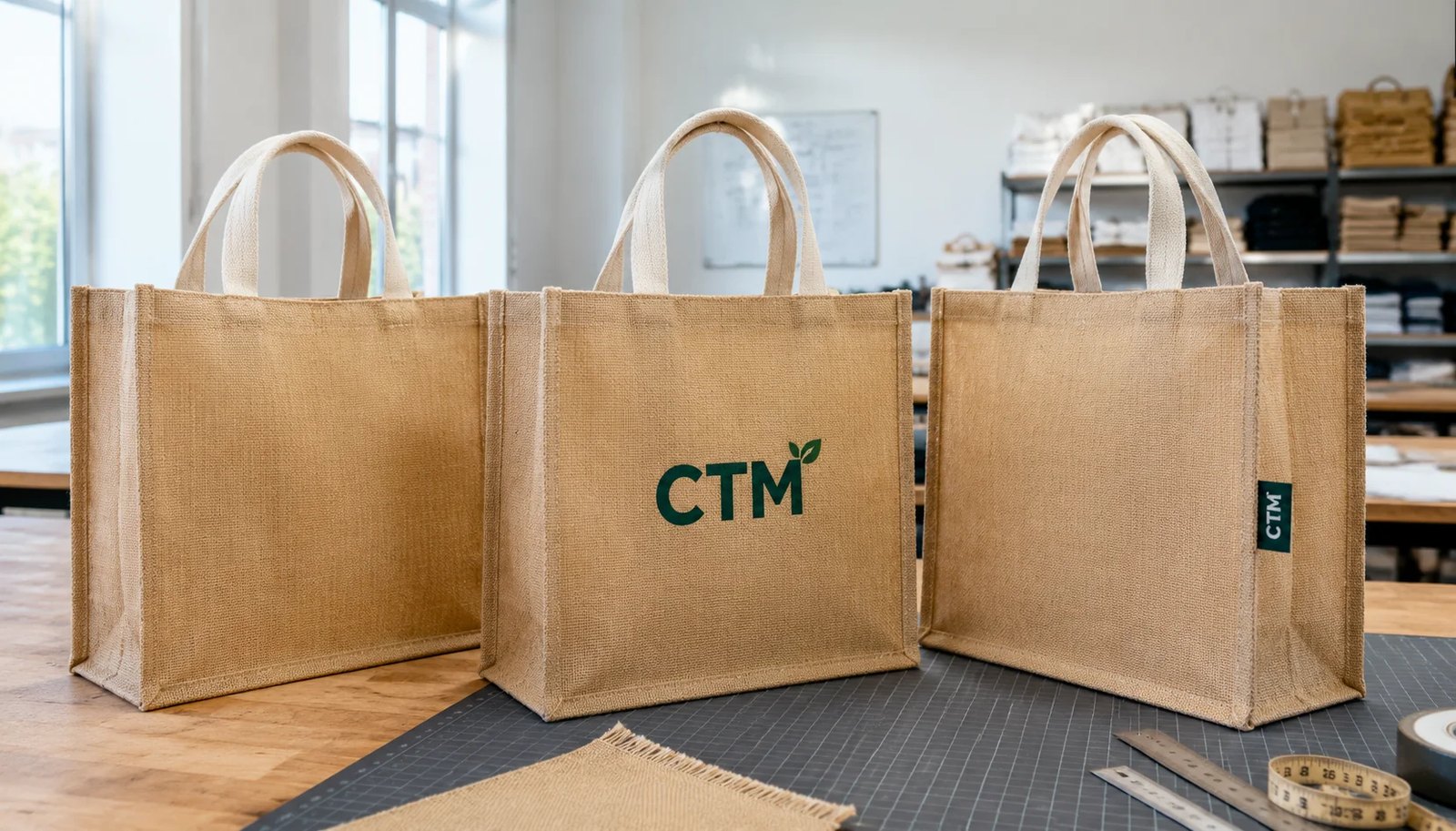
Why natural grocer buyers need a tighter jute tote RFQ
Natural grocer programs usually sit in an awkward middle zone: the bag is a branded retail item, but it also has to work like a utility carrier. That creates quote problems. One supplier prices a soft unlaminated jute bag that looks acceptable in a photo. Another prices a laminated structured tote with cotton webbing handles and a stronger gusset. Both call it a jute grocery tote. If your RFQ is vague, the cheapest quote often wins on paper and loses after arrival, when the bag feels rough, prints poorly, or collapses under a normal grocery load.
The buying problem is not only material choice. It is quote comparability. Procurement teams need each supplier pricing the same body construction, print area, packing count, and sample route. Otherwise unit price differences say very little. A usable RFQ for natural grocers should remove hidden substitutions early: lamination type, handle comfort, print legibility on coarse weave, seam reinforcement, and export carton density all change cost and performance.
- Main failure in weak RFQs: suppliers quote different bag constructions under one product name
- Most common disputes: handle comfort, print clarity, bag shape retention, and unexpected carton cube
- Best RFQ outcome: one quote matrix where material, print, sample, and packing assumptions are aligned
Start with the bag spec that actually matches grocery use
For natural grocery retail, laminated jute is usually the safer default than unlaminated jute. It holds shape better on shelf, wipes cleaner, reduces fiber shedding, and gives a more stable print surface. A common practical range is roughly 260-320 GSM for the jute body, but you should not treat GSM as the only strength indicator. Jute weave, lamination thickness, seam allowance, and handle attachment all influence real-world use. If a supplier only states GSM and avoids finished bag weight or construction details, the quote is still incomplete.
Bag dimensions should be chosen around actual basket replacement behavior, not visual impact. Many buyers overspecify very wide totes because they want a premium look, then absorb higher freight and seam stress. A medium format with a usable gusset is usually more efficient for grocery categories such as produce, dry goods, bottles, and bakery packs. Cotton webbing handles stitched into side seams are generally more comfortable and more repeatable than self-jute handles for a grocery bag expected to carry weight.
- Useful baseline spec example: laminated natural jute body, 280-300 GSM target, medium grocery size, 15-20 cm gusset
- Preferred handle setup: 2.5-3.5 cm cotton webbing with reinforced stitching
- Include load expectation in RFQ: example range for daily carry, rather than vague wording like heavy duty
How to write the RFQ so suppliers quote the same bag
A good RFQ reads like a production sheet, not a marketing brief. Give finished dimensions, body material, lamination requirement, handle material and width, print size, print colors, and packing details. If you leave these open, suppliers will optimize toward different cost structures. One may quote larger seam allowances and stronger handles. Another may reduce lamination, use narrower webbing, and increase pieces per carton to lower apparent cost. Procurement then spends time chasing gaps instead of comparing landed value.
For natural grocers, it also helps to state the use context inside the RFQ: reusable checkout tote, promotional retail sale, or loyalty bag. That signals whether you prioritize cost, comfort, or presentation. If the logo is simple, note that screen print is acceptable. If line detail matters, ask the supplier to comment on minimum printable line weight on jute. This forces an early technical response instead of a late-stage print disappointment.
- Include in RFQ: finished size, gusset, handle drop, webbing width, body color, lamination, print area, print colors, packing plan, inspection standard
- Reference artwork file type and Pantone values if print color matters
- State quote basis clearly: EXW or FOB, target port, and sample charges shown separately
Print and branding decisions that affect cost and readability
Jute is not canvas. The weave is coarser, surface texture is less uniform, and fine artwork can break visually even when the print is technically applied correctly. For most natural grocer logos, one or two spot colors by screen print on a laminated panel is the most practical option. It controls cost, gives acceptable color coverage, and is easy to repeat across volume orders. Large solid areas can still show minor weave texture through the ink, so buyers should approve a printed sample under normal retail viewing distance, not only close-up photos.
If the bag includes a side label or internal brand tag, treat that as a separate quote item. Woven labels, cotton side labels, or simple printed care labels each add labor and can affect MOQ. Do not assume a CTM-style side label is free because it looks small. Also define print position from fixed points such as top edge and side seam. Jute body panels can shift more than smoother fabrics during cutting and stitching, so a reasonable tolerance is better than demanding unrealistic dead-center precision.
- Best value branding for jute grocery totes: 1-2 color screen print on one or two sides
- Avoid very small reversed text, fine script, and tight registration between multiple colors
- Add print tolerance to approval sheet so inspection is based on agreed limits
MOQ logic and price breaks: where buyers misread the quote
MOQ on jute bags is rarely just one number. Factories may have one MOQ for the base bag size, another for custom dyed body color, another for print color count, and another for mixed logo variants. If your natural grocer program uses one body construction with several regional store logos, mention that in the RFQ. Some suppliers can hold one common body and split print quantities more efficiently. Others will price each logo as a separate run with extra setup cost, making the quote look expensive unless you understand the reason.
Price breaks usually move with labor efficiency, not just raw material volume. A 3,000-piece order may not be much cheaper than 1,500 pieces if the same print screens, cutting layout, and packing method apply. But a jump from one-color print to two-color print, or from one-side to two-side print, may change the unit cost more than expected. The same is true for custom handle colors, inside pockets, or bottle dividers. Keep the first RFQ focused on the standard bag unless your volume is large enough to justify options.
- Ask for tier pricing on at least three quantity breaks using the same specification
- Separate setup costs from unit price where possible: screens, labels, barcode stickers, special packing
- Clarify whether mixed logos can share one MOQ when body and print size remain the same
Sample approval should test use, not only appearance
A blank sample is useful for shape, weave, and handle feel, but it is not enough for approval. For jute grocery bags, the printed pre-production sample is where many problems surface: muddy logo edges, off-center print, handle drop inconsistency, and gusset shape changes once the bag is packed flat. Buyers should review the PPS filled with normal grocery products or similar weighted contents. A bag that looks fine empty may become uncomfortable when loaded because the handle width is too narrow or the seam area twists.
Set sample comments in measurable terms. Instead of writing 'make stronger' or 'print looks small,' state the exact revision: increase webbing width to 3 cm, move logo 2 cm down from top edge, reduce carton pack count to avoid flattening. Keep one approved reference sample in the factory and one with the buyer or inspection party. This reduces the usual argument where the bulk follows a sample version that was later replaced informally in email.
- Useful sample sequence: stock sample, blank custom-size sample, printed PPS, sealed production reference
- Review loaded sample for comfort, seam stability, and panel shape under realistic use
- Approve against a written sample comments sheet, not only photo messaging
Packing details can change freight and retail readiness more than expected
Many grocery bag orders are quoted with flat packing in export cartons, but the carton logic varies a lot. Some factories will push a high count per carton to lower apparent per-piece freight, especially on sea shipments. That can create crushed gussets, print rubbing, or cartons too heavy for warehouse handling rules. A natural grocer program often benefits from a moderate carton count with counted inner bundles for receiving accuracy. This matters if distribution centers need quick verification by SKU or logo version.
Include carton dimensions and gross weight limits in the RFQ. If the order includes multiple store versions, specify whether mixed cartons are allowed. Mixed cartons may help minimums but complicate receiving and later store allocation. Also state whether barcode stickers, polybags, or carton line drawings are needed. Many buyers do not want individual polybags for sustainability reasons, but they still need bags protected from dust and moisture through proper inner bundling.
- Define units per inner bundle and per export carton
- Set carton gross weight cap based on your warehouse or distributor handling preference
- Decide early on mixed cartons versus single-SKU cartons to avoid repacking charges later
Lead time planning: what usually delays jute bag production
Lead time for wholesale jute totes depends on more than sewing capacity. Raw jute body availability, lamination scheduling, print screen preparation, and handle webbing matching can all affect timing. Buyers often assume jute is a simple commodity and underestimate pre-production steps. If the body color is natural and the print is simple, timing is usually more stable. Once you add custom dyed panels, several logo versions, or retail ticketing, the order moves from commodity to project management.
A realistic buying plan should separate sample lead time from bulk lead time and define what event starts the production clock: artwork approval, deposit receipt, or PPS approval. That matters because some suppliers quote production days from deposit only, while the artwork or label files are still unresolved. For seasonal natural grocer promotions, build margin for rework on print alignment or late packing updates. The cheapest supplier can become the slowest shipment if the RFQ leaves too many pre-production items open.
- State the official lead-time trigger in the purchase order
- Ask whether body material and webbing are stocked or purchased only after order confirmation
- Leave buffer for print screen approval, carton mark approval, and final inspection booking
QC thresholds that prevent avoidable disputes on arrival
Jute bags need practical QC criteria, not luxury-goods standards. The goal is to block commercial defects that affect retail sale or normal use. Focus on dimensions, handle security, print legibility, major stains, severe weave flaws, lamination peeling, and carton condition. Small natural jute slubs and minor weave variation may be acceptable if they are consistent with the approved sample. If you do not define this, inspectors may reject too much or too little depending on personal judgment.
For natural grocer retail, handle symmetry and seam quality deserve extra attention because customers will actually carry weight. AQL alone does not replace product-specific acceptance points. Include a simple load test in your QC plan. Even an internal factory test with a defined weight held for a set period is better than no functional check. Also require odor review after unpacking a sample carton, since storage conditions and lamination can occasionally create odors that matter in food-adjacent retail environments.
- Critical QC items: broken stitching, detached handles, illegible print, major stains, lamination failure
- Commercial tolerance should distinguish natural material variation from true defects
- Add a simple functional load check and odor review to final inspection notes
How to compare quotes on landed value, not only FOB price
A lower unit price can disappear once packing density, carton cube, and defect risk are included. Larger bags, heavier lamination, and lower carton counts increase freight. But underbuilt bags can create replacement cost, markdowns, or a second emergency order. For natural grocer programs, landed value is usually the right comparison method: FOB price, sample cost, setup charges, inspection cost, estimated freight impact, and expected retail acceptance. Procurement should standardize quote sheets so each supplier answers on the same commercial basis.
It helps to ask suppliers for finished bag weight and carton details because these feed freight estimates better than GSM alone. If one supplier quotes a 290 GSM body with strong webbing and moderate carton count, and another quotes a thinner body packed more densely, the second may look cheaper but create worse shelf appearance and more deformation at arrival. A usable decision matrix should balance durability, print quality, timeline confidence, and cube efficiency against unit price.
- Compare supplier quotes using the same Incoterm, same packing basis, and same sample stage included
- Use finished bag weight and carton cube to estimate freight impact
- Treat defect risk and reordering risk as cost factors, not only quality comments
Specification comparison for buyers
| Spec decision | Recommended option | When it fits | Buyer risk to check |
|---|---|---|---|
| Jute body construction | Laminated jute, 13x13 weave equivalent with inside lamination | Best for grocery retail where moisture resistance and shape retention matter | Some suppliers quote unlaminated jute at lower cost; bag may shed fibers, distort more, and print less cleanly |
| Fabric weight target | Approx. 260-320 GSM jute body depending on bag size and load target | Suitable for daily grocery carry and repeat store use | GSM alone is not enough; request finished bag weight tolerance and load expectation because weave density varies |
| Handle material | Cotton webbing or padded cotton handles stitched into side seams | Preferred for shopper comfort with heavier grocery loads | Pure jute handles can feel rough and may fray faster; verify stitch box size and reinforcement count |
| Print method | Screen print for 1-3 spot colors on laminated panel | Most natural grocer programs use simple logos and short runs across stores | Large art areas or fine details may fill in on coarse jute; request minimum line thickness and print registration tolerance |
| Bag size and gusset | Medium grocery format around 35-40 cm wide with 15-20 cm gusset | Fits produce, boxed items, and checkout counter use without excessive material cost | Oversized bags look attractive in quotes but increase freight, carton cube, and seam stress |
| MOQ structure | MOQ by size and print color, often one base body with split print quantities | Good for chains needing several store logos on one bag construction | Low MOQ custom colors may trigger fabric dye lot surcharges or full-roll requirements not visible in first quote |
| Inner finish | PP or PE lamination with bound top edge and trimmed inside threads | Useful when buyers want easier wipe-clean performance and cleaner shelf presentation | If lamination is too thin or poorly bonded, it may wrinkle, peel, or crack near fold lines during transit |
| Packing method | Flat pack in export cartons with counted inner bundles and carton weight cap | Best for importers managing warehouse receiving accuracy and lower freight cost | Compressed packing can distort printed panels and edge piping; define maximum units per carton and carton gross weight |
| Sample approval route | Blank pre-production sample plus final printed PPS before bulk | Recommended whenever logo color, handle drop, or gusset shape affects usability | Skipping printed PPS often leads to disputes over ink shade, panel centering, and handle comfort after goods arrive |
Buyer checklist before sampling
- State finished bag size in centimeters, including gusset width, handle drop, and whether dimensions are measured when bag is laid flat or opened.
- Specify jute construction clearly: laminated or unlaminated, target GSM range, natural or dyed body color, and whether inside lamination must be visible or hidden.
- Define handle material, width, attachment method, stitch reinforcement, and minimum comfortable load target for grocery use.
- Attach artwork with print size, spot colors or Pantone references, print position tolerance, and whether both sides require printing.
- List your MOQ logic by SKU: same size with different logos, mixed colors, or split shipments, so suppliers quote the same basis.
- Request sample sequence: stock sample, pre-production sample, print strike-off if needed, and final production sample retention method.
- Set packing rules including units per bundle, units per carton, carton dimensions limit, gross weight cap, barcode labeling, and shipping marks.
- Include acceptable tolerances for size, color shade, print alignment, odor, loose threads, and carton damage at receipt.
- State target ex-works or FOB quote basis, destination port, and whether duty-sensitive HS coding or sustainability documents are required.
- Ask suppliers to show photos or video of similar laminated jute grocery bags packed in cartons, not only tabletop samples.
Factory quote questions to send
- What jute body specification are you quoting exactly: laminated or unlaminated, target GSM, weave density, and finished bag weight per piece?
- Is the quoted handle made from cotton webbing, self-jute, or blended webbing, and what are the width, thickness, and stitch reinforcement details?
- What print method is included in the price, how many colors per side, and what print size limit applies before the quote changes?
- What is the MOQ by size, by body color, and by logo variation if one construction is shared across several store locations?
- How many days are needed for blank sample, printed pre-production sample, and bulk production after artwork and deposit approval?
- What carton quantity and carton dimensions are planned, and what gross weight per carton will be used for export handling?
- Are the unit price and sample cost based on current raw jute market conditions, and how long is the quote validity before revision?
- What inspection standard do you follow in-house, and can you provide your typical tolerance for size, print placement, and handle drop?
- What loading test or seam strength standard do you normally use for grocery tote programs, even if only internal factory testing?
- Which cost items are excluded from the quote such as mold, screen, sample courier, barcode stickers, or destination-specific labeling?
Quality-control points to confirm
- Finished size tolerance should be defined before production; many buyers use ±1 cm on body dimensions and ±0.5-1 cm on handle drop depending on bag size.
- Print placement should stay within agreed tolerance from top seam and side seam; typical practical tolerance is ±5 mm to ±8 mm on jute due to fabric texture.
- Logo edges must remain legible on coarse weave; thin reversed text and very small registration marks should be rejected during PPS review, not after bulk.
- Handle stitching should show no skipped stitches, loose thread tails, or uneven reinforcement boxes; left and right handles must match in drop and angle.
- Lamination should be bonded evenly without severe wrinkles, exposed peeling edges, or cracking at folded gussets after normal carton compression.
- Top edge binding or fold-over finish should be straight and securely caught in stitching with no open sections at side seam turns.
- Cartons should be dry, correctly labeled, and packed to count; crushed cartons can distort gussets and transfer print rubbing onto adjacent bags.
- Random load test should be done on finished bags using a realistic grocery weight range defined in the RFQ, not only an empty visual inspection.