Why Durability Matters in Hotel Retail
Wholesale jute tote bags for hotel retail are not the same as one-time event giveaways. A hotel shop bag may be handled by retail staff, displayed on a shelf for weeks, folded into back-room storage, carried by guests to the beach or airport, and then reused as a visible souvenir. The buyer is not only paying for a bag; the buyer is protecting the hotel's retail margin and brand presentation.
Durability testing should therefore be written into the RFQ before suppliers quote. If the quote only says "jute tote bag, logo printed," factories will price different fabric weights, different lamination thicknesses, different handle constructions, and different packing methods. The cheapest quotation may be based on a bag that looks close in a photo but fails when loaded with towels, glass bottles, books, or spa products.
- Use a defined target load, such as 5 kg or 8 kg, based on the heaviest likely retail basket.
- State whether the bag must stand on shelf, fold flat, or hang from a retail peg.
- Include hotel storage conditions, especially humidity, if stock will be kept near beach, spa, laundry, or basement areas.
- Treat handle strength, bottom gusset strength, print rub, and odor as separate approval points.
Start With the Real Carrying Use
The most useful specification starts with the products the guest may carry. A small spa boutique bag holding lotions and candles needs a different gusset and handle than a resort beach tote holding two towels and a water bottle. The same fabric GSM can perform differently if the bag is tall and narrow, wide with a large gusset, or overloaded at one corner by a heavy boxed item.
Hotel buyers often request a popular retail size first, then discover during sampling that the handle drop, bottom shape, or shelf presentation does not match the actual use. Before asking for prices, map the expected contents and the sales environment. This prevents suppliers from guessing a construction that is easy to quote but not suitable for the property.
- For spa or boutique retail, prioritize clean print, smooth inside lamination, and moderate gusset depth.
- For resort or beach retail, prioritize shoulder handle length, bottom reinforcement, and moisture-resistant packing.
- For minibar, wine, or glass items, avoid oversized loose bags unless dividers or bottle carriers are being specified.
- For gift-with-purchase programs, balance fabric weight against freight volume and retail perceived value.
Fabric Weight and Lamination Choices
For hotel retail jute totes, many workable constructions sit around 13 oz to 15 oz jute, roughly 350-420 GSM before lamination depending on the mill and counting method. Lighter fabric can reduce cost and carton weight, but it may feel flimsy on shelf and may fray more at seams. Heavier jute gives stronger structure and a more premium hand feel, but it increases material cost, folding marks, carton CBM, and sometimes needle breakage during sewing.
Inner lamination is a major durability variable. A PP laminated inner side helps reduce fiber shedding, improves body stiffness, and gives a cleaner interior. However, lamination should not be treated as a magic strength layer. Too thin and it peels; too thick and it may crack around folds or gusset corners. Buyers should request the lamination type and approximate thickness, then review a cut panel sample before approving bulk production.
- Clarify whether the quoted GSM is jute only, laminated jute, or finished composite fabric.
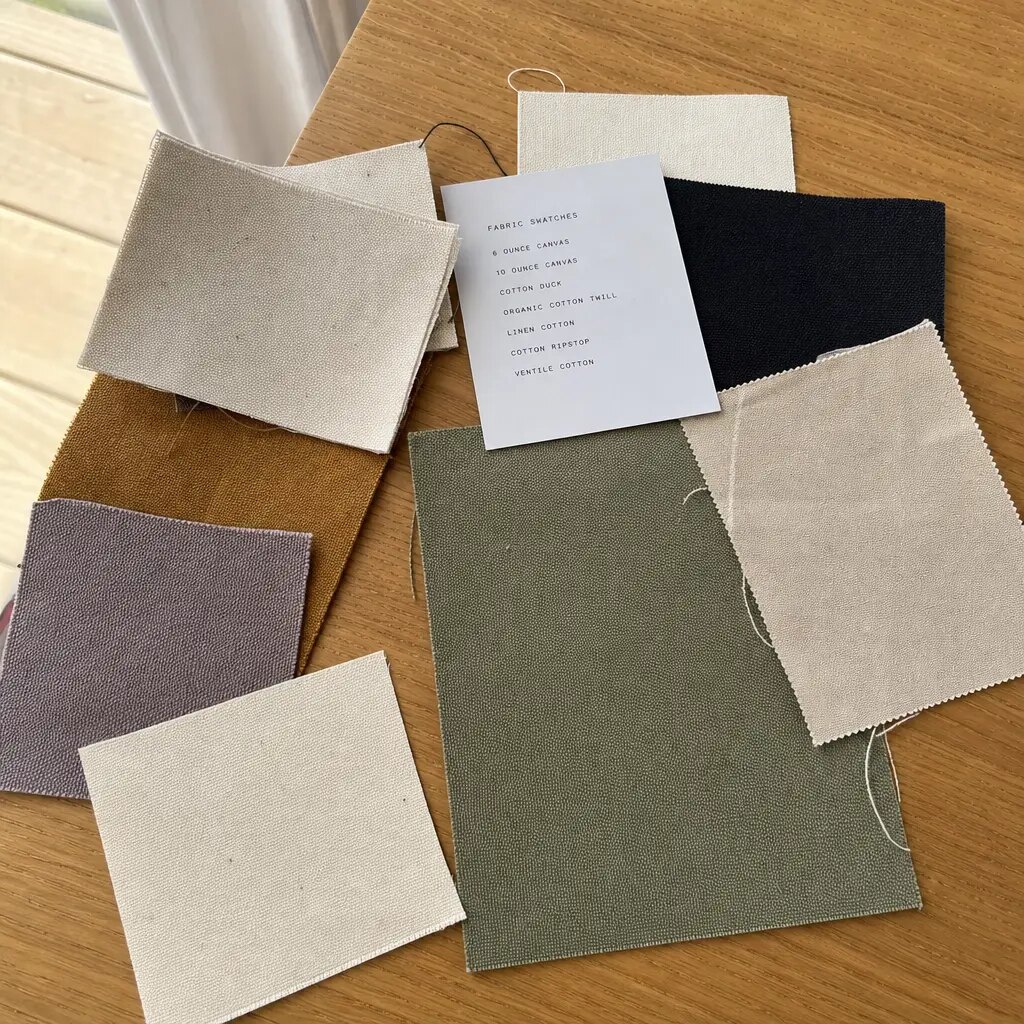
- Request a fabric swatch from the same production batch when color or stiffness matters.
- Use heavier fabric for bags that must stand upright with merchandise inside.
- Review lamination odor after the sample has been sealed in a polybag or carton for at least 24 hours.
Handle Construction Is the Main Failure Point
Many jute tote failures are not fabric failures. They are handle joint failures. A strong-looking jute panel can still fail if the handle is attached with short stitches, weak thread, no back tack, or no reinforcement area. This is especially important for hotel retail because guests may load the bag quickly at checkout and then carry it over a shoulder for a long distance.
Cotton webbing handles usually give a cleaner touch and better guest comfort than rough jute handles, especially for resort and boutique use. Jute handles can look more natural but need careful finishing to avoid scratchiness. For higher load expectations, buyers should request X-box stitching, enough stitch density, and reinforcement patches or folded fabric layers where the handle enters the body.
- Define handle material, width, total length, and finished drop measurement.
- Require back tack or reinforced stitching at all handle stress points.
- Check whether handle color is stock, dyed to order, or matched to print color.
- During sample testing, load the bag and swing it gently by the handles to reveal weak stitch points.
Print Durability on Coarse Jute
Jute is not a smooth canvas. The woven texture absorbs and breaks up ink, so artwork that looks sharp on a PDF can become uneven on the real bag. For hotel logos, resort names, and destination artwork, screen printing is usually practical when the design uses solid areas, larger text, and limited colors. Very fine serif type, gradients, small icons, and reversed details are common causes of rejected samples.
Print durability should be tested for rub, flaking, and edge coverage. A single-color screen print can be more reliable than a multi-color design that requires tight registration on an uneven surface. If the brand requires detailed artwork, buyers may consider a cotton patch, woven label, leather-look patch, or printed canvas panel sewn onto the jute, but each option changes MOQ, lead time, and unit cost.
- Provide Pantone references, but allow realistic tolerance because natural jute shade affects the final color.
- Set minimum text height and line width after reviewing the factory's print test.
- Avoid printing too close to seams, gusset folds, or heavy texture bands.
- Approve print placement with measurements from the top edge and side seam, not by visual centering only.
MOQ Logic Behind the Quote
MOQ for wholesale jute tote bags is not one simple number. The factory may have one MOQ for the bag sewing line, another for custom handle color, another for logo printing, another for custom labels, and a higher MOQ if the buyer requests dyed jute. A quote for 500 pieces may use stock natural jute and stock handles, while a quote for 3,000 pieces may allow better customization and more stable unit cost.
Buyers should compare MOQ logic instead of only comparing the lowest unit price. A supplier may quote a low MOQ with a high sample cost and limited customization, while another may quote a higher MOQ with better fabric control and lower per-unit printing setup cost. For hotel groups and distributors serving multiple properties, combining orders across properties can improve MOQ efficiency if logo and artwork can share a common base bag.
- Separate base bag MOQ from print MOQ, label MOQ, and packaging MOQ.
- Ask whether the factory can hold the same fabric lot for repeat orders.
- Check whether setup charges apply per artwork, per color, or per production run.
- For multi-property hotel programs, price a shared blank bag with property-specific labels or hangtags.
Sample Approval That Prevents Bulk Problems
A photo sample is not enough for this product. The buyer needs a physical sample that can be loaded, rubbed, smelled, folded, and placed on a shelf. The first sample may confirm size and construction. The printed sample should confirm artwork performance on the actual jute texture. The pre-production sample should represent the approved bulk materials, handle method, label placement, and carton packing direction.
For hotel retail, the golden sample should be kept with clear notes. Mark the approved fabric shade, logo color, handle drop, inside lamination, stitching method, and any acceptable natural jute variation. Natural jute will not be perfectly uniform, so the approval record should separate acceptable character from defects such as heavy oil marks, dark stains, broken yarns, and strong chemical odor.
- Measure finished size after the sample is sewn, not only from the pattern drawing.
- Load the sample with the expected retail weight for at least several minutes, then inspect handle joints and bottom seams.
- Rub the print with a dry white cloth to check obvious transfer or flaking.
- Seal the sample in a bag overnight and reopen it to judge odor realistically.
Durability Test Thresholds to Put in the PO
Durability requirements should be written as acceptance criteria, not casual comments. A practical hotel retail test can include static load holding, handle pull review, seam inspection after loading, print rub test, lamination bend check, and carton drop test. The exact standards can vary by buyer, but the purchase order should state what failure looks like.
For example, if the target retail load is 5 kg, the test may require the bag to hold 1.5 times that weight for a defined period without seam opening, handle tearing, or visible distortion beyond an agreed level. If the tote is marketed as reusable, the buyer may add repeated lift cycles. These tests are simple, but they force the factory to build the bag for real use rather than only for appearance.
- Static load: bag holds agreed weight with no handle detachment, seam opening, or bottom failure.
- Handle pull: both handles remain secure after controlled upward force or repeated lifting.
- Print rub: no obvious ink transfer or logo breakdown after normal dry handling.
- Fold test: lamination does not crack badly at gusset folds or top edge after normal packing.
- Carton drop: packed cartons protect bags from crushing, dirty marks, and burst seams during transport.
Packing and Storage Risks
Jute is vulnerable to moisture, odor absorption, and compression marks. Hotel retail stock may travel by sea, sit in a distributor warehouse, then move to individual properties. Poor packing can turn a good production run into a retail problem. Bags should be clean, dry, and packed with carton liners or moisture protection suitable for the shipping route.
Carton planning affects both durability and landed cost. Overpacking cartons may reduce CBM on paper but can crush gussets, stress lamination, and create deep fold marks. Underpacking increases freight cost. The buyer should review carton size, pieces per carton, gross weight, and CBM per 1,000 pieces before comparing supplier quotes.
- Set a carton gross weight limit that warehouse staff can handle safely.
- Use clean inner liners or master polybags when moisture and dust exposure are likely.
- Require carton marks that identify PO number, SKU, quantity, color, and destination property if needed.
- Avoid long storage in damp conditions; jute should be kept dry and away from strong odors.
Lead Time and Schedule Risk
Lead time for jute tote bags depends on material availability, print complexity, sample approval speed, and factory capacity. A simple stock natural jute bag with one-color printing can move faster than a custom dyed jute bag with special handles and retail packaging. Buyers should separate sample time, approval time, production time, inspection time, and transit time instead of accepting one broad delivery estimate.
Hotel retail deadlines often connect to season openings, property launches, conferences, or holiday merchandising. The highest risk is late artwork approval followed by rushed production. Rushed jute bag production can create uneven stitching, wet ink packing, strong odor, or skipped inline checks. The RFQ should request the date assumptions behind the lead time and the latest artwork approval date needed to meet shipment.
- Confirm whether lead time starts after deposit, artwork approval, or pre-production sample approval.
- Add time for printed sample courier delivery and buyer review.
- Reserve inspection time before shipment, especially for multi-carton wholesale orders.
- For seasonal hotel programs, approve a repeatable base construction early and change only artwork or labels later.
Specification comparison for buyers
| Spec decision | Recommended option | When it fits | Buyer risk to check |
|---|---|---|---|
| Main jute fabric weight | 13 oz to 15 oz jute, usually around 350-420 GSM before lamination | Hotel gift shops, resort boutiques, spa retail, amenity resale, and mid-weight guest shopping use | Low GSM may look acceptable in photos but collapse on shelf and fray faster at the seams |
| Inside construction | Clear or milky PP lamination on the inner side, 12-18 microns as a common working range | Retail shelves, humid storage rooms, light grocery or towel carrying, and cleaner inside finishing | Thick lamination can crack at fold lines; thin lamination can peel or expose loose jute fibers |
| Handle material | Cotton webbing or padded jute handle with reinforced X-box stitching | Bags expected to carry books, bottled drinks, towels, spa products, or multiple souvenir items | Rope or thin jute handles can pull out if stitch density and reinforcement patches are weak |
| Handle drop | 55-65 cm total handle length for shoulder carry; shorter only for small boutique sizes | Hotel retail buyers who want one bag to work for room shop, beach shop, and checkout counter use | Too-short handles create guest complaints; too-long handles drag when used as a hand carry bag |
| Print method | Single or two-color screen print with ink adjusted for coarse jute texture | Hotel logos, resort names, simple line artwork, and destination graphics | Fine type, gradients, and small reversed text break up on jute and should be redesigned before sampling |
| Seam reinforcement | Side seams and bottom gusset lockstitched with back tack at stress points | Wholesale orders where bags are shipped flat and later handled repeatedly by retail staff | Weak bottom gusset stitching is a common failure point during load testing, even when fabric GSM is acceptable |
| Retail packing | Flat packed in export cartons with moisture control, carton liners, and clear carton marks | Hotel chains, distributors, and importers needing clean stock for multiple property deliveries | Over-compression causes creases, lamination stress, and misshapen corners that reduce shelf appeal |
| Inspection level | AQL inspection with added load, handle pull, print rub, and carton drop checks | Bulk orders where failure would affect multiple hotels or retail locations | Standard visual inspection alone may miss functional failures that appear only after loading |
Buyer checklist before sampling
- Define the retail use: guest shopping, beach towel carry, spa merchandise, souvenir checkout, or amenity gift packaging.
- Specify finished size, gusset depth, handle length, and target load in kilograms instead of only sharing a reference photo.
- State jute fabric weight in GSM or oz, and clarify whether the weight is before or after lamination.
- Confirm inner lamination type, thickness expectation, odor requirement, and whether food-contact claims are needed or not needed.
- Limit artwork to practical print details for jute: minimum line width, minimum text height, color count, and Pantone references.
- Request handle reinforcement details including stitch pattern, stitch count, thread color, back tack, and reinforcement patch if used.
- Approve a pre-production sample under actual loading, print rub, seam pull, and shelf-standing checks before mass cutting.
- Set acceptable tolerances for size, handle drop, print placement, color deviation, odor, loose fibers, and carton quantity.
- Confirm packing method, carton dimensions, gross weight limit, polybag policy, moisture protection, and pallet requirement.
- Collect quote data in the same format from each factory: fabric GSM, lamination, print method, MOQ, sample fee, lead time, carton CBM, and payment terms.
Factory quote questions to send
- What jute weight are you quoting, in GSM or oz, and is that measured before lamination or after lamination?
- What inner lamination material and approximate thickness will be used, and can you provide a cut piece for approval?
- What is the maximum recommended loading weight for this construction, and what in-house test method do you use to support it?
- How will the handles be attached: stitch pattern, stitches per inch, reinforcement patch, thread type, and back tack details?
- Can the artwork be screen printed cleanly on this jute texture, and what minimum line width and text height do you recommend?
- What MOQ applies to the bag body, print color, fabric dyeing if any, handle color, and custom label separately?
- What sample types are included: blank size sample, printed sample, pre-production sample, and sealed golden sample?
- What are the carton dimensions, pieces per carton, estimated gross weight, and CBM per 1,000 pieces?
- What production lead time starts after deposit, after artwork approval, or after sample approval?
- Which quality records can be shared: material inspection, inline inspection, final AQL report, load test photos, and carton drop test photos?
Quality-control points to confirm
- Finished size tolerance should normally be controlled within +/-1 cm for body width and height, with gusset tolerance agreed separately.
- Handle drop should remain consistent across the carton, with a practical tolerance such as +/-1 cm unless the design requires tighter control.
- Loaded bag should hold the agreed test weight without handle tearing, seam opening, bottom distortion, or lamination cracking.
- Print should pass dry rub handling without obvious color transfer and should not show missing logo sections caused by poor ink coverage.
- Inside lamination should be continuous, without major peeling, bubbling, sharp folded edges, or heavy odor when cartons are opened.
- Stitching should be straight enough for retail presentation, with no skipped stitches at handle joints, side seams, or bottom gusset corners.
- Cartons should not exceed the buyer's warehouse handling weight limit and should protect the bags from moisture, crushing, and dust.
- Random samples from production should match the approved golden sample for fabric shade, hand feel, handle color, print position, and label placement.