1. Start With the Finished Bag, Not the Mockup
Wholesale jute tote bags for corporate gifting need a clearer specification than a design mockup can provide. Jute has an uneven yarn, open weave, natural color variation, seam bulk, and gusset structure. A logo that looks centered on a flat digital rectangle can look too high, too low, distorted, or too close to a fold once the bag is sewn, filled, and carried.
Procurement should treat logo placement as a measurable product requirement. The safe reference is the finished bag: top hem, side seam, centerline, handle stitch box, and bottom gusset fold. Those points can be checked by a sample room, print operator, and inspector. A vague note such as “logo as shown” is difficult to repeat and almost impossible to inspect fairly.
The usable front panel is smaller than the total panel. Top hem bulk, handle reinforcement, side seams, and the bottom gusset transition reduce the clean print zone. For most corporate gift totes, the main logo works best centered horizontally in the upper-middle visual area, away from handle stitching and the bottom fold. Exact dimensions depend on bag size and artwork, so confirm them on an actual sewn blank before approving the decorated sample.
- Measure logo placement from finished-bag references, not from a flat artwork file.
- Keep the logo clear of top hem bulk, handle stitch boxes, side seams, bottom gusset folds, and planned packing folds.
- Use the approved physical sample and measurement sheet as the reorder standard.
- Avoid fine type or detailed reversed artwork unless the sample proves it is readable on the chosen jute.
2. Write the RFQ Around Construction and Use
The RFQ should define the bag before it defines decoration. Ask for finished width x height x gusset depth, handle drop, handle width, handle material, stitch type, and interior finish. Finished dimensions matter because seam allowance, top hem, gusset folding, and handle placement all affect capacity and logo space.
Dimension tolerances should be confirmed by the supplier, not copied from another product. In sewn natural-fiber totes, buyers often discuss around +/-1 cm for width and height and around +/-0.5 to 1 cm for gusset depth or handle drop, depending on size and construction. These are practical discussion ranges, not universal standards. Put the confirmed tolerance in the PO and inspection checklist.
Fabric weight also needs precision. A standard corporate jute tote often starts around 300-350 gsm woven jute. Lighter 250-280 gsm options may suit simple event handouts, while heavier 360-450 gsm constructions may add structure. Always ask whether GSM refers to raw jute only or includes lamination, backing, coating, or lining, because those constructions print, fold, smell, and ship differently.
Tell the supplier what the tote will carry: brochures, bottles, notebooks, apparel, boxed gifts, welcome kits, or mailed packages. Contents affect handle reinforcement, gusset depth, packing method, and whether a raw, laminated, backed, or lined interior is appropriate.
- State finished size, handle drop, handle width, handle material, and stitch reinforcement.
- List the approximate packed weight and whether the bag must stand upright or fold flat.
- Clarify raw, dyed, laminated, backed, lined, or cotton-laminated jute.
- Ask for the usable logo area after sewing and folding, not only the front panel size.
3. Choose Decoration by Artwork Risk, Cost, and Schedule
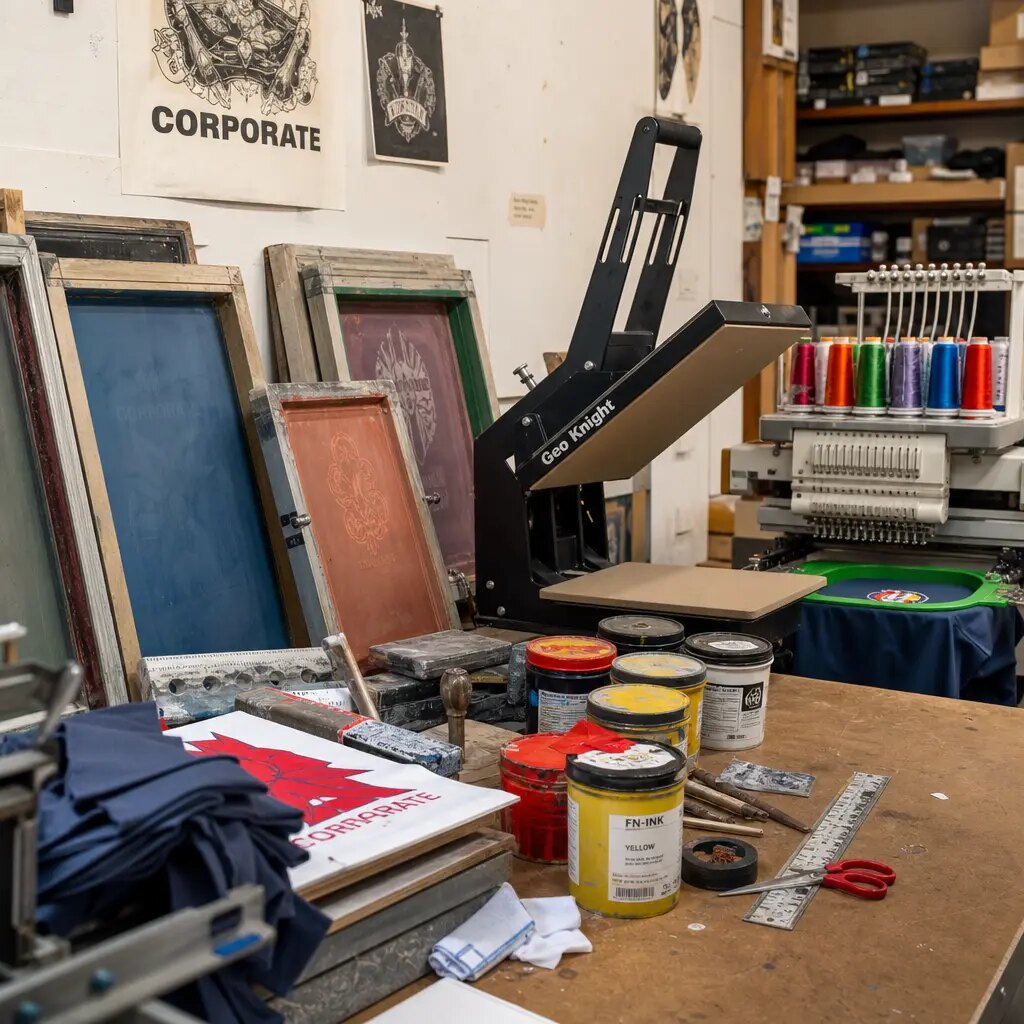
Screen printing is usually the practical first option for wholesale jute tote bags for corporate gifting. It is cost-effective for bold one-color or two-color logos and is repeatable when artwork, screens, and placement jigs are controlled. Its limitation is detail: coarse jute can soften edges, break fine lines, and make small text hard to read.
Two-color screen print can work, but registration needs attention. Tight gaps, small reversed letters, thin outlines, and close-fitting color traps are risky on a textured textile. If brand guidelines allow it, a simplified one-color mark often looks cleaner on natural jute than a complex multi-color version.
Heat transfer may help with detailed or multi-color artwork, but it is not automatically better. Transfers must bond to a rough surface, bend with the bag, and resist edge lift, cracking, rubbing, and blocking during packing. Large transfers can also look stiff on jute. Approve heat transfer only after testing it on the final bag construction.
Woven labels, cotton labels, or stitched patches are useful when the brand wants a premium small mark or when the logo is too detailed for direct print. They add labor, may have a separate MOQ, and require their own placement tolerance. Hangtags work well for QR codes, campaign copy, and legal text, but they do not replace permanent branding if the tote must remain branded after the gift is opened.
- Use screen print for simple, bold marks and predictable volume pricing.
- Use heat transfer only after adhesion, folding, rub, and edge-lift checks.
- Use labels or patches for small premium branding or detailed artwork.
- Move QR codes, legal text, or sponsor lists to hangtags or inserts when jute print readability is doubtful.
4. Convert Logo Placement Into Factory Measurements
A usable logo placement guide should include logo size, top distance, side reference, centerline, no-print zones, and tolerance. For example: front logo 18 cm wide, centered horizontally, top of artwork 10 cm below finished top edge, no print within 3 cm of side seams, no print within 4 cm of bottom gusset fold, and print-position tolerance +/-0.5 cm if the supplier confirms it is achievable. The numbers are examples; the structure is the point.
Measure from finished-bag points. If you measure from a pattern edge or digital panel, the factory may lose accuracy after sewing and folding. The top hem, side seam, and bag centerline are better inspection references. If the logo must be visually centered within a clean area, define that clean area after excluding handle stitching and gusset transition.
Do not use one general mockup for every decoration position. Front panel, back panel, side gusset, handle, label, and patch placements each need their own reference points and tolerances. Side gussets curve and fold, so they are better for secondary branding. Handles bend and rub, so avoid small text there.
Before making the decorated sample, ask the supplier to mark the intended print area on a photo of the actual sewn blank bag. This low-cost approval step catches common problems: logo too close to handles, artwork crossing a fold, mark sitting below the visual center, or print area larger than the flat zone.
- Define logo width and height, top distance, side distance or centerline, and tolerance.
- Create no-print zones for hem, handles, side seams, bottom fold, gusset fold, and carton fold line.
- Require a marked blank-bag photo before decorated sampling.
- Write separate rules for front, back, gusset, handle, label, and patch positions.
5. Ask for Quotes That Expose the Real Cost Drivers
A useful quote separates the base bag from decoration, setup, samples, packing, and export terms. If every cost is hidden in one unit price, buyers cannot see whether suppliers are quoting the same product. Request fabric GSM, construction, finished size, handle type, interior finish, decoration method, number of colors, setup charges, sample charges, packing count, carton size, lead time, and Incoterm.
Cost changes quickly when the bag becomes larger, heavier, lined, laminated, or fitted with pockets, zippers, snaps, labels, hangtags, bottom boards, or custom handles. Decoration also affects price. Extra print colors may mean extra screens and registration time. Large solid prints use more ink and may need longer curing. Transfers have film and application costs. Labels and patches add sewing labor and may require their own production MOQ.
MOQ should be quoted by the real production driver. A supplier may offer a lower MOQ for a stock-size blank with one-color print but require more pieces for a custom size, dyed jute, custom lining, special handle color, woven label, or several artwork versions. A 3,000-piece order split into six logos of 500 pieces is not equivalent to one 3,000-piece logo run.
Compare landed readiness, not only unit price. EXW, FOB, and DDP quotes are not interchangeable. Include inspection, packing, carton marks, destination sorting, freight, duties or destination charges where applicable, and any local repacking or kitting.
- Ask for line items for bag, decoration, setup, samples, packing, cartons, and export basis.
- Confirm whether setup charges apply per color, artwork, size, or repeat order.
- Request MOQ by style, fabric, handle, lining, artwork version, and packing method.
- Use the same Incoterm, currency, quote validity, and packing standard for supplier comparison.
6. Sample Approval Should Be Measured, Not Casual
The decorated pre-production sample is the control point for a branded jute tote order. It should use the final fabric, final handle construction, final interior finish, final decoration method, final logo size, final placement, and proposed folding method. If any element is substituted, label the sample as a development sample and keep approval conditional.
Review the sample with a ruler. Measure finished width, height, gusset depth, handle drop, handle width, logo width, logo height, and logo position from top hem and side seam. If approval is remote, request clear photos with the bag laid flat and a ruler in frame. Then check readability at normal viewing distance and close range.
Color approval needs realistic expectations. Natural jute changes the appearance of ink because the base color is not white and may vary across the weave. Compare against the approved sample and brand reference under consistent light. If color precision is critical, consider a strike-off, label, patch, or transfer on a controlled base.
For larger or event-critical orders, require a top-of-production sample or first-article photo set before the full run continues. This confirms that the approved sample has been translated into actual production conditions, not just a hand-prepared showroom piece.
- Classify samples as blank reference, development sample, pre-production sample, or top-of-production sample.
- Measure finished dimensions and logo placement before approving bulk production.
- Record accepted limits for color, texture, ink coverage, and natural jute variation.
- Name one approval owner and define how fast first-article approval must be given.
7. QC Criteria for Jute Gift Totes
Generic bag inspections often miss the issues that matter for corporate gifting. The PO should include product-specific checks for finished size, logo placement, print readability, handle strength, odor, moisture, stains, and arrival presentation. Use the approved sample for visual comparison and a measurement sheet for objective checks.
For dimensions, inspect finished sewn bags in a relaxed flat state. Do not pull the fabric to make a measurement pass. Check width, height, gusset, handle drop, and handle width against the agreed tolerance. For logo placement, measure from top hem, side seam, centerline, and/or bottom gusset fold. A visibly off-center mark should not pass just because the digital artwork was centered.
Print inspection should cover more than color. Check coverage, edge clarity, pinholes, bleeding, smearing, double image, registration, scuffing, cracking, tackiness, ink transfer after stacking, and transfer edge lift. Production should match the signed sample while allowing reasonable variation caused by natural jute texture.
Stitching and handles are functional risk points. Inspect top hem, side seams, bottom seam, gusset corners, handle alignment, handle length equality, and reinforcement. Loose threads may be trimmed, but open seams, broken stitches, weak bar-tacks, skipped stitch clusters, and handles pulling away from the body are major concerns.
Odor and moisture should be written into the inspection scope. Musty smell, damp cartons, mildew marks, oil stains, water stains, or heavy discoloration can make correct-looking bags unsuitable for office gifting.
- Inspect actual sewn bags, not only layout files or showroom samples.
- Measure logo position from fixed finished-bag references.
- Check print cure, rub behavior, transfer adhesion, and stacking marks.
- Reject open seams, broken stitches, weak handles, damp cartons, mildew odor, and major stains.
8. Packing Controls Protect the Logo at Arrival
Packing is part of the product, especially when the tote is handed directly to employees, clients, or event guests. A bag can pass sewing and printing checks but arrive with a hard crease through the logo, scuffed ink, transferred print, or mixed artwork versions. Define packing before production ends, not after cartons are full.
Flat folding is common because jute totes are bulky. Confirm the fold direction on a packed sample or photo. If the main logo cannot accept a hard crease, state that the logo area must remain free of the primary fold or that interleaf protection is required. Large dark prints and transfers may need tissue, paper interleaving, controlled stacking direction, or longer curing before packing.
Inner pack count should match receiving needs. Event teams often prefer bundles of 10, 20, 25, or 50, depending on bag size and carton weight. Warehouses need consistent master carton quantities and clear labels. Carton marks should include PO number, style, artwork version, quantity, carton number, destination, and any location code.
For multi-logo or multi-destination programs, separate artwork versions at origin unless the buyer approves mixed cartons. Sorting errors are expensive close to an event date. Ask for carton dimensions, gross weight, and carton count before shipment so freight and receiving teams can plan.
- Approve fold direction and whether the logo may be folded across.
- Use interleaf or tissue when scuffing, blocking, or transfer marks are likely.
- Define inner quantity, master carton quantity, carton size, gross weight, and carton marks.
- Separate artwork versions and destinations before shipment when possible.
9. Lead Time and Final Supplier Selection
Factory lead time is often quoted as production days after sample approval, but the full calendar includes artwork review, artwork correction, blank sample, decorated sample, sample transit, approval, material preparation, cutting, sewing, decoration, curing, inspection, packing, and freight booking. For event gifting, ask for the latest safe approval date and earliest reliable ship date.
Internal decision control affects schedule. Each artwork change can require new screens, new transfers, or another placement approval. Each packing change can alter carton dimensions and freight planning. Appoint one approval owner and treat late changes to logo size, color, fabric, handles, lining, or packing as schedule-impacting revisions.
Select suppliers on clarity and risk control, not catalog appeal alone. A strong bidder will confirm tolerances, identify decoration limits, explain subcontracted steps, propose a sample plan, and show relevant jute references. If cutting, sewing, printing, curing, inspection, or packing are subcontracted, that is not automatically a problem, but responsibility must be clear.
For repeat programs, preserve the approved sample, measurement sheet, artwork file, print reference, packing photos, carton mark template, and post-order notes. Reorders are easier when the next RFQ starts from a controlled standard rather than a screenshot of last year’s mockup.
- Build the timeline around approval gates, not only bulk production days.
- Score suppliers on tolerance confirmation, sample discipline, QC process, and lead time realism.
- Clarify who controls printing, first-piece approval, inspection, and packing.
- Keep the signed sample and measurement sheet for future reorders.
Specification comparison for buyers
| Decoration method | Best fit for corporate gifting | Cost, MOQ, and lead-time impact | Placement and QC risks to control |
|---|---|---|---|
| 1-color screen print | Bold logos, event names, short slogans, simple corporate marks, and repeat orders where cost control matters | Usually the most economical branded option at volume. Setup or screen charges may apply per artwork and color. Lead time is generally predictable once artwork and screens are approved. | Coarse jute can break fine lines and small text. Confirm safe line thickness, print size, ink coverage, cure, rub resistance, and print-position tolerance on the approved bag. |
| 2-color screen print | Logos that need one accent color or simple two-tone branding without gradients | Higher setup cost than one color because each color may require a screen and registration. MOQ may rise if the factory needs efficient setup time per artwork version. | Registration can shift on uneven jute. Avoid tight traps, small reversed letters, and tiny gaps between colors. Inspect color alignment and repeatability during production. |
| Heat transfer | Multi-color artwork, gradients, cleaner edges, or brand marks that cannot be simplified for screen print | Material and application cost can be higher than screen print. MOQ depends on transfer production and artwork size. Extra sampling time is important because adhesion is construction-dependent. | Transfers must adhere to textured jute and survive folding, rubbing, stacking, and handling. Check edge lift, cracking, stiffness, gloss difference, and whether the film bridges the weave attractively. |
| Woven label or cotton label | Premium, restrained branding; detailed logos; small marks; bags where direct print is too rough | Custom label MOQ may be separate from bag MOQ. Adds sewing labor and can lengthen lead time if label production is outsourced. | Placement must be measured like a logo. Check label color, size, stitch alignment, fraying, corner lift, and whether the label distorts the front panel. |
| Stitched patch | Retail-style gifting, heavier branding elements, leather-look or cotton patch effects | Usually higher cost than direct print because of patch material, die or cutting setup, and sewing time. MOQ can be driven by patch supplier requirements. | Patch edges, stitch spacing, and panel flatness matter. Heavy patches can pull on softer jute. Confirm position tolerance, stitch color, and durability. |
| Hangtag or removable card | Programs that need detailed messaging, QR codes, legal text, campaign information, or changing seasonal messages | Low risk for print quality on the bag, but tag printing, stringing, and packing add line items. Useful when different regions need different messages on the same bag style. | Not a substitute for permanent logo placement if the bag must carry the brand after gifting. Check tag attachment, barcode accuracy, carton sorting, and whether tags crease in packing. |
Buyer checklist before sampling
- Specify finished bag width, height, gusset depth, handle drop, handle material, handle width, stitch style, and acceptable production tolerance in the RFQ and PO.
- State the target jute fabric weight in gsm and clarify whether the value refers to raw woven jute only or includes lamination, backing, coating, or lining.
- Define the interior as raw, laminated, backed, lined, or otherwise finished; list pockets, zippers, snaps, labels, hangtags, closures, or bottom boards separately.
- Declare the intended contents and approximate packed gift weight so the supplier can recommend handle reinforcement and bag structure.
- Provide vector artwork with outlined fonts, approved color references, minimum readable text size, and any allowed simplified logo version for jute printing.
- Define logo size and placement from finished-bag reference points such as top hem, side seam, centerline, and bottom gusset fold.
- Set no-print zones around handle stitch boxes, top hem bulk, side seams, bottom seam, gusset folds, and planned carton fold lines.
- Choose or restrict the decoration method in the RFQ, including color count, setup charges, transfer approval requirements, and whether labels or patches are acceptable alternatives.
- State sample requirements: blank reference if needed, decorated pre-production sample, approval photos with ruler, and top-of-production sample for large or event-critical orders.
- Write acceptance criteria for dimensions, logo placement tolerance, logo scale, color range, ink coverage, stitch quality, handle strength, odor, moisture, stains, and packing condition.
Factory quote questions to send
- What are the exact finished dimensions: width, height, gusset depth, handle drop, handle width, and your normal tolerance for each measurement?
- What jute GSM are you quoting, and does it include raw jute only or also backing, lamination, coating, or lining?
- Can you provide a swatch or close-up photo showing the actual jute weave, color range, and interior finish planned for bulk production?
- Is the bag natural jute, dyed jute, laminated jute, cotton-laminated jute, lined jute, or another construction?
- What decoration method do you recommend for this artwork, and what minimum line thickness and text height are safe on this material?
- How many logo colors are included in the unit price, and are screen, setup, film, transfer, sample, or repeat-order charges listed separately?
- What is the maximum safe print area after excluding top hem, handle stitch boxes, side seams, bottom gusset, and fold lines?
- Where will the logo sit on the finished bag, measured from top hem, side seam, centerline, and/or bottom gusset fold?
- What print-position tolerance will you hold in bulk, and how will your operator check alignment during production?
- Can you mark the intended decoration area on a photo of an actual sewn blank bag before making the decorated sample?
Quality-control points to confirm
- Finished width, height, gusset depth, handle drop, and handle width are measured on sewn bags against the PO tolerance, without stretching the bag to make it pass.
- Fabric weight and construction are checked against the approved material reference, including whether backing, lamination, coating, or lining matches the PO.
- Logo placement is measured from fixed finished-bag references such as top hem, side seam, centerline, and bottom gusset fold.
- Logo scale, proportion, orientation, and artwork version match the signed sample, with no unapproved shrinking, stretching, rotation, or repositioning.
- Print color is compared with the approved sample or agreed reference under consistent light, allowing for natural jute variation but rejecting obvious batch mismatch.
- Print quality is checked for readability, coverage, pinholes, bleeding, smearing, double image, registration shift, cracking, scuffing, peeling, edge lift, and ink transfer after stacking.
- Ink or transfer finish is dry and cured enough for packing, with no tackiness, blocking, or visible transfer to adjacent bags.
- Top hem, side seams, bottom seam, gusset corners, and handle attachments are secure, with no open seams, broken stitches, large loose-thread clusters, or weak reinforcement.
- Handles are equal in length, attached straight, reinforced as specified, and able to carry the intended gift contents without tearing or pulling away from the body.
- Interior finish, lining, pocket, zipper, snap, woven label, hangtag, barcode label, folding method, carton marks, and packing count match the approved specification.