Why material selection matters more than the cheapest jute quote
For coffee roasters, a jute tote bag is usually purchased as branded retail packaging, merchandise, or event carry bag. In all three uses, the material decision controls whether the bag feels rustic and premium or rough and disposable. Many sourcing problems start because one supplier quotes natural jute with lamination, another quotes unlaminated loose-weave jute, and a third mixes jute with cotton canvas handles and still presents all three as the same item category.
The result is bad quote comparison. One bag sheds dust and prints poorly but is cheaper. Another prints better because the panel is tighter and laminated, but the buyer only notices the higher unit cost, not the different construction. A usable RFQ needs to fix the real performance requirement first: carrying weight, brand appearance, print clarity, expected life, and how the bag will be packed and shipped.
- If the bag is for retail sale, appearance consistency matters more than the lowest raw material cost.
- If the bag is a giveaway at an event, print simplicity and low setup cost may matter more than long life.
- If the bag will carry coffee beans, mugs, or gift boxes, handle comfort and bottom shape become key cost drivers.
Choose jute fabric by performance, not by vague heavy-duty language
Jute bag quotations often use informal terms such as standard, medium, or heavy quality. Those labels are not useful for procurement. Use actual GSM, weave openness, and whether the body is laminated. For most coffee roaster tote programs, approx. 270-320 GSM jute is a practical range. It gives enough body for a branded tote without becoming too stiff for folding and carton packing.
Below that range, the bag can collapse too easily, show more weave irregularity, and lose print sharpness. Above that range, the bag gets bulkier, freight cost rises, and fold lines become more obvious. If the marketing team wants a soft natural look, unlaminated jute can work, but buyers should expect more fiber variation and rougher print edges. If the brand needs cleaner graphics, inside lamination usually gives a better result.
- Common buyer language to use: 270-320 GSM jute body, natural color, inside lamination optional.
- Ask for finished bag weight per piece if the factory cannot reliably test GSM in-house.
- Request photos of the actual weave close-up, not only distant sample images.
- State whether natural shade variation is acceptable within the order.
Laminated versus unlaminated jute for coffee brand use
Lamination is one of the biggest hidden differences in supplier quotes. A thin PP lamination on the inside reduces dust shedding, improves shape retention, and creates a more stable backing for print. For coffee roasters selling beans, mugs, brewing tools, or gift bundles, this is usually the safer option because the bag presents better on shelf and arrives cleaner after ocean transit.
Unlaminated jute has a more natural hand feel and can be cheaper, but it brings tradeoffs. Odor can be more noticeable, fibers can shed inside cartons, and artwork may look rough if the weave is open. Some buyers prefer that rustic effect; others reject it after seeing a first production lot. The smart move is to decide early whether the bag is meant to look raw and artisanal or structured and retail-ready.
- Inside lamination is usually enough; outside lamination is rarely needed for this product type.
- Require odor evaluation after packed storage, especially in warm weather conditions.
- If lamination is used, define acceptable stiffness so the bag does not feel overly plastic.
- For food-adjacent retail environments, cleaner interiors often outweigh small unit savings from unlaminated cloth.
Handle and seam construction determine complaint rate
Coffee buyers often focus on front-panel print and forget the part customers actually touch first: the handles. Twisted jute handles may fit a rustic look, but cotton webbing handles are usually more comfortable and more reliable for daily carrying. A 25-30 mm cotton webbing handle with box stitch reinforcement is a practical standard for totes expected to carry 3-6 kg loads such as coffee packs, cups, and small gift sets.
Construction details should be written into the RFQ. Handle insertion depth, stitch count, and reinforcement pattern affect failure risk more than minor fabric variation. If a supplier only shows a nice sample photo but does not document the handle build, the bulk order can arrive with shorter handles, weaker stitching, or uneven attachment. That is a frequent cause of post-arrival claims.
- Specify total handle length and handle drop separately.
- Define whether handles are sewn to inside panels or wrapped through top seam construction.
- Request level-handle tolerance so both handles do not sit unevenly on the finished bag.
- For heavier gift sets, add bottom reinforcement or a structured base.
Print method: match logo style to jute surface limitations
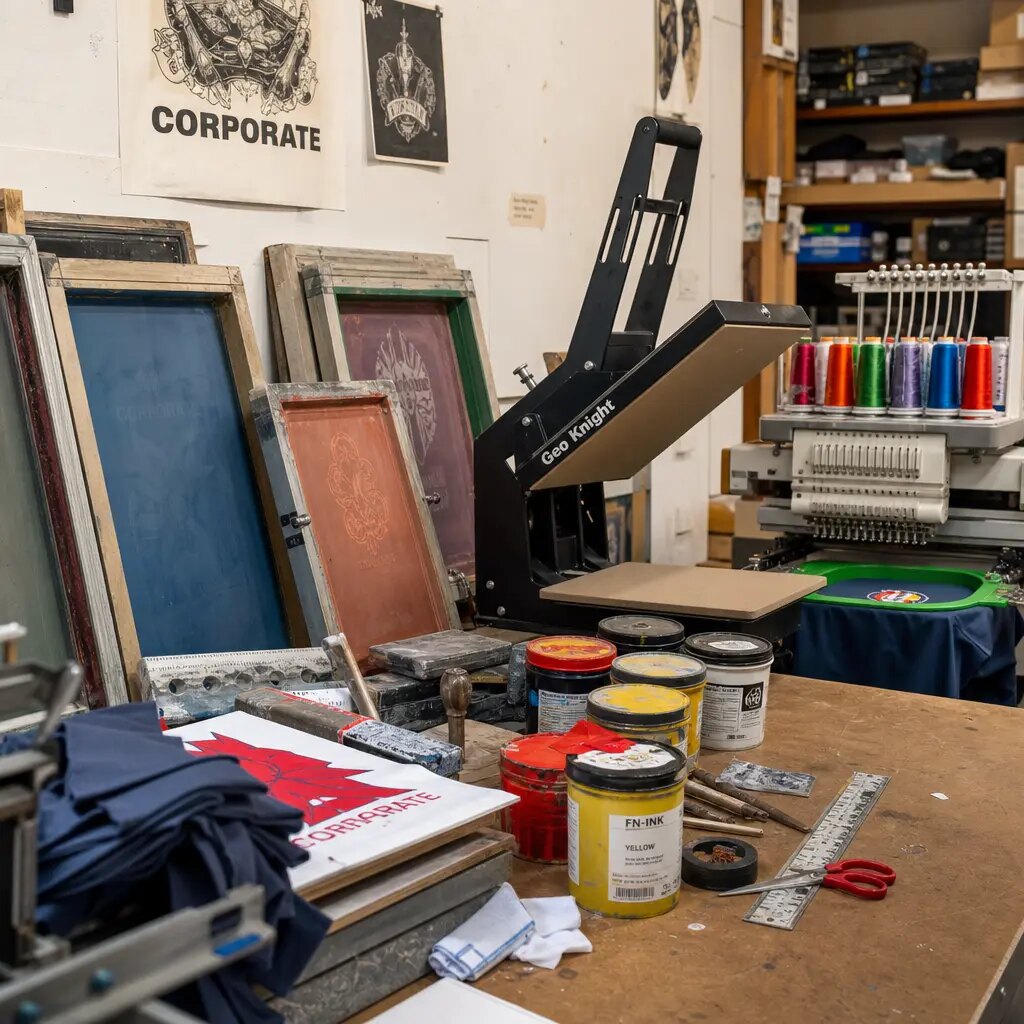
Most wholesale jute tote bags for coffee roasters use screen printing, and for good reason: it is cost-effective for simple 1-2 color logos and medium volume runs. But screen printing on jute is not the same as printing on smooth canvas. The coarse surface limits fine detail, sharp corners, and very small text. A logo that looks crisp in vector format can soften noticeably when printed across natural fiber ridges.
A better RFQ does not just attach artwork. It states minimum line thickness, acceptable edge softness, and whether the logo must be legible from close retail distance or simply visible at event distance. If the artwork includes solid dark fills, ask whether ink penetration will create pinholes in the weave. For some projects, a printed cotton patch sewn onto the jute bag may actually produce a better brand result than direct print.
- Best fit: 1-2 color logos, bold shapes, larger text, and moderate ink coverage.
- Risk areas: tiny serif text, large solid blocks, fine lines, and exact Pantone matching on natural jute.
- Approve a print strike-off before pre-production sample approval.
- If side gusset print is needed, state the print area and fold impact clearly.
MOQ logic and why first orders should not carry too many variables
Many importers lose money on first orders by combining too many changes at once: multiple sizes, multiple logo colors, custom dyed handles, woven labels, and special inserts. Jute tote bags are not technically complex, but every variation affects setup, fabric usage, print screens, and packing efficiency. A supplier may still quote the order, but hidden surcharges or a weak production plan appear later.
For first runs, it is usually more efficient to keep one size, one body color, one handle color, and one main print layout. Use natural stock material if the brand permits it. That lets procurement evaluate the factory's cutting, printing, stitching, and packing consistency before expanding the line. Lower complexity also makes sample approval faster and reduces the chance of mixed-pack errors in shipment.
- Separate unavoidable customizations from nice-to-have branding extras.
- Ask the factory to price setup charges separately from recurring unit cost.
- If testing a market, compare pilot MOQ against projected reorder cadence, not against target margin alone.
- A slightly higher MOQ on a stable spec can cost less than a low MOQ with many custom changes.
How to compare quote data without missing the real cost drivers
A useful jute bag quote should break cost by material grade, print setup, print quantity, handle type, labeling, and packing. When suppliers give only one all-in unit price, the buyer cannot see what is driving the difference. A low quote may exclude inner lamination, use narrower handles, or assume bulk packing that creates shape damage. A higher quote may include cleaner finishing and lower complaint risk. Without line-item logic, procurement compares numbers without comparing the product.
For landed cost planning, the bag's volume matters almost as much as the ex-factory price. Stiff laminated bags with bottom boards can consume more carton space than flexible unstructured bags. If the order is shipping by sea, small differences in folded thickness and carton count can outweigh a minor unit-price saving. Always request estimated carton dimensions and pieces per carton at quotation stage.
- Quote data should include: size, GSM, lamination, handle spec, print colors, label, packing, MOQ, sample cost, and lead time.
- Ask whether the quoted carton count is based on compression packing or natural flat packing.
- If comparing multiple factories, normalize all offers to the same Incoterm and the same packing plan.
- Review whether the print plate or screen charge repeats on reorders.
Sample approval should prove the difficult parts, not just the overall look
A pre-production sample is useful only if it represents the areas most likely to fail in bulk. For jute tote bags, that means the weave texture, print quality on that actual texture, handle attachment, smell after packing, and final folded appearance. Too many buyers approve a sample based on front photo appearance alone and then discover that the bulk lot has looser weave, more loose fibers, or weaker interior finishing.
Use a staged sample process. First approve a material swatch or cut panel with the real jute and lamination. Then approve a print strike-off on the actual surface. Then approve the full pre-production sample with final handle construction and packing fold. This sequence catches specification issues earlier, when changes are still cheap. It also gives the factory a cleaner bulk standard to follow.
- Inspect sample from 30-50 cm retail viewing distance and also by hand for roughness and odor.
- Measure the handle drop on the sample; visual balance can hide actual length errors.
- Store the packed sample closed overnight before odor review.
- Take approval photos of front, back, side, interior, and top seam for production reference.
QC thresholds for jute bags must allow natural variation without accepting poor workmanship
Jute is a natural material, so buyers should not write impossible cosmetic standards. Minor slubs, small tone variation, and a less uniform surface than canvas are normal. But natural variation should not become an excuse for weak workmanship. Procurement teams should separate acceptable material character from rejectable defects such as severe weave gaps, broken yarn clusters, heavy odor, misaligned print, or loose seam ends that continue to unravel.
Set realistic acceptance criteria before production. For example, define measurement tolerance, print placement tolerance, handle symmetry tolerance, and acceptable level of loose fiber. If the order is for premium retail sale, increase the appearance standard and reduce tolerance for visible contamination, dark stains, and severe panel mismatch. If it is for a short event promotion, some variation may be commercially acceptable.
- Reject if print is visibly shifted beyond approved tolerance or key text becomes unclear.
- Reject if handles are uneven enough to affect carrying comfort or bag balance.
- Reject if strong storage or chemical odor remains after carton opening and airing period.
- Document which natural jute characteristics are acceptable before bulk cutting starts.
Packing, lead time, and shipment planning often decide whether the order stays profitable
Packing assumptions are where many jute tote programs go wrong. If the factory compresses too many bags into one carton, gussets crease hard, handles distort, and laminated surfaces can hold fold marks. If cartons are too heavy, warehouse receiving and domestic parcel handling become more expensive. A bag intended to look premium in store can lose value before it even reaches the buyer's DC.
Lead time also needs a realistic breakdown. Material sourcing, printing screens, sample approval, sewing, inspection, and packing each take time. Jute products can face added delays during peak gift and holiday seasons, especially when custom printing and handle materials are involved. Instead of accepting one total lead time, ask for stage timing so the team can see where schedule risk sits and when artwork or sample approvals become critical path items.
- Set a maximum carton gross weight if your warehouse has handling limits.
- Request flat-pack photos of packed bags before shipment release.
- Ask for lead time split by sample stage, material prep, production, and final packing.
- If freight cost is sensitive, compare structured bags versus unstructured bags on cube efficiency.
Specification comparison for buyers
| Spec decision | Recommended option | When it fits | Buyer risk to check |
|---|---|---|---|
| Base fabric weight | 13 oz equivalent laminated jute or approx. 270-320 GSM body fabric | Daily retail use, coffee bean purchases, gift sets, and event tote programs needing shape retention | Some quotes use lighter cloth but describe it as heavy duty; require actual GSM tolerance and finished bag weight range |
| Lamination style | Thin PP lamination inside only | Coffee roaster retail bags needing better print backing, less dust shedding, and easier wipe-clean interior | Over-lamination can make the bag stiff, add odor, and crack at folds; request lamination thickness and odor standard |
| Handle material | Cotton webbing handles 25-30 mm width with box stitch reinforcement | Brand buyers wanting a softer hand feel than twisted jute handles and better comfort for 3-6 kg carrying loads | Short quoted handle drop may look fine in sample photos but fail shoulder carry; confirm handle length and pull test basis |
| Printing method | 1-2 color screen print on jute surface or on laminated panel | Simple coffee brand logos, origin graphics, and event messaging in medium volume runs | Fine lines and solid coverage can bleed on coarse weave; request minimum line width, Pantone tolerance, and strike-off |
| Panel construction | Front and back jute panels with gusset and structured bottom board optional | Gift retail, subscription kits, and premium store packaging where upright presentation matters | Bottom board may shift or warp in humid transit; confirm whether removable, fixed, or omitted |
| MOQ strategy | Single size, single print, shared natural jute stock for first order | Pilot orders, regional launches, or distributor tests where artwork is set but reorder velocity is unknown | Low MOQs often raise unit cost sharply or reduce print setup efficiency; compare setup cost separately from bag cost |
| Inner finishing | Bound seams or turned top hem with clean tape finish | Retail-facing bags where interior presentation affects perceived quality and loose fibers are a complaint risk | Open raw seam edges can fray and shed; specify acceptable loose fiber level at final inspection |
| Packing route | Flat packed in export carton with controlled carton count by size and target gross weight under buyer limit | Importers balancing freight cube, warehouse handling, and e-commerce relabeling needs | Cheap quotes may overpack cartons and deform bags or exceed receiving warehouse weight rules |
| Sample approval path | Blank material swatch, printed strike-off, then pre-production sample | Programs with color-sensitive branding or uncertainty on weave texture and print clarity | Skipping the swatch stage causes late disputes on shade, smell, weave openness, and logo sharpness |
Buyer checklist before sampling
- State bag finished size in W x H x Gusset and specify tolerance, for example ±1 cm.
- Specify jute fabric weight as actual GSM or equivalent ounce weight, not only heavy or standard grade wording.
- Define whether lamination is required, and if yes, inside only or both sides, with acceptable odor level.
- List handle material, width, total length, handle drop, stitch reinforcement method, and load expectation.
- Provide artwork dimensions, number of print colors, print position, Pantone references, and minimum readable text size.
- Note whether the bag must stand upright and whether a bottom board or base insert is required.
- Set appearance expectations for natural jute variation, slub, shade difference, and acceptable loose fibers.
- Request sample sequence: material cutting swatch, print strike-off, full pre-production sample, and bulk approval standard.
- Define packing method: pieces per polybag if any, pieces per carton, carton size limit, and carton gross weight limit.
- Clarify destination market requirements for labeling, barcode stickers, country of origin marking, and carton marks.
Factory quote questions to send
- What is the actual body fabric GSM and what tolerance do you use across the order?
- Is the jute plain woven, laminated, or blended with cotton/canvas panels, and how does that affect print clarity?
- What handle construction is included in the quoted price: material, width, insertion depth, and stitch pattern?
- Does the print price include artwork setup, Pantone matching, strike-off, and print on gusset or only front panel?
- What MOQ applies by size, by color, and by print design, and what surcharge applies below standard MOQ?
- Can you provide a blank material swatch and printed sample before pre-production approval, and what are the sample lead times?
- What is the standard lead time from artwork approval to shipment during normal season and peak season?
- How are bags packed per carton, what are the export carton dimensions, and what is the estimated carton gross weight?
- What in-line and final QC points do you use for odor, print adhesion, seam security, and measurement tolerance?
- What issues are considered natural jute characteristics rather than defects, and how are these documented before order confirmation?
Quality-control points to confirm
- Measure finished width, height, and gusset on random samples against approved tolerance.
- Verify body fabric GSM or finished bag weight against approved standard to catch lighter substitutions.
- Inspect lamination bond, interior cleanliness, and any plastic odor after bags sit packed for 24 hours.
- Test handle stitch security and symmetry; handles should match approved drop length and sit level.
- Check print position, color tone, edge sharpness, and ink coverage on coarse jute texture.
- Review interior and exterior for excessive loose fibers, broken yarns, sharp jute ends, or seam fray.
- Confirm bottom seam and side seam alignment so the bag stands correctly if structured construction is specified.
- Inspect packing count, carton marks, barcode placement, and carton gross weight before shipment release.