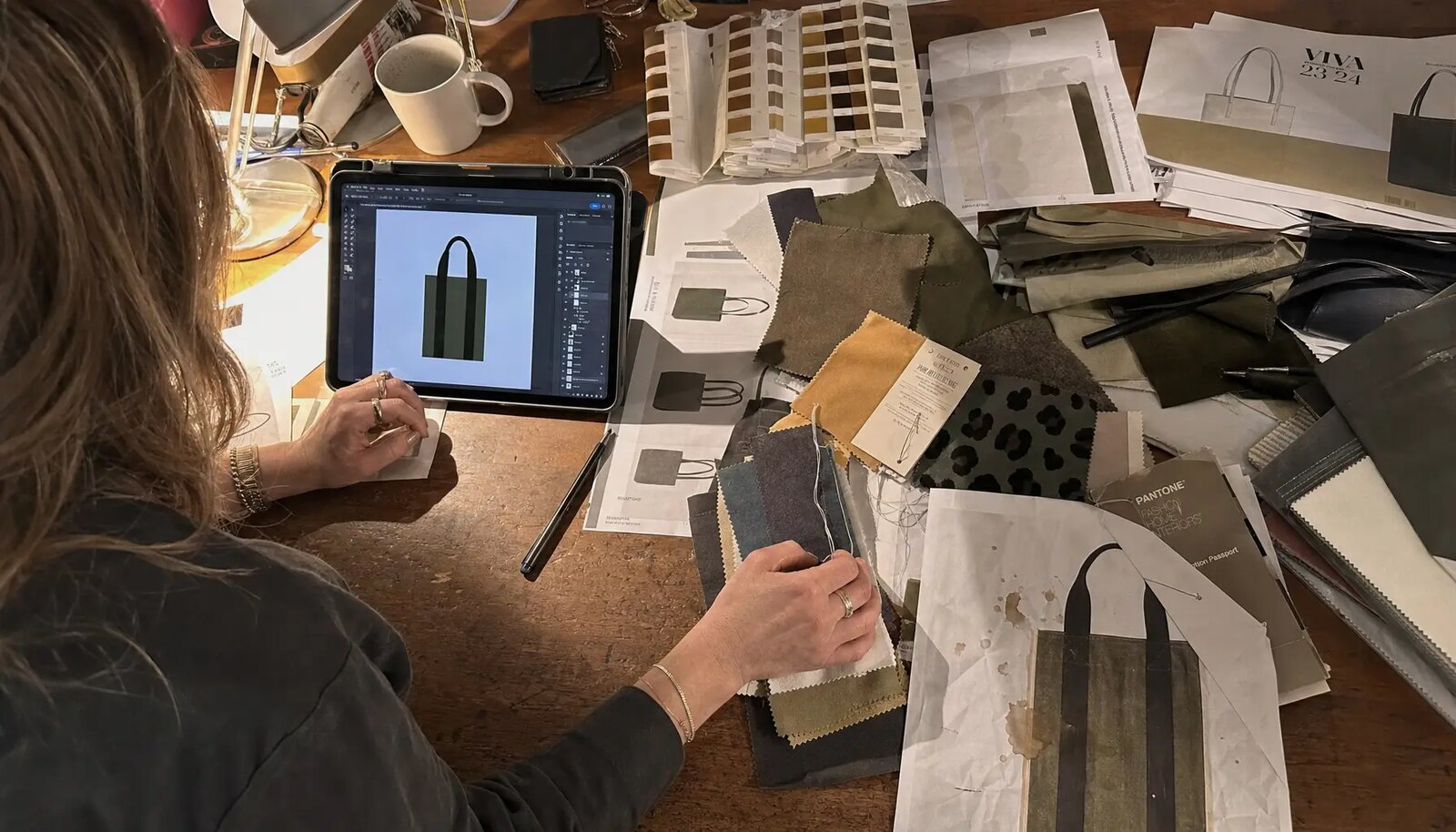
Why fabric weight is the first commercial decision, not a minor spec
For eco apparel brands buying wholesale jute tote bags, fabric weight is not a back-office detail. It affects unit cost, hand feel, customer perception, strength, print quality, shipping cube, and the way the bag can be described in marketing. A mockup can make a 320 GSM tote and a 420 GSM tote look almost identical. In a store, they will behave very differently. The lighter bag may slouch on the counter, distort when filled, or put stress on the handle attachment once a customer adds denim or boxed accessories. The heavier bag may feel more premium, but it can also be stiffer, rougher under print, and bulkier to ship.
Procurement teams should treat fabric weight as part of the total construction, not as a single isolated number. The right GSM depends on size, gusset depth, handle type, lamination, artwork, expected load, packing method, and carry style. A compact hand-carry gift bag does not need the same body as a wide shoulder shopper. A deep-gusset bag needs enough structure to hold shape. A bag for shoes or denim needs stronger handle reinforcement than a giveaway tote intended for a T-shirt and a leaflet.
There is also a language problem. Suppliers may describe jute as light, standard, heavy, premium, export quality, or by ounce equivalents. Those terms are useful in conversation, but they are not precise enough for quote comparison. GSM, or grams per square meter, is clearer buying language. Even then, you need to define the measurement basis: base jute fabric, laminated finished fabric, or finished body panel after processing. Put that basis in the RFQ, the sample card, and the inspection checklist.
- Start with use case and load, then choose GSM; do not select weight from a catalog label alone
- Ask whether the quoted GSM is before or after lamination because laminated fabric can feel firmer without having the same base jute weight
- Avoid comparing unit prices until size, GSM, handle, print, lamination, tolerance, and packing are normalized
- Review fabric weight together with gusset depth and handle reinforcement for apparel retail programs
- Use physical swatches or blank samples to compare hand feel; online mockups do not reveal structure, stiffness, or slouch
Practical GSM ranges for retail, gifting, and event programs
For many apparel retail shoppers, 380 to 410 GSM is a practical starting range for the jute body fabric. It usually gives more structure than promotional-grade jute while staying workable for wholesale quantities, screen printing, folding, and carton packing. Some suppliers may call this roughly 13 oz to 14 oz equivalent. Treat that as a loose reference only. Ounce terminology varies by market and fabric convention, so GSM should remain the control point in your specification.
For premium gifting, denim, footwear, boxed accessories, or launch kits, 430 to 500 GSM can make sense. The bag feels more substantial and often presents better when handed to a customer or used in a launch environment. The tradeoff is real: higher material cost, more shipping volume, possible rougher surface texture, and less foldability. Choose heavier jute because the contents and brand presentation justify it, not because heavier automatically means better.
For events or low-load promotions, 300 to 350 GSM may be acceptable. This range can work for leaflets, light T-shirts, conference giveaways, or short-duration campaigns where the bag is not expected to carry heavy purchases repeatedly. The risk comes when a light bag is presented as a durable reusable shopper without testing. A tote can look fine when empty but fail once it is filled, carried, stacked, and handled by store staff.
- 300 to 350 GSM: budget event totes, leaflets, lightweight giveaways, and short-use campaigns
- 380 to 410 GSM: practical all-around range for many apparel retail shopping bags
- 430 to 500 GSM: premium gifting, heavier contents, footwear, denim, and structured launch bags
- Agree the production tolerance in writing; many buyers use +/-5% or a fixed accepted GSM band
- Approve the target weight on a signed swatch card and reference it during inspection
- Do not rely on ounce equivalents unless the supplier states exactly how the conversion is being used
How lamination changes performance, cost, and eco messaging
Lamination is easy to overlook because it sits inside the bag, but it changes the product. A thin inner PP lamination can make a jute tote feel firmer, improve shape retention, reduce fiber shedding inside the bag, and offer some resistance to damp surfaces or light moisture exposure. That can be helpful for deep-gusset retail shoppers, humid routes, boxed goods, and checkout programs where the bag needs to stand more neatly.
The same lamination also adds a plastic component. That matters for an apparel brand trying to keep material claims clean and accurate. If the message is based on natural fiber simplicity, unlaminated jute may be easier to explain. If the message is reuse, stronger structure, and practical durability, laminated jute may still fit the brief. What should be avoided is loose wording such as plastic-free, fully natural, or all-natural when lamination, plastic base boards, or synthetic support materials are present.
Lamination also complicates quote comparison. One supplier may quote 400 GSM including lamination. Another may quote 400 GSM base jute plus lamination. Those are not the same construction. It can also create its own QC issues: bubbling, delamination, adhesive marks, odor, sharp inner seam edges, and changes in stiffness. Inspect the inside of the bag as carefully as the printed front panel.
- Use unlaminated jute when simple natural-material messaging is a priority
- Use laminated jute when structure, inner cleanliness, moisture resistance, or reduced fiber shedding is more important
- State whether GSM includes or excludes lamination and keep the same basis across all quotes
- Inspect laminated samples for odor, bubbling, peeling, adhesive bleed, and rough inner seam edges
- If using base boards or plastic inserts, disclose them internally before approving eco-positioning language
Print limits on jute: what artwork can realistically achieve
Jute is a coarse woven material with visible yarns, slubs, and surface irregularity. That texture is part of the appeal, but it limits print precision. A bold screen-printed logo can look excellent on natural jute. Small serif text, hairline rules, gradients, photo effects, and tight multi-color registration can look broken or uneven. This is not always a factory mistake. Often it is the natural result of asking fine artwork to sit on an open-weave surface.
For most wholesale jute tote bags, screen print is the best-value option when the artwork uses one to three solid colors and simple shapes. Still, buyers should ask about print size, color references, minimum line width, small-text limits, and print position tolerance. If a logo includes fine marks, have the supplier review the artwork before screens are made. A print strike-off on the actual jute is the safest approval step because it shows how ink behaves on the real production surface.
If detailed artwork is essential, consider a printed cotton patch, transfer, or printed panel. Do not treat these as simple artwork swaps. They change the construction and introduce their own risks. Transfers can crack or lift if adhesion is poor. Patches add stitching, edge control, and extra material. Printed panels can shift the product away from the natural jute look. These options can work well, but they need testing, pricing, and claim review.
- Best screen-print candidates: bold logos, large text, solid icons, and simple campaign marks
- Risky artwork: small serif fonts, thin outlines, gradients, halftones, photos, and tight color registration
- Ask for minimum line width and minimum text size guidance before artwork approval
- Use Pantone references where color matters, but remember that natural jute background shade affects the final appearance
- Approve print with a strike-off on actual jute fabric, not only a digital mockup
- Define print position tolerance in millimeters, such as +/-5 mm or +/-10 mm depending on design and bag size
Construction details that decide whether the tote works in store
A useful jute tote specification reads like a finished product standard, not a fabric note. It should include finished width, height, gusset depth, handle drop, and handle width. It should also describe the format: portrait, landscape, square, compact gift style, or deep-gusset shopper. A wide retail shopper needs different stability from a narrow launch bag. A shoulder-carry tote needs a different handle drop from a hand-carry gift bag.
Handles deserve more attention than they often receive. Cotton webbing is common for apparel retail because it is softer than jute rope, can be color coordinated, and feels better when the bag is loaded. Useful widths are often 25 to 38 mm, depending on size and target look. Narrow webbing may reduce cost, but it can cut into the hand. If the bag should fit over the shoulder, test the handle drop over coats and layered clothing, not just on a flat sample table.
Handle reinforcement is one area where low quotes often hide savings. Ask whether the attachment uses box stitch, X-box stitch, bar tack, internal reinforcement, or simple straight stitching. For repeat-use apparel shoppers, box or X-box reinforcement is generally safer than minimal stitching. Side seams, bottom seams, and gusset folds also need to match the intended load. A deep gusset on light fabric can collapse. A base insert can help structure, but it adds another material, more cost, and packing complexity.
- Specify finished sewn dimensions, not just approximate catalog size
- Confirm whether handle drop is designed for hand carry, shoulder carry, or both
- Cotton webbing handles usually suit fashion retail better than narrow jute handles for loaded use
- Use box stitch or X-box reinforcement for repeat-use bags and heavier contents
- For deep gussets, check bottom seam strength and whether the bag stands when filled
- If a base insert is required, specify material, thickness, coverage, and whether it is removable, sewn in, covered, or exposed
Tolerances and test expectations to put in the RFQ
Jute bags are sewn natural-fiber products, so tolerances need to be realistic and measurable. Without written tolerances, buyers and factories often end up arguing about whether bulk production is acceptable. A strong RFQ states GSM tolerance, size tolerance, print position tolerance, color tolerance, and workmanship rules. The goal is not to make every piece mathematically identical. The goal is to define a range that protects retail appearance, packing, and performance.
For standard totes, many buyers start around +/-10 mm for width and height, then adjust tighter or looser depending on size and construction. Gusset depth and handle drop often need +/-5 to 10 mm controls because they affect usable space and carry comfort. Print placement can often be controlled within a similar range, but it depends on artwork size, seam alignment, and whether the print sits near a fold or gusset.
Load testing should be tied to the actual contents. Instead of writing strong handles, state what the bag must carry and how it will be used. Folded garments, denim, shoes, and boxed accessories create different stress points. The supplier may have an internal pull or hanging-load method; ask them to state the method, load, duration, and pass/fail rule. If your retailer or compliance program has a required test, include it before quote approval, not after production starts.
- Define GSM tolerance, commonly as +/-5% or a fixed accepted range, and state the measurement basis
- State finished size tolerance for width, height, gusset, and handle drop in millimeters
- State print position tolerance from top edge, side seam, or centerline, depending on artwork
- Define unacceptable workmanship: open seams, skipped stitches, broken yarn holes, stains, heavy odor, and loose handle ends
- Ask the factory to identify its handle pull or load test method and proposed pass level
- Use the same tolerance sheet for sample approval, inline review, and final inspection
MOQ and cost drivers: what raises minimums and unit price
MOQ for wholesale jute tote bags is not driven only by sewing capacity. It is shaped by fabric availability, customization level, cutting efficiency, printing setup, and trim sourcing. A standard natural jute body, common size, available cotton handle color, and one-color screen print is usually the most efficient route. Once the order adds dyed jute, uncommon GSM, custom webbing, lining, pockets, labels, contrast piping, base boards, or multiple print positions, the factory carries more setup risk and may raise the minimum.
Multi-version programs can be efficient if they share the same body construction. Several front print designs on one natural jute bag body are simpler than several sizes, fabrics, handle colors, and trims. Ask which part of the MOQ is caused by fabric, which part by printing, and which part by sewing or trim sourcing. That answer helps the buyer decide whether to simplify the spec or accept a higher minimum for strategic reasons.
Low unit prices can also be misleading if the quote quietly removes quality details. Common reductions include lighter GSM, smaller finished size, narrow handles, fewer stitches, no lamination, no inner liner, weaker cartons, or tighter compression. Before negotiating price, lock the construction and packing standard. Then each revision can be priced clearly instead of becoming a dispute later.
- Lowest-risk first order: standard natural jute, common size, available webbing, one-location screen print
- MOQ increases with dyed fabric, special GSM, custom handles, lining, pockets, labels, base inserts, and multiple print locations
- Ask whether artwork variations can share the same bag body and only change the print screen
- Require line-item pricing for revisions such as added print color, wider handle, lamination, or individual packing
- Check whether sample cost, screens, courier, testing, and carton labeling are included or separate
- Do not compare quotes until GSM, size, handle, lamination, print, tolerance, and packing match
Sample approval package for bulk production control
The pre-production sample is the buyer’s best chance to catch problems while they are still inexpensive to fix. With jute totes, sample approval should cover function as well as appearance. Fill the bag with the products it will carry. Test handle comfort. Place it on a counter. Stack a few pieces. Check whether store staff can pack garments quickly. A tote that looks attractive when empty may still be too floppy, too narrow, too rough inside, or uncomfortable under load.
A strong approval package includes a signed fabric swatch with GSM and tolerance, a print strike-off on actual jute, a finished pre-production sample, measurement record, artwork placement file, trim references, packing instruction, and carton mark format. If the order includes several print versions, approve each version clearly. If design, logistics, compliance, and merchandising teams are all involved, collect their comments before the factory starts bulk cutting.
Document every approved deviation. If the sample is accepted except for cleaner thread trimming or moving the logo 5 mm upward, write that exactly. Avoid vague notes such as approved with small changes. The factory needs objective instructions that can be checked on the sewing line and by final inspectors.
- Measure sample width, height, gusset, handle drop, handle width, print size, and print position
- Check the sample against actual intended contents, not only empty appearance
- Seal or sign one master sample and require production to match it
- Approve fabric, print, handles, seam construction, lamination, labels, and packing before bulk
- Photograph the approved sample from front, back, inside, side seam, bottom seam, and handle attachment
- Keep the approved sample available for final inspection comparison
QC plan: inspection points that matter more than cosmetic perfection
Jute is not a polished synthetic fabric. Minor shade movement, slubs, and natural texture are expected. The QC goal is not perfect visual uniformity. It is consistent commercial performance. The bag should be dry, clean, correctly sized, securely sewn, readable in print, acceptable in odor, and packed for shipment without damage. Setting that expectation prevents unnecessary disputes while still protecting the buyer.
A practical inspection plan checks the product in stages: fabric, cutting, printing, sewing, finishing, and packing. At fabric stage, confirm GSM, weave consistency, and shade against the approved swatch. At printing, inspect ink coverage, position, bleeding, registration, and cure. At sewing, inspect seam security, handle reinforcement, stitch density, and raw-end handling. At finishing and packing, inspect loose threads, stains, odor, carton count, carton marks, and compression.
Many wholesale orders use an AQL framework, but AQL by itself is not enough. The product-specific checklist must define major and minor defects. Major defects may include open seams, broken handle attachment, wrong artwork, severe print shift, heavy odor, mildew, incorrect size beyond tolerance, or mixed SKU cartons. Minor defects may include small loose threads or slight natural yarn irregularities within the approved range. Put these rules in the purchase order or QC brief.
- Major defects: open seams, weak handles, wrong print, mildew, strong odor, severe stains, incorrect size, and wrong carton contents
- Minor defects: small loose threads, acceptable natural slubs, and minor shade variation within the approved sample range
- Inspect multiple cartons across the production lot, not only top-packed samples
- Perform a practical loaded carry test on random units when the bag is intended for retail use
- Check lamination inside the bag, not only the outer panel
- Confirm carton quantity, markings, SKU version, and barcode labels before shipment release
Packing, freight, and lead-time decisions that affect landed cost
Packing choices can change both landed cost and store readiness. Flat packing is efficient, but over-compression can create stubborn creases or print transfer if ink is not fully cured. Individual polybags keep units clean but add cost and plastic, which may conflict with an eco-positioned apparel program. Bundle packing with an inner carton liner is often a practical middle option, but it must be specified before the quote is finalized.
Carton planning should make warehouse handling easier, not harder. Ask for pieces per carton, carton dimensions, net weight, gross weight, and expected carton count. Very heavy cartons slow receiving and increase damage risk. Very tight cartons may save freight but create reshaping labor in stores. For multi-version programs, carton marks should include PO number, item code, artwork version, quantity, carton number, gross and net weight, and country-of-origin marking where required.
Lead time should be mapped by milestone rather than summarized as one vague number. Jute tote production may include material booking, lamination, screen making, strike-off, sample approval, cutting, printing, sewing, finishing, inspection, export packing, and shipment booking. Custom dyed jute, special handles, unusual sizes, and late artwork changes are common schedule risks. If the launch date is fixed, work backward from the required warehouse date and reserve time for sample revisions, inspection, export documents, customs, and domestic delivery.
- Specify pieces per carton, bundle method, carton size, target gross weight, and inner protection
- Use desiccant or moisture control for humid seasons, long ocean freight routes, or natural-fiber storage risk
- Decide whether polybags are required, prohibited, or replaced by paper bands or bundle packing
- Request packed-carton photos and carton mark photos before shipment release
- Build a milestone schedule from artwork lock to ex-factory date and in-warehouse date
- Ask which materials are stock and which require booking before confirming delivery dates
Specification comparison for buyers
| Spec decision | Recommended option | When it fits | Buyer risk to check |
|---|---|---|---|
| Fabric weight for daily apparel retail tote use | 380 to 410 GSM finished jute body fabric; many suppliers may describe this as about 13 oz to 14 oz equivalent, but confirm the supplier’s conversion basis | Folded garments, light knitwear, accessories, store shopping bags, and reusable retail packaging where the bag should feel substantial without becoming overly stiff | GSM may be measured before lamination, after lamination, or from bulk roll fabric; require a written tolerance, commonly +/-5% or a defined GSM band |
| Fabric weight for premium launch or gift bag | 430 to 500 GSM jute body fabric, combined with reinforced handle stitching and a suitable gusset or base design | VIP gifting, denim, footwear, boxed apparel, capsule launches, press kits, and structured in-store presentation | Heavier fabric increases unit cost, shipping cube, and surface roughness; approve a print strike-off because fine artwork may break on coarse yarns |
| Budget event tote fabric | 300 to 350 GSM jute, usually unlaminated or lightly finished, with limited load expectations | Short events, leaflets, light T-shirts, conference giveaways, and short-duration promotional distribution | Do not market as heavy-duty reusable unless tested; light fabric can slouch, distort at seams, and fail earlier under repeated load |
| Inner finish | Unlaminated for simpler material messaging; thin PP lamination only when shape retention, inner cleanliness, or moisture resistance is needed | Reusable store bags, deeper gussets, humid retail routes, bags carrying boxed goods, and programs needing less fiber shedding inside | Lamination affects eco claims, odor, stiffness, recyclability messaging, and sometimes total GSM; state thickness or supplier standard and inspect for bubbling or delamination |
| Front panel print method | Screen print for bold logos, large text, and 1 to 3 solid colors | Most apparel brand marks, seasonal retail campaigns, natural-look packaging, and cost-sensitive wholesale quantities | Coarse jute limits detail; confirm minimum line width, small text size, registration tolerance, ink cure, rub resistance, and print position tolerance |
| Detailed artwork option | Printed cotton patch, heat transfer, or printed laminated panel only after a strike-off on actual production material | Fine typography, illustration-heavy graphics, photo-like artwork, tonal artwork, or color-critical brand applications | Transfers and patches add cost and process risk; check edge adhesion, cracking, wash or rub resistance where relevant, and how the added material affects product claims |
| Handle material and reinforcement | Cotton webbing handles, typically 25 to 38 mm wide, sewn with box stitch or X-box reinforcement | Fashion retail shoppers, shoulder-carry totes, premium gift bags, and repeat-use customer packaging | Narrow webbing can cut into the hand; specify handle drop, width, color, attachment method, stitch density, and a pull or load test aligned to intended use |
| Size and gusset construction | Finished sewn dimensions stated as width x height x gusset, with tolerances; side gusset and reinforced bottom seam for apparel shoppers | Folded apparel, shoes, accessories, gift sets, multi-item retail purchases, and store display programs | A deep gusset on light jute collapses easily; confirm whether dimensions are finished size or cut-panel size and whether usable internal size matters |
| Base support | No base insert for flexible tote use; removable or sewn-in base insert only when structure is required | Gift presentation, footwear boxes, boxed accessories, upright merchandising, and heavier retail loads | Base board adds material, cost, packing complexity, and sustainability disclosure; specify material, thickness, coverage, and whether it is covered or exposed |
Buyer checklist before sampling
- Define the real use case first: retail shopping bag, gift-with-purchase, launch gift, event tote, e-commerce insert, influencer kit, or premium packaging. Tie that use case to expected load, carry duration, and whether the customer will reuse the bag.
- State the target body fabric weight in GSM and write exactly how it is measured: unlaminated jute only, laminated finished fabric, or cut body panel. Add tolerance, such as +/-5% or a defined accepted range like 380 to 410 GSM.
- Specify finished sewn size in width x height x gusset depth, plus handle drop and handle width. Confirm whether measurements are outer finished dimensions, usable internal dimensions, or pre-sewing cut panel dimensions.
- Define acceptable dimensional tolerance in millimeters for bulk production. A practical starting point is often +/-10 mm for body dimensions and +/-5 to 10 mm for handle drop, but adjust by bag size and retail need.
- Choose the finish deliberately: natural jute, dyed jute, laminated inner surface, unlaminated natural jute, cotton-lined jute, jute-cotton blend, printed cotton patch, or side label. Do not let lamination be assumed by the supplier.
- Attach production-ready artwork with print size, Pantone or color references, print location from top edge and side seam, number of colors, minimum line thickness, and any small-text requirements.
- Request a print strike-off on actual jute fabric for any logo where edge clarity, small type, color, or registration matters. A digital mockup is useful for layout only; it is not enough for jute texture approval.
- Specify handle material, webbing width, handle drop, color, stitch type, reinforcement shape, and expected load. Ask for a practical handle pull or loaded carry test matched to the intended contents.
- Request sample photos or video showing front print, inside lamination or lining, side seam, bottom seam, handle reinforcement, close-up weave, loose-thread finishing, and carton packing method.
- Set packing requirements: pieces per carton, bundle method, maximum carton gross weight, carton dimensions, inner liner, desiccant if needed, barcode labels, hangtags, master carton marks, and whether individual polybags are allowed.
Factory quote questions to send
- What is the actual body fabric weight in GSM, and is that measured before lamination, after lamination, or on the finished cut body fabric?
- What tolerance will apply to GSM in bulk production: +/-5%, +/-10%, or a stated accepted range? How will the factory verify it?
- What yarn or weave characteristics can you provide, and will bulk fabric match the approved swatch for weave density, hand feel, and shade range?
- Is the quoted construction single-layer jute, laminated jute, lined jute, reinforced jute, or a mixed-material construction with hidden support tape or base board?
- If laminated, what type of lamination is used, on which side, and what defects are unacceptable: bubbling, delamination, adhesive marks, strong odor, or sharp seam edges?
- What finished size is quoted, and what bulk tolerance applies for width, height, gusset depth, handle drop, and print position in millimeters?
- What handle material is included in the quote, including webbing width, handle length or drop, color, attachment method, reinforcement stitching, and raw-end treatment?
- What seam construction is used for side seams and bottom panels, and is reinforcement tape, binding, overlock, or double stitching included?
- What load or handle pull test can you perform for this bag, what test method do you use internally, and what load level do you recommend for the intended contents?
- What print method is included: screen print, transfer, printed patch, digital panel, or other? What limits apply for minimum line width, small text, gradients, and multi-color registration?
Quality-control points to confirm
- Verify fabric weight against the approved GSM range using the same measurement basis stated in the specification. Do not judge fabric weight by hand feel alone, especially when lamination is involved.
- Compare bulk fabric to the approved swatch for weave density, shade range, hand feel, and visible flaws. Reject major thin patches, broken yarn clusters, holes, severe slubs, and panels cut from obviously inconsistent rolls.
- Check moisture condition before packing and before shipment. Hold cartons with mildew marks, damp smell, softened structure, water staining, or signs of excessive humidity exposure for review.
- Inspect print on actual bags for legibility, color match within agreed tolerance, broken lines, ink bleeding, registration, rub transfer, and position. Use the approved strike-off as the reference.
- Measure finished dimensions from multiple cartons: width, height, gusset, handle drop, handle width, and print placement. Record deviations in millimeters against the agreed tolerance.
- Inspect handle attachment for box or X-box reinforcement, skipped stitches, loose thread clusters, exposed raw ends, weak tack points, inconsistent stitch density, and left-to-right alignment.
- Perform a practical load or pull test aligned with intended use. The test load should reflect what the customer will carry, such as folded garments, denim, shoes, or boxed accessories, not an empty-bag check.
- Check side seams, bottom seams, gusset folds, and base areas under load. Reject open seams, unraveling ends, weak bottom corners, sharp internal support edges, and reinforcement that shifts during carry.
- For laminated bags, inspect for strong chemical odor, bubbling, delamination, adhesive bleed, cracked inner surface, sharp seam edges, and lamination visible through the weave in an unacceptable way.
- Review finishing for loose threads, stained panels, oil marks, dirt, fiber shedding beyond the approved sample, misaligned labels, incorrect hangtags, and mixed artwork versions.