Start with the load, not the catalog name
Coffee roasters often buy jute totes for a more demanding job than a basic giveaway bag. The same tote may carry retail coffee packs from a cafe counter, hold a holiday gift set, support a subscription welcome kit, or sit on a shelf as paid branded merchandise. Coffee is dense for its size, so an empty sample can look sturdy and still sag, twist, or fail once packed with real product.
Start with the intended packed load. A bag carrying one 250 g pouch at a coffee festival does not need the same fabric, handle, and seam standard as a bag carrying two 1 kg bags, a ceramic mug, and a brew guide. Procurement teams should define the expected load in kilograms, then add a practical safety margin. Customers lift quickly, swing bags into cars, and often reuse branded totes for groceries or daily errands.
Fabric weight matters because it affects body structure, print stability, sewing behavior, carton volume, and perceived value. It is not the only strength factor. A heavier jute panel with narrow handles and shallow stitching can perform worse than a medium-weight panel with proper cotton webbing and reinforcement. For B2B sourcing, the stronger question is not simply, “What GSM is best?” It is, “What complete construction fits the real use case?”
- List the actual products expected inside the tote before requesting price.
- Define the target packed load in kilograms and state whether the bag is for hand carry, shoulder carry, or both.
- Use GSM as one control point alongside weave density, lamination, handle construction, seam quality, and packing method.
- Avoid vague internal labels such as premium, strong, or heavy duty unless they are tied to measurable specifications.
- Ask suppliers to quote against the same construction so price comparisons are meaningful.
Practical GSM ranges for coffee roaster totes
For many wholesale jute tote bags for coffee roasters, a useful general-purpose range is 440 to 475 GSM, often described commercially as 13 oz to 14 oz jute. This range usually gives enough body for cafe retail carry bags, one to three coffee packs, and branded merchandise without creating unnecessary bulk. It also gives a more stable print face than lighter open-weave jute, especially for bold screen-printed logos.
For premium merchandise, larger gusseted bags, and gift sets that may exceed about 6 kg packed load, 540 to 610 GSM is a better starting point. The heavier fabric can support a more structured feel and better shelf presentation, especially when paired with lamination or a reinforced base. The tradeoff is real: higher cost, thicker folds, and more carton volume. Check freight impact before approving the upgrade.
Light jute, roughly 340 to 410 GSM, belongs in low-load promotional uses: coffee festivals, small flat totes, cafe-opening giveaways, or single-pouch campaigns. It should not be specified for repeat retail use unless the brand accepts a softer body and more visible distortion. Very heavy jute above 610 GSM may be right for a specific premium structure, but it should be chosen for a design reason, not because “heavier” sounds safer.
- 340 to 410 GSM: short-term promotions, small flat bags, and one-pouch campaigns.
- 440 to 475 GSM: balanced range for most roaster retail totes and general branded carry bags.
- 540 to 610 GSM: premium, larger, laminated, or heavier gift-set bags.
- Above 610 GSM: use only when the structure, brand position, or load requirement justifies added cost and freight.
- Always ask whether GSM applies to every panel or only the main body fabric.
GSM, ounces, moisture, and tolerances
Jute weight can be confusing because suppliers may quote both GSM and ounces. GSM means grams per square meter. Ounce descriptions are commonly based on ounces per square yard, but catalogs and quotations do not always state the basis clearly. Since jute is a natural fiber, moisture content, finishing, weave openness, and lamination can influence the measured weight. Treat any conversion as approximate unless the supplier defines the method.
For procurement, a range is more useful than a single exact number. A target such as 440 to 475 GSM with an agreed tolerance is easier to inspect than a specification that says 450 GSM only. Depending on the supplier and material grade, a tolerance around plus or minus 5 percent may be realistic, but do not assume it. Ask the factory what tolerance it can hold and how it will verify bulk fabric before cutting.
Also clarify whether the quoted GSM includes lamination. A laminated panel can weigh more than base jute, which can make two quotes look similar even when the underlying fabric is different. For accurate comparison, ask for base fabric weight, finished panel construction, and physical swatches. For higher-value orders, a cut sample measured by area and weighed on a calibrated scale can confirm whether the material is within range.
- State both GSM and acceptable tolerance in the RFQ.
- Ask whether the quoted weight is base jute only or laminated finished panel weight.
- Request the supplier's measurement method and sampling frequency.
- Keep approved swatches from sample stage for bulk inspection comparison.
- Do not reject natural variation automatically; define what variation is unacceptable.
Weave and finish change the way the bag behaves
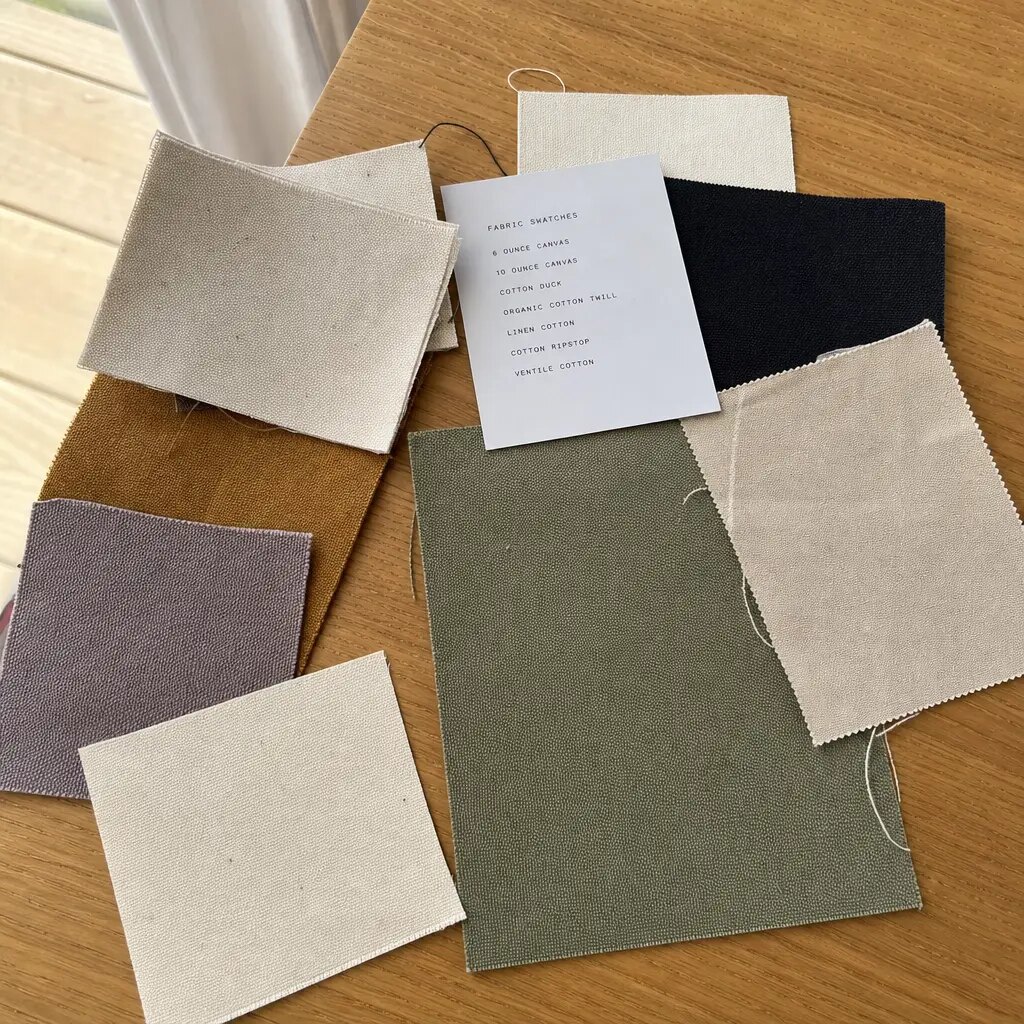
Two fabrics with the same GSM can behave differently. A tighter weave generally gives a cleaner print surface and better panel stability. A looser, coarser weave can feel rustic and natural, but it may distort more under load and show more ink breaks. This is why a fabric swatch matters. Look at yarn thickness, weave openness, slubs, broken yarns, and shade consistency, not only the number printed on the quotation.
Unlaminated jute gives the most natural handfeel and may suit brands that want a simple material story. It can also shed more fiber and feel softer in the body. Laminated jute can improve structure, reduce loose fibers inside the tote, and help the bag display upright. It may also increase stiffness, carton volume, and odor risk if coating and airing are poorly controlled.
If the roaster plans to make sustainability statements, the material construction must be precise. A tote described casually as jute may include coating, cotton webbing, polyester thread, plastic zipper tape, or synthetic labels. Those additions can be acceptable from a product standpoint, but marketing language should match the real construction. Procurement should collect material details before the brand team writes packaging copy or website claims.
- Inspect weave tightness and slub level from actual swatches.
- Decide whether the desired look is rustic, refined, structured, or low-cost promotional.
- Use lamination when structure and interior cleanliness matter more than pure natural handfeel.
- Ask whether side gussets and base panels use the same fabric as the front and back panels.
- Keep material claims factual and tied to the actual construction.
Print method should follow the artwork
Jute is textured. Artwork that prints beautifully on paper, cotton canvas, or a digital mockup may not reproduce cleanly on the bag. Raised yarns, weave gaps, fibers, and slubs can break thin strokes, fill in small reverse text, and create uneven ink coverage. Medium and heavier jute usually provides a more stable surface, but it still will not behave like smooth fabric.
Screen printing is usually the right choice for bold roaster logos, cafe names, origin symbols, event marks, and large one-color or two-color graphics. It is less suitable for small tasting notes, fine serif typography, QR codes, detailed illustrations, or tight multi-color registration. If the brand requires detail, consider a sewn cotton patch, canvas front panel, woven label, or tested heat transfer. Each option should be priced and sampled because it changes labor, MOQ, and appearance.
The approval that matters is the strike-off on actual production jute. A PDF proof confirms layout, not print behavior. Buyers should define logo size, placement tolerance, Pantone or color target, minimum stroke width, smallest text height, and acceptable edge roughness. A slightly irregular edge may be normal on jute; a broken logo, unreadable text, or major ink skip should not be accepted unless it was visible and approved in the strike-off.
- Use direct screen print for bold logos and simple roaster marks.
- Move small-detail branding to a patch, canvas panel, woven label, or tested transfer.
- Approve color and detail on real jute, not only on a digital proof.
- Set minimum stroke width and smallest text size before bulk production.
- Inspect strike-offs from straight-on and angled photos to judge ink coverage and texture.
Handle construction is the main strength checkpoint
Handle failure is one of the most common practical risks in coffee tote programs. Dense coffee packs concentrate stress where the handles attach to the body, especially when customers lift the bag quickly from a counter or carry it on one shoulder. Adding 50 GSM to the body fabric will not fix a handle that is too narrow, attached too shallowly, or sewn with weak thread.
Cotton webbing is a strong baseline for most roaster bags because it is comfortable, familiar, and easy to reinforce. A typical width is about 25 mm to 38 mm, depending on bag size and load. Procurement should specify finished handle drop, not only total handle length, because the drop controls whether the bag works for hand carry or shoulder carry. Attachment depth and stitch pattern should be written into the spec as well.
A box-and-cross stitch is a practical standard for many coffee retail totes. For heavier gift sets, a reinforcement patch or extended attachment area may be needed. Ask the supplier to state the load test method: how much weight is used, how long it is applied, how the bag is lifted or suspended, and what counts as failure. Testing should reflect the real program, not a generic light demonstration.
- Specify handle material, webbing width, finished drop, and attachment depth.
- Use box-and-cross reinforcement as a practical baseline for medium and heavy coffee totes.
- Define hand-carry versus shoulder-carry requirements before sampling.
- Test the approved sample with real coffee packs or equivalent weight.
- Treat stitch failure, panel tearing, handle slippage, and major distortion as separate failure modes.
Choose stock, semi-custom, or full custom deliberately
A stock jute tote with custom print can be the right route for a new coffee roaster program. It lowers development time, often reduces MOQ, and helps test customer response for seasonal blends, cafe openings, trade shows, and distributor campaigns. The limitation is control. Stock sizes, handle drops, lamination, natural shade, and carton packing may follow the supplier’s existing standard rather than the buyer’s ideal specification.
A semi-custom route may use an existing body pattern while changing print, handle color, label, or packing. This can be efficient when the bag is close to what the roaster needs but still requires a stronger brand presentation. Full custom production is better when the tote must fit a specific gift box, carry a defined weight, use a special gusset, include a zipper or pocket, display a sewn patch, or maintain a consistent retail merchandise standard across repeat orders.
The cleanest comparison is to ask for both routes when demand is uncertain. Quote stock body with custom print and full custom construction separately. Compare MOQ, unit cost, sample cost, print setup, lead time, carton quantity, and reorder terms. This keeps a low-cost stock option from being compared unfairly with a more controlled custom build.
- Use stock plus print for pilots, events, and lower-volume launches.
- Use semi-custom when the existing body works but branding or packing needs adjustment.
- Use full custom when size, load, structure, and premium presentation must be controlled.
- Ask whether artwork changes, handle color changes, or size changes trigger new MOQ or setup fees.
- Document which quote assumptions are fixed and which are supplier defaults.
Sample approvals should become production rules
A sample is not just a visual reference. It should prove the parts of the specification that create risk: fabric weight, weave, lamination, print quality, handle strength, finished dimensions, and packing. A useful approval path may include a fabric swatch, stock reference sample, custom blank sample, print strike-off, pre-production sample, and production-line sample for larger orders. Not every order needs every stage, but every skipped stage leaves more room for supplier interpretation.
The pre-production sample is the key approval point. It should use final jute, final lamination, final handles, final thread, final artwork, final trim, and the intended fold method if possible. Measurements should be taken after sewing because cutting, seam allowance, gusset formation, and top hemming affect finished size. If the tote is for a gift set, pack the exact contents into the sample and check balance, fit, handle comfort, and logo visibility when filled.
Turn sample comments into measurable production language. Instead of saying the print looks too low, state the approved logo placement and tolerance. Instead of saying the handle feels short, state the finished drop length. Instead of saying the bag smells strong, define the odor acceptance process and whether cartons must be aired before final packing. This is where subjective feedback becomes inspectable criteria.
- Measure width, height, gusset, top opening, handle drop, and logo placement on the pre-production sample.
- Weigh a sample panel when fabric weight is a critical buying factor.
- Approve the logo on actual jute and keep the strike-off for inspection reference.
- Pack the real coffee products into the sample before signing off.
- Record every approved change in the spec sheet before bulk production starts.
QC tolerances and inspection points for bulk orders
Natural jute will never look as uniform as synthetic fabric or tightly woven cotton canvas. That does not mean inspection should be loose. It means the buyer and supplier need clear acceptance standards. Define body dimension tolerances, handle drop tolerance, logo placement tolerance, shade tolerance, and allowed natural slub level before production. If the buyer wants a rustic look, approve a range. If the brand requires a cleaner premium look, select a tighter fabric grade and inspect against that grade.
For many tote programs, practical tolerances might include body dimensions within about plus or minus 1 cm, handle drop within about plus or minus 1 cm, and logo placement within about plus or minus 5 mm to 10 mm, depending on bag size and print method. These figures are not universal. Confirm what the supplier can hold and match the tolerance to the construction. A rigid boxed-base bag may need different controls from a soft flat tote.
Inspection should cover both appearance and function. Check fabric defects, panel shade, odor, lamination bonding, print coverage, seam quality, skipped stitches, handle attachment, loose threads, and carton packing. For heavy-load programs, include a defined load test on sampled units. For bags with rivets, eyelets, snaps, zippers, or magnetic closures, add needle and metal control checks. Photos of accepted and rejected examples help reduce disputes during final inspection.
- Set dimensional and logo-placement tolerances in writing before production.
- Inspect odor after opening packed cartons, not only on loose samples.
- Check lamination at folds, seams, corners, and gussets for peeling or bubbling.
- Use approved strike-offs to judge print quality and legibility.
- Apply load testing to sampled units when the bag carries heavy or high-value gift sets.
- Confirm final inspection covers both loose units and packed cartons.
Packing, cartons, and landed cost
Jute totes can be bulky, especially when fabric weight increases, lamination is added, handles are thick, or the base is structured. A small unit price saving can disappear if the packing method reduces carton quantity or increases cubic volume. Before selecting the final specification, request carton dimensions, units per carton, net weight, gross weight, and estimated cubic meters for each quoted option.
Packing also affects product condition. Over-compression can create permanent creases, distort the bag mouth, or mark printed areas. Loose packing can increase freight and allow bags to shift inside the carton. Individual polybags may protect presentation and reduce dust transfer, but they add cost and material. Inner packs may help stores, ecommerce teams, or 3PLs count and replenish stock more easily than one loose master carton.
Carton labeling should be locked before production is finished. For distributor or retail DC shipments, the carton may need SKU name, purchase order number, barcode label, country of origin marking, carton sequence, gross weight, and destination details. Late label changes can create relabeling cost and receiving delays. Ask for a packed carton photo before shipment so the team can verify fold direction, label placement, carton marks, and count.
- Compare quotes using estimated landed cost, not only ex-factory unit price.
- Request carton dimensions and units per carton for each GSM and lamination option.
- Set maximum gross carton weight based on warehouse handling requirements.
- Decide whether individual polybags are required, allowed, discouraged, or prohibited.
- Confirm carton marks, barcode labels, and inner pack quantities before shipment booking.
- Ask for packed carton photos as part of pre-shipment approval.
Specification comparison for buyers
| Spec decision | Recommended option | When it fits | Buyer risk to check |
|---|---|---|---|
| Base fabric weight | 13 oz to 14 oz jute, approximately 440 to 475 GSM | Most cafe retail bags, gift-with-purchase totes, daily-use branded merchandise, and bags carrying one to three retail coffee packs | Confirm the conversion basis and tolerance. Oz values are often quoted as oz per square yard, and jute weight can shift with moisture content, weave, finish, and supplier convention. |
| Heavy-duty fabric weight | 16 oz to 18 oz jute, approximately 540 to 610 GSM | Premium retail bags, larger gusseted formats, subscription welcome kits, and coffee gift sets above about 6 kg packed load | Higher GSM does not rescue weak handles or loose weave. Ask for a fabric swatch, panel weight check, handle load test, and carton-volume estimate. |
| Light promotional fabric weight | 10 oz to 12 oz jute, approximately 340 to 410 GSM | Short-term events, cafe openings, coffee festival giveaways, small flat bags, or one-pouch promotional use | Do not call it heavy duty. It may sag under dense coffee packs, print less cleanly, and show more panel distortion after folding. |
| Inner finish | Defined laminated or unlaminated construction with coating type stated | Lamination helps structure, interior cleanliness, reduced fiber shedding, and shelf display; unlaminated construction suits simpler natural-material programs | Lamination can affect odor, handfeel, recyclability language, carton count, and claims. Specify full or partial lamination and request odor checks. |
| Front logo print | Screen print for bold one-color or two-color artwork | Roaster logos, cafe names, origin marks, event graphics, and large block lettering on medium or heavy jute | Fine lines can break and small reverse text can fill in. Approve a strike-off on actual fabric and set minimum stroke and text size. |
| High-detail branding | Sewn cotton patch, canvas panel, woven label, or tested heat transfer | Premium badges, small typography, crests, detailed illustrations, batch labels, or artwork that must stay sharp | Patches add placement tolerance and labor; transfers can look glossy or crack if not tested on the exact jute and coating. |
| Handle construction | Cotton webbing, typically 25 mm to 38 mm wide, with box-and-cross reinforcement | Coffee bags carrying dense packs, mugs, grinder accessories, brew guides, or gift boxes | Most failures happen at the handle attachment. Define finished drop, attachment depth, stitch pattern, thread, and load-test method. |
| MOQ route | Stock body plus custom print for pilots; full custom for exact size and premium builds | Stock works for lower-volume launches and seasonal campaigns; custom works for repeat programs, specific kits, and controlled presentation | Do not compare stock unlaminated bags against full custom laminated bags as equivalent quotes. Normalize specs before judging price. |
| Packing plan | Flat packed by approved fold direction, carton count, carton marks, and maximum carton weight | Distributor receiving, 3PL inbound, retail DCs, ecommerce replenishment, and multi-SKU roaster programs | Poor packing can crease print, inflate freight, cause barcode errors, or trigger receiving delays. Request packed carton dimensions before approval. |
Buyer checklist before sampling
- Define the real packed load in kilograms, including coffee packs, mugs, brew guides, gift boxes, tissue wrap, and accessories. A tote for two 1 kg coffee bags needs different handle and seam controls than a tote for one 250 g pouch.
- Specify target fabric weight as a range, such as 440 to 475 GSM, not as one ideal number. Ask the supplier to state GSM tolerance, weighing method, and whether the quoted weight includes coating or only base jute.
- Clarify the measurement basis for ounce weights. Many suppliers use oz per square yard, but conversion can be imprecise because jute moisture, weave openness, and finishing change the measured result.
- State whether the bag is unlaminated, fully laminated, or partially laminated. If laminated, ask for coating type, approximate thickness if available, odor control process, and whether the coating changes sustainability or recyclability claims.
- Confirm the bag format before quoting: flat tote, bottom gusset, side gusset, boxed base, open top, zipper top, inner pocket, patch panel, binding, piping, or label trim. Similar-looking bags can have very different cutting and sewing costs.
- Provide artwork with Pantone or other color reference, final logo size, placement, minimum stroke width, smallest text size, and number of print colors. Coarse jute can distort fine detail even when the artwork file is correct.
- Define handle material, width, finished drop length, attachment position, attachment depth, stitch pattern, thread color and size, reinforcement patch, and intended hand-carry or shoulder-carry use.
- Request a pre-production sample made with final fabric weight, final lamination decision, final handle construction, final print method, final trim, and intended fold method. A digital proof or stock blank should not be the only bulk approval.
- Ask for fabric swatches, a print strike-off, and at least one destructive or load-test sample if the tote will carry heavy gift sets, ship into retail distribution, or be sold as merchandise.
- Set inspection acceptance points for odor, loose fibers, panel shade, seam puckering, print offset, ink coverage, logo placement, handle alignment, skipped stitches, broken yarns, and carton packing before production starts.
Factory quote questions to send
- What is the quoted jute fabric weight in GSM and oz per square yard, and what tolerance applies across bulk production?
- Does the quoted GSM refer to base jute only, laminated jute, or finished panel weight including coating?
- How do you verify fabric weight: mill certificate, in-house GSM cutter and scale, panel weighing, third-party test, or inspection sampling?
- What is the weave construction and visual grade of the jute? Can you provide actual swatches from the intended production lot or closest available lot?
- Is the quoted bag plain jute, laminated jute, jute with cotton canvas paneling, or jute combined with another lining? Please state the exact construction of each panel.
- If lamination is included, what coating type is used, is it full or partial, and how do you control odor before cutting, sewing, and carton packing?
- Can you provide a weighed sample panel and a finished sample bag before order confirmation?
- What print method are you quoting, how many colors are included, and what setup costs apply for first orders and repeat orders?
- What minimum line width, smallest text height, and reverse-text size can you hold on this exact jute fabric without filling in or breaking?
- Can you provide a print strike-off on the final jute fabric before bulk production starts, and what approval lead time is needed?
Quality-control points to confirm
- Fabric weight should be verified from actual sample panels using an agreed GSM method and tolerance range, not copied only from a catalog description.
- Finished body dimensions must match the approved specification within tolerance, especially width, height, gusset depth, top opening, seam allowance effect, and finished handle drop.
- Jute weave should be visually consistent, with no major holes, severe slubs, oil stains, water marks, broken yarns, mold marks, or panel-to-panel shade mismatch beyond the approved standard.
- If laminated, the inner coating should be even, bonded, and free from peeling, bubbling, sticky patches, sharp odor, exposed rough coating edges, or delamination at folds and seams.
- Printed logos should match approved artwork for size, placement, color density, and coverage, with no obvious skip print, smearing, ghosting, ink offset, or excessive ink sink into the weave.
- Fine text, QR codes, origin notes, batch details, and small icons should be inspected against the approved strike-off because jute texture can reduce legibility even when the overall logo looks acceptable.
- Handle attachment should pass the agreed pull or static load test, with webbing width, finished drop, stitch density, thread color, reinforcement patch, and stitch pattern matching the approved sample.
- Seams, bottom corners, binding, piping, gussets, and top hems should lie flat without open seam gaps, skipped stitches, loose thread nests, raw sharp edges, or puckering at stress points.
- Bag odor should be checked after normal carton opening, not only on an aired-out sample. Strong chemical, musty, oily, or damp odors should trigger hold and investigation before shipment.
- Carton packing count, fold direction, inner pack arrangement, carton marks, barcode labels, and master carton dimensions should match the shipping instruction and purchase order.