Why carton planning belongs in the first jute tote quote
Wholesale jute tote bags for coffee roasters look like a branding purchase at first. The buyer sees a natural fiber tote, a cafe logo, and a retail moment at the counter. Once the order grows beyond a few samples, though, the decision becomes a logistics decision as well. The same tote might be used for cafe merchandise, seasonal gift sets, wholesale customer kits, event sampling, or online add-ons. Each use case affects finished size, fabric weight, handle strength, print coverage, packing method, carton count, and freight cost.
Jute does not pack like thin cotton canvas or non-woven polypropylene. The yarn is coarse. Seams are bulky. Laminated panels resist compression. Cotton webbing handles create thick zones inside the carton. A gusset that looks only slightly deeper on a spec sheet can reduce pieces per carton enough to change CBM per 1,000 pcs, pallet positions, LCL freight, and warehouse labor. That is why the lowest FOB unit price is not always the lowest delivered cost.
For procurement teams, the better comparison is cost per delivered usable bag. A complete first quote should include product spec, print spec, MOQ logic, packing method, carton dimensions, gross weight, and CBM per 1,000 pcs. If the supplier cannot provide a credible carton plan, the price is incomplete. This matters even more when the order is split by artwork, destination, distributor, store allocation, or seasonal launch timing.
- Request carton data in the first quote round: pieces/carton, L x W x H, gross weight, net weight, bundle count, and CBM per 1,000 pcs.
- Compare FOB price together with setup charges, sample fees, packing costs, carton strength, inspection cost, and expected receiving labor.
- Treat carton failure, wrong counts, hidden mixed SKUs, and repacking as procurement risks, not only warehouse issues.
- Make the approved packing method and carton marks part of the purchase order, not an informal email note.
Start with the coffee payload, then size the bag
A vague RFQ such as “premium jute coffee tote” leaves too much room for interpretation. A tote for one 12 oz coffee pouch and a postcard does not need the same gusset, handle reinforcement, or carton volume as a tote for two 1 lb bags, a ceramic mug, a dripper, tissue, and a gift insert. Before asking for prices, define the real payload and the presentation standard.
A common medium format for coffee roaster retail programs is around 350 W x 150 G x 350 H mm. It can work for many bean bundles and small gift sets, but it is not a universal standard. If the tote must fit a rigid gift box, shelf display, distributor carton, or e-commerce shipper, build the size around that requirement. Put the actual products on a table, measure width, depth, and height, then add only the allowance needed for easy packing and a clean visual shape.
Gusset depth is where many carton plans go off track. The front panel may remain 350 mm wide while the gusset moves from 100 mm to 150 mm or 180 mm. The deeper gusset may help the filled bag stand upright, but it also adds folded bulk. If the tote is mainly sold empty as cafe merchandise, a moderate gusset may be enough. If it is a gift-set carrier, a deeper gusset can be justified. Price the carton impact before approving it.
- State payload count, product dimensions, and loaded weight in the RFQ.
- Specify finished dimensions as width x gusset x height, not simply “large” or “medium.”
- Define handle drop based on use: hand-carry, forearm carry, or shoulder carry. A typical retail tote may use about 140-180 mm handle drop, but confirm against the product style.
- Check whether the filled tote must fit a shelf, gift carton, cafe display, distributor carton, or e-commerce shipper.
- Ask the supplier to quote carton CBM for each proposed size so marketing and logistics can evaluate the trade-off together.
Specify jute construction using measurable terms
Jute bag language can be loose. Suppliers may say burlap, natural jute, laminated jute, eco jute, or jute blend without explaining the construction behind the term. For purchasing, the spec should be measurable: body material, weave character, lamination, target weight, handle material, top hem construction, and finished piece weight. Medium-duty retail jute totes are often quoted around 10 oz to 12 oz, roughly 270-340 GSM equivalent depending on weave and finishing. Because ounce and GSM conversions are not always applied consistently, finished piece weight is a useful way to compare quotes.
Inside lamination is common for coffee roaster totes. It gives the bag more body, reduces loose fiber shedding, and can make flat packing more stable. It also helps the tote hold a cleaner retail shape when displayed with packaged beans. Unlaminated jute has a softer, more rustic feel. It may also shed more, crease differently, and print less sharply. Neither option is automatically better; the right choice depends on use case, price, carton density, odor expectations, and any environmental messaging requirements.
Construction changes show up in freight. Heavier jute, thicker lamination, wider handles, and reinforced hems increase piece weight and can reduce the number of bags per carton. If you ask suppliers to quote two material options, require piece weight and carton yield for each one. Otherwise, a lower price may simply reflect a lighter fabric, looser weave, thinner lamination, or weaker handle package.
- Use a spec line such as: natural jute body, inside laminated, approx. 10-12 oz, cotton webbing handles, folded top hem, screen print front side.
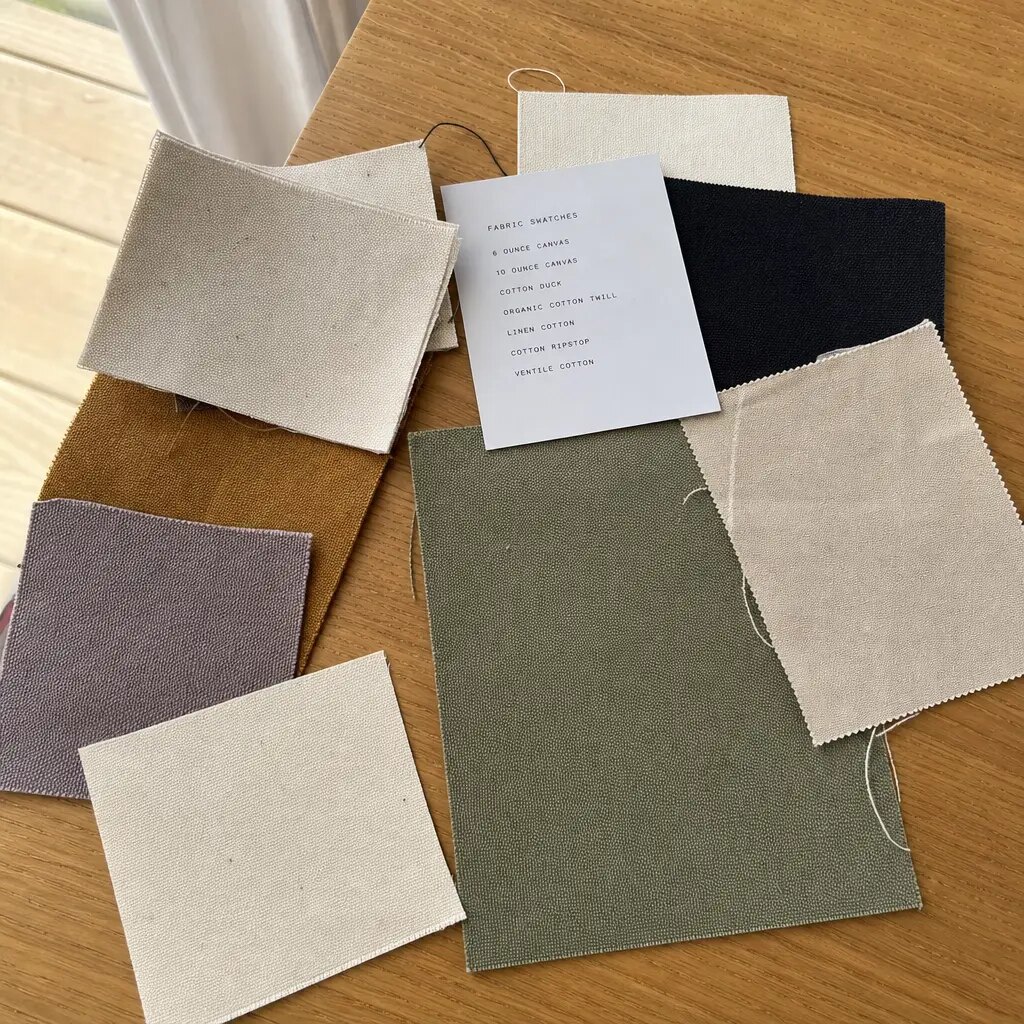
- Request a physical swatch or reference sample when changing from unlaminated to laminated jute.
- Ask whether lamination is inside, outside, or both sides; outside lamination changes appearance and print behavior.
- Confirm odor expectations and dry storage requirements before production, because jute can absorb moisture and smells.
- Avoid approving sustainability claims from the material name alone; validate claims against your market and packaging policy.
Set handle and seam requirements for real coffee loads
Handle failure is one of the fastest ways to turn a reusable tote into a customer complaint. Coffee products are compact and dense, so a small gift bundle can weigh more than expected. Two 1 lb coffee bags, a mug, and a small brewer can put meaningful stress on handle attachment points, especially when customers swing the tote, carry it by one handle, or reuse it repeatedly.
Cotton webbing handles about 25-30 mm wide are a practical choice for many coffee roaster programs. They feel better in the hand and are easier to reinforce than narrow rope or self-jute handles. The handle should be sewn into the top hem with a reinforced stitch pattern, often a box or box-X style depending on construction. Ask the supplier to state handle drop, webbing width, stitch pattern, stitch density, and whether the handle is sewn through one layer or multiple folded layers.
Avoid the phrase “strong handles” in the purchase order. It is too vague. Define a practical test tied to the intended payload. The exact load should be based on the product bundle, but the factory should perform a static load check with a safety margin and document the method. For example, if the expected filled tote is around 3 kg, the test should exceed that load rather than prove only that an empty bag can hang for a photo. The goal is simple: prevent weak sewing and underbuilt stress points.
- Specify handle material, width, color, drop, placement, and stitch pattern.
- Measure handle drop from the top mouth edge to the top of the handle curve, using the same method at sample and inspection.
- Inspect both handle attachments on both sides for skipped stitches, broken thread, and inconsistent reinforcement.
- Require seam allowance wide enough to prevent jute fraying at stress points.
- Define loaded-use expectations in kilograms so the supplier understands the required strength level.
Design artwork for jute texture and screen-print limits
Coffee brands often use detailed badges, tasting notes, fine serif type, origin maps, distressed textures, and small certification-style icons. Those elements may reproduce well on labels, cartons, or smooth cotton. Coarse jute is less forgiving. The weave can break fine lines, absorb ink unevenly, and leave small pinholes in solid areas. A digital mockup on a clean tote template is not proof that the print will work in production.
For most wholesale jute tote bags for coffee roasters, one-color or two-color screen printing is the most economical and predictable option. Bold logos, thicker lines, and moderate print areas usually perform best. Large solid blocks can look patchy, need more ink, require longer curing time, and create a higher risk of offset marks during stacking. Multi-color artwork adds registration tolerance, so agree the acceptable shift before final artwork release.
Artwork can also change the carton plan. Heavy ink coverage, two-sided printing, or artwork close to fold lines may require tissue interleaving, longer drying time, reduced bundle compression, or a different folding direction. Those choices affect pieces per carton. Review the strike-off or pre-production sample together with the packing plan, not as a design-only approval.
- Ask for minimum line width, minimum text height, and registration tolerance before final artwork release.
- Keep critical text large and bold. Avoid QR codes or tiny tasting notes unless tested on the actual jute.
- Confirm print area in millimeters and placement from the top edge and side seam.
- Review the print at normal retail viewing distance as well as close-up inspection distance.
- If print rub is a concern, require a simple rub check and confirm curing time before packing.
- Include tissue or interleaving in the packing trial if the artwork has heavy ink coverage.
Understand MOQ, versioning, and carton allocation
MOQ for custom jute tote bags is rarely driven by one variable. Material purchasing, cutting efficiency, handle availability, sewing setup, screen printing, packing, and export handling all play a role. A buyer may believe they are placing one 5,000 pc order. The factory may see ten small runs if there are two sizes and five artwork versions. Every added version can require separate screens, scheduling, inspection records, carton labels, and inventory control.
Coffee roasters often want seasonal artwork, cafe-specific branding, regional versions, or wholesale customer co-branding. That is workable, but the procurement structure should protect production efficiency. A practical approach is to standardize the body size, jute construction, handle color, print method, and carton count, then vary only the print artwork where necessary. If sizes, handle colors, or material constructions change, treat them as separate SKUs with separate carton plans.
Overrun and underrun rules matter for store allocations and event deadlines. Custom textile production can have small quantity variance. If exact quantities matter, state whether overruns are allowed, whether the factory may short ship, and how partial cartons are packed. Mixed-SKU cartons should be avoided unless the buyer approves clear inner separation and carton-level labeling.
- Clarify MOQ per size, material, handle color, print color, artwork, and shipment destination.
- Ask whether screen charges apply per artwork and per color.
- Require a carton allocation sheet before production: SKU, artwork, quantity, pieces/carton, carton count, and any partial carton.
- Confirm whether full cartons are required for each artwork version.
- Approve mixed cartons only when inner bundles and carton marks make receiving simple.
Approve the sample and the pilot carton together
A loose sample confirms look and construction. It does not prove the order will pack correctly. Jute totes may look good one by one and still create problems in bulk. Handles can form uneven stacks. Laminated gussets can trap air. Printed panels can offset. Bag mouths can distort if cartons are over-compressed. These issues usually appear during pack-out, not in isolated product photos.
For a first order, or any order with strict freight planning, ask the supplier to document a packing trial. The trial should use the approved bag size, correct handle, actual print method, hangtags or labels if required, and the proposed inner bundle count. Photos should show counted bundles, loading direction, open carton fill, sealed carton, measured carton dimensions, gross weight, and side marks. If the carton bulges or has to be forced closed, the pack count is not dependable.
The pilot carton is also a commercial checkpoint. If the original quote promised 100 pcs per carton but the safe trial supports only 80 pcs, the buyer needs to know before mass production and freight booking. It is better to adjust the quote and carton plan early than to release a shipment that occupies more CBM than expected or arrives with damaged retail merchandise.
- Approve product details and packing details as two separate sign-offs.
- Include hangtags, barcode labels, tissue, inserts, and retail bands in the trial if they are part of the final order.
- Record actual carton L x W x H after sealing, not just the factory’s nominal carton size.
- Check whether bags recover their shape after being unpacked from the trial carton.
- Attach sample photos and pilot carton data to the PO and inspection checklist.
Choose packing and export cartons for the shipping route
Flat packing is usually the safest default for jute tote bags. Bags are folded consistently, grouped in counted inner bundles, and placed in export cartons with limited dead space. Bundle counts of 10 or 20 pcs are common, but the right number depends on fabric weight, lamination stiffness, handle bulk, print protection, and receiving requirements. The bundle should be easy to count without unpacking the entire carton.
Aggressive compression can reduce quoted CBM on paper. It can also create permanent creases, crushed gussets, distorted mouths, and pressure marks on printed panels. For coffee roasters selling totes as merchandise or using them in premium gift sets, presentation damage can cost more than a slightly larger carton. If the tote must look retail-ready on arrival, avoid compression methods that force warehouse staff to reshape every bag.
Carton strength should match the route. LCL shipments often pass through more handling points than full-container palletized shipments. A 5-ply corrugated export carton is a practical baseline for many jute tote programs, but final board strength should reflect carton size, gross weight, stacking height, moisture exposure, and whether cartons are floor-loaded or palletized. Plan carton gross weight within your warehouse’s manual-handling limits. Many teams prefer a practical range such as 12-18 kg, but your internal policy should set the final limit.
- Specify flat packing unless a retail pack-out requires another method.
- Use consistent inner bundle counts and make them visible for receiving.
- Confirm carton board, ply, tape method, side marks, and any straps or pallet requirements.
- Avoid cartons that bulge after sealing or exceed safe manual-handling weight.
- Ask whether cartons will move by LCL, FCL floor-load, palletized ocean freight, courier, or domestic redistribution.
- Keep jute dry and away from strong odors during storage and transport.
Compare supplier quotes using CBM per 1,000 pcs
Pieces per carton is not enough for a fair quote comparison. One supplier may pack 80 pcs in a compact, safe carton. Another may pack 100 pcs in a larger carton or rely on risky compression. The cleaner metric is CBM per 1,000 pcs. Calculate carton volume by multiplying length x width x height in meters, divide by pieces per carton, then multiply by 1,000. This gives procurement, logistics, and finance a more useful landed-cost view.
Gross weight deserves the same attention. Jute totes are heavier than many promotional bags, and cartons with dense handle areas can become awkward to move. If a supplier’s carton has a very high piece count but an impractical gross weight, receiving labor and damage risk may increase. Ask for both net and gross weight so the freight forwarder and warehouse can plan accurately.
A strong comparison sheet includes unit price, print setup, sample fee, MOQ, lead time, pieces/carton, carton dimensions, gross weight, CBM per 1,000 pcs, packing method, carton board, expected tolerance, and inspection plan. If two quotes differ sharply, ask what construction or packing assumption explains the gap. Do not assume the cheaper quote is equivalent until the measurable specs align.
- Use this formula: carton CBM = L x W x H in meters; CBM per 1,000 pcs = carton CBM / pcs per carton x 1,000.
- Compare quotes at the same bag size, material, handle, print area, and packing style.
- Request 20GP, 40GP, and 40HQ loading estimates only after the carton plan is verified.
- For LCL shipments, prioritize carton durability and clear side marks because the cartons face more handling.
- Include receiving cost, sorting cost, repacking risk, and defect risk in the landed-cost comparison.
Set jute-specific QC tolerances before mass production
Jute is a natural fiber, so some texture variation, color variation, and slubs are normal. That does not make every visible defect acceptable. A coffee roaster tote usually carries brand artwork and may sit beside premium coffee products. The front presentation zone should therefore be held to a stricter standard than hidden folds or internal areas. Major defects should include front-panel holes, oil stains, mildew odor, severe color patches, open seams, broken handle stitching, lamination peeling, and unreadable logo areas.
QC should be measurable, not based on general impressions. The inspector should measure width, gusset, height, handle drop, print placement, carton dimensions, and gross weight against the approved sample and tolerance sheet. Commercial tolerances vary by factory and construction, but many buyers use targets such as +/-10 mm for width and height, +/-5 to 8 mm for gusset, +/-10 mm for handle drop, and +/-10 to 15 mm for print placement. If the tote must fit a rigid gift pack or display fixture, tighter tolerances may be needed and should be priced before production.
Packing QC belongs in the same inspection plan as product QC. Inspectors should open selected cartons, verify bundle counts, check SKU separation, compare actual carton dimensions to the approved carton plan, and confirm side marks. If carton dimensions or count change after approval, freight booking and warehouse receiving can be affected. For first-time suppliers, do not release shipment based only on product appearance; carton compliance is part of the quality requirement.
- Define a front presentation zone for stricter inspection of logo area, front panel, mouth line, and visible handles.
- Measure dimensions separately and record actual readings, not just pass/fail comments.
- Check handle pull, seam strength, stitch density, loose threads, skipped stitches, and bottom corner reinforcement.
- Reject strong odor, mildew smell, oil stains, water marks, lamination peeling, tacky surface, and large holes in visible areas.
- Open cartons during inspection to verify pieces/carton, bundle count, SKU separation, carton marks, dimensions, and gross weight.
- Photograph defects and carton conditions before shipment release so decisions are documented.
Specification comparison for buyers
| Spec decision | Recommended option | When it fits | Buyer risk to check |
|---|---|---|---|
| Bag format and size | Medium retail tote around 350 W x 150 G x 350 H mm, or dimensions built from the actual coffee payload | Works for coffee bean bundles, small gift sets, mugs, brewers, in-store merchandise, and cafe retail without creating unnecessary carton volume | Do not quote from front panel width alone. Gusset depth, handle drop, top hem, and folding method all change pieces per carton and CBM. |
| Finished size tolerance | Typical commercial target: +/-10 mm for width/height, +/-5 to 8 mm for gusset, +/-10 mm for handle drop, unless your program needs tighter control | Suitable for most retail and promotional coffee tote orders where the bag is not required to fit inside a rigid outer shipper | Factories may quote a broad tolerance such as +/-2 cm. Ask for separate tolerances by dimension so carton planning and presentation remain predictable. |
| Jute body weight | 10 oz to 12 oz laminated jute, often roughly 270-340 GSM equivalent depending on weave, coating, and local measuring practice | Good balance for coffee roaster retail totes that need to hold packaged beans, mugs, small brewing accessories, or gift bundles | GSM and ounce terms are not always converted consistently. Ask for finished piece weight and a physical swatch, not only a fabric number. |
| Lamination | Inside PE lamination for structure; unlaminated only when a softer rustic feel matters more than shape and shedding control | Inside lamination helps reduce fiber shedding, improves body shape, and supports more consistent flat packing | Confirm lamination location, odor level, peel resistance at folds, and whether any environmental claim is legally supportable in your market. |
| Handle material | Cotton webbing about 25-30 mm wide with reinforced box or box-X stitching into the top hem | Better hand feel and repeat-use strength than narrow rope or self-jute handles for coffee bundles above light giveaway weight | Ask for handle drop, webbing width, stitch pattern, seam allowance, and practical pull-test load. Weak handle attachment is a common major defect. |
| Print method | 1-color or 2-color screen print on the flat front panel; bold artwork, limited fine detail, moderate ink coverage | Most cost-effective for roaster logos, seasonal gift graphics, cafe merchandise, and event totes | Fine text, QR codes, distressed logos, and large solid blocks may break, fill, rub, or require slower packing. Request line-width and placement limits. |
| MOQ structure | One size, one body construction, one handle spec, with artwork versions grouped only after MOQ per version is understood | Best for stable production, consistent cartons, simpler QC, and cleaner warehouse receiving | MOQ may apply per size, body color, handle color, print color, or artwork. A 3,000 pc order split into six versions can behave like six small orders. |
| Inner packing | Flat packed in counted bundles, commonly 10 or 20 pcs per bundle, with paper band or poly sleeve as agreed | Supports easier counting, less print rub, and more reliable receiving for wholesale and distributor shipments | Over-compressed bundles can crease laminated jute, distort bag mouths, crush gussets, and transfer ink between printed panels. |
| Export carton | 5-ply corrugated export carton, carton gross weight normally planned within a practical manual-handling range such as 12-18 kg unless palletized handling supports more | Appropriate for ocean freight, LCL consolidation, distributor receiving, and multi-store replenishment | A low carton cost can become expensive if cartons burst, collapse, or require repacking. Confirm board grade, tape method, carton dimensions, and stacking route. |
Buyer checklist before sampling
- Define the use case in the RFQ: retail merchandise, empty cafe tote, gift-set carrier, event giveaway, wholesale customer kit, or e-commerce insert.
- List the actual intended payload: number of 12 oz, 250 g, 340 g, 500 g, or 1 lb coffee bags; mug or brewer dimensions; insert or gift box; and estimated loaded weight.
- Lock finished dimensions as width x gusset x height, plus handle drop and handle width. Do not allow suppliers to quote from a reference photo only.
- State jute construction clearly: natural jute, jute-cotton blend, laminated or unlaminated, target 10 oz/12 oz or GSM range, lamination side, and acceptable odor level.
- Ask for estimated finished piece weight for the approved size. This helps expose whether two quotes use meaningfully different jute, lamination, or handle materials.
- Specify print method, colors, print area in mm, side count, artwork placement, approximate ink coverage, and whether small text or QR-like detail is present.
- Request minimum line width, minimum text height, registration tolerance for multi-color printing, and print placement tolerance before artwork is finalized.
- Require first-round carton data: pieces per carton, outer carton dimensions, net/gross weight, inner bundle count, packing method, and estimated CBM per 1,000 pcs.
- Specify whether bags ship flat, folded, nested, tissue-interleaved, hangtagged, barcoded, poly-bundled, paper-banded, or retail-ready. Packing choices change freight and QC risk.
- Confirm MOQ by size, body material, handle color, print color, artwork version, and shipment destination; do not rely on one total-order MOQ number.
Factory quote questions to send
- What exact jute construction are you quoting: natural jute or blend, laminated or unlaminated, lamination side, approximate ounce/GSM, weave character, and finished piece weight?
- What are the finished bag dimensions in width x gusset x height, handle drop, handle width, top hem construction, and expected production tolerances for each dimension?
- What handle material and attachment method are included: cotton webbing width, sewing pattern, reinforcement, stitch density, and seam allowance at stress points?
- Which print method will you use on jute, and what minimum line width, smallest text size, maximum solid-fill area, registration tolerance, and print placement tolerance do you recommend?
- Is the quoted price based on one artwork only, or does it include multiple artwork versions? What MOQ, screen charge, and setup charge apply per version?
- How many pieces fit per export carton using normal sea-shipment packing, and what are the carton outer dimensions, net weight, gross weight, bundle count, and CBM per carton?
- Is the carton count based on safe flat packing or aggressive compression? Can you provide photos from a full carton packing trial before mass production approval?
- What carton board type, ply, tape method, strapping if any, moisture protection, and side-mark format are included in the price?
- What overrun or underrun percentage applies, and how will you pack partial cartons or mixed artwork cartons if exact allocation is required?
- What sample sequence do you recommend: material swatch, print strike-off, pre-production sample, pilot carton, and final inspection sample?
Quality-control points to confirm
- Finished dimensions should be measured separately for width, gusset, height, mouth opening, handle drop, handle width, and print placement. A single broad size tolerance is not enough for carton planning.
- Typical commercial tolerances should be agreed before production, such as +/-10 mm for width/height, +/-5 to 8 mm for gusset, +/-10 mm for handle drop, and +/-10 to 15 mm for print placement unless tighter limits are required.
- Handle attachment should use consistent reinforcement, no skipped stitches at box corners, no loose or broken threads affecting strength, no twisted handle webbing, and symmetrical left/right placement.
- A practical handle pull check should reflect the intended payload plus safety margin. For example, if the loaded gift set is 3 kg, agree on a higher static test load and hold time rather than a vague 'strong handle' requirement.
- Side seams, bottom seams, gusset folds, top hem, and handle insertion points should be checked for fraying, narrow seam allowance, open seams, needle damage, or uneven stitch tension.
- Print should remain legible on the jute texture with no severe pinholes, broken critical logo detail, ghosting, heavy ink smears, offset marks, poor curing, or unacceptable shade variation.
- Print placement should be measured from stable reference points such as the top mouth edge and side seam, not estimated visually from a photo angle.
- Lamination, if used, should not show strong chemical odor, tacky feel, bubbling, peeling at folds, delamination near seams, or whitening/cracking caused by over-compression.
- Natural jute variation is expected, but major holes, oil stains, mildew smell, water marks, severe color patches, contamination, or large slubs in the front logo zone should be treated as defects.
- Bag mouths should lie reasonably flat after unpacking. Excessive distortion, crushed gussets, bulky handle bunching, or permanent creases reduce retail presentation and may signal poor packing.