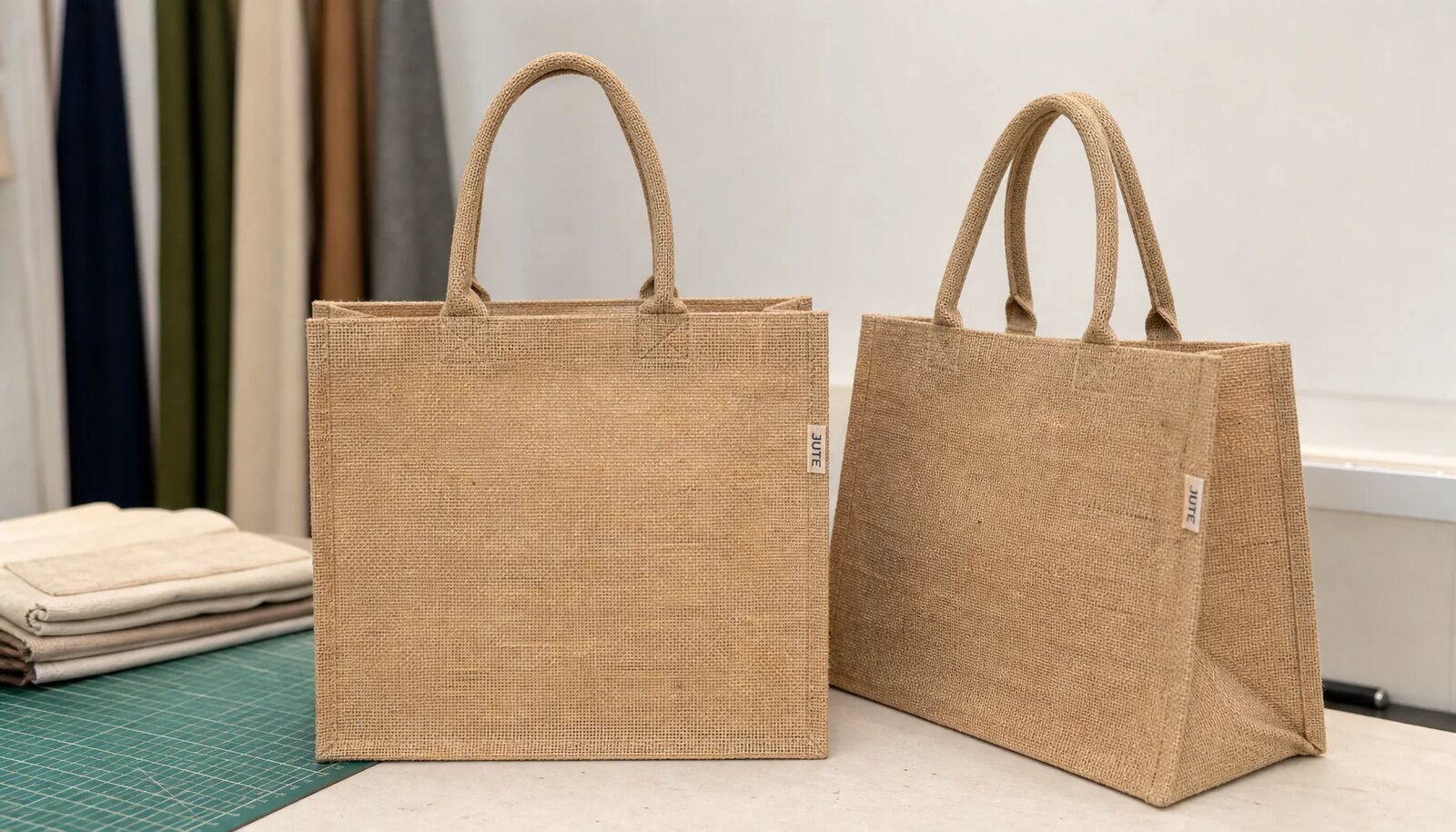
Start With the Commercial Use Case, Not the Product Photo
Wholesale jute tote bags for eco apparel brands should be specified from the selling use case backward. A boutique carry tote has different requirements from a low-cost event giveaway, a gift-with-purchase, a subscription box insert, or a resale merch tote. The finished bag may look similar in supplier photos, but fabric weight, gusset depth, handle reinforcement, print method, packing style, and inspection tolerance can change the final cost and risk profile.
Begin by writing down what the bag must do after it leaves the factory. Will it carry one folded T-shirt, a denim jacket, a shoebox, several garments on hangers, or a full launch kit with tissue and inserts? Will the customer reuse it as a shopper, or is it mainly branded packaging? Does the bag need to stand upright on a retail counter, lie flat in an e-commerce carton, or hang from a peg at an event booth? These answers decide whether you need a lighter unlaminated jute tote or a more structured laminated or lined construction.
For procurement, define the expected load in measurable terms. Many apparel programs are light, but the bag still needs a realistic target, such as 2 kg for small folded apparel, 5 kg for heavier retail carry, or a different figure based on your product mix. The target load is not a universal guarantee; it is a test condition that the buyer and supplier can agree to validate on samples. Without a stated load, handle strength becomes subjective.
The use case also influences how strict QC should be. A free event tote can tolerate more natural shade variation than a premium resale tote with a large front logo. A retail carry bag may need cleaner print placement because shoppers photograph it in-store. A bag used for apparel packaging must avoid odor, dust, lint, stains, and sharp internal seams that could affect finished garments. Do not let a supplier quote from a reference image alone; convert the image into function-based requirements.
- State the channel: retail carry, event giveaway, GWP, packaging, influencer kit, subscription insert, or resale merch.
- Define intended contents by weight and shape, such as folded knits, boxed accessories, denim, footwear, or light promotional items.
- Decide whether the bag must stand upright, fold flat, hang, ship flat, or arrive retail-ready with an insert or tag.
- Rank priorities before quoting: lowest cost, natural texture, premium structure, print clarity, reusability, or pack efficiency.
- Tell suppliers if the bag will touch finished apparel directly so they can address odor, lint, dust, seam finish, and inside cleanliness.
Build a Complete Tote Spec Sheet Before RFQ
Clean quote comparison depends on every supplier pricing the same bag. For jute totes, the major cost drivers are finished dimensions, gusset depth, body GSM, construction type, handle material, handle reinforcement, decoration, label, inner finish, and packing. If any of those details are missing, one supplier may quote a lighter, simpler bag while another quotes a stronger construction, making the cheaper price misleading.
Your spec sheet should distinguish finished bag measurements from flat fabric measurements. Quote finished width, height, and gusset in centimeters or inches, then give acceptable tolerance for each. A common starting tolerance for sewn natural-fiber bags is about plus or minus 1 cm on body dimensions, but larger totes, thick seams, and hand-cut processes may require a wider tolerance. Confirm what the factory can hold before using the number in a purchase order.
Add handle width, total handle length, handle drop, and attachment method. Handle drop matters because customers may carry the tote by hand, over the forearm, or on the shoulder. For hand carry, a shorter drop may be acceptable. For shoulder carry, the drop normally needs to be longer and must be checked on the approved sample with the bag filled. A tote that is technically large enough for the garment can still feel wrong if the handle drop is too short.
Do not write only natural jute tote with logo. Specify whether the body is unlaminated jute, laminated jute, lined jute, coated jute, or jute combined with another material. Clarify whether the quoted GSM refers to the jute cloth only or a laminated composite. If your brand has a sustainability or materials claim, ask the supplier to identify every component: jute body, cotton handle, polyester thread, plastic lamination, metal snap, paper hangtag, or plastic polybag. This prevents substitutions that change appearance, cost, and product descriptions.
- Include finished width, height, gusset, handle width, total handle length, handle drop, seam allowance expectation, and target load.
- Define body fabric GSM and whether it applies to raw jute cloth, finished cloth, laminated fabric, or total composite construction.
- Specify inside finish: raw, bound seams, laminated, coated, cotton-lined, canvas-lined, or with an insert board.
- List all trims: hangtag, woven label, care label, snap, zipper, button, drawcord, tissue, paper band, or barcode sticker.
- Attach artwork files with exact print size, placement from top edge and side seam, color references, and acceptable print tolerance.
Choose GSM, Construction, and Handle Strength Deliberately
GSM is useful, but it is not the whole construction story. A 320 GSM jute tote may be suitable for light apparel packaging, while a 420 GSM bag may be more appropriate for a premium reusable shopper. However, weave density, lamination, lining, seam construction, thread, and handle reinforcement can make two bags with similar GSM perform differently. For procurement, GSM should be paired with a physical swatch or approved sample so the supplier cannot meet the number while missing the handfeel or structure.
For many apparel uses, 280-340 GSM jute cloth is a practical range for lighter carry bags, event programs, folded T-shirts, and cost-controlled packaging. A 380-450 GSM range is often reviewed when the bag must hold shape, carry heavier goods, or feel substantial enough for resale or premium presentation. Above that, the buyer should check whether added weight improves performance enough to justify higher unit cost and freight. If the tote needs a boxed silhouette, lining or lamination may matter more than simply increasing GSM.
Construction affects both user experience and claims. Unlaminated jute gives a rustic handfeel, visible weave, and traditional natural look, but it can shed more fibers and is more sensitive to moisture and odor. Laminated jute can improve body, reduce shedding, and make the inside cleaner, but the lamination material should be declared and checked for odor, cracking, and brand-fit. Cotton lining can improve interior presentation, but adds cost, labor, and another material to the claim.
Handles deserve separate review because handle failure is one of the most visible functional defects. Cotton webbing can be softer and easier to color match, while jute handles keep a unified natural look. Widths around 25-40 mm are common for many tote applications, but the right width depends on load and comfort. Reinforcement methods may include box-X stitching, bartacks, folded tabs, or extra seam reinforcement. Ask the factory to show the actual handle attachment on the sample and test it with the intended load, not just a quick pull at the desk.
- Use lighter GSM for low-load campaigns and stronger GSM, lining, or lamination for reusable retail totes.
- Ask for jute swatches if the order value is high or if multiple suppliers quote different GSM ranges.
- Check handle drop against the intended carry style: hand carry, forearm carry, or shoulder carry.
- Require reinforced handle stitching at stress points, especially for larger gusseted bags or heavier apparel loads.
- Test filled samples for mouth distortion, gusset collapse, handle twist, seam stress, and visible stretching after handling.
Set Realistic Tolerances Before the Purchase Order
B2B tote sourcing becomes more reliable when tolerances are written before production, not argued after inspection. Jute is a natural woven material, and tote bags are sewn products, so perfect uniformity is not realistic. The buyer’s job is to define which variation is acceptable and which variation affects function, presentation, or receiving requirements.
For finished dimensions, many buyers start by discussing plus or minus 1 cm for width, height, and gusset on standard totes, and plus or minus 1-1.5 cm for handle drop depending on size and construction. These are not automatic standards; they must be confirmed with the factory’s process and sample results. Larger bags, thick laminated seams, rounded corners, and manual cutting can require a wider tolerance. If a bag must fit a specific box, shelf, or insert, tighten the tolerance only after the factory confirms capability.
Print tolerance should also be measurable. Ask the supplier what they can hold for placement from the top edge and side seam. For many sewn bags, plus or minus 5 mm to 10 mm may be more realistic than demanding exact placement, especially if printing occurs after sewing on an uneven surface. Color tolerance must account for jute’s natural shade variation. Pantone matching on rough natural jute will not look the same as on coated paper or white cotton, so approve a real print strike-off and define the acceptable visual range.
Stitching standards should define defects, not just stitch appearance. Broken stitches, open seams, skipped stitches at stress points, unsecured thread ends, and handle attachments pulling away should be treated as major defects. Small loose threads may be minor if they can be trimmed and do not affect appearance. Natural slubs, knots, and shade variation can be acceptable when they match the approved sample band, but stains, oil marks, mold, insect residue, and water damage should not be treated as normal jute character.
- Agree body dimension tolerances separately for width, height, gusset, and mouth opening.
- Agree handle tolerance for length, drop, placement, angle, and attachment symmetry.
- Set print tolerance for placement, size, color, opacity, registration, and small text legibility.
- Define natural jute variation with approved swatches or sample photos, not vague words like rustic or premium.
- Classify defects as critical, major, or minor so final inspection decisions are consistent.
Select Decoration Based on Jute Texture and Brand Standards
Printing on jute is different from printing on smooth cotton canvas. The weave is rougher, the surface is more uneven, and fibers can interrupt solid ink coverage. Screen printing is often practical for one or two solid brand colors, but artwork must be adjusted for the material. Thin lines, small type, tight spacing, gradients, and delicate icons may fill in or break up. A design that looks clean on a PDF can look soft or uneven on the bag.
For an RFQ, provide vector artwork and specify print size, print position, color reference, and number of colors. Also ask the supplier for their minimum recommended stroke width and minimum text height on the selected jute. There is no single universal value because weave, ink, screen mesh, print area, and color contrast all matter. The safest approval is a strike-off or pre-production sample printed on the actual production fabric.
Dark, simple logos on natural jute are usually easier to control than pale ink, fine detail, or large solid panels. Large ink areas may show weave texture and patchiness, which may be acceptable for a natural look but not for every brand standard. If the logo requires crisp edges, very small type, or multiple campaign versions, consider a sewn label, cotton patch, printed canvas panel, embroidery on a separate patch, or another decoration route that the supplier can sample honestly.
Confirm whether printing happens before sewing or after sewing. Printing before sewing can improve access to a flat panel but requires accurate cutting and sewing to keep placement centered. Printing after sewing allows decoration of finished bags but can be harder near seams, gussets, and handle attachments. If multiple bag colors or logo versions are in one program, create a version-control sheet with SKU, artwork file name, logo size, print color, carton mark, and quantity.
- Avoid very small type, thin outlines, gradients, and tight detail unless the supplier proves them on a real sample.
- Request a production-material print strike-off before bulk approval, especially for light ink, large logos, or fine type.
- Define print placement from fixed reference points, such as top edge and side seam, not by visual centering only.
- Set tolerances for print position, print size, color variation, ink coverage, and acceptable slub interruption.
- Confirm whether setup charges are one-time, per color, per artwork, per size, per repeat order, or per logo version.
Compare Supplier Routes With Visibility and Accountability
The best sourcing route depends on program complexity, order size, and how much control your team needs. A direct jute bag factory can offer better visibility into fabric, cutting, stitching, printing, and packing, but it usually expects a clear spec, realistic MOQ, and disciplined approvals. A trading company or sourcing office can be useful for small launches, multiple product categories, or teams that need consolidated communication, but the extra layer can slow technical problem-solving if production details are hidden.
A specialist merchandiser with a reliable bag factory relationship can be a practical middle ground. This route may help with artwork proofing, label coordination, carton planning, inspection scheduling, and export communication while still giving access to technical bag knowledge. The key is transparency. Ask who actually makes the bag, where printing happens, who supplies fabric, and who signs off on in-line and final QC.
If production is split across fabric supplier, bag sewing unit, print facility, and packing warehouse, responsibility for defects must be clear. A print problem may not be solved by the sewing factory if decoration is subcontracted. A moisture issue may come from raw material storage, not final packing. Procurement buyers should request a basic process flow and identify who owns each stage before paying a deposit.
Domestic decorators have a role when speed, local control, or very small quantities outweigh unit cost. They may buy blank jute bags and apply decoration locally. This can work for urgent events and small replenishment, but the buyer should still verify base bag quality, handle strength, GSM consistency, and carton packing. Domestic decoration does not fix construction issues if the blank bag is weak or inconsistent.
- Use direct factories for repeatable programs with stable specs and meaningful order quantities.
- Use specialist sourcing support when you need artwork, packing, inspection, shipment, and multi-SKU coordination.
- Use domestic decoration for short deadlines or small runs, but inspect blank bag construction before committing.
- Ask for production-site identity, process flow, subcontracted steps, and QC responsibility before deposit.
- Avoid supplier comparisons where one quote is factory-direct and another hides key production assumptions.
Read the Quote Like a Procurement Buyer
A strong wholesale quote is more than a unit price. It should describe exactly what is included and excluded: fabric GSM, finished size, handle material, print method, number of colors, label, sample, setup, packing, carton marks, export documentation, inspection support, and delivery terms. If the quote has only one line, you cannot tell whether a lower price comes from lighter cloth, shorter handles, simpler packing, omitted setup charges, or a different Incoterm.
Ask for tiered pricing at quantities you might actually buy. A jute tote program may show a meaningful price difference between 500 and 3,000 pieces because cutting, printing, and setup costs are spread across more units. Custom size, custom cloth, special lamination, non-stock handle, sewn label, or multiple logo versions can raise MOQ. If a supplier offers a very low MOQ, ask whether they are using stock cloth and a standard bag size. That may be a smart choice, but it must be clear before branding and launch planning begin.
Check commercial terms carefully. EXW, FOB, CIF, DDP, and domestic delivered prices are not comparable unless freight, duty, destination fees, and risk transfer are understood. Confirm whether sample freight, bank charges, inspection fees, palletizing, barcode labels, carton stickers, and document charges are included. Ask how long the quote is valid, because raw jute, labor, exchange rate, carton cost, and freight can change.
For B2B procurement, the goal is not to pressure every supplier into the lowest number; it is to understand why numbers differ and which quote is most reliable for the required spec. If one supplier’s price is much lower, ask them to reconfirm GSM, finished size, handle length, print area, carton pack, and inside finish in writing. Many avoidable disputes start when the buyer assumes two quotes are equivalent and the supplier assumes the buyer is accepting a cheaper construction.
- Request a quote breakdown for body fabric, handle, print, label, lining or lamination, packing, and setup.
- Ask for price tiers at 500, 1,000, 3,000, 5,000, and 10,000 pieces if those volumes are plausible.
- Confirm Incoterms, currency, payment terms, quote validity, sample charges, inspection support, and whether setup charges repeat.
- Ask what spec changes trigger price changes: GSM, gusset, handle length, print area, color count, label, lining, or carton pack.
- Compare quotes only after matching the same sample standard, same packing method, same defect tolerance, and same delivery basis.
Use Sampling as a Production Trial, Not a Mood Board
Sampling is where the buying team should prove the bag can be made repeatedly. A showroom sample may help with general direction, but it is not enough for PO approval. For wholesale jute tote bags, the pre-production sample should use the same body fabric, handle material, thread, construction, print method, label, lining, and packing fold intended for bulk production. If a supplier cannot sample the true materials, ask what will change and document the risk.
Inspect samples with a practical checklist. Measure finished width, height, gusset, handle width, total handle length, and handle drop. Weigh or identify the fabric reference where possible, but do not rely on GSM alone. Fill the bag with the real apparel load or an equivalent weight. Carry it for several minutes, set it down, lift it again, and look for handle stretching, seam stress, gusset distortion, and mouth collapse.
Review decoration after realistic handling. Fold the tote according to the proposed packing method and check whether the print cracks, rubs, transfers, or becomes permanently creased. Rub printed surfaces lightly against another bag or packing material if bags will be bundled. Look at small type under daylight and typical store lighting. If the bag will be shipped sealed, smell it after it has been closed in packaging for a period, because odor can become more noticeable after transit.
Approval should be controlled. Keep one signed sample with the buyer, one with the supplier, and one if needed for third-party inspection. Mark it as the approved production sample and include the date, PO number, material notes, print version, and packing method. If any change happens after approval, such as a revised logo size, new handle color, substitute fabric, or different carton pack, update the sample record. This prevents arguments later when production is compared against an outdated reference.
- Approve a production-material sample, not only a reference sample, showroom sample, or edited product photo.
- Measure the sample and record actual dimensions, handle drop, print size, label placement, and packing fold.
- Test with realistic load, normal carrying, folding, stacking, and rubbing against other packed bags.
- Review print under daylight and typical store lighting, especially for light inks, fine lines, and small text.
- Keep signed control samples for buyer, supplier, and third-party inspection if used.
Set QC Standards for Natural Jute Without Excusing Defects
Quality control works best when the supplier can measure it. Instructions such as nice stitching, good color, or premium finish are too subjective. For jute tote bags, define measurable tolerances for size, handle placement, print position, print color, stitch condition, odor, stains, and packing. Natural jute will have slubs, knots, and shade variation, so the standard should separate acceptable natural texture from defects that damage presentation or function.
Decide which defects are critical, major, or minor before production starts. Critical defects may include unsafe hardware, contamination, severe mold, or any issue that makes the bag unusable or unsafe. Major defects may include wrong artwork, wrong size outside tolerance, open seams, broken stitches, weak handle reinforcement, badly misaligned prints, wrong handle length, incorrect label, strong odor, or wrong carton marks. Minor defects may include small loose threads or natural fiber variation within the approved visual range.
For apparel brands, odor and cleanliness deserve extra focus. Jute can absorb moisture and smell if stored poorly. Ask how the factory stores raw fabric, whether cartons are kept off damp floors, and how moisture is controlled during packing. Bags should be clean, dry, and neutral-smelling enough for the intended channel. A visually acceptable bag can still fail if it smells musty when opened in a retail stockroom or fulfillment center.
Inspection should use both the written spec and the signed sample. The sample shows handfeel, shade band, weave character, and print appearance. The written spec defines dimensions, tolerances, defect classification, packing, and labeling. If you use third-party inspection, provide both documents and state the sampling plan or inspection level required by your company. Do not expect an inspector to infer your brand standard from a product photo.
- Set size tolerance separately for width, height, gusset, mouth opening, and handle drop.
- Define print tolerance for position, color, opacity, registration, and legibility on rough weave.
- Reject open seams, broken stitches, weak handle reinforcement, oil stains, mold smell, wrong artwork, and wrong SKU labels as major issues.
- Create an approved visual range for natural jute shade, slubs, knots, and fiber irregularities.
- Require inspection against the signed sample and written spec, not against a supplier memory of the order.
Verify Claims, Components, and Documentation
Eco apparel brands often buy jute totes because the material supports a natural presentation, but procurement teams should be careful with claim wording. Jute is a plant-based fiber, yet the finished tote may include cotton handles, polyester thread, plastic lamination, coated lining, metal hardware, adhesive labels, and plastic inner packing. A claim about the whole bag should match the actual construction, not just the main panel material.
Ask the supplier to provide a component list before artwork and packaging copy are finalized. The list should identify body fabric, lining, lamination or coating, handle material, thread, labels, hangtags, closures, and packing materials. If your marketing team wants to say biodegradable, plastic-free, recyclable, natural, organic, or compostable, verify the evidence and legal requirements for your selling market. Avoid claim language that the factory cannot document.
If the tote is intended for retail resale, promotional distribution, or use with branded apparel, also confirm labeling and documentation needs. Some buyers require country of origin marking, fiber content language, barcode labels, PO numbers, or retailer-specific carton marks. Others need testing for restricted substances, colorfastness, odor, or packaging compliance. Requirements vary by market and customer, so put them in the RFQ instead of asking after production is packed.
Documentation is also useful for reorders. A clear spec file with component list, sample photos, artwork version, carton marks, and QC tolerances makes repeat buying easier and reduces drift. If a supplier changes fabric source, handle supplier, lamination, or print ink, require notification and sample approval before bulk production continues.
- Request a component list covering body fabric, handles, thread, lining, lamination, labels, hardware, and packing.
- Do not make whole-product sustainability claims based only on the jute body panel.
- Confirm country of origin, fiber description, barcode, hangtag, and carton mark requirements before production.
- Ask whether any testing, retailer documentation, or restricted-substance declaration is required for your market.
- Require supplier notice and approval samples for material substitutions or process changes on reorders.
Specification comparison for buyers
| Spec decision | Recommended option | When it fits | Buyer risk to check |
|---|---|---|---|
| Use case | Retail apparel carry tote | Boutiques, pop-ups, showroom orders, and eco apparel stores where the bag supports brand presentation after purchase | Confirm target load, handle drop, print position, whether the bag must stand upright, and whether finished garments touch raw jute directly |
| Use case | Gift-with-purchase or event tote | Seasonal campaigns, launch events, influencer seeding, low-load promotional kits, and apparel inserts | Control cost by limiting print colors, avoiding unnecessary lining, using standard size where possible, and approving a realistic defect level |
| Body fabric | 280-340 GSM jute cloth | Light apparel packaging, simple giveaways, folded T-shirts, small accessories, and budget-sensitive programs | May feel softer or less structured; test gusset distortion, seam strength, shedding, and print clarity on the actual weave |
| Body fabric | 380-450 GSM jute cloth | Premium retail totes, heavier folded apparel, boxed accessories, resale merch totes, or reusable shopper positioning | Higher unit cost and freight weight; verify carton CBM, gross weight, handle reinforcement, and landed cost before approval |
| Construction | Unlaminated natural jute | Brands wanting rustic texture, lower material complexity, natural handfeel, and a more traditional burlap appearance | More lint, fiber shedding, odor sensitivity, and less shape retention; fine print edges are harder to hold on rough weave |
| Construction | Laminated or lined jute | Retail-ready bags needing cleaner interior, more body, reduced shedding, and better shape retention | Check lamination type, odor after sealed packing, cracking at folds, claim wording, and whether the finish conflicts with sustainability messaging |
| Handle style | Cotton webbing handles, commonly 25-40 mm wide | Comfortable carry, cleaner color options, softer handfeel, and shoulder or forearm use | Confirm handle GSM or thickness, colorfastness, attachment stitching, and whether cotton handles change the material declaration |
| Handle style | Jute webbing, rope, or self-fabric handles | Consistent natural look and stronger visual continuity across the tote | Can feel rougher and may fray at edges; verify reinforcement, bartacks or box-X stitching, seam allowance, and load test results |
| Print method | Screen printing at bag or print facility | One or two solid logo colors, simple graphics, repeat programs, and moderate print areas | Fine type can fill in; approve minimum stroke width, minimum text height, ink opacity, print placement tolerance, and an actual production-material strike-off |
Buyer checklist before sampling
- Define the exact end use first: retail carry bag, event giveaway, gift-with-purchase, influencer kit, apparel packaging, subscription insert, or resale merch tote.
- Lock finished width, height, gusset depth, handle width, total handle length, handle drop, target load in kilograms or pounds, and whether the tote must stand upright when filled.
- Specify body fabric weight in GSM and clarify whether the figure refers to raw jute cloth, finished cloth, laminated cloth, lining, or total composite construction.
- Decide whether the bag is unlined, laminated, coated, cotton-lined, or has bound seams, and state the required inside cleanliness, handfeel, stiffness, and lint expectation.
- Choose decoration method, number of logo colors, artwork size, Pantone or color reference if needed, minimum line thickness, and minimum text height before RFQs go out.
- Ask for tiered pricing at realistic order quantities and identify which features change MOQ: custom size, non-stock GSM, print color count, label, lining, handle, carton pack, or multiple logo versions.
- Request a pre-production sample made from production materials, production handle, production print route, and proposed packing fold, not a showroom sample with similar appearance.
- Test the approved sample by filling it with the intended product load for at least several minutes, checking handle stress, mouth distortion, gusset shape, print rub, odor, and shedding.
- Set written QC tolerances for finished size, handle placement, stitch quality, print position, print color, odor, moisture, stains, and acceptable natural jute shade and slub variation.
- Confirm inner packing, fold method, pieces per carton, carton dimensions, gross weight, CBM, PO marks, barcode rules, moisture protection, and carton drop/handling expectations before bulk packing starts.
Factory quote questions to send
- What is the exact body fabric GSM, and is that raw jute cloth weight, finished cloth weight, laminated cloth weight, or total composite construction including lining?
- What finished dimensions are you quoting, including width, height, gusset depth, handle width, total handle length, and handle drop after sewing?
- What are your normal production tolerances for this style: finished size, handle drop, handle placement, print placement, print size, and carton quantity?
- Are handles made from matching jute, cotton webbing, rope, canvas, or another material, and what reinforcement is used at stress points?
- Is the bag unlaminated, laminated, coated, lined, or seam-bound, and can you send a swatch or sample photo showing the inside finish and seam construction?
- Which print method will you use, and what minimum stroke width, minimum text height, and spacing do you recommend for clean printing on this specific jute weave?
- Does the quote include screen charges, plate charges, artwork setup, pre-production sample, sample freight, inner packing, export cartons, carton marks, labels, inspection support, and documentation?
- What is your MOQ at one-color print, two-color print, custom handle, custom size, sewn label, lining, and multiple logo versions on the same base bag?
- Can you provide tiered pricing at 500, 1,000, 3,000, 5,000, and 10,000 units using the same finished size, construction, logo, packing method, and Incoterm?
- Will the production sample be made on the same fabric, with the same handle material, same thread, same print route, same label, and same packing fold as bulk production?
Quality-control points to confirm
- Body fabric matches the agreed GSM range, weave appearance, approved handfeel, stiffness, natural shade band, and inside finish from the signed control sample.
- Finished dimensions stay within written tolerance for height, width, gusset, handle length, handle drop, mouth opening, and panel symmetry.
- Handles are aligned, evenly attached, and reinforced with consistent stitching; no loose threads, skipped stitches, weak bartacks, open attachment seams, or pulling at stress points.
- Seams are secure and straight enough for the selling grade, with no broken stitches, open seams, severe puckering, needle damage, distorted gusset corners, or exposed sharp trim ends.
- Print position, print size, color, opacity, registration, edge sharpness, and legibility match the approved production sample within written tolerance.
- Small type, fine lines, QR codes if used, and logo edges remain readable on the actual jute weave after normal folding, stacking, and hand rubbing.
- Natural jute shade variation, slubs, knots, and fiber irregularity stay within the approved visual band and do not create mismatched cartons, dirty-looking panels, or patchy logo areas.
- No oil stains, watermarks, mold smell, chemical odor, visible contamination, insect residue, excessive dust, or moisture damage on fabric, handles, labels, hangtags, or packing.
- Lamination, coating, or lining does not crack, peel, bubble, delaminate, smell strongly, discolor, or distort the bag when folded and packed according to the approved method.
- Inner packing matches the approved fold, bundle count, tissue, paper band, hangtag, polybag, barcode, or insert requirement, with printed surfaces protected from abrasion where required.