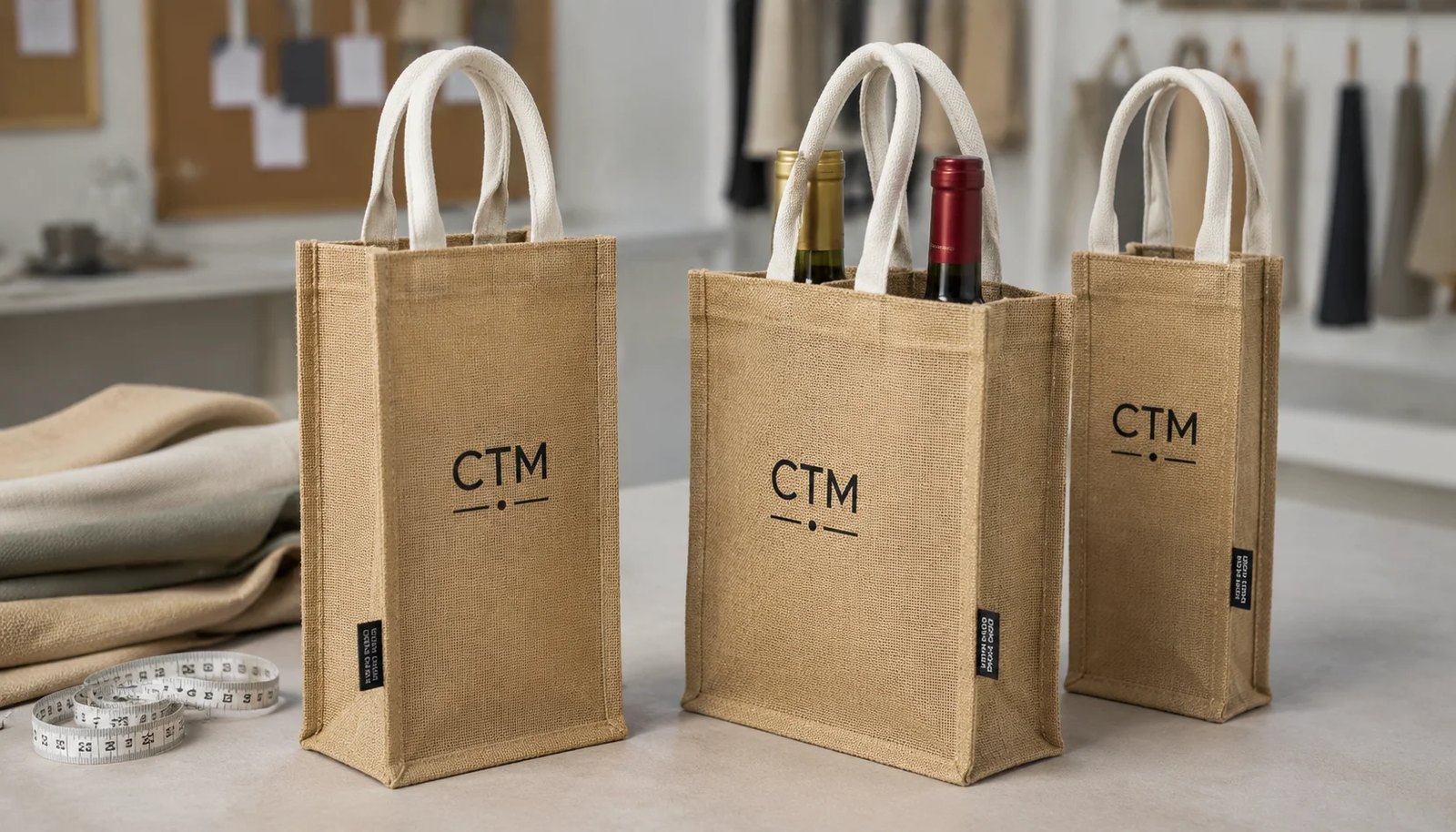
Start With the Retail Date, Not the Bag Photo
For wholesale jute tote bags for liquor retailers, the real planning point is the retail launch date. A bag that arrives one week after a holiday wine promotion, store opening, tasting event, or distributor campaign has very little value. Work backward from the date the bags must be in the retailer's warehouse, not from the date your team wants to place the purchase order.
A practical timeline starts with sample approval, because most factories will not release bulk cutting until size, fabric, print, handle, and packing are approved. If the buyer sends only a reference image and a target price, the factory may quote quickly, but the order will still slow down later when bottle fit, artwork, divider structure, and packing requirements are finally clarified.
- Use the required in-warehouse date as the anchor date for the production schedule.
- Separate sample making time from bulk production time; do not treat a quotation date as a production start date.
- Add time for internal buyer approval, brand approval, liquor retailer approval, and compliance review if the logo or promotional wording is controlled.
- Treat freight booking, final inspection, and customs documentation as part of the lead time, not afterthoughts.
Choose Jute Weight by Bottle Load
Jute tote bags for liquor retail usually need more structure than a light promotional shopper. A 13 oz jute fabric, roughly in the 305-370 GSM range depending on weave, can work for standard single-bottle bags when the gusset is correct and the handle stitching is reinforced. For heavier gift sets, two-bottle carriers, or premium reusable retail bags, 14 oz to 15 oz jute is often a safer starting point.
Do not compare quotes only by the word jute. Factories may use different yarn thickness, weave density, backing, and finishing. Two suppliers can both write 14 oz jute while delivering very different hand feel and stiffness. The RFQ should request the actual fabric weight, approximate GSM, weave appearance, and whether the fabric is laminated or unlaminated.
- Single wine or spirits bottle: 13 oz to 14 oz jute is usually the commercial range.
- Two-bottle or gift-set bags: 14 oz to 15 oz jute gives better shape retention and handle support.
- Natural jute shade variation is normal; color-critical branding should use a controlled print color and approved tolerance.
- Loose weave lowers cost but makes small print and clean seams harder to control.
- Laminated jute improves stiffness and moisture resistance but can crease if folded or packed too tightly.
Build the Bag Around the Bottle
The most common production mistake is approving a nice-looking jute tote that does not fit the actual bottle range. Liquor retailers may carry Bordeaux wine bottles, Burgundy bottles, champagne bottles, square whisky bottles, tall vodka bottles, and boxed gift sets. A few millimeters in base diameter or shoulder width can change how the bag sits, whether it closes neatly, and whether the bottle leans.
The RFQ should include bottle height, base diameter, widest shoulder point, and whether the bag must hold one bottle, two bottles, or a bottle plus accessory. For two-bottle bags, the divider must be specified as removable, stitched-in, or laminated board style. If the divider is too soft, bottles knock together; if it is too tight, store staff will struggle to load the bag at checkout.
- Provide bottle drawings or measured dimensions instead of only stating 750 ml.
- Confirm whether the retailer needs room for tissue paper, neck tag, brochure, or gift card.
- For two-bottle bags, define the divider pocket width and height, not only the outer bag size.
- Request a loaded photo from the factory using a bottle with similar dimensions before sample shipment.
- Use finished size tolerance such as plus or minus 5 mm for small bottle totes and wider tolerance only where it will not affect fit.
Print Planning on Coarse Jute
Jute is not a smooth cotton canvas. The coarse weave absorbs and breaks print edges, so artwork designed for paper bags or nonwoven bags may not transfer well. Screen printing is usually the most reliable method for bold liquor retail logos, simple store branding, and one to three color artwork. Fine serif text, thin borders, halftones, and small compliance wording need adjustment before production.
Heat transfer can be useful for detailed graphics, but it needs testing because adhesion and surface appearance vary on rough jute. Embroidery is possible for premium programs, but it adds time, cost, and stitch-density risk. For most wholesale liquor tote projects, the best result comes from simplifying the artwork, increasing line thickness, and approving a real production print sample.
- Send vector artwork with print size, position, Pantone references, and acceptable color variation.
- Avoid tiny legal text on the jute panel; use a sewn label or printed tag if small copy must be readable.
- Specify whether the logo is printed before or after sewing, because panel print position is easier to control before assembly.
- Test ink rub after curing, especially for dark logos on natural jute and bags packed face to face.
- Require print alignment tolerance from bag edge or handle centerline so the logo does not drift across bulk production.
MOQ and Cost Drivers
MOQ is not just a supplier preference. It is shaped by fabric availability, cutting efficiency, print setup, sewing line changeover, packing method, and how much waste the factory must absorb. A common natural jute liquor tote in a standard size may be workable from 500 to 1,000 pieces. Dyed jute, custom colored handles, printed lining, divider structures, and retail-ready individual packing can push the economical quantity higher.
When buyers push for a very low MOQ, the unit price often rises because setup costs are spread over fewer bags. The factory may also rely on available stock jute, manual cutting, or simplified packing. That is not automatically wrong, but the quote should say so. For distributor programs, consolidating several retailer logos on the same base bag can reduce risk if artwork changes are controlled early.
- Main cost drivers: jute weight, lamination, gusset size, handle material, divider complexity, print colors, and packing labor.
- Setup-sensitive costs: screen charge, print trial, cutting pattern, label setup, carton mark preparation, and sample courier fee.
- MOQ may be lower for natural jute with standard cotton handles and one-color screen print.
- MOQ usually increases for custom dyed fabric, special woven labels, multi-color printing, and nonstandard bottle divider construction.
- A price comparison is incomplete without carton CBM and gross weight, because bulky jute bags can change landed cost.
Sample Approval That Prevents Rework
A sales sample made from similar fabric is useful for early discussion, but it is not enough for production approval. The pre-production sample should use the quoted jute weight, final handle material, intended print method, lining or divider, and proposed packing. If the buyer approves a sample with substitute fabric, the factory still has room to change the finished hand feel and shape in bulk production.
For liquor retailers, sample review should include a loaded test. Put the actual bottle or a matching dummy bottle inside the bag, carry it by the handle, set it on a flat counter, and inspect the side seams and base. If the sample twists, tips forward, or stretches at the handle seam, fix the construction before bulk cutting.
- Approve one signed physical sample and keep an identical factory retained sample.
- Measure finished size, gusset, handle drop, print position, and divider pocket width during approval.
- Check whether the bag stands upright when loaded and whether the bottle neck sits at the expected height.
- Review jute odor, loose fibers, color shade, and lamination finish before committing to bulk material.
- Do not approve bulk production from flat photos only when the bag is intended to carry glass bottles.
Packing Choices Affect Lead Time
Packing is often treated as a warehouse detail, but it affects both production speed and landed cost. Flat packing is efficient for many jute totes, but laminated jute and printed panels can crease if cartons are over-compressed. Individual polybags protect bags from rubbing and moisture, but add material cost, labor time, and sometimes retailer sustainability objections.
Liquor retailers and distributors also need carton handling to be realistic. A carton packed too heavy may be rejected by warehouse rules or damaged during transfer. A carton packed too loose wastes freight volume. The RFQ should define pieces per carton, carton weight target, carton marks, barcode labels, and whether the goods will be palletized at origin or destination.
- Use tissue or paper interleaving when printed panels may rub during ocean freight.
- Add silica gel or moisture-control packing for humid routes, especially with natural jute.
- Keep carton gross weight practical for manual handling; heavy bottle totes can make cartons difficult to lift.
- Confirm whether bags are packed flat, folded, nested, or shaped with dividers inserted.
- Include carton dimensions and total CBM in the quote so freight cost can be compared correctly.
Factory Schedule and Risk Points
A realistic lead time for wholesale jute liquor totes often includes 7 to 10 days for sampling after artwork and specs are complete, 20 to 35 days for bulk production after sample approval, and additional time for inspection, packing, booking, and export. These ranges depend on season, material availability, order size, and complexity. They should be treated as planning examples, not promises.
The highest-risk delays usually happen before bulk sewing starts. Late artwork, unclear bottle dimensions, missing carton requirements, or changes from one-bottle to two-bottle construction can reset the schedule. During peak retail seasons, a factory may also have limited print capacity even if sewing capacity is available. A buyer who needs a fixed launch date should freeze the functional spec before negotiating cosmetic refinements.
- Material risk: jute shade, fabric weight, lamination availability, and dyed fabric lead time.
- Artwork risk: small text, extra print colors, color matching, and revised logo position.
- Construction risk: divider changes, handle reinforcement, base shaping, and lining method.
- Packing risk: individual packing, retail labels, pallet requirements, and carton mark approval.
- Shipping risk: booking availability, customs documents, port congestion, and destination warehouse appointment.
Quote Data Needed for Landed Cost
The lowest unit price is not always the lowest landed cost. Jute tote bags can be bulky, and small changes in packing method can affect CBM. A buyer comparing supplier quotes should collect the same data from each supplier: fabric spec, finished size, print method, MOQ, sample charge, bulk lead time, carton quantity, carton dimensions, gross weight, and Incoterms.
For importers and distributors, quote discipline also prevents internal confusion. If one supplier quotes FOB with flat packing and another quotes EXW with individual polybags, the comparison is not useful. Normalize the quotation before presenting options to retail buyers or brand owners. This is especially important when the bag is part of a larger liquor retail program that includes tags, labels, gift boxes, or multiple store versions.
- Request FOB port, EXW, or DDP terms clearly; do not mix terms in the same comparison without adjustment.
- Collect carton size and total CBM before estimating freight.
- Separate tooling, screen, label, sample, and courier costs from the unit price.
- Confirm whether duties, taxes, destination handling, and palletization are included or excluded.
- Compare lead time from approved sample date, not from quotation issue date.
Acceptance Criteria for Bulk Inspection
A good inspection plan for jute liquor totes separates natural material characteristics from functional defects. Slight shade variation, small slubs, and natural fiber texture are normal for jute. Holes, mildew smell, oil stains, broken seams, weak handles, misaligned print, and incorrect divider size are not acceptable. The purchase order should define these differences before the inspector arrives.
For a bottle-carrying bag, functional testing matters more than a perfect textile appearance. Inspectors should measure the bag, test loaded carrying strength, review print placement, check lining or lamination, and verify carton packing. The retained approved sample should be available at inspection so the factory, buyer, and inspector compare against the same reference.
- Use AQL inspection for appearance and workmanship, plus a separate functional load test for handles and seams.
- Set measurable tolerance for size, handle drop, print position, and divider pocket width.
- Classify mildew odor, weak handle attachment, wrong size, and incorrect print as major defects.
- Allow reasonable natural jute shade variation only within the approved sample range.
- Photograph defect examples during inspection so rework decisions are based on evidence.
Specification comparison for buyers
| Spec decision | Recommended option | When it fits | Buyer risk to check |
|---|---|---|---|
| Jute fabric weight | 13 oz to 15 oz jute, roughly 305-420 GSM depending on weave density | Standard liquor gift totes, seasonal retail packs, and reusable promotional bags where the bottle must stand upright | Very loose weave can look cheap and distort print edges; very heavy jute may increase carton weight and freight cost |
| Bag size and bottle fit | Single bottle: about 12 x 35 x 10 cm; two bottle: about 20 x 35 x 10 cm; confirm with filled bottle dimensions | Liquor retailers carrying wine, spirits, mixers, or gift bundles with different bottle shoulder shapes | A bag approved around one bottle can fail on a wider whisky bottle or boxed gift set; request fit testing with actual bottle dimensions |
| Handle construction | Cotton webbing or padded jute handles with reinforced cross stitch at stress points | Retail checkout bags, gift-with-purchase campaigns, and distributor resale packs where shoppers carry full bottles | Soft jute handles may fray; short handles can make the bag awkward for heavier bottles; weak bartacks cause handle pullout |
| Print method | Screen print for bold 1-3 color logos; heat transfer only for small detailed art with pre-production testing | Brand logos, store marks, event graphics, and liquor compliance copy that must stay readable on coarse fabric | Fine lines disappear in jute texture; ink can bleed or sit unevenly if artwork is not adjusted for rough fabric |
| MOQ logic | Start from 500-1,000 pcs for common sizes; expect higher MOQ for dyed jute, custom weave, special lining, or divided interiors | Importers building a seasonal program or distributors consolidating several retailer accounts | A low MOQ quote may hide higher unit price, manual packing, substitute fabric, or no reserve material for rework |
| Lining and divider | Laminated inner lining or cotton lining with removable or stitched divider, depending on bottle count and retail positioning | Liquor gift packs, premium spirits, wine club orders, and bottle protection during customer carryout | Lamination can crack if folded poorly; stitched dividers add sewing time and need dimensional tolerance control |
| Packing format | Flat pack with tissue between printed panels, silica gel for humid routes, export carton under practical lifting weight | Wholesale shipments to distribution centers, chain retail back rooms, and ecommerce kitting operations | Over-compressed cartons crease lamination and deform handles; wet cartons can transfer odor or mildew to natural jute |
| Production route | Direct factory for repeat programs; trading company only when consolidating several unrelated bag styles | Buyers who need stable specs, sample traceability, and controlled bulk timing for liquor retail launches | An indirect route may delay artwork changes, sample correction, and fabric issue reporting unless communication is documented |
| Lead time buffer | Plan 7-10 days for sampling, 20-35 days for bulk production after approval, plus inspection and freight buffer | Holiday launches, store opening kits, distributor promotions, and private label retail packaging | Approving artwork late or changing packing after sample sign-off can reset the production clock |
Buyer checklist before sampling
- Define the bottle types before requesting price: wine, champagne, whisky, vodka, boxed spirits, or mixed gift sets.
- Give finished bag size with tolerance, not only a reference photo. Include gusset depth and handle drop.
- State jute weight target in oz or GSM and request the factory's closest available stock fabric.
- Specify whether the bag must stand upright when loaded with a full bottle.
- Confirm handle material, handle length, stitch pattern, and minimum pull strength requirement.
- Send vector artwork and identify Pantone references, print size, print position, and acceptable color variation on jute.
- Decide whether lamination, cotton lining, PE coating, or divider panels are required before comparing quotes.
- Require a pre-production sample using production fabric, production print method, and final packing style.
- Define packing count per carton, carton weight limit, barcode or carton mark requirements, and pallet preference.
- Build schedule around sample approval date, not initial inquiry date.
Factory quote questions to send
- What jute fabric weight and weave density are you quoting, and is it stock fabric or made to order?
- Can you fit-test our exact bottle dimensions and confirm whether the loaded bag stands upright?
- What is the MOQ for this size with our print method, lining, divider, and handle construction?
- Which print method will you use on coarse jute, and what minimum line width do you recommend for our artwork?
- How many days are needed for material preparation, sample making, sample correction, bulk sewing, printing, inspection, and packing?
- Will the pre-production sample use the same jute batch, handle tape, lining, ink, and carton packing as bulk production?
- What are the finished bag size tolerances, handle pull test standard, and print registration tolerance?
- How many pieces per export carton, what is the estimated carton size, gross weight, and total CBM for the order?
- Do you provide in-line inspection photos for fabric cutting, handle attachment, print curing, and final packing?
- What changes would increase lead time: dyed fabric, extra print colors, divider sewing, special labels, or retail-ready packing?
Quality-control points to confirm
- Measure finished height, width, gusset, handle drop, and divider pocket width against approved sample tolerances.
- Check jute weight and weave consistency; reject panels with excessive slubs, broken yarns, holes, oil marks, or mildew smell.
- Load-test the bag with the intended bottle weight plus a practical margin; inspect handle stitch after hanging and carrying.
- Review print sharpness on the rough jute surface, especially small text, registration, edge bleed, and ink rub resistance.
- Confirm bottle fit with actual bottle dimensions, including shoulder width, base diameter, cork or cap height, and gift box size.
- Inspect inner lining or lamination for cracks, bubbles, delamination, odor, and loose edge stitching.
- Check divider attachment strength and pocket symmetry so bottles do not collide during normal carrying.
- Verify carton packing count, carton marks, barcode labels, moisture protection, and whether printed panels are protected from rubbing.
- Compare bulk production against signed pre-production sample for fabric shade, handle color, print position, and sewing workmanship.
- Record AQL defects by type so the supplier can separate cosmetic jute texture issues from functional failures.