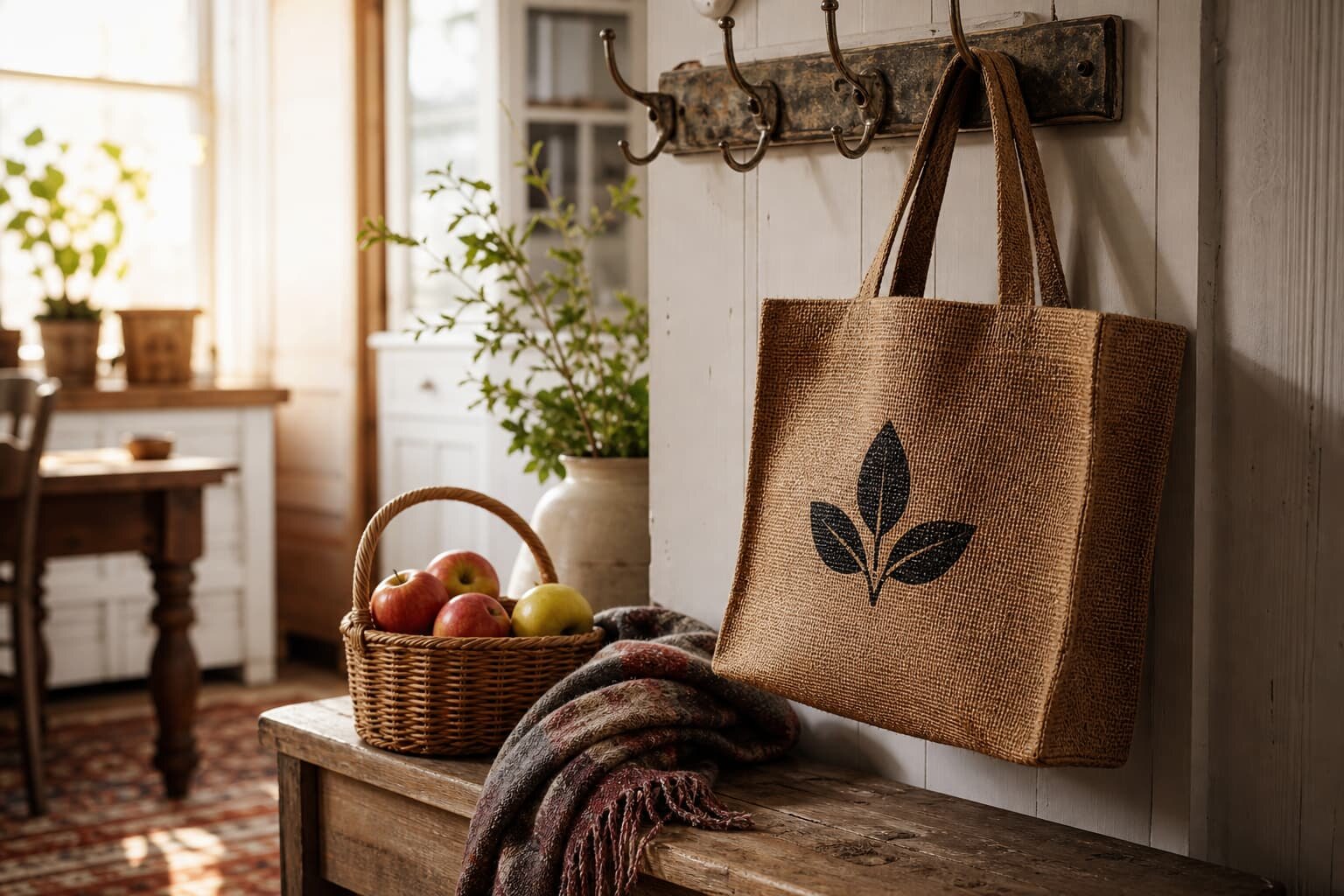
1. The buying problem: jute samples often look acceptable but fail in bulk
A wholesale jute or burlap bag sample can look attractive on a desk but still hide production problems that become expensive after shipment. The common issue is that buyers approve based on the front appearance only: natural color, rustic texture, and logo position. In bulk, the same order may arrive with weak handles, loose weave, different bag stiffness, heavy odor, poor carton packing, or print color that does not match the approved sample.
For procurement teams, the sample review should not be a quick design approval. It should be a controlled production check that connects the physical sample to the RFQ, quotation, purchase order, and inspection standard. If the supplier quote says 300 GSM laminated jute with cotton webbing handles, the approved sample must prove that exact combination. If the sample was made with available stock material and the bulk will use a different roll, that must be stated before approval.
- Treat the sample as a manufacturing reference, not a styling suggestion.
- Record fabric weight, lamination, handle material, print method, and packing assumptions before signing approval.
- Ask whether the sample uses the same fabric source and same production process as bulk.
- Avoid approving a sample if the factory cannot give tolerances for size, color, stitching, and print position.
2. Start the review with fabric identity and GSM, not the logo
Jute, burlap, juco, and cotton-jute blends are often discussed loosely in buyer emails, but they behave differently in sewing, printing, and packing. Jute usually has a coarse natural fiber texture and visible yarn variation. Burlap is a looser woven jute-style fabric often used for rustic promotional packaging. Juco combines jute and cotton to give a smoother print surface. If your RFQ only says burlap bag, suppliers may quote different fabrics and the prices will not be comparable.
GSM is one of the first sample checks because it affects bag body, durability, print appearance, carton weight, and cost. For standard retail totes, 270-320 GSM jute is common. For heavier gift bags or bags that must stand better, 350-420 GSM can be suitable. A laminated bag may feel firmer than an unlaminated bag of the same fabric weight, so buyers should not judge GSM by hand feel only. Cut a small swatch from a retained sample if possible or ask the factory to provide a marked fabric swatch with the sample.
- Specify fabric as natural jute, burlap, laminated jute, juco, or blend instead of using one generic term.
- Request target GSM and acceptable tolerance, for example 300 GSM with agreed production tolerance.
- Compare sample weight across several bags if the supplier sends more than one piece.
- Check whether color variation is natural fiber variation or uncontrolled fabric sourcing.
3. Review lamination before you approve bag structure
Many wholesale jute bags use inner PP lamination because it improves body shape, reduces fiber shedding inside the bag, and gives some resistance against moisture. The lamination may be clear, milky, or colored. A laminated jute bag usually stands better and looks cleaner for retail use, but it may crack at hard folds if the material or sewing method is poor. Unlaminated jute has a softer natural feel but may shed more fibers and feel less structured.
When checking a sample, open the bag and inspect the bottom corners, side seams, and fold lines. These are the places where weak lamination shows bubbles, peeling, whitening, or cracking. Smell is also important. Natural jute can have an earthy odor, but a strong chemical or damp smell is a warning sign. If the bags will be packed tightly for sea freight, moisture and odor problems can become worse inside cartons.
- Ask for lamination thickness, commonly discussed in microns, and whether it is included in the quoted price.
- Fold and unfold the bag several times to check cracking at the bottom and gusset.
- Check inside corners for delamination after light loading.
- If your market restricts plastic lamination, confirm acceptable alternatives before sample development.
4. Handles are a cost item and a failure point
Handle specification is one of the fastest ways two jute bag quotes become different. A bag with 2.5 cm cotton webbing handles and simple sewing is not the same product as a bag with 4 cm padded cotton handles and cross-stitch reinforcement. Handle drop also changes usability. Short handles may work for hand-carry gift bags, while retail shopping totes often need enough drop for comfortable carrying over the forearm or shoulder.
During sample review, pull the handles with controlled force and inspect the stitch pattern. Look for skipped stitches, loose thread ends, poor backstitching, or reinforcement that is too close to the fabric edge. Jute fabric can fray or tear if the handle attachment is weak or if the stitch density cuts the fabric. For heavier applications such as wine bottles, books, jars, or grocery items, handle construction should be reviewed as a load-bearing component, not a decorative detail.
- Define handle material: cotton webbing, jute webbing, rope, padded cotton, or self-fabric.
- State handle width and handle drop in centimeters, not only as short or long.
- Require cross-stitch, box stitch, or bar tack details if load strength matters.
- Check whether handle color is stock dyed or custom dyed, because this can affect MOQ and shade consistency.
5. Printing on jute needs a real strike-off, not only artwork approval
Jute is not a smooth print surface. The yarn peaks and gaps can break fine lines, reduce ink opacity, and make small text difficult to read. Screen printing is usually the practical choice for one to three solid colors on jute and burlap bags. Heat transfer can give sharper details but may not suit every rustic surface or sustainability positioning. Embroidery is possible for some designs but increases cost and may pull the fabric if the artwork is dense.
Buyers should request a print strike-off on the same fabric and lamination construction as bulk. Paper proofs are useful for layout, but they do not show ink absorption, edge sharpness, or how the color appears against natural jute. If the logo uses a brand color, give Pantone or other color reference but allow a realistic tolerance because natural fiber base color changes the final result. For small type, legal marks, QR codes, or fine icons, test readability before approving mass production.
- Use screen print for solid logos and larger graphics on natural jute.
- Avoid very thin lines, small reversed text, and low-contrast colors.
- Ask the factory to confirm maximum print area and safe distance from seams and gussets.
- Rub the sample print dry and slightly damp to check dusting, bleeding, and adhesion.
6. MOQ logic: why the same bag can have different minimums
Wholesale jute and burlap bag MOQ is not only a factory policy. It is usually linked to fabric availability, lamination setup, dyeing, handle material, print setup, label production, and packing requirements. A natural stock jute tote with one-color screen print may have a lower MOQ than a custom dyed laminated bag with custom cotton handles and woven labels. If the buyer compares only unit price, the quote with a lower MOQ may not include the same material or finishing.
To write a better RFQ, separate the must-have requirements from the negotiable items. If your launch quantity is small, use stock natural fabric, standard handle colors, and simple screen print. If you need a retail program with consistent repeat orders, you can specify more custom details and ask the supplier to quote stepped quantities. This gives procurement a clearer view of the price break between sample order, first production order, and repeat order.
- Ask MOQ by fabric type, bag size, print color count, and custom label requirement.
- Request price breaks at realistic quantities, such as 500, 1000, 3000, and 5000 pieces if those match your demand.
- Confirm whether sample cost is refundable or separate from production cost.
- Do not assume a low MOQ quote includes custom dyed fabric, custom handle color, or special packing.
7. Dimensional checks should match how the bag will be used
A jute bag is often sold by width, height, and gusset, but the useful capacity depends on how the bottom is sewn and how the side gussets open. A 35 x 40 x 15 cm tote may behave differently from another bag with the same stated dimensions if the bottom fold, seam allowance, and lamination stiffness are different. For retail buyers, this matters because the bag must fit boxed goods, bottles, catalogs, apparel sets, or grocery products without forcing the seams.
Measure the sample flat and opened. Check the width at top and bottom, the height from top edge to bottom seam, gusset depth, handle drop, and print position from the top edge and side seam. If the bag must carry a specific product, put that product or an equivalent weight and size into the sample. A desk measurement is useful, but loading the bag shows whether it stands, tilts, bulges, or stresses the handle attachment.
- Give finished size tolerance, for example plus or minus 1 cm for general tote dimensions if acceptable.
- Define whether measurements are taken flat, opened, or under light tension.
- Check print placement after the bag is filled, especially on gusseted bags.
- Test actual product fit before approving bag width or gusset.
8. Packing decisions affect mold risk, freight cost, and presentation
Packing is not just a logistics detail for jute bags. Natural fibers absorb moisture, and tightly packed cartons can trap odor or humidity. For sea shipments, buyers should ask about carton strength, inner polybag or liner, desiccant use, and whether bags are fully dry before packing. If cartons are overpacked to reduce CBM, bag shape may deform and printed panels may mark against each other.
The buyer should also decide whether the bags need individual polybags, bundle packing, barcode stickers, hang tags, or retail-ready cartons. Individual polybags improve cleanliness and distribution handling but add material cost and may conflict with plastic reduction goals. Bundle packing is common for wholesale distribution but needs a clean counting method. Carton markings should match the purchase order, SKU, color, size, and destination requirements.
- Request carton size, pieces per carton, net weight, gross weight, and total CBM in the quote.
- Confirm whether bags are packed flat, folded once, or nested.
- Use desiccants or moisture-control packing when shipping in humid seasons or long sea routes.
- Approve carton marks and barcode placement before production packing starts.
9. Lead time should be separated into sample, approval, production, and packing stages
A realistic sourcing schedule for wholesale jute bags should not only say delivery in four weeks. The timeline should separate artwork confirmation, material sourcing, sample making, sample transit, buyer review, sample revision, bulk material preparation, printing, sewing, trimming, inspection, packing, and export handover. If any custom element is not approved early, the production date moves.
Sample lead time depends on whether the factory uses available fabric and standard handles or needs special sourcing. Production lead time depends on quantity, print complexity, lamination, and current factory capacity. Procurement teams should ask for lead time after sample approval, because that is the practical production clock. If your order has a fixed promotion date, build in time for sample revision and pre-shipment inspection instead of using the factory's best-case production estimate.
- Ask for sample lead time and bulk lead time separately.
- Clarify whether production starts after deposit, artwork approval, or physical sample approval.
- Confirm when the factory will provide production photos or a pre-production sample.
- Reserve inspection time before final payment or shipment release.
10. Quote data that makes supplier offers comparable
A useful quote for jute and burlap bags should include more than unit price. It should show the fabric type, GSM, lamination, bag size, handle specification, print method, number of print colors, label details, packing method, carton data, MOQ, sample cost, tooling or screen charges if any, lead time, payment terms, and trade term. Without these fields, a lower price may simply mean a lighter fabric, shorter handle, smaller print, weaker carton, or no lamination.
When comparing suppliers, create a side-by-side quote sheet and mark every unknown item. If a supplier cannot identify GSM, lamination, or carton CBM, their price may still be usable, but it is not ready for purchase order approval. Before confirming bulk, require the supplier to update the final proforma invoice or sales contract with the same details as the approved sample. This reduces disputes if the delivered bags differ from what your team expected.
- Require finished bag size, not only cutting panel size.
- List fabric GSM and lamination status directly in the quote.
- Include print size, print colors, and print position in the commercial offer.
- Ask for carton quantity and CBM to estimate landed cost and warehouse handling.
- Attach the approved sample photos and specification sheet to the purchase order.
Specification comparison for buyers
| Spec decision | Recommended option | When it fits | Buyer risk to check |
|---|---|---|---|
| Body fabric | Natural jute 270-320 GSM for standard shopping totes | Retail packaging, grocery promotions, trade show giveaways, reusable gift bags | Loose weave, odor, inconsistent yarn thickness, or fabric weight below approved sample |
| Heavier body fabric | Jute 350-420 GSM or laminated burlap | Wine bags, premium gift bags, heavier merchandise, structured retail presentation | Higher unit weight increases freight cost and may reduce folding efficiency in cartons |
| Inner backing | Clear or milky PP lamination 20-30 microns | Bags needing better shape, cleaner inner surface, and moisture resistance | Cracking at folded corners, lamination bubbles, strong smell, or poor stitch holding |
| Handle type | Cotton webbing 2.5-4 cm width with cross-stitch reinforcement | Comfortable retail tote use and better print appearance than raw jute handles | Handle color variation, weak bar tack, short handle drop, or rough edge against hand |
| Print method | Screen print for 1-3 solid colors on flat panels | Brand logos, promotional artwork, and retail private label orders | Ink bleeding into open weave, low opacity, poor registration, or cracked print after folding |
| Labeling | Side seam woven label or inside care label | Brand programs, distributor SKU control, country compliance, or retail barcode process | Label position drifting, wrong language, missing fiber content, or needle damage around seam |
| Packing | Flat packed 50-100 pcs per export carton with moisture protection | Most wholesale jute bag shipments by sea or consolidated air | Mold risk if bags are packed damp, cartons crushed, or cartons lack desiccants in humid season |
Buyer checklist before sampling
- Confirm the approved sample is tagged with date, version number, fabric GSM, handle size, print color code, and lamination status.
- Weigh the bag and compare it with quoted GSM and finished dimensions; do not rely only on visual texture.
- Measure width, height, gusset, handle width, handle drop, and seam allowance on at least three sample points.
- Check whether the bag stands, folds, and loads the same way your retail or distribution use requires.
- Rub the printed logo dry and slightly damp; look for ink dusting, bleeding, cracking, or poor coverage on yarn peaks.
- Inspect the inside lamination for bubbles, odor, hard creases, and delamination at side seams and bottom corners.
- Pull each handle firmly and inspect stitching pattern, thread breaks, skipped stitches, and reinforcement placement.
- Ask the factory to state bulk tolerance for GSM, dimensions, print position, color, handle drop, and carton quantity.
- Review carton packing method, polybag policy, desiccant use, carton size, and gross weight before approving mass production.
- Keep one sealed golden sample at your office and require the factory to keep one matching production reference.
Factory quote questions to send
- What exact fabric will be used: jute, burlap, juco, cotton-jute blend, or laminated jute, and what is the target GSM with tolerance?
- Is the quoted bag made from stock fabric or dyed-to-order fabric, and how does that affect MOQ and lead time?
- What lamination thickness and type are included, and can the bag be produced unlaminated if requested?
- Which print method is included in the quote, how many colors, what maximum print area, and what artwork file format is required?
- Are handle material, handle width, handle drop, reinforcement stitching, and color matching included in the base price?
- What is the minimum order quantity by bag size, fabric type, print color count, and packing method?
- How many pre-production samples are included, what is the sample cost policy, and how long does sample revision take?
- What are the normal production lead time and the lead time after sample approval, excluding international transit?
- What carton dimensions, pieces per carton, net weight, gross weight, and estimated CBM will be used for the quote?
- Which quality tolerances will be used for size, print placement, color shade, stitching defects, odor, and carton damage?
Quality-control points to confirm
- Fabric GSM must match the approved specification within agreed tolerance, because jute appearance alone is not reliable.
- Finished dimensions should be checked after sewing and pressing, not only from cutting panels.
- Handle pull strength should be tested according to the intended load, especially for grocery, bottle, and book promotions.
- Print adhesion and opacity must be reviewed on the actual jute surface, not on paper proof or smooth cotton fabric.
- Lamination should remain bonded at fold lines, bottom corners, side seams, and handle stitch areas.
- Odor and moisture must be checked before packing because natural jute can absorb humidity during storage.
- Carton packing must prevent deformation, mold, dirt transfer, and crushing during sea shipment.
- Bulk production should be compared against a sealed golden sample, approved print strike-off, and signed size spec.