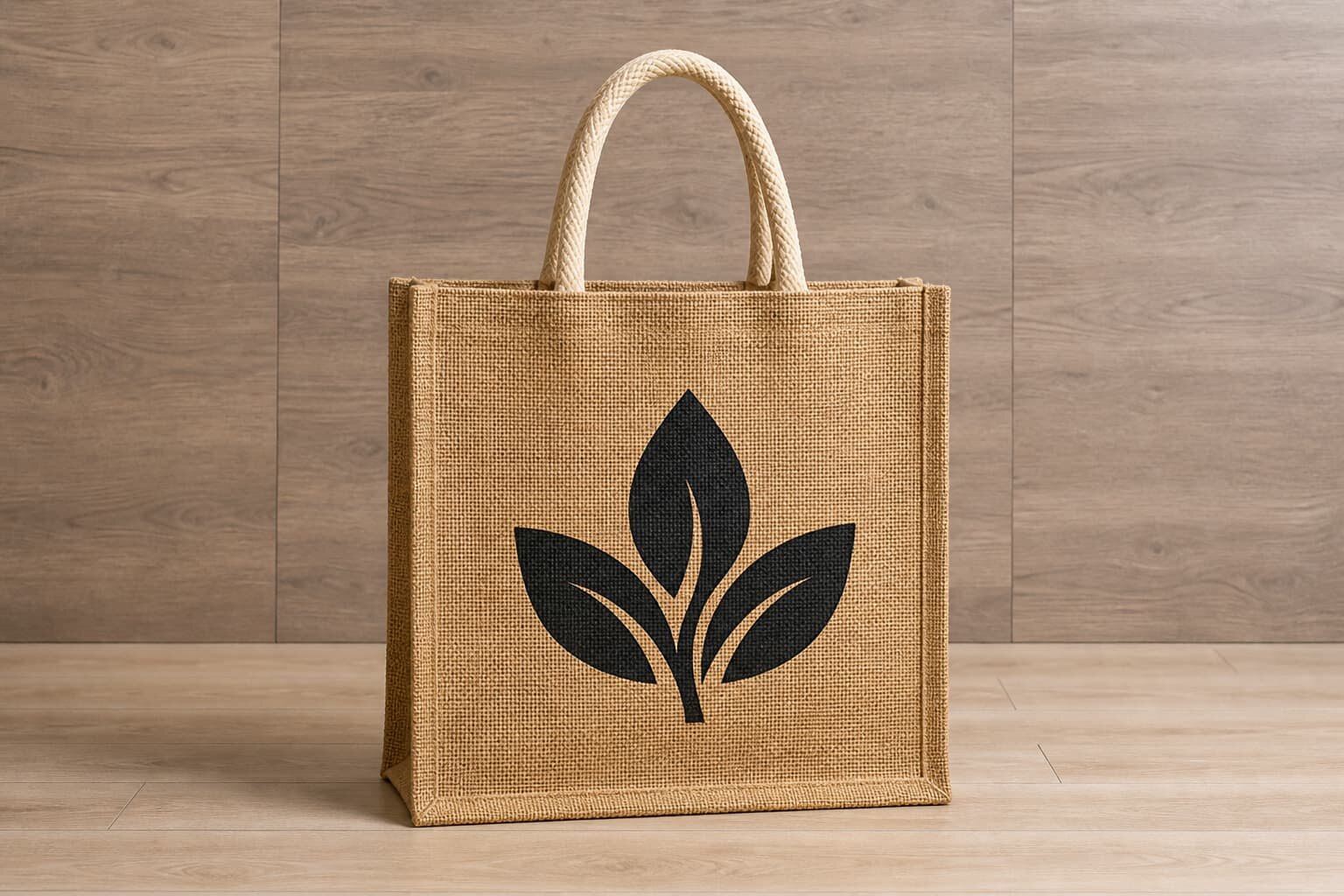
1. Treat Lead Time as Approval Gates, Not One Number
A wholesale jute or burlap bag order can look simple on a quote sheet, but the production timeline depends on decisions made before cutting begins. The common delay is not sewing capacity; it is missing specification detail. If the RFQ does not say whether the fabric is laminated, how heavy the jute should be, how the handle is reinforced, or whether the logo is screen printed or labeled, the supplier has to quote assumptions. Those assumptions often change after sampling, which pushes the real production start date back.
For procurement buyers, the useful question is not only “How many days for production?” The better question is “What approval starts each stage?” A supplier may say 30 working days, but that may mean 30 days after deposit, after artwork approval, after material is available, or after the pre-production sample is approved. These are very different calendars. A clean timeline separates RFQ, proofing, sampling, buyer approval, material preparation, printing, sewing, packing, inspection, and shipment handoff.
This is especially important for natural fiber bags because material and print behavior cannot be judged reliably from a PDF. Coarse weave, shade variation, lamination stiffness, and handle comfort must be confirmed on a sample. Once those details are approved, the bulk schedule becomes easier to control.
- Ask every supplier to define the production start point in writing.
- Separate sample time, buyer review time, and bulk production time in your launch calendar.
- Freeze fabric, lamination, handle, print, and packing after pre-production sample approval.
- Use one sealed sample or signed sample-photo record as the reference for production and inspection.
2. Start With the Bag Function and Load Target
The RFQ should begin with what the bag must do. A laminated grocery tote, a burlap wine carrier, a drawstring jute pouch, and a rustic gift bag may use similar fibers, but they do not need the same construction. A retail tote needs panels that sit flat, handles that survive repeated carrying, and printing that is legible from a distance. A wine bag needs bottle fit, upright shape, and neat finishing around the opening. A drawstring pouch needs a softer hand feel and a cord that moves smoothly without catching loose fibers.
A simple function statement helps the factory choose a practical specification. For example: “Natural laminated jute tote for grocery promotion, expected carry weight 8 kg, one-color front print, packed flat for sea shipment.” That sentence gives the supplier a stronger basis for material, handle, stitching, and packing than a photo alone. It also makes quotes comparable because each factory is solving the same performance requirement.
Do not rely on generic terms such as premium jute bag or eco burlap tote. These phrases do not define fabric weight, lamination, strength, print method, or carton volume. For procurement, vague wording creates cost and inspection risk.
- Retail shopping tote: prioritize handle strength, flat panels, stable gusset, and clean logo position.
- Wine or gift bag: prioritize presentation, bottle fit, opening shape, and edge finishing.
- Drawstring pouch: prioritize soft fabric, low shedding, cord movement, and knot security.
- Promotional giveaway: prioritize standard material, simple print, efficient packing, and realistic MOQ.
- Heavy-use bag: define target carry weight and require sample load testing before bulk release.
3. Specify Material Weight Without GSM and Oz Confusion
Jute and burlap fabric is often described in GSM, ounces, or local mill codes. This can create confusion because one supplier may quote fabric weight before lamination while another quotes finished laminated weight. A bag described as 300 GSM may not be equal to another 300 GSM quote if lamination, weave density, and finishing are different. For many commercial totes, buyers often compare materials around 13-15 oz jute or roughly 280-340 GSM burlap-style fabric, but the correct choice depends on bag size, load target, lamination, and desired stiffness.
Heavier fabric can improve perceived strength and retail presentation, but it is not automatically better. It can increase cost, reduce sewing speed, make folding less tidy, and raise carton CBM. Lighter fabric can lower price and freight volume, but it may collapse, distort at the seams, or make printing look uneven. The RFQ should state the target weight, acceptable tolerance, and whether the measurement includes lamination.
Ask for a swatch or sample from the intended production material. Natural jute shade can range from pale straw to darker brown, and this base color affects logo appearance. If brand color consistency matters, approve the print on the actual fabric rather than on a smooth paper proof.
- Write fabric weight as GSM or oz and require the supplier to confirm the measurement basis.
- Use a tolerance, such as plus or minus 5%, where appropriate for the program.
- Confirm whether lamination is included in the quoted weight.
- Request shade range approval for natural jute before bulk fabric is cut.
- For repeat orders, compare new fabric swatches against the previous sealed sample.
4. Decide Lamination Early Because It Changes Cost, Feel, and Timing
Lamination is one of the biggest specification decisions in jute and burlap bags. Clear PP lamination can improve structure, moisture resistance, and print stability. It helps totes stand better and can reduce fraying on some constructions. However, lamination also changes hand feel, fold behavior, odor risk, recyclability claims, and sometimes print adhesion. If lamination is added after the first quote, the sample and bulk timeline may need to restart.
Unlaminated burlap gives a softer, rustic look and can be suitable for gift packaging, craft-style pouches, or decorative bags. The tradeoff is less structure, more fiber shedding, and less resistance to moisture. If the bag must look crisp in a retail environment, unlaminated fabric may disappoint unless the design intentionally accepts a softer natural finish.
The RFQ should say whether lamination is required, where it is applied, and what finish is expected. Buyers should also avoid making sustainability or food-contact claims unless the material, lamination, ink, and use case have been reviewed properly. A jute bag carrying wrapped products is different from direct food contact.
- Confirm laminated or unlaminated construction before requesting final price.
- State clear, matte, glossy, inner, or visible lamination where relevant.
- Check lamination for odor, bubbling, peeling, cracking, and fold marks on the sample.
- Ask whether the selected print method is compatible with the laminated surface.
- Clarify any compliance or claim requirements before artwork and packaging copy are approved.
5. Match Print Method to Coarse Weave Reality
Many artwork problems start because a logo designed for paper is applied to a rough woven surface. Jute texture can break thin lines, soften small text, and make gradients look uneven. Screen printing is usually the practical choice for bold one- to three-color logos, but it has limits on fine detail. Heat transfer may give cleaner detail, but it can change hand feel, create edge-lifting risk, and require adhesion checks. Woven labels and sewn labels are often better for small, detailed logos or premium branding where sharp edges matter.
The print method should be approved before final price comparison. A quote based on one-color screen print cannot be compared directly with a quote using heat transfer, embroidery, or a woven label. Each method changes unit cost, setup time, sample time, and inspection criteria. The factory should mark final print size, placement, Pantone color, and placement tolerance on the artwork proof.
For procurement teams, the key is to approve what can actually be produced. A clean PDF is not proof that the logo will be readable on burlap. If the design includes small text, QR codes, thin outlines, or reversed-out lettering, require a physical print sample or first-off production approval before bulk printing continues.
- Use screen print for bold logos, large text, and simple solid colors.
- Use woven or sewn labels for small or detailed branding that must remain sharp.
- Use heat transfer only after adhesion, edge, and hand-feel checks are acceptable.
- Avoid tiny QR codes, thin serif text, and gradients unless tested on the exact fabric.
- Request rub testing, tape testing, or handling checks when print durability is important.
6. Build MOQ and Cost Comparison Around Real Drivers
MOQ for wholesale jute and burlap bags is linked to more than the supplier’s sales policy. It depends on fabric roll use, cutting efficiency, print setup, handle material, label production, labor planning, packing method, and export handling. A standard natural tote with one-color screen print can usually be planned more efficiently than a custom-dyed laminated bag with several sizes, multiple logos, woven labels, and individual barcode stickers.
When you compare quotes, ask whether MOQ applies per order, per size, per color, per print design, or per packing version. A total MOQ can be misleading if the order includes five designs. Each logo may require separate screens, setup, approval, and packing control. Similarly, a special handle color or custom label may have its own minimum that is higher than the bag MOQ.
Price breaks should also be reviewed with freight in mind. A cheaper unit price is not always the lowest landed cost if the bag is bulkier, packed loosely, or uses a carton plan that increases CBM. Ask suppliers to include estimated carton dimensions at quotation stage so procurement can compare unit price and logistics impact together.
- Request MOQ per SKU, not only total order MOQ.
- Ask for price breaks at practical quantities such as 500, 1,000, 3,000, and 5,000 pieces if relevant.
- Check whether custom-dyed fabric, special handles, or woven labels have separate minimums.
- Ask whether unused custom material must be purchased or can be held for repeat orders.
- Compare estimated carton CBM before choosing the lowest unit price.
7. Use Sampling to Prove the Specification, Not Just the Look
Sampling is where the production timeline becomes realistic. A digital proof can show layout, but it cannot prove stiffness, odor, fabric shade, print coverage, handle comfort, seam strength, or how the bag sits when filled. A pre-production sample should use the intended fabric weight, lamination, handle material, stitching method, print method, and important packing direction wherever possible.
If a factory sends a quick sample using substitute fabric, it can still be useful, but it should be labeled correctly. A construction sample can confirm size and sewing style, but it is not final approval for fabric weight, lamination, color, print, or handle strength. For bulk approval, procurement should require either a true pre-production sample or a first-off production sample made from the actual bulk material.
The buyer review period must be included in the calendar. Internal approval often involves procurement, brand, merchandising, compliance, and logistics. If comments arrive one by one, the sample stage expands. Use one consolidated revision list and update the specification after each change.
- Measure finished width, height, gusset, handle drop, and print position.
- Compare fabric shade, stiffness, lamination, and odor against the RFQ.
- Check print opacity, edge quality, registration, and readability at normal viewing distance.
- Pull handles by hand and check whether stitches distort or holes enlarge.
- Confirm whether the sample stands, folds, and packs as required.
- Seal the approved sample or create a signed photo record before bulk production release.
8. Control Bulk Production With First-Off and Inline Checks
Bulk production normally moves through material preparation, cutting, printing, drying or curing, sewing, trimming, inspection, and packing. The order matters. If panels are printed before sewing, artwork placement must account for seam allowance and gusset folding. If printing is done after sewing, seams, handles, and bag thickness may limit the printable area. Ask the supplier to describe the production flow so your QC plan matches the actual process.
Inline checks are valuable because jute defects can multiply quickly. A wrong screen position, unstable ink color, short handle insertion, or poor stitch tension can affect hundreds or thousands of bags before final inspection. First-off approval should happen at the beginning of cutting, printing, and sewing. Photos can help, but for high-risk orders an onsite or third-party inline inspection is stronger.
The purchase order should state that production cannot continue past key stages if the first-off result is outside tolerance. This does not need to slow the order if the factory is prepared. It actually protects the timeline by catching issues before full rework is required.
- Incoming material check: roll width, shade, lamination, odor, and visible defects.
- Cutting check: panel size, grain direction, gusset allowance, and defect removal.
- First print check: placement, color, registration, ink coverage, and drying or curing.
- Sewing check: seam allowance, stitch density, handle insertion, reinforcement, and thread color.
- Pre-packing check: loose threads, finished size, shape, print appearance, and carton plan.
9. Strengthen Final QC With AQL, Defect Classes, and Load Testing
Final inspection should not be a casual carton count. For jute and burlap bags, the inspection must compare the packed goods against the sealed sample, approved artwork, purchase order, and packing list. A typical consumer-goods approach may use General Inspection Level II with AQL 0 for critical defects, 2.5 for major defects, and 4.0 for minor defects, but the exact plan should match your buyer requirements and risk level.
Defect classification should be agreed before inspection. Critical defects include mold, serious contamination, unsafe sharp parts, wrong material, or a product that cannot be sold. Major defects include weak handles, open seams, wrong size beyond tolerance, unacceptable print, wrong logo, wrong carton count, or serious lamination peeling. Minor defects may include small loose threads, slight shade variation within the approved range, or minor cosmetic marks that do not affect saleability.
Load testing deserves special attention because handle failure is one of the most common practical risks. The handle area often fails before the fabric body. Define the target carry weight, the test duration, and what counts as failure. After testing, inspect stitch holes, seam distortion, handle slippage, panel tearing, and reinforcement patches. Do not approve a heavy-use tote based only on fabric GSM.
- Use an AQL plan appropriate for the retailer, destination, and order value.
- Classify critical, major, and minor defects before the inspection company arrives.
- Inspect after most goods are packed, but keep time available for rework if defects are found.
- Include load checks on samples and selected bulk pieces based on the expected use.
- Match inspection results to the sealed sample, PO, artwork, carton marks, and packing list.
10. Confirm Packing, Carton CBM, and Shipment Handoff Before PO
Packing affects presentation, freight cost, moisture risk, and warehouse receiving. It should be decided before the final quote, not during the last production week. Laminated jute can crease if folded too tightly. Rope handles can mark front panels if compressed against the logo. Wine bags need shape protection so the opening and base remain presentable. Drawstring pouches may need inner bundling so cords do not tangle.
For importers and distributors, carton data is part of the commercial offer. Request pieces per carton, carton dimensions, gross weight, net weight, and total CBM at quotation stage. Final numbers can be confirmed after packing trials, but early estimates help compare sea, air, truck, and warehouse costs. A low unit price may become unattractive if the carton plan is inefficient.
Shipment handoff also needs clear documents. Carton marks, SKU labels, barcodes, packing list, commercial invoice, and forwarder booking details should match the PO. If the order is split by destination or retail program, packing instructions must be written by SKU and carton, not handled verbally.
- Flat packing is efficient for totes but must avoid hard fold lines across the logo.
- Individual polybags improve cleanliness but add material, labor, and compliance considerations.
- Inner bundles improve count control and warehouse receiving.
- Moisture protection is important because natural fibers can absorb humidity during storage or sea shipment.
- Confirm carton strength, shipping marks, barcode labels, and total CBM before shipment release.
Specification comparison for buyers
| Timeline stage | Typical working-day range | Buyer approval or document needed | Risk if skipped or unclear |
|---|---|---|---|
| RFQ clarification and quote | 1-4 working days | Finished size, gusset, fabric weight, lamination, handle, print method, quantity, packing, Incoterm, and delivery target | Supplier quotes assumptions instead of your real requirement, making price and lead time comparisons unreliable. |
| Artwork proof and print feasibility check | 1-3 working days | Editable logo file, final print size, Pantone references, placement measurement, and minimum readable text requirement | Fine text, gradients, QR codes, or thin lines may fail on coarse jute after screens or transfers are already prepared. |
| Material confirmation | 2-7 working days for stock; longer for dyed or special laminated fabric | Fabric weight in GSM or oz, whether weight includes lamination, color shade, lamination type, and tolerance | Different suppliers may quote lighter material under similar wording; bulk may feel weaker or stiffer than expected. |
| Pre-production sample | 5-12 working days for standard materials; longer for special handles, labels, dyeing, or complex print | Sample made with intended fabric, lamination, handles, stitching, print, and packing direction where possible | A construction-only sample may not prove final stiffness, print adhesion, handle strength, odor, or carton presentation. |
| Buyer sample review and revision | 2-10 working days depending on internal approvals | Written approval, sealed sample, signed sample photos, or revision comments with updated specification | Procurement, brand, and compliance teams may approve different details unless one final reference sample is locked. |
| Bulk material purchasing and preparation | 3-10 working days after production release; longer for custom-dyed fabric | Deposit or PO release, approved sample, confirmed BOM, roll allocation, handle material, labels, and packaging materials | Changing lamination, color, handle, or label after this point can reset the schedule and increase cost. |
| Cutting, first-off print, and inline approval | 3-8 working days depending on quantity and print complexity | First cut-panel photos or inline inspection against size, grain direction, print position, color, and registration | Incorrect print placement, shade variation, or panel distortion may spread through the lot before anyone notices. |
| Sewing, trimming, and load checks | 5-15 working days depending on quantity, construction, and labor allocation | Handle insertion depth, stitch density, reinforcement method, seam allowance, size tolerance, and target carry weight | Handle failures often come from weak stitch patterns or short insertion depth rather than fabric weight alone. |
| Final inspection and AQL release | 1-3 working days after 80-100% packed | Approved sample, PO, artwork, packing list, AQL plan, defect classification, and carton count | Final inspection may find print, stitching, odor, moisture, or packing defects too late for low-cost rework. |
Buyer checklist before sampling
- Define the exact bag style: tote, shopping bag, wine bag, drawstring jute pouch, gift bag, promotional carrier, or laminated burlap retail bag.
- State finished dimensions with tolerance: width, height, gusset depth, handle drop, and measurement method when the bag is laid flat.
- Specify fabric weight in GSM or oz and require the supplier to state whether the value is fabric-only or includes lamination.
- Confirm natural, bleached, dyed, or laminated fabric; for natural jute, define acceptable shade variation before bulk approval.
- Choose laminated or unlaminated construction and note the lamination type, stiffness target, odor expectation, fold-mark risk, and any recyclability or food-contact limitations.
- Send logo artwork at actual print size with Pantone references, minimum readable text size, and final placement from top edge, side seam, or gusset.
- Select the print or branding method before final price comparison: screen print, heat transfer, embroidery, woven label, sewn label, or printed cotton patch.
- Define handle material, width, length, drop, insertion depth, stitch pattern, thread color, reinforcement patch, and target carry weight.
- Ask for MOQ by SKU, size, color, print design, and packing method, not only a total order MOQ.
- Request pricing at realistic quantity breaks and ask what changes if designs are split across several logos or destinations.
Factory quote questions to send
- Is the quoted jute or burlap weight measured before or after lamination, and what fabric weight tolerance will be used in production?
- Is the fabric natural, bleached, dyed, coated, or laminated from stock, and will the full order come from one fabric batch where possible?
- What lamination are you quoting: clear PP, matte, glossy, inner only, outer visible, or no lamination? What odor and fold-mark risks should we expect?
- Can you quote two fabric weights for comparison so we can evaluate cost, stiffness, carry performance, carton volume, and freight impact?
- What print method are you quoting, and what is the minimum line thickness and minimum text height you can hold on this weave?
- Will printing be done on cut panels before sewing or on finished bags after sewing, and how does that affect placement tolerance?
- What is the MOQ for this exact size, fabric, lamination, handle, print, and packing method? What changes if we split into multiple logo versions?
- What handle reinforcement do you use: box stitch, cross stitch, bar tack, inner patch, longer insertion, or another method?
- What load test can you perform on the approved sample and bulk goods, and what carry weight should the bag pass without seam or handle failure?
- How many working days are needed for artwork proof, material confirmation, sample making, sample dispatch, bulk material, printing, sewing, QC, packing, and shipment handoff?
Quality-control points to confirm
- Incoming fabric checked for weight, weave density, shade, roll width, contamination, odor, moisture, and whether lamination matches the approved specification.
- Fabric weight recorded with a clear method, such as GSM test from cut swatches or supplier roll certificate, and compared with agreed tolerance.
- Lamination checked for bubbles, peeling, delamination at seams, uneven gloss, cracking at fold lines, strong odor, and poor adhesion after light flexing.
- Cut panels checked for size, grain direction, square corners, gusset allowance, shade consistency, stains, holes, slubs beyond tolerance, and fiber shedding.
- First-off print checked against approved artwork for placement, Pantone target, ink coverage, registration, opacity, edge sharpness, rubbing resistance, and readability on coarse texture.
- Heat transfer or label application checked for adhesion, edge lifting, hand feel, temperature marks, and alignment after the bag is folded or handled.
- Handle material checked for width, color, length, drop, insertion depth, stitch density, reinforcement patch, and consistency across cartons.
- Load performance checked on approved samples and selected bulk pieces; for example, hold the agreed target weight for a defined time and inspect handle distortion, seam tearing, stitch-hole enlargement, and panel deformation.
- Finished bag checked for size tolerance, gusset shape, top hem, seam alignment, stitch skips, loose threads, sharp edges, exposed raw edges, and overall presentation.
- Packing checked for correct fold method, logo protection, handle deformation, moisture-control method, inner bundle quantity, carton count, carton strength, shipping marks, barcode accuracy, and packing-list match.