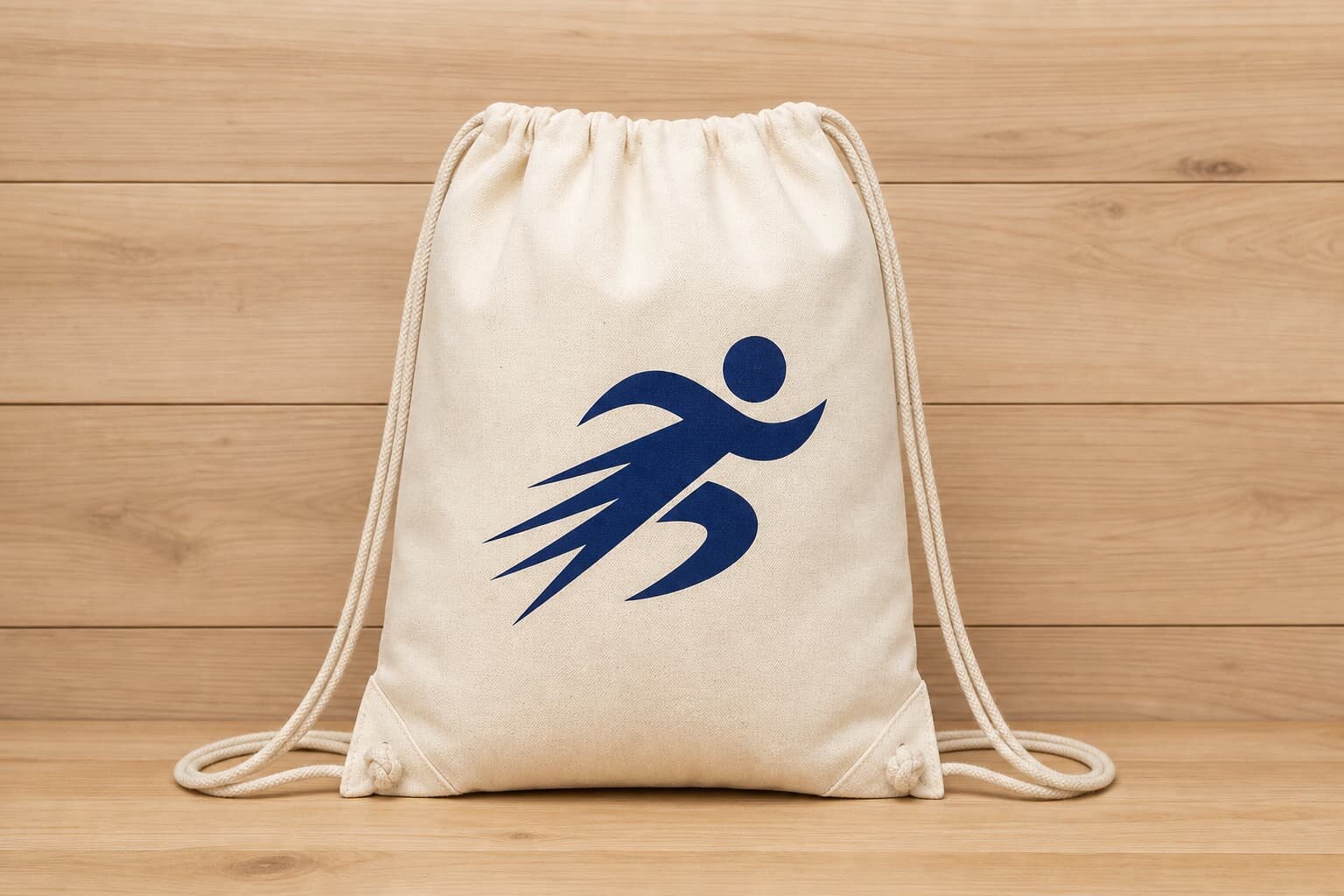
1. The buying problem: drawstring backpacks look simple, but quotes often are not comparable
A drawstring backpack is one of the easiest bags to sketch and one of the easiest bags to quote incorrectly. Many RFQs only say “drawstring backpack with logo” and attach artwork. A supplier can then quote a thin 210D promotional bag, a 5 oz cotton bag, or a heavier canvas gym-style bag and all three quotes may look valid on paper. The unit prices will not be comparable because the fabric, cord, reinforcement, print method, and packing are different.
For procurement teams, the practical risk is not only overpaying. The bigger risk is approving the cheapest offer without noticing that the quote removed the parts that make the bag usable: reinforced corners, correct cord length, adequate fabric weight, a suitable print process, and export-ready packing. This wholesale drawstring backpacks supplier checklist 09 is designed to help buyers control the RFQ before the supplier controls the specification.
- Bad RFQ: “Please quote 10,000 drawstring backpacks, black, one-color logo.”
- Better RFQ: “Please quote 10,000 pcs, 210D polyester drawstring backpacks, finished size 34 x 42 cm, black body, 5 mm black cord, reinforced lower corners with metal eyelets, one-color white screen print 22 x 18 cm, bulk packed 100 pcs/carton, FOB port.”
- Best RFQ: Add load expectation, sample stages, tolerance, print artwork file, packing data, and request carton CBM with the quote.
2. Start with use case and load, not only size
The same 34 x 42 cm drawstring backpack can be a cheap event bag, a school sports bag, or a retail merchandise item. The difference is what the user puts inside. If the bag will carry only brochures and a T-shirt, a light 210D polyester body may be enough. If it will carry shoes, a water bottle, books, or subscription box contents, the lower corners and cord attachment need more attention.
Before asking for price, write a short use-case line into the RFQ. This helps the factory recommend the right fabric and construction instead of quoting only the lowest material. A good supplier can then warn you if your requested fabric is too light for the expected load or if your print size will crack or distort on the chosen material.
- Event leaflet bag: light contents, low cost priority, bulk packing acceptable.
- Gym or sports promotion bag: needs stronger cord, good corner reinforcement, and resistance to abrasion.
- School or campus bag: check seam strength and eyelet security because repeated daily use is likely.
- Retail merchandise bag: handfeel, color consistency, print finish, and individual presentation become more important.
- Subscription or kit packing bag: confirm usable internal space after drawstring closure, not only flat dimensions.
3. Choose fabric weight with a real GSM range
Fabric weight is one of the largest cost drivers. For drawstring backpacks, buyers often compare polyester denier, cotton ounce weight, and canvas GSM without realizing they are not the same measurement system. A 210D polyester promotional bag is not equivalent to a 6 oz cotton bag, and a 10 oz canvas bag is in a different cost and sewing category. If the RFQ does not state fabric clearly, each factory may quote a different base material.
For cotton and canvas drawstring backpacks, use ounce weight and GSM together where possible. As a working reference, 5 oz cotton is often around 140-150 GSM, 6 oz around 170-200 GSM, 8 oz canvas around 270 GSM, and 10 oz canvas around 300-340 GSM depending on weave and finishing. For polyester, state denier and coating if relevant, such as 210D polyester with PU coating or non-coated fabric.
- 210D polyester: common for low-cost promotional drawstring backpacks; ask about coating, opacity, and tear resistance.
- 300D or 420D polyester: stronger and more structured than 210D; useful when the bag carries heavier goods.
- 5-6 oz cotton: good for natural branding and lighter merchandise; check shrinkage and print absorption.
- 8-10 oz canvas: stronger, more premium, and more expensive; confirm sewing machine capability and cord channel width.
- Nonwoven polypropylene: can be low cost but may not fit buyers seeking longer reuse or a natural fabric appearance.
4. Specify construction details that protect the lower corners
Most drawstring backpack failures happen at the lower cord attachment points. The user wears the cord as shoulder straps, so the lower corners carry continuous tension. If a supplier quotes a very low price, check whether the bag has only simple punched eyelets on thin fabric, fabric tabs, sewn loops, or reinforced bar-tacks. The difference is small in appearance but large in durability.
For import orders, do not approve production only from a front photo. Ask for close-up photos of the lower corners, inside seams, cord channel, and top opening. If the bag is intended for heavier use, ask the supplier to perform a simple pulling test or provide an internal load test standard. Even if you do not require a formal lab test, the factory should know how the stress point is constructed.
- Light event bag: metal eyelets on reinforced lower corners may be acceptable if the fabric is stable.
- Cotton or canvas bag: triangular corner tabs or sewn-in fabric loops often look cleaner and reduce tearing risk.
- Heavier content: request bar-tacks at stress points and confirm stitch density.
- Metal eyelets: ask whether eyelet color is nickel, black, brass, or custom, and whether it may rust during storage.
- Cord channel: confirm the channel is wide enough for smooth pulling after bulk production, especially on thick canvas.
5. Match print method to fabric, artwork, and order quantity
Printing is where many quote differences hide. A one-color screen print on 10,000 polyester drawstring backpacks is very different from a full-color heat transfer on 500 cotton bags. If the artwork includes gradients, small text, QR codes, metallic ink, large solid blocks, or edge-to-edge placement, the factory must know before quoting. Otherwise, the first quote may be low and the corrected quote after artwork review may increase.
Screen printing is usually cost-effective for solid logos and medium to large quantities. Heat transfer can work for detailed multi-color artwork, but the handfeel and wash/rub resistance should be checked. Digital or DTF printing can be useful for smaller runs or complex designs, but it may not be the best option for every fabric. Sublimation is mainly for suitable polyester fabric, usually light-colored or specially prepared material.
- Ask for maximum printable area, not only bag size. The cord channel, seams, and wrinkles reduce usable print space.
- Give Pantone references for brand colors and ask if the quote includes Pantone matching or only close match.
- For dark fabric with light logo, confirm whether an underbase is needed and included.
- For large solid prints on cotton, check ink handfeel, cracking risk, and drying time.
- For QR codes or small text, request a strike-off before approving mass production.
6. Understand MOQ logic before comparing suppliers
MOQ is not only a sales rule. It usually comes from fabric purchasing, dyeing, printing setup, accessory sourcing, and packing labor. A supplier may accept 500 pieces if using stock fabric and one print color, but require 3,000 to 5,000 pieces for custom dyed cotton, special cord color, or multi-color printing. If your order is split across several colors or designs, each split may trigger a smaller production batch and higher cost.
When comparing wholesale drawstring backpack suppliers, ask for MOQ by component. One quote may state a low total MOQ but use only stock black, white, or natural fabric. Another quote may include custom Pantone fabric dyeing, which has a higher minimum but gives better brand control. Neither is automatically wrong; they simply solve different purchasing needs.
- MOQ per fabric color: important for custom dye, canvas color, and polyester stock availability.
- MOQ per print design: each artwork may need screen setup, transfer setup, or digital file handling.
- MOQ per cord color: custom cord matching can have its own accessory minimum.
- MOQ per packing style: barcode labels, hangtags, and individual bags may require extra setup time.
- MOQ for reorder: ask whether repeat orders can use lower MOQ if material remains available.
7. Build the quote sheet so hidden costs are visible
A useful supplier quote should let you see what is included. If one supplier includes individual polybags, barcode stickers, and reinforced corners while another quotes bulk packing and plain punched eyelets, the unit prices should not be compared directly. Ask for a quote structure that separates the main cost drivers, even if the final commercial offer is one unit price.
The most practical quote data includes fabric, size, construction, print, accessories, packing, sample cost, lead time, payment term, incoterm, carton data, and validity period. Carton size and CBM are important because drawstring backpacks are light but can become bulky, especially in thicker cotton or canvas. Freight cost can change the landed cost more than expected.
- Bag body: fabric type, weight, color, size, and construction included.
- Accessories: cord type, eyelets, tabs, labels, hangtags, zipper pocket if any.
- Decoration: setup charge, print method, number of colors, print area, and strike-off cost.
- Packing: bulk pack, individual polybag, barcode, inner carton, master carton, pallet request.
- Logistics data: pieces per carton, carton dimensions, gross weight, net weight, and estimated CBM.
- Commercial terms: MOQ, lead time basis, incoterm, quote validity, payment term, and sample policy.
8. Sampling: approve the right sample, not only a nice-looking sample
Sampling should reduce production risk, not only show a pretty bag. For drawstring backpacks, a buyer should usually review at least a material swatch, print strike-off, and pre-production sample for custom orders. If the project uses stock fabric with simple screen print, sampling can be faster. If the order uses custom dyed canvas, special cord, or complex print, skipping sampling is a common cause of disputes.
When you receive the sample, check it like a production item. Measure the finished size, pull the cords, inspect the lower corners, compare the fabric to your requested weight, review print position, and test whether the opening closes smoothly. Keep the approved sample as the golden sample. If possible, require the factory to keep a duplicate approved sample in the production room.
- Fabric swatch: confirms color, handfeel, coating, opacity, and approximate weight.
- Print strike-off: confirms logo size, ink color, registration, and adhesion before sewing all bags.
- Pre-production sample: confirms actual construction, cord length, corners, print placement, and packing.
- Packing sample: useful for retail orders with barcode, hangtag, or individual polybag requirements.
- Approval record: sign or email approval with photos, measurements, and tolerance notes.
9. Packing and lead time affect landed cost and launch dates
Packing should match the distribution plan. Event giveaways may only need bulk packing, such as 50 or 100 pieces per carton. Retail programs may need individual polybags, barcode labels, hangtags, and carton marks by SKU. Distributors may need carton weights controlled for warehouse handling. Each packing choice changes labor cost, material cost, carton size, and inspection time.
Lead time should be defined from a clear starting point. A supplier saying “25 days” may mean after deposit, after artwork approval, after fabric arrival, or after pre-production sample approval. For procurement planning, ask the factory to separate sample lead time, material preparation time, bulk production time, packing time, inspection window, and export document preparation. This helps avoid late shipment caused by one delayed approval.
- Bulk pack: lower cost and less plastic, suitable for controlled event distribution.
- Individual polybag: cleaner presentation, useful for retail, kits, and warehouse picking.
- Barcode sticker: confirm code type, position, scan quality, and whether it goes on bag, polybag, or hangtag.
- Carton weight: set a maximum gross weight if warehouse or courier rules require it.
- Lead time basis: state whether counting starts after deposit, sample approval, artwork approval, or material readiness.
10. Acceptance criteria before production release
Before approving mass production, define what will be accepted and what will be rejected. This does not need to be complicated, but it should be written. For example, allow a small measurement tolerance, define acceptable print position variance, specify that eyelets must not pull out under normal hand tension, and state that obvious stains, broken stitches, and wrong logo colors are not acceptable. Clear criteria reduce argument during inspection.
For large orders, request inline photos or a mid-production check before the full order is packed. Once thousands of drawstring backpacks are sealed in cartons, rework becomes slower and more expensive. A professional factory should not object to practical quality checkpoints if they are agreed before production starts.
- Size tolerance: commonly set a practical finished-size tolerance such as plus or minus 0.5-1 cm, depending on fabric and style.
- Print tolerance: define acceptable position shift and color standard using approved strike-off or Pantone reference.
- Function check: cords must pull smoothly and carry evenly when worn as shoulder straps.
- Stress point check: lower corners, tabs, eyelets, and bar-tacks should not detach during normal pulling.
- Appearance check: no major stains, holes, broken seams, loose threads, severe wrinkles, or mixed shade panels.
- Packing check: carton quantity, carton marks, SKU labels, and barcode data must match the purchase order.
Specification comparison for buyers
| Spec decision | Recommended option | When it fits | Buyer risk to check |
|---|---|---|---|
| Fabric for low-cost promotion | 210D polyester, usually 60-80 GSM equivalent depending on coating | Mass events, school giveaways, sports promotions, light retail gift-with-purchase | Too-thin fabric can show contents, wrinkle badly, or tear at eyelets if the bottom corners are not reinforced |
| Fabric for natural brand look | 5-6 oz cotton, about 140-200 GSM | Merchandise programs, eco-positioned campaigns, bookstores, lifestyle brands | Cotton shrinkage and color variation must be checked before print approval, especially on dyed fabric |
| Fabric for premium reusable bag | 8-10 oz canvas, about 270-340 GSM | Retail resale, higher perceived value, conference kits with heavier contents | Thicker fabric increases unit cost, carton weight, sewing time, and may need stronger cord and larger channel |
| Cord system | 5-6 mm polyester cord for synthetic bags; cotton cord or flat tape for natural fabric bags | Daily use, school, retail, and branded merchandise orders | Cord length, knot security, and friction through eyelets affect user comfort and return claims |
| Corner reinforcement | Triangular fabric tabs or reinforced lower corners with eyelets/bar-tacks | Any backpack style expected to carry more than light leaflets | Unreinforced eyelets can pull out during use; request load test or pulling test photos |
| Print method | Screen print for solid logos; heat transfer for multi-color small runs; digital/DTF for complex artwork | Depends on artwork, fabric, order quantity, and color accuracy requirement | Print on cord channel or seam areas can distort; confirm printable area and tolerance before sampling |
| Packing | Individual polybag only when retail or clean presentation is required; bulk pack for events | Retail distribution, warehouse picking, subscription kits, event handout | Over-packing increases cost and CBM; under-packing may cause soiling or barcode handling issues |
Buyer checklist before sampling
- Confirm the bag size in width x height, and state whether measurements are finished size before or after washing/shrinkage.
- Specify fabric type and weight: for example 210D polyester, 5 oz cotton, 6 oz cotton, 8 oz canvas, or 10 oz canvas with target GSM range.
- Define fabric color using Pantone, standard factory shade card, natural unbleached cotton, or custom dye requirement.
- State the intended load: documents only, sportswear, shoes, books, retail goods, or mixed event kit contents.
- Confirm whether the bottom corners need triangular reinforcement, metal eyelets, sewn cord loops, or bar-tack reinforcement.
- Specify cord material, color, diameter or width, finished length, knot method, and whether the cord must match the bag or logo color.
- Provide logo artwork as vector files and include print size, print position, number of colors, Pantone references, and any underbase requirement.
- Confirm the print method you expect or ask the factory to recommend screen print, heat transfer, digital print, sublimation, or embroidery based on fabric and quantity.
- State sample requirements clearly: blank fabric swatch, strike-off, pre-production sample, packing sample, and approved golden sample.
- Ask for MOQ by fabric color, print design, size, and packing method, not only total order quantity.
Factory quote questions to send
- What exact fabric construction and weight are you quoting, and what is the acceptable GSM tolerance in production?
- Is the quoted fabric from stock, greige fabric to be dyed, or custom woven/ordered fabric?
- What is the MOQ per color, per print design, and per shipment, and what changes if we split the order across two colors?
- Which print method are you quoting, and what are the artwork limits for fine lines, gradients, photo images, and Pantone matching?
- What is the maximum recommended printable area for this bag size without distortion near the cord channel or side seams?
- Are bottom corners reinforced with fabric tabs, metal eyelets, sewn loops, or bar-tacks, and is this included in the quote?
- What cord material and diameter are included, and can the cord color be custom matched?
- How many sample stages are included before mass production, and how long does each approval stage normally take?
- What packing method is included in the base quote, and what is the additional cost for individual polybags, barcode stickers, or retail hangtags?
- What is the estimated carton quantity, carton size, gross weight, and CBM for the quoted order quantity?
Quality-control points to confirm
- Measure finished width and height on at least several pieces from different cartons and compare against the approved tolerance.
- Check fabric weight or compare production fabric to approved swatch for handfeel, opacity, coating, and shrinkage behavior.
- Pull test lower eyelets, cord loops, and bar-tacked corners because these are common failure points on drawstring backpacks.
- Check cord length, cord color, knot security, and whether both straps sit evenly when worn as a backpack.
- Inspect print position, print size, color, registration, cracking, rubbing, and adhesion after light stretching or folding.
- Review stitching density, skipped stitches, loose threads, seam allowance, and reverse stitching at stress points.
- Confirm bag opening and cord channel are not too tight, especially on thicker cotton or canvas styles.
- Check packing count, polybag quality, carton marks, barcode position, and whether cartons stay within warehouse weight limits.
- Compare random production pieces against the approved pre-production sample before releasing shipment.
- Record defects by type and severity so rework discussions are based on evidence, not general complaints.