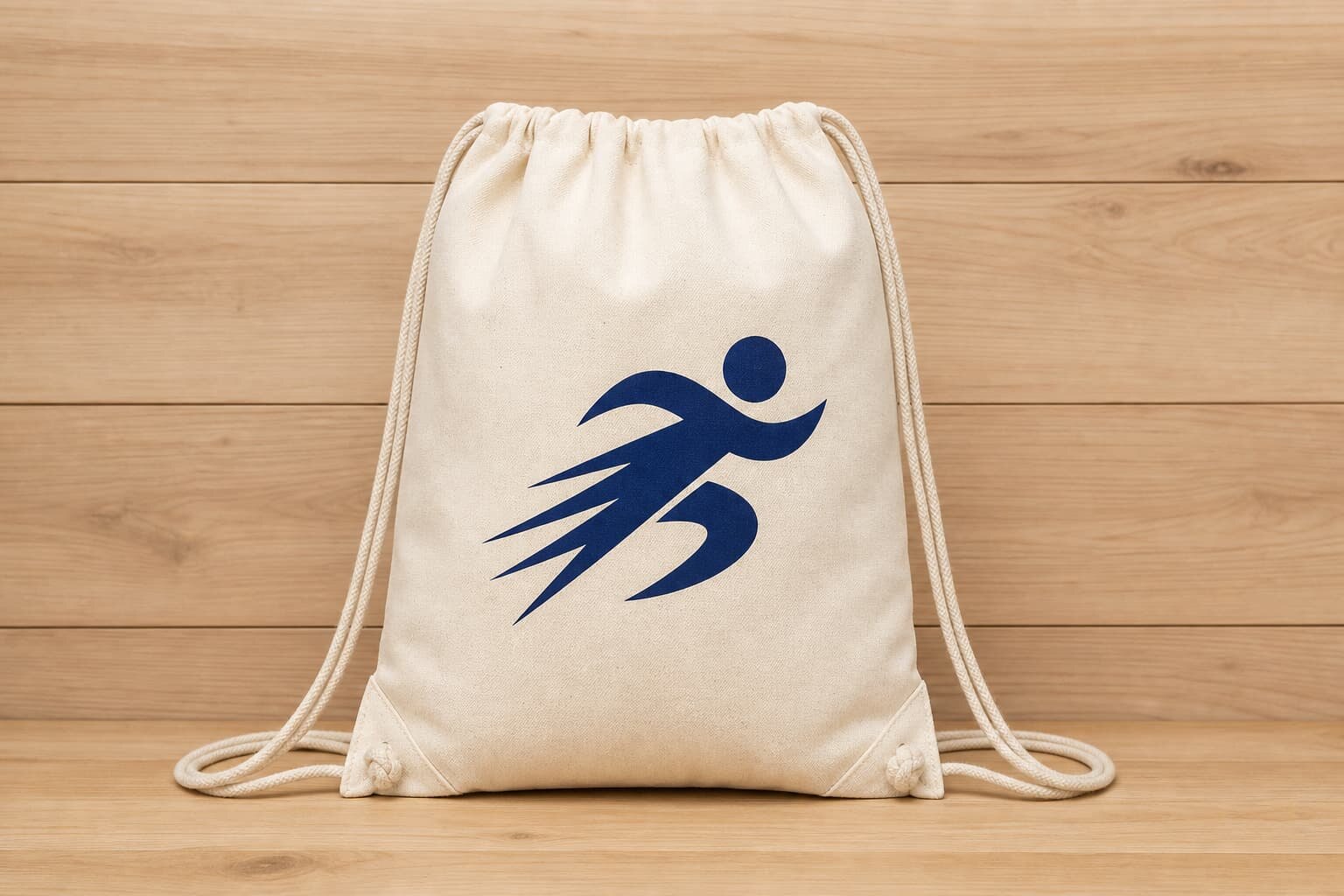
1. The sample review problem buyers usually underestimate
A drawstring backpack looks simple until the bulk shipment arrives with weak corners, thin fabric, dull printing, or cartons that cost more to ship than expected. The sample stage is where procurement teams can prevent most of these problems. A photo approval is not enough. You need to confirm the material, construction, print behavior, packing method, and what the factory is actually including in the quotation.
For wholesale drawstring backpacks, the most common sourcing mistake is comparing prices before comparing specifications. One supplier may quote 80 GSM non-woven fabric with basic cord and no reinforcement. Another may quote 210D polyester with reinforced tabs and two-color screen print. The product name is the same, but the cost structure and risk level are different. Your sample review should turn a loose RFQ into a controlled production standard.
- Do not approve a sample only because the logo looks correct in a photo.
- Check whether the sample is made from stock fabric or the exact bulk fabric.
- Ask if the sample construction is handmade or made by the normal production line.
- Record all sample deviations before the supplier starts mass production.
2. Start with the use case before choosing fabric
The right drawstring backpack specification depends on how the buyer expects the bag to be used. A one-day event bag does not need the same fabric weight as a retail resale backpack. A school sports bag carrying shoes and a water bottle needs stronger corners than a cosmetic gift bag holding light samples. If the RFQ only says “drawstring backpack, custom logo,” suppliers will fill the missing details with the cheapest workable option.
Define the load expectation, campaign duration, branding requirement, and target selling channel before asking for a quote. This helps the factory recommend a realistic material and avoids unnecessary upgrades. For example, 210D polyester is often a balanced option for general promotional backpacks because it is light, printable, and stronger than most non-woven PP. Cotton is better when the brand needs a natural handfeel, but it may increase unit weight, carton volume, and print testing requirements.
- For short events: consider 80-100 GSM non-woven PP if cost is the main driver.
- For standard promotions: 210D polyester is usually a safer middle specification.
- For natural branding: 6-8 oz cotton or 140-220 GSM cotton can work, but confirm shrinkage and colorfastness.
- For retail resale: consider 300D polyester, thicker cord, stronger corner tabs, and better packing.
3. Fabric weight and handfeel: what to verify on the sample
Fabric weight is one of the easiest places for quotes to become misleading. Buyers may request “polyester drawstring backpack,” but polyester can mean 190T, 210D, 300D, or other constructions. Non-woven bags may be 70 GSM, 80 GSM, 90 GSM, or 100 GSM, and the difference is visible when the bag is loaded. Cotton can be described by GSM or ounces, and suppliers may use different conversion habits. Always ask for the exact material standard in writing.
When the sample arrives, handle it like a user. Put in a hoodie, notebook, bottle, or the expected promotional contents. Check whether the fabric becomes transparent, whether the bottom seam distorts, and whether the printed area wrinkles too easily. If the bag must be folded into retail packaging, fold it and see if the print cracks or the fabric keeps deep creases. The sample does not need to be overbuilt, but it must match the promised usage.
- Non-woven PP: review GSM, surface evenness, stiffness, and corner tear resistance.
- 210D polyester: confirm denier, coating, water resistance expectation, and opacity.
- Cotton: confirm GSM or ounce weight, natural or bleached finish, shrinkage, and lint level.
- Nylon or premium polyester: check fabric density, smoothness, and whether the price includes stronger cords.
4. Drawcords, channels, and corners decide real durability
Most drawstring backpack failures happen at the cord path, not in the middle of the fabric panel. The cord rubs against the top channel, pulls against bottom corners, and carries the full load on the shoulder. If the cord is too thin, it can cut into the fabric or feel uncomfortable. If the cord is too smooth, knots may slip. If the bottom corner is only caught in one weak seam, the bag may fail after a few uses.
During sample review, pull the cords several times from both sides and inspect the stress points. For light non-woven bags, reinforced stitching or stronger corner construction can make a major difference. For polyester and cotton bags, bottom tabs, metal grommets, or sewn eyelets may be used depending on budget and look. Grommets look clean, but poor grommet setting can cut the fabric. Sewn tabs may be more reliable if the factory controls stitching properly.
- Check cord diameter and material: PP cord, polyester cord, nylon cord, or cotton rope.
- Confirm whether cord color is stock or custom dyed, because custom cord can affect MOQ and lead time.
- Inspect the top channel height so the cord moves smoothly without bunching.
- Pull both cords with realistic force and check for seam opening, fabric tearing, or grommet movement.
- Review the knot size and finishing so cords do not disappear into the channel.
5. Logo printing: choose the method before approving artwork
Logo quality on drawstring backpacks depends on the fabric and print method together. Screen printing is common for simple one-color or two-color logos on polyester, non-woven, and cotton. Heat transfer can handle more detailed artwork, but the edge feel and long-term adhesion must be checked. Sublimation can produce full-color graphics on suitable white polyester fabric, but it is not the right choice for every color or material. Embroidery is possible on heavier fabric, but it may distort light panels.
A common procurement issue is approving a digital artwork proof and assuming the physical print will match. It may not. Coated polyester can affect ink adhesion. Natural cotton absorbs ink and may make colors look softer. Non-woven surfaces can reduce edge sharpness. If brand color is important, request a printed sample or at least a strike-off on the actual production fabric. Ask the factory to state the Pantone target and realistic tolerance.
- Screen print: best for clean logos, solid colors, and economical bulk production.
- Heat transfer: useful for gradients or small details, but test peeling and cracking.
- Sublimation: good for full-color polyester designs, usually on white or light fabric.
- Embroidery: better on thicker fabric; confirm backing, stitch count, and panel puckering.
- Woven or sewn label: useful when the bag surface is unsuitable for large printing.
6. Size, capacity, and tolerance should be written clearly
Drawstring backpack sizes are often quoted as width by height, but the measuring method is not always consistent. Some suppliers measure cut fabric before sewing. Others measure finished bags flat. A few measure from outer seam to outer seam, which can hide usable capacity loss from seam allowance. If the bag must hold a folder, shoe box, sports kit, or retail insert, confirm the functional capacity, not only the flat size.
Tolerance is also important. A normal soft sewn bag may have a small finished-size tolerance because fabric, cutting, and sewing all move. However, the buyer should still define what is acceptable. For a general promotional drawstring backpack, a finished-size tolerance such as plus or minus a small range may be workable, but the exact tolerance should be agreed with the factory. Oversized bags increase fabric consumption and freight volume. Undersized bags may not fit the intended contents.
- State finished size as W x H, measured flat after sewing.
- Confirm whether cord channel height is included in total height.
- Ask for usable opening width and usable internal height if the bag must fit a specific item.
- Approve a size tolerance in writing before production.
- Check whether the bottom is a simple seam, boxed bottom, or reinforced panel.
7. MOQ logic: why the lowest MOQ may not be the best quote
MOQ for wholesale drawstring backpacks is not only about sewing quantity. It can be driven by fabric purchasing, fabric dyeing, cord color, print setup, label production, packing materials, or carton printing. A factory may accept a low MOQ if stock fabric and stock cords are used. The same factory may require a higher MOQ for custom-dyed fabric, special Pantone cord, custom woven labels, or all-over printing.
When comparing quotes, separate the MOQ for blank bags from the MOQ for branded production. A supplier may say the MOQ is 500 pieces, but the print setup cost makes the unit price unattractive below a higher quantity. Another supplier may quote 1,000 pieces but include screen setup, stronger cords, and export packing. Procurement teams should ask for price breaks at practical quantities instead of forcing every supplier into one artificial quantity.
- Ask for quote breaks at two or three quantities, such as 500, 1,000, and 3,000 pieces, if those match your buying plan.
- Confirm whether MOQ changes by bag color, logo color, or packing style.
- Ask if stock fabric colors can reduce MOQ and lead time.
- Separate sample cost, setup cost, unit cost, and freight-related packing data.
- Avoid approving a cheap low-MOQ sample if bulk production will switch to different fabric.
8. Packing affects freight, retail handling, and damage claims
Drawstring backpacks are lightweight, but packing still matters. A very low unit price can become less attractive if the bags are packed loosely in oversized cartons. For importers and distributors, carton size, gross weight, and CBM can affect landed cost more than expected. For retail buyers, individual polybags, barcode labels, hangtags, carton marks, and inner carton requirements should be quoted from the start.
During sample approval, do not review the bag alone. Review the packing proposal. If the bag has a large print, confirm whether folding will crease the logo. If the bag is cotton, consider moisture control during long sea transit. If the bag is for retail, check whether the folded size fits shelf, peg, or fulfillment requirements. A clean packing plan reduces warehouse complaints and prevents last-minute repacking costs.
- Confirm individual polybag, bulk pack, paper band, or retail-ready packing.
- Ask for pieces per carton, carton dimensions, gross weight, net weight, and total CBM.
- Check whether the print is protected from rubbing inside cartons.
- Confirm warning text on polybags if required by the destination market.
- Request carton marks and barcode placement before mass packing starts.
9. Lead time: sample approval is not the same as production readiness
Buyers often ask for delivery lead time before the specification is fixed. The factory can only give a reliable schedule after confirming fabric availability, print method, trim supply, packing material, and sample approval status. A stock-color polyester backpack with one-color print may move quickly. A custom cotton color, custom cord, woven label, and retail packaging plan will take longer because several suppliers are involved before sewing begins.
When you review the sample, ask what will change in bulk production. If the sample used available fabric but bulk requires a new dye lot, there may be color variation. If the sample print was made by a sample technician but bulk will be screen printed on the production line, print position and opacity should be checked again with a pre-production sample. Lead time should be counted from final approval and deposit, not from the first inquiry date.
- Separate sample lead time, pre-production sample lead time, bulk production time, inspection time, and shipping handover time.
- Ask whether fabric is in stock or must be produced or dyed.
- Confirm when print screens, transfer films, labels, and cartons will be prepared.
- Build time for sample comments and re-sampling if the first sample is not approved.
- Do not approve production before receiving written confirmation of all open details.
10. How to compare supplier quotes after the sample review
After reviewing samples, update your quote comparison sheet. Do not compare only unit price. Compare fabric specification, finished size, cord quality, reinforcement, logo method, number of print positions, packing, sample cost, setup cost, payment terms, lead time, carton data, and inspection standard. This is where many buyers discover that the cheapest quote removed details that the better sample included.
A useful quote should allow you to calculate landed cost and production risk. If a supplier cannot state fabric GSM, cord specification, print method, carton quantity, or lead time assumptions, the quote is incomplete. You do not need excessive paperwork, but you do need enough data to avoid arguments after deposit. The approved sample, signed artwork, purchase order, and final quotation should all describe the same product.
- Require the quotation to list material, GSM or denier, size, cord, reinforcement, print method, and packing.
- Ask whether setup charges are included or separate.
- Confirm whether the quoted price is based on EXW, FOB, CIF, DDP, or another trade term.
- Check if carton data is estimated or based on a packed sample.
- Attach approved sample photos and written comments to the purchase order.
Specification comparison for buyers
| Spec decision | Recommended option | When it fits | Buyer risk to check |
|---|---|---|---|
| Economy event giveaway | 80-100 GSM non-woven PP with heat-transfer or simple screen print | Large-volume campaigns, school events, low unit budget, short use cycle | Corners tear easily if the cord grommet area is not reinforced; confirm fabric GSM and stitch density before approving |
| General retail or brand promo | 210D polyester with PU coating, 2-color screen print | Sports events, travel promotions, retail gift-with-purchase, reusable light-duty bag | Thin 190T fabric may be quoted as 210D; ask for fabric specification and physical sample weight |
| Natural brand position | 6-8 oz cotton canvas or 140-220 GSM cotton sheeting | Eco-themed promotions, boutique packaging, wellness, cosmetic, or lifestyle brands | Cotton shrinkage and print bleeding after washing; request pre-production print test and tolerance |
| Premium reusable backpack | 300D polyester or 12 oz cotton canvas with reinforced bottom corners | Retail resale, employee kits, campus merchandise, higher perceived value | Higher fabric weight changes carton volume and freight cost; check packed carton CBM in the quote |
| Full-color artwork | Sublimation on white polyester or heat-transfer print on coated fabric | Gradient logos, photos, mascot graphics, or multicolor designs under tight setup cost | Color can shift from approved digital artwork; require physical sample or strike-off under production fabric |
| Longer service life | Nylon cord or thick polyester rope with bar-tacked bottom tabs | Repeated carrying, gym use, sports clubs, youth programs | Cheap PP cord frays and slips; review cord diameter, knot finishing, and pull strength |
Buyer checklist before sampling
- Confirm the sample matches the RFQ fabric type, GSM, denier, color, coating, and finish, not only the general style.
- Measure finished bag size flat and loaded, then record the allowed tolerance for bulk production.
- Check drawcord material, diameter, length, colorfastness, knot security, and comfort on the shoulder.
- Inspect corner reinforcement, grommets, or sewn tabs by pulling the cords with realistic force.
- Compare logo size, placement, print color, opacity, and edge sharpness against the approved artwork.
- Review internal seam allowance, stitch density, loose threads, skipped stitches, and back-tacking at stress points.
- Test whether the fabric wrinkles, stains, cracks, bleeds, or shows pinholes after normal handling.
- Confirm individual packing method, master carton quantity, carton marks, barcode needs, and polybag warning text if required.
- Ask the supplier to state whether the reviewed sample is handmade, pre-production, or from bulk line production.
- Record approval comments in writing and attach photos before releasing deposit or mass production authorization.
Factory quote questions to send
- What exact fabric are you quoting: material composition, GSM or denier, coating, color process, and available stock color range?
- Is the quoted size measured before sewing, after sewing flat, or after loading? What finished-size tolerance do you accept?
- What cord material, diameter, and length are included in the price, and are reinforced corners, grommets, or bottom tabs included?
- Which print method is included: screen print, heat transfer, sublimation, digital print, or embroidery? How many colors and positions are included?
- What is the MOQ for the bag body color and what is the MOQ for custom printing? Are these separate minimums?
- What sample type will you provide: blank stock sample, printed sample, pre-production sample, or exact production sample?
- What are the sample charge, mold or screen charge, courier cost, and whether any charge is refundable after bulk order?
- What is the production lead time after sample approval and deposit, and does that include fabric booking and packing material preparation?
- What is the packing plan: pieces per polybag, pieces per carton, carton size, gross weight, net weight, and total CBM?
- What quality standard will be used for bulk inspection, and which defects are considered critical, major, or minor?
Quality-control points to confirm
- Fabric GSM or denier verified against the approved sample and purchase order.
- Finished dimensions checked at width, height, cord channel height, and usable opening.
- Print adhesion tested by rubbing, light scratching, and folding on the printed area.
- Cord pull strength checked at both bottom corners and top channel.
- Seam strength reviewed at side seams, bottom seam, and corner reinforcement.
- Color consistency checked between front panel, back panel, cords, trims, and approved reference.
- Stitching inspected for skipped stitches, broken thread, uneven tension, and loose thread ends.
- Packing checked for correct quantity, barcode placement, carton marks, moisture control, and carton strength.
- Bulk production compared against the approved sample, not only against the supplier's internal standard.
- Random finished bags loaded with realistic contents to check shape, cord comfort, and seam stress.