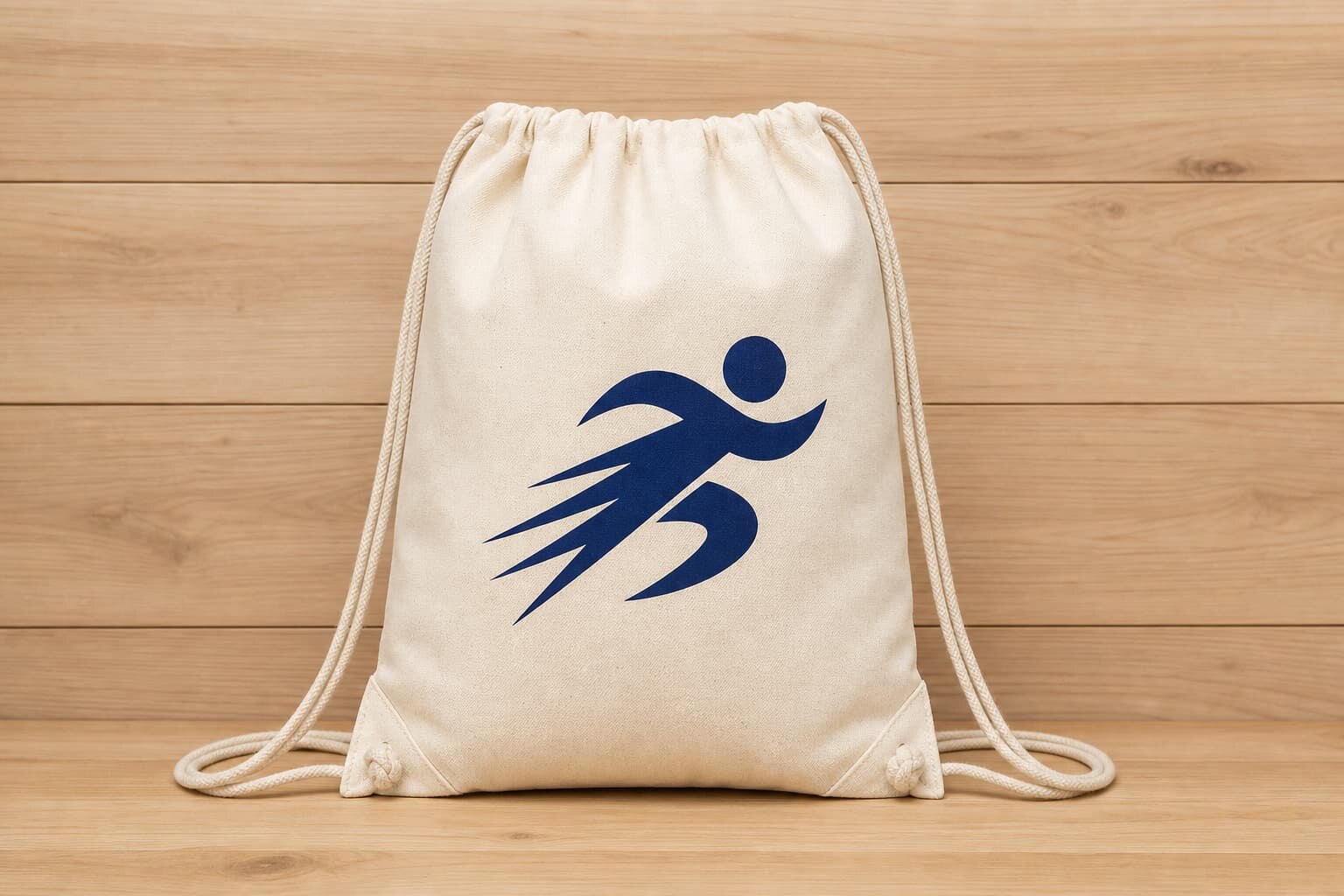
1. Why MOQ for drawstring backpacks is rarely a single number
When buyers ask for a wholesale drawstring backpacks MOQ guide, the first mistake is assuming there is one universal minimum order quantity. In practice, factories set MOQ by fabric availability, cutting efficiency, print setup, and packing labor. A plain natural cotton bag may be easier to run than a dyed bag with a multi-color logo and retail packing, so the “minimum” changes with the specification, not just the product category.
For procurement teams, the right question is not “What is your MOQ?” but “What is your MOQ for this exact spec?” If you want accurate quotes, define the finished size, material, print method, and pack-out before asking for pricing. Otherwise, you may compare numbers that cannot be produced on the same line or with the same yield.
- MOQ can change by fabric color, logo complexity, packing format, and whether the material is stock or custom-dyed.
- A lower MOQ usually means higher labor share per bag, fewer customization choices, or a higher unit price.
- The most useful quote is the one tied to a complete specification sheet, not a generic product name.
2. The spec decisions that move MOQ and unit cost the most
For drawstring backpacks, the biggest MOQ drivers are fabric type, fabric weight, printing method, and whether the bag needs extra finishing. Cotton and canvas are common because they print well and look premium enough for retail or promo programs. A typical buyer range is around 140–180 GSM cotton for lighter use and about 120–140 GSM canvas when the bag must hold more shape. Heavier fabric usually improves durability but raises cutting cost, sewing time, and freight weight.
Print method matters just as much. One-color screen print is usually the easiest and most economical for bulk orders, especially when the logo has bold shapes and simple text. Heat transfer may work for smaller runs or more detailed graphics, but it can increase setup complexity. Embroidery and woven labels add perceived value, yet they also change stitch time and may require a different MOQ logic than plain printing.
- Fabric weight affects drape, strength, and freight cost.
- Color count affects screen setup and production risk.
- Retail packing adds labor, material, and carton volume.
- Custom cord, woven label, or patch details can shift the quote more than buyers expect.
3. How factories usually calculate MOQ for wholesale drawstring backpacks
Factories generally calculate MOQ from the point where production becomes efficient enough to cover setup and reject risk. That includes fabric cutting, edge finishing, cord insertion, print preparation, and final packing. If one step needs special tooling or manual adjustment, the minimum often rises. For example, a standard natural cotton bag with one logo may be run at a lower quantity than a dyed black bag with a white print, because dark fabric often needs tighter print control and more careful QC.
This is why two suppliers can quote very different minimums for what looks like the same bag. One factory may own stock fabric and do its own printing in-house, while another outsources fabric or printing and needs a larger batch to stay efficient. When comparing quotes, ask whether the MOQ is tied to a fabric purchase, a print screen setup, a dye lot, or a packing line requirement.
- Ask whether the MOQ is per design, per color, or per order line.
- Confirm whether mixed sizes or mixed print colors are allowed inside one MOQ.
- Check if the quoted MOQ is for a stock fabric bag or a fully custom build.
4. A practical buyer comparison: which backpack spec is easiest to source
If your priority is speed and quote clarity, start with a simple spec: natural cotton, one-color logo, standard cord, bulk packing. This is usually the easiest path for new programs, distributor replenishment, and seasonal promotions. The factory has fewer variables to control, and your risk of approval delays is lower because the sample usually represents the bulk build more closely.
If your goal is stronger retail value, you may need heavier fabric, better finishing, and retail packaging. That can be the right choice for brands, but the buyer should expect a higher MOQ or at least a higher setup burden. The key is to decide where the value sits: lower unit cost, faster turnaround, or stronger shelf appeal. You rarely get all three at the same time.
- Use simple specs for event, promo, and distributor programs.
- Use upgraded specs when the bag is part of a retail collection or needs a premium feel.
- Do not mix “lowest cost” and “premium retail finish” in the same RFQ unless you want inconsistent quotes.
5. Sampling: what a good pre-production sample must prove
A sample is useful only if it reflects the production spec, not just the general shape. For drawstring backpacks, a proper pre-production sample should confirm fabric GSM, print placement, cord length, top tunnel construction, and overall proportion. If the sample is made in plain cloth but the bulk order uses dyed material, the color and hand-feel can change enough to affect buyer approval.
Before approving, inspect the sample as if it were a shipment issue. Check whether the cords pull smoothly, whether the top corners are reinforced, and whether the print sits flat without distortion. Also confirm any label or side tag placement, because these are small details that often drift between sample and bulk if the spec sheet is not clear.
- Request the sample in final fabric, final print method, and final color when possible.
- Measure finished width, height, and cord length against the agreed spec.
- Check seam straightness, tunnel alignment, and whether the bag opens and closes smoothly.
- If the order has retail packing, review the finished pack presentation, not only the bag itself.
6. Printing and decoration choices that change the quote
For wholesale drawstring backpacks, logo decoration is often the fastest way to create quote differences. Screen printing is usually the benchmark because it works well on cotton and canvas, especially for simple one-color artwork. The artwork should be checked for line thickness, spacing, and edge detail. Thin text or tiny icons can break down on textured fabric, which means a design that looks fine on screen may not print cleanly in production.
If you need multi-color graphics, ask how the factory separates colors and whether registration tolerance is tight enough for your design. Heat transfer can help with more detailed art, but you should confirm wash resistance and surface feel. Embroidery can look strong, but on lightweight bags it may cause puckering or a stiff patch. The cheapest method is not always the best one if the bag will be handled frequently or sold at retail.
- Ask for the decoration method in writing, not just “logo printing.”
- Confirm whether artwork setup is one-time or repeated on each reorder.
- Request a production photo or strike-off if the logo has fine lines, gradients, or small text.
7. Packing, carton loading, and why “same bag” can still price differently
Packing is one of the easiest places to underestimate cost. A bulk-packed drawstring backpack is simpler to produce and ship than a retail-ready bag with individual polybags, barcode stickers, hangtags, or insert cards. If you want store-ready units, ask for the full packing spec before quoting. Otherwise, the factory may quote a bare bag price and add labor later, which makes comparison useless.
Carton pack also affects the final landed cost. If the bags are folded differently or packed individually, carton dimensions can increase and container utilization may drop. For importers, that means freight efficiency matters as much as factory price. A slightly higher unit price can still be better if it reduces carton volume or prevents damage during transit.
- State whether you need bulk pack, polybag, hangtag, barcode, or retail insert card.
- Confirm carton quantity and whether master cartons are single-size or mixed-size.
- Ask if packing material is included in the quoted unit price.
8. Lead time planning: sample, bulk, and the delays buyers forget
Lead time for wholesale drawstring backpacks depends on whether the factory is using stock fabric, custom dyeing, and in-house printing. A simple program can move faster because there is less upstream coordination, while custom color and special packaging add steps. The buyer should always separate sample lead time from bulk production lead time, because many quote sheets blur the two and hide the real schedule risk.
The delays most buyers forget are artwork approval, material matching, and packing sign-off. A sample may be ready quickly, but if the print file is not finalized or the label artwork changes late, production stops. In procurement, a clean approval process is often more important than pushing the factory for a shorter quoted lead time.
- Ask for lead time after sample approval, not after inquiry.
- Confirm whether weekends, holidays, and shipping booking time are included.
- Clarify if custom-dyed fabric extends the schedule.
- Request a production milestone update before bulk packing starts.
9. How to compare factory quotes without getting misled
A useful quote comparison starts with the same specification line by line. If one supplier quotes 140 GSM cotton, one-color screen print, and bulk packing, but another quotes a lighter fabric with different packing, the lower price is not an apples-to-apples result. You should align fabric weight, logo method, bag size, cord, and pack format before comparing unit cost.
It also helps to break the quote into cost buckets: fabric, sewing, print, packaging, and overhead or setup. You may not always get a full cost breakdown, but even a partial split will show where the supplier is earning or saving. If the price is unusually low, ask where the saving comes from. In many cases, the answer is thinner fabric, simpler stitching, weaker packing, or a less controlled print process.
- Compare only after confirming the same GSM, size, print method, and packing spec.
- Check whether sample cost is refundable against bulk order.
- Ask what part of the price is setup versus variable production cost.
- Watch for hidden charges on screens, plates, labeling, or carton marks.
10. Common sourcing mistakes and how to avoid them
The biggest mistake is approving a quote before the spec sheet is locked. Once the factory starts estimating from a vague description, every later change becomes a revision. Another frequent mistake is choosing the cheapest fabric without testing load performance. A drawstring backpack may look fine on a desk, but if the fabric is too light or the top tunnel is weak, the bag can fail in daily use and create a quality complaint after delivery.
Buyers also lose time when they do not define acceptance criteria. If you need a premium retail result, say so with measurable details: final size tolerance, print placement tolerance, seam finish expectations, and packing format. That gives the factory a target and gives your QA team something to inspect against. In B2B sourcing, vague language always becomes expensive later.
- Do not mix old artwork and new bag specs in one RFQ.
- Do not approve a sample without checking print placement, seams, and cord function.
- Do not compare prices until the packing requirement is fixed.
- Do not assume the lowest MOQ gives the lowest total landed cost.
Specification comparison for buyers
| Spec decision | Recommended option | When it fits | Buyer risk to check |
|---|---|---|---|
| Fabric | 140–180 GSM cotton or 120–140 GSM canvas | Brand promos, retail packs, school or event use | Too light for load-bearing use; too heavy for price-sensitive giveaways |
| Print method | 1-color screen print or heat transfer for small graphics | Simple logos, repeat orders, lower-cost programs | Fine lines can fill in; color matching may vary by batch |
| Closure style | Self-fabric drawcord with reinforced eyelets or stitched tunnel | General promotional and retail use | Cord abrasion, loose tunnels, and weak stress points at top corners |
| MOQ structure | Base MOQ by fabric color plus print setup and packing method | Most standard B2B orders | Low MOQ may still carry higher unit cost or fewer customization options |
| Packing | Bulk pack, individual polybag, or retail-ready insert card | Wholesale, marketplace, or store-ready programs | Retail pack adds labor and carton volume; confirm barcode placement |
| Sample type | Pre-production sample with final fabric and final artwork | Any order with custom logo or size changes | Plain sample approval is not enough for print placement or stitching checks |
Buyer checklist before sampling
- Confirm finished size, fabric GSM, and whether the bag is cotton, canvas, polyester, or blended material.
- State the exact logo method, artwork size, number of print colors, and artwork file format.
- Specify cord material, cord thickness, top closure style, and reinforcement requirements.
- Ask for MOQ by color, by print design, and by carton pack configuration.
- Request sample photos showing inside seams, cord channel, label position, and print placement.
- State packing format, carton quantity, barcode needs, and outer carton marks before quoting.
- Ask for lead time separately for sample, bulk production, and shipping-ready packing.
Factory quote questions to send
- What is your MOQ by fabric color, print color count, and packing method?
- Does your quoted MOQ include one artwork setup, or is there a separate screen fee or plate fee?
- What fabric GSM are you quoting, and is that the finished bag fabric or the raw cloth before cutting?
- Will you use screen print, heat transfer, embroidery, woven label, or sewn patch for this logo?
- What are the acceptable size tolerances for finished width, height, and cord length?
- Can you share the sample lead time, bulk lead time, and the expected carton count per order?
- What inspection points do you check before shipment, and do you provide photo approval before packing?
Quality-control points to confirm
- Finished size matches the approved spec sheet within agreed tolerance.
- Fabric weight matches the confirmed GSM and there is no substitution after sample approval.
- Print is centered, clean, and resistant to cracking or smudging during normal handling.
- Top tunnel, cord stitch, and stress points do not open under a basic pull test.
- Cord ends are sealed or finished cleanly and do not fray excessively.
- Labels, care marks, and barcodes are in the right position and readable.
- Carton packing count is correct and inner packing does not distort bag shape.