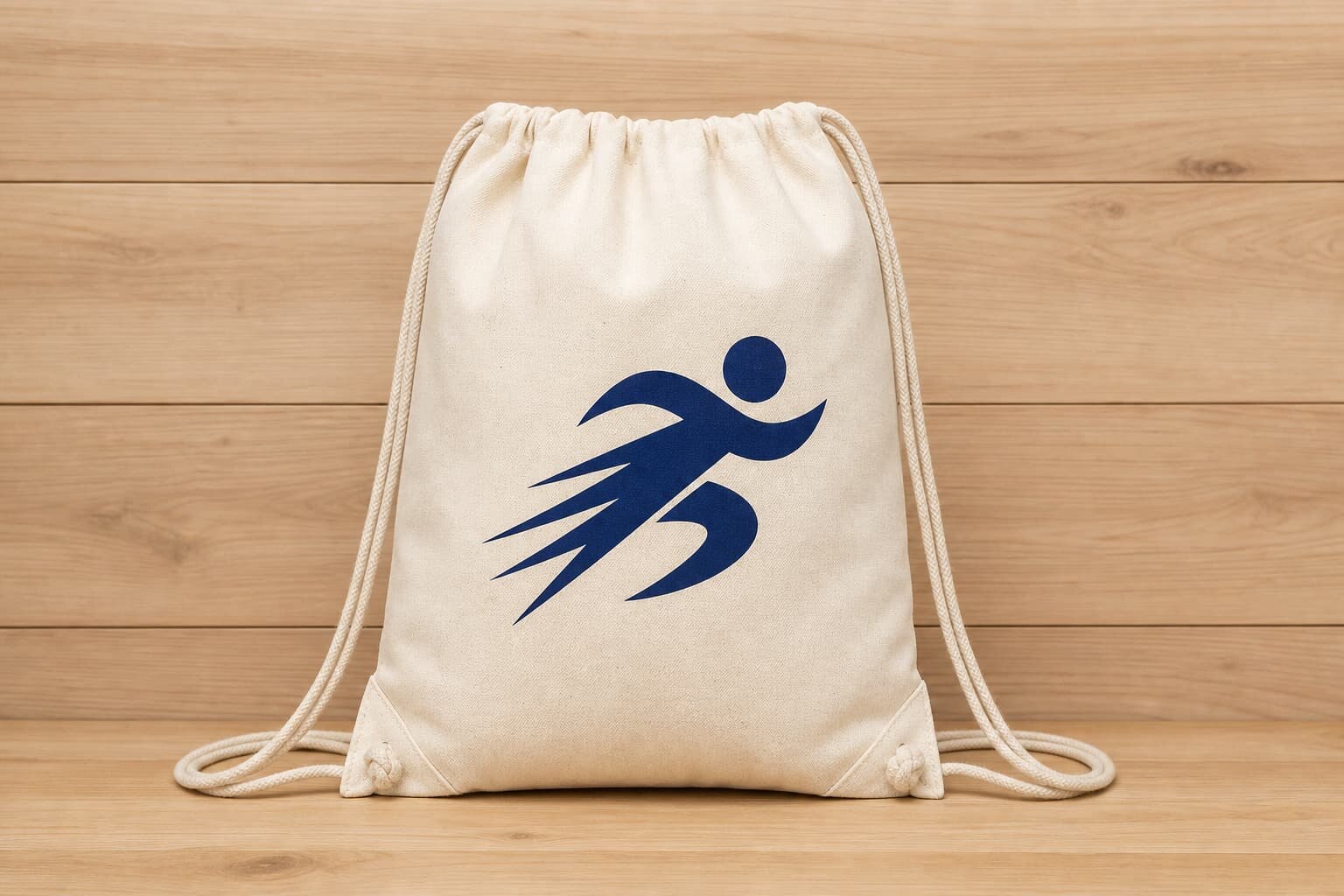
1. Audit the parts that actually create claims
Drawstring backpacks are simple products, but the problems that create chargebacks and customer complaints are rarely visible in a quotation photo. A sample can look clean on a desk while still being weak in use. The logo may be centered, the fabric may appear close to the requested color, and the cord may slide through the top channel. The failures appear later: thin cord cuts into the shoulder, an eyelet pulls through the bottom corner, the print rubs off after cartons are stacked, or the top channel stitching opens when the user loads shoes and a bottle.
A useful supplier audit should therefore focus on the stress points and decoration process, not only on general factory capacity. The buyer should confirm the fabric weight, cord specification, reinforcement method, print system, sampling control, inspection plan, and packing method. These details explain many price gaps between suppliers. Two factories may both quote a 34 x 43 cm 210D polyester drawstring bag, but one may include 5.5 mm cord, reinforced corners, correct low-bleed ink, and carton marks, while the other quotes thin cord, weak eyelets, and bulk packing that increases print blocking risk.
The goal is not to over-engineer a low-cost giveaway. The goal is to match construction to use and to make the quote comparable. If the order is for a one-day handout with a brochure and T-shirt, the specification can stay efficient. If the order is for campus retail, youth sports kits, or repeated promotional use, the buyer needs measurable controls for load, cord pull, seam strength, logo durability, and packing.
- Review the loaded bag, not only the empty front panel.
- Treat cord, bottom exits, and print adhesion as functional quality points.
- Require the supplier to quote the same specification, not a similar-looking sample-room item.
- Keep a signed approved sample and a clear spec sheet as the inspection standard.
2. Define the use case before asking for the cheapest MOQ
Procurement teams often begin with quantity, target price, and logo. For drawstring backpacks, the better starting point is use. A bag carrying only event papers can be much lighter than a bag carrying shoes, a towel, a metal bottle, or retail merchandise. Without this context, many factories quote their lowest construction and leave the buyer to discover the weakness after distribution.
Give the supplier a target load and distribution environment. For example, a light event bag may be reviewed at 2 kg, while a stronger promotional or sports-use bag may be reviewed at 4 kg. The exact target should come from your contents and risk tolerance, but it must be written down. Ask the factory to load the sample, hang it by the cords, open and close it repeatedly, and check the bottom exits after testing. This factory-level check is not a substitute for a laboratory test when a formal standard is required, but it quickly exposes weak corners, loose knots, poor bartacks, and fabric tearing.
Children’s or youth use needs extra attention. Draw cords can raise safety and labeling questions depending on the market and age group. If the backpack is intended for children, ask about destination-market expectations before locking cord length, toggles, metal tips, labels, or packaging. For the United States, buyers often review CPSIA-related requirements for children’s products; for the EU, REACH-related chemical considerations may be relevant. Do not assume a generic adult promotional bag is automatically suitable for children’s distribution.
- Light event use: brochures, badge, T-shirt, coupon, or small giveaway.
- Medium use: shoes, towel, bottle, product sample kit, or repeated campus use.
- Retail use: cleaner stitching, better cord comfort, consistent shade, barcode control, and stronger packing.
- Children’s use: review cord length, small parts, labeling, and chemical compliance for the destination market.
3. Fabric: quote denier, GSM, coating, and shade control together
Fabric names alone are not enough. A quote that says 210D polyester, 300D polyester, non-woven, cotton, or canvas leaves too much room for substitution. Denier describes yarn size, but finished performance depends on weave density, coating, finishing, and actual GSM. Two 210D fabrics can feel very different. One may be acceptable for a light giveaway; another may be thin, noisy, over-coated, or easy to tear at the bottom eyelet.
For polyester backpacks, ask for denier, actual GSM or factory GSM range, coating type if any, stock color availability, and whether the coating affects print adhesion. Coated polyester may improve body and water resistance, but poor coating can smell, crack, or reject ink. For cotton and canvas, request ounce weight and GSM equivalent. A 5 oz cotton bag may fit a light eco campaign, while 6-8 oz cotton normally gives a better handfeel and print surface. Heavier canvas can look premium but raises freight cost, carton weight, sewing time, and price.
Shade control matters, especially for repeat programs. Stock fabric colors may vary by batch. Custom dyed fabric requires lab dips, shade approval, mill MOQ, and longer lead time. If a brand color is important, approve fabric shade and printed logo together. A white logo on black coated polyester can look different from the same white logo on natural cotton because ink opacity, fabric absorbency, and surface texture change the result.
- For polyester, record denier, GSM, coating, color name, and approved swatch reference.
- For cotton, record ounce weight, GSM equivalent, shrinkage expectation, shade band, and natural speck tolerance.
- For custom dyeing, require lab dip approval and define acceptable shade variation before bulk fabric is purchased.
- Reject fabric substitutions that change handfeel, opacity, print adhesion, or load performance without buyer approval.
4. Cord specification: small cost difference, large user impact
The cord is not a minor trim. It is the closure, handle, and shoulder strap at the same time. Thin cord may help a factory reach a low price, but it can make the backpack uncomfortable and concentrate force at the bottom corners. For many standard promotional drawstring backpacks, a polyester cord around 5-6 mm is a practical baseline. Premium orders may use softer braided cord or cotton cord, but these choices should be checked for colorfastness, shedding, shrinkage, and knot security.
Measure cord diameter with a caliper and record it in the specification. If the sample uses 5.5 mm cord, the bulk order should not arrive with 4 mm cord unless the buyer approved the change. Cord length also matters. Short cords make the bag difficult to wear; long cords may drag or create safety concerns for children. The cord should pull smoothly through the top channel and close the mouth evenly without snagging, twisting, or excessive friction.
Cord color is another source of mismatch. Stock black or white cord is usually easy. Pantone-matched cord may require dyeing, higher MOQ, and shade variation. Ask whether the cord is dyed in the same batch as the fabric or sourced separately. A small mismatch may be acceptable for a giveaway, but it can be unacceptable for retail or brand-controlled programs.
- Specify material: polyester, cotton, braided cord, flat tape, or other trim.
- Specify diameter in millimeters and length tolerance, not only color.
- Check end treatment: knot, heat-sealed end, plastic tip, metal tip, or sewn termination.
- After loading the sample, inspect knot slippage, cord fraying, shoulder comfort, and bottom exit distortion.
5. Bottom reinforcement: make the failure point measurable
Most functional failures happen where the cord exits the bottom corners. The cord may pass through a metal eyelet, a plastic grommet, a PU or fabric patch, a folded tunnel, or a sewn loop. Each construction can work when matched to the load and executed well. Each can also fail when the material is thin, the punch is rough, the washer is weak, or the bartack is missing.
The specification should include close-up photos and written details. If the approved sample uses a reinforced patch with bartacks, the factory should not switch to a simple punched eyelet during bulk production to save cost. If the approved sample uses metal eyelets, check whether there is reinforcement behind the hole and whether the eyelet edge cuts into the fabric. For PU patches, bend the material and look for cracking. For fabric tunnels, inspect seam allowance and stitch density because the cord can rub through the fabric under load.
Acceptance criteria should be practical and visible. A pulled-out eyelet, torn corner, missing bartack, open seam, or reinforcement that separates during the agreed loaded sample check should be treated as a major defect at minimum. For products carrying children’s items or heavier loads, it may be treated as critical depending on the buyer’s classification. Do not leave this decision to the inspector on the day of inspection.
- Eyelet construction: check washer security, rust risk, sharp edge, alignment, and reinforcement backing.
- Patch construction: check patch size, thickness, flexibility, stitch density, and edge cracking.
- Folded tunnel construction: check bartacks, seam allowance, cord abrasion, and symmetry.
- Loop construction: check loop material, insertion depth, bartack length, and pull resistance.
6. Printing: match the method to artwork, fabric, and packing
Screen printing remains the best value for many wholesale drawstring backpack orders, especially one to three solid colors. It can be durable and efficient when the factory selects the correct ink and cures it properly. Problems occur when buyers assume all fabrics print the same. Dyed polyester can cause migration, especially when light ink is printed on dark fabric. Coated polyester can reduce adhesion. Cotton absorbs ink differently and may need another ink system or curing profile.
Heat transfer is useful for multi-color artwork, gradients, small sponsor logos, and designs that are difficult to screen print. Its risks are different: edge lifting, bubbles, glossy handfeel, cracking after folding, and poor bonding on textured fabric. Sublimation can work well on white or light polyester panels but is not a fix for dark cotton or dark coated polyester. Embroidery may look premium on heavier fabric, but thin 210D panels can pucker and distort.
Ask for a print strike-off on the actual fabric, especially for color-critical orders or large ink coverage. The strike-off should show logo size, color, position, edge quality, and handfeel. For inspection, include simple field checks: dry rub, tape pull, visual cracking after gentle folding, and edge-lift review for transfers. If a recognized test method is required, discuss methods such as ISO 105 or AATCC colorfastness/rub approaches with the testing provider before production. The factory should not invent a vague pass result after goods are finished.
- Screen print: confirm ink type, curing control, opacity, migration risk, and rub performance.
- Heat transfer: confirm film type, temperature, pressure, dwell time, edge bonding, and wash or fold expectations if relevant.
- Sublimation: confirm polyester suitability, base color, ghosting control, and panel alignment.
- Embroidery: confirm fabric strength, backing, needle damage risk, puckering, and cost impact.
7. Sample approval: inspect the bag as a production standard
A pre-production sample is not only a sales sample. It becomes the physical standard for bulk cutting, printing, sewing, packing, and final inspection. Measure it flat and record finished width, height, top channel depth, seam allowance if visible, corner shape, print position, logo size, cord length, cord diameter, reinforcement details, and packing fold. If the sample is approved only by email photo, the buyer loses control over many measurable features.
Test the sample with the intended contents. Load it to the agreed weight, hang it by the cords, open and close the top channel repeatedly, and then inspect the stress points. Look for distorted corners, frayed cord, loose knots, skipped stitches, eyelet movement, stitch popping, or fabric tearing. For print approval, do not rely only on a phone photo. Request a physical sample when timing allows. If a physical sample is impossible, require high-resolution photos under neutral light plus close-ups of the print edge, reverse side, seams, top channel, and bottom exits.
Approval should be complete. Do not approve the fabric but leave the cord open. Do not approve the print but leave packing undefined. A signed sample or sample approval sheet should list what is locked and what remains pending. The buyer and supplier should each keep one approved reference sample. If third-party inspection is planned, the inspector should receive the same spec sheet, photos, and approval comments before visiting the factory.
- Measure size and logo position with a ruler; do not approve by eye only.
- Check whether the finished size is measured before or after pressing, folding, or packing.
- Perform rub, tape, and gentle fold checks on printed samples where appropriate.
- Confirm the sample uses intended bulk fabric, cord, reinforcement, ink or transfer film, and packing method.
- Keep retained approval samples for final inspection and repeat-order comparison.
8. RFQ structure: make supplier quotes comparable
A strong RFQ prevents vague quotes. The supplier should not be asked only for unit price on a drawstring backpack with logo. The RFQ should define finished size, fabric, GSM or weight, cord specification, reinforcement, print method, logo size, number of colors, packing, carton data, compliance needs, sample requirement, inspection plan, Incoterm, and destination. If those fields are missing, the lowest quote is often just the thinnest version.
Lead time should be split. Sample development includes fabric sourcing, artwork output, print strike-off, sewing, approval, and courier delivery. Bulk lead time should start after sample approval, final artwork, deposit, and material confirmation. Printing, sewing, QC, and packing can each create delays during peak season. If a supplier promises a short schedule without asking about custom dyeing, transfer film, carton marks, inspection booking, or compliance documents, treat the date as conditional until confirmed.
MOQ should also be explained. Low MOQ is easier with stock fabric, standard size, stock cord, and one-color print. Custom dyed fabric, matched cord, multiple logo versions, or special retail packing can push MOQ higher. For distributors, it may be smarter to consolidate fabric color and change only the logo, rather than creating many small custom SKUs with separate fabric and cord colors.
- Ask suppliers to quote from one controlled specification sheet.
- Separate product cost, setup cost, sample cost, packing cost, and testing or inspection cost.
- Clarify Incoterm: EXW, FOB, CIF, DDP, or another agreed term.
- Request carton dimensions, gross weight, and pieces per carton before confirming freight estimates.
- Require written approval for any substitution of fabric, cord, reinforcement, print method, or packing.
9. Inspection plan: use AQL, but add product-specific pass/fail checks
AQL sampling is useful, but it is not enough by itself unless defect classifications are clear. Many buyers use ANSI/ASQ Z1.4 or ISO 2859-1 style sampling plans for final random inspection. The buyer should define inspection level and AQL limits before production, not after defects are found. Critical defects normally have zero tolerance, while major and minor defects are accepted or rejected according to the agreed AQL. The exact levels depend on buyer risk, order value, and destination channel.
For drawstring backpacks, product-specific defects should be added to the checklist. Functional problems such as cord breakage, eyelet pull-out, open reinforcement seam, wrong fabric, wrong print method, severe print peeling, or unsafe sharp hardware are not small cosmetic issues. They should be classified as major or critical. Cosmetic issues such as loose threads, slight wrinkles, small washable marks, or minor shade variation may be minor if they do not affect use and remain within the approved tolerance.
Inspection timing matters. A material check before cutting can catch wrong GSM, wrong shade, odor, or coating problems. An inline inspection after first printing and sewing output can catch wrong logo position, poor curing, missed bartacks, and cord mismatch before the whole order is finished. Final random inspection should happen when goods are packed but still available for rework if the result fails. For high-risk artwork, large orders, or new suppliers, third-party inspection before shipment is usually easier and cheaper than handling destination claims.
- Before cutting: verify fabric GSM, shade, coating, odor, and approved swatch match.
- Inline: check first bulk print output, cord diameter, reinforcement sewing, top channel, and logo placement.
- Final inspection: check randomly selected packed goods against the spec, approved sample, and packing list.
- Functional checks: loaded hang, cord pull, draw operation, seam stress, print rub/tape, and reinforcement review.
- Documentation: keep inspection report, defect photos, carton photos, and retained bulk samples.
10. Packing, cartons, compliance, and retained samples
Packing can protect the order or create new defects. If printed bags are packed before ink or transfer bonding is stable, pressure and heat inside cartons can cause blocking, offsetting, or transfer marks. Large prints packed face-to-face may need paper separation, longer curing time, or a different fold. Individual polybags protect each unit and help retail or warehouse control, but they increase material use, carton volume, and sometimes labeling obligations. Bulk packing may be appropriate for event distribution when print blocking risk is controlled.
Carton control affects receiving. The purchase order, SKU, color, quantity, carton number, gross weight, and destination should match the shipping marks and packing list. Carton weight should be safe for handling and acceptable for the buyer’s warehouse. If cartons are stacked for export, ask about carton grade and perform a practical stacking review. For higher-risk shipments, buyers may request a carton drop check based on the buyer’s own logistics standard or a recognized packaging test approach such as ISTA-style concepts, although the exact test must be agreed in advance.
Compliance should be addressed early. For EU buyers, REACH-related chemical restrictions may affect inks, coatings, PVC transfers, metal trims, and packaging. For U.S. children’s products, CPSIA-related requirements may apply depending on product type, age grading, materials, and labeling. Retailers may add their own restricted substance lists, barcode rules, polybag warnings, suffocation warning text, or country-of-origin requirements. The factory may not know your channel’s rules unless you provide them.
Finally, retain samples. Keep one approved pre-production sample, several random bulk samples, and at least one packed example with carton photos. Retained samples help resolve claims, compare repeat orders, and identify whether a problem came from production, packing, storage, or transport. This is a low-cost control step that many buyers skip until a dispute occurs.
- Confirm bulk pack, inner bundle, or individual polybag before production starts.
- Check print blocking risk after packed goods sit under carton pressure.
- Verify carton count, carton marks, SKU separation, barcode labels, and gross weight.
- Review REACH, CPSIA, restricted substance, warning label, and retailer packaging requirements where applicable.
- Hold retained samples from approved production and record carton number, production date, and inspector notes.
Specification comparison for buyers
| Spec decision | Recommended option | When it fits | Measurable acceptance criteria to confirm |
|---|---|---|---|
| Low-cost event fabric | 210D polyester, typically checked by actual GSM as well as denier | Race packs, school events, trade shows, simple one-color promotional orders | Record GSM on the spec sheet; reject obvious downgrade if bulk handfeel is thinner than approved sample, coating is tacky, or fabric tears at cord exit during loaded sample check |
| Stronger reusable fabric | 300D or 420D polyester with confirmed GSM and coating | Sports clubs, campus programs, travel promotions, kits carrying shoes, bottles, or catalogs | Define target load, commonly 3-5 kg depending on use; after hanging test, no seam opening, no cord exit tearing, and no reinforcement distortion beyond approved limit |
| Natural fabric option | 5-8 oz cotton canvas, with GSM equivalent and shrinkage expectation | Eco campaigns, lifestyle packaging, retail gift bags, natural-color branding | Confirm fabric weight, shade band, shrinkage expectation, and print strike-off; reject severe slubs, stains, off-shade panels, and logo distortion after normal pressing or packing |
| Cord construction | 5-6 mm polyester cord for standard bags; softer braided or cotton cord for premium models | Most wholesale drawstring backpacks where comfort and repeat use matter | Measure diameter with caliper; cord should pull evenly, show no obvious fraying, and pass a buyer-defined static pull or loaded-hang test without knot slippage or corner damage |
| Bottom reinforcement | Eyelet with washer, PU/fabric corner patch, folded tunnel, or bartacked loop locked by approved sample | Any order carrying more than leaflets or T-shirts | Classify pulled-out eyelet, torn corner, missing bartack, or open reinforcement seam as major or critical depending on load use; check stitch density and reinforcement size against sample |
| Screen print | Correct ink system for fabric, controlled curing, and strike-off approval | One to three spot colors, large logos, repeat promotional programs | Dry rub and tape checks should show no visible flaking or unacceptable ink transfer; cracking, under-curing, heavy bleeding, or wrong logo position should be major defects |
| Heat transfer or digital transfer | Transfer film matched to fabric texture, temperature, pressure, and dwell time | Gradients, small details, sponsor marks, multi-color artwork | Check corner lift, bubbles, edge contamination, folding marks, and tape pull; peeling transfer edges should be major defects and widespread poor bonding should stop shipment |
| Sublimation | White or light polyester panels designed for sublimation | Full-panel graphics, photo designs, sports and event themes | Confirm artwork scale, color tolerance, panel alignment, and ghosting; sublimation is not suitable for dark cotton or dark coated polyester unless design is changed |
| Packing method | Bulk pack, inner bundle, or individual polybag based on distribution need | Event handout, warehouse replenishment, retail, e-commerce kits | Verify pieces per carton, carton size, gross weight, barcode/marking, print blocking risk, and drop/stacking expectations; wrong quantity or mixed SKU carton is a major receiving defect |
Buyer checklist before sampling
- Define the real carrying use: documents only, T-shirt and leaflet, gym shoes, bottle plus apparel, school kit, or retail accessory.
- Set a target load for sample review, for example 2 kg for light event use or 4 kg for stronger promotional use, then test the loaded sample.
- Ask the factory to quote fabric by denier plus actual GSM, or by cotton ounce weight plus GSM equivalent.
- Specify finished size and tolerance, for example 34 x 43 cm with +/- 1 cm unless your retailer or kit contents require tighter control.
- Confirm cord material, diameter in millimeters, color, length, end treatment, and how the cord exits the bottom corners.
- Lock the reinforcement method with photos: metal eyelet, fabric/PU patch, folded tunnel, loop, bartack, or combined construction.
- State logo size, Pantone references, print position tolerance, number of colors, artwork file format, and whether a strike-off is required.
- Choose print method after reviewing fabric and artwork, not before: screen print, heat transfer, sublimation, digital print, or embroidery.
- Require pre-production sample approval before bulk cutting when fabric, cord, color, artwork, or packing is customized.
- Check sample function using expected contents, not just front-panel appearance on an empty bag.
Factory quote questions to send
- What is the actual GSM of the quoted 210D, 300D, cotton, or canvas fabric, and can you provide swatches before sample making?
- Is the fabric stock color or custom dyed, and what MOQ, lab dip, shade tolerance, and lead-time difference applies?
- What cord diameter and material are included in the base quote, and what is the upgrade cost for thicker, softer, or color-matched cord?
- How are the bottom cord exit points reinforced, and can you provide close-up photos or a construction drawing before sampling?
- What stitch density and bartack method do you use at the bottom corners, side seams, and top channel stress points?
- Which print method do you recommend for this artwork and fabric, and what are the risks for dye migration, cracking, peeling, rubbing, or color shift?
- Can you provide a print strike-off or pre-production sample using bulk fabric and bulk ink or transfer film before mass printing?
- What tolerance do you use for finished size, print position, fabric shade, cord length, and logo color?
- What testing can you perform in-house, such as loaded hang, cord pull, dry/wet rub, tape adhesion, seam check, or carton drop check?
- What inspection standard do you support, for example ANSI/ASQ Z1.4 sampling with agreed AQL levels, and can a third-party inspector visit before final packing?
Quality-control points to confirm
- Verify fabric type, denier or ounce weight, actual GSM, coating feel, shade, odor, and visible defects before cutting starts.
- Measure finished size, top channel depth, logo position, cord length, and print size against the approved sample and signed specification sheet.
- Use a buyer-defined loaded hang test, such as 2 kg or 4 kg for a stated time, and reject samples showing corner tearing, eyelet pull-out, seam opening, or cord slippage.
- Apply a cord pull check at both bottom exits and top channel; any cord break, knot release, or reinforcement separation should be treated as a serious functional defect.
- Check seam density, skipped stitches, broken stitches, loose threads, needle holes, seam allowance, and bartacks at stress points.
- Inspect eyelets for alignment, clean punching, washer security, rust risk, sharp edges, and fabric cutting around the hole.
- Check print curing or transfer bonding by visual inspection, dry rub, tape pull, edge lift check, and gentle folding or stretch observation where appropriate.
- Classify wrong artwork, wrong logo color, severe print cracking, peeling transfer, or incorrect print position as major defects unless the buyer defines otherwise.
- Confirm cord color and fabric shade against approved sample under consistent lighting, especially for custom dyed or repeat-order programs.
- Review labels, warning statements, barcode placement, country-of-origin marking, and children’s product requirements if applicable to the destination market.