The Proofing Problem Bookstore Buyers Need to Control
Wholesale cotton drawstring pouches look simple, but university bookstore orders usually carry licensed artwork, multiple campus departments, event deadlines, and retail display requirements. The real buying problem is not only finding a pouch factory. It is preventing small proofing errors from becoming thousands of off-color, off-center, or badly packed pouches that cannot be sold during orientation, graduation, alumni weekend, or holiday promotions.
For wholesale cotton drawstring pouches for university bookstores print proofing checklist work, the buyer should treat the pouch as a printed retail product, not as a disposable packing bag. Cotton texture, fabric shade, GSM, print method, seam allowance, drawcord channel, and carton sorting all affect the final result. A clean RFQ should make these variables visible before suppliers quote, otherwise the lowest price often comes from a different fabric weight, smaller print area, weaker packing method, or skipped sample process.
- Use one approved specification sheet for size, GSM, color, drawcord, print, packing, and inspection.
- Make logo proofing a production gate: no bulk cutting or printing before written sample approval.
- Separate retail needs from giveaway needs because durability, print clarity, and packing standards are different.
- List every artwork version and expected quantity so the factory can calculate setup and changeover costs correctly.
Start with the Finished Pouch Size, Not the Cut Panel
A common ordering mistake is quoting only the flat fabric size without defining the finished usable space. A pouch advertised as 15 x 20 cm may have less usable height after the drawcord channel and bottom seam are sewn. If the bookstore plans to pack a lanyard, USB cable, pin set, bookmark bundle, jewelry item, gift card, or small apparel accessory, the buyer should test the real contents inside a sample pouch before confirming the size.
For RFQ accuracy, state whether dimensions are outside finished size or internal usable size. Also define whether the opening must close fully after the contents are inserted. Small cotton pouches can look neat when empty but become distorted when filled. That distortion can affect print appearance if the logo is placed too close to the drawcord channel or side seams.
- Small accessory pouch: often around 10 x 15 cm or 12 x 17 cm finished size for pins, jewelry, earbuds, and gift cards.
- Medium bookstore gift pouch: often around 15 x 20 cm or 18 x 24 cm for stationery sets, socks, small merch bundles, or orientation items.
- Larger retail pouch: often around 25 x 30 cm or above for folded T-shirts, scarves, or bundled campus merchandise.
- Keep the print at least a practical distance from seams and channel stitching so bulk sewing variation does not make it look crooked.
Choose GSM Around Use, Shelf Feel, and Print Coverage
Cotton pouch GSM is one of the main quote variables. For bookstore merchandise, 140-180 GSM is a practical middle range: it gives better opacity and hand feel than very light promotional cotton while keeping cost, bulk, and freight weight under control. Lighter 100-120 GSM cotton can work for low-cost giveaway pouches, but it may show contents through the fabric and can look weak under a large university logo.
Heavier cotton, such as 200 GSM or above, may be useful for premium gift sets or repeat-use retail packaging. The tradeoff is higher fabric cost, thicker seams, higher carton volume, and sometimes a stiffer closure at smaller sizes. If the pouch will carry only a pin set or gift card, overbuilding the fabric may add cost without improving the customer experience. If the pouch will be sold as a reusable item, heavier fabric and stronger cord may be justified.
- 100-120 GSM: budget giveaway use, lower opacity, best with small single-color prints.
- 140-180 GSM: balanced bookstore retail and event use, better print surface, reasonable freight efficiency.
- 200 GSM and above: premium feel, stronger body, higher landed cost, less suitable for very small pouch sizes.
- Natural cotton may include specks and shade variation; bleached cotton gives cleaner print contrast but changes the sustainability look.
Match Print Method to University Artwork
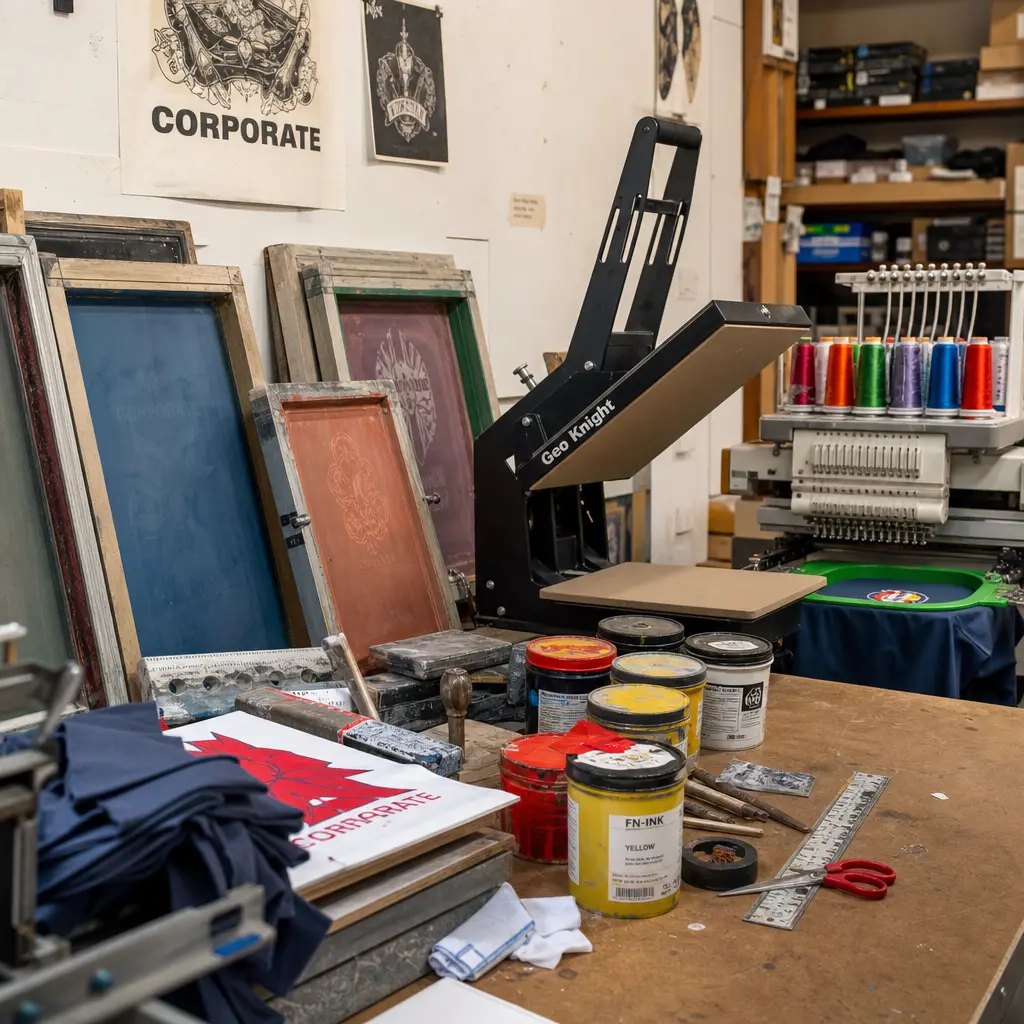
Screen printing is usually the most stable choice for wholesale cotton drawstring pouches with one to three solid logo colors. It works well for bookstore designs such as a campus wordmark, mascot silhouette, simple crest, department name, or orientation slogan. The cost is predictable once the number of colors and logo versions are known, but each color normally requires setup, and each logo version may require separate screens.
Heat transfer can handle gradients, photographic mascot art, and small multi-color details, but it changes the hand feel and may not match the soft cotton look some bookstores prefer. Embroidery is usually not the first choice on small pouches because it can pucker light cotton and increase cost, though it may suit premium heavy cotton or canvas pouches. Digital printing may be possible depending on fabric finish and artwork, but buyers should validate wash resistance, rub resistance, and color consistency before treating it as a bulk route.
- Use vector files for screen printing; low-resolution PNG files create edge problems and artwork cleanup charges.
- Avoid tiny reversed text in filled logo blocks because ink spread on cotton can close the letters.
- Define print size in centimeters or inches, not only as a percentage in a PDF mockup.
- For licensed marks, approve the physical printed color against the university brand standard under consistent light.
Build the Print Proof Around Acceptance Criteria
A useful proof is more than a pretty sample photo. It should prove that the factory can hold the print size, color, position, ink hand feel, and registration on the chosen cotton fabric. For multi-color artwork, registration tolerance matters because even a small shift can make a crest or mascot look unlicensed. For one-color artwork, opacity and edge sharpness are usually the bigger issues.
The buyer should approve a physical pre-production sample, ideally made with the same fabric, drawcord, sewing method, print method, and print size as bulk production. A digital layout can be used first to catch spelling, placement, and scale mistakes, but it cannot show cotton shade, ink absorption, seam distortion, or how the pouch looks after packing. If the first sample fails, the revision notes should be specific: move logo down 8 mm, increase ink opacity, reduce print width to avoid seam curve, or change PMS direction because natural cotton makes the color warmer.
- Logo placement tolerance: define an acceptable shift, such as plus or minus 5 mm for small pouches where realistic.
- Print size tolerance: define finished print width and height, with a practical production tolerance.
- Color approval: use a signed physical sample or print strike-off as the master, not only a screen image.
- Defect limits: reject obvious smudging, ghosting, pinholes in solid areas, wrong artwork, and prints crossing seam distortion zones.
Understand MOQ Logic Before Comparing Quotes
MOQ for cotton drawstring pouches is rarely just one number. A factory may have one MOQ for fabric purchasing, another for dyeing, another for printing setup, and another for efficient sewing line changeover. If a buyer requests 1,000 total pouches across five department logos, the factory may price it differently from 1,000 pieces with one logo because each artwork version creates separate setup, proofing, sorting, and packing work.
When comparing supplier quotes, separate pouch body MOQ from logo MOQ. For example, one natural cotton pouch body could support several print versions if the fabric, size, cord, and sewing are identical. That can reduce fabric waste and keep unit cost manageable. However, each logo version still needs artwork checking, screens or transfer setup, print changeover, and carton identification. A quote that ignores these details may look cheaper but create disputes later.
- Request price breaks at realistic volumes, such as 500, 1,000, 2,500, and 5,000 pieces per size or per artwork mix.
- Ask whether the MOQ applies per pouch size, per fabric color, per drawcord color, per print design, or per purchase order.
- Confirm whether setup charges are one-time for repeat orders or charged again when artwork, size, or print color changes.
- For reorders, keep the approved sample, artwork file, print screen reference, carton spec, and SKU mapping on record.
Quote Data That Prevents Hidden Cost Changes
A strong RFQ gives the supplier enough data to quote the same product every time. Missing data invites assumptions. One supplier may quote 120 GSM natural cotton with a small one-color print and bulk mixed cartons, while another quotes 180 GSM cotton, PMS-matched ink, individual packing, and SKU labels. Those are not comparable offers, even if both say cotton drawstring pouch on the quotation.
The quote should show unit price, setup charges, sample charges, packing cost, export carton data, estimated CBM, gross weight, lead time, payment terms, and validity period. For importers and distributors, carton size and weight matter because low unit price can be offset by inefficient packing volume. For retail buyers, SKU labeling and carton sorting matter because receiving labor and inventory errors become real store costs.
- Fabric: cotton type, GSM, color, weave, shrinkage range, and whether washing or pre-shrinking is included.
- Construction: finished size, seam type, drawcord material, cord diameter, cord color, and channel style.
- Printing: method, color count, PMS target, print size, print position, setup cost, and proofing route.
- Packing: pieces per inner pack, pieces per carton, carton dimensions, gross weight, SKU labels, and carton marks.
- Commercial terms: MOQ, price breaks, sample time, production time, Incoterm, quote validity, and revision cost rules.
Packing Decisions Affect Retail Receiving and Print Appearance
Packing is often treated as an afterthought, but it can damage the print or confuse bookstore receiving. Freshly printed cotton pouches need proper curing and handling before being compressed into cartons. If ink is not fully cured or pouches are packed too tightly, the print can show blocking, creasing, or transfer marks. This is especially important for dark ink coverage, heat transfer prints, and large solid university logos.
For bookstores, carton organization should follow how the goods will be received and sold. If the order includes several campus departments, alumni marks, or event slogans, each version should be separated clearly unless assortment packing is intentional. Carton labels should match the purchase order or SKU list. A factory packing list that says 5,000 cotton pouches is not enough when the bookstore needs 800 orientation pouches, 700 alumni pouches, and 500 department pouches at different store locations.
- Flat bulk packing works for low-cost event distribution if prints are cured and cartons are not overcompressed.
- Inner polybags or paper bands help separate logo versions and make receiving counts faster.
- Individual polybags add cost and plastic use but may be needed for premium retail presentation or online fulfillment.
- Carton marks should include PO number, SKU, artwork version, quantity, carton number, gross weight, and destination if needed.
Lead Time Risk: Artwork Approval Is Usually the Bottleneck
For university bookstore orders, production delay often starts before sewing. Artwork approval may need licensing review, department sign-off, bookstore merchandising approval, or campus brand office confirmation. If the buyer sends incomplete files, changes school color direction, or adds a new logo version after the sample is made, the factory schedule can reset. This is why lead time should be built around approval gates, not only factory production days.
A realistic schedule includes artwork checking, digital proof, sample production, sample transit, sample review, revision if needed, bulk material preparation, printing, curing, sewing, trimming, QC, packing, inspection, and shipping. If the goods must arrive before orientation week or graduation, the PO should include a final artwork deadline and sample approval deadline. Without these gates, both buyer and supplier may assume the other side is responsible for lost time.
- Artwork review: allow time for vector file cleanup, PMS reference, placement layout, and licensing comments.
- Sample stage: allow production time plus courier transit and buyer review time, not only factory sample days.
- Bulk stage: lock fabric, cord, logo, packing, and carton marks before cutting and printing.
- Shipping stage: plan inspection and freight booking before the event deadline, especially in peak retail seasons.
Inspection Standards for Bulk Cotton Pouches
Bulk inspection should focus on defects that affect retail salability and brand compliance. Critical defects include wrong logo, wrong university name, unsafe contamination, severe color mismatch, or mixed artwork in unmarked cartons. Major defects include visibly off-center print, open seams, broken drawcord channel stitching, heavy ink smears, wrong size outside tolerance, or incorrect packing by SKU. Minor defects may include small loose threads, slight natural cotton specks, or very small shade variation within the approved fabric standard.
Inspection sampling should be defined before production. Many buyers use AQL-based inspection, but the classification must match the product. A loose thread may be minor on a giveaway pouch, while a crooked crest on a retail university pouch may be major because it affects licensed brand appearance. The inspection team should measure finished pieces from cartons, not only samples from the production table, because packing pressure and mixed-carton errors appear at the final stage.
- Measure pouch width, height, and opening after sewing, using the finished product as packed for shipment.
- Check logo position from finished seam edges and top opening, not from fabric panel marks.
- Test drawcord function by opening and closing several pieces from different cartons.
- Rub-test printed areas lightly for tackiness, transfer, or poor curing where the print method requires it.
- Open cartons across different artwork versions to verify assortment accuracy and packing list reliability.
Specification comparison for buyers
| Spec decision | Recommended option | When it fits | Buyer risk to check |
|---|---|---|---|
| Fabric weight for bookstore merchandise | 140-180 GSM cotton for small gift, accessory, and orientation pouches | Works when the pouch carries pens, earbuds, pins, small apparel items, or campus welcome kits without needing a rigid body | Below 120 GSM can look transparent after printing; above 200 GSM may raise freight cost and make small pouches feel bulky |
| Fabric finish before printing | Natural unbleached cotton for eco-style stores; bleached or dyed cotton only when brand color accuracy is critical | Natural cotton suits campus sustainability lines and bookstore souvenir ranges where slight specks are acceptable | Natural cotton changes how ink color appears; approve the print on final fabric, not on coated paper or a digital mockup |
| Print method for university logos | Screen print for 1-3 solid colors; heat transfer only for gradients or complex small artwork | Screen print gives stable cost and good durability for repeat bookstore orders with simple crest, mascot, or department marks | Fine lines under 0.3 mm, small reversed text, and ink-heavy blocks can fill in or crack if not tested on the actual pouch size |
| Drawcord material | Cotton cord for natural look; polyester cord for dyed colors and smoother pull | Cotton cord matches natural pouches; polyester cord helps when the school color must match a Pantone direction | Cord diameter changes closure feel; thin cord can look cheap while thick cord may bunch at small pouch openings |
| MOQ structure | Base MOQ by pouch size and fabric color, with print MOQ separated by logo version | Best for bookstores ordering several department logos on the same pouch body | A low headline MOQ may hide separate setup charges, screen charges, or color-change fees for each artwork |
| Proofing route | Digital artwork proof plus physical pre-production sample on bulk fabric | Required when licensed university artwork, school colors, and retail shelf quality are all important | Skipping the physical proof can miss cotton shrinkage, seam distortion, off-center print, or ink color shift |
| Packing format | Flat bulk pack in inner polybags or paper bands, with carton marks by SKU and logo version | Fits bookstore receiving teams that need easy counting, shelf replenishment, and separation by campus design | Random mixed cartons cause receiving errors; overly tight packing can crease prints before retail display |
| Lead time planning | Sample approval before bulk fabric cutting, then production schedule locked by artwork, fabric, and packing sign-off | Useful before orientation season, alumni events, graduation, and holiday gift tables | Late logo changes after screens are made can reset proofing and push shipment beyond bookstore event dates |
Buyer checklist before sampling
- Define pouch size by usable internal space, not only flat cut size; allow seam allowance and drawcord channel loss.
- Select fabric GSM and color before approving artwork because natural, bleached, and dyed cotton change print appearance.
- Provide vector artwork with Pantone references, minimum line thickness, print size, and required placement tolerance.
- Require a physical pre-production sample printed on the approved bulk fabric before mass production starts.
- Set acceptance tolerances for logo position, print color, print size, seam strength, drawcord length, and pouch dimensions.
- Separate MOQ by pouch body, fabric color, print color count, and logo version so supplier quotes can be compared fairly.
- Confirm whether setup charges include screens, artwork adjustment, sample print, and revised proofing if the first sample fails.
- Specify packing by SKU, department logo, inner quantity, carton quantity, carton size, gross weight, and carton marks.
- Ask for production photos at fabric cutting, printing, sewing, final QC, and packed carton stages.
- Reserve lead time for artwork approval, sample transit, bulk production, inspection, and shipping instead of quoting only sewing days.
Factory quote questions to send
- What GSM, weave, and shrinkage range are you quoting for the cotton fabric, and is the fabric greige, bleached, dyed, or washed?
- Is the quoted pouch size the flat outside size or the usable internal size after sewing and drawcord channel construction?
- What print method is included in the unit price, how many colors are included, and what is the maximum print area?
- What are the separate costs for screen setup, PMS color matching, artwork cleanup, sample printing, and revised samples?
- What is the MOQ for one pouch size with multiple university logo versions, and what price break applies at each quantity level?
- What placement tolerance can your factory hold for front-center printing on this pouch size during bulk production?
- How many bulk pieces will be inspected, what AQL level do you use, and what defects are classified as critical, major, and minor?
- How will pouches be packed by logo version, and can cartons be labeled for bookstore receiving by SKU or campus department?
- What is the realistic timeline from artwork approval to sample dispatch, sample approval to production completion, and shipment booking?
- Can you provide fabric swatches, print strike-offs, pre-production samples, and production photos before final balance payment?
Quality-control points to confirm
- Fabric GSM should match the approved spec within an agreed tolerance, commonly plus or minus 5 percent depending on mill control.
- Finished pouch dimensions should be measured flat after sewing, with separate tolerance for width, height, and drawcord channel depth.
- Print placement should be checked from the finished seam edges, not from the cut panel before sewing.
- Logo color should be judged under consistent light against the approved physical sample, not only against a phone photo.
- Drawcord length should allow easy closure without excessive loose ends that create a messy retail display.
- Seams should hold under a practical pull test suitable for the intended contents, especially at side seams and channel openings.
- Ink should not show obvious cracking, tackiness, smearing, pinholes, or heavy bleed into the cotton surface.
- Cartons should be free from mixed artwork unless the PO clearly allows assortment packing with a packing list by variant.