Start With The Bookstore Buying Objective
Wholesale cotton drawstring pouches look simple on a quote sheet. In practice, university bookstores buy them for several different jobs, and each job needs a slightly different specification. A pouch sold as a campus logo accessory has different priorities from one used for orientation coupons, graduation cords, alumni gifts, department swag, stationery sets, or protective packaging. Before asking for prices, define the pouch's role: resale merchandise, gift-with-purchase, kit component, protective dust pouch, event handout, department-funded item, or licensed campus merchandise.
That one decision shapes almost everything that follows. Retail SKUs need a better fabric hand, crisp folding, barcode readiness, attractive shelf presentation, and tighter cosmetic inspection because a customer handles the pouch before buying it. Orientation and move-in programs care more about accurate counts, clear carton marking, fast kitting, and delivery that does not miss the campus calendar. Alumni or donor gifts may justify heavier cotton, cleaner cord construction, and a more cautious logo approval process because the pouch carries the university identity beyond the store.
Name the approvers early. Procurement may control supplier terms and pricing. Bookstore operations may own POS labeling, receiving, display, and storage. Licensing may approve trademark use and school colors. Event teams may control the delivery date. When those groups first see the pouch after sampling, projects lose time to artwork revisions, barcode changes, repacking instructions, or internal sign-offs. A stronger RFQ states the use case, distribution route, approval chain, and required arrival date at the top, before the technical specification.
- For retail resale, prioritize fabric hand feel, print clarity, barcode readiness, hangtag method, and consistent shelf presentation.
- For welcome kits, prioritize exact counts, bulk inner packing, quick unpacking, and consistent size across cartons.
- For protective packaging, prioritize correct fit, low lint, clean seam trimming, and no odor transfer to the main product.
- For licensed merchandise, treat artwork approval, color approval, and trademark placement as production gates.
- For department-funded programs, confirm whether each department logo is a separate artwork version with separate MOQ and setup cost.
Define Fabric Weight, Finish, And Tolerance
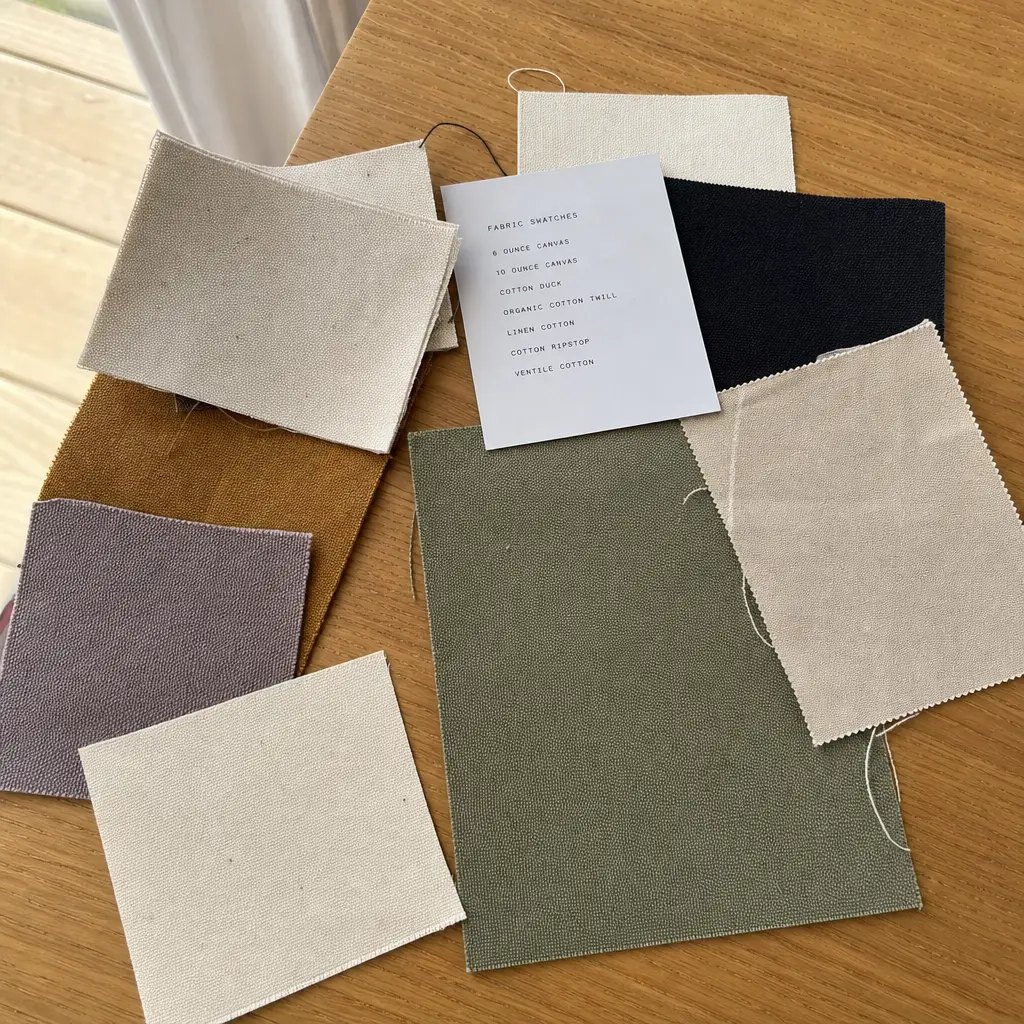
Cotton pouch quotes are only comparable when the fabric is comparable. For most wholesale cotton drawstring pouches for university bookstores, 170-240 GSM cotton, roughly 5-7 oz, is a practical retail range. It feels more substantial than thin promotional cotton, usually gives the printer a better surface, and still closes cleanly through a drawcord channel. That range works well for stationery bundles, small accessories, reusable gift packaging, orientation add-ons, and mid-price campus merchandise.
Lighter fabric has its place, but it should be chosen on purpose. A 120-150 GSM pouch can work for budget event inserts, simple dust bags, or one-time packaging where the pouch is not the main value. The tradeoffs are visible: more wrinkling, possible show-through, a lighter hand, and less retail presence. At the other end, 260-320 GSM canvas adds structure and a premium feel for larger pouches or heavier contents. It also increases cotton consumption, freight weight, sewing effort, and bulk at the drawcord channel. On small pouch sizes, heavy canvas can make the mouth hard to close neatly.
Avoid vague fabric language such as thick cotton, eco cotton, or premium canvas unless it is backed by measurable detail. Ask for a target GSM and tolerance, such as 200 GSM with +/-5% tolerance, or require the supplier's mill tolerance in writing. Also clarify whether the fabric is natural, bleached, dyed, washed, brushed, softened, or otherwise finished. Natural cotton may show small seed flecks or minor slubs. Decide what is acceptable during sample approval, not when cartons arrive.
- 120-150 GSM: use for budget dust bags, event inserts, and one-time promotional packaging where low cost is more important than retail feel.
- 170-240 GSM: use for most bookstore retail pouches, campus gift packaging, accessory bags, and orientation merchandise.
- 260-320 GSM: use for premium gift sets, larger pouches, heavier contents, or structured canvas programs where extra body adds value.
- Ask whether GSM is measured before washing, after finishing, or according to the fabric mill's standard tolerance.
- Approve fabric hand feel, opacity, color, slub level, and shrinkage expectation on the physical pre-production sample.
Specify Finished Size And Real Product Fit
Size errors are common because buyers and suppliers may be using different reference points. A supplier might quote cutting size while the buyer assumes finished size. A 20 x 30 cm cut panel is not a 20 x 30 cm finished pouch after the side seams, bottom seam, fold-over, and drawcord channel are sewn. The RFQ should state finished dimensions after sewing and define the measurement method. Width is normally measured flat from side seam to side seam. Height should say whether the channel is included and whether usable internal height below the channel is required.
Do not size the pouch from a catalog photo. Size it around the actual contents. Pins, jewelry, gift cards, pens, notebooks, charging cables, folded T-shirts, graduation items, and small boxed gifts all need different opening widths and internal heights. A pouch that looks right when flat can be too tight once the product stack is inserted. If it is too tight, kitting teams waste time forcing items inside and customers may stress the seams or tear the channel. If it is too large, the item looks underfilled and the buyer pays for cotton, decoration area, and freight that do not add value.
The purchase order should include practical size tolerance. For small pouches up to roughly 15 x 20 cm, +/-5 mm is often a reasonable starting point if the supplier can support it. For larger pouches, +/-10 mm may be more realistic for sewn cotton goods. If the pouch holds a rigid box or a fixed retail set, test a sample with the actual product and tighten the fit requirement where needed. Measurement points should be written into the inspection plan so the factory, inspector, and receiving team judge the same thing.
- Small accessories: confirm whether 10 x 14 cm or 12 x 16 cm provides enough opening width after seams and channel are sewn.
- Stationery and gift cards: test 15 x 20 cm or 18 x 24 cm with the actual product stack, not only a flat pouch sample.
- Tech accessories: confirm product thickness, cord closure appearance, and whether contents distort the pouch shape.
- Folded apparel or gift sets: trial 25 x 35 cm or 30 x 40 cm and confirm the top closes without excessive bunching.
- Write tolerances by measurement point: width, height, usable internal height, opening width, and channel depth.
Engineer The Drawcord And Channel
The drawcord is a small component, but customers notice it immediately. Natural cotton cord suits unbleached, white, or eco-positioned pouches and gives the product a softer retail look. Polyester cord can be useful for navy, black, red, and other saturated school colors because it may provide stronger color consistency and better abrasion resistance. Specify the cord material, approximate diameter, finished length, knot method, and whether the pouch uses one cord or two.
Channel construction matters just as much as the cord. A narrow channel creates friction, especially with heavier cotton or thicker braided cord. Poorly trimmed channel seams can snag the cord, shed loose threads, or make the closure feel rough. Channel openings should be cleanly finished, and the channel should not tear during normal opening and closing. A two-cord closure generally looks more balanced and retail-ready. A single-cord closure can be acceptable for low-cost packaging or basic event use, as long as the buyer accepts the appearance and function.
Cord length needs a tolerance. Uneven cord tails make otherwise acceptable pouches look inconsistent when merchandised together. The RFQ should say whether knots are acceptable, whether polyester cord ends should be heat sealed, and whether cord tips, sewn stops, or other finishing is required. If the pouches will be used in programs involving children or specialized campus activities, ask the relevant compliance team whether drawcord length, loose loops, or small parts need additional review.
- Specify one-cord or two-cord construction because it changes material cost, labor, appearance, and closure feel.
- Confirm cord material, diameter, length tolerance, knot style, cord-end treatment, channel width, and channel seam finish.
- Test repeated opening and closing because tight channels and loose threads often appear only during handling.
- Reject cords that shed heavily, fray at knots, vary noticeably in length, or make the pouch difficult to close.
- Ask the factory to provide close-up sample photos of channel ends, knots, cord path, and seam finishing before bulk approval.
Choose Logo Decoration By Artwork Risk
Screen printing is usually the most practical decoration method for wholesale cotton drawstring pouches for university bookstores. Many campus logos, bookstore names, department marks, and event graphics use solid colors, and screen print handles that work efficiently. It is well suited to one- to three-color artwork, supports repeatable placement, and can keep the pouch flexible when the ink deposit is controlled. On natural or white cotton, screen printing is often straightforward. On dark cotton, the factory may need an underbase so the logo does not look dull.
Heat transfer can be useful for gradients, photographic artwork, very fine text, or small pilot runs where screen setup is inefficient. It should be tested on the actual fabric for edge lifting, cracking, heat press marks, opacity, and hand feel. Embroidery can add value on heavier cotton or canvas, but it may pucker lightweight fabric and distort small lettering. Woven labels and side labels work well when the bookstore wants subtle private-label branding or when the front panel should stay clean.
Artwork instructions should remove guesswork. Send vector files, Pantone references, maximum print area, placement dimensions, clear-space rules, and licensing restrictions. Logo placement should be measured from the top edge, side seam, and center line rather than judged only by a digital mockup. If campus licensing approval is required, build that gate into the schedule before bulk production starts. Rushing this step can turn a simple pouch into a trademark or receiving problem.
- Use screen print for bold university marks, bookstore slogans, department names, and one- to three-color event graphics.
- Use heat transfer only after testing rub resistance, fold resistance, edge lifting, heat marks, and fabric compatibility.
- Use embroidery on heavier cotton where raised branding adds value and puckering can be controlled.
- Use woven side labels or hangtags when subtle branding is preferred or front-panel artwork should stay minimal.
- Confirm underbase need, setup fees, print area, color count, curing requirements, and acceptable ink hand feel before comparing prices.
Manage Color, Dye Lots, And Brand Standards
School-color pouches can look strong on a retail wall, but dyed cotton adds sourcing risk. Natural cotton, white cotton, black cotton, and common stock colors are usually easier to source than custom-dyed university colors. Custom dyeing may require higher MOQ, lab dip approval, longer lead time, and tighter shade control. Even with controls in place, color can shift slightly by fabric lot, finishing process, lighting, and humidity.
Pantone references help suppliers understand the target, but they do not make every material match perfectly. Cotton fabric, polyester cord, screen ink, woven labels, hangtags, and barcode labels absorb and reflect color differently. Approve physical lab dips or strike-offs when color is mission-critical. Define whether the tolerance is visual against an approved sample or measured by a formal color standard. For many bookstore programs, one approved physical sample is more useful than a set of supplier phone photos.
Dark fabrics bring one more decision: print opacity. A white or gold logo on navy cotton may need an underbase to prevent the fabric shade from dulling the print. Underbase printing can improve visibility, but it can also add cost, thickness, and stiffness. Approve logo color and ink hand feel on the real fabric, not on a digital rendering. If the university has strict brand standards, include licensing in the sample review instead of treating color as a purely procurement decision.
- Choose natural or white cotton when cost, lead time, and repeatability are more important than full school-color fabric.
- Use lab dips or fabric strike-offs for custom-dyed cotton, especially for navy, maroon, red, purple, or other brand-sensitive colors.
- Approve separate color expectations for fabric, cord, ink, woven label, hangtag, and packaging label because each material behaves differently.
- Confirm whether dark fabric needs an underbase and whether the underbase changes hand feel, opacity, curing, or unit cost.
- Document the approved physical standard and require shade comparison under consistent lighting during QC.
Read MOQ And Pricing Like A Buyer
MOQ is rarely one clean number. For cotton drawstring pouches, the real production minimum depends on fabric color, finished size, cord color, artwork version, label version, barcode version, and packing format. A supplier may advertise a 500-piece MOQ, but that could mean 500 pieces per size, per color, per logo, or per packing style. If a bookstore orders 2,000 pouches split across four department logos and three fabric colors, the order behaves like several small production lots rather than one efficient wholesale run.
Ask for a price ladder that matches how the bookstore actually buys. Useful tiers may include 500, 1,000, 3,000, 5,000, and 10,000 pieces per design, depending on the program. The quote should separate the base pouch price from screen setup, underbase charges, extra print colors, woven labels, hangtags, barcode service, individual packing, and special carton marking. Clear pricing lets procurement decide whether departments should consolidate artwork, share a common base pouch, or keep separate SKUs.
Low MOQ helps when testing a new retail item, but it can bring higher unit cost, more setup cost per piece, limited fabric choices, and less scheduling priority. Higher MOQ may lower unit price, yet it increases inventory exposure if the artwork is tied to one event, season, or graduating class. The best buying decision is not always the lowest unit price. It is the quantity that fits forecast accuracy, storage space, delivery risk, cash flow, and reorder plans.
- Ask for MOQ by fabric color, pouch size, cord color, artwork, label, barcode, and packing method.
- Request setup charges separately so department-specific logos can be evaluated without hiding costs in unit price.
- Ask whether mixed sizes can share the same fabric lot, cord material, print schedule, and inspection batch.
- Confirm whether screens, labels, hangtags, and approved samples can be reused for reorders.
- Compare landed cost and receiving readiness, not only the lowest unit price on the quote sheet.
Build A Comparable RFQ Package
A strong RFQ forces suppliers to quote the same product. If one supplier includes 200 GSM cotton, a two-cord closure, one-color screen print, bulk inner bags, and export cartons while another quotes 150 GSM cotton, a single cord, unclear barcode service, and no carton data, the lowest price is not meaningful. Procurement should use a fixed RFQ format with the same specifications, quantity tiers, and packing assumptions for every supplier.
Include the technical and operational details in one package: fabric, finished size, size tolerance, cord construction, decoration method, artwork files, color references, packing route, sample requirements, lead time, carton data, payment terms, and inspection expectations. For import planning, carton dimensions, units per carton, gross weight, net weight, and estimated CBM are needed for freight and warehouse handling. For bookstore receiving, barcode placement, carton marks, PO number, SKU number, and inner bag count can matter as much as the pouch itself.
State the production gates. Common gates include artwork approval, lab dip approval, pre-production sample approval, purchase order confirmation, deposit payment, material arrival, mass production, final inspection, balance payment, and shipment release. If the campus date is fixed, ask the supplier to identify the critical path instead of simply promising a short lead time. A realistic calendar protects orientation, homecoming, alumni weekend, graduation, and semester-start retail windows.
- Include one specification sheet per SKU with finished size, fabric GSM, cord, decoration, artwork, packing, and barcode requirements.
- Request quantity-tier pricing using the same specification at every tier and across every supplier.
- Require carton quantity, carton dimensions, gross weight, net weight, estimated CBM, and carton mark format before supplier selection.
- Separate product cost from setup, underbase, extra print colors, labels, hangtags, barcode service, and individual packing.
- Ask the supplier to define what event starts lead time and what approvals can delay production.
Approve Samples With Production Discipline
A sample that looks good in a photo is not enough for bulk approval. The approved pre-production sample should represent the intended mass production materials and construction: fabric weight, fabric color, cord material, cord length, stitch type, print method, label, folding method, barcode placement, and packing. If the supplier sends a generic stock pouch only to show shape, treat it as a reference sample, not as production approval.
Bring the right reviewers into the sample stage. Procurement checks price, supplier terms, and production feasibility. Bookstore operations checks product fit, receiving, POS labeling, shelf display, and kitting speed. Licensing or brand teams check logo use, color, clear space, and trademark accuracy. If the pouch is part of an orientation, alumni, or department kit, the kit owner should place the actual contents inside the pouch and close it repeatedly.
Document approval in writing. Record the approved finished size, GSM, cord specification, print position, print color, acceptable fabric characteristics, packing method, and any required changes. If a revision is needed, separate required corrections from preferences. That discipline prevents endless sampling and protects the schedule. It also gives the inspector a clear standard when bulk production is checked.
- Measure finished width, height, usable internal height, opening width, channel depth, cord length, and logo placement.
- Insert the actual contents, close the pouch repeatedly, and confirm the product does not distort the shape or stress the seams.
- Rub the print with a clean white cloth and fold the printed area to check curing, transfer, cracking, and adhesion risk.
- Check barcode position, hangtag attachment, folding, inner packing, and carton presentation if the pouch will be retail-ready.
- Keep one signed approval sample with the buyer and require the supplier to keep a matching reference sample at the factory.
Set QC Standards Before Production
Cotton drawstring pouch defects are easy to describe but expensive when found late. Common problems include stains, oil marks, loose threads, skipped stitches, uneven cord length, tight channels, crooked logo placement, print bleeding, wrong barcodes, odor, short count, and mixed sizes in one carton. Any of these can block resale, slow receiving, or create a licensing issue even though the product is a simple sewn item.
Define critical, major, and minor defects before production starts. Wrong logo, wrong school name, wrong barcode, mildew odor, unsafe contamination, and missing drawcord should be treated as serious failures because they can prevent use or resale. Major defects often include visible stains on the display face, open seams, severe print peeling, wrong size beyond tolerance, incorrect carton marking, and short count. Minor defects may include small natural cotton slubs if they are similar to the approved sample and do not affect the logo area.
Many buyers use AQL-based inspection for sewn goods, but AQL language alone is not enough. State the inspection level, sample size approach, defect definitions, measurement points, and acceptance rules. For time-sensitive bookstore programs, production photos, inline checks, and final random inspection photos can reduce risk before shipment. The inspection should cover function, cosmetics, measurements, barcode accuracy, assortment, packing, carton marks, and moisture protection.
- Define measurement tolerances for width, height, usable internal height, opening width, channel depth, cord length, and logo placement.
- Reject critical errors such as wrong logo, wrong trademark use, wrong barcode, mildew odor, missing cord, or unsafe contamination.
- Reject major defects such as stains on the display face, open seams, severe print cracking, wrong size, short count, or mixed SKU cartons.
- Accept minor natural fabric variation only if it matches the approved sample and does not affect retail presentation or logo clarity.
- Require inspection photos showing measurements, logo close-ups, cord channel, seams, labels, carton marks, inner packing, and defect examples.
Specification comparison for buyers
| Procurement decision | Recommended specification | Typical bookstore fit | QC or quote risk to control |
|---|---|---|---|
| Use case classification | Classify as retail SKU, gift-with-purchase, orientation kit component, department giveaway, alumni gift packaging, protective dust pouch, or licensed campus merchandise before quoting. | Aligns fabric, decoration, packing, barcode, inspection, and delivery requirements with the real sales or distribution route. | If the use case is vague, suppliers may quote a thin promotional pouch when the bookstore expects a retail-ready item. |
| Fabric weight | For most campus retail programs, specify 170-240 GSM cotton, approximately 5-7 oz, with a written GSM tolerance such as +/-5% or the mill's stated tolerance. | Works for stationery sets, small accessories, gift packaging, welcome kits, and mid-price campus merchandise. | Quotes are not comparable if one supplier prices 140 GSM promotional cotton and another prices 220 GSM retail cotton. |
| Premium or budget fabric options | Use 120-150 GSM only for budget inserts or dust bags; use 260-320 GSM canvas when structure, premium feel, or heavier contents justify the added cost. | Helps buyers avoid overbuilding low-value giveaways or underbuilding higher-value bookstore merchandise. | Heavy fabric can make small pouches bulky at the channel; light fabric can show contents, wrinkle, and feel disposable. |
| Finished size | Quote finished size after sewing, not cut-panel size. Confirm width, height, usable internal height, opening width, channel depth, and seam allowance assumptions. | Important for pouches holding pins, gift cards, stationery, tech accessories, folded apparel, graduation items, or boxed merchandise. | A 20 x 30 cm cut panel is not a 20 x 30 cm finished pouch. Size misunderstandings change fit, cost, and carton quantity. |
| Size tolerance | Use practical tolerances such as +/-5 mm for small pouches up to about 15 x 20 cm and +/-10 mm for larger pouches, unless the product fit requires tighter control. | Keeps receiving teams from rejecting normal sewn-goods variation while still controlling fit and presentation. | Without a tolerance and measurement method, the buyer and factory may disagree during final inspection. |
| Drawcord and channel | Specify one-cord or two-cord closure, cord material, cord diameter, cord length, knot method, channel width, and reinforcement or finishing at channel ends. | Cotton cord fits natural retail programs; polyester cord is useful for stronger color consistency and abrasion resistance. | Thin cords, tight channels, loose threads, and uneven cord lengths make the pouch feel cheap and can cause functional failures. |
| Decoration method | Use screen print for solid campus marks; heat transfer for gradients or short runs after testing; embroidery only on heavier cotton; woven labels for subtle branding. | Screen print is usually the most efficient choice for one- to three-color bookstore logos and department graphics. | Dark fabric may require an underbase, which changes cost, opacity, ink hand feel, and curing risk. |
| Color approval | Use natural or white cotton for lower dye risk; use dyed school colors only with lab dip or strike-off approval and shade tolerance. | Natural cotton supports eco-positioned packaging; dyed cotton strengthens campus identity for retail lines. | Pantone targets do not translate identically across fabric, cord, ink, woven labels, hangtags, and packaging labels. |
| MOQ structure | Request MOQ by fabric color, finished size, cord color, artwork, label version, barcode version, and packing format, not only total order quantity. | Useful when bookstores coordinate departments, orientation, athletics, alumni, and private-label retail programs from one supplier. | A low headline MOQ can disappear once each logo, size, color, and barcode is treated as a separate production lot. |
Buyer checklist before sampling
- Define the commercial purpose first: retail resale, gift-with-purchase, orientation kit, alumni event, department giveaway, licensed merchandise, or protective packaging.
- Specify finished size after sewing, including width, height, usable internal height, opening width, drawcord channel depth, and measurement tolerance.
- State fabric composition, target GSM or ounce weight, weave type if known, color process, shrinkage expectation, and acceptable natural cotton characteristics such as minor slubs.
- Request pricing by quantity tier and separate MOQ by pouch size, fabric color, cord color, artwork version, label version, barcode version, and packing method.
- Provide vector artwork, Pantone references, logo placement dimensions, maximum print area, clear-space rules, trademark restrictions, and the name of the final approval authority.
- Confirm whether the quote includes screen setup, underbase printing, extra colors, heat-transfer setup, embroidery digitizing, woven label MOQ, hangtag attachment, barcode labeling, and special folding.
- Require a physical pre-production sample made with the intended bulk fabric, cord, print method, stitching, label, folding, barcode, and packing format.
- Approve sample measurements, drawstring function, seam strength, print adhesion, print placement, odor, stains, loose threads, lint, barcode readability, and retail presentation before mass production.
- Ask for carton dimensions, units per carton, gross weight, net weight, inner bag quantity, carton mark format, estimated CBM, and any palletization recommendation before issuing the purchase order.
- Build the production calendar backward from orientation, homecoming, alumni weekend, graduation, semester-start receiving windows, campus licensing approval, and freight transit.
Factory quote questions to send
- What is the exact fabric composition, target GSM, accepted GSM tolerance, weave style, yarn style if known, finishing method, and expected shrinkage after normal handling or washing if applicable?
- Is the price based on finished size after sewing or fabric cutting size, and what measurement points will the inspector use for width, height, opening width, usable internal height, and channel depth?
- What tolerance will apply to finished dimensions, cord length, logo placement, print color, fabric shade, carton count, and barcode placement?
- What MOQ applies separately to each pouch size, fabric color, cord color, print design, woven label version, barcode version, and packing format?
- Which decoration method is included, how many print colors are included, what print area is priced, whether an underbase is required, and whether setup fees are separate?
- Can the same Pantone target be held across cotton fabric, drawcord, screen ink, woven label, hangtag, and packaging label, or should separate approved tolerances be used for each material?
- What sample cost, sample lead time, courier timing, revision policy, and sample cost credit policy apply before bulk production?
- Will the pre-production sample use the same fabric lot or same approved fabric quality, drawcord, ink, stitch type, label, folding method, and packing format planned for mass production?
- What carton dimensions, units per carton, gross weight, net weight, inner bag quantity, estimated CBM, moisture protection, and pallet recommendation are included in the quote?
- Which inspection standard, AQL level if used, sample size, defect classifications, and measurement procedures will be accepted for university bookstore retail merchandise?
Quality-control points to confirm
- Fabric weight is checked against the approved sample and target GSM within agreed tolerance, with unacceptable slubs, holes, oil marks, stains, shade bands, or weak fabric rejected.
- Finished pouch size is measured after sewing at defined points for width, height, usable internal height, opening width, and drawcord channel depth.
- Drawstring function is tested by repeated opening and closing to confirm smooth sliding, even cord length, secure knots, no channel catching, and no excessive shedding.
- Cord, channel seams, side seams, bottom seams, bartacks, and label attachments withstand normal handling for the intended contents without open seams or broken stitches.
- Print placement stays within agreed tolerance from top edge, side seam, and center line, rather than being judged only by visual alignment.
- Print quality is checked for cracking, peeling, bleeding, poor curing, severe pinholes, registration error, ink stains, scorch marks, and transfer during rub testing.
- School colors and logo colors are compared to the approved physical sample or approved color standard under consistent lighting, not only to digital mockups or phone photos.
- Pouches are clean, dry, odor-free, and free from mildew smell, chemical odor, loose lint buildup, needle damage, foreign fibers, and visible contamination.
- Packing count, size assortment, color assortment, barcode placement, hangtag attachment, carton marks, inner bag quantities, and moisture protection match the purchase order.
- Inspection photos include front, back, inside, cord channel, side seam, bottom seam, logo close-up, label close-up, measurement photos, carton marks, inner packing, and defect examples when defects are found.